Analog Clock Understanding Worksheets for Ages 4-8
3 filtered results
-
From - To
Welcome to our Analog Clock Understanding Worksheets designed for children ages 4-8! These engaging and interactive resources aim to help young learners grasp the concept of time. Through age-appropriate activities, kids will enjoy identifying clock parts, reading time to the hour and half-hour, and practicing time-related vocabulary. Our colorful worksheets are tailored to enhance problem-solving skills and boost confidence while making learning fun. Perfect for both classroom use and at-home practice, these worksheets offer a hands-on approach to mastering analog clocks. Download now to empower your child with essential time-telling skills that will last a lifetime!
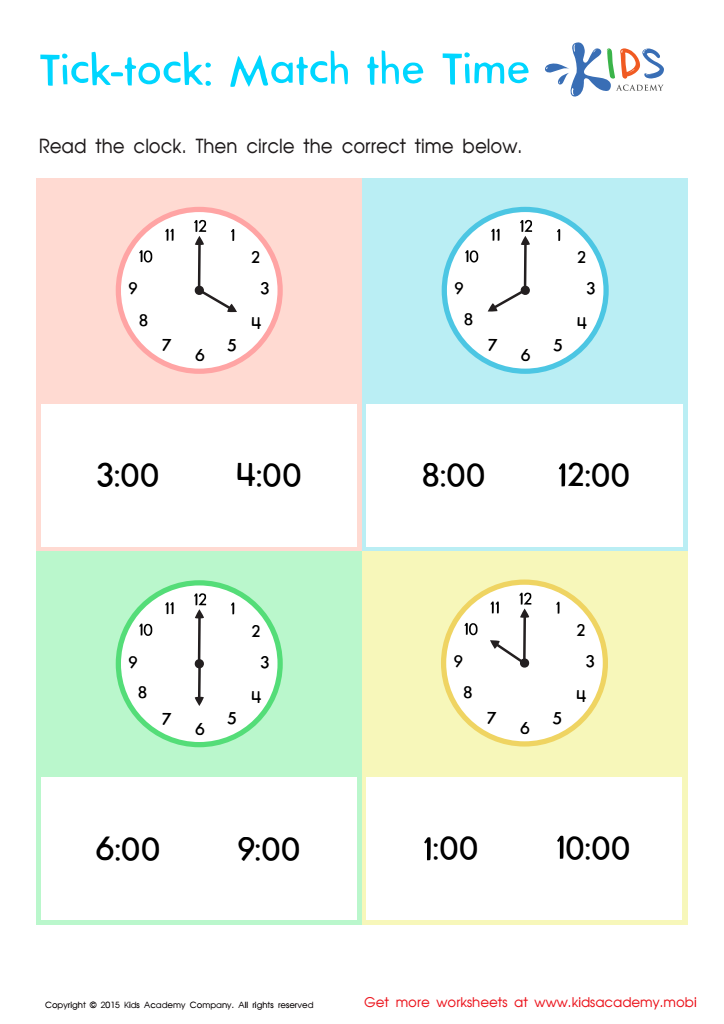
Telling The Time Worksheet: Part 4
 Assign to My Students
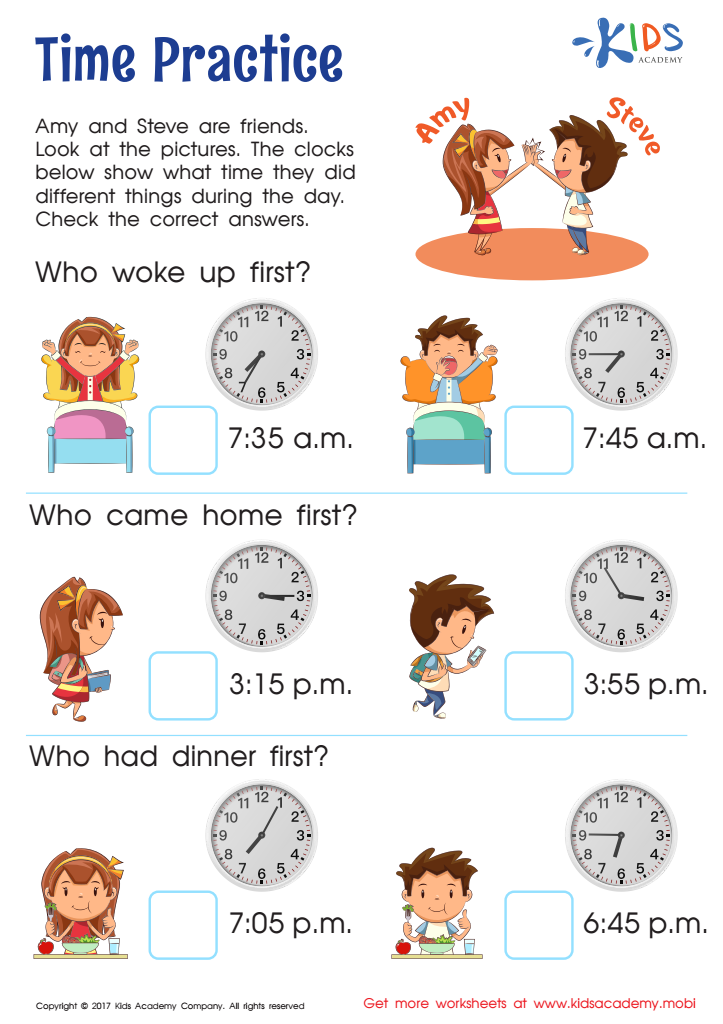
Time Practice Worksheet
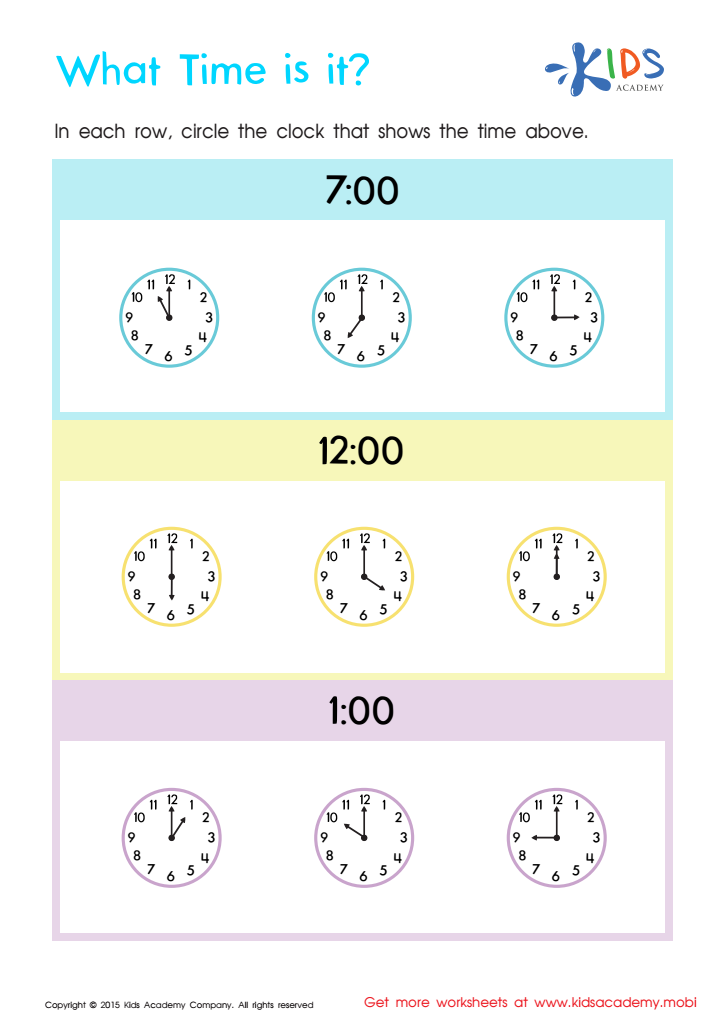
Telling The Time Worksheet: Part 3







Understanding analog clocks is vital for children aged 4-8 as it enhances their mathematical learning, cognitive skills, and daily life orientation. Analyzing analog clocks aids in developing concepts of time, which are crucial for planning, routine establishment, and understanding sequences of events. Mastery of mind-boggling skills like reading the hour and minute hands promotes problem-solving skills and cognitive flexibility.
Moreover, analog clocks encourage better number sense and critical thinking. Children grasp the cyclical nature of time—leading to a grasp of concepts such as division and fractions when understanding minutes versus hours. These foundational skills not only ensure robust mathematical competency but also foster confidence as children navigate daily schedules.
Additionally, teaching analog clock comprehension promotes attentiveness and patience, virtues essential for focused learning. In a digital age where screens dominate, understanding traditional time-telling also cultivates appreciation for historical learning tools. This engagement provides opportunities for discussions about time, history, and cultures, enhancing social awareness.
In conclusion, nurturing analog clock understanding in early learners equips them with essential life skills, enhances cognitive development, and enriches their connection with the world around them – making it a vital focus for both parents and educators.








