
Differentiating goods/services Worksheets for Ages 4-8
3 filtered results
Difficulty Level
Grade
Age
-
From - To
Subject
Activity
Standards
Discover our "Differentiating Goods/Services Worksheets for Ages 4-8" at Kids Academy! These engaging worksheets help young children understand the vital economic concepts of goods and services through fun and interactive activities. Perfect for early learners, our resources foster critical thinking and comprehension skills. Each worksheet, creatively designed with vibrant illustrations, successfully captures children's attention while providing educational value. Ideal for classroom or at-home learning, these activities guide children in identifying and distinguishing between various goods and services in everyday life. Equip your child with essential future skills—explore our Differentiating Goods/Services worksheets today!
Favorites
With answer key
Interactive
 Assign to My Students
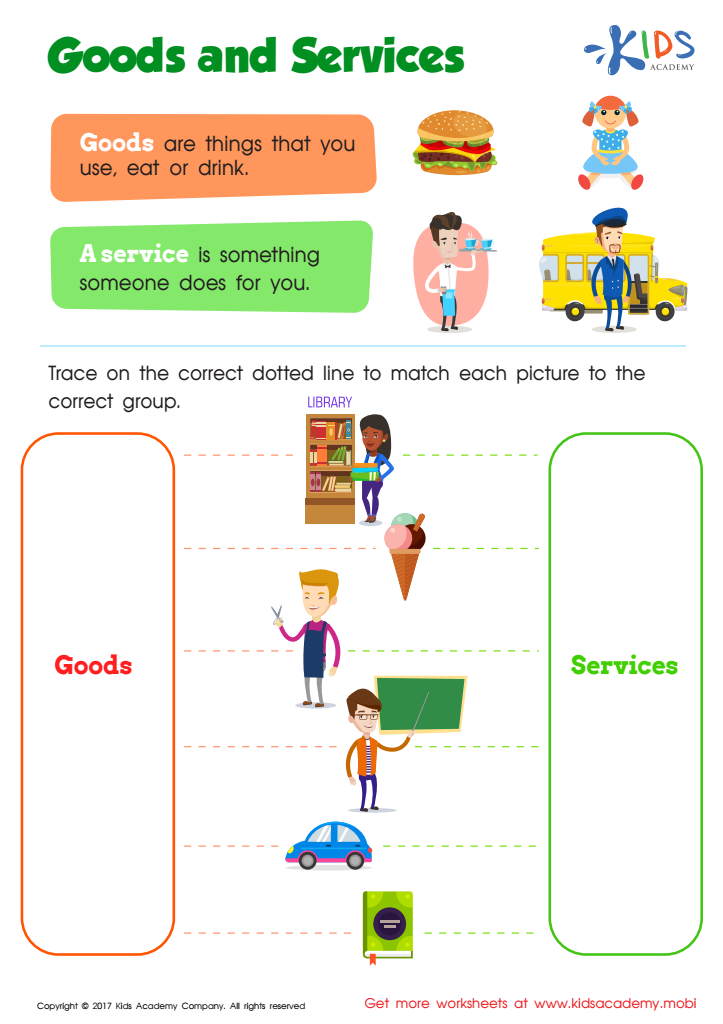
Goods and Services Worksheet
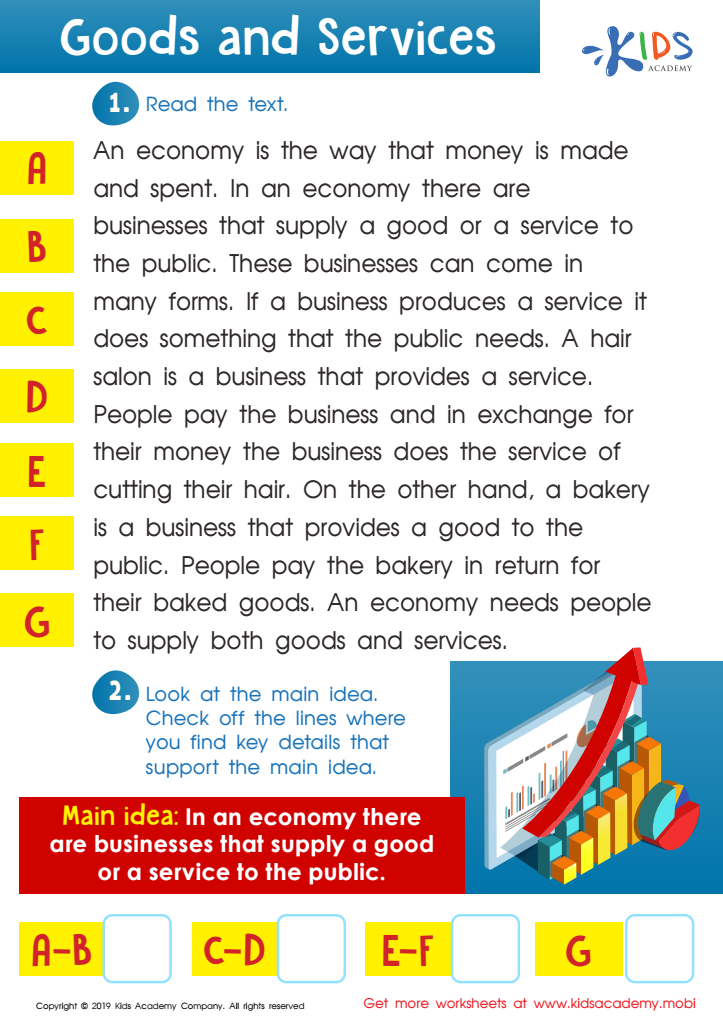
Teach your kids about the economy and businesses with this worksheet. Ask them if they know what goods and services are. After they complete the worksheet, they'll have a better understanding. Read the text to them and guide them step-by-step through the instructions. Help them learn!
Goods and Services Worksheet
Worksheet
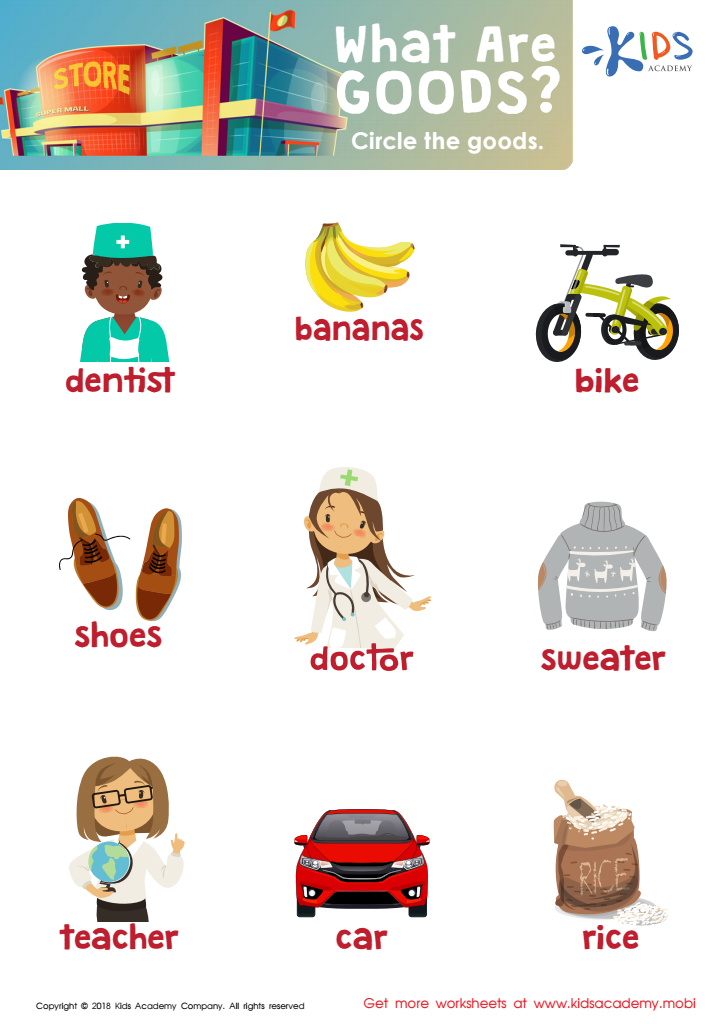
What Are Goods? Worksheet
Introduce your child to economics with this social studies worksheet! It helps kids differentiate between goods and services. Have them look at each picture, discuss what it does, and decide whether it's an object or a service. Encourage them to think carefully and circle the goods. It's a great way to start teaching the basics of economics.
What Are Goods? Worksheet
Worksheet
Join Kids Academy for Free
Who is primarily going to use this learning content?



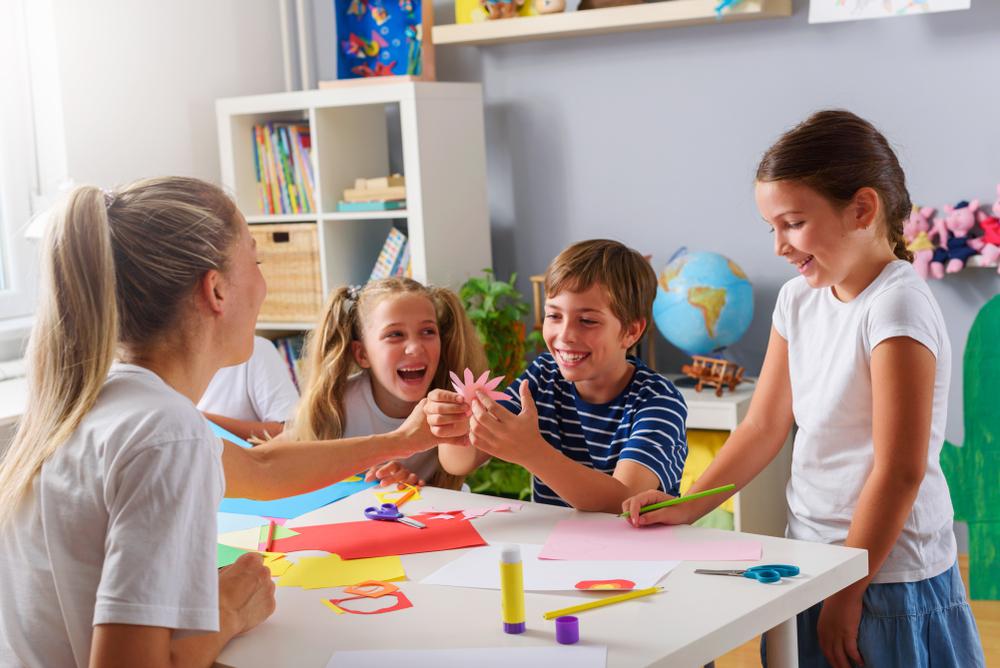




Differentiating goods and services for children aged 4-8 is crucial for several developmental and educational reasons. At this stage, children experience rapid growth in cognitive, emotional, and physical domains. Therefore, tailored approaches cater to their unique needs and foster holistic development.
First, personalized learning materials and toys enhance individual learning styles and paces. Children grasp concepts differently, and activities designed to cater to these differences ensure all students achieve their full potential. For example, visual learners benefit from picture books, while kinesthetic learners thrive with hands-on activities.
Second, emotional development at this age is pivotal. Selective books or games addressing themes like empathy, kindness, and teamwork nurture emotional intelligence. Differentiating services, such as personalized play therapy, further supports emotional well-being.
Physical development, too, sees marked growth between ages 4-8. Age-appropriate physical activities and equipment enhance motor skills and overall health, fostering a lifelong habit of fitness.
Moreover, providing diversified resources respects and celebrates the unique cultural, linguistic, and social backgrounds of each child, promoting inclusivity. This not only enriches their individual experiences but cultivates a welcoming community.
Hence, a differentiated approach in goods and services is vital for nurturing well-rounded, happy, and healthy individuals, ultimately laying a strong foundation for lifelong success.








