Fine motor skills development Worksheets for Ages 4-8 - Page 2
27 filtered results
-
From - To
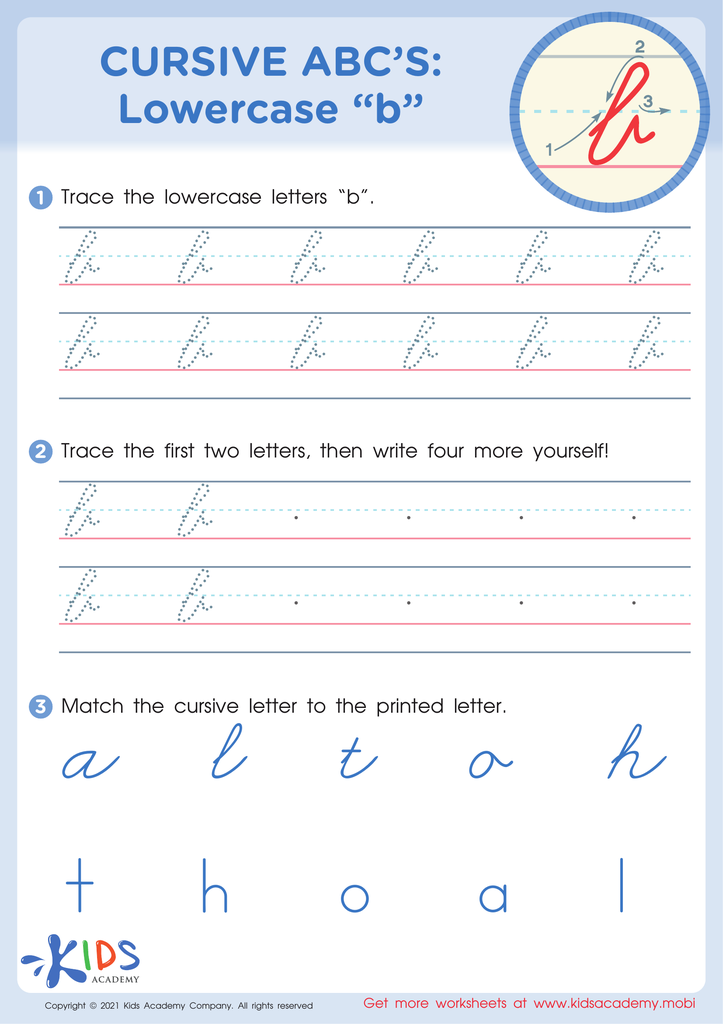
Cursive ABCs: Lowercase b
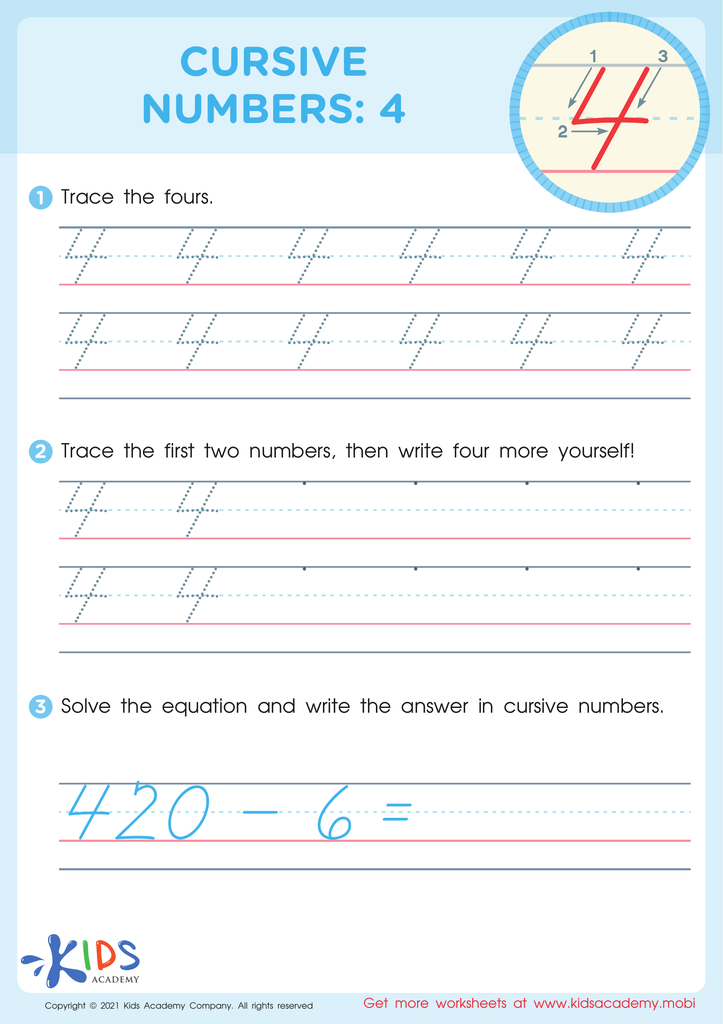
Cursive Numbers: 4 Worksheet








Fine motor skills development is crucial for children ages 4-8 as it significantly impacts their overall growth and learning. During these formative years, children are refining their hand-eye coordination, dexterity, and control over small muscle groups, skills essential for everyday tasks like writing, drawing, buttoning clothes, and using utensils. Strong fine motor skills lay the foundation for academic success, particularly in literacy and mathematics, as they are closely linked to the ability to form letters, manipulate objects, and engage in hands-on learning activities.
Parents and teachers should care about this development as it fosters independence, increases self-confidence, and allows children to participate actively in their learning environments. Engaging in activities that promote fine motor skills, such as crafting, gardening, and puzzles, not only enhances these skills but also encourages creativity and problem-solving abilities. Additionally, early attention to fine motor development can identify potential challenges, allowing for timely interventions that can prevent future academic difficulties.
In promoting fine motor skills, adults also support children's social skills. Collaborative activities foster cooperation while children refine their techniques together. Ultimately, understanding the importance of fine motor skills sets children on a path toward a successful, independent future.








