Grouping skills Worksheets for Ages 4-8
4 filtered results
-
From - To
Discover our engaging Grouping Skills Worksheets designed specifically for children aged 4-8. These interactive resources help young learners develop essential grouping and categorization skills, vital for early math and literacy. Our worksheets include fun activities like sorting objects, matching pictures, and identifying similar items, all aimed at enhancing critical thinking and cognitive development. Perfect for both classroom use and homeschooling, these worksheets promote collaboration, boosts understanding of relationships, and encourage children to explore their creativity. Easy to print and integrate into daily learning routines, our Grouping Skills Worksheets are an invaluable tool for nurturing a strong foundation for future learning.
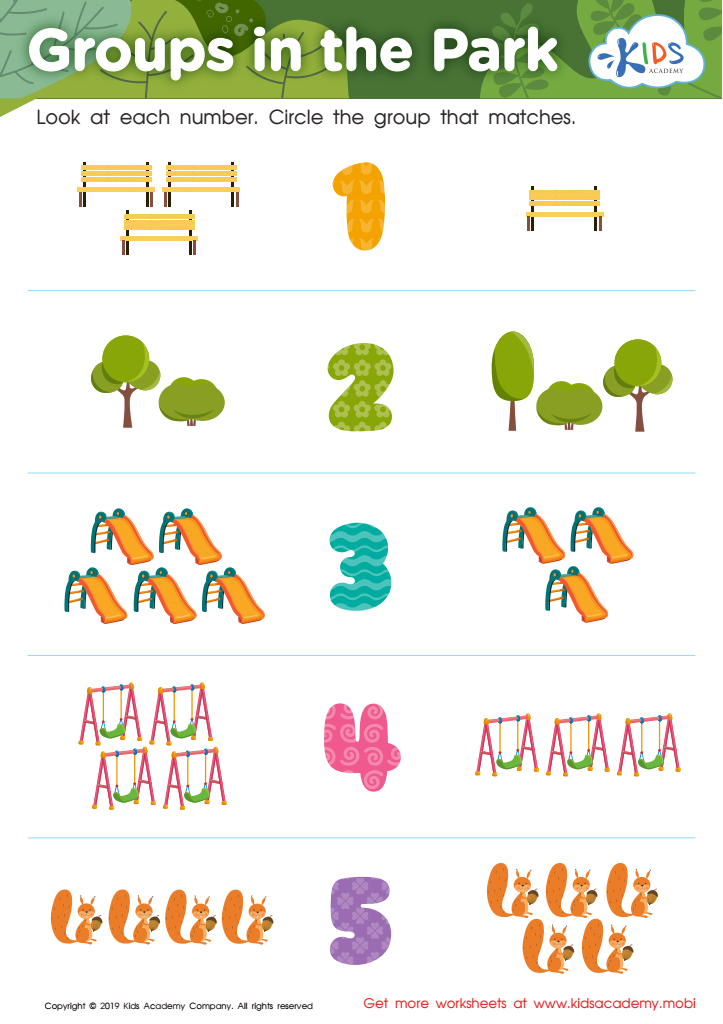
Groups in the Park Worksheet
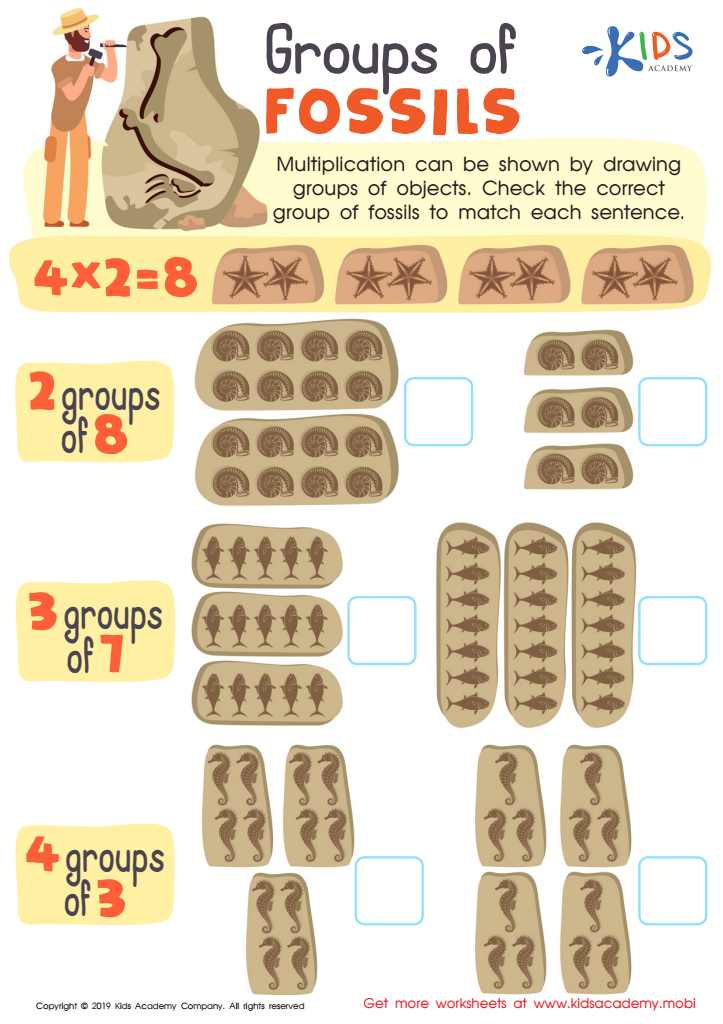
Groups of Fossils Worksheet
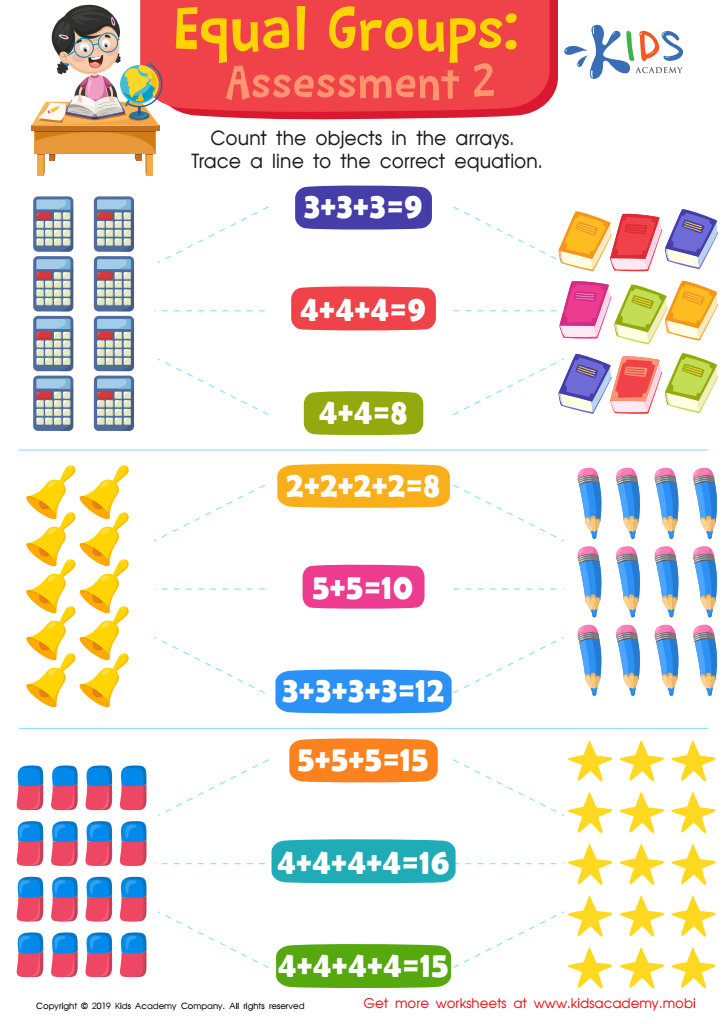
Equal Groups: Assessment 2 Worksheet
Musical Band Worksheet
 Assign to My Students








Parents and teachers should prioritize the development of grouping skills for children aged 4-8 because these skills are foundational for cognitive, social, and academic growth. Grouping skills enable children to categorize and organize information, helping them to make sense of their environment and experiences. At this age, children are naturally curious and engaged in discovering patterns and relationships, making it an ideal time for them to learn how to group objects, ideas, and experiences.
These skills enhance critical thinking by encouraging youngsters to identify similarities and differences, fostering problem-solving abilities. For example, when children group objects by color, shape, or size, they not only learn classifications but also develop mathematical fundamentals. Additionally, working in groups or with peers helps build social skills such as collaboration, communication, and empathy, which are vital for their overall development.
Furthermore, early grouping skills contribute to academic readiness. Children who can classify and organize information tend to perform better in subjects such as math, science, and reading. By nurturing these skills, parents and teachers set the stage for enhanced learning experiences and increased confidence as children transition through educational stages. Supporting the development of grouping skills at this critical age promotes lifelong learning and well-rounded individuals.








