
Improving mathematical skills Worksheets for Ages 4-8
8 filtered results
Difficulty Level
Grade
Age
-
From - To
Subject
Activity
Standards
Boost your child's mathematical abilities with our Improving Mathematical Skills Worksheets designed for ages 4-8. These engaging resources provide a fun and effective way to develop essential math skills through hands-on activities. From counting and number recognition to basic addition and subtraction, our carefully crafted worksheets help young learners build a strong foundation in mathematics. Perfect for both classroom and home use, these printable worksheets are tailored to make learning enjoyable and accessible. Help your child excel in math with our comprehensive collection of worksheets, designed by experts to foster confidence and academic success.
Favorites
With answer key
Interactive
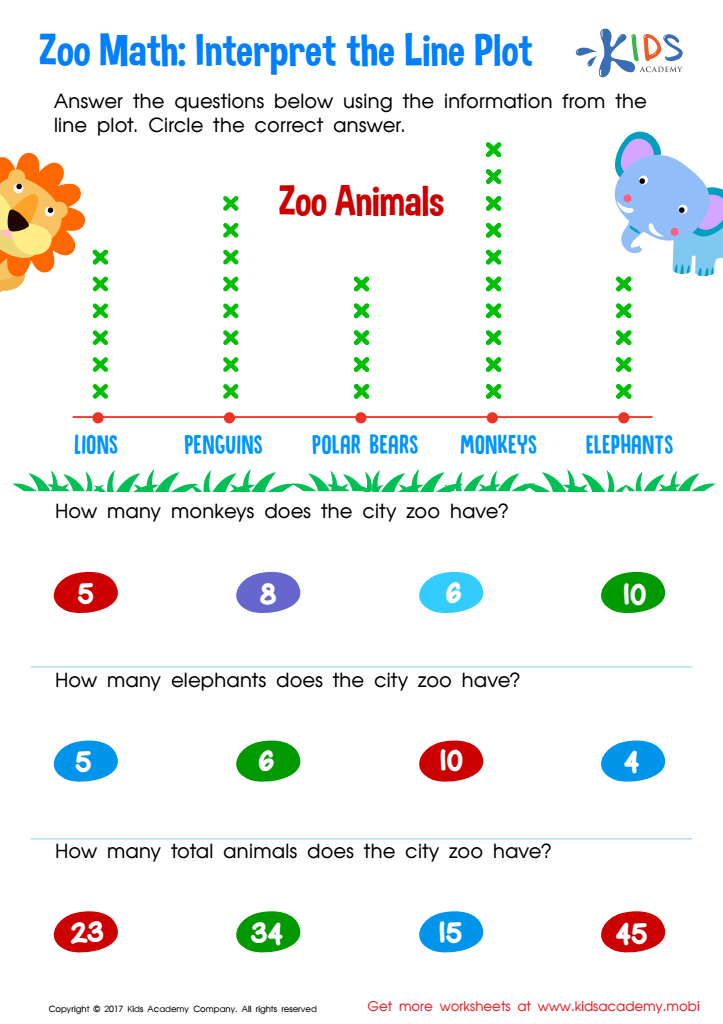
Interpret Line Plot Worksheet
Kids can learn to read graphs and analyze data easily with line plots. A fun zoo animal worksheet motivates kids to answer questions by reading the line plot and finding out how many animals a local zoo has.
 Assign to My Students
Interpret Line Plot Worksheet
Worksheet
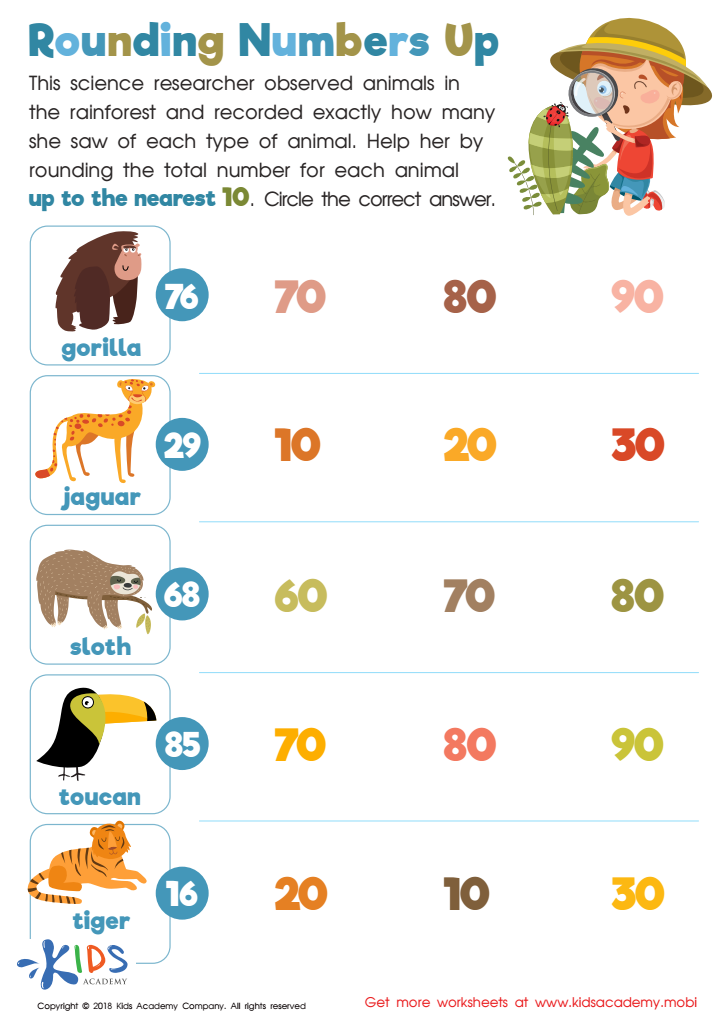
Rounding Numbers Up Worksheet
Does your child want to be a science researcher? If so, they share something in common with the person in this worksheet. She observed rainforest animals and counted them. Your child can help by rounding the totals to the nearest 10 and circling the correct answer for each type.
Rounding Numbers Up Worksheet
Worksheet
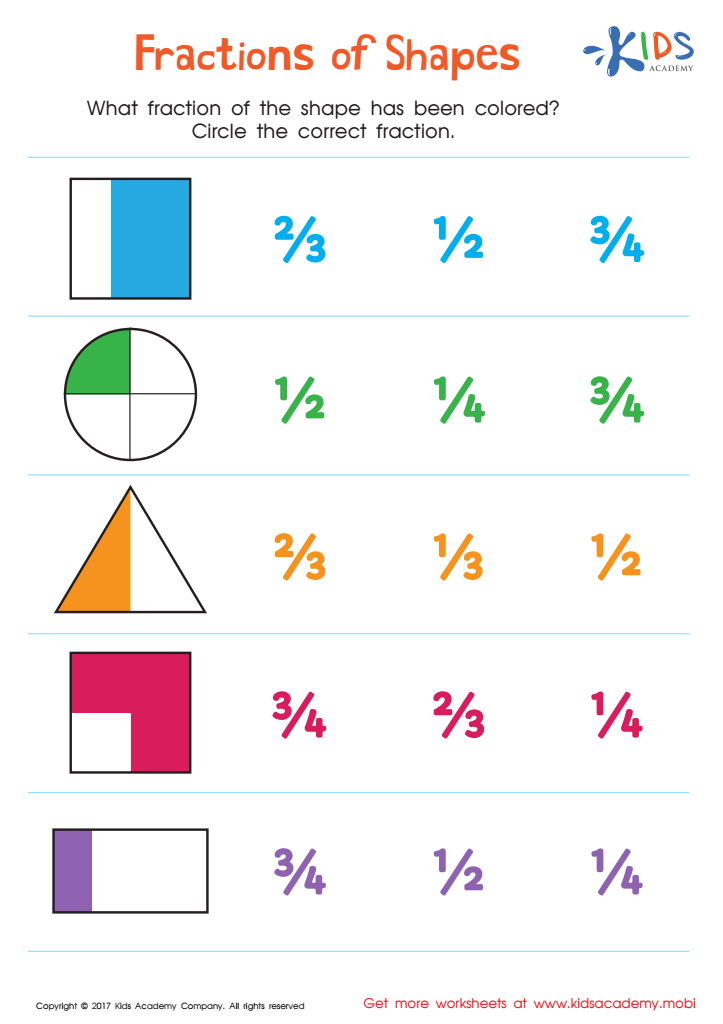
Fractions of Shapes: Math Concept Worksheet
Fractions can be tricky, but with pictures to illustrate them, they become much easier to understand. Our fractions of shapes worksheet is a great way to help children visualize fractions and gain a better understanding of them.
Fractions of Shapes: Math Concept Worksheet
Worksheet
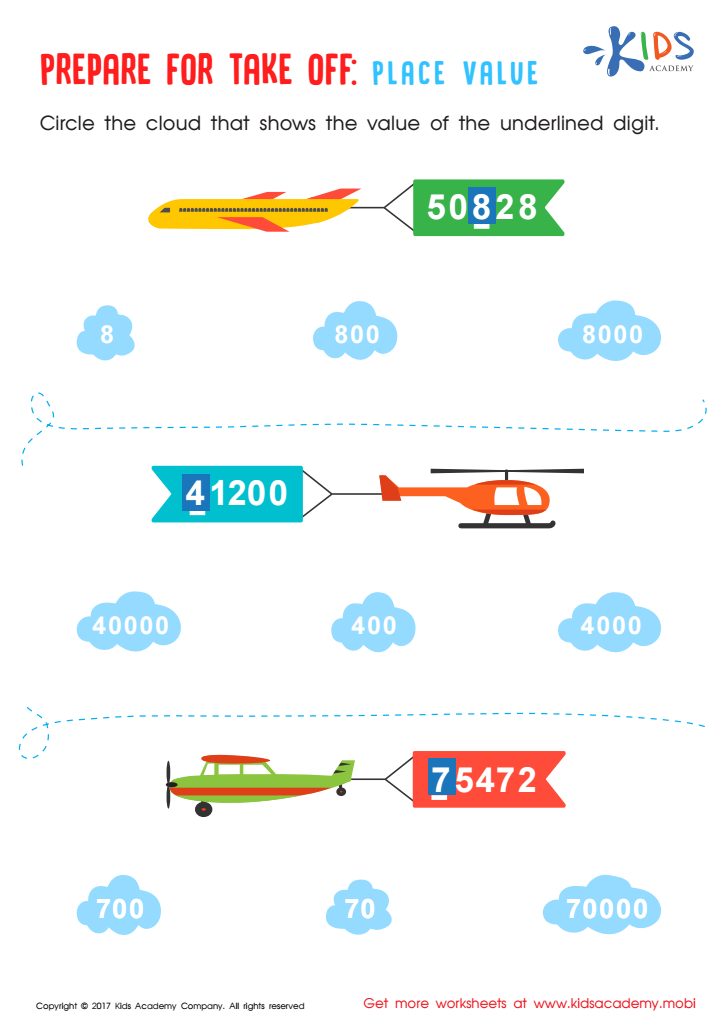
Free Place Value Worksheet for 3rd Grade
Take place value to new heights with this free 3rd grade worksheet! Your child will use large numbers in the tens of thousands and identify the place value of the underlined digit. Explore sky-high numbers and soar in place value skills!
Free Place Value Worksheet for 3rd Grade
Worksheet
Join Kids Academy for Free
Who is primarily going to use this learning content?






Improving mathematical skills in children ages 4-8 is crucial for several compelling reasons. Firstly, early exposure to math concepts lays a strong foundation for future academic success. Basic skills such as counting, recognising numbers, and understanding simple addition and subtraction form the bedrock upon which more complex mathematical ideals are built. Developing these cores skills at a young age enhances cognitive abilities including problem-solving, logical thinking, and reasoning.
Moreover, math-related tasks often require focus and persistence, which help cultivate patience and attention span. Engaging with numbers and patterns can also spark creativity and inquisitiveness, essential traits for lifelong learning. Practical implications abound as well: Mathematics is deeply ingrained in daily life, from measuring ingredients in a recipe to budgeting an allowance. Early competence in math fosters confidence, thus reducing anxiety during future encounters with more advanced math problems.
Lastly, promoting mathematical skills aligns with brain development stages. At ages 4-8, children’s brains are remarkably plastic and capable of absorbing new information rapidly. Capitalising on this developmental stage can significantly boost not just their mathematical acumen but also their overall intellectual growth. Teachers and parents play a pivotal role in providing a supportive, engaging, and rich learning environment necessary for this essential early education.








