Number ordering Worksheets for Ages 4-8
3 filtered results
-
From - To
Welcome to our Number Ordering Worksheets for Ages 4-8! Designed to enhance foundational math skills, these engaging worksheets help young learners understand the concept of sequencing numbers. Perfect for preschool and early elementary students, our resources cater to various learning styles through fun activities and vibrant illustrations. By practicing number order, children will develop better comprehension of counting, comparison, and math concepts essential for future learning. With printable sheets suitable for home or classroom practice, you can easily foster a love for math in a playful and educational way. Explore our collection to boost your child's confidence in number ordering today!
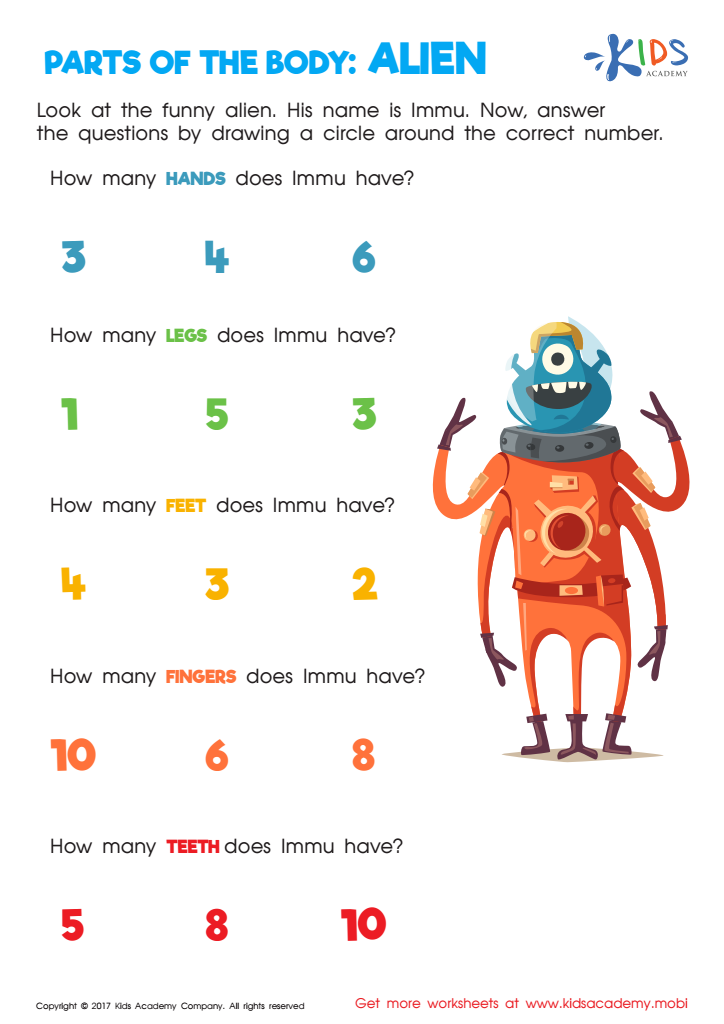
Alien Worksheet
 Assign to My Students





.jpg)

Number ordering is a fundamental mathematical skill that lays the groundwork for more complex arithmetic concepts and problem-solving abilities. For children aged 4-8, mastering number ordering nurtures their cognitive development and enhances their understanding of numerical relationships, which is vital for their educational journey.
When children practice ordering numbers, they learn to recognize patterns, compare quantities, and develop critical analytical skills. These abilities not only boost their confidence in mathematics but also support their overall academic performance across subjects. Furthermore, number ordering aids in the development of early computational skills, as children learn to sequence numbers, understand ascending and descending order, and grasp the concept of “more than” or “less than.”
Parents and teachers play a crucial role in fostering these skills. By promoting engaging activities like games, number lines, and interactive discussions, they can make learning enjoyable and relevant. In early education, a strong foundation in number ordering equips children with the tools they need for future learning, establishing a solid base for mathematical literacy. Developing these skills early helps ensure that children are not only prepared for future math challenges but also confident in their abilities to tackle them. Therefore, educators and caregivers should actively prioritize number ordering in their teaching methods.








