Phonological awareness Worksheets for Ages 4-8
11 filtered results
-
From - To
Welcome to our Phonological Awareness Worksheets for Ages 4-8! These engaging resources are designed to help early learners develop crucial sound awareness skills through fun and interactive activities. Our worksheets include tracing, matching, and identifying sounds that foster foundational literacy, promote language development, and enhance listening skills. Ideal for parents and educators, these printable activities cater to diverse learning styles and encourage independent practice. Whether used in the classroom or at home, our phonological awareness worksheets provide a solid framework for young children to build essential literacy skills, laying the groundwork for future reading and writing success. Explore and empower your child’s learning journey today!
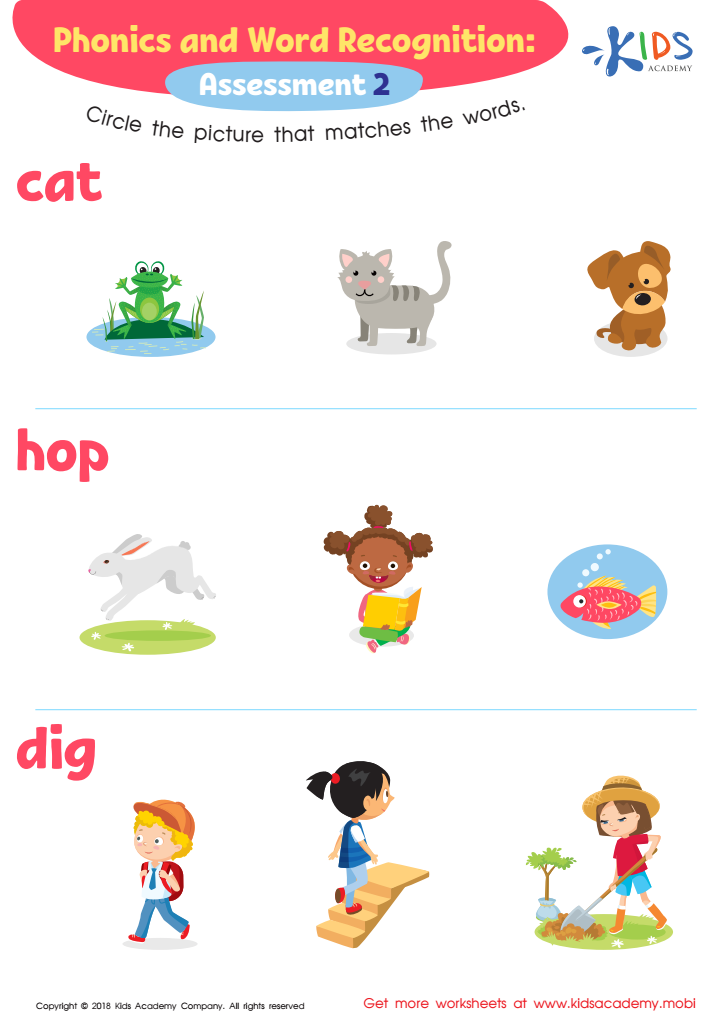
Phonological Awareness: Assessment 2 ELA Worksheet
 Assign to My Students
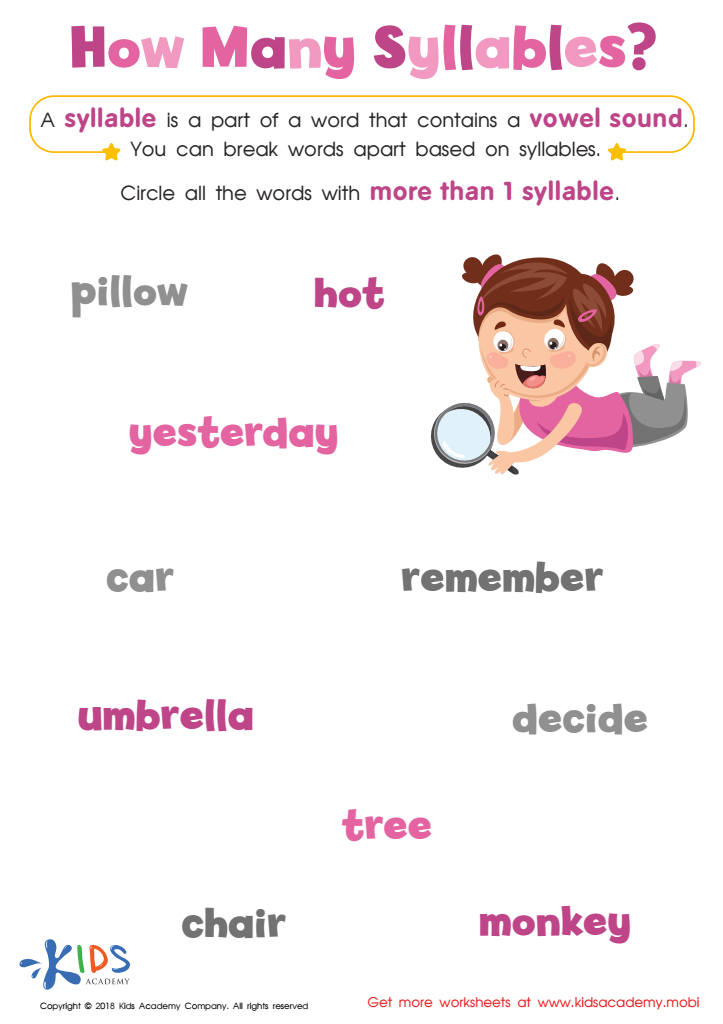
Reading: How Many Syllables Worksheet
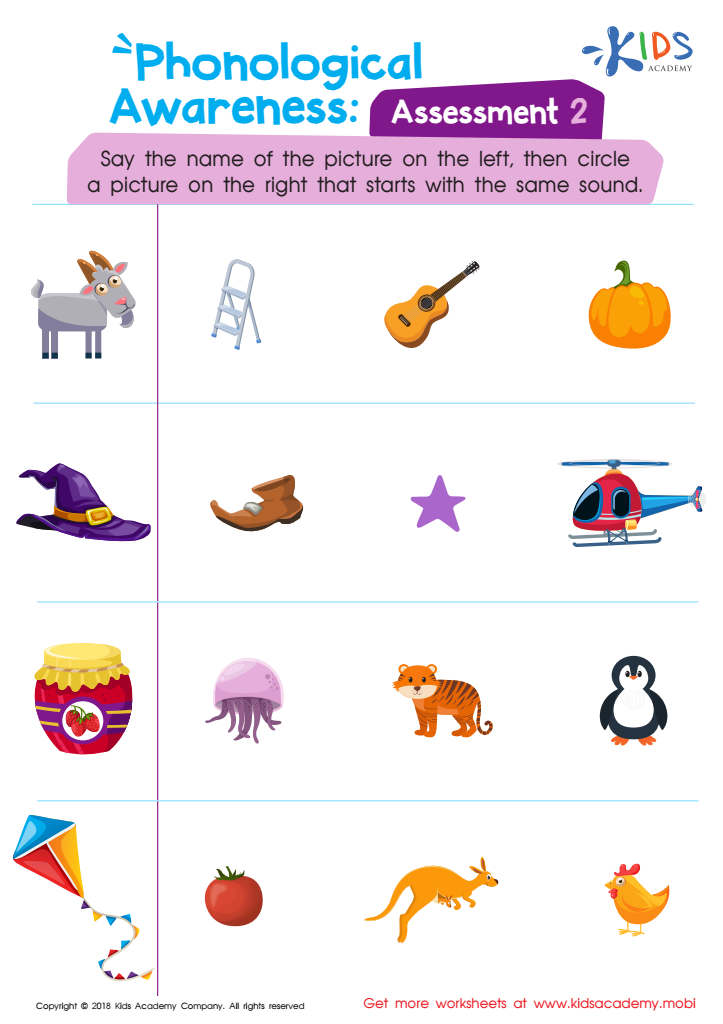
Phonological Awareness: Assessment 2 Worksheet
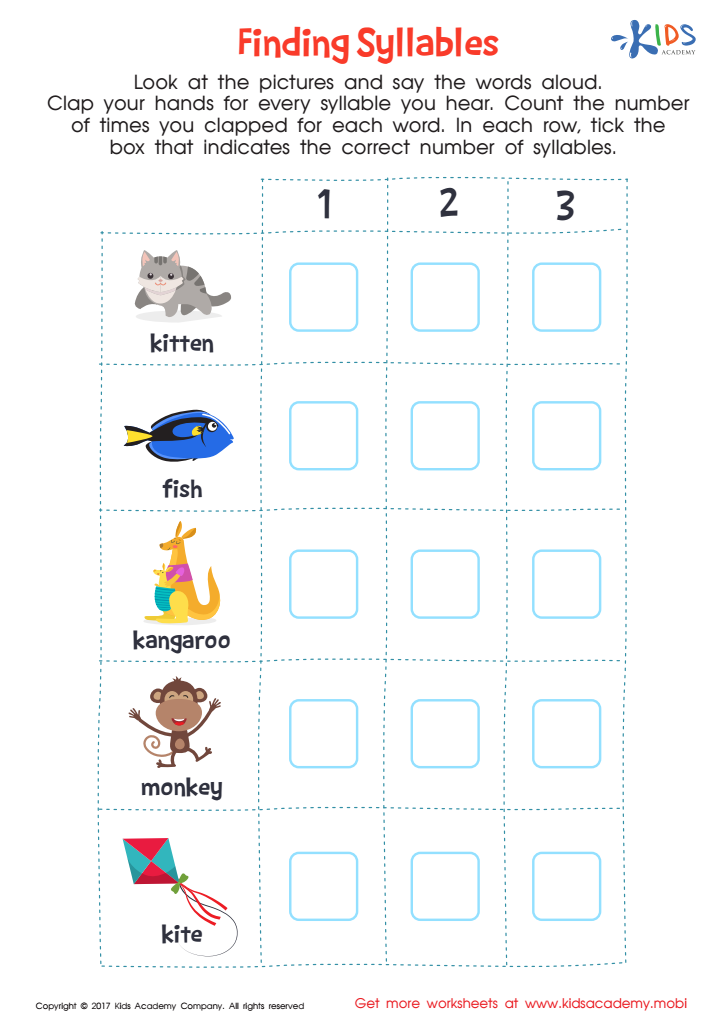
Finding Syllables Word Structure Worksheet
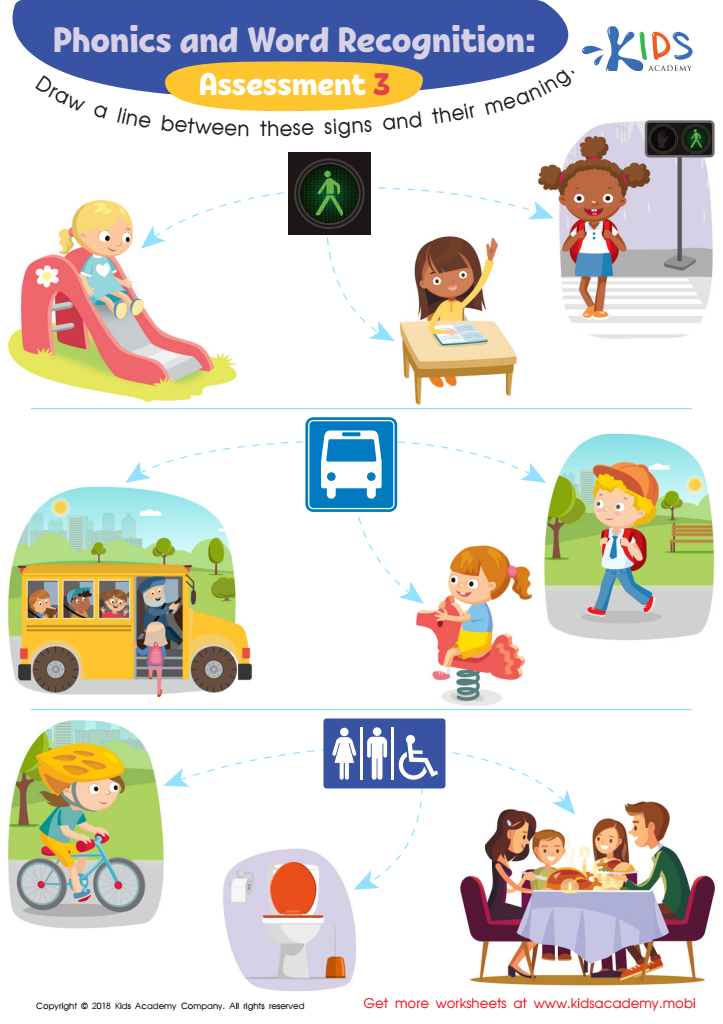
Phonological Awareness: Assessment 3 ELA Worksheet
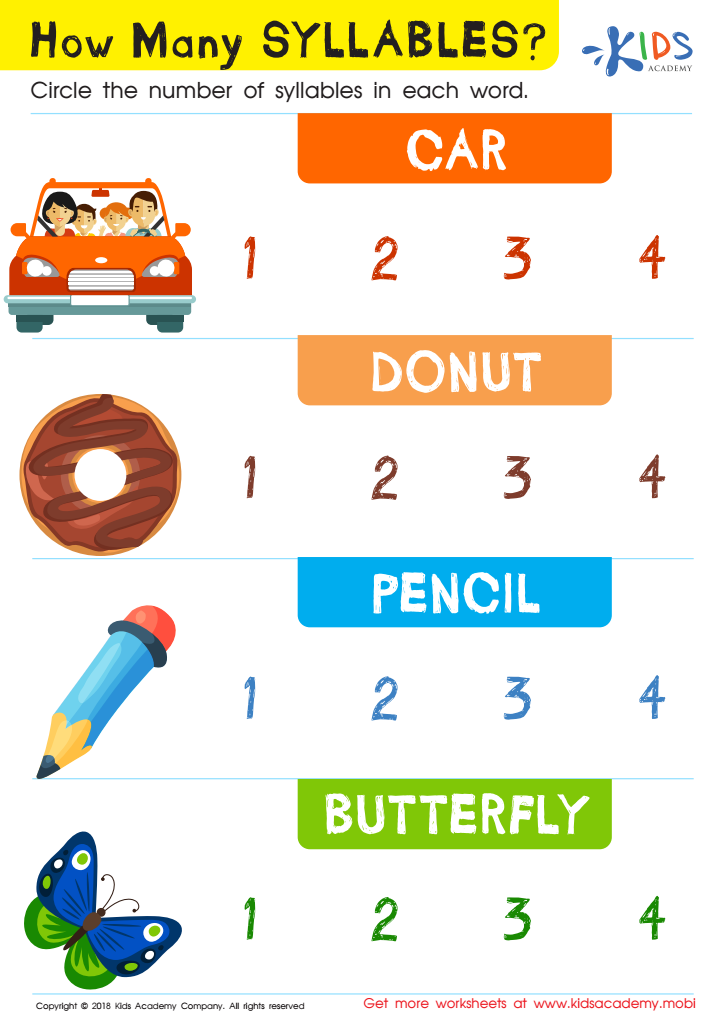
How Many Syllables? Worksheet
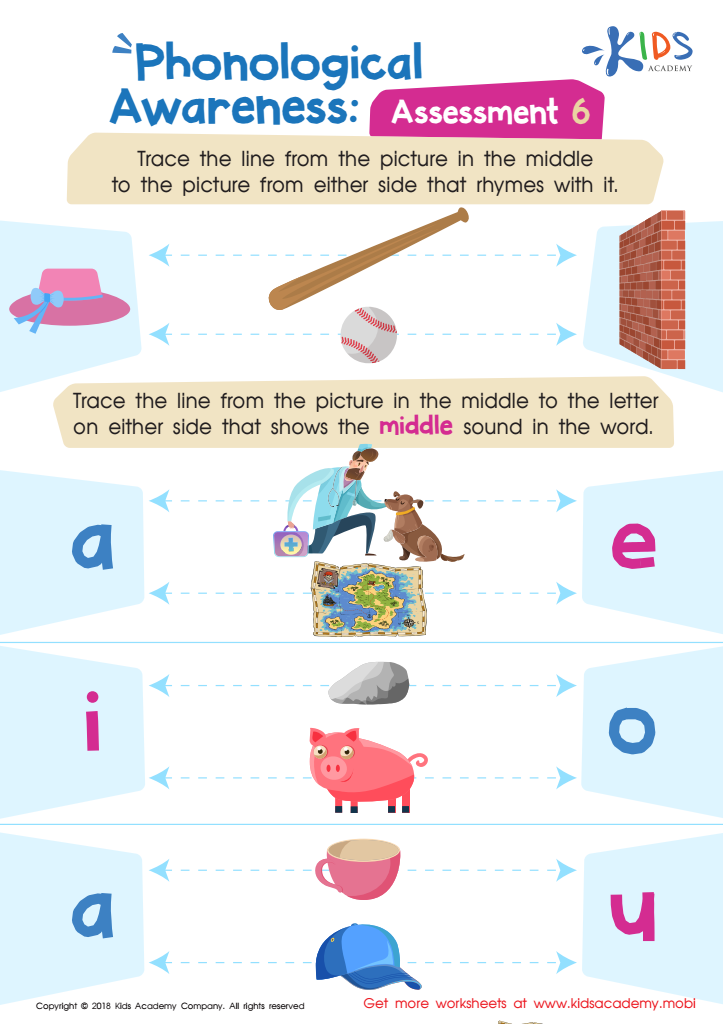
Phonological Awareness: Assessment 6 Worksheet
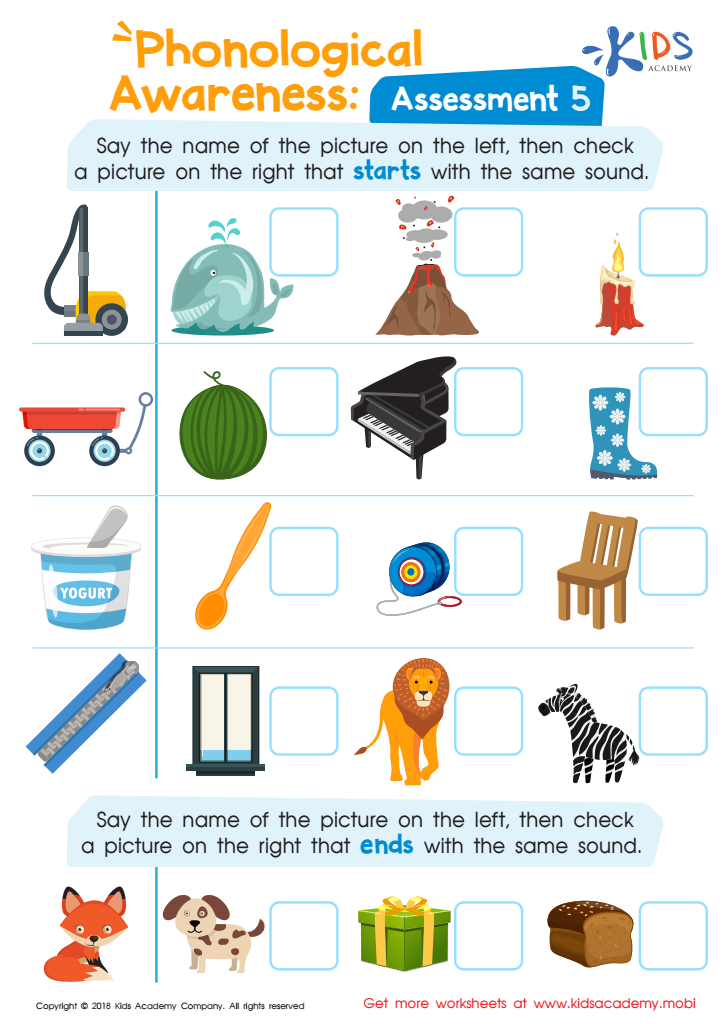
Phonological Awareness: Assessment 5 Worksheet
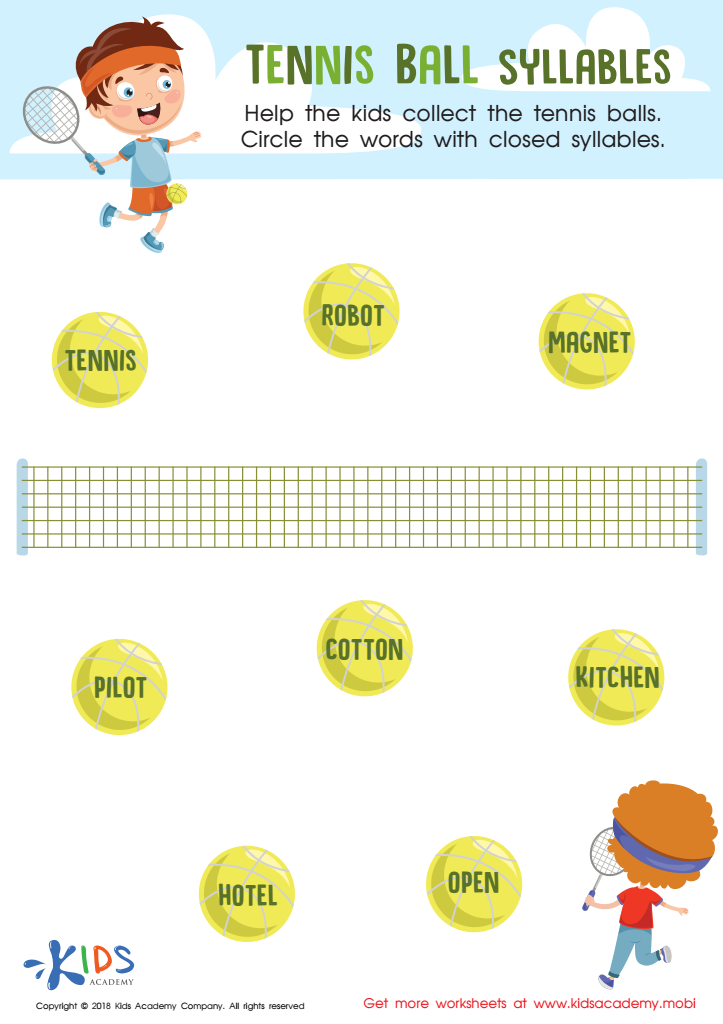
Tennis Ball Syllables Worksheet
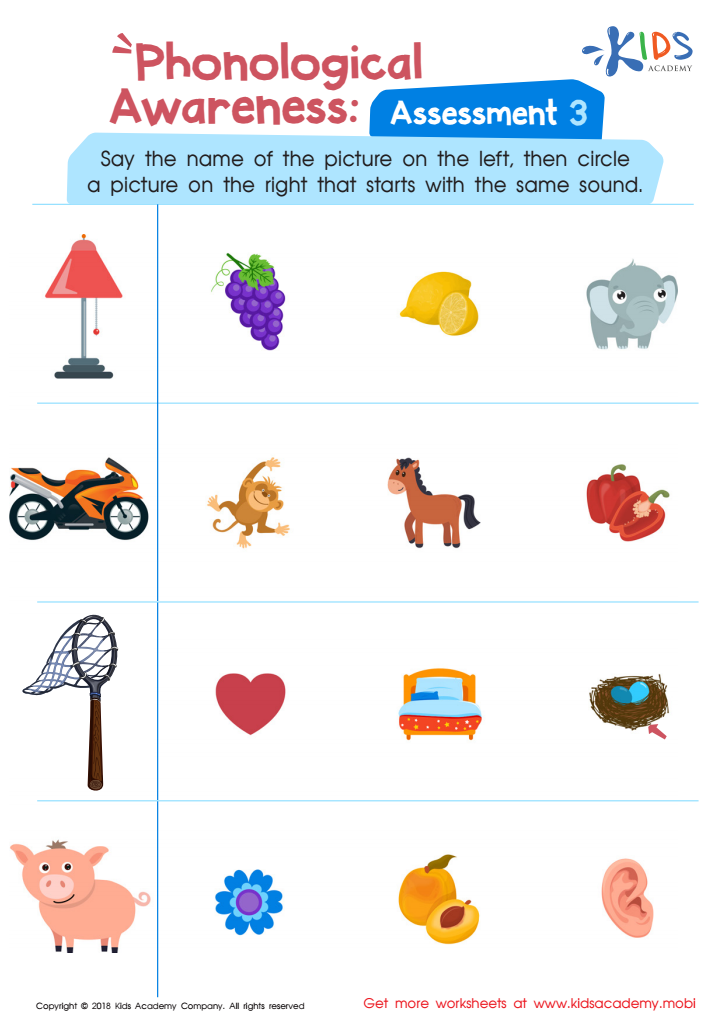
Phonological Awareness: Assessment 3 Worksheet
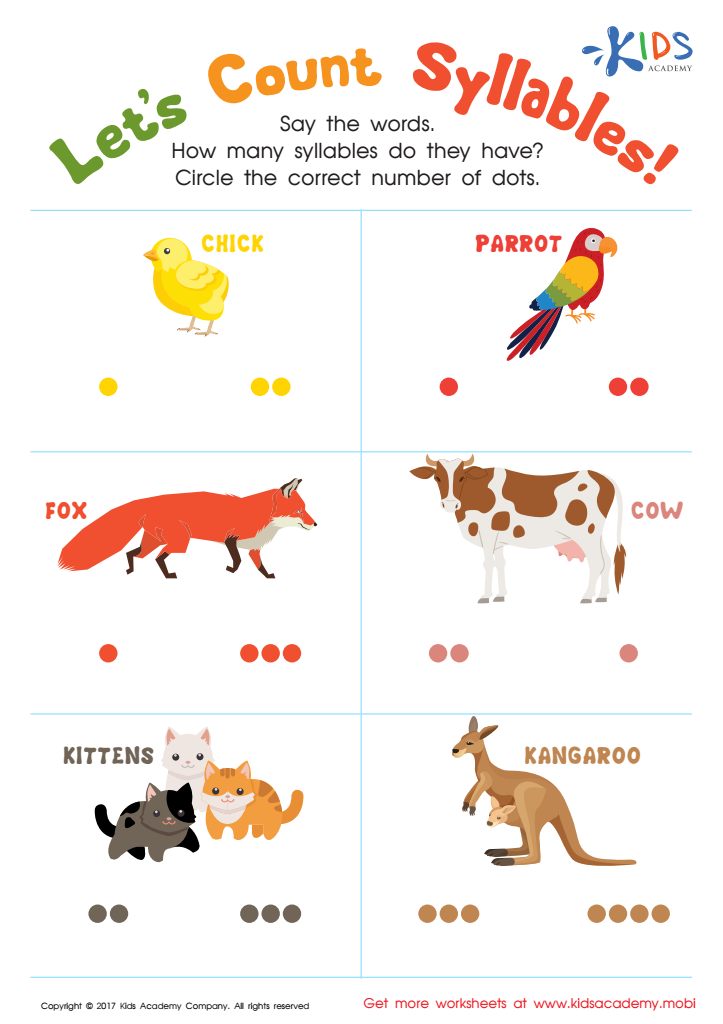
Lets Count Syllables Worksheet



%20(1).jpg)



Phonological awareness is a fundamental skill that significantly influences early literacy development in children aged 4-8. It refers to the ability to recognize and manipulate the sounds in spoken language, encompassing skills such as identifying rhymes, syllables, and individual phonemes. Parents and teachers should prioritize phonological awareness because it serves as a predictor of future reading success. Children with strong phonological awareness are better equipped to decode words and comprehend text, laying a solid foundation for fluent reading abilities.
Additionally, fostering phonological awareness in young learners enhances their overall language development. It enriches vocabulary acquisition, improves spelling skills, and facilitates better writing outcomes. Children who can easily identify sounds are more likely to enjoy reading and engage actively in literacy activities, contributing to a lifelong love for learning.
Moreover, developing these skills early can help identify and address potential learning difficulties, ensuring that all children receive the support they need. Engaging in fun activities like rhyming games, clapping syllables, and manipulating sounds can transform learning into an enjoyable experience, benefiting both learners and educators. Consequently, investing time and resources into cultivating phonological awareness can yield profound benefits for children's educational journeys.








