Understanding biodiversity Worksheets for Ages 4-8
4 filtered results
-
From - To
Welcome to our "Understanding Biodiversity Worksheets for Ages 4-8"! Designed for dynamic young minds, these engaging worksheets introduce children to the wonders of biodiversity through colorful illustrations and interactive activities. Featuring fun facts about various plants, animals, and their habitats, our resources foster curiosity and awareness of the environment. Each worksheet encourages creativity, critical thinking, and an appreciation for nature, making learning enjoyable and impactful. Ideal for home or classroom use, these printables promote essential skills while helping children grasp the importance of protecting our planet's diverse ecosystems. Dive into a world of fun learning with our biodiversity worksheets today!
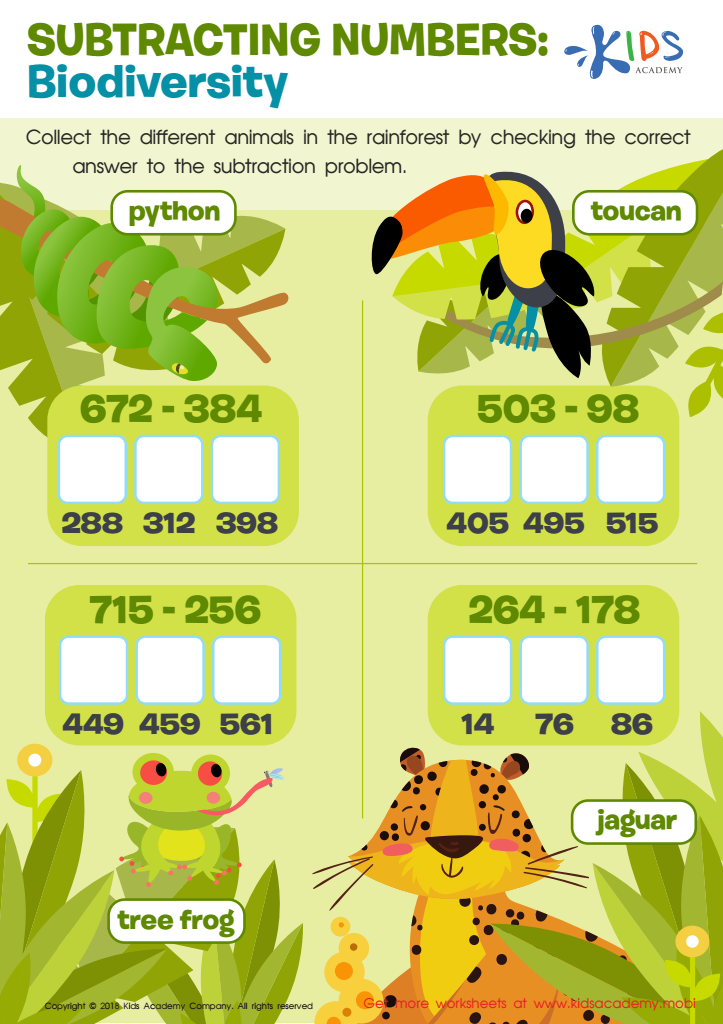
Subtracting Numbers: Biodiversity Worksheet
 Assign to My Students
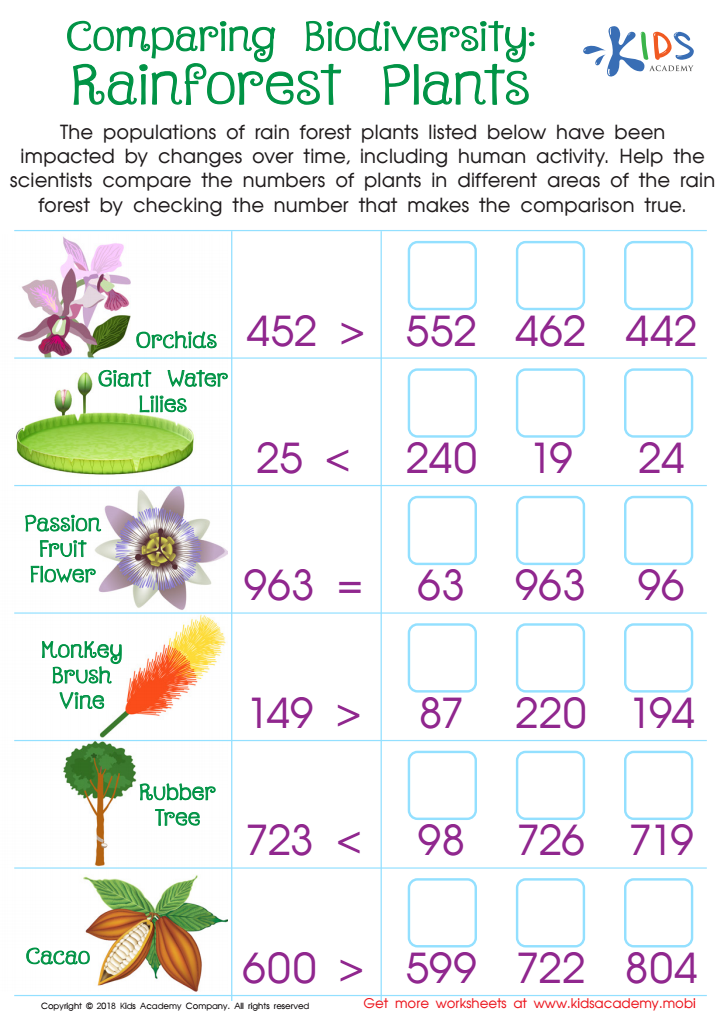
Comparing Biodiversity: Rainforest Plants Worksheet
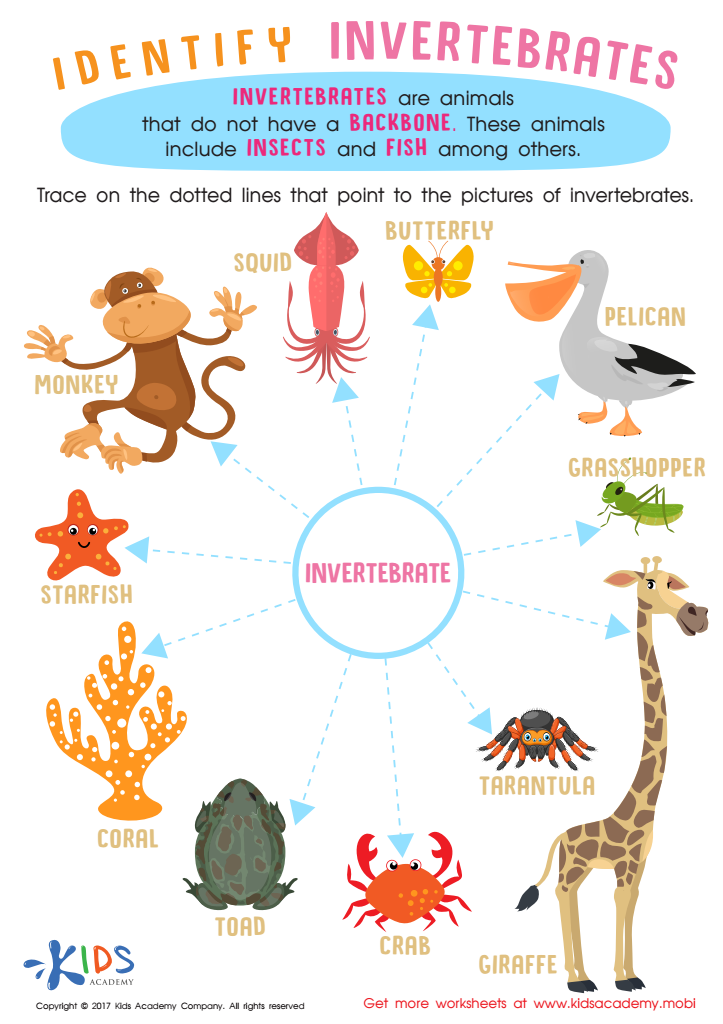
Invertebrates Worksheet for Grade 3
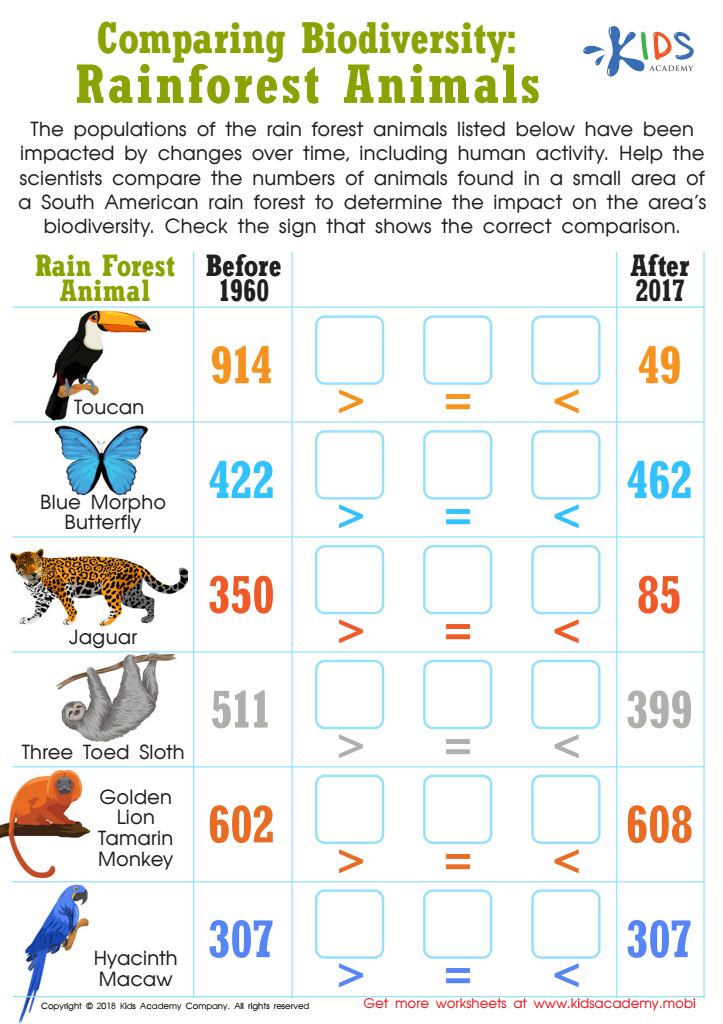
Comparing Biodiversity: Rainforest Animals Worksheet







Understanding biodiversity is crucial for children aged 4-8 as it lays the groundwork for a sustainable future. At this developmental stage, children are naturally curious about the world around them, and learning about biodiversity helps nurture that curiosity. It fosters an appreciation for the variety of life, including plants, animals, and ecosystems, demonstrating how all living things are interconnected.
When parents and teachers engage children in discussions about biodiversity, they not only enhance their knowledge but also promote critical thinking and observational skills. By exploring local wildlife, plants, and ecosystems, children develop a sense of responsibility and stewardship for their environment at an early age.
Additionally, learning about biodiversity can enhance emotional development. It encourages empathy and compassion as children learn to care for other living beings. This understanding can create lifelong environmental advocates who recognize the importance of preserving habitats and protecting endangered species.
Furthermore, teaching kids about biodiversity can be a cross-curricular experience, incorporating art, science, language, and health. Overall, by prioritizing biodiversity education, parents and teachers equip children to become informed and responsible citizens who are aware of their role in maintaining the delicate balance of our natural world.








