
Understanding weather conditions Worksheets for Ages 4-8
3 filtered results
Difficulty Level
Grade
Age
-
From - To
Subject
Activity
Standards
Discover our engaging "Understanding Weather Conditions Worksheets for Ages 4-8," designed to make learning about weather fun and educational. Perfect for early grade students, these printable worksheets cover various weather topics to sharpen their observational skills and enhance their understanding of different weather patterns. Each worksheet is crafted to make learning dynamic and enjoyable, from sunny skies to rainy days. Encourage curiosity and scientific thinking with activities designed specifically for young learners. Visit Kids Academy to explore our comprehensive collection tailored to stimulate young minds and foster a love for learning about the weather!
Favorites
With answer key
Interactive
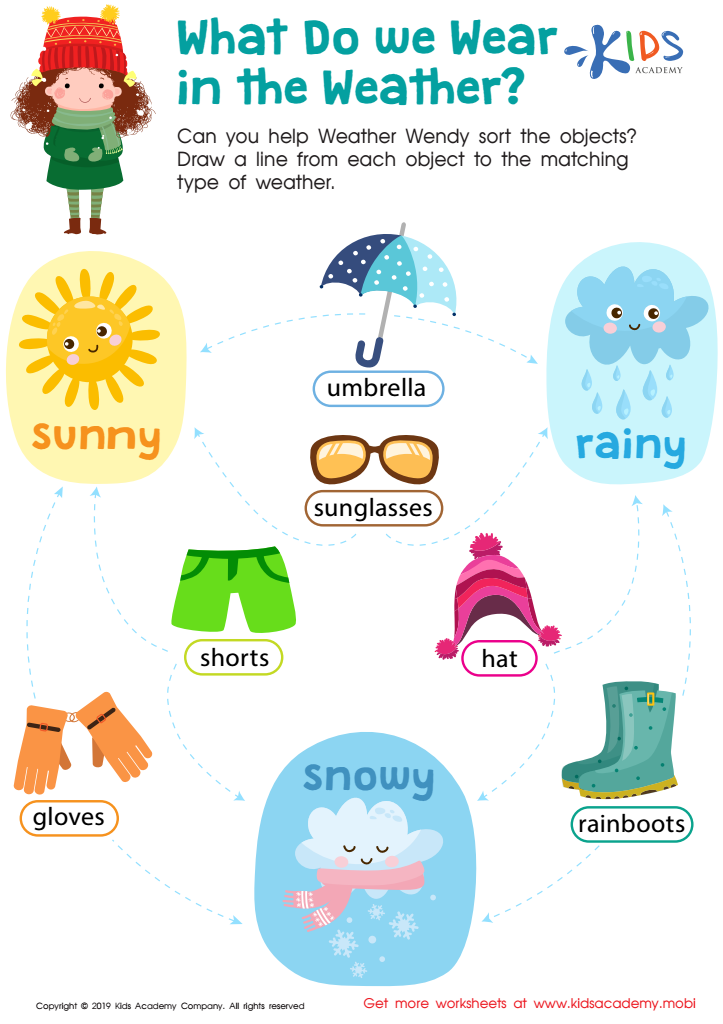
What Do We Wear in the Weather? Worksheet
This worksheet boosts young learners' everyday vocab with fun high-frequency weather words. They'll see and match familiar pictures to the words they read. Plus, it helps them develop fine motor skills. Perfect for preschoolers.
 Assign to My Students
What Do We Wear in the Weather? Worksheet
Worksheet
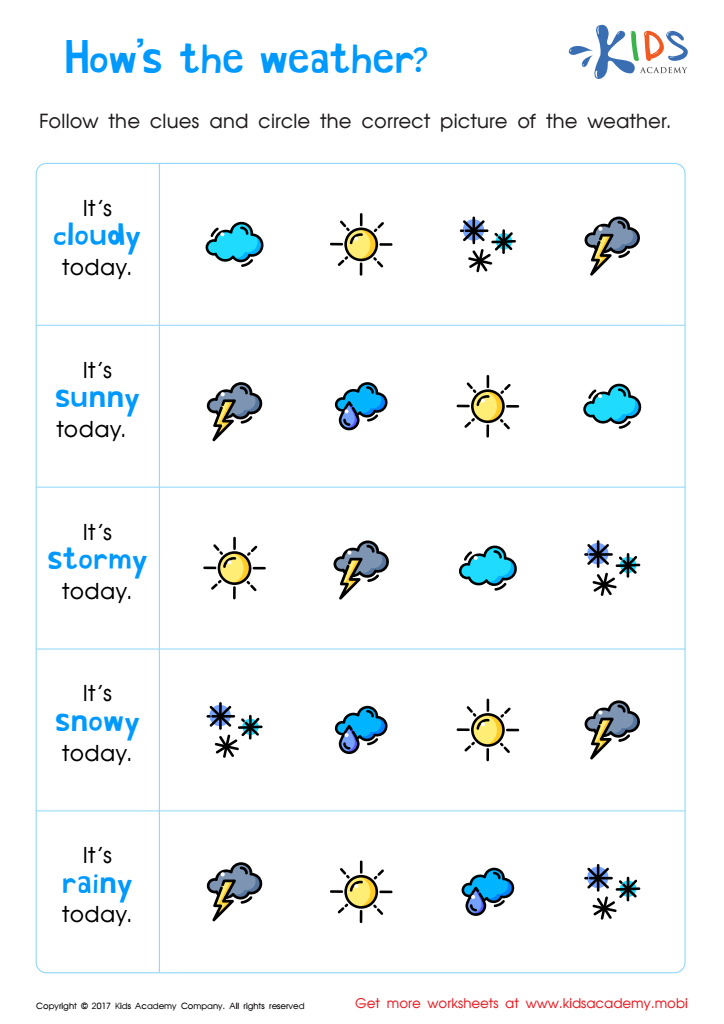
Hows the Weather Worksheet
Teaching kids about weather is a fun way to start science learning. This worksheet helps recognize symbols, literacy skills and make real world connections. Your child will love it!
Hows the Weather Worksheet
Worksheet
Join Kids Academy for Free
Who is primarily going to use this learning content?








Understanding weather conditions is vital for young children, ages 4-8, for several compelling reasons. Firstly, it fosters safety awareness. By learning about different weather conditions, children can better understand how to dress appropriately and avoid unsafe situations, like playing outside during a storm. Secondly, discussing weather teaches important science concepts. Topics like the water cycle, temperature variations, and seasonal changes can be made accessible and interesting, laying the groundwork for future scientific learning.
Thirdly, learning about weather promotes emotional preparedness. Knowing that rain might mean indoor play, or that sunny days might mean time at the park, helps kids manage expectations and reduces disappointment. Weather-related vocabulary also enhances language skills, incorporating new words like “humidity,” “forecast,” and “breeze.”
Additionally, weather education nurtures curiosity and connection to nature. Engaging with the natural world can foster a lifelong interest in environmental sciences and a love for outdoor activities. Also, it supports routine and planning’s understanding. Daily weather checks can become a part of morning routines, teaching children about time management and responsibility.
Lastly, weather discussions often require observation and reporting, skills key for developing critical thinking and increasing attention to detail. For teachers and parents, integrating weather education into daily routines offers a multifaceted approach to holistic child development.








