Filters

18 filtered results

Clear all filters
Favorites
With answer key
Interactive

18 filtered results

Difficulty Level

Grade


Discover our engaging "Visual Learning Adding in the Sea" worksheets designed for children ages 4-8! These interactive resources make learning addition exciting and accessible by utilizing vibrant sea-themed visuals that capture young learners’ imaginations. Each worksheet is crafted to enhance number recognition, counting skills, and basic addition through colorful illustrations of underwater scenes. Perfect for both classroom and home learning, these worksheets promote visual learning, helping kids grasp mathematical concepts intuitively and accommodating diverse learning styles. Dive into math with your little ones and build their confidence in addition while exploring the wonders of the ocean. Try these worksheets today!
Check out this FREE Trial Lesson on Adding in the Sea for age 4-8!

H

Favorites
With answer key
Interactive
  • 4-8
  • Visual Learning
  • Adding in the Sea
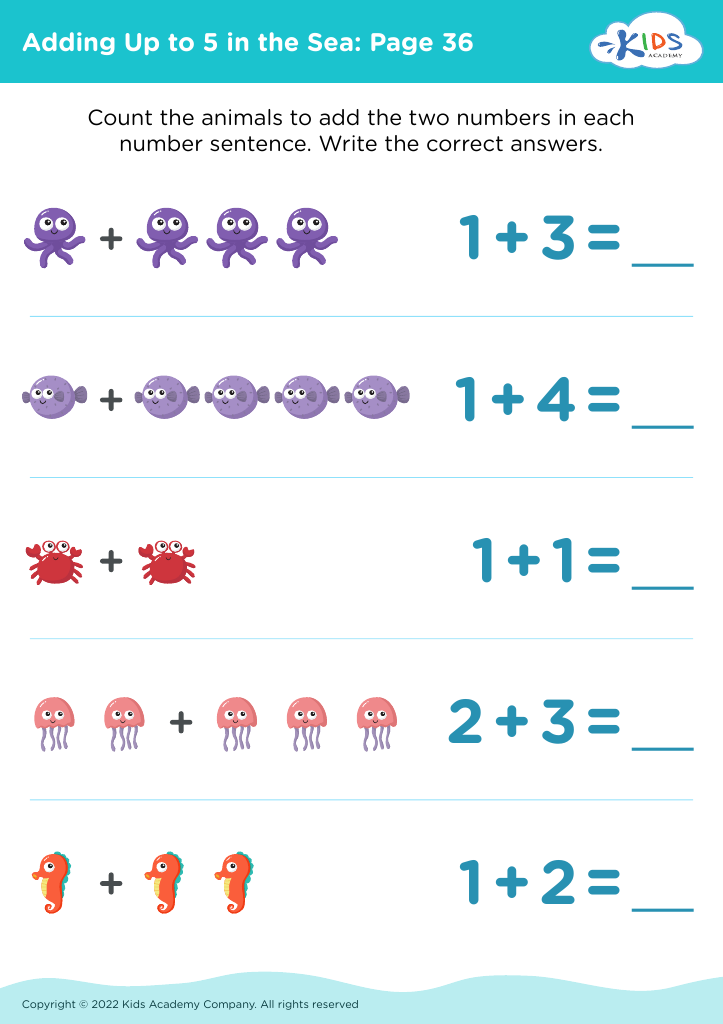
Adding Up to 5 in the Sea: Page 36
Worksheet
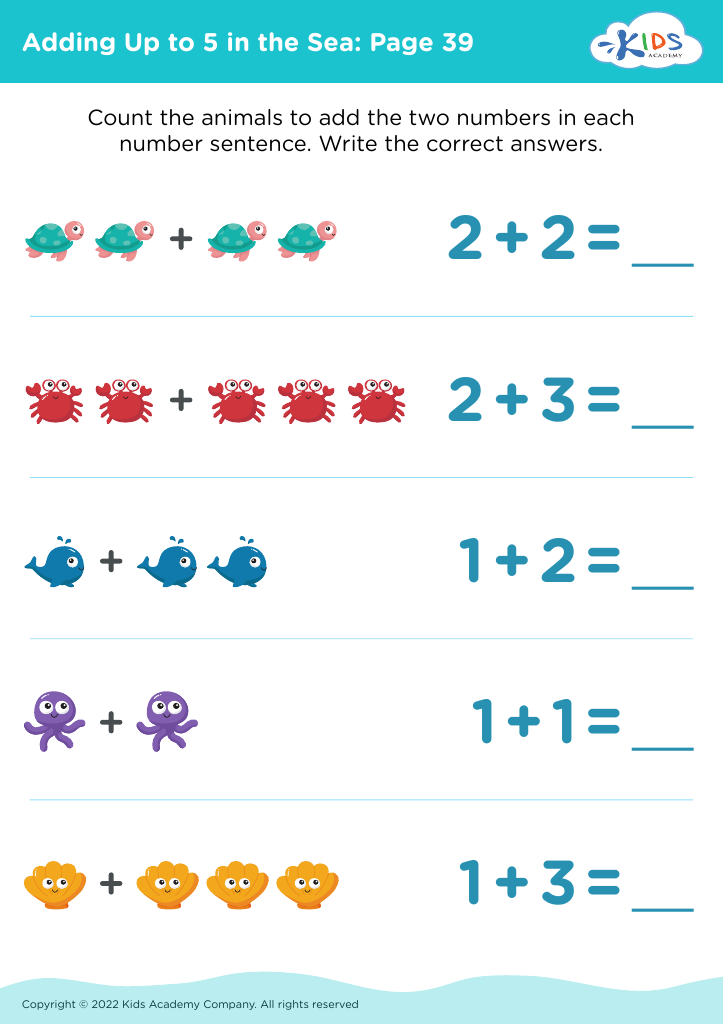
Adding Up to 5 in the Sea: Page 39
Worksheet
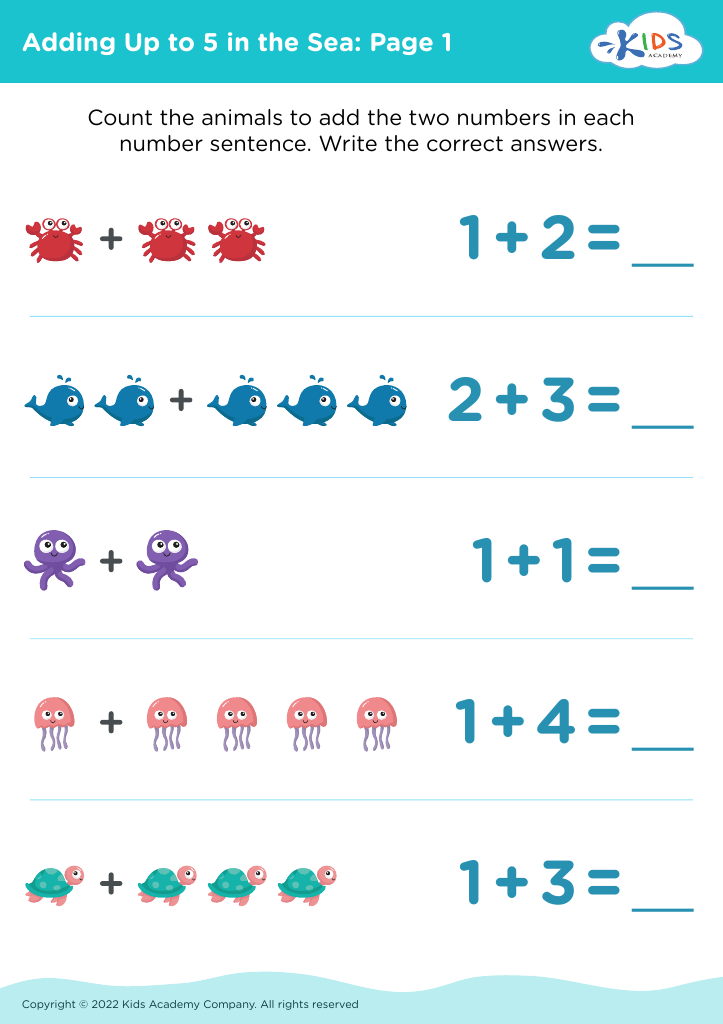
Adding Up to 5 in the Sea: Page 1

Adding Up to 5 in the Sea: Page 1

Adding Up to 5 in the Sea: Page 1
Worksheet
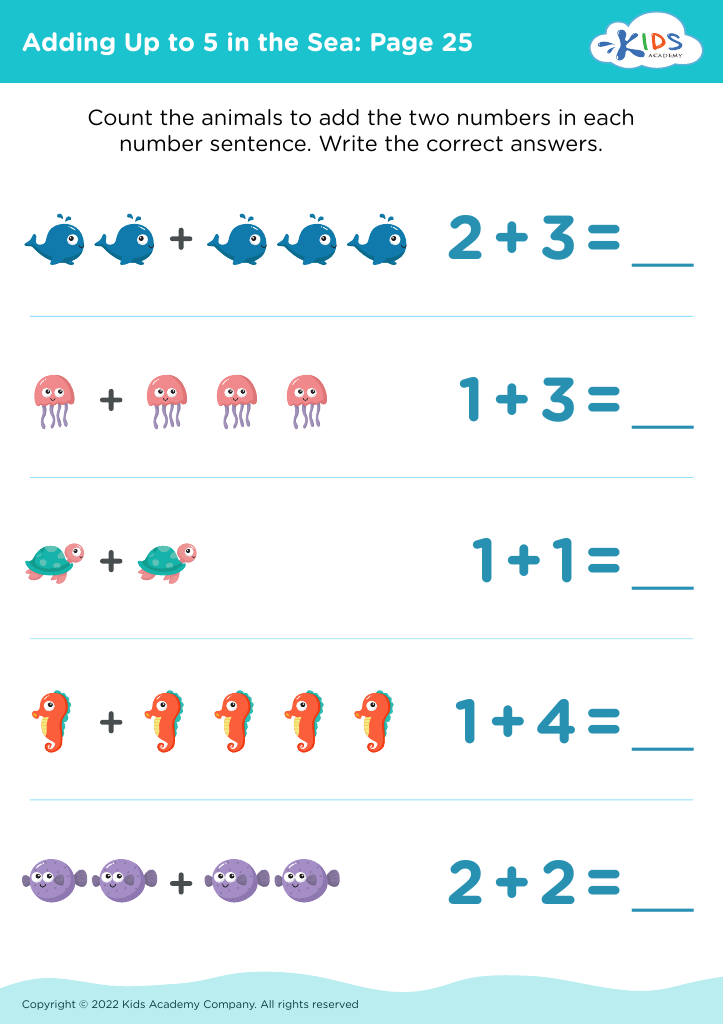
Adding Up to 5 in the Sea: Page 25
Worksheet
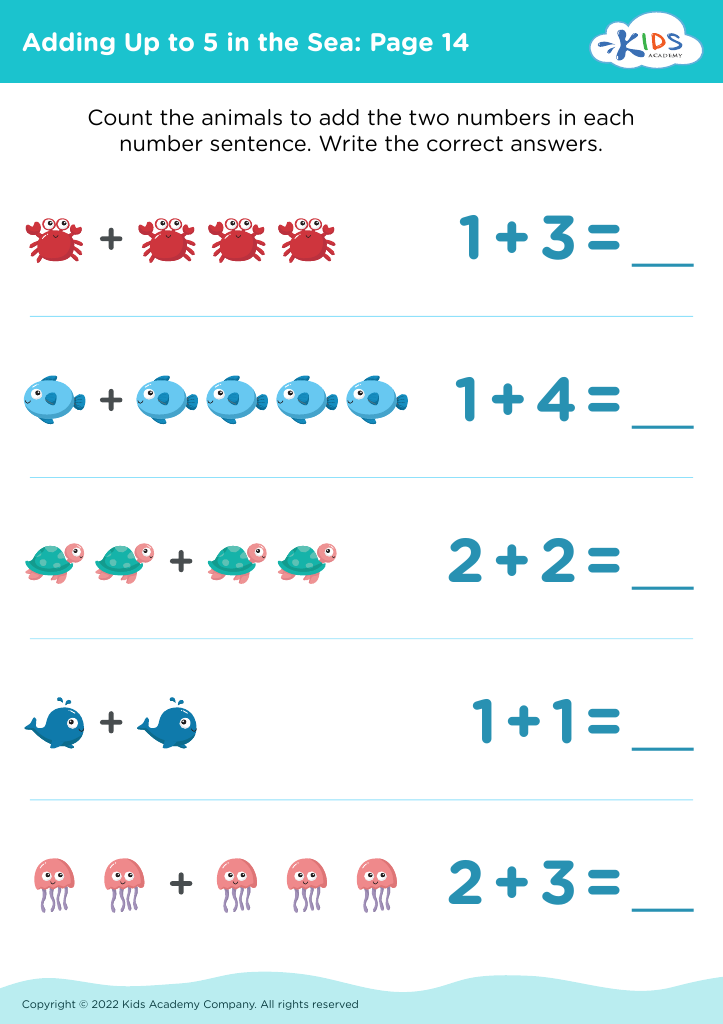
Adding Up to 5 in the Sea: Page 14
Worksheet
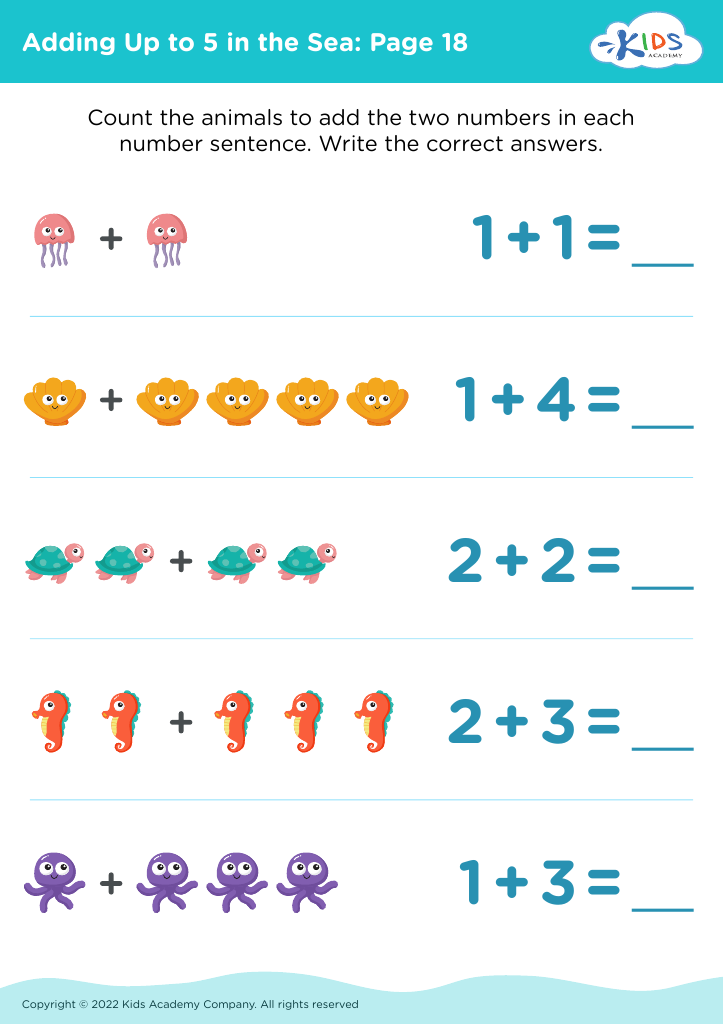
Adding Up to 5 in the Sea: Page 18
Worksheet
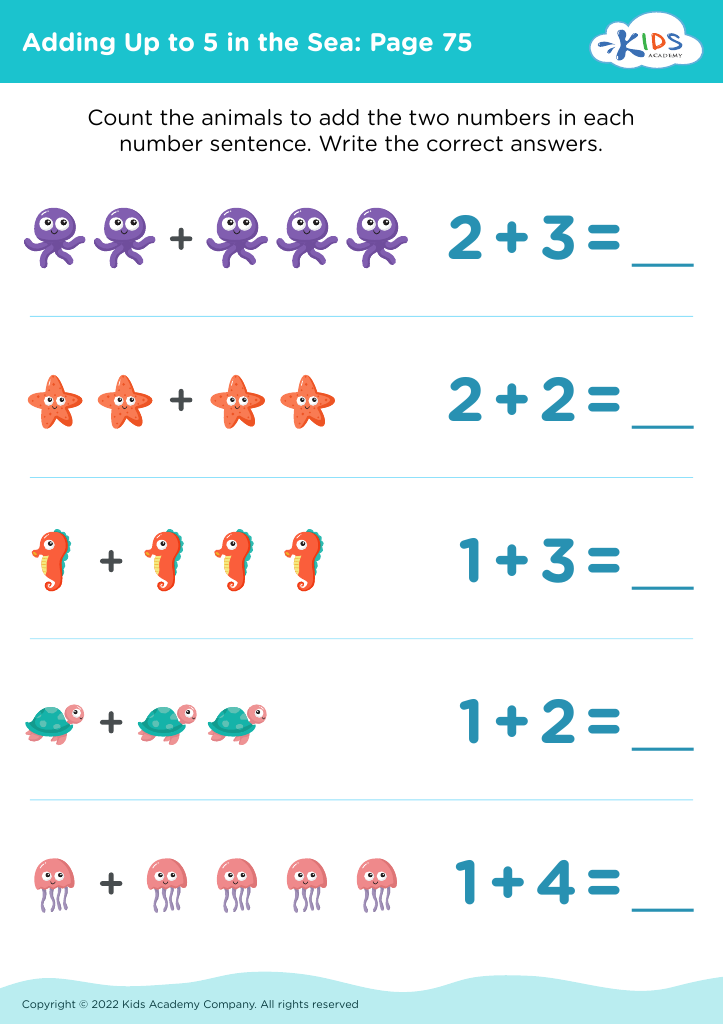
Adding Up to 5 in the Sea: Page 75
Worksheet
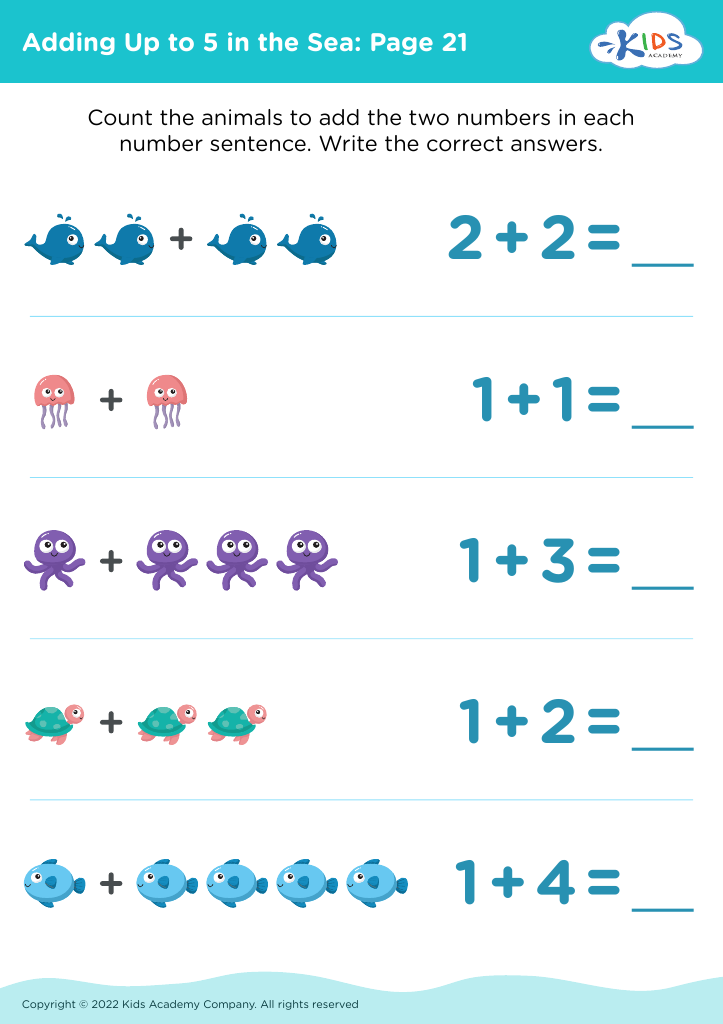
Adding Up to 5 in the Sea: Page 21
Worksheet
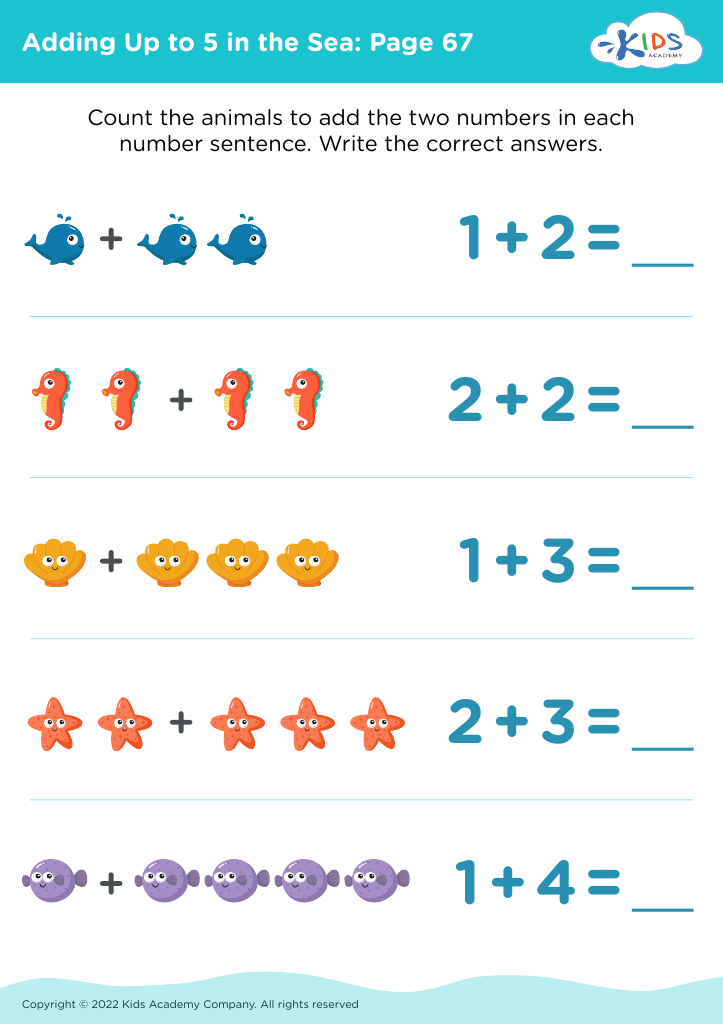
Adding Up to 5 in the Sea: Page 67
Worksheet
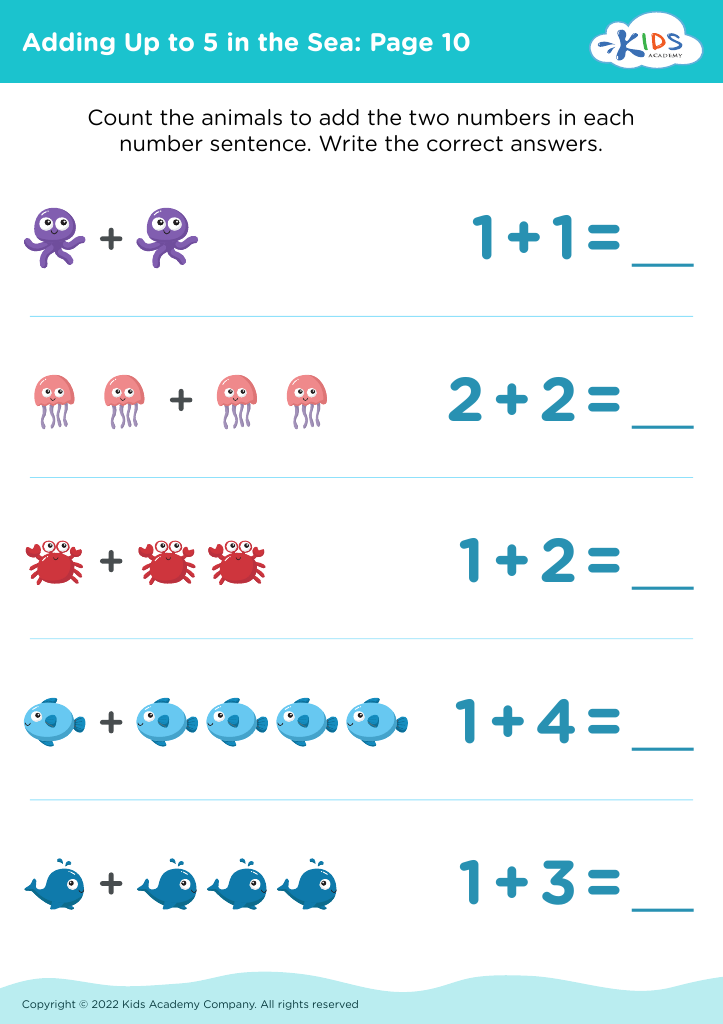
Adding Up to 5 in the Sea: Page 10
Worksheet
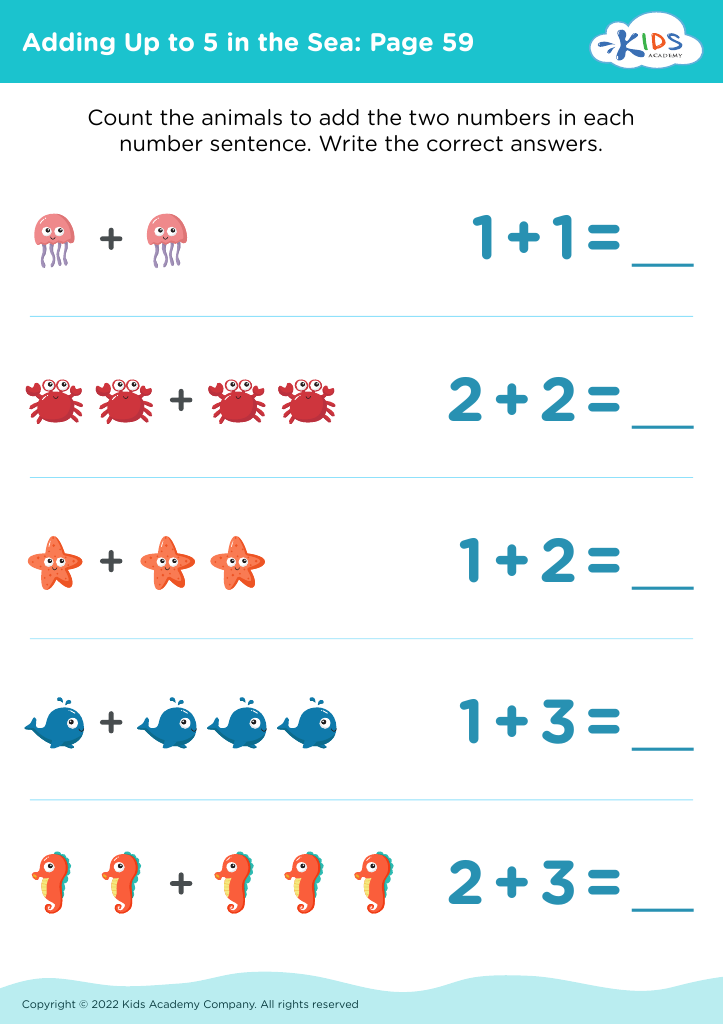
Adding Up to 5 in the Sea: Page 59
Worksheet
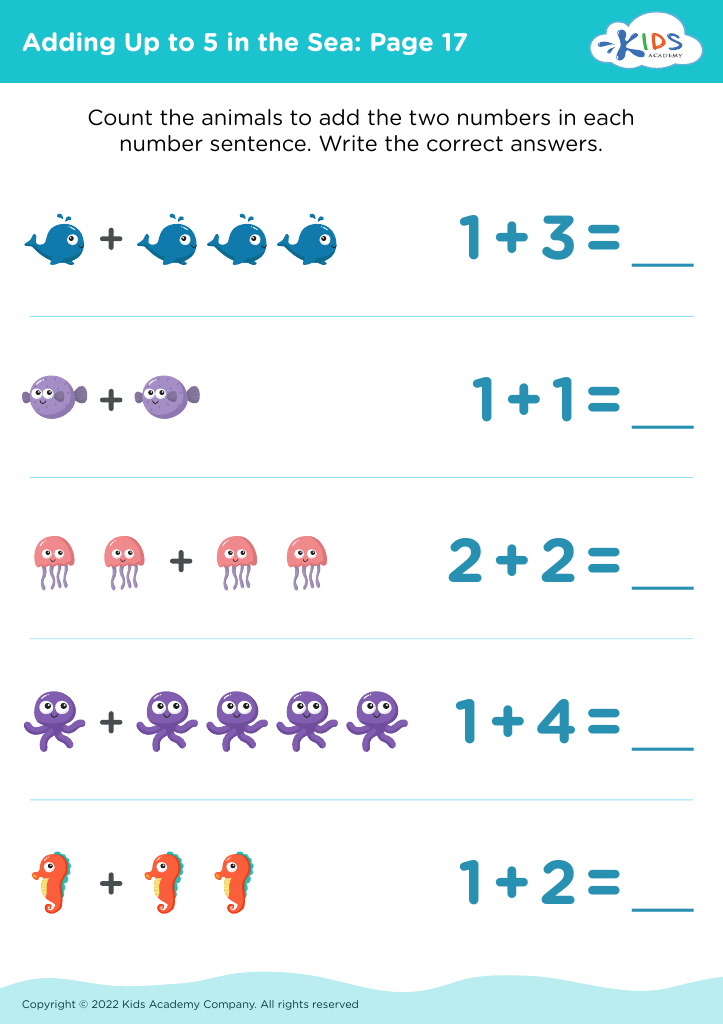
Adding Up to 5 in the Sea: Page 17
Worksheet
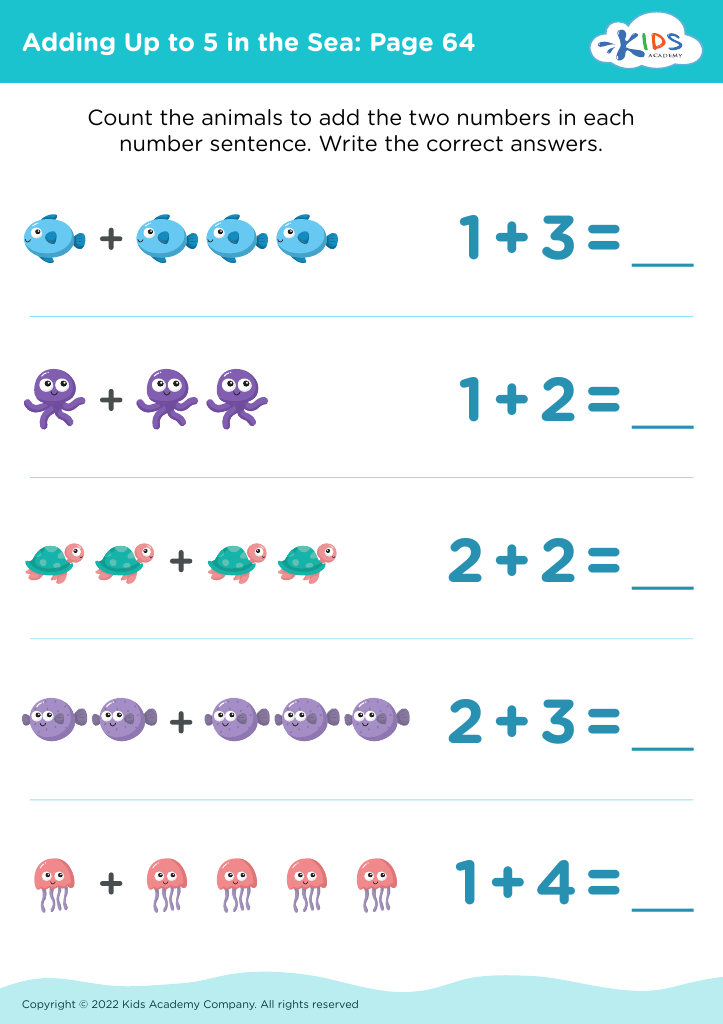
Adding Up to 5 in the Sea: Page 64
Worksheet
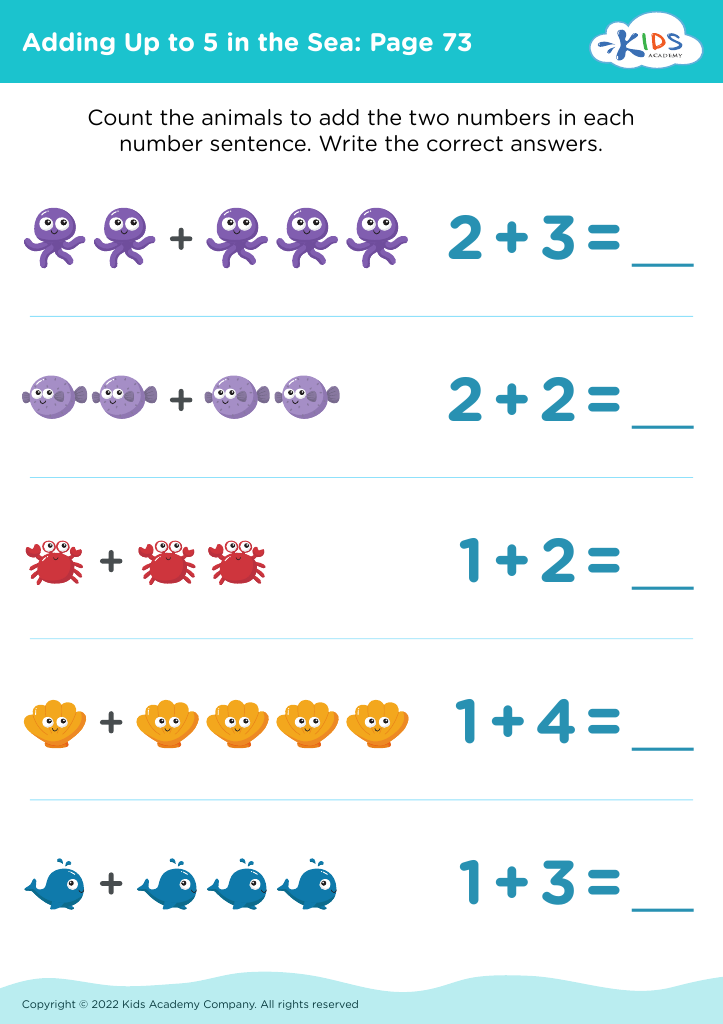
Adding Up to 5 in the Sea: Page 73
Worksheet
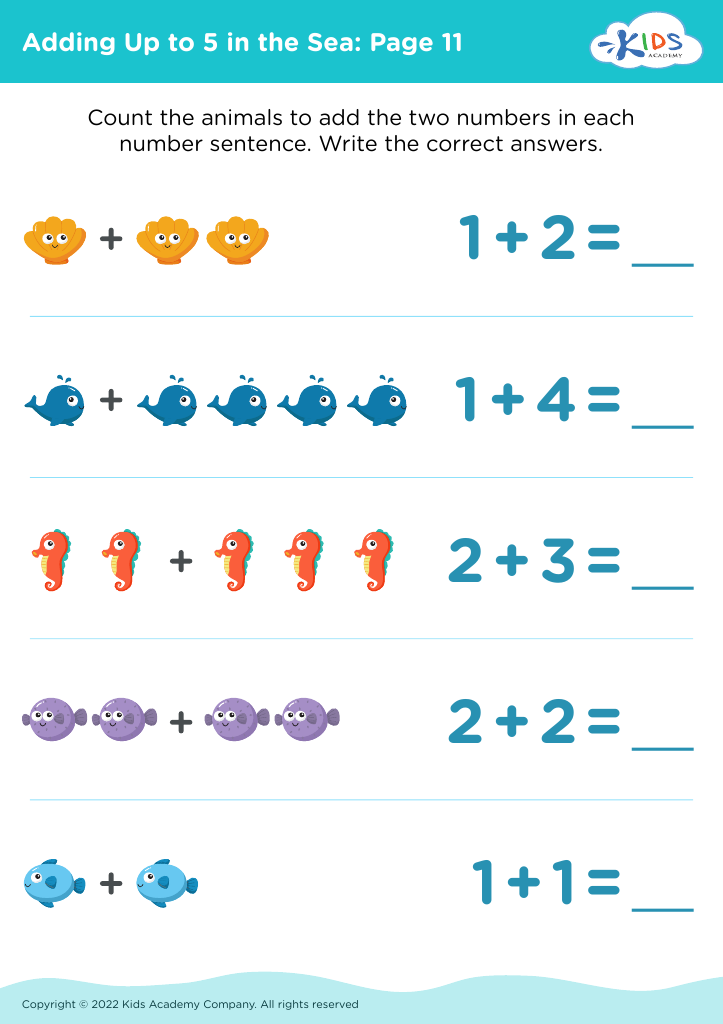
Adding Up to 5 in the Sea: Page 11
Worksheet
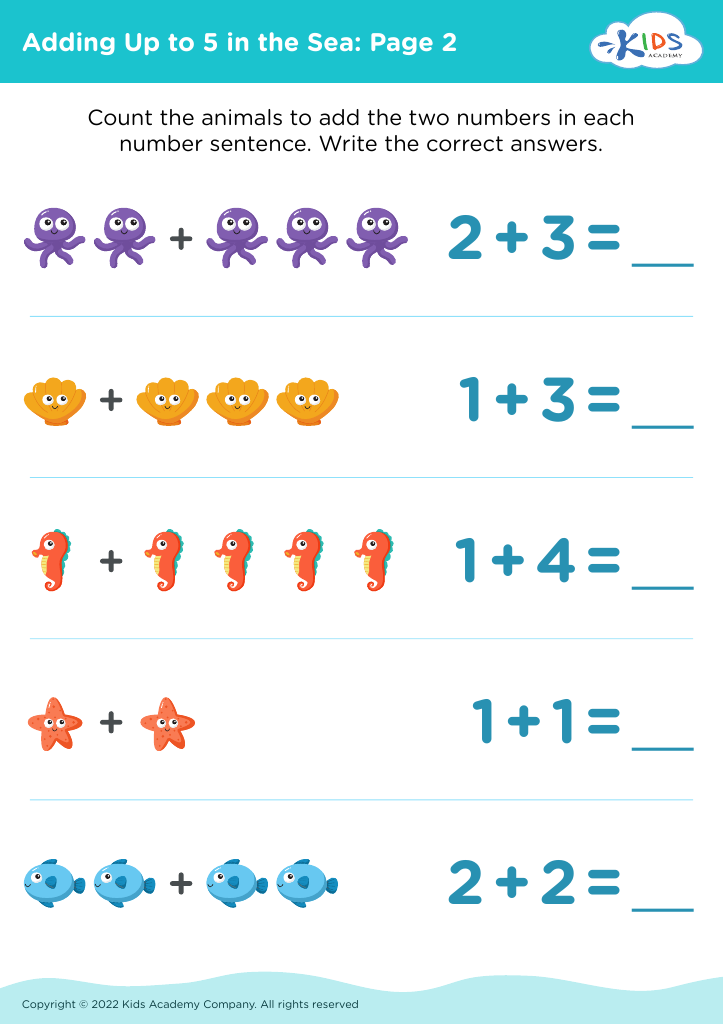
Adding Up to 5 in the Sea: Page 2

Adding Up to 5 in the Sea: Page 2

Adding Up to 5 in the Sea: Page 2
Worksheet
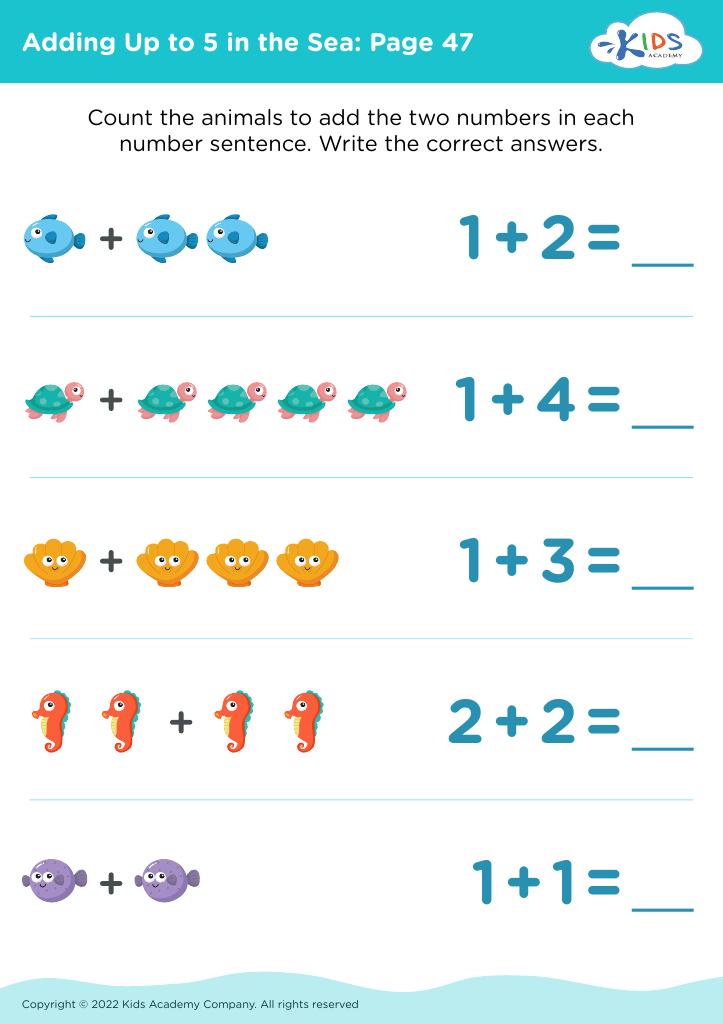
Adding Up to 5 in the Sea: Page 47
Worksheet
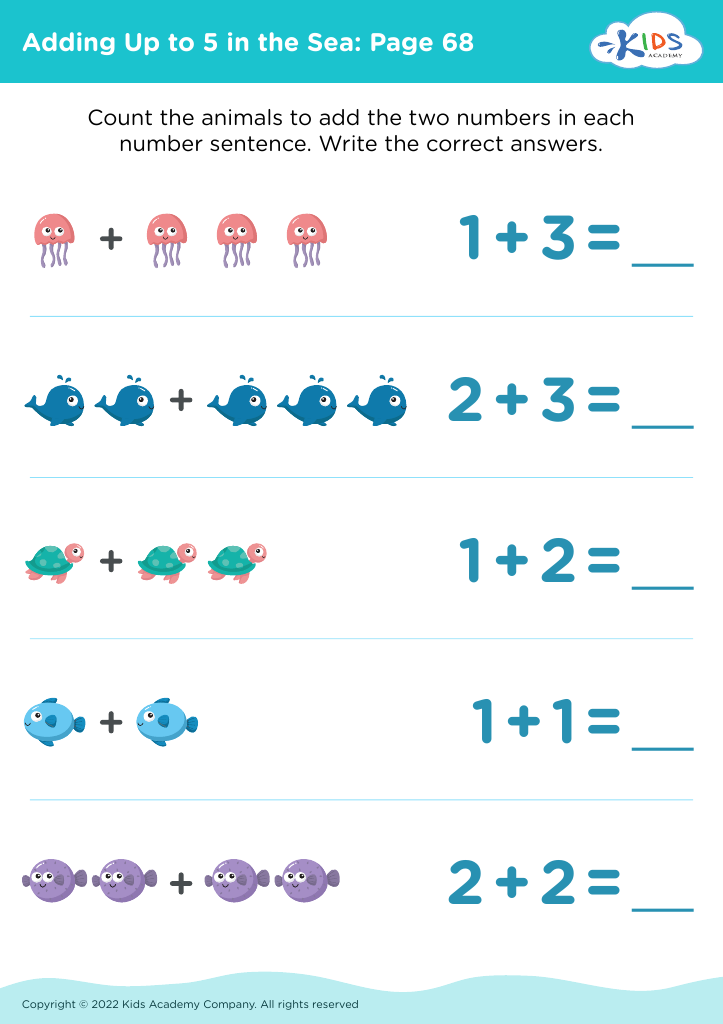
Adding Up to 5 in the Sea: Page 68
Worksheet


Visual learning is crucial for children aged 4-8, especially in subjects like "Adding in the Sea." At this developmental stage, children are naturally curious and highly responsive to visual stimuli. Incorporating visuals into mathematical concepts, such as addition, not only captures their interest but also enhances their understanding.

When learning addition, visual aids, such as colorful sea creatures, underwater scenes, or counting tools like manipulatives, help kids grasp abstract concepts in a more tangible way. For instance, counting fish can make the process of addition immediate and relatable. These visual cues support cognitive development, helping children forge connections between numbers and quantities.

Furthermore, visuals can cater to various learning styles, catering especially to visual learners who thrive with diagrams, pictures, and videos. By engaging children visually, parents and teachers can foster a supportive learning environment, encouraging confidence and participation.

Additionally, playful and thematic visuals can make learning more enjoyable, instilling a love for math. Involving sea themes can stimulate imagination while teaching foundational skills, making it both fun and educational. Ultimately, promoting visual learning builds essential skills not only in mathematics but also critical thinking and problem-solving, laying a strong foundation for lifelong learning.