Adding up to 1000 Without Regrouping Worksheets for Ages 4-8 - Page 3
73 filtered results
-
From - To
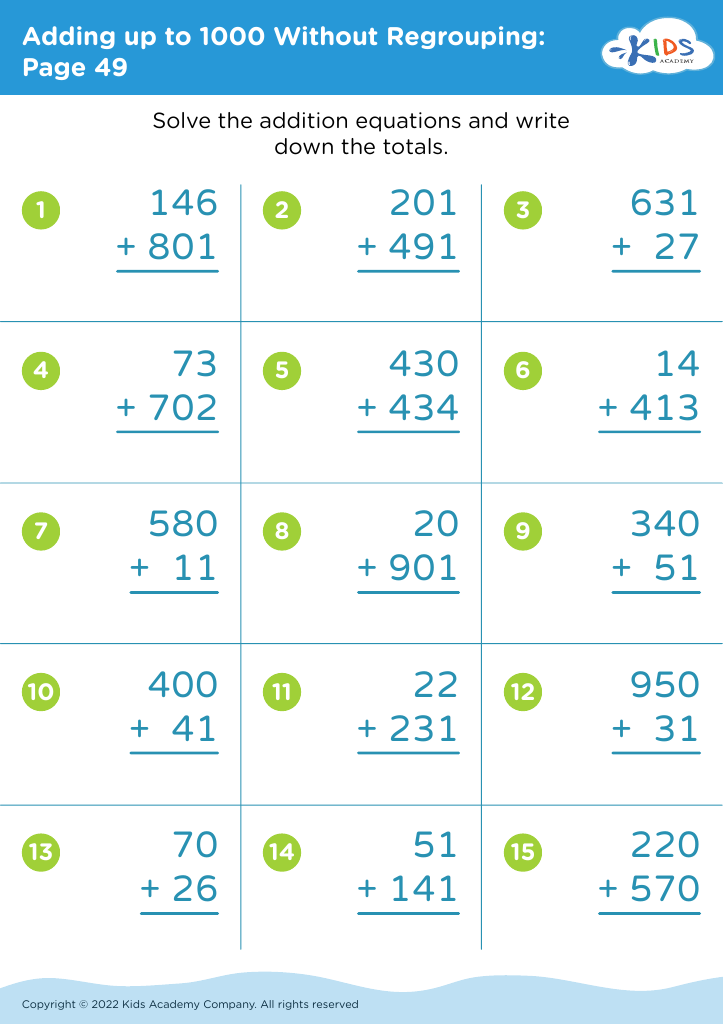
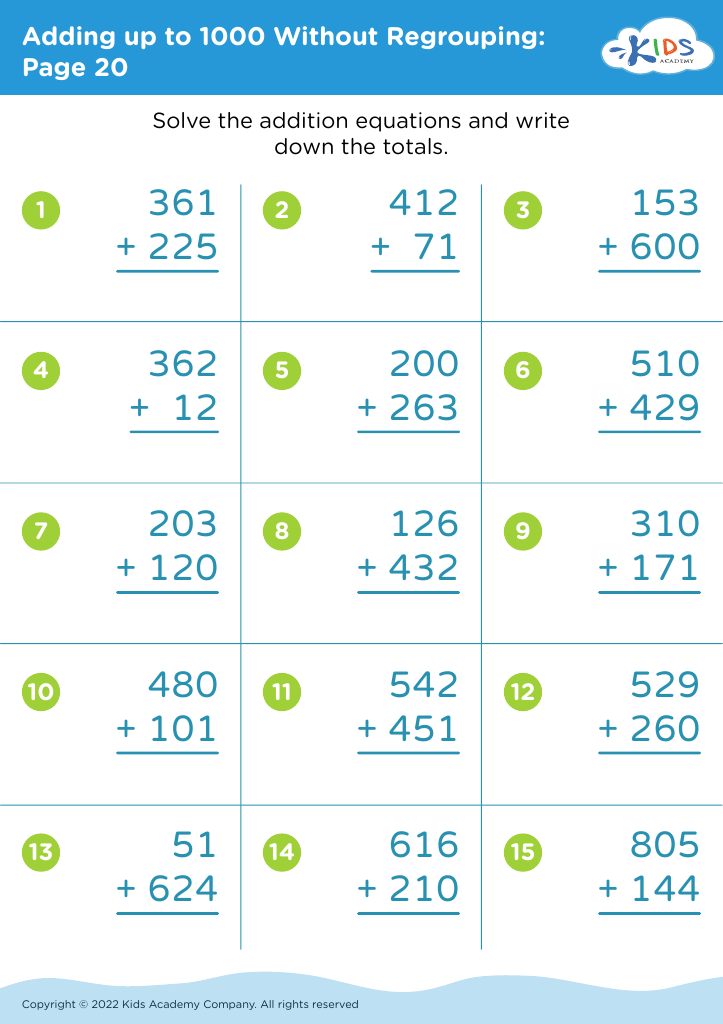
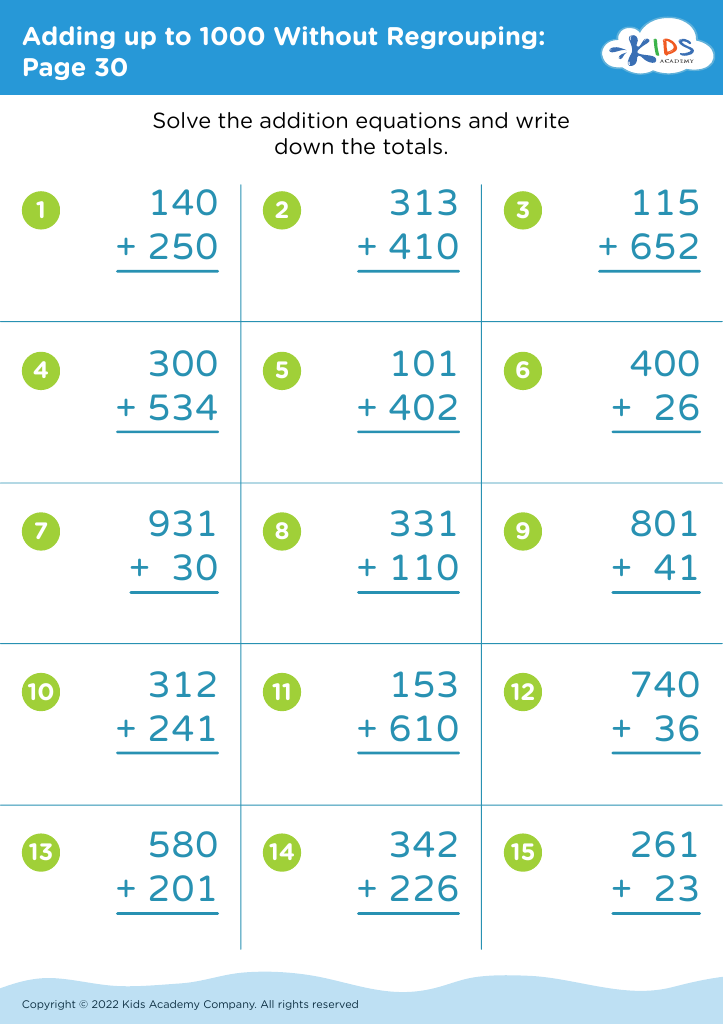
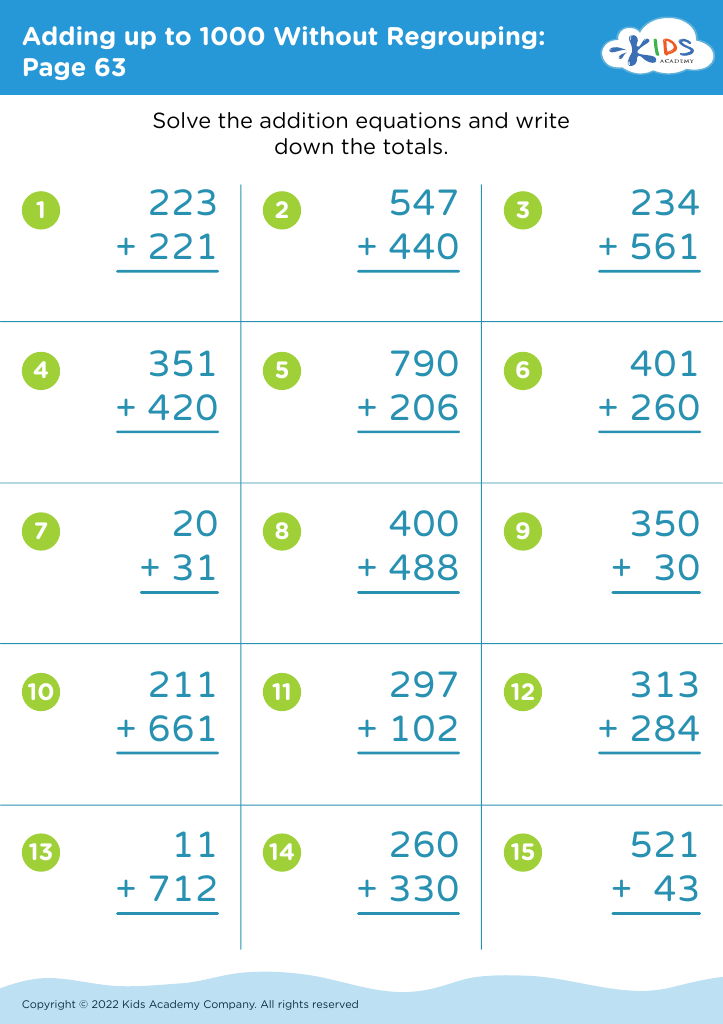
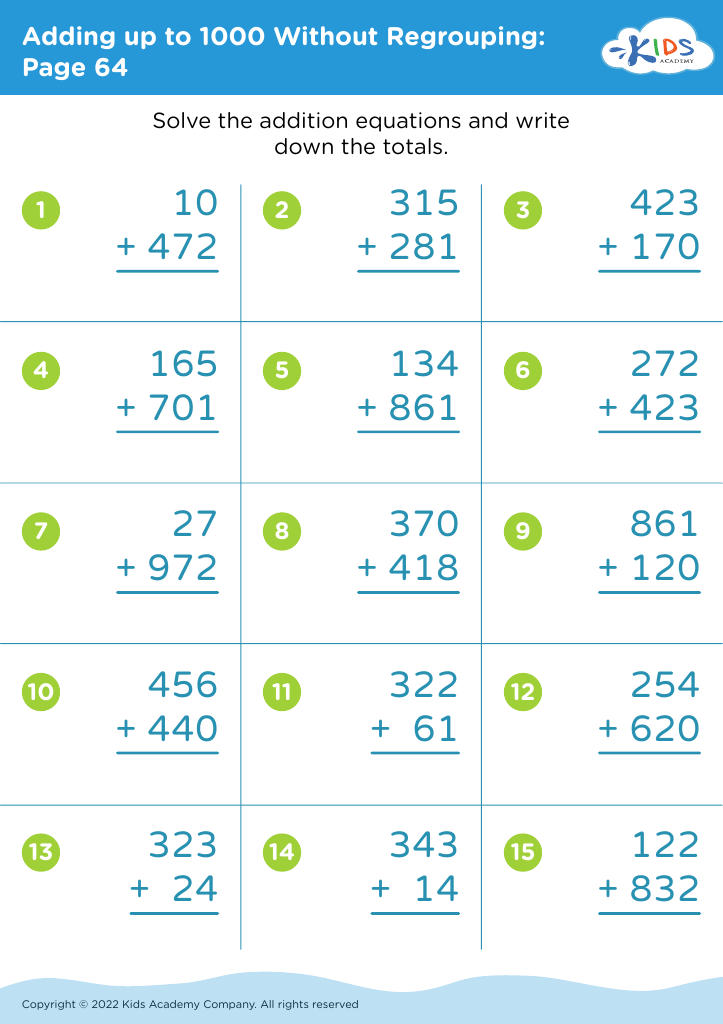
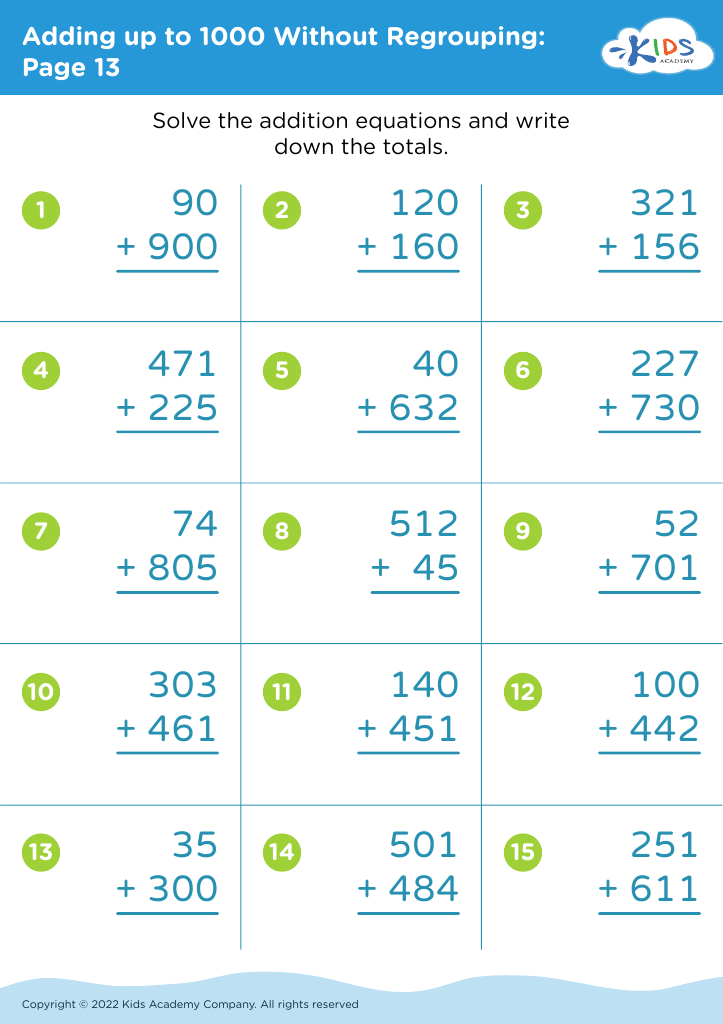
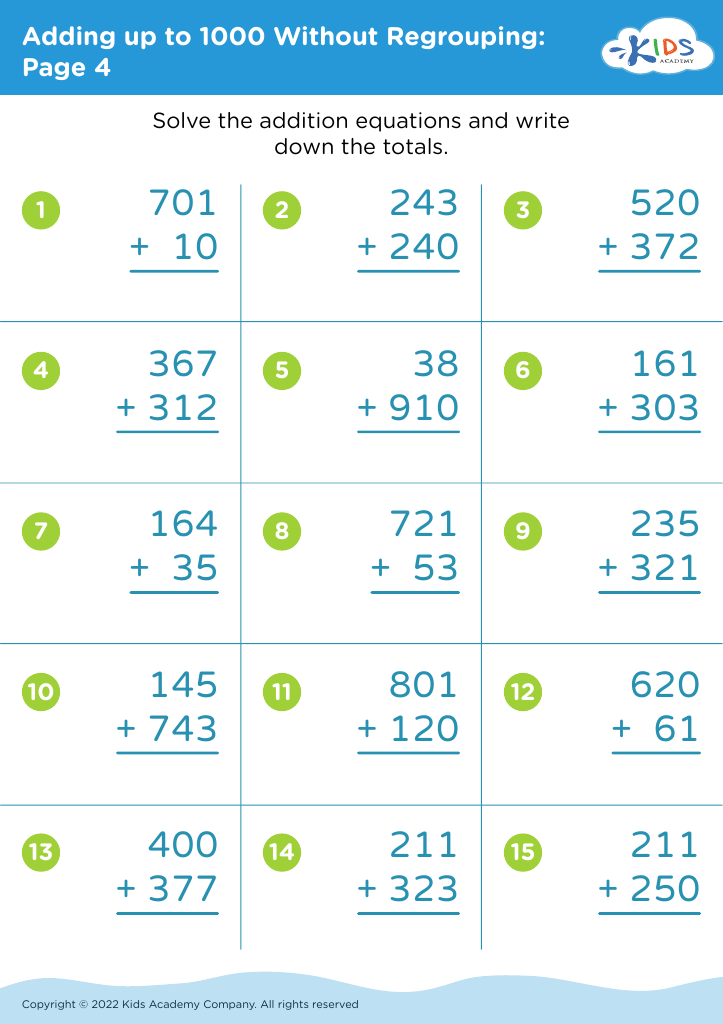
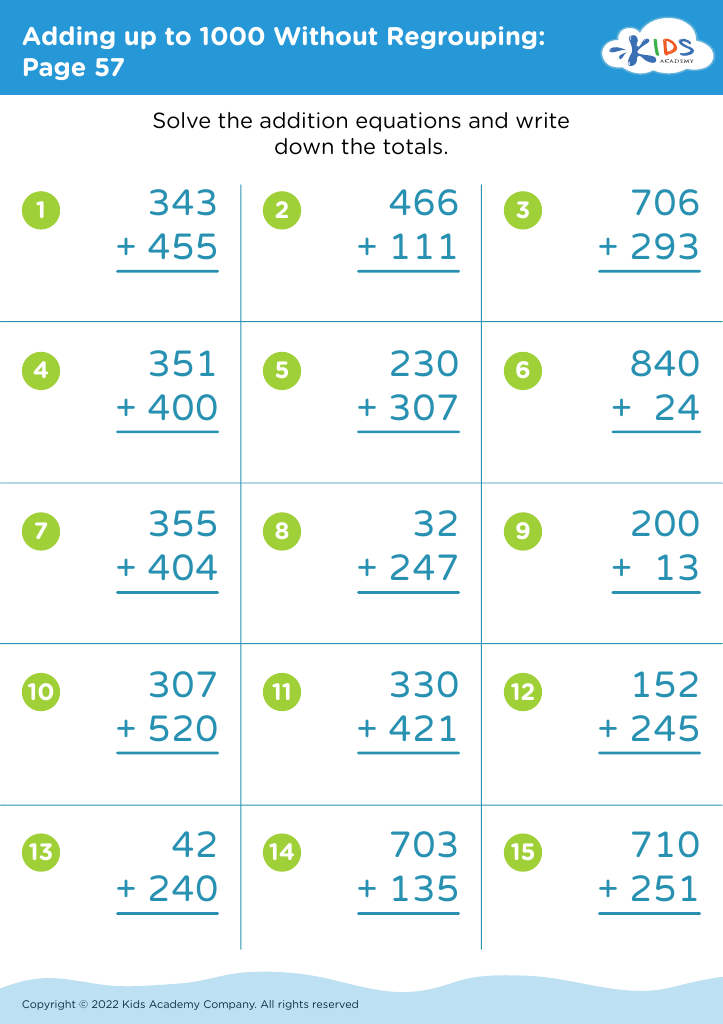
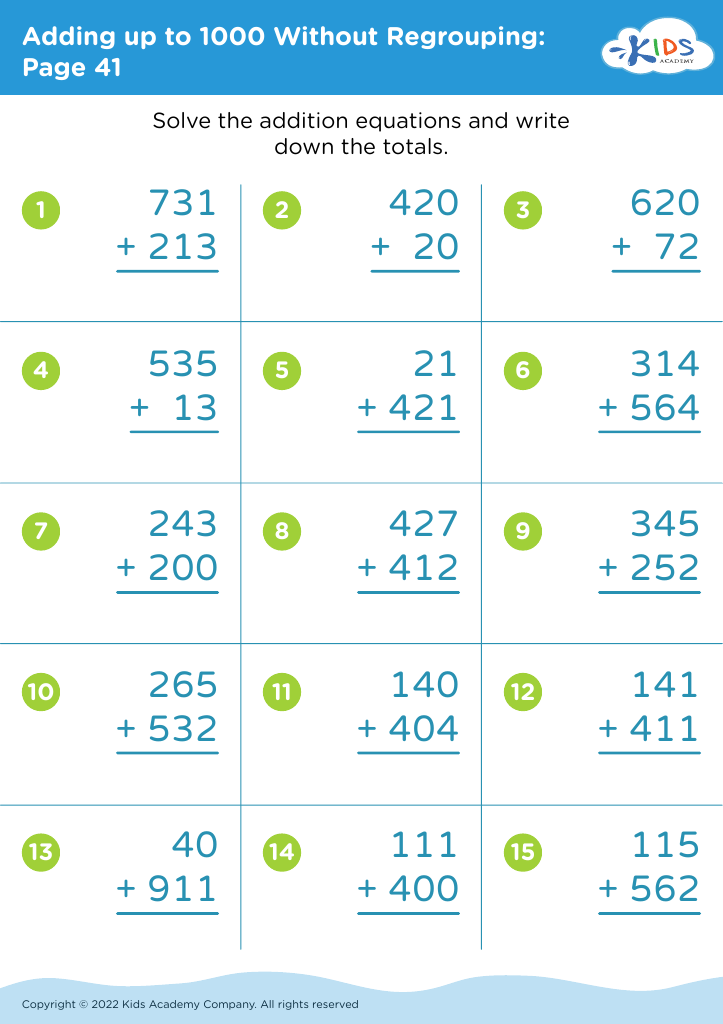
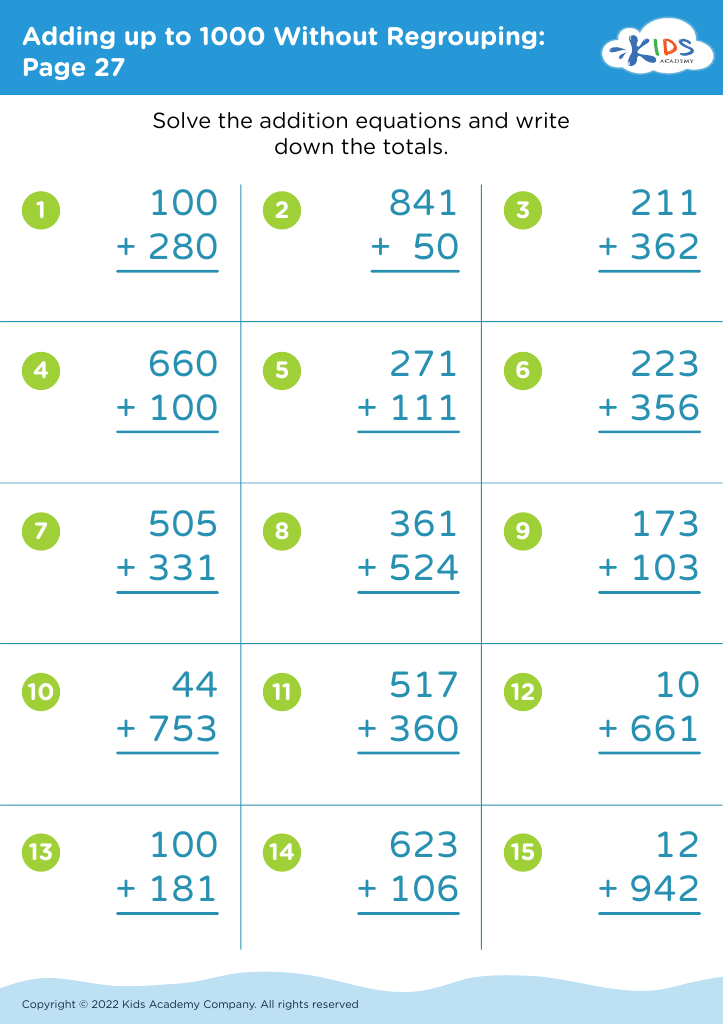
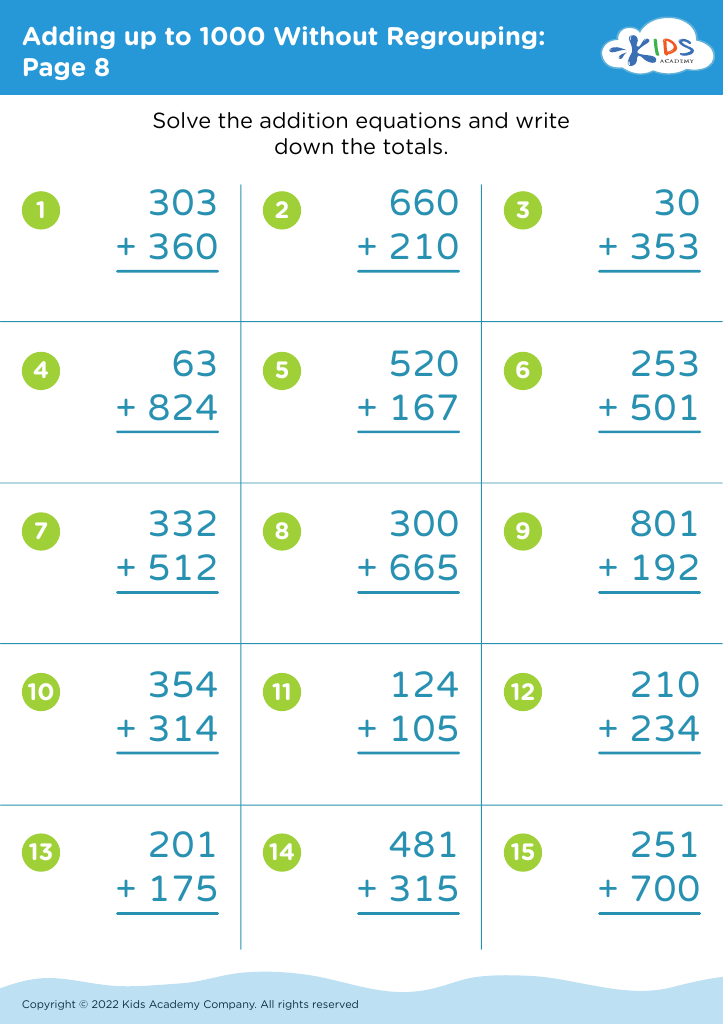
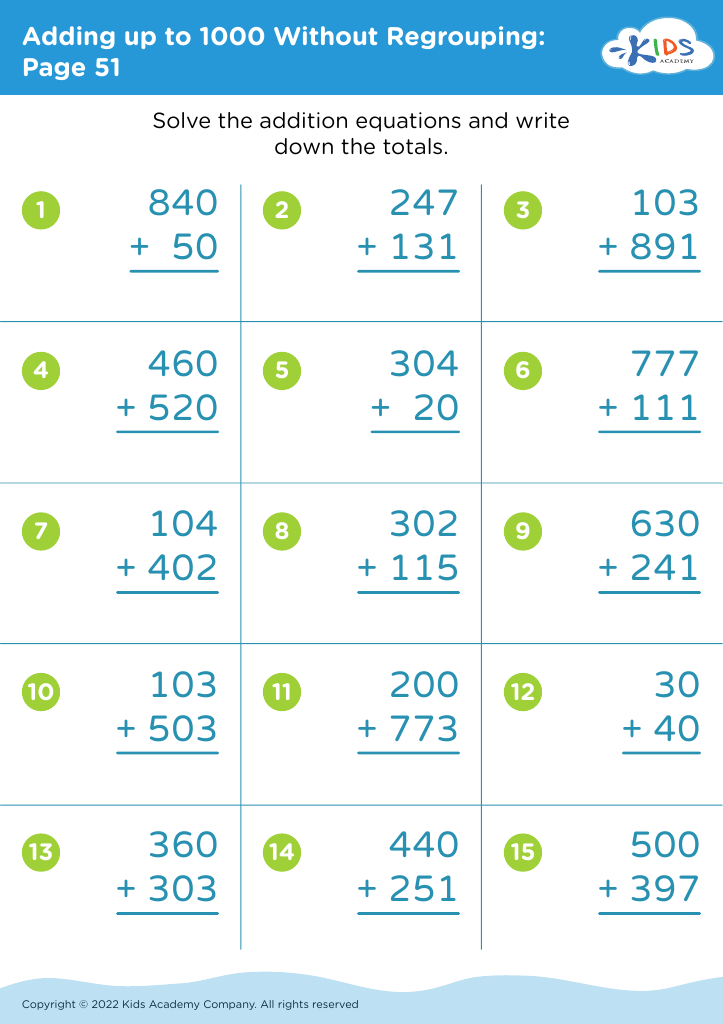
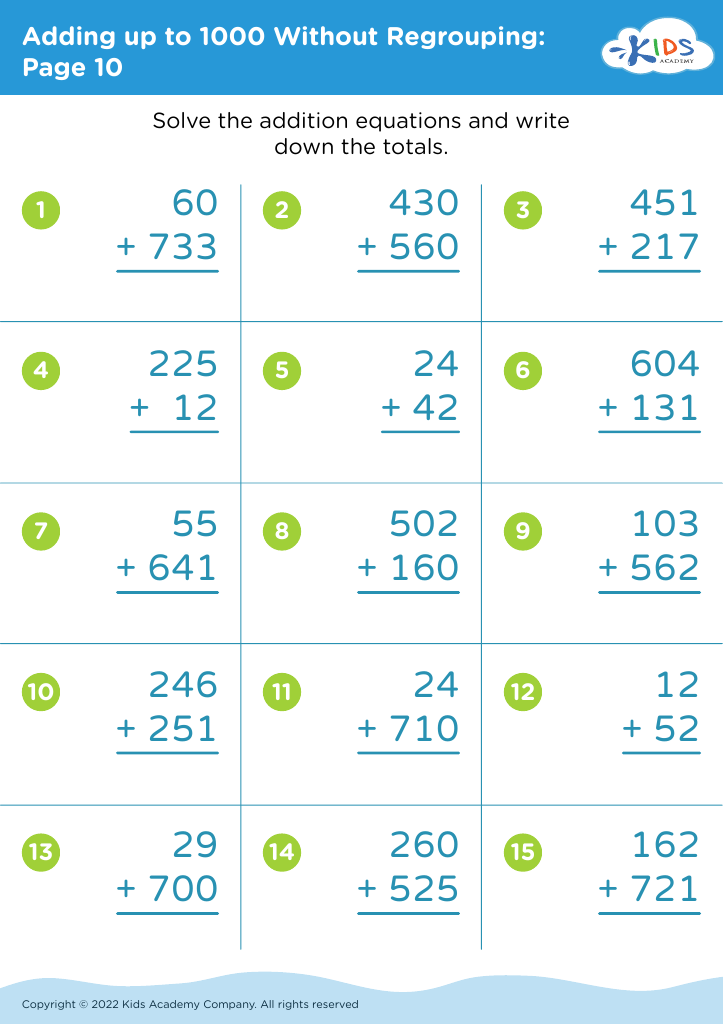
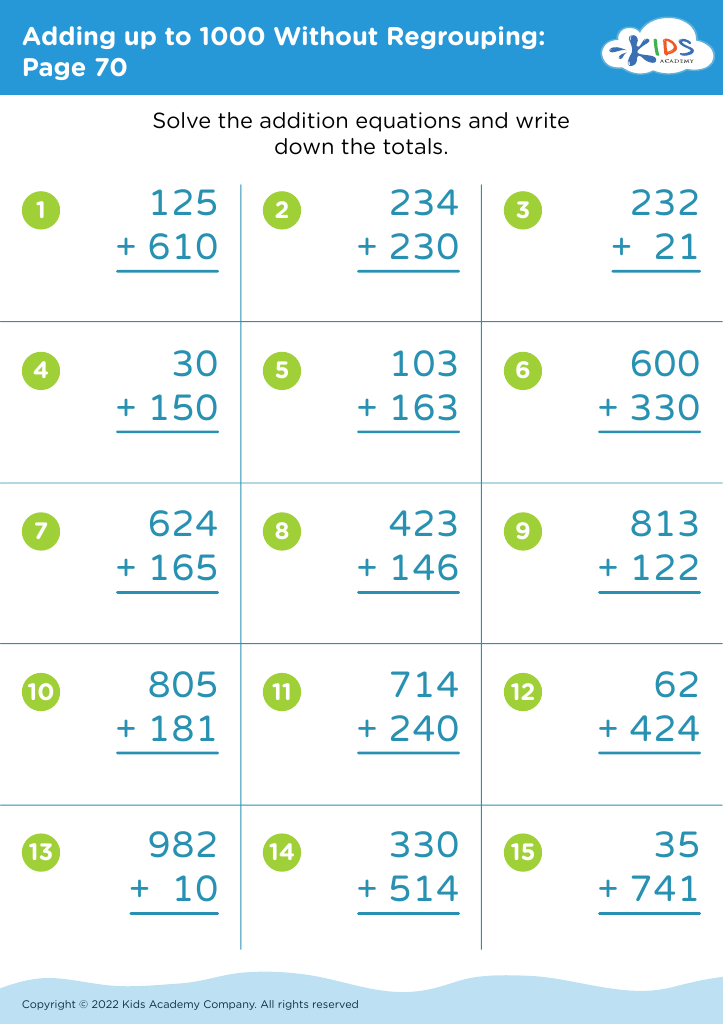
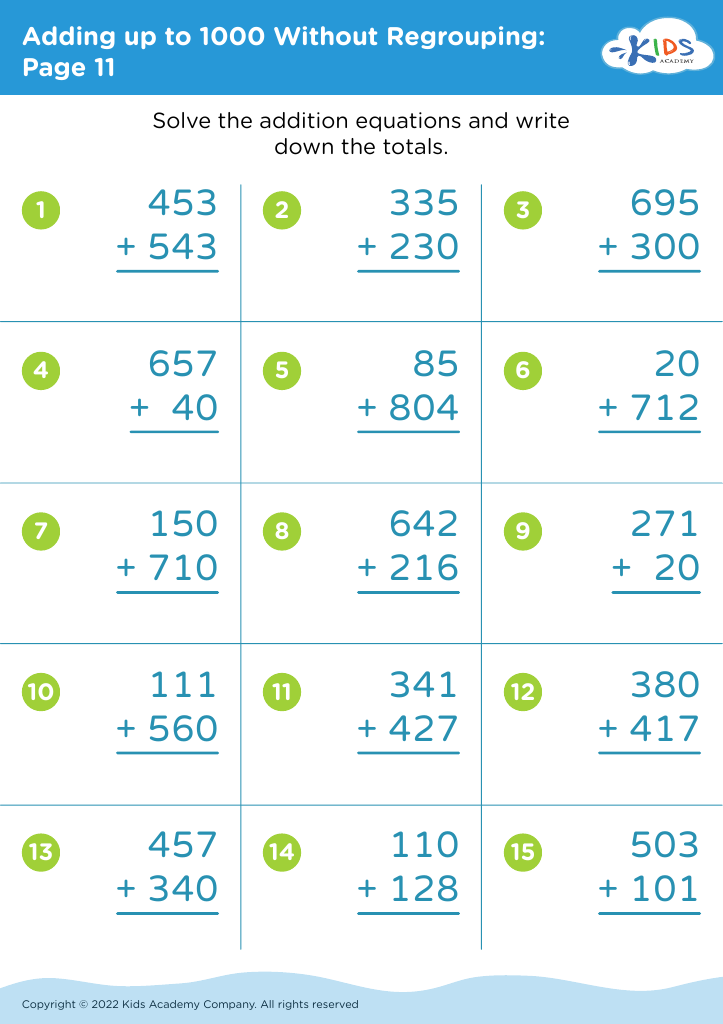
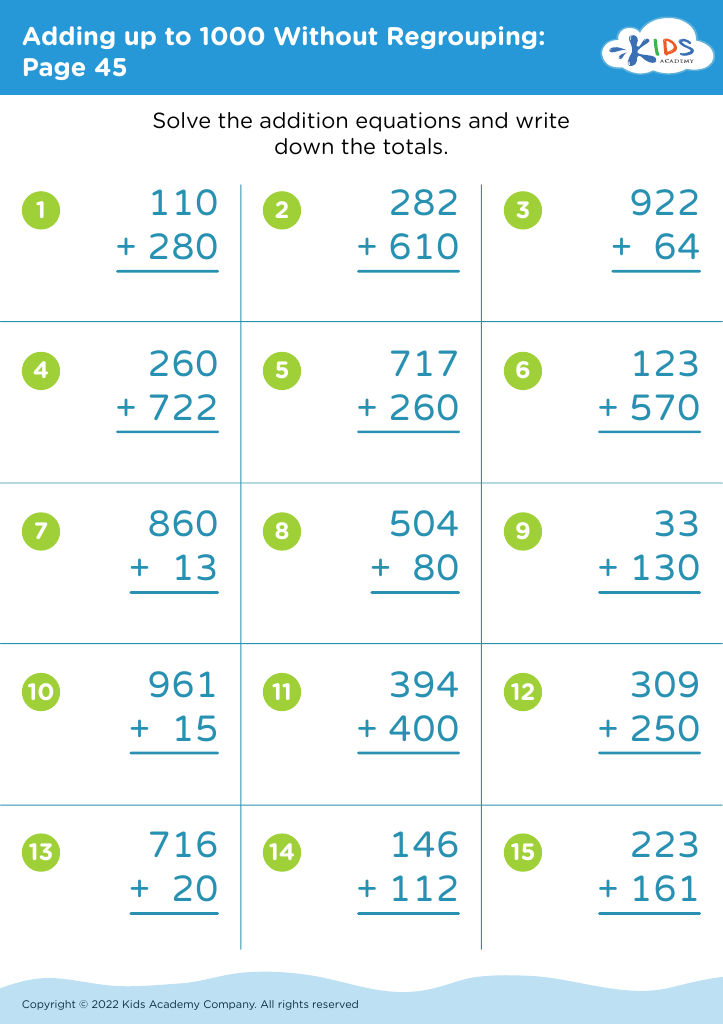
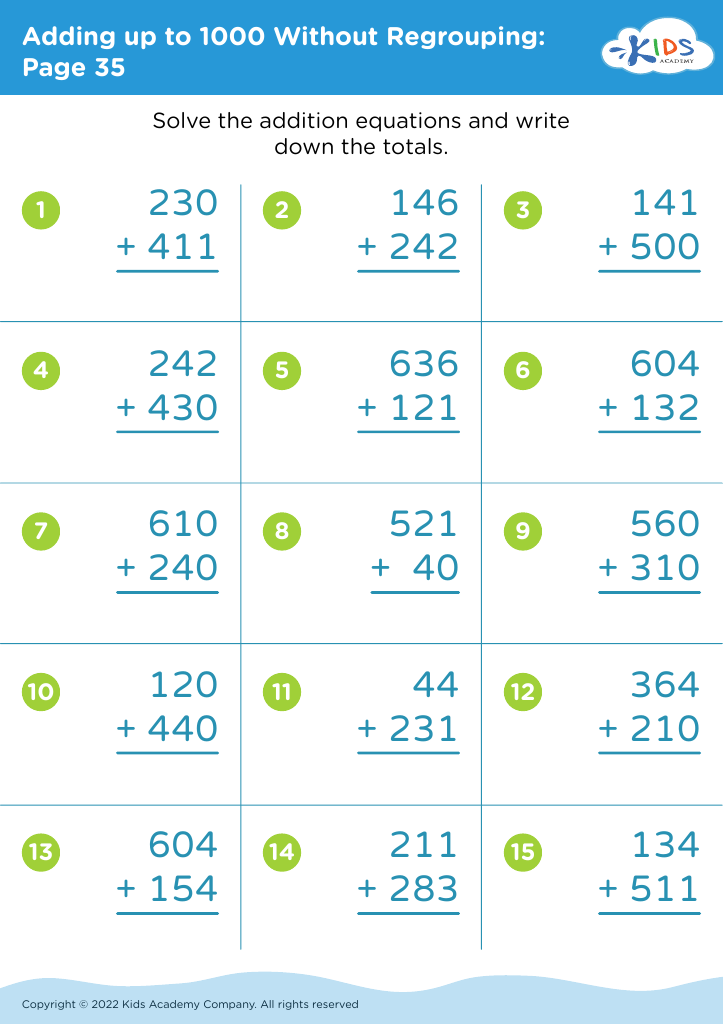
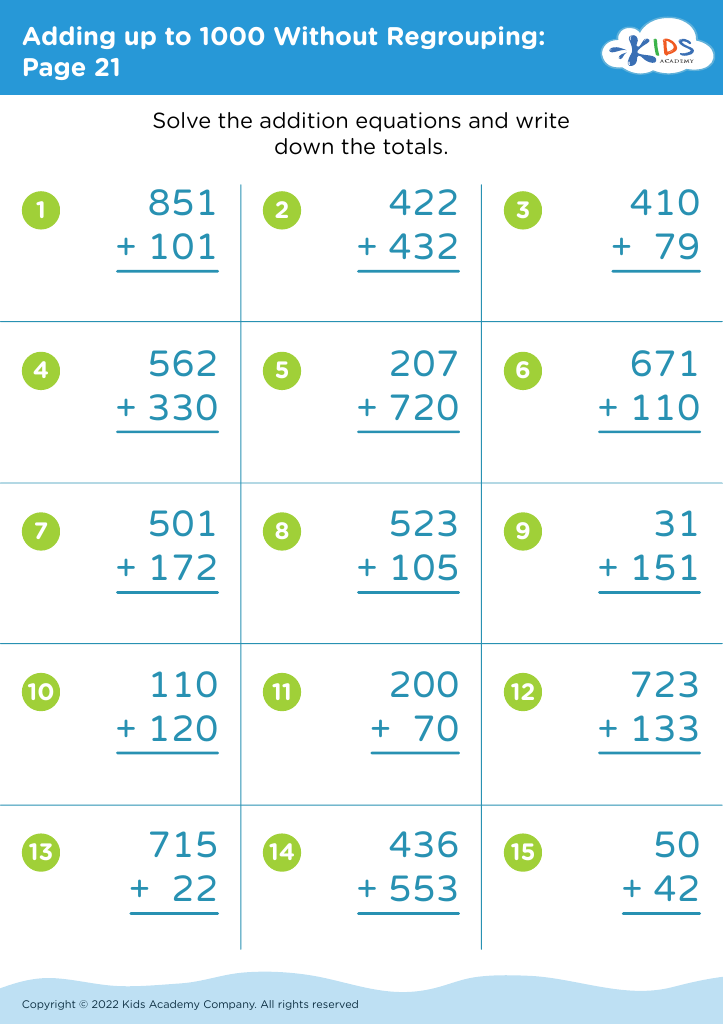
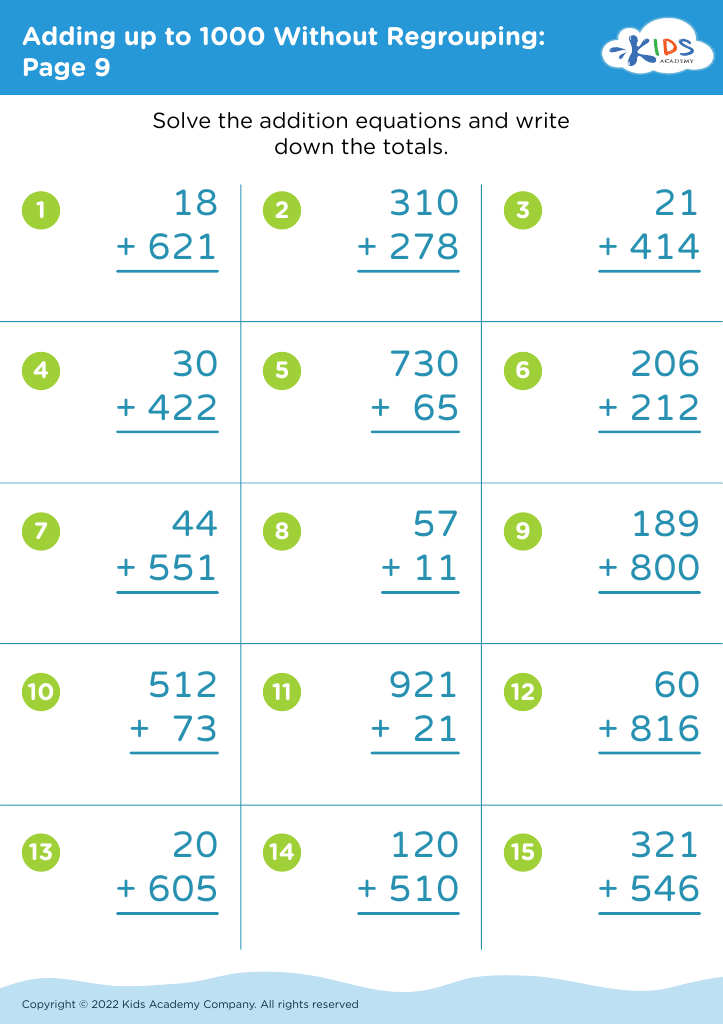
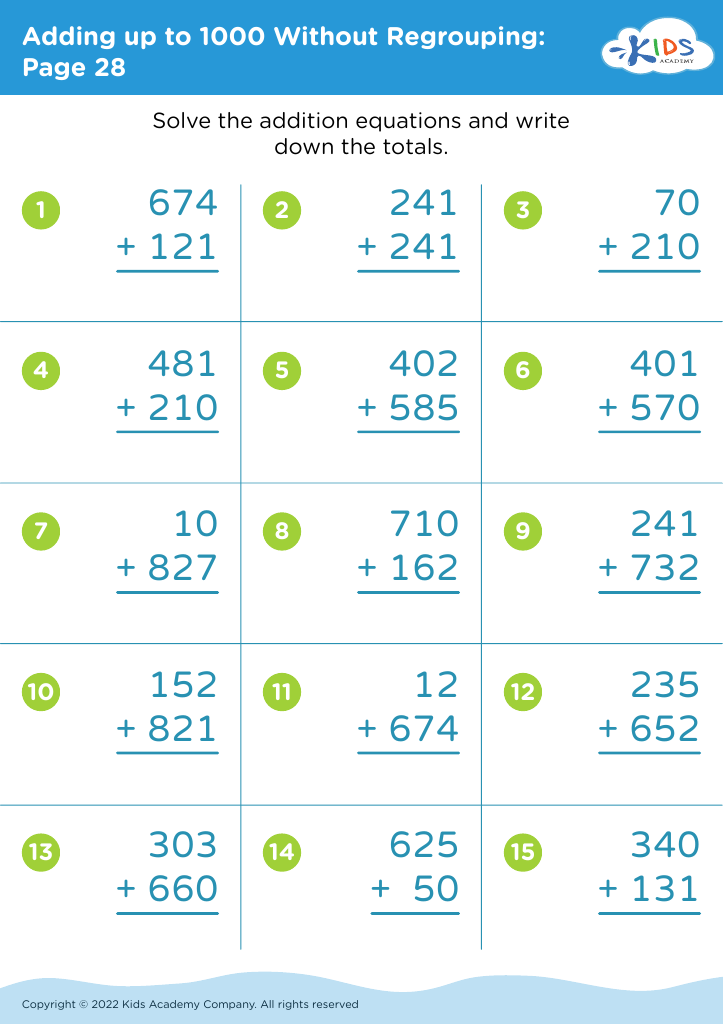
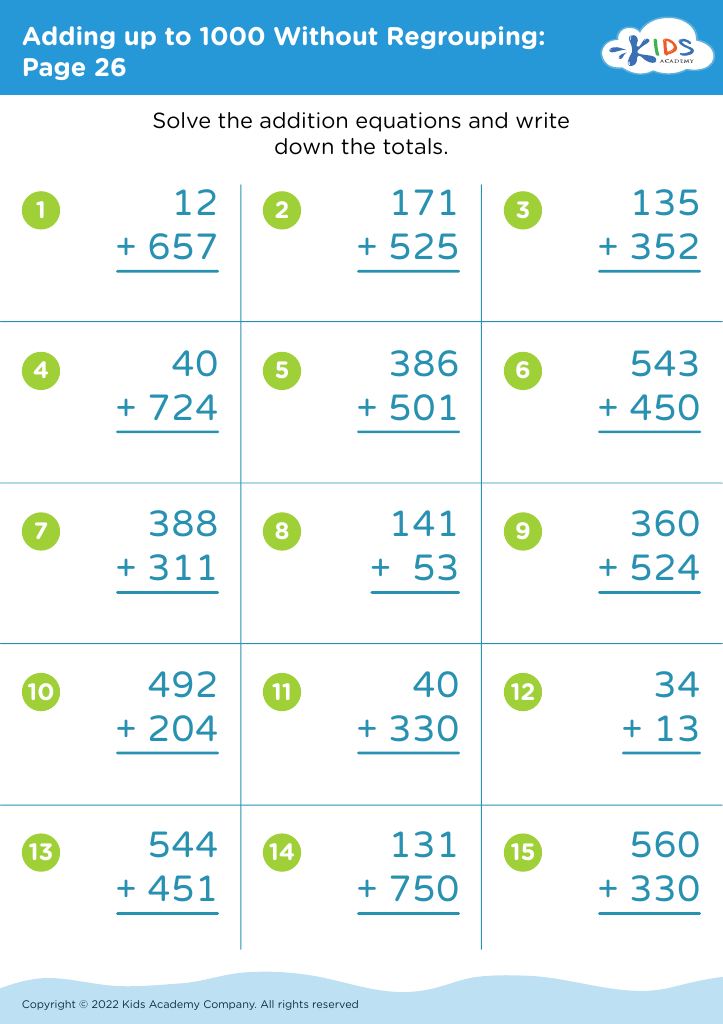
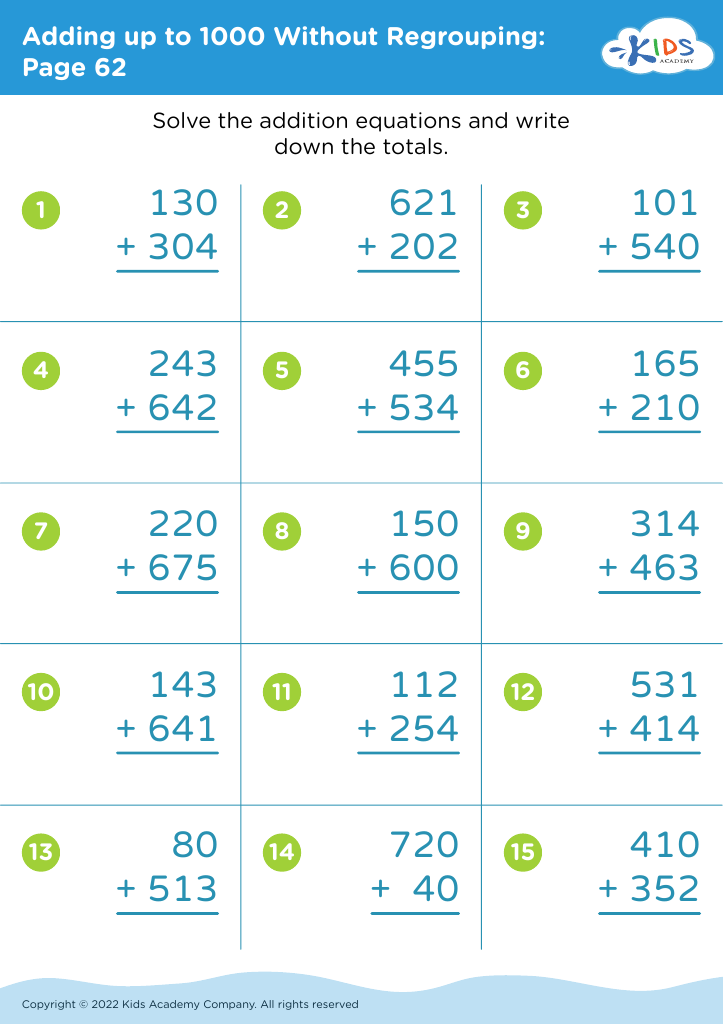
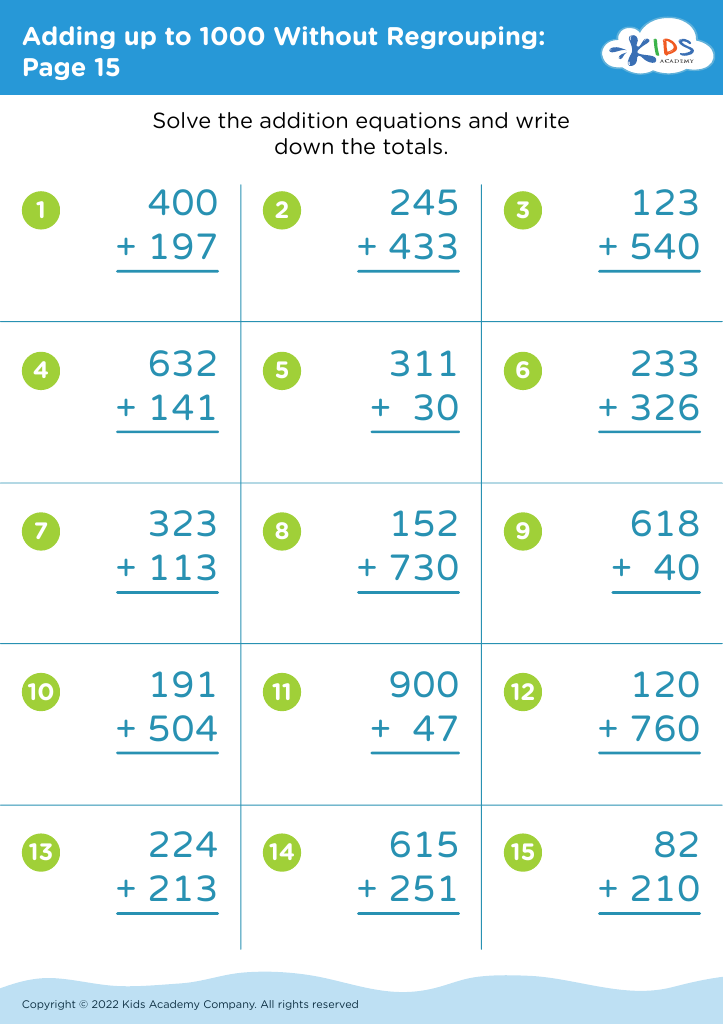
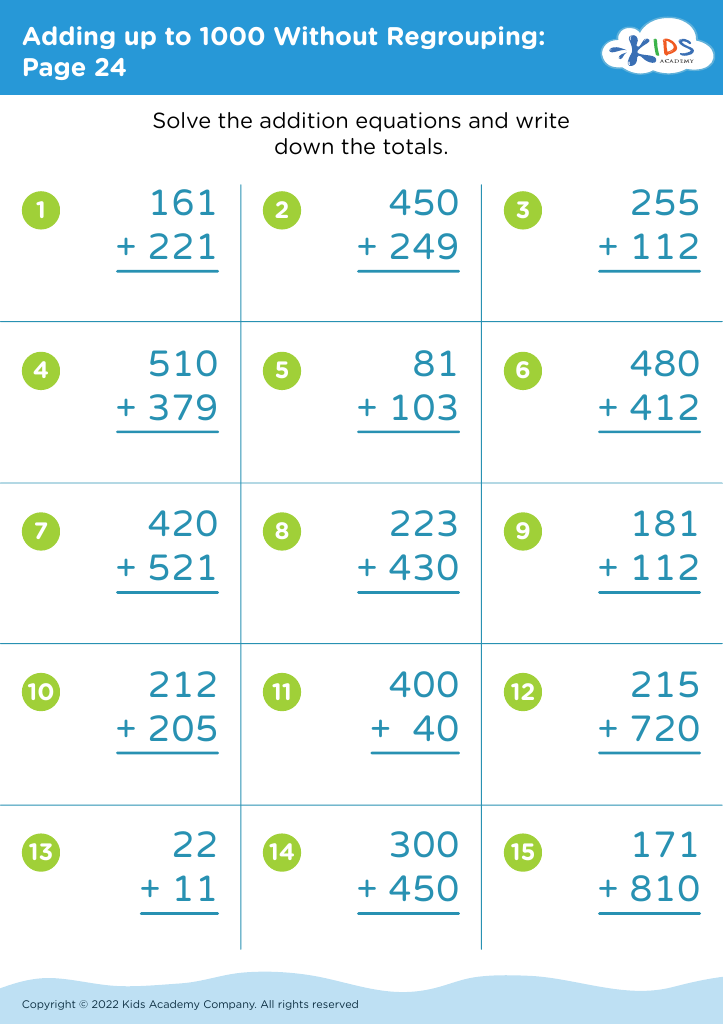


Introducing children aged 4-8 to adding up to 1000 without regrouping is a significant step in their mathematical development. At this stage, young learners are developing foundational skills that will support their future academic success. Teaching addition with larger numbers builds their confidence and familiarity with numerical operations.
Firstly, handling larger numbers without regrouping helps children understand the concept of place value more deeply. They start to see numbers in hundreds, tens, and ones, which is crucial for mastering more advanced math concepts later on, such as multiplication, division, and eventually, algebra.
Secondly, it promotes problem-solving abilities and logical thinking. When children work through these addition problems, they practice mental math strategies and develop an ability to manipulate numbers in their minds. This cognitive exercise enhances their ability to approach and solve problems in various contexts, not just in math.
Finally, achieving milestones like adding up to 1000 gives kids a sense of achievement and boosts their self-esteem. When they can solve such problems correctly, they carry that confidence into other academic areas and life situations, setting a positive cycle of learning and growth in motion.
Therefore, parents and teachers should emphasize these skills to build a solid foundation and foster a love for lifelong learning in young children.