Filters

17 filtered results

Clear all filters
Favorites
With answer key
Interactive

17 filtered results

Difficulty Level

Grade


Discover our "Understanding Quantity: Adding Up to 5 Worksheets" designed for children ages 4 to 8! These engaging and interactive worksheets help young learners grasp the concept of quantity while developing their addition skills. Through fun activities and colorful illustrations, kids will explore various ways to combine numbers to reach a total of 5. Perfect for homeschooling or classroom use, these worksheets foster a strong mathematical foundation, enhancing number recognition and boosting confidence in early math learners. Let your child embark on an exciting learning journey with our thoughtfully crafted exercises that promote both understanding and enjoyment of math concepts!
Check out this FREE Trial Lesson on Adding Up to 5 for age 4-8!

A

Favorites
With answer key
Interactive
  • 4-8
  • Understanding quantity
  • Adding Up to 5
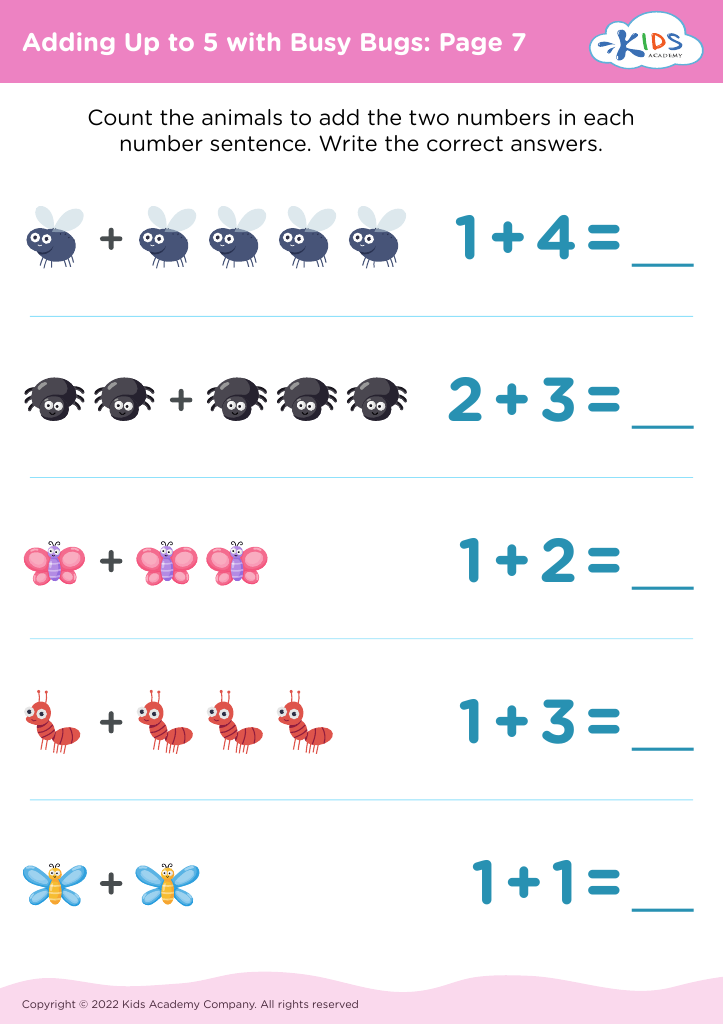
Adding Up to 5 with Busy Bugs: Page 7
Worksheet
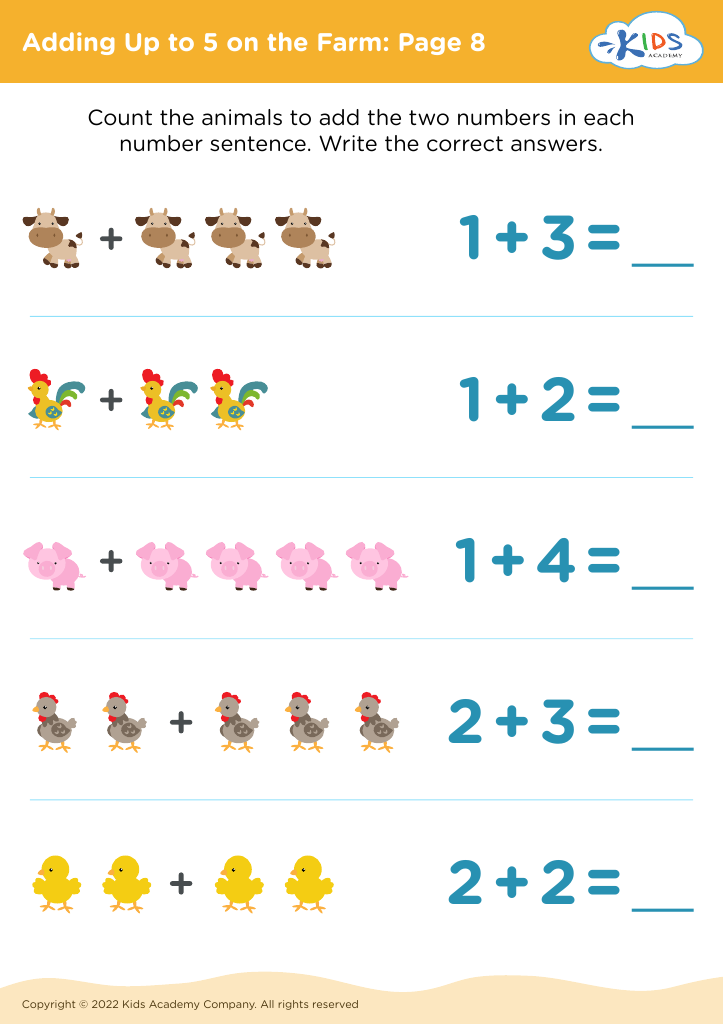
Adding Up to 5 on the Farm: Page 8
Worksheet
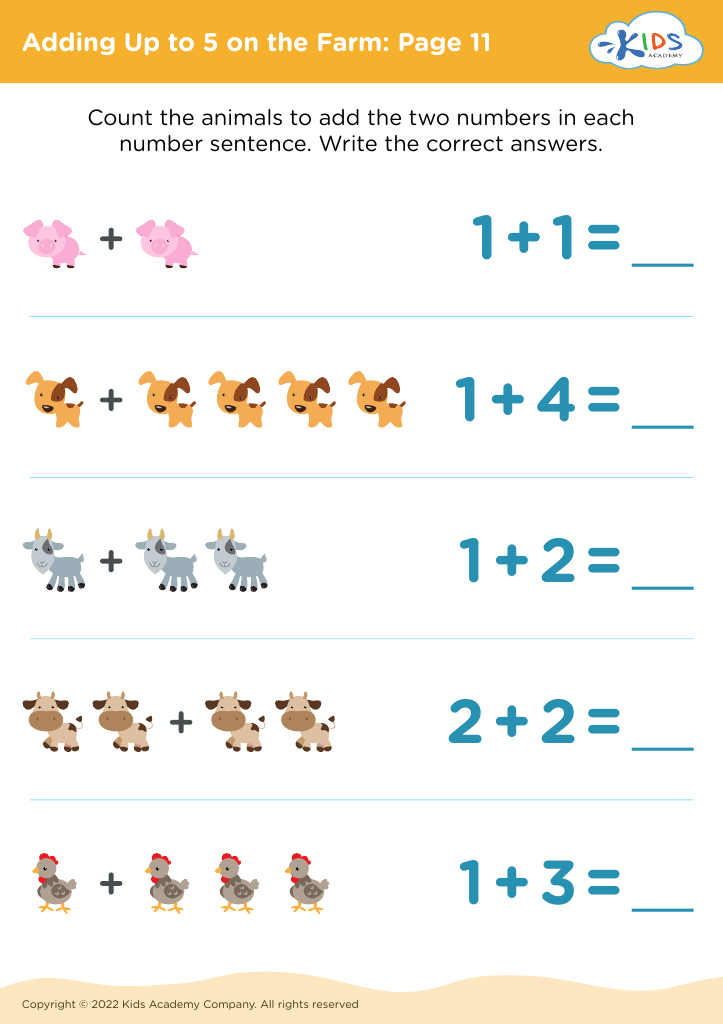
Adding Up to 5 on the Farm: Page 11
Worksheet
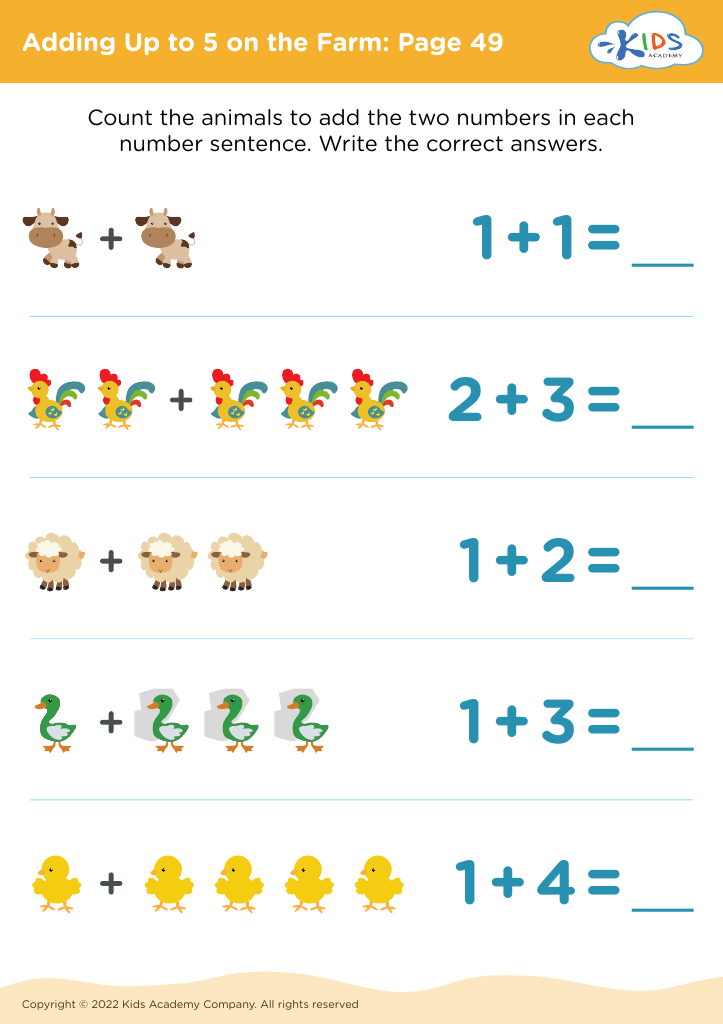
Adding Up to 5 on the Farm: Page 49
Worksheet
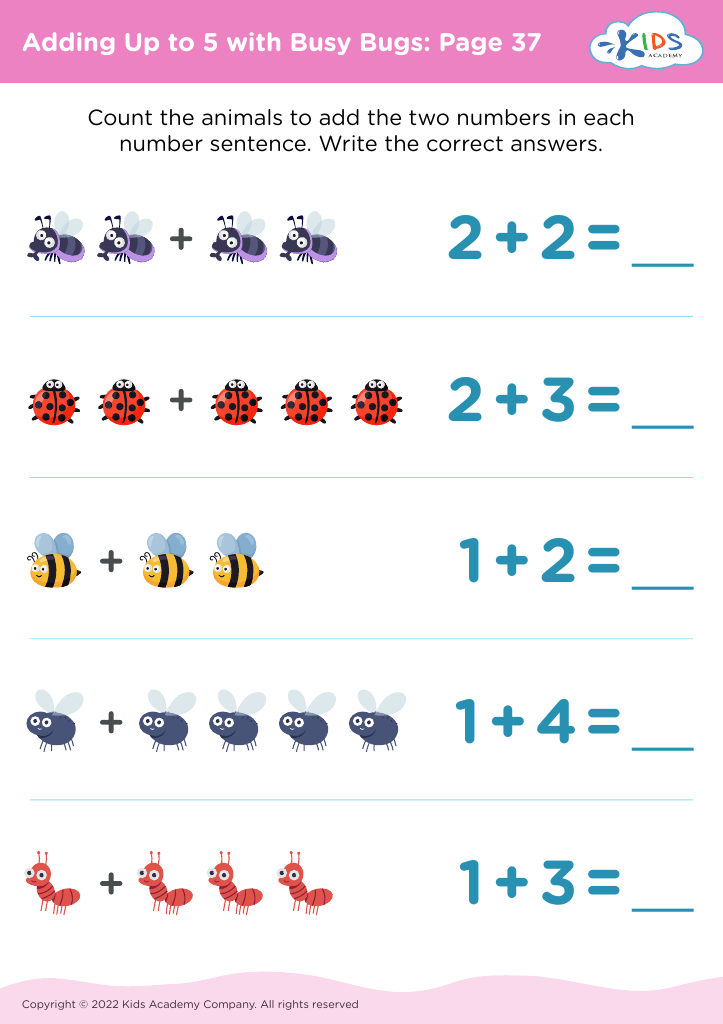
Adding Up to 5 with Busy Bugs: Page 37
Worksheet
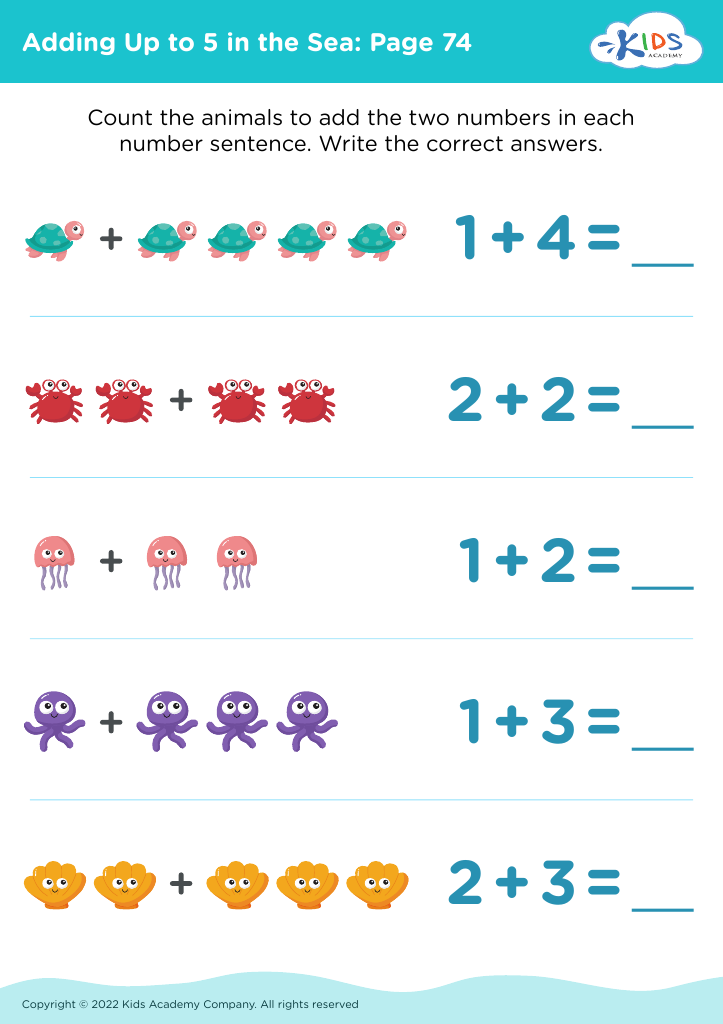
Adding Up to 5 in the Sea: Page 74
Worksheet
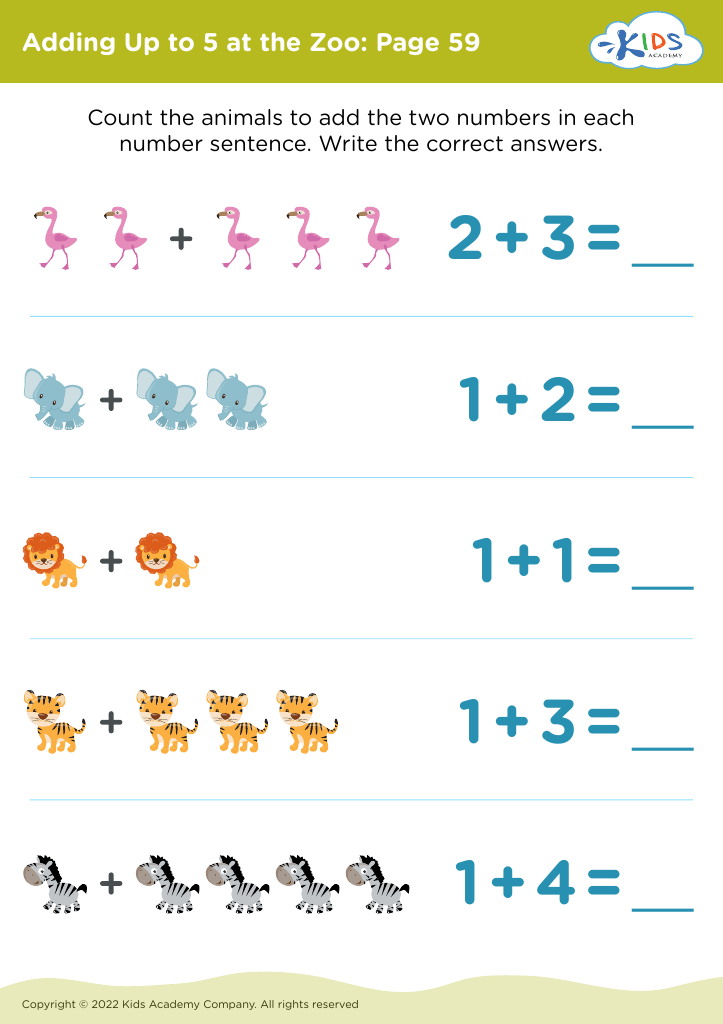
Adding Up to 5 at the Zoo: Page 59
Worksheet
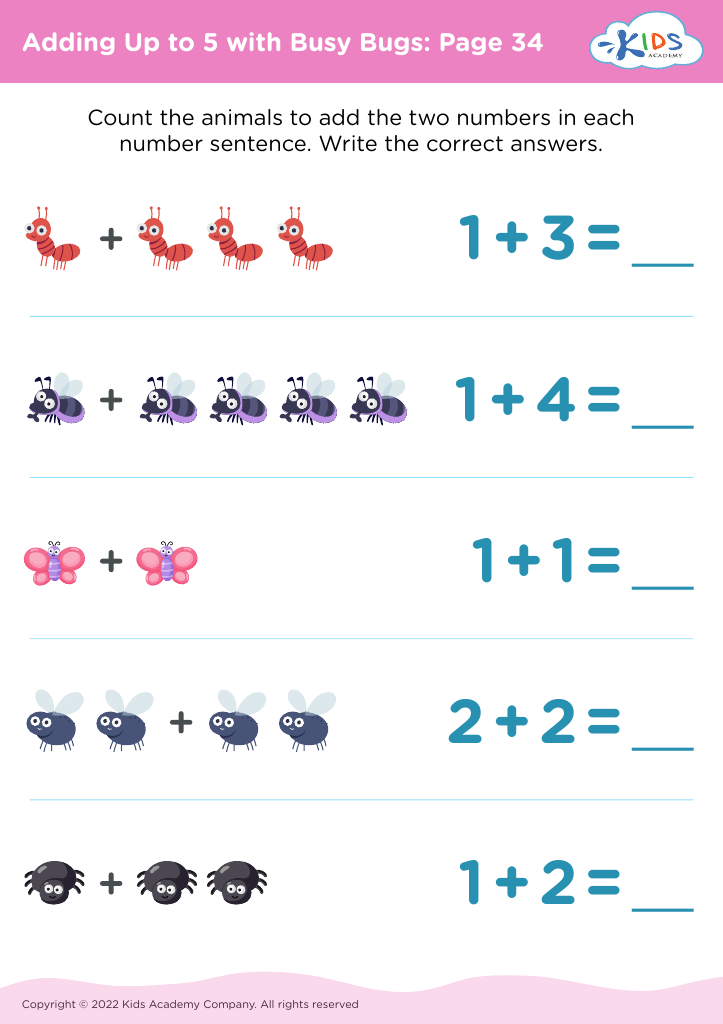
Adding Up to 5 with Busy Bugs: Page 34
Worksheet
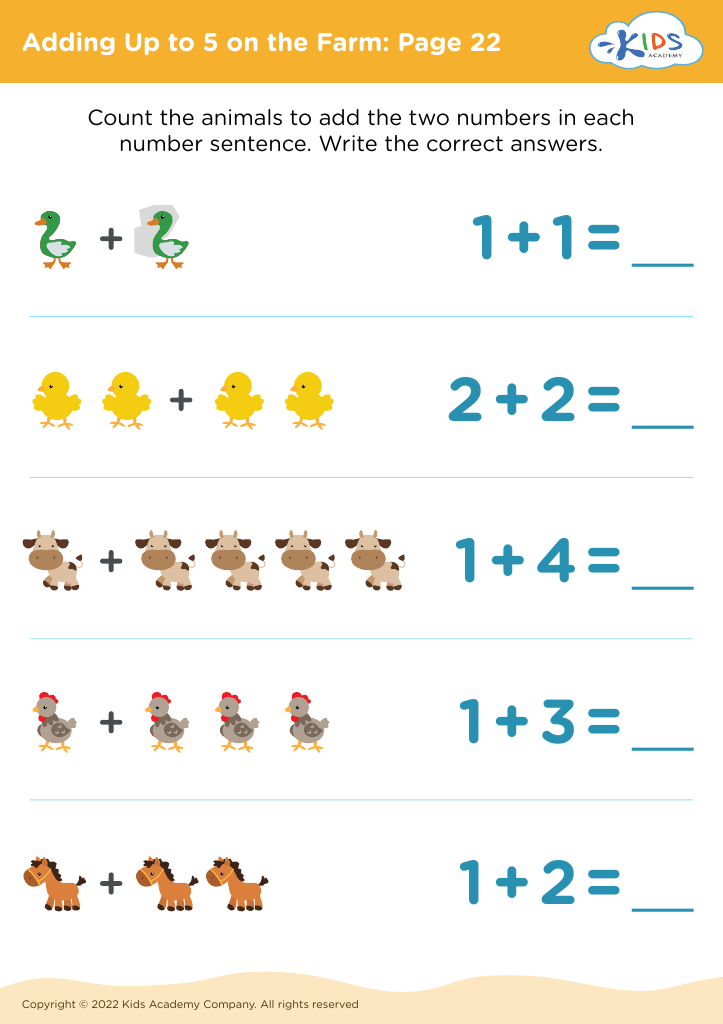
Adding Up to 5 on the Farm: Page 22
Worksheet
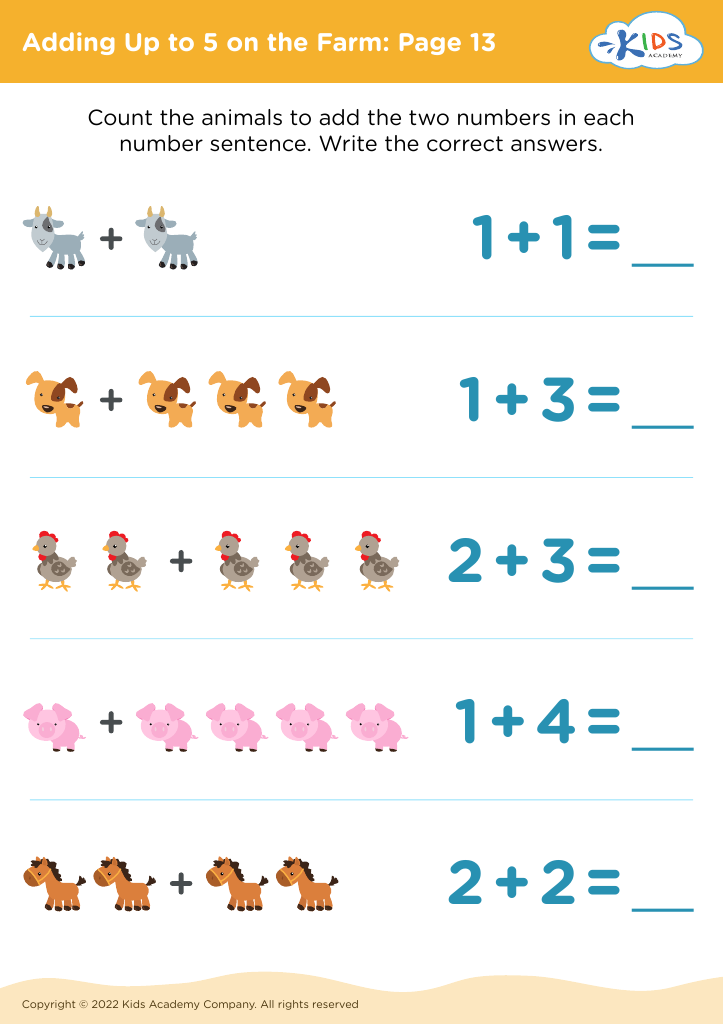
Adding Up to 5 on the Farm: Page 13
Worksheet
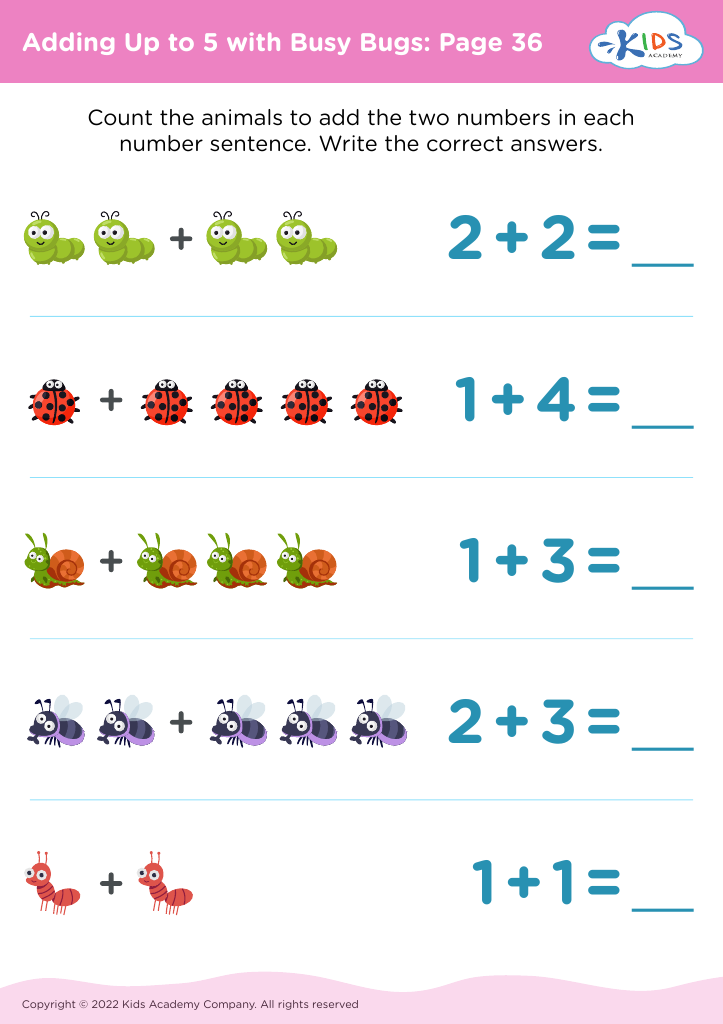
Adding Up to 5 with Busy Bugs: Page 36
Worksheet
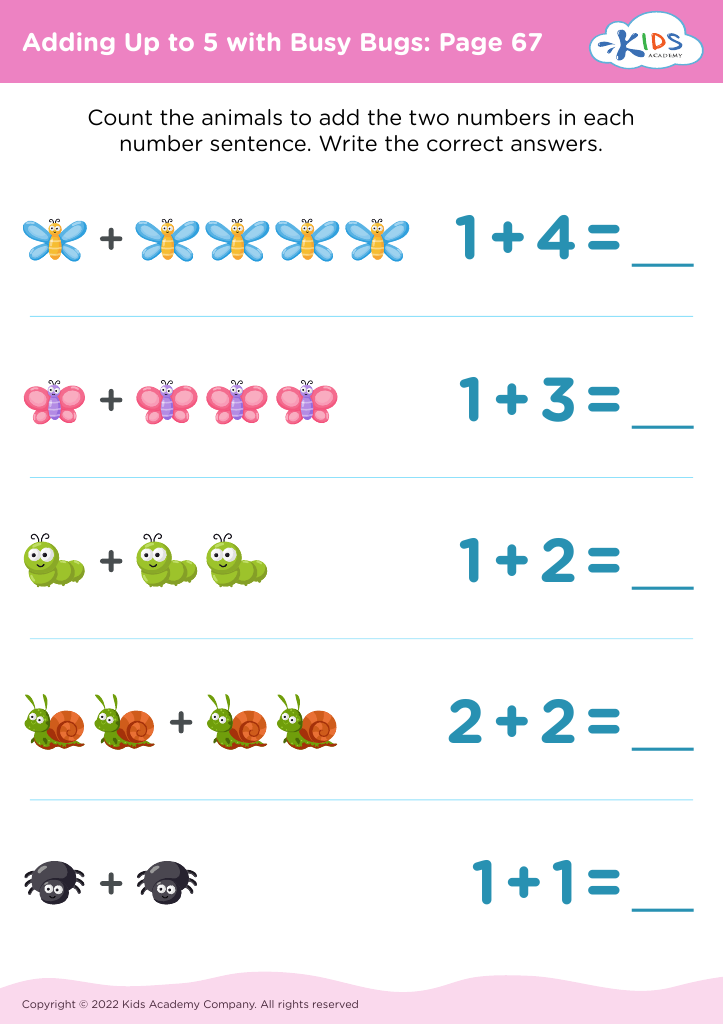
Adding Up to 5 with Busy Bugs: Page 67
Worksheet
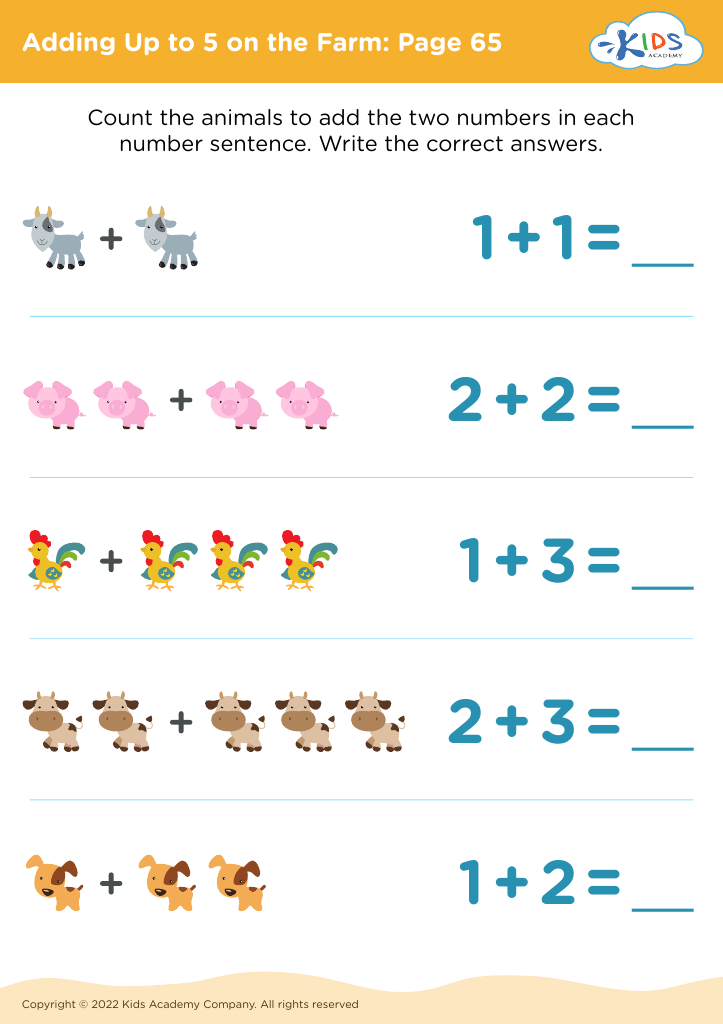
Adding Up to 5 on the Farm: Page 65
Worksheet
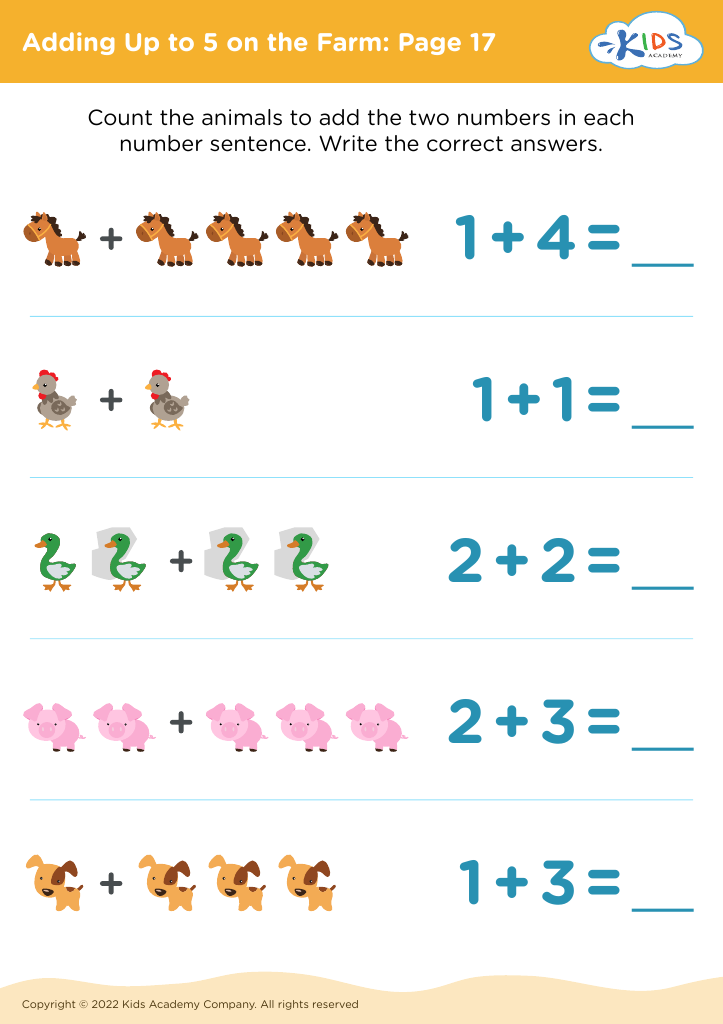
Adding Up to 5 on the Farm: Page 17
Worksheet
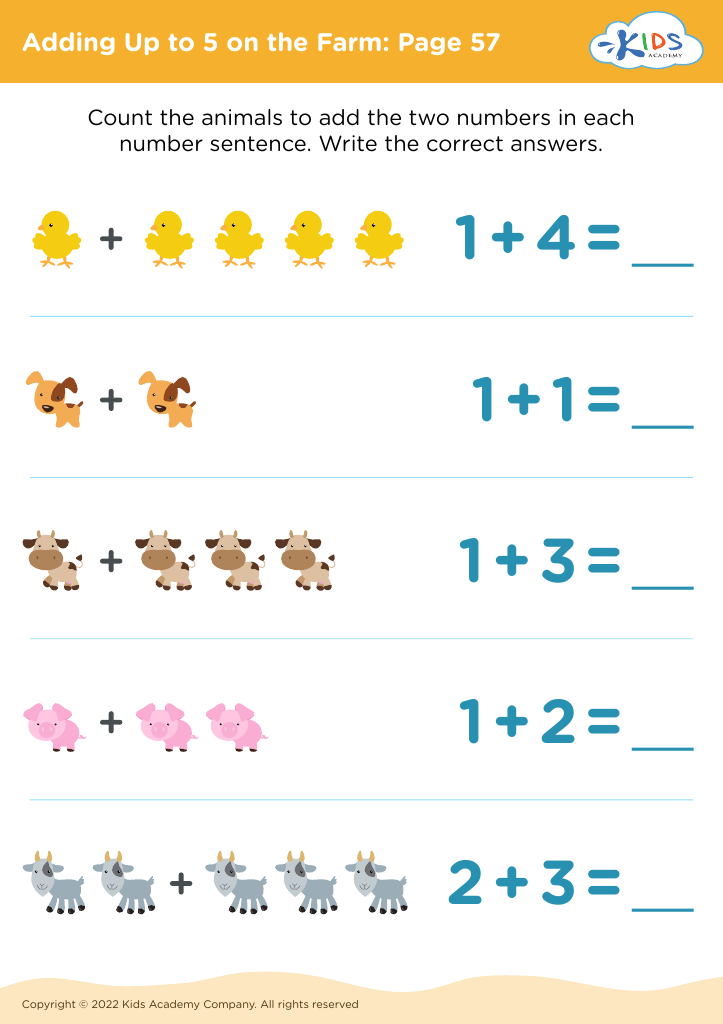
Adding Up to 5 on the Farm: Page 57
Worksheet
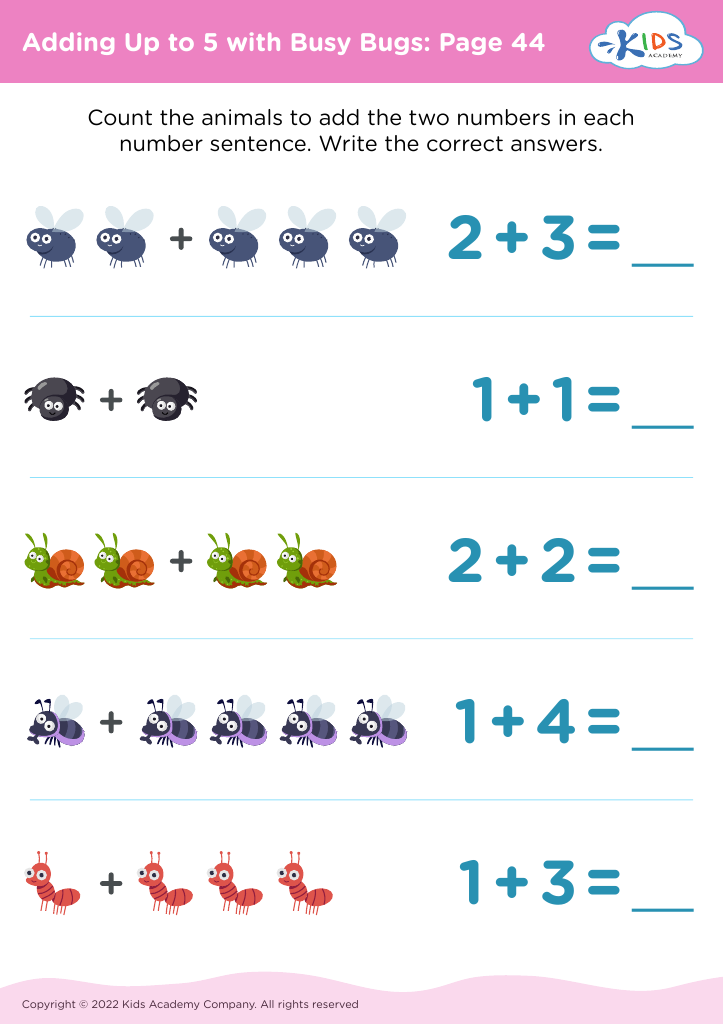
Adding Up to 5 with Busy Bugs: Page 44
Worksheet
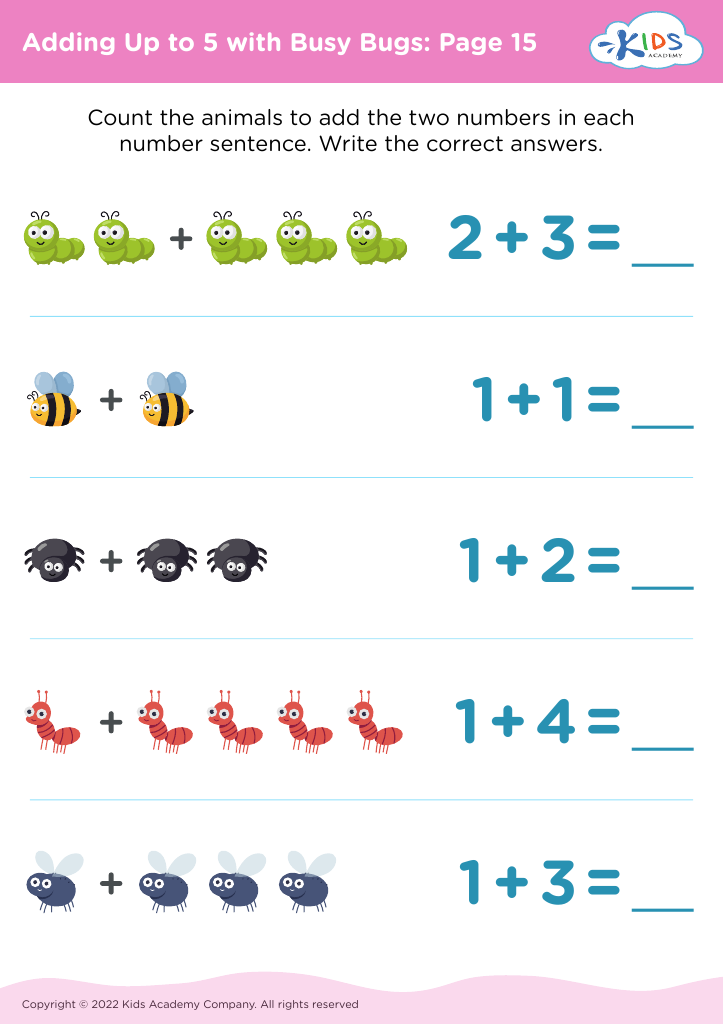
Adding Up to 5 with Busy Bugs: Page 15
Worksheet


Understanding quantity and the concept of adding up to 5 is foundational for young learners aged 4-8, setting the stage for future mathematical understanding. At this age, children are rapidly developing cognitive skills and their ability to grasp numbers directly influences their academic journey. Mastering the idea of quantity helps children recognize and interpret numerical relationships, a critical skill necessary for more complex concepts like addition and subtraction.

When children can visualize and articulate how quantities combine to form larger totals—like recognizing that 2 plus 3 equals 5—they build confidence and a sense of competence in math. This understanding aids in everyday scenarios, fostering essential life skills like counting items, understanding prices, and even managing time.

Moreover, engaging with quantity helps solidify counting skills, improves memory, and encourage problem-solving abilities. Parents and teachers play a crucial role, as their support can turn abstract concepts into tangible experiences through play, games, and interactive activities. By prioritizing such foundational skills, caregivers make a significant impact on children's academic success and overall mathematical fluency, shaping a future where children feel comfortable and capable in their mathematical abilities.