Filters

84 filtered results

Clear all filters
Favorites
With answer key
Interactive

84 filtered results

Difficulty Level

Grade


Check out this FREE Trial Lesson on Adding Up to 5 for age 4-8!

T

Favorites
With answer key
Interactive
  • 4-8
  • Visual Learning
  • Adding Up to 5
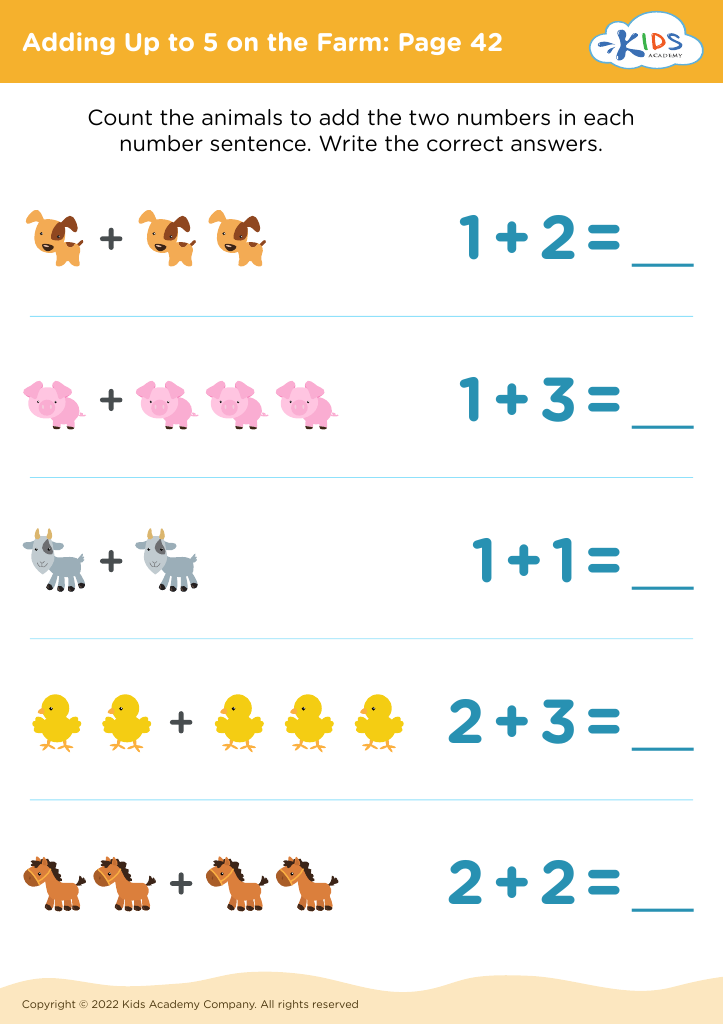
Adding Up to 5 on the Farm: Page 42
Worksheet
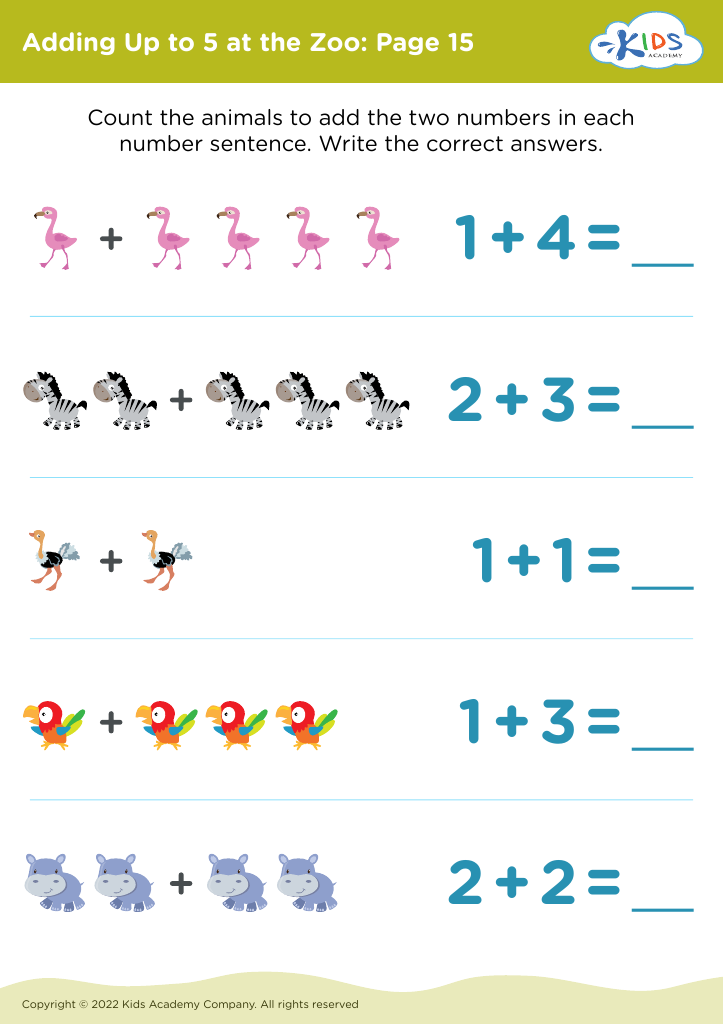
Adding Up to 5 at the Zoo: Page 15
Worksheet
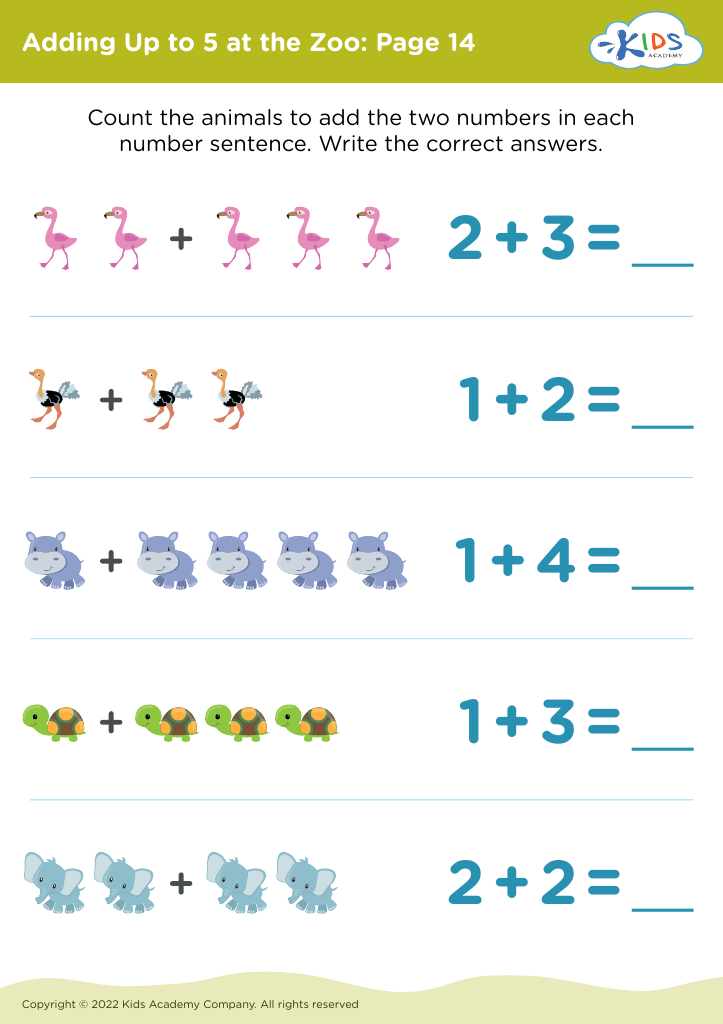
Adding Up to 5 at the Zoo: Page 14
Worksheet
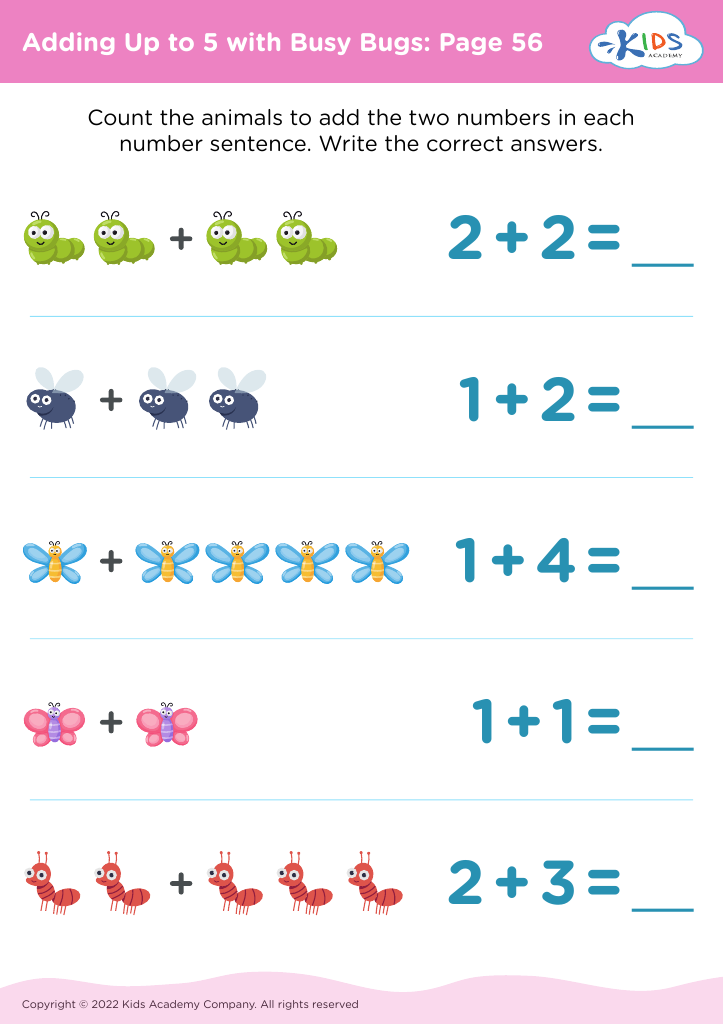
Adding Up to 5 with Busy Bugs: Page 56
Worksheet
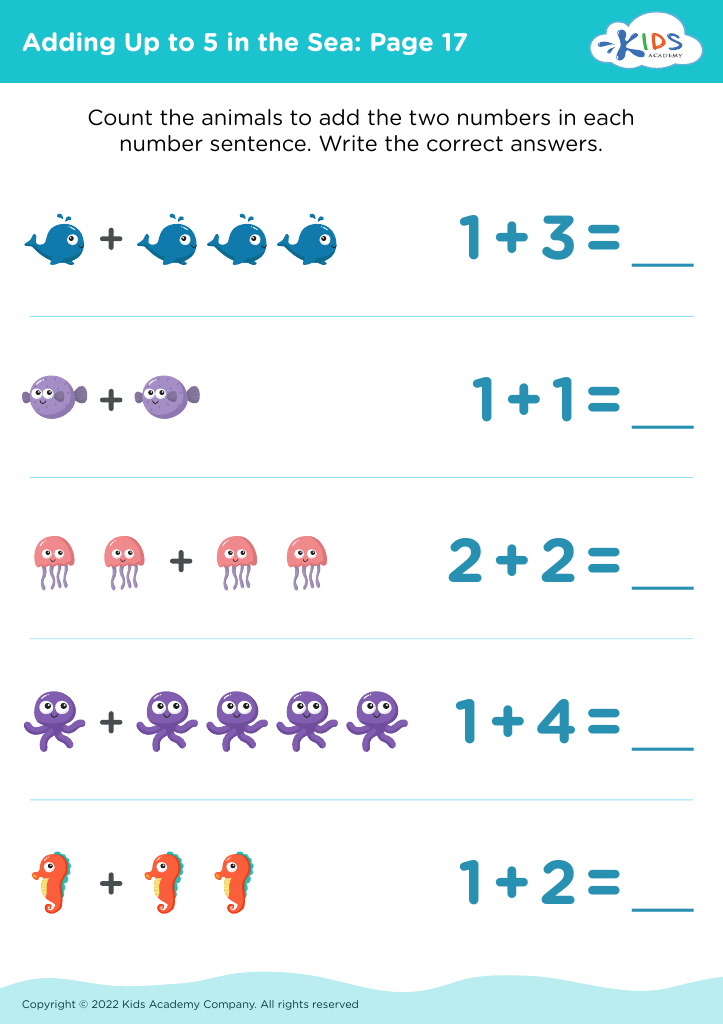
Adding Up to 5 in the Sea: Page 17
Worksheet
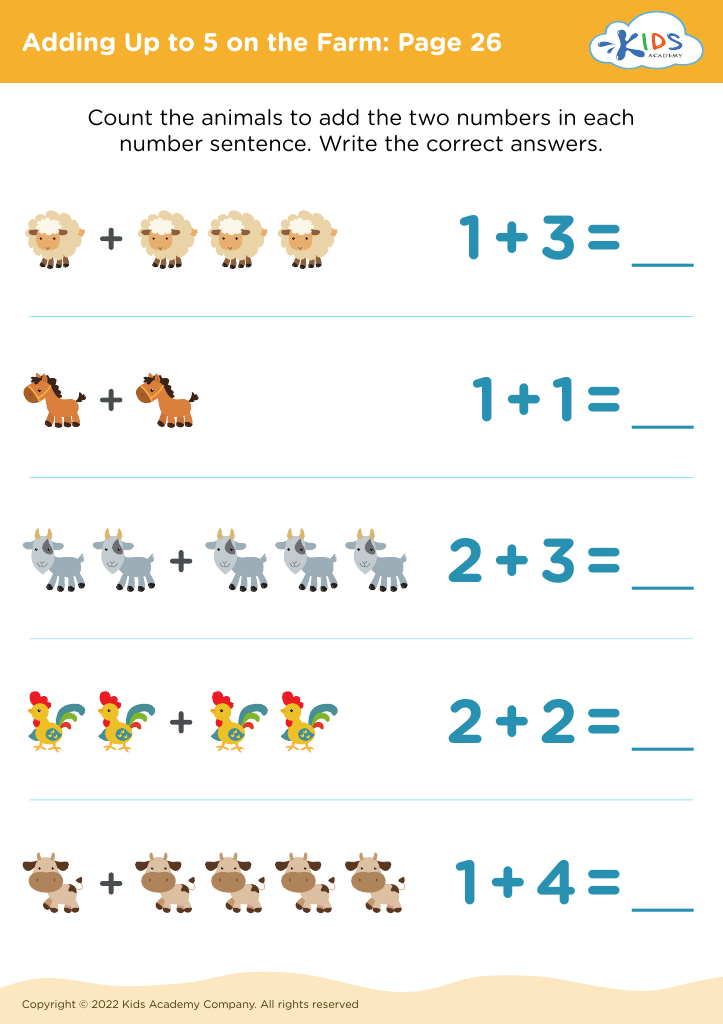
Adding Up to 5 on the Farm: Page 26
Worksheet
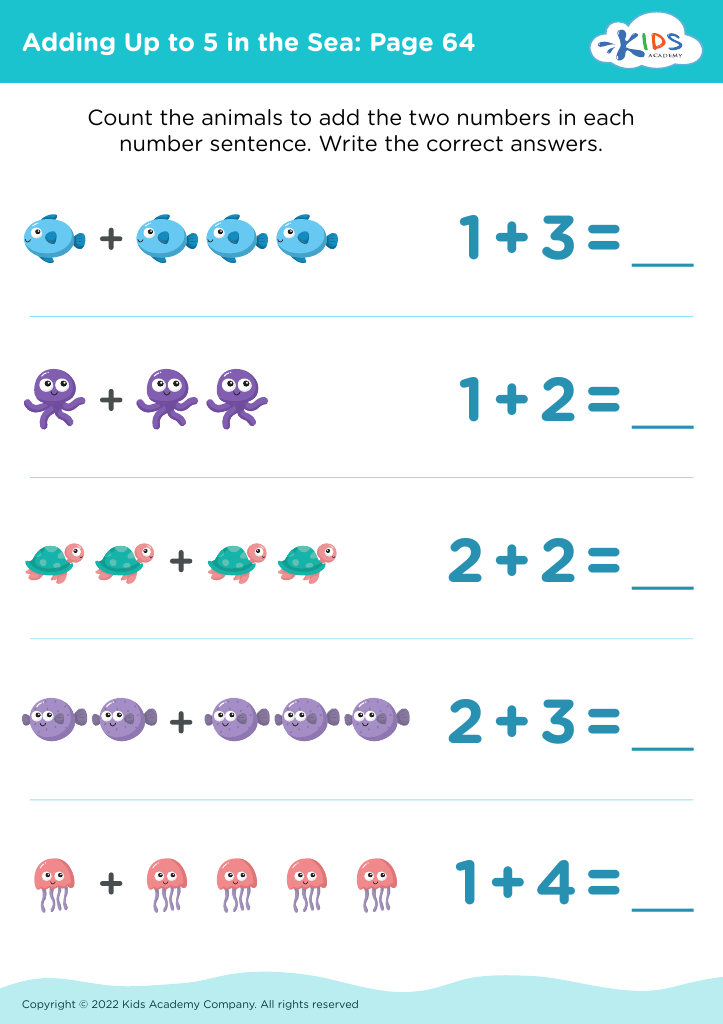
Adding Up to 5 in the Sea: Page 64
Worksheet
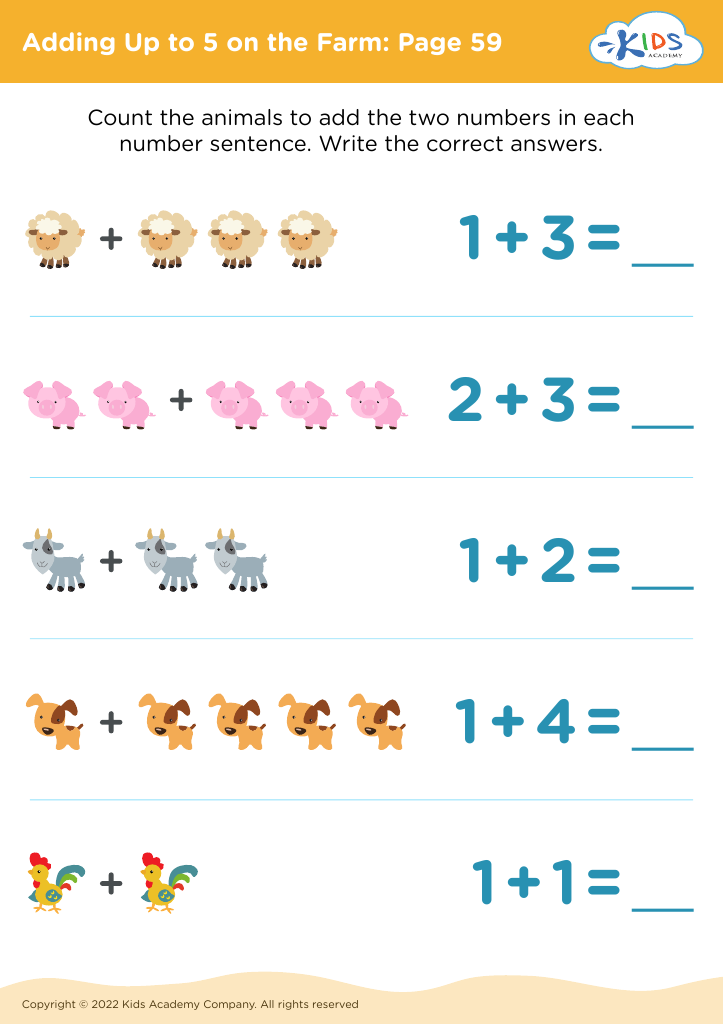
Adding Up to 5 on the Farm: Page 59
Worksheet
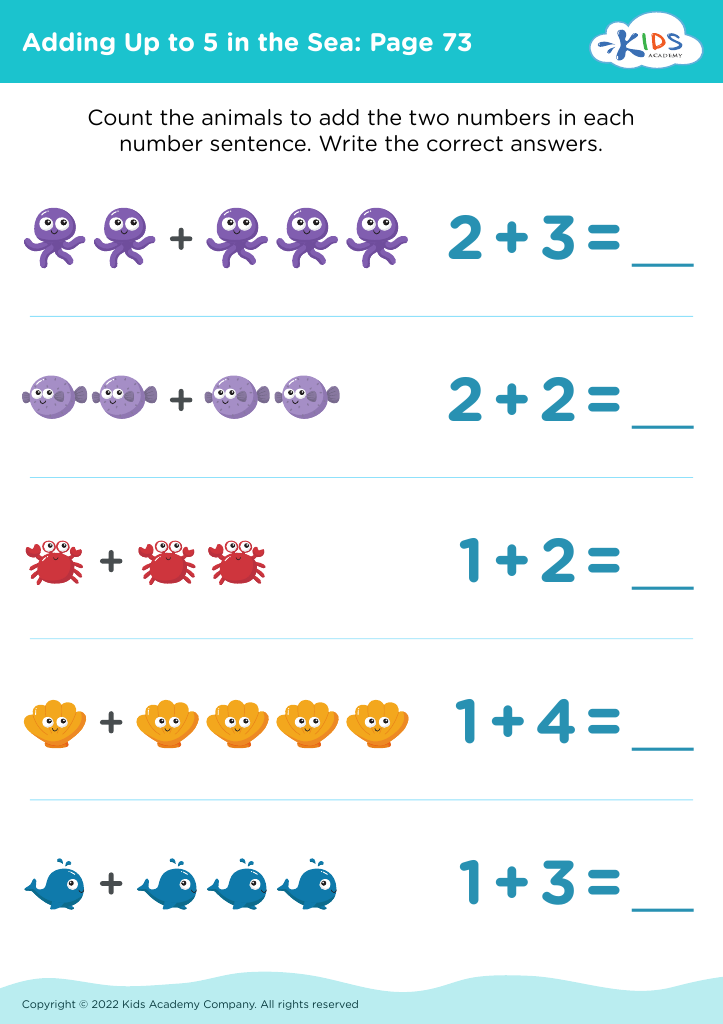
Adding Up to 5 in the Sea: Page 73
Worksheet
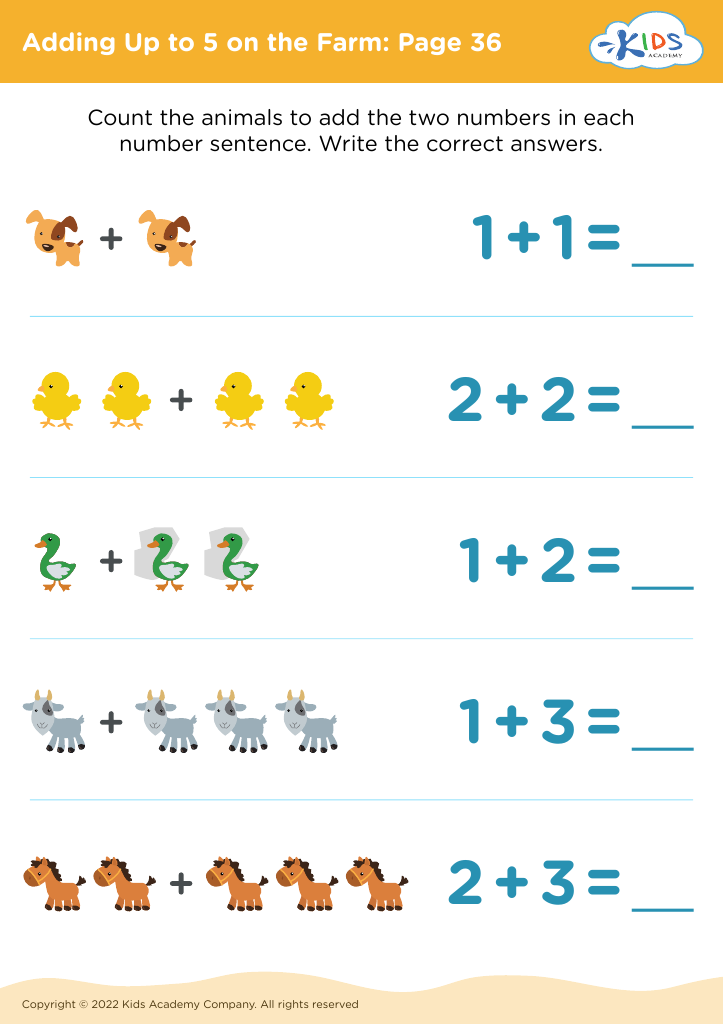
Adding Up to 5 on the Farm: Page 36
Worksheet
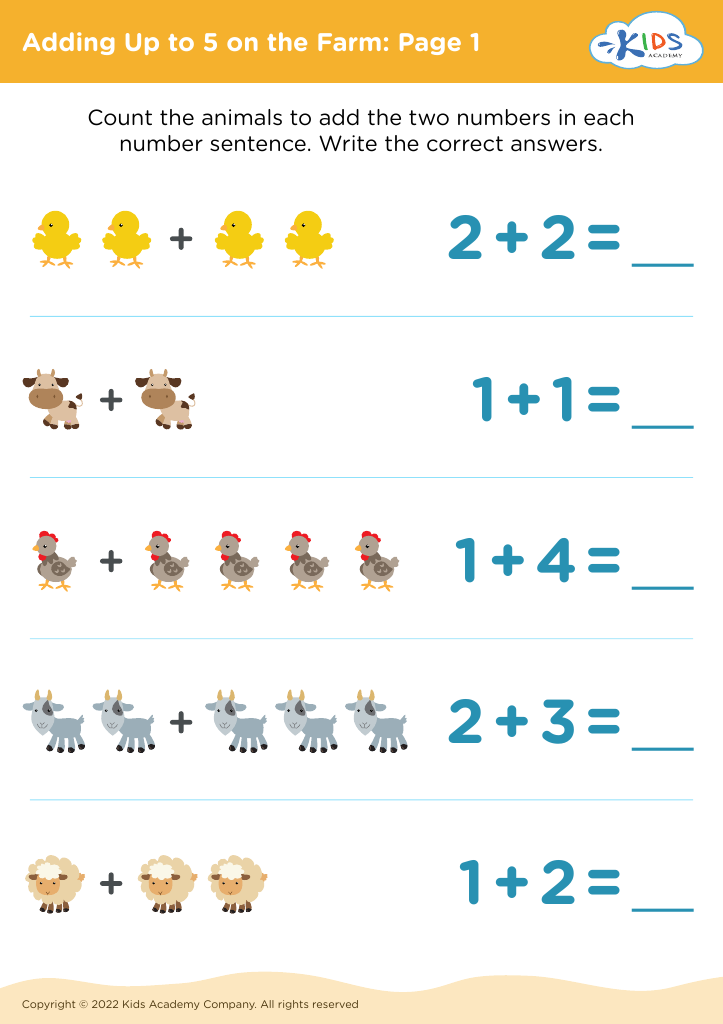
Adding Up to 5 on the Farm: Page 1
Worksheet
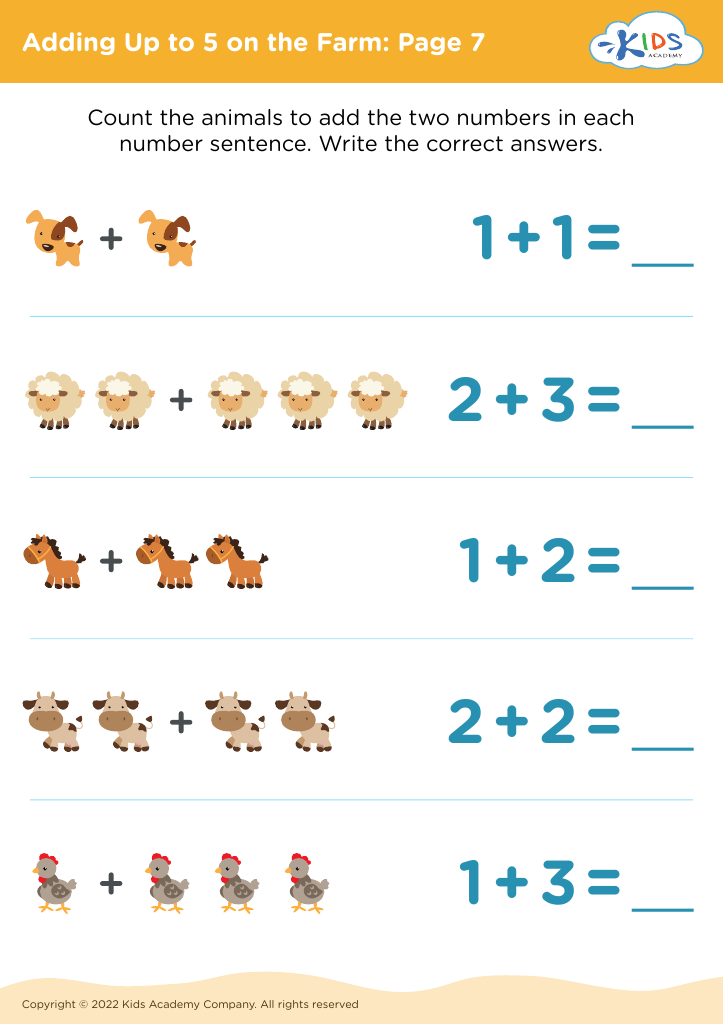
Adding Up to 5 on the Farm: Page 7
Worksheet
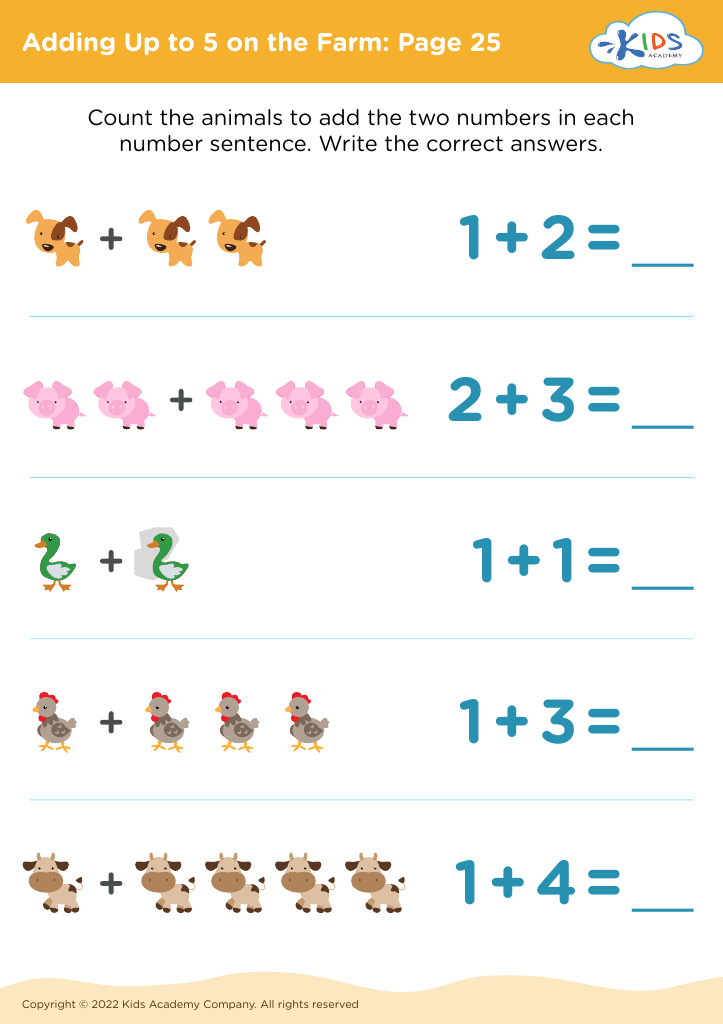
Adding Up to 5 on the Farm: Page 25
Worksheet
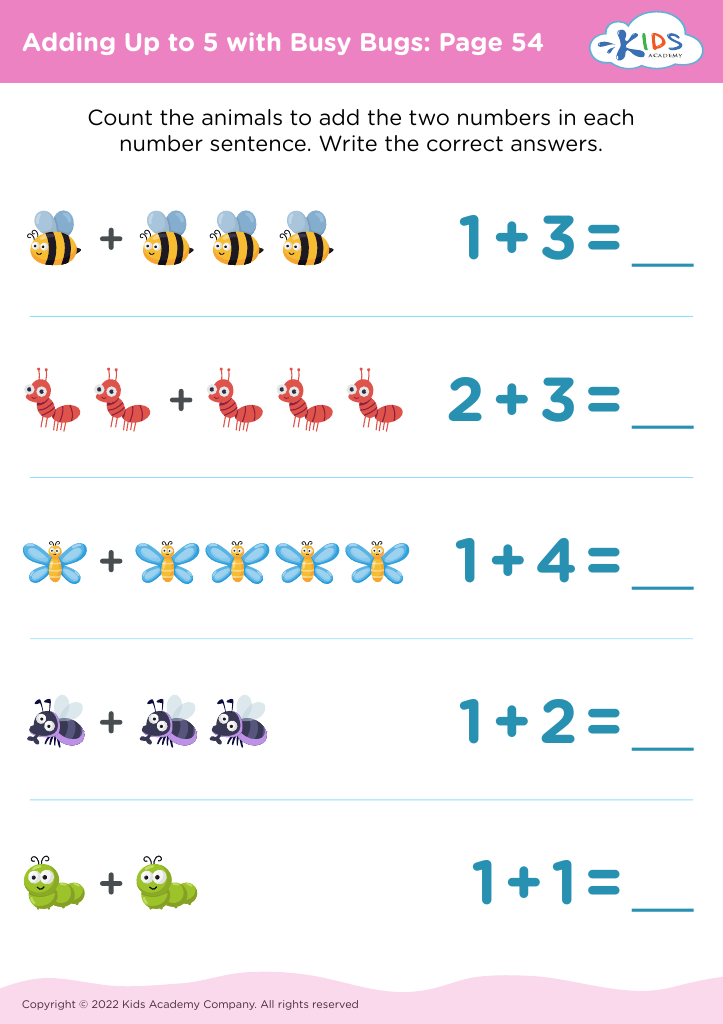
Adding Up to 5 with Busy Bugs: Page 54
Worksheet
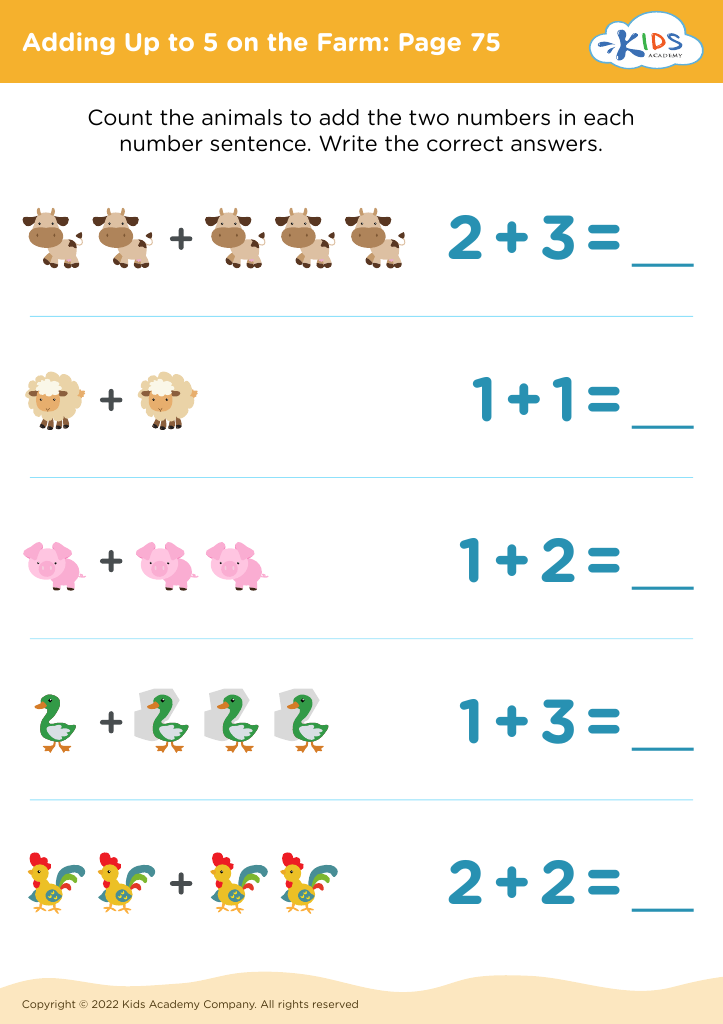
Adding Up to 5 on the Farm: Page 75
Worksheet
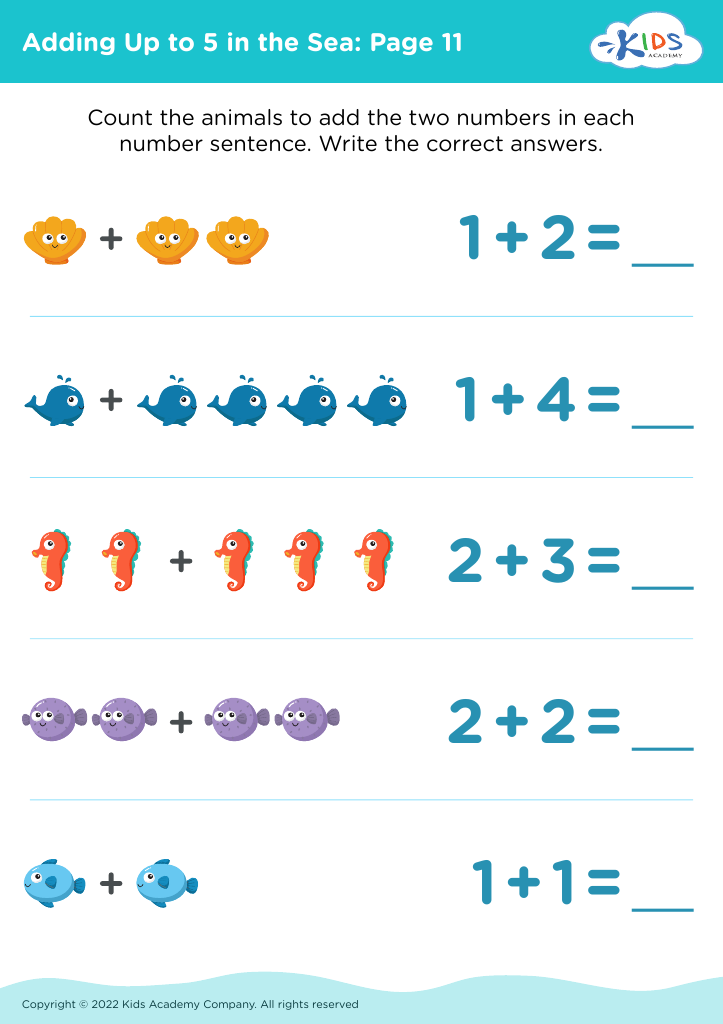
Adding Up to 5 in the Sea: Page 11
Worksheet
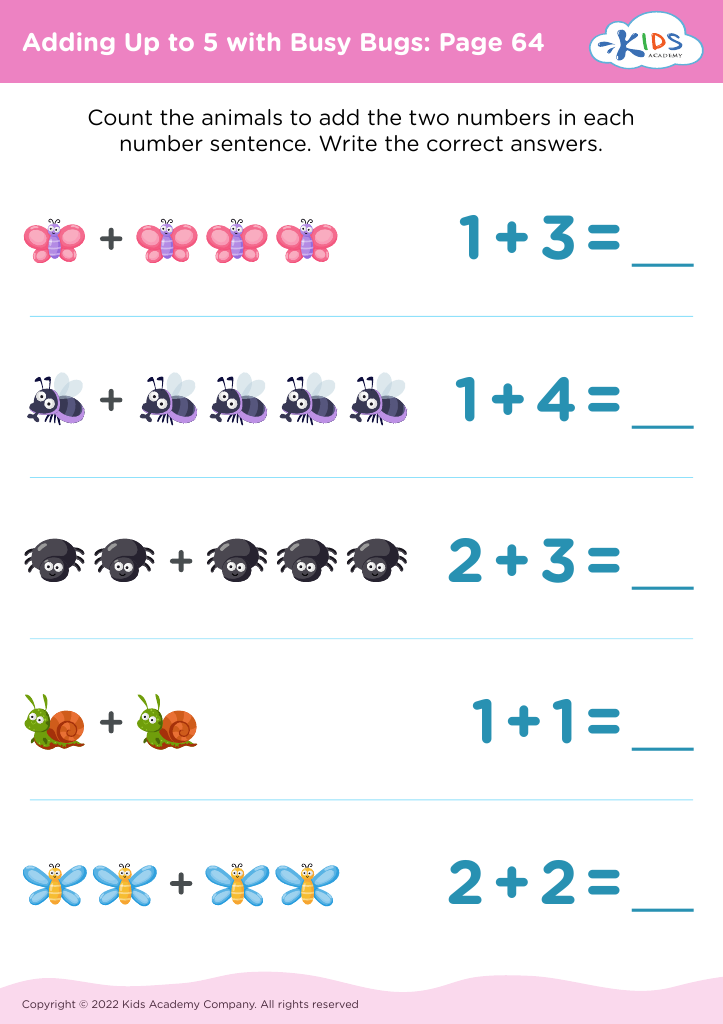
Adding Up to 5 with Busy Bugs: Page 64
Worksheet
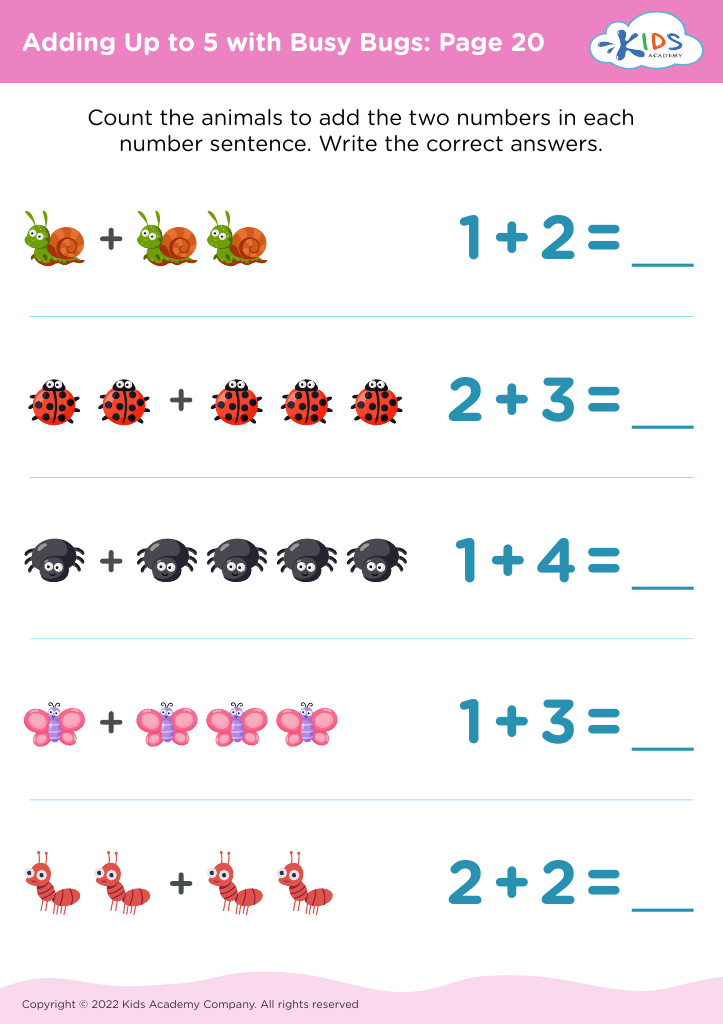
Adding Up to 5 with Busy Bugs: Page 20
Worksheet
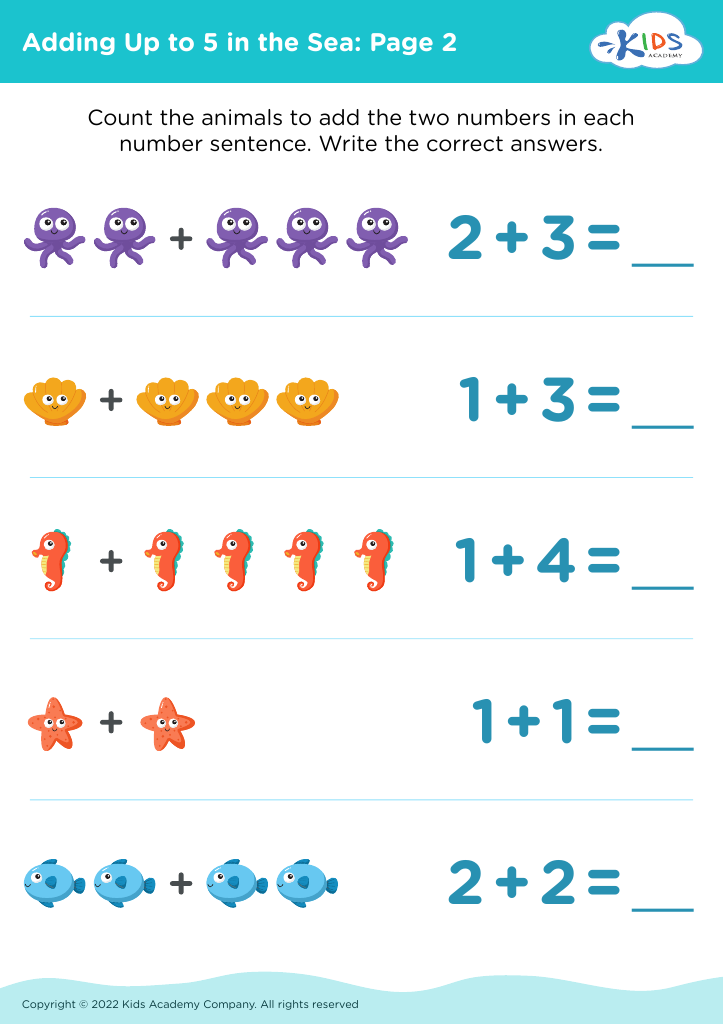
Adding Up to 5 in the Sea: Page 2

Adding Up to 5 in the Sea: Page 2

Adding Up to 5 in the Sea: Page 2
Worksheet
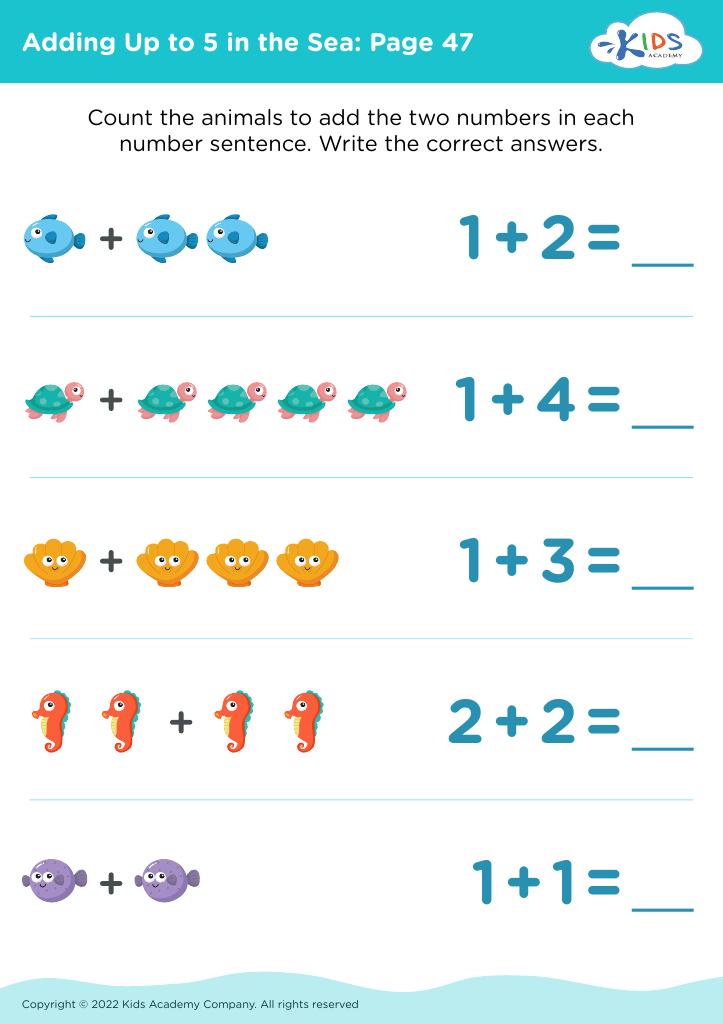
Adding Up to 5 in the Sea: Page 47
Worksheet
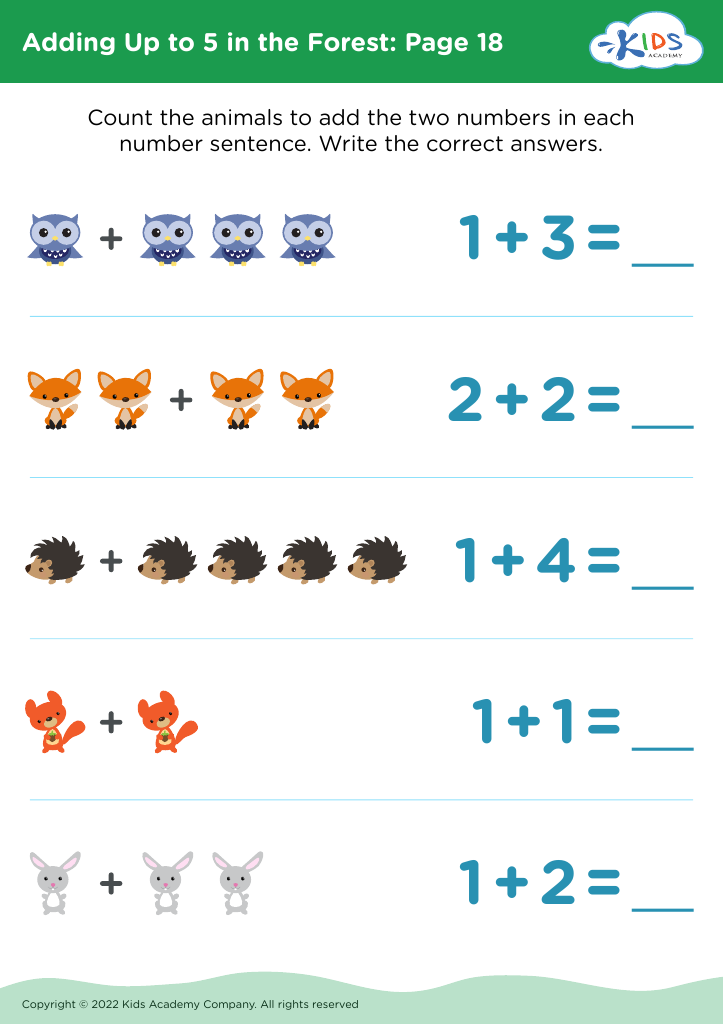
Adding Up to 5 in the Forest: Page 18
Worksheet
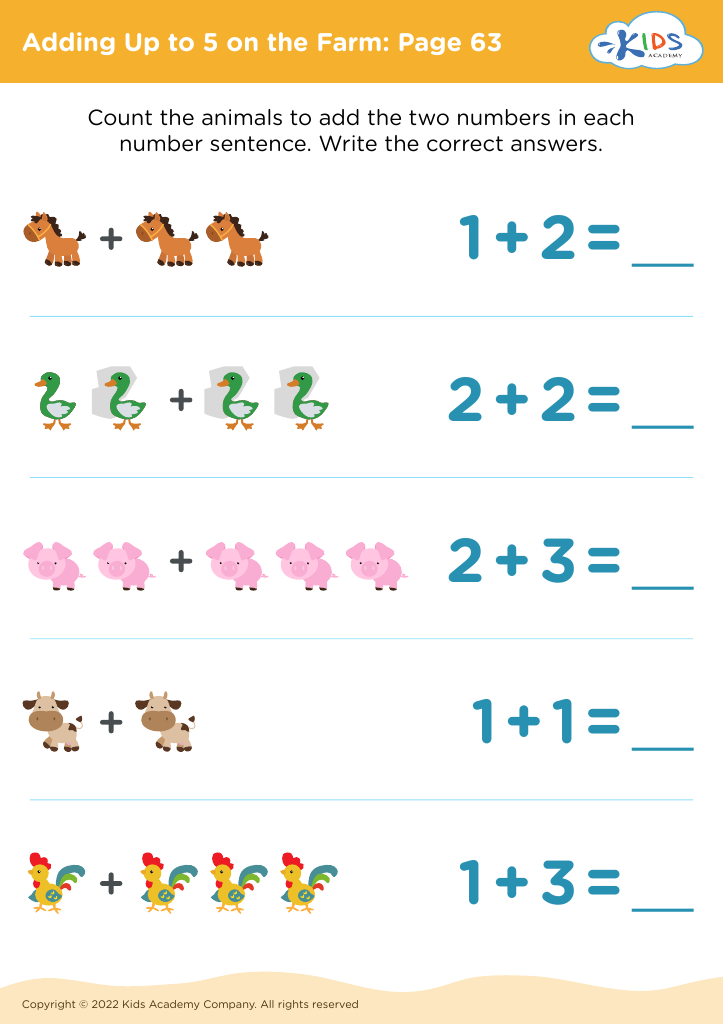
Adding Up to 5 on the Farm: Page 63
Worksheet
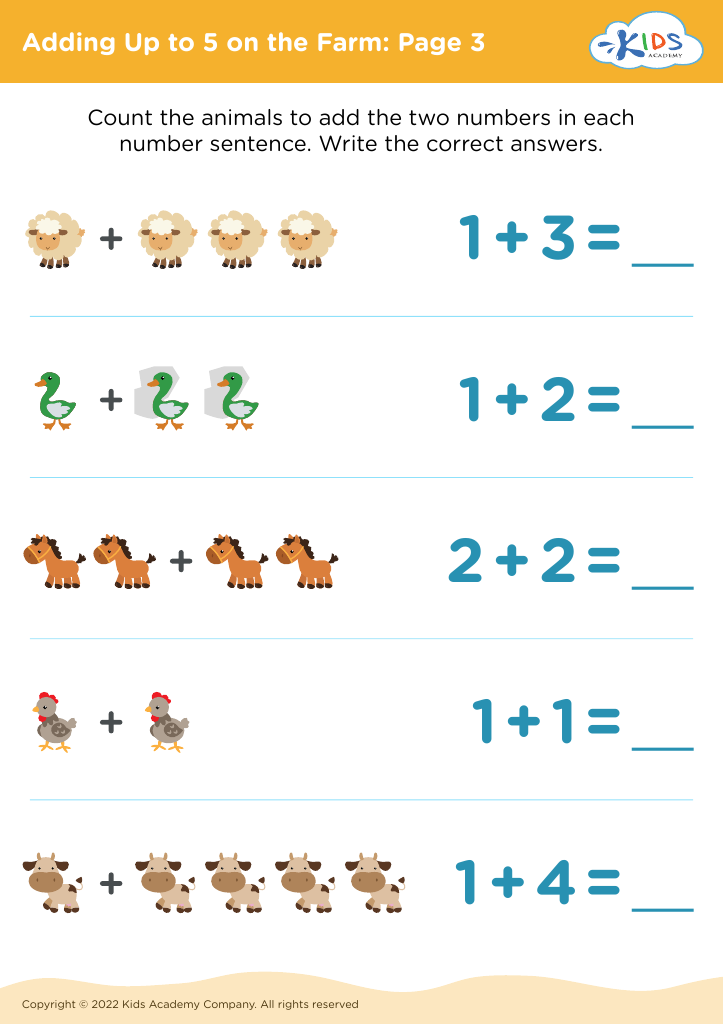
Adding Up to 5 on the Farm: Page 3
Worksheet
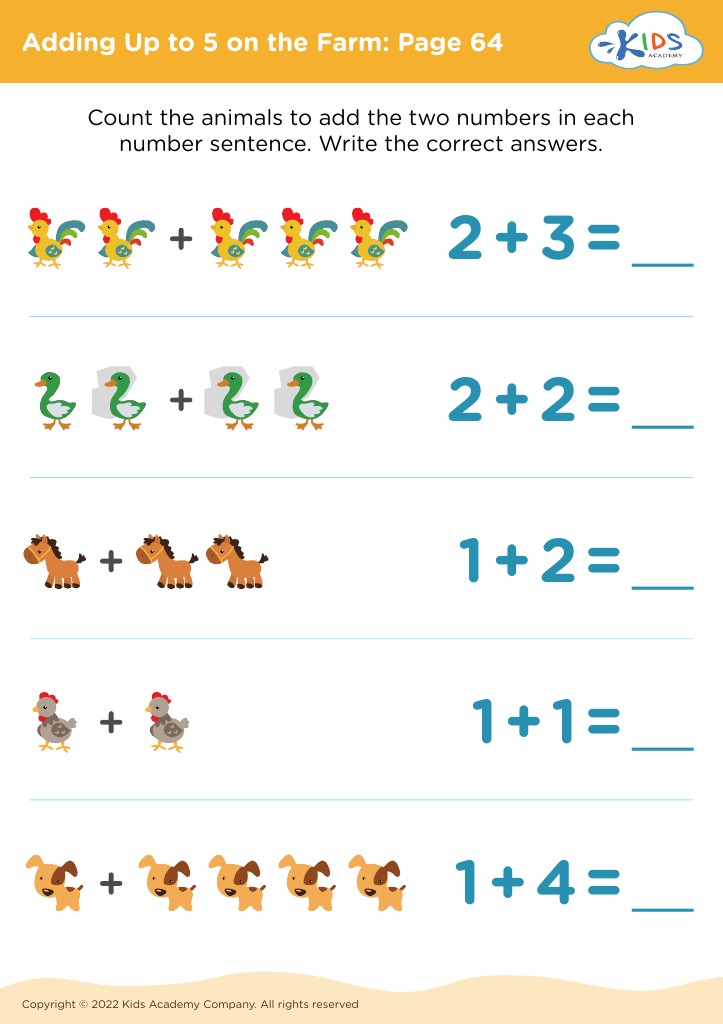
Adding Up to 5 on the Farm: Page 64
Worksheet


Understanding early math concepts like adding up to 5 using visual learning is crucial for children aged 4-8. During these formative years, developing foundational math skills sets the stage for future academic success. Visual aids, such as counting blocks, number lines, and pictorial representations, provide tangible ways for young learners to grasp abstract concepts.

Parents and teachers should care about this because visual learning is closely aligned with how children in this age group naturally explore and understand the world. By engaging their senses and building concrete-to-abstract connections, visual aids help solidify comprehension. For instance, seeing five apples split into two and three apples shows the practical application of addition, making it relatable and understandable.

Furthermore, visual learning caters to various learning styles, helping more children to succeed. It boosts spatial reasoning, pattern recognition, and problem-solving skills. Utilizing visual methods also keeps children motivated and reduces math anxiety, creating a positive learning experience.

Altogether, investing time and energy in visual learning for addition helps young learners develop a strong mathematical foundation, ensuring they're better prepared for more complex concepts. Parents and teachers who focus on this approach help cultivate confident and competent problem-solvers equipped for future educational challenges.