Filters

34 filtered results

Clear all filters
Favorites
With answer key
Interactive

34 filtered results

Difficulty Level

Grade


Subject

    Check out this FREE Trial Lesson on Adding up to 50 for age 4-8!

    My Family

    Favorites
    With answer key
    Interactive
    • 4-8
    • Counting skills
    • Adding up to 50
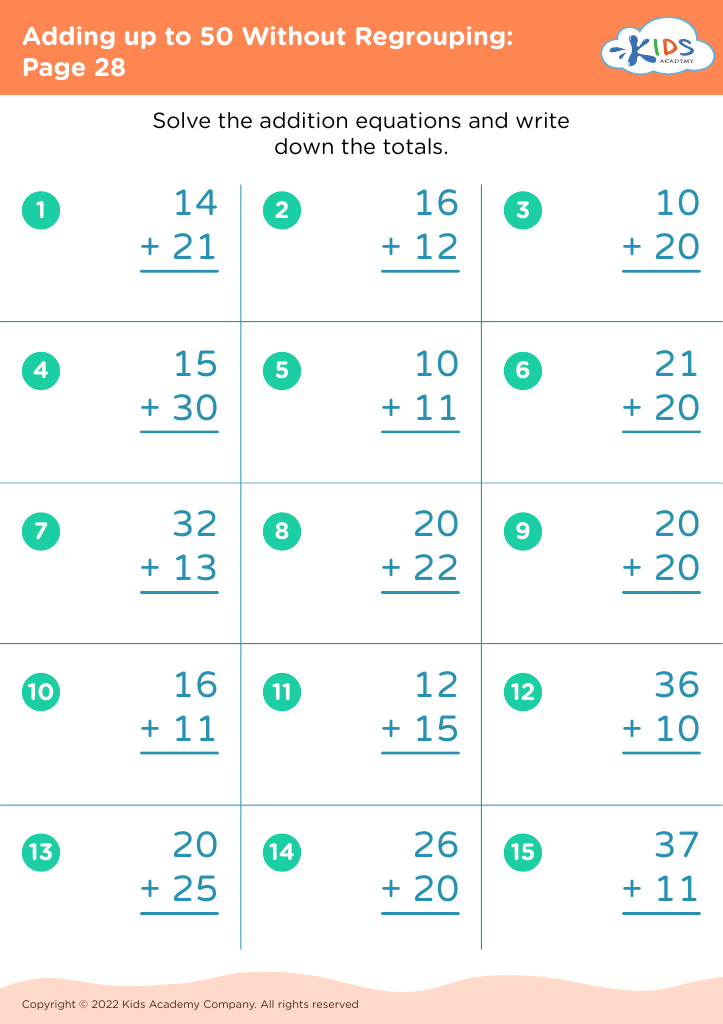
    Adding up to 50 Without Regrouping: Page 28
    Adding up to 50 Without Regrouping: Page 28
    Adding up to 50 Without Regrouping: Page 28
    Worksheet
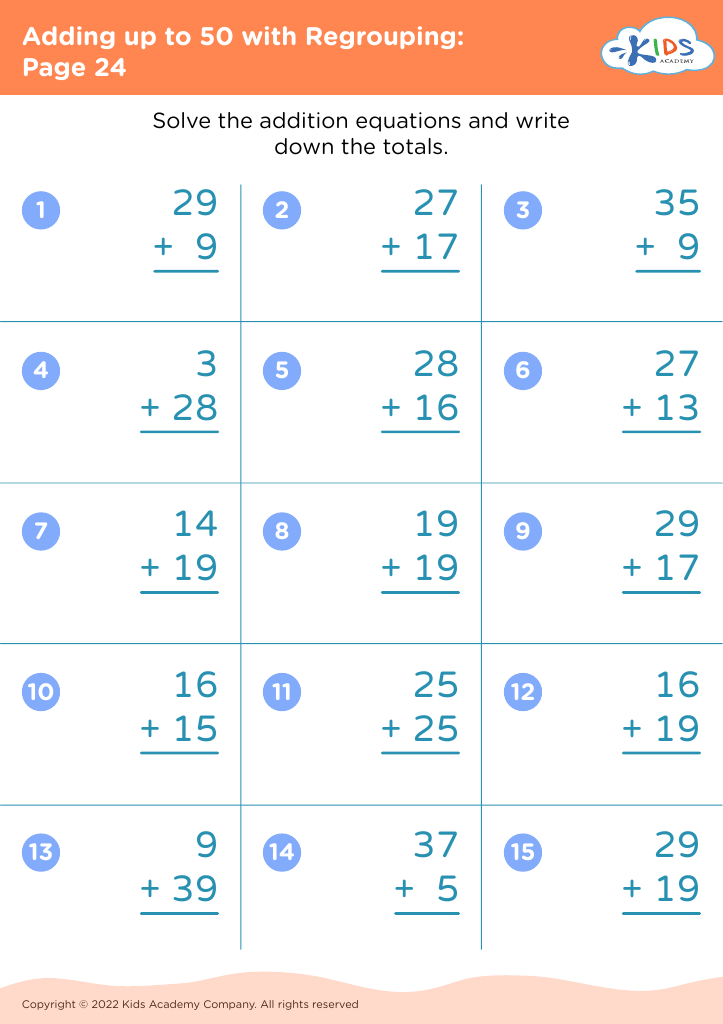
    Adding up to 50 with Regrouping: Page 24
    Adding up to 50 with Regrouping: Page 24
    Adding up to 50 with Regrouping: Page 24
    Worksheet
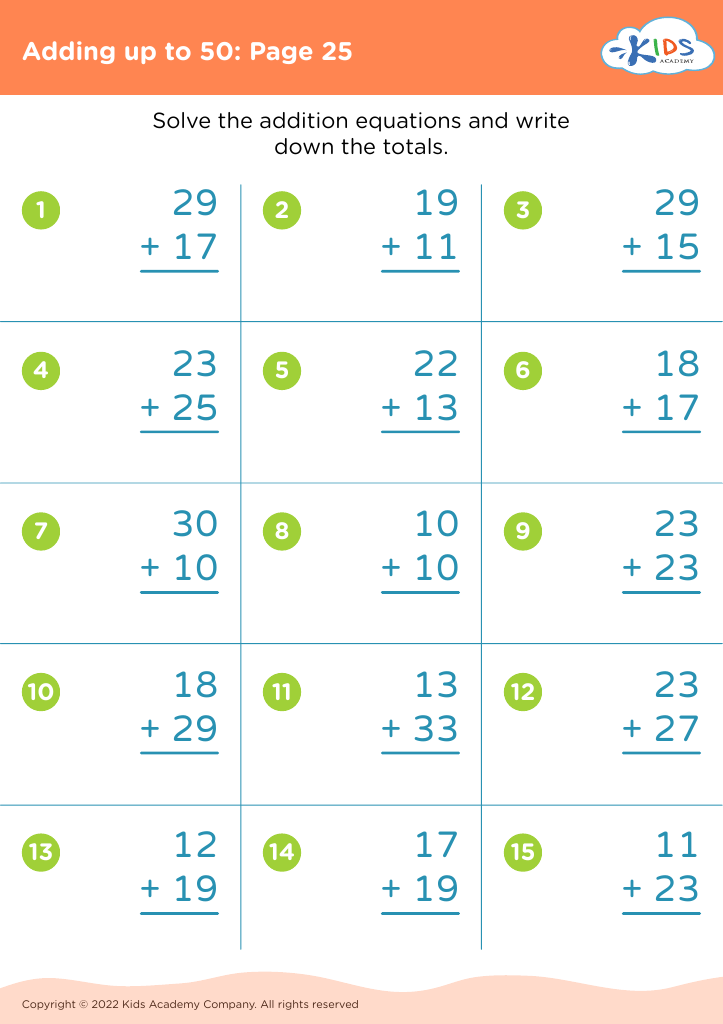
    Adding up to 50: Page 25
    Adding up to 50: Page 25

    Adding up to 50: Page 25

    Adding up to 50: Page 25
    Worksheet
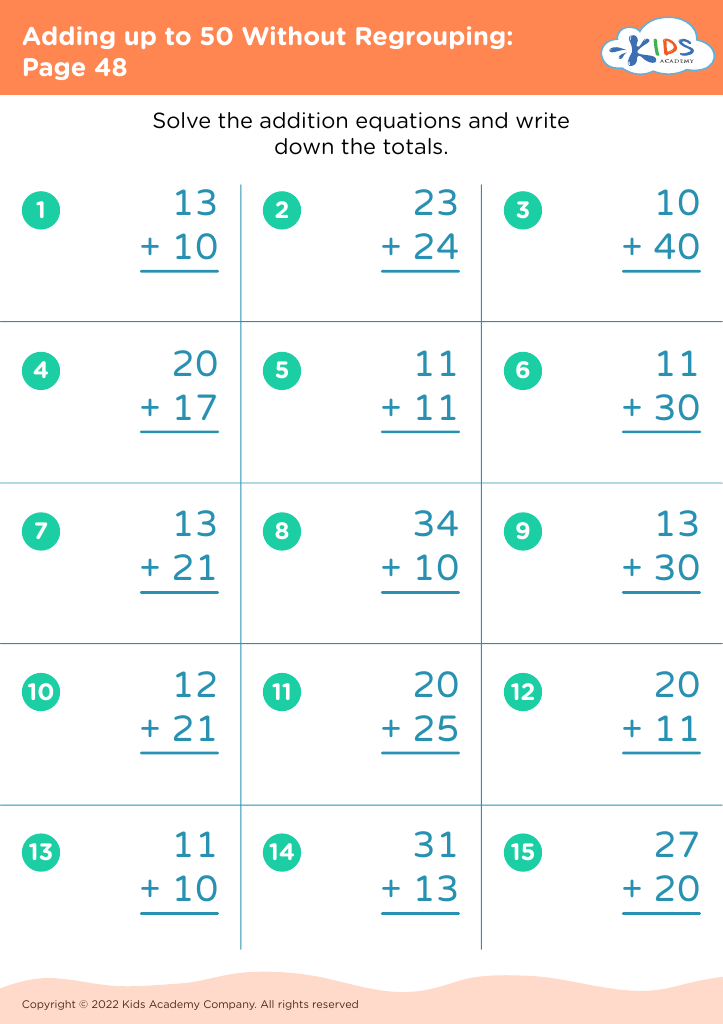
    Adding up to 50 Without Regrouping: Page 48
    Adding up to 50 Without Regrouping: Page 48
    Adding up to 50 Without Regrouping: Page 48
    Worksheet
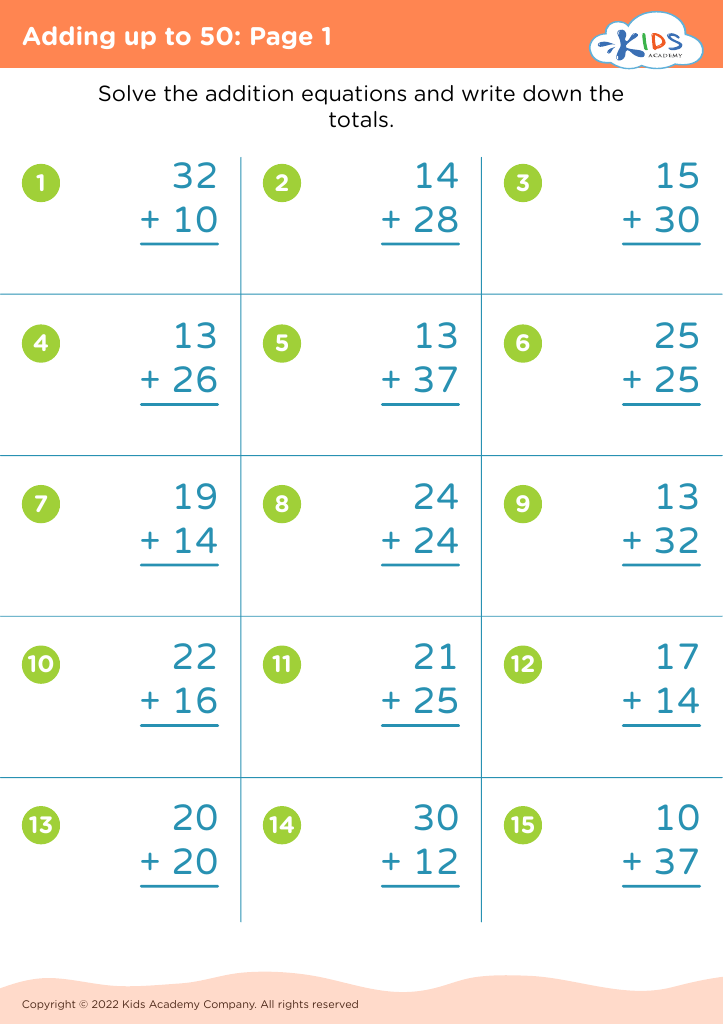
    Adding up to 50: Page 1
    Adding up to 50: Page 1

    Adding up to 50: Page 1

    Adding up to 50: Page 1
    Worksheet
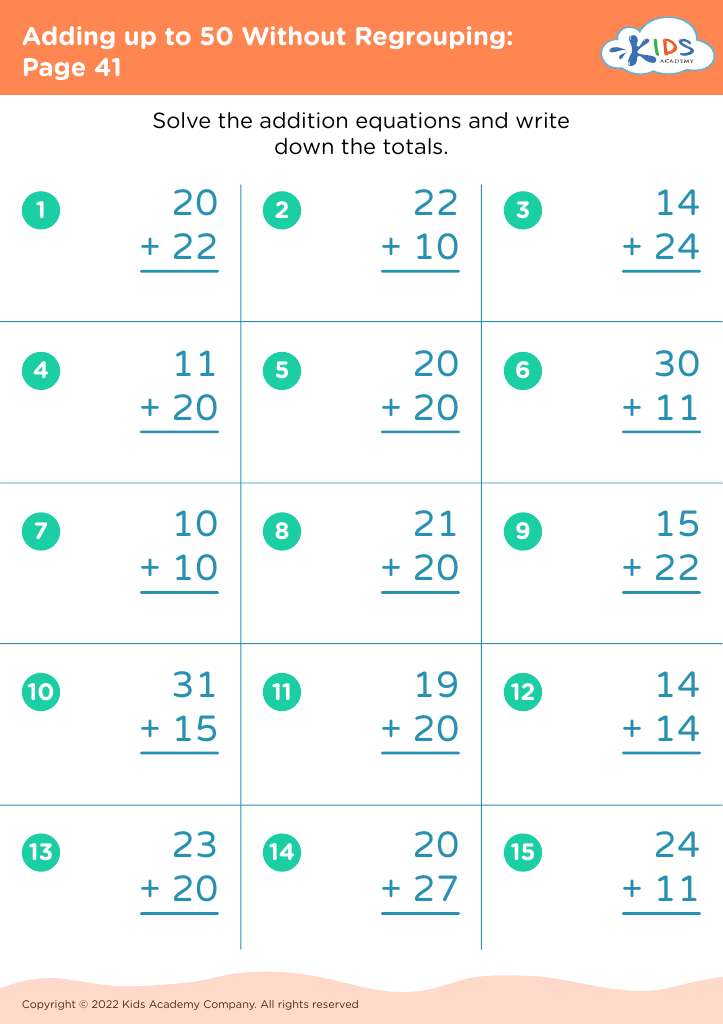
    Adding up to 50 Without Regrouping: Page 41
    Adding up to 50 Without Regrouping: Page 41
    Adding up to 50 Without Regrouping: Page 41
    Worksheet
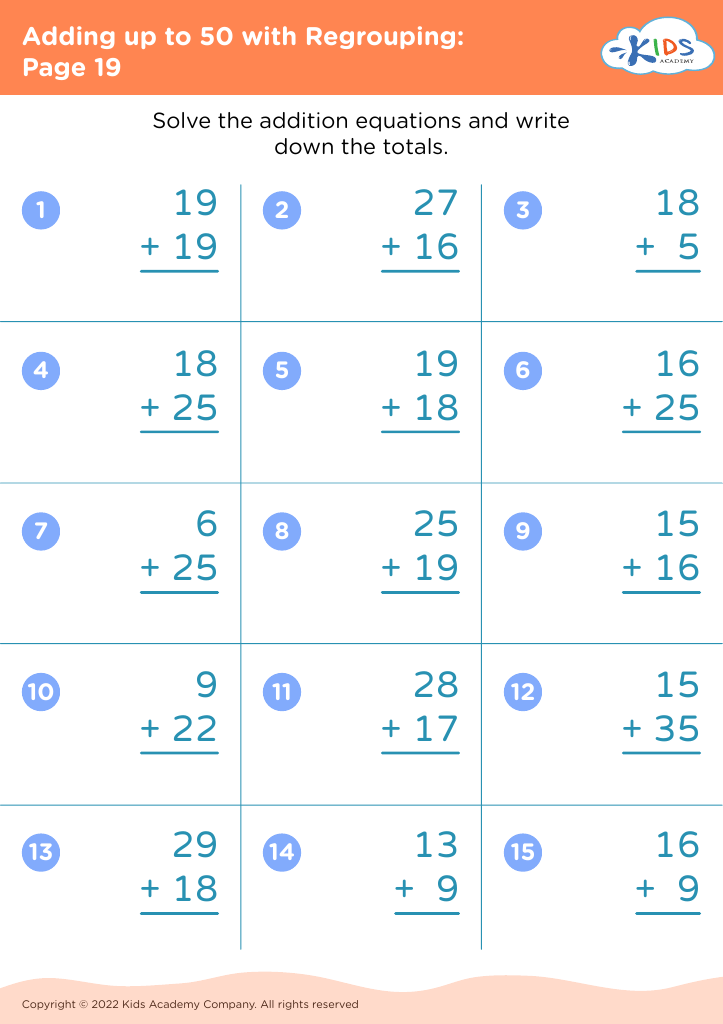
    Adding up to 50 with Regrouping: Page 19
    Adding up to 50 with Regrouping: Page 19
    Adding up to 50 with Regrouping: Page 19
    Worksheet
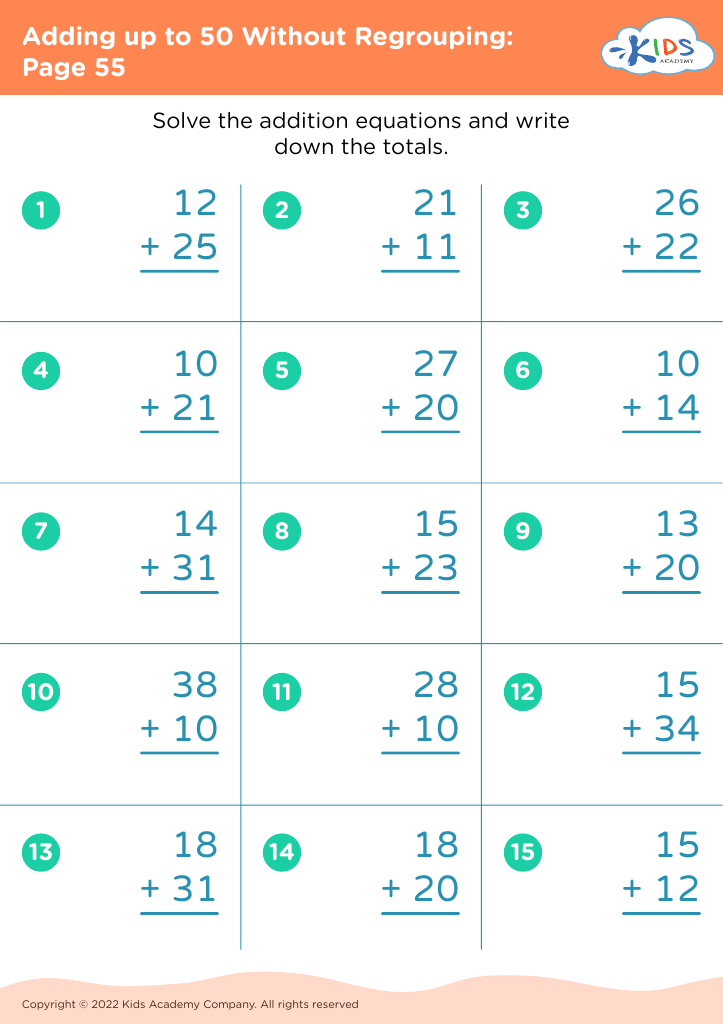
    Adding up to 50 Without Regrouping: Page 55
    Adding up to 50 Without Regrouping: Page 55
    Adding up to 50 Without Regrouping: Page 55
    Worksheet
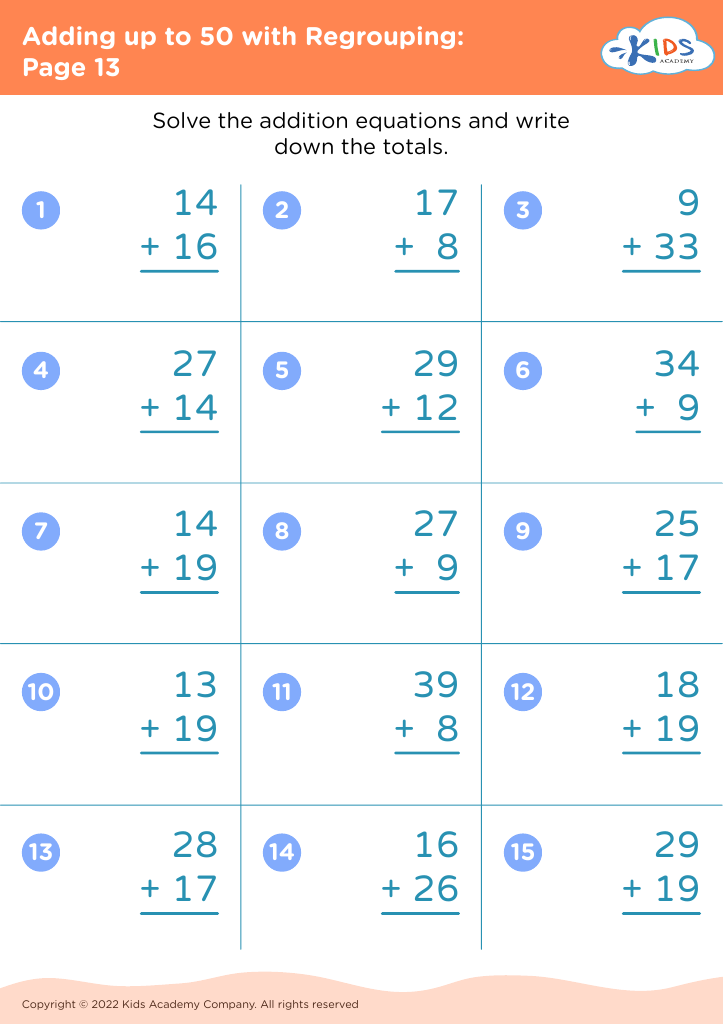
    Adding up to 50 with Regrouping: Page 13
    Adding up to 50 with Regrouping: Page 13
    Adding up to 50 with Regrouping: Page 13
    Worksheet
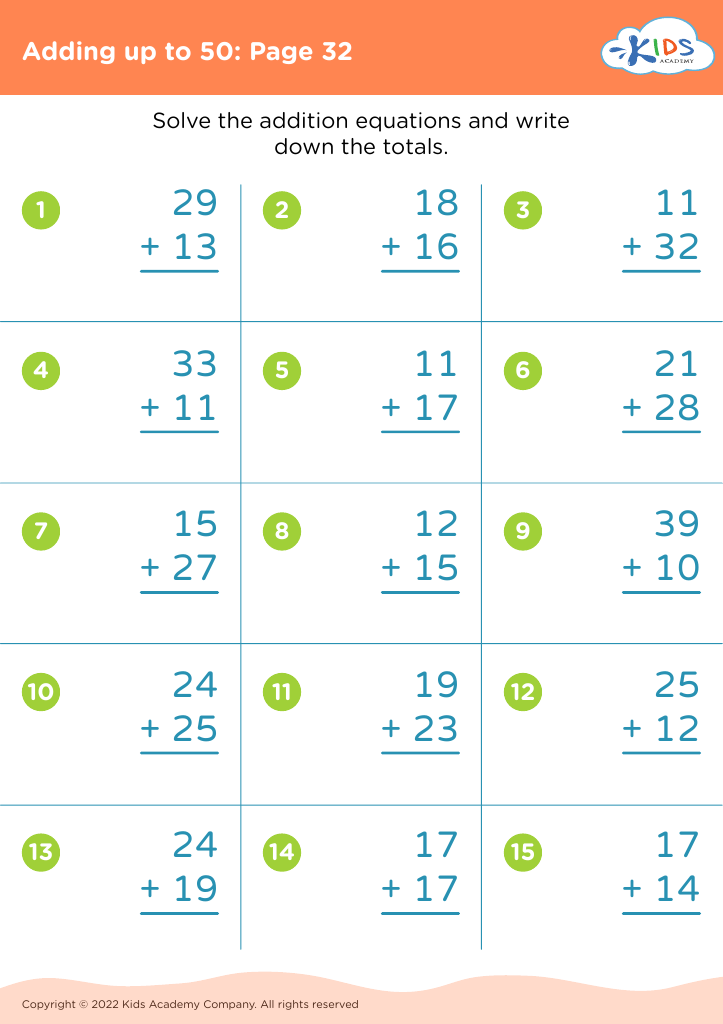
    Adding up to 50: Page 32
    Adding up to 50: Page 32

    Adding up to 50: Page 32

    Adding up to 50: Page 32
    Worksheet


    Counting skills and the ability to add up to 50 are foundational mathematical concepts crucial for children aged 4 to 8. Early development of these skills facilitates number sense, which lays the groundwork for more complex mathematical understanding later on. Parents and teachers should recognize that children who are proficient in counting and simple addition not only perform better academically but also develop critical thinking and problem-solving abilities through mathematical reasoning.

    Mastering counting up to 50 enhances a child's ability to recognize patterns, engage in logical thinking, and build confidence in their mathematical skills. Moreover, these skills correlate with real-life applications, such as managing money, measuring ingredients in cooking, and understanding time, thereby enriching their everyday experiences.

    Encouraging counting through playful activities and engaging games can make learning enjoyable and less intimidating. This playful approach nurtures a positive attitude towards math, often leading to sustained interest throughout their educational journey. Additionally, early mastery can help identify students who may need extra support to grasp advanced concepts, ensuring they receive the resources necessary to succeed. Therefore, it is vital for adults to foster strong counting and addition skills in young learners to promote their overall growth and academic success.