Filters

21 filtered results

Clear all filters
Favorites
With answer key
Interactive

21 filtered results

Difficulty Level

Grade


Introduce young learners to the foundations of math with our collection of Basic Addition & Subtraction Worksheets for Ages 4-8 available at Kids Academy. Designed to engage and educate, these worksheets help children practice essential arithmetic skills through a variety of fun and interactive activities. Your child will develop confidence in solving basic math problems, while gradually improving their addition and subtraction capabilities. Perfect for both in-class and at-home learning, these printable worksheets ensure young students attain solid math proficiency in an enjoyable and stress-free way. Start your child's math journey today with our expertly crafted resources!
Check out this FREE Trial Lesson on Addition & Subtraction for age 4-8!

P

Favorites
With answer key
Interactive
  • 4-8
  • Basic Addition
  • Addition & Subtraction
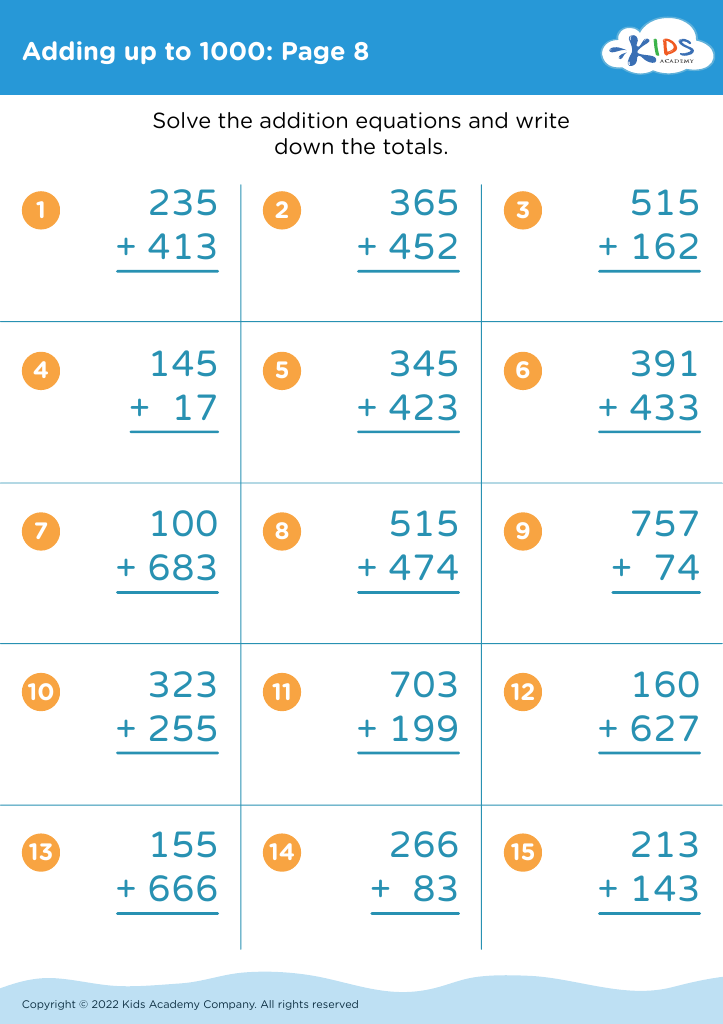
Adding up to 1000: Page 8

Adding up to 1000: Page 8

Adding up to 1000: Page 8
Worksheet
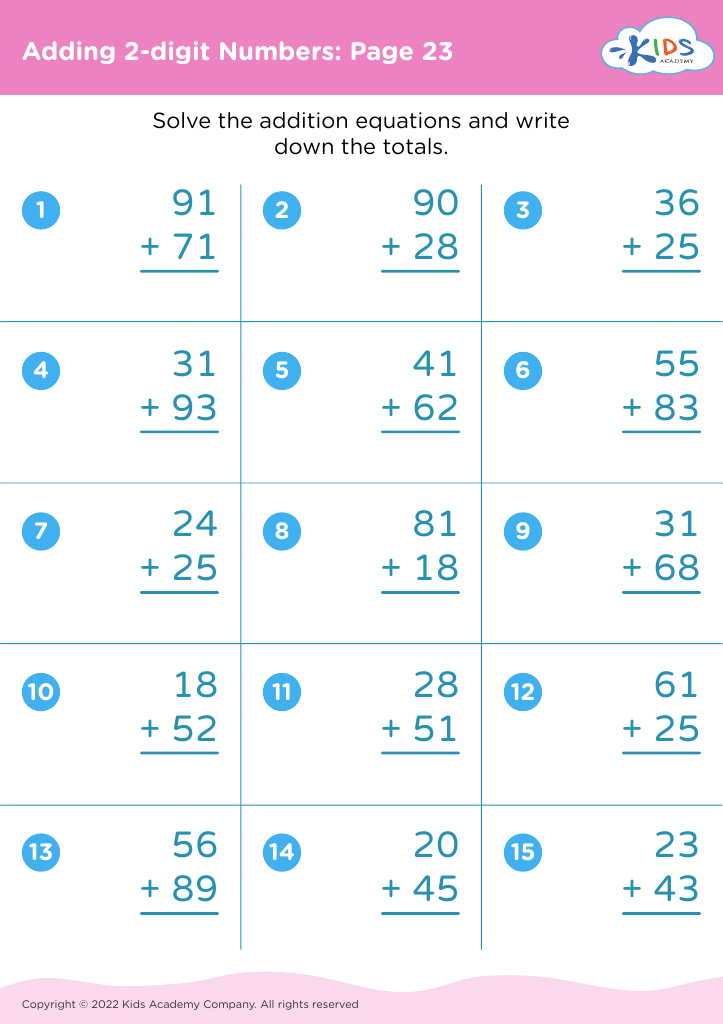
Adding 2-digit Numbers: Page 23

Adding 2-digit Numbers: Page 23

Adding 2-digit Numbers: Page 23
Worksheet
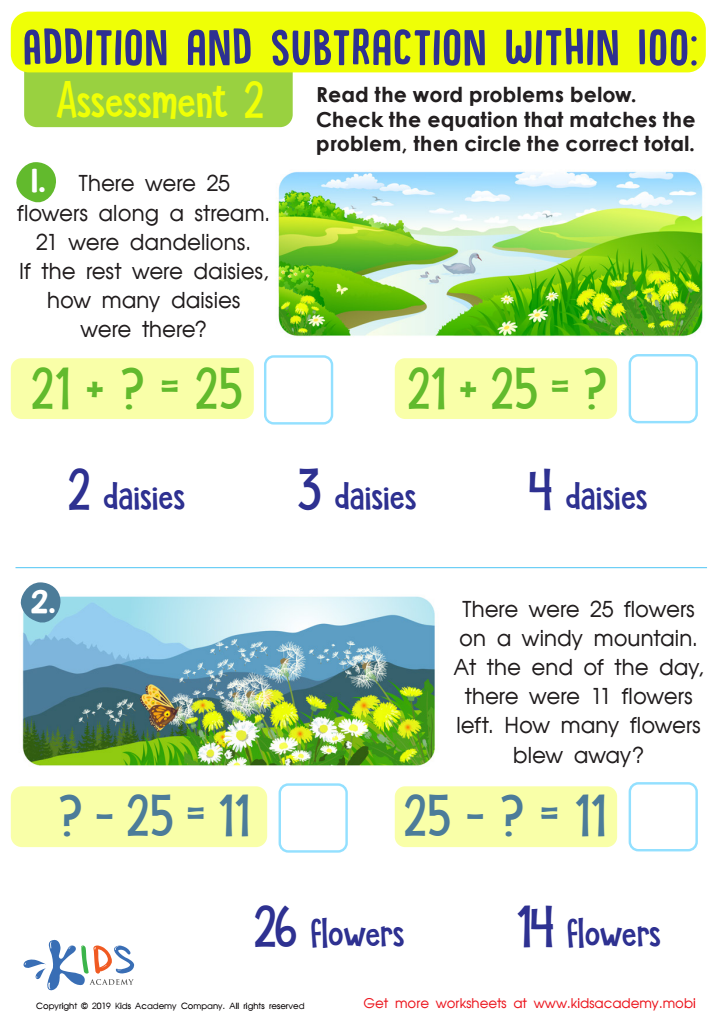
Assessment 2 Math Worksheet

Assessment 2 Math Worksheet

Using fun exercises and pictures, you can get kids excited about math. With practice and reminders of what they've learnt, they'll be solving simple addition and subtraction equations with ease. Read the word problems in the picture to them, then help them check the equation and choose the correct answer.
Assessment 2 Math Worksheet
Worksheet
Adding up to 100: Page 4

Adding up to 100: Page 4

Adding up to 100: Page 4
Worksheet
Adding up to 50 with Regrouping: Page 1
Worksheet
Practice Ordinal Numbers Worksheets PDF
Ordinal Numbers: Let's Practice Numbers Printable
Worksheet
Adding up to 50 with Regrouping: Page 10
Worksheet
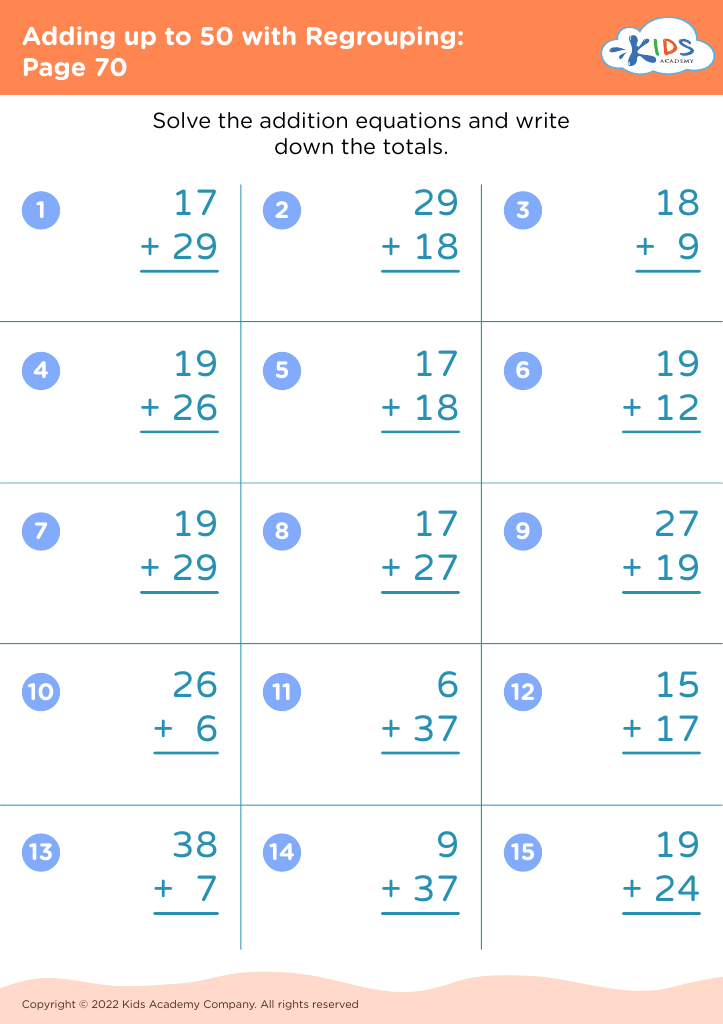
Adding up to 50 with Regrouping: Page 70
Worksheet
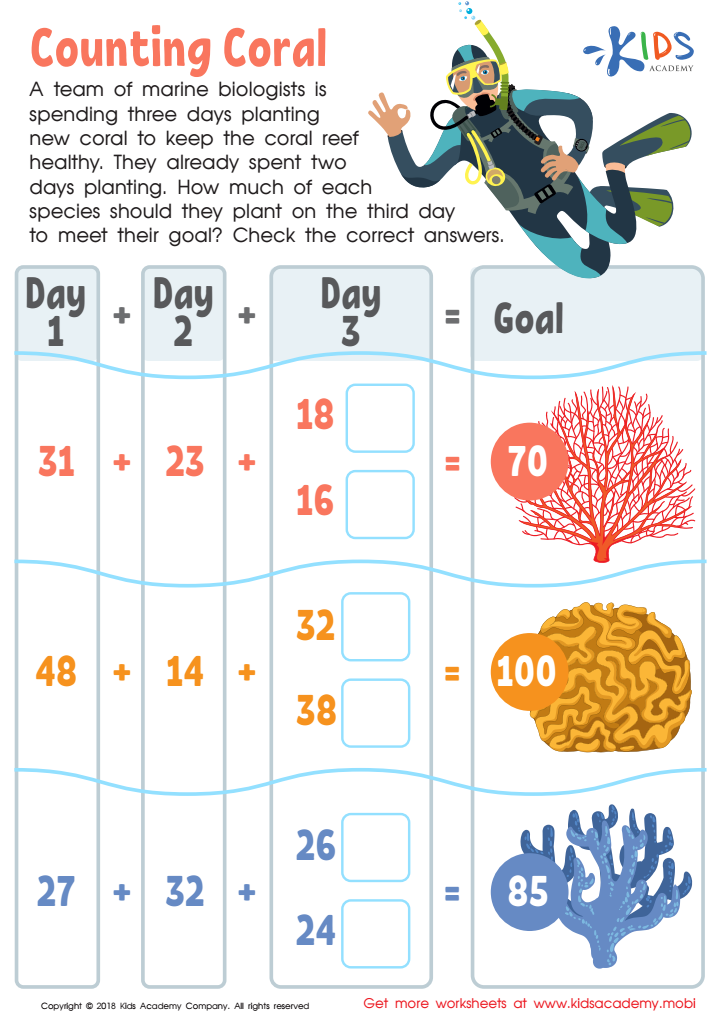
Counting Coral Worksheet

Counting Coral Worksheet

Introduce your child to the team of marine biologists planting coral to keep a reef healthy. They've planted for two days and need to figure out how much of each specie to plant on the third day to reach their goal. Help your child answer the questions on the printout and learn what it takes to be a marine biologist.
Counting Coral Worksheet
Worksheet
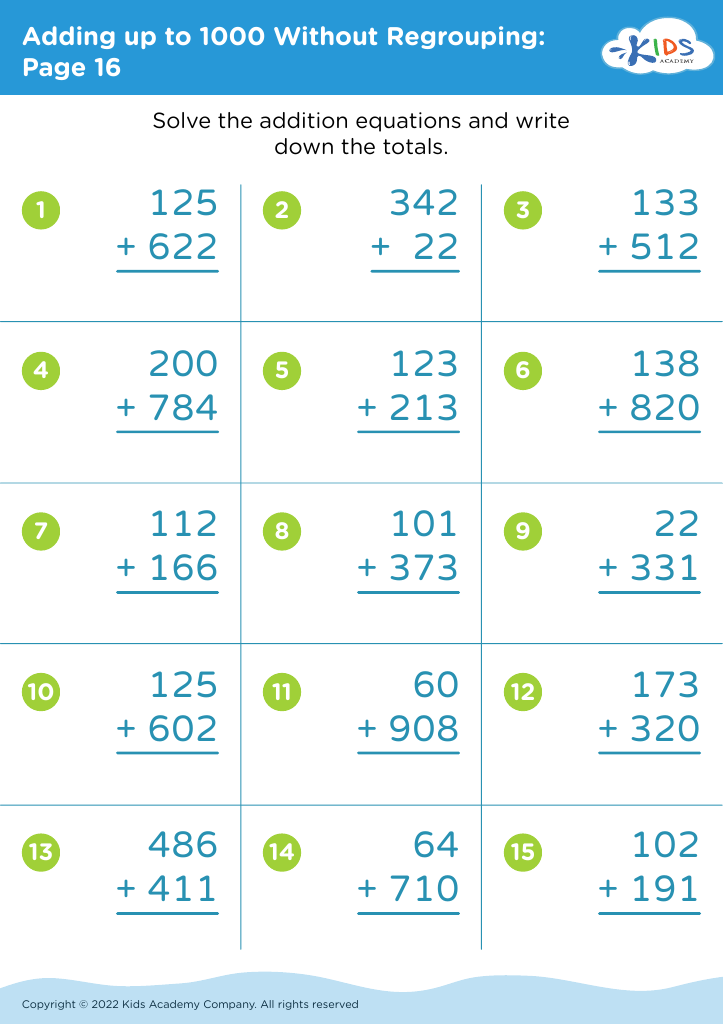
Adding up to 1000 Without Regrouping: Page 16
Worksheet
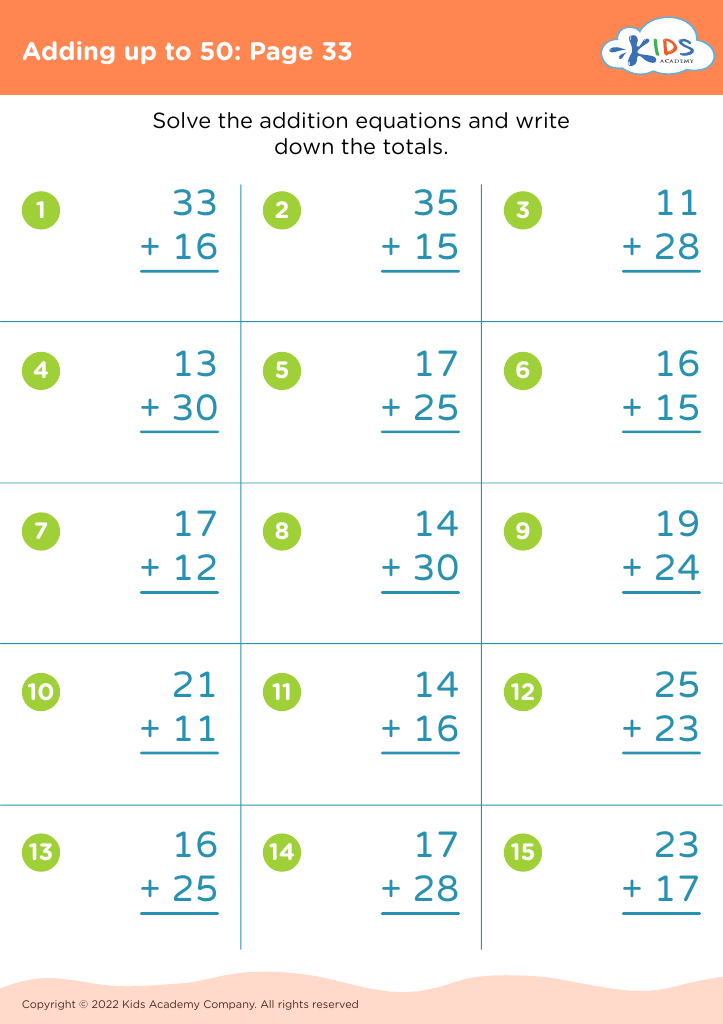
Adding up to 50: Page 33

Adding up to 50: Page 33

Adding up to 50: Page 33
Worksheet
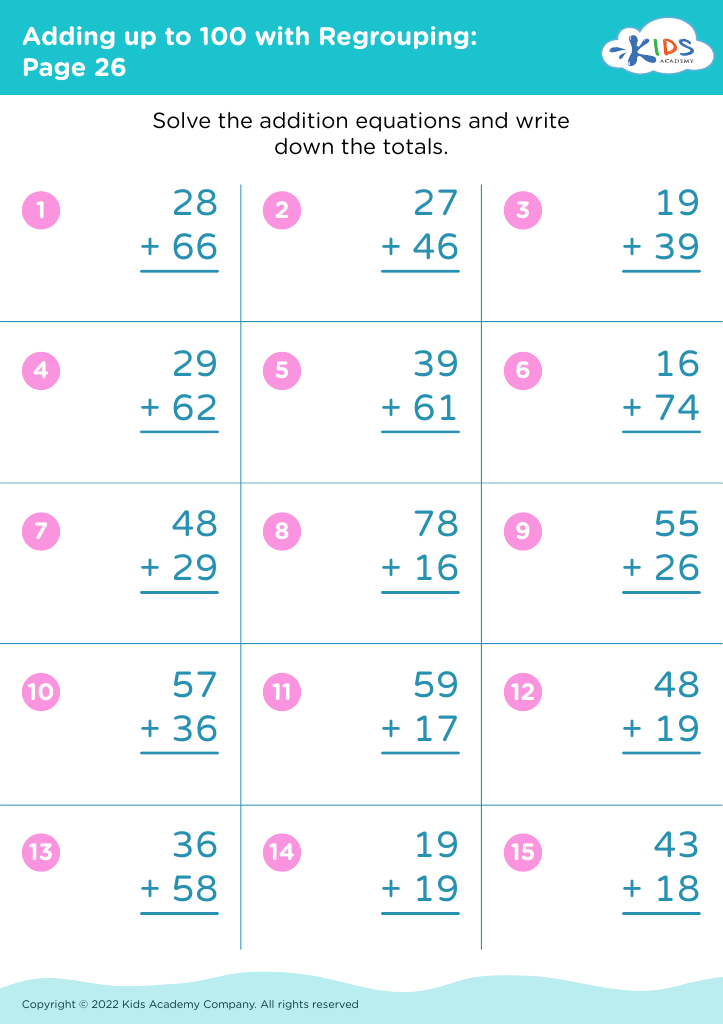
Adding up to 100 with Regrouping: Page 26
Worksheet
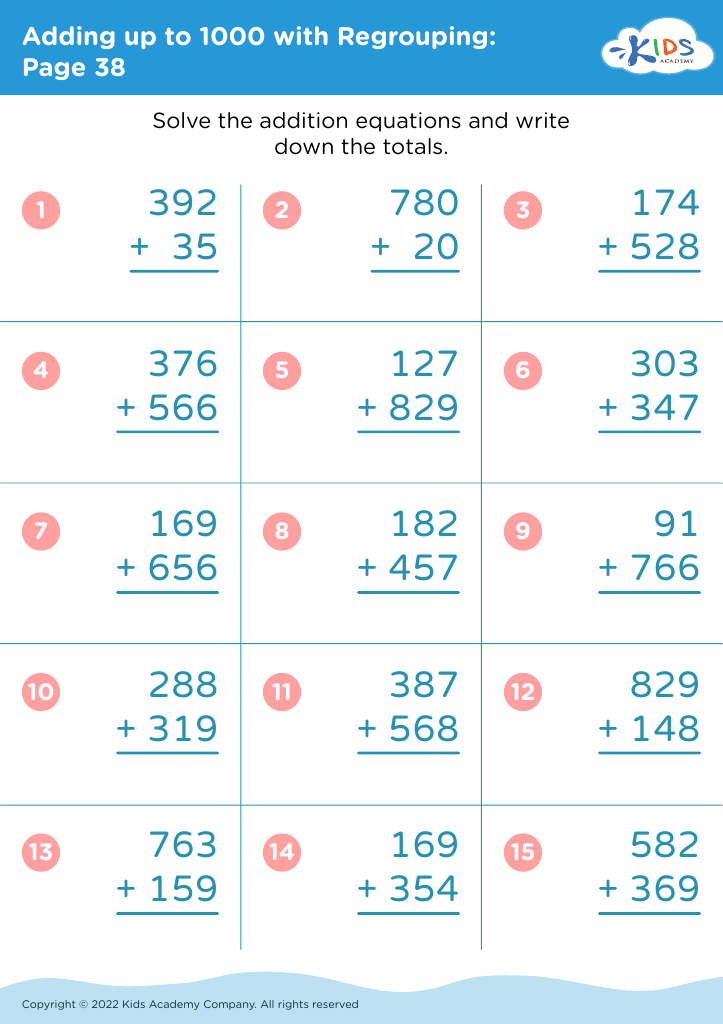
Adding up to 1000 with Regrouping: Page 38
Worksheet
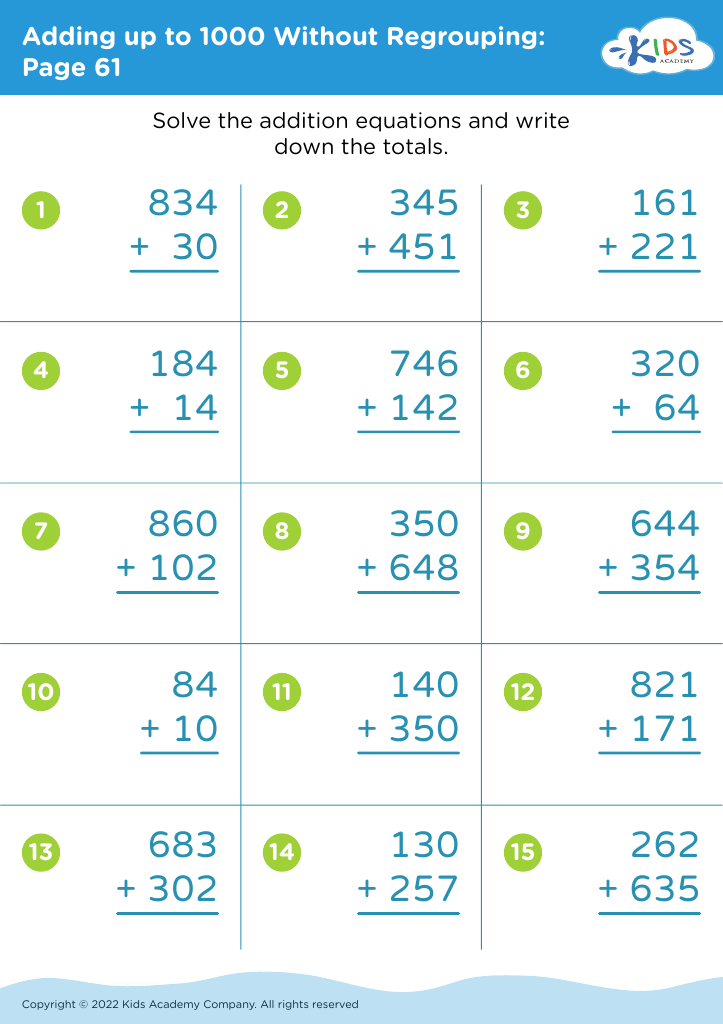
Adding up to 1000 Without Regrouping: Page 61
Worksheet
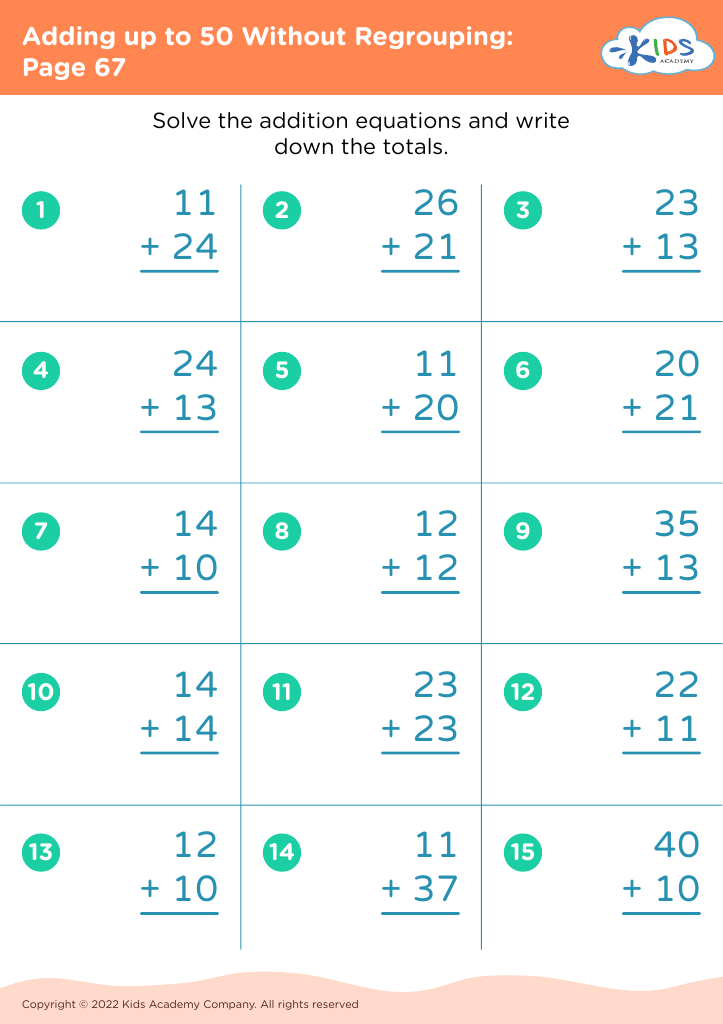
Adding up to 50 Without Regrouping: Page 67
Worksheet
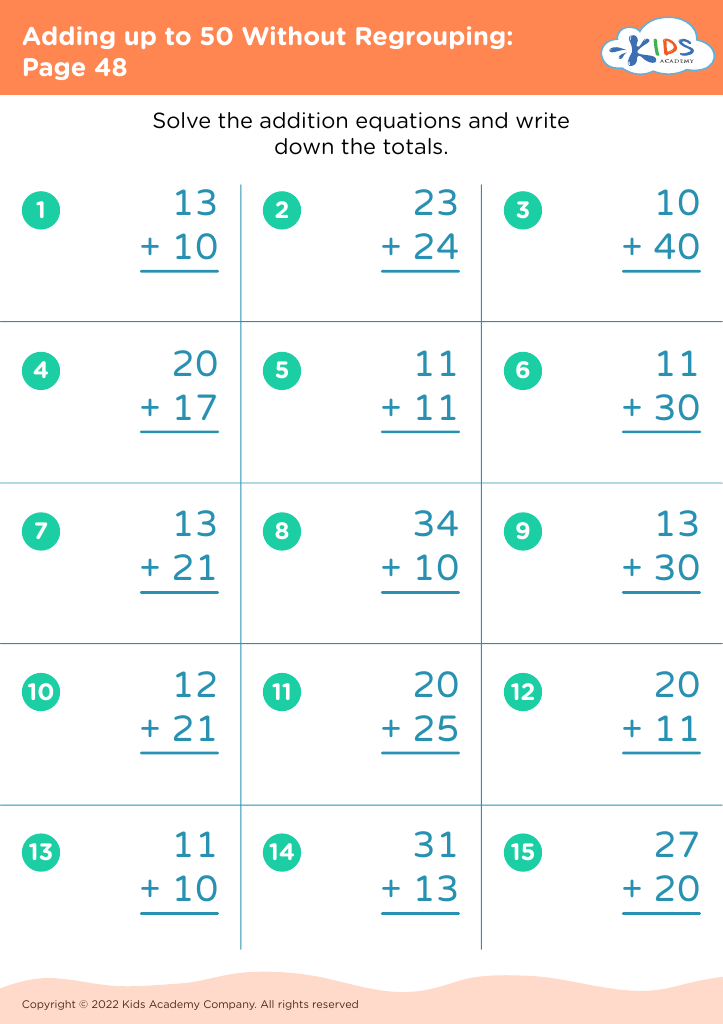
Adding up to 50 Without Regrouping: Page 48
Worksheet
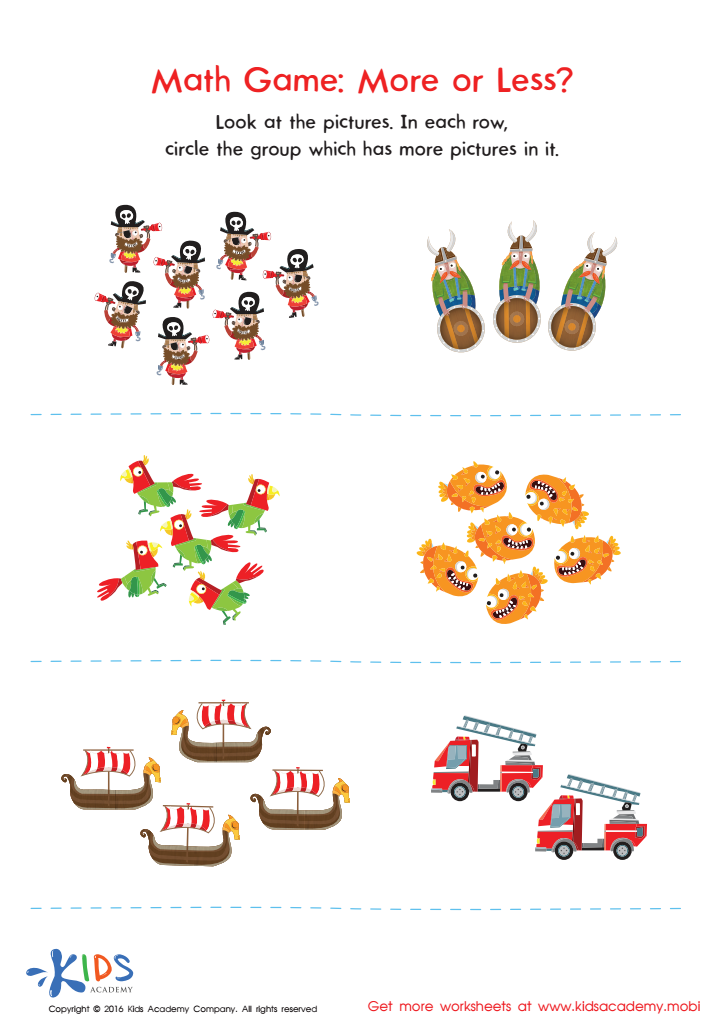
Free Printable More or Less Worksheets for Kindergarten

More or Less Worksheet

Counting and understanding quantity are essential skills for kindergarteners. Get your free printable more or less worksheet now!
More or Less Worksheet
Worksheet
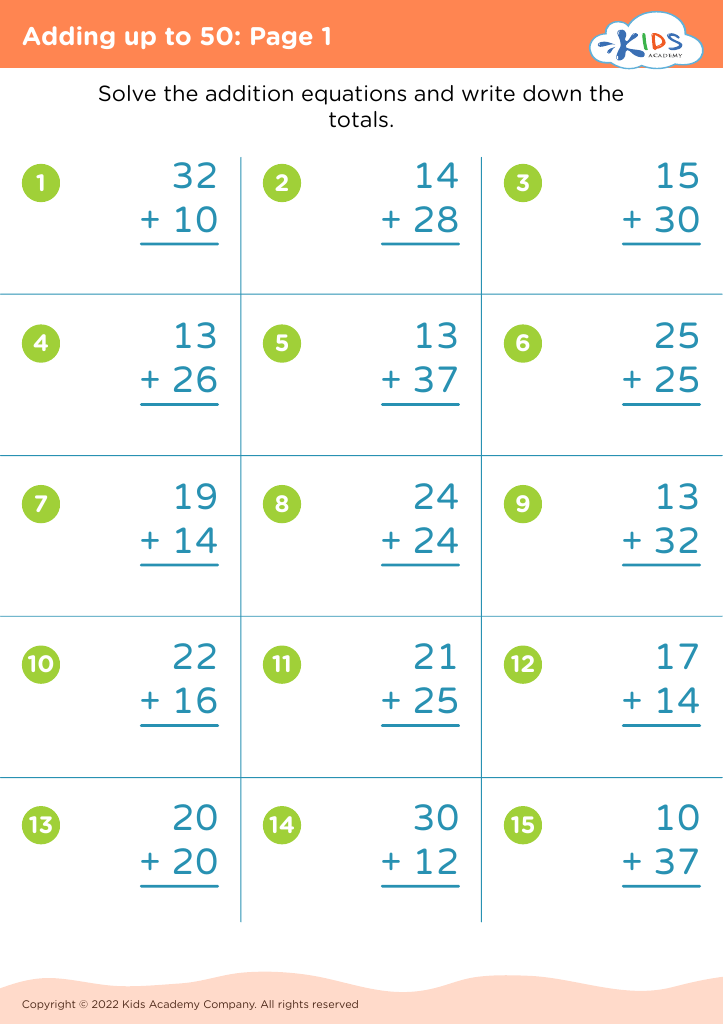
Adding up to 50: Page 1

Adding up to 50: Page 1

Adding up to 50: Page 1
Worksheet
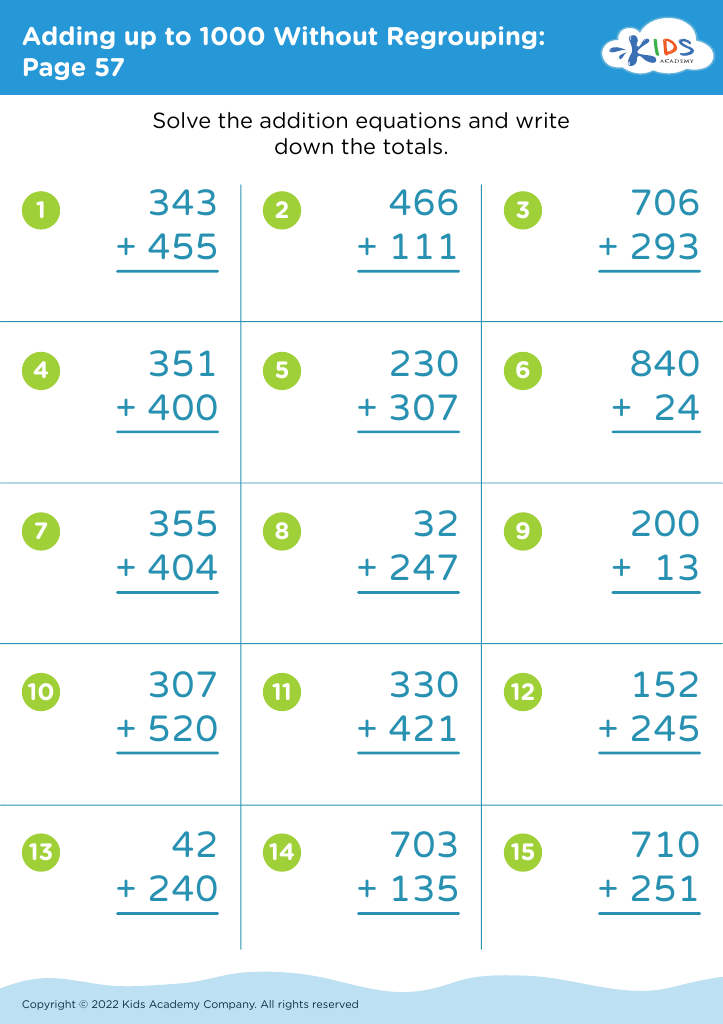
Adding up to 1000 Without Regrouping: Page 57
Worksheet
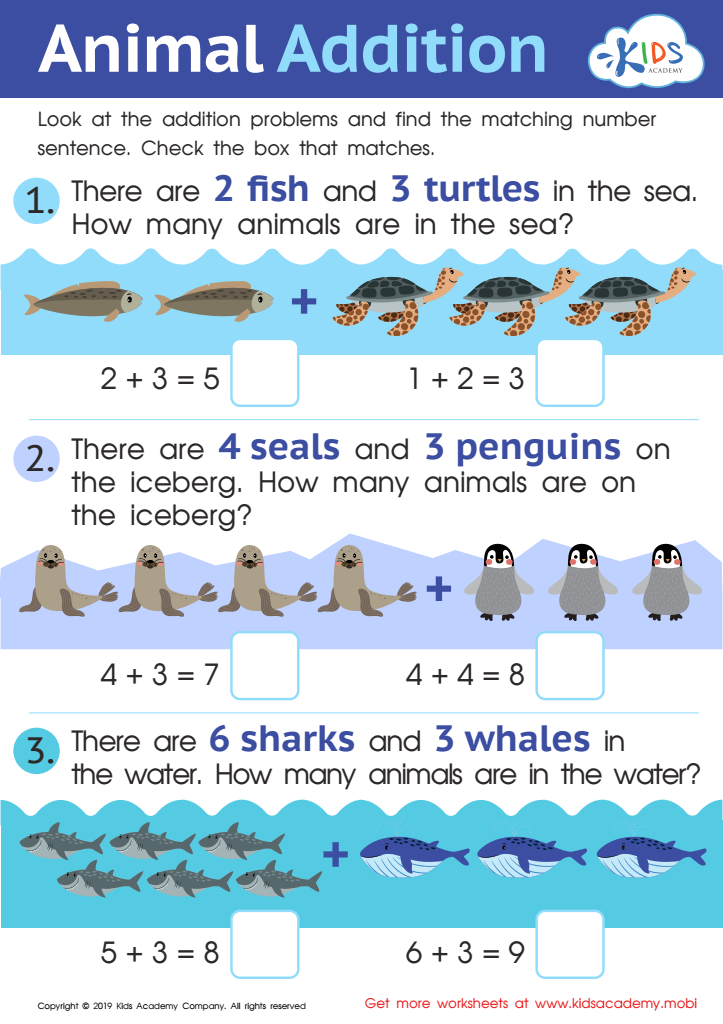
Animal Addition Worksheet

Animal Addition Worksheet

Get your kids learning addition and subtraction with this fun worksheet! Show them that solving equations can be enjoyable and help them match number sentences to the correct boxes. By doing this together, you'll create a positive learning experience that your kids won't forget.
Animal Addition Worksheet
Worksheet
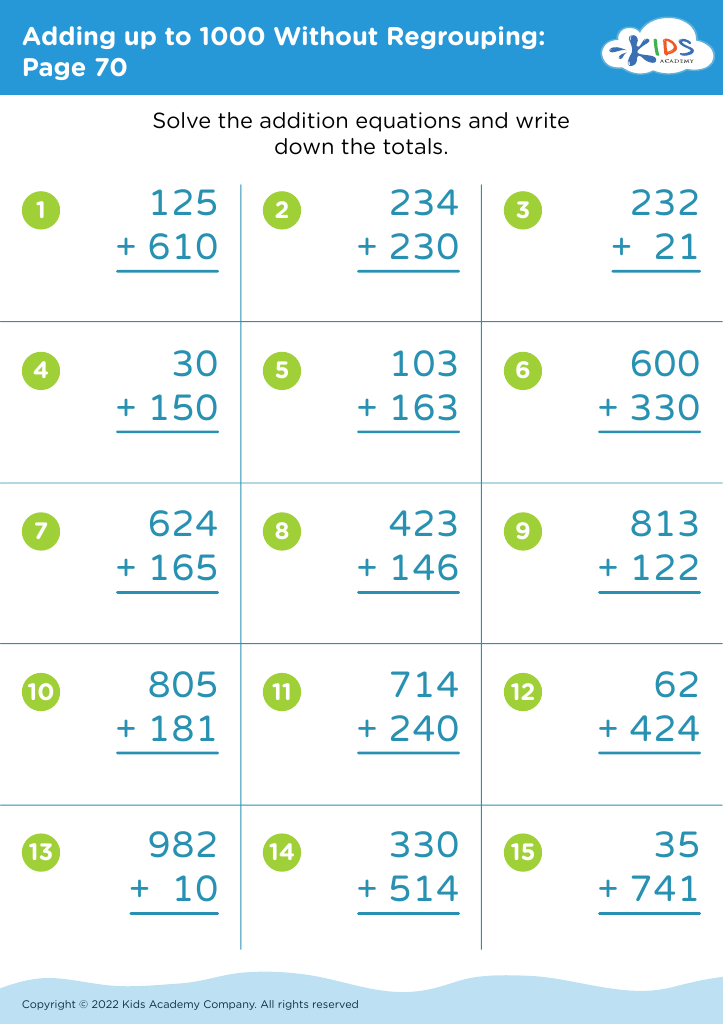
Adding up to 1000 Without Regrouping: Page 70
Worksheet


Basic addition and subtraction are foundational mathematical skills crucial for young children's cognitive development. For ages 4-8, grasping these concepts is essential as they serve as the building blocks for more advanced math and logic skills. Parents and teachers should care about ensuring children in this age group develop a strong grasp of these skills for several important reasons.

Firstly, early math proficiency is linked to academic success in later years. Studies show that children who excel in early math are more likely to succeed across various subjects, including science and engineering. Secondly, mastering basic addition and subtraction enhances problem-solving abilities, logical thinking, and attention to detail. These skills extend beyond the classroom, benefiting children in everyday life situations, such as understanding money, time, and spatial relationships.

Moreover, learning these concepts at a young age helps build confidence. When children grasp addition and subtraction, they feel a sense of accomplishment that can motivate them to tackle more complex subjects. Engaging, supportive learning environments created by parents and teachers can make math enjoyable and less intimidating, fostering a positive attitude towards learning.

Lastly, early intervention can identify and address any learning difficulties, ensuring that all children have the opportunity to succeed. Understanding the importance of basic math skills allows parents and teachers to support children appropriately, laying a strong educational foundation for their future.