Filters

254 filtered results

Clear all filters
Favorites
With answer key
Interactive

254 filtered results

Difficulty Level

Grade


Check out this FREE Trial Lesson on Addition & Subtraction for age 4-8!

Use Mental Strategies -Counting

Favorites
With answer key
Interactive
  • 4-8
  • Counting skills
  • Addition & Subtraction
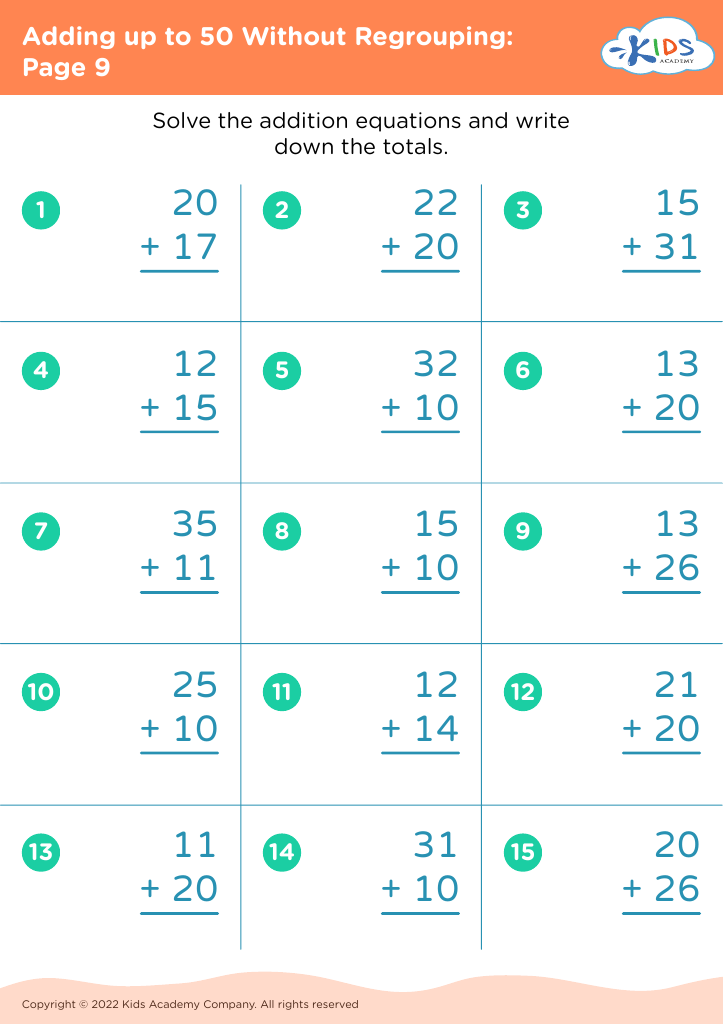
Adding up to 50 Without Regrouping: Page 9
Worksheet
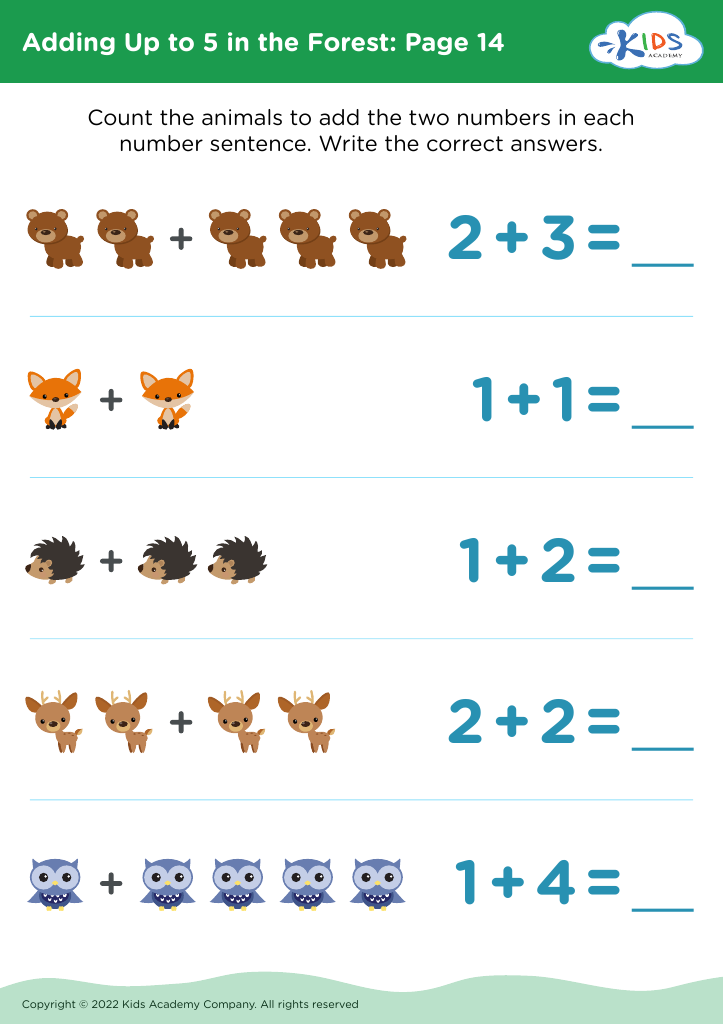
Adding Up to 5 in the Forest: Page 14
Worksheet
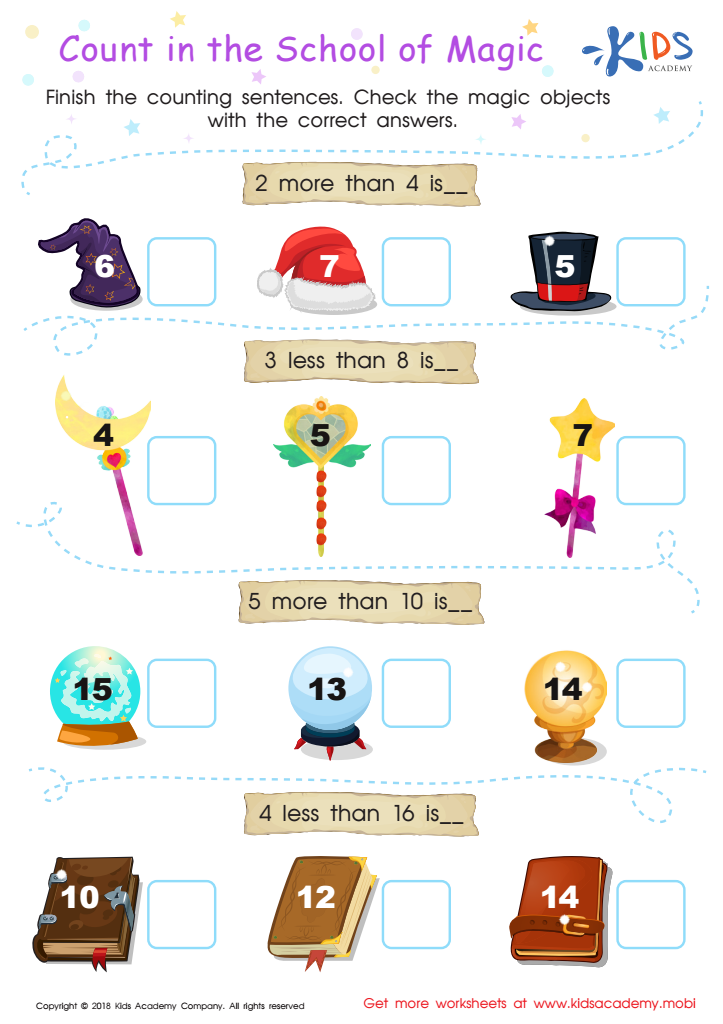
Count in the School of Magic Worksheet

Count in the School of Magic Worksheet

Your math learners can explore the School of Magic with this worksheet. They'll read equations with addition and subtraction numbers under 20, count back and forth to find the answer, then complete the counting sentences. Fun pictures and easy accuracy make it an enjoyable and successful learning experience.
Count in the School of Magic Worksheet
Worksheet
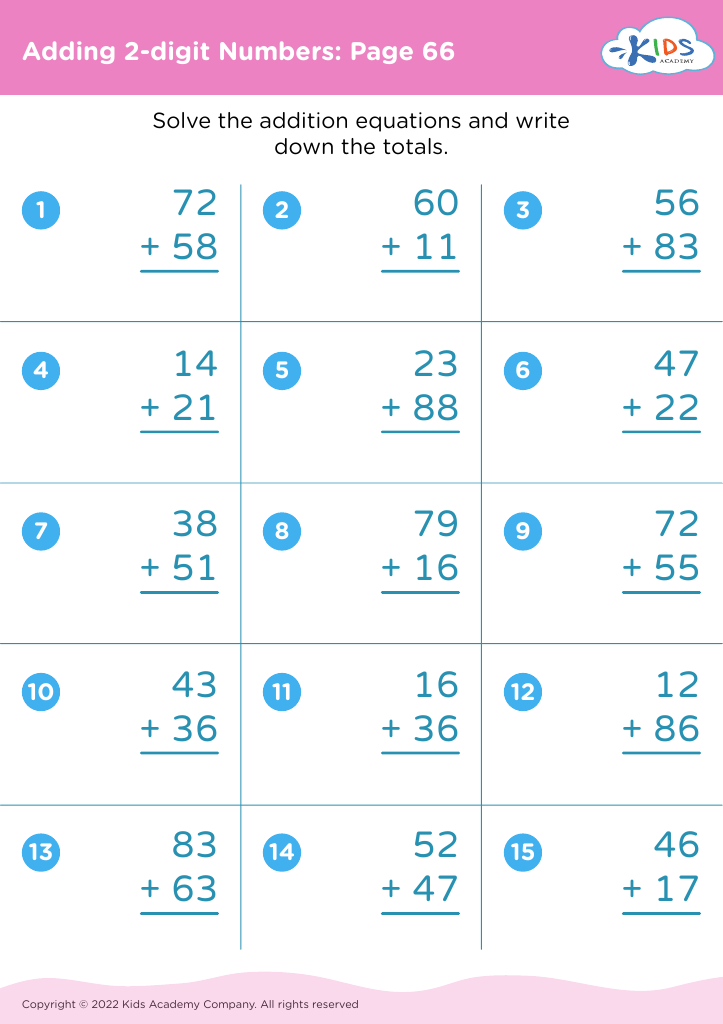
Adding 2-digit Numbers: Page 66

Adding 2-digit Numbers: Page 66

Adding 2-digit Numbers: Page 66
Worksheet
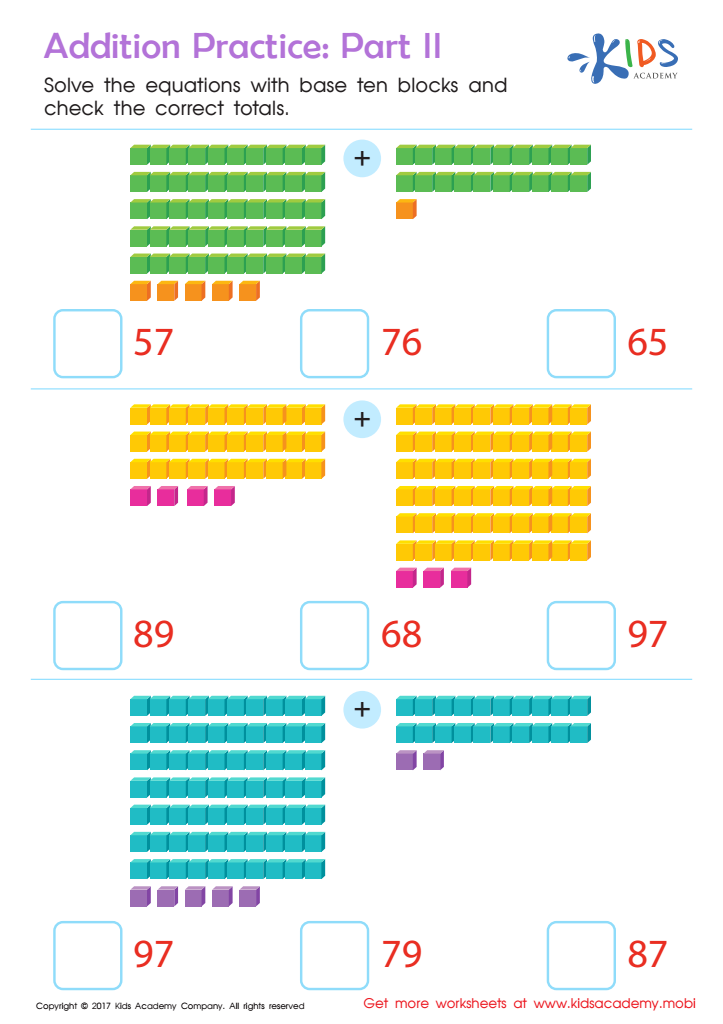
Addition Practice Sheet: Part 2

Addition Practice Sheet: Part 2

Make sure your kids understand place value before introducing two/three-digit addition. To help, use Kids Academy's colorful cube worksheet. It provides all the manipulatives needed to solve the problem and find totals. A great way to explain the concept behind the addition!
Addition Practice Sheet: Part 2
Worksheet
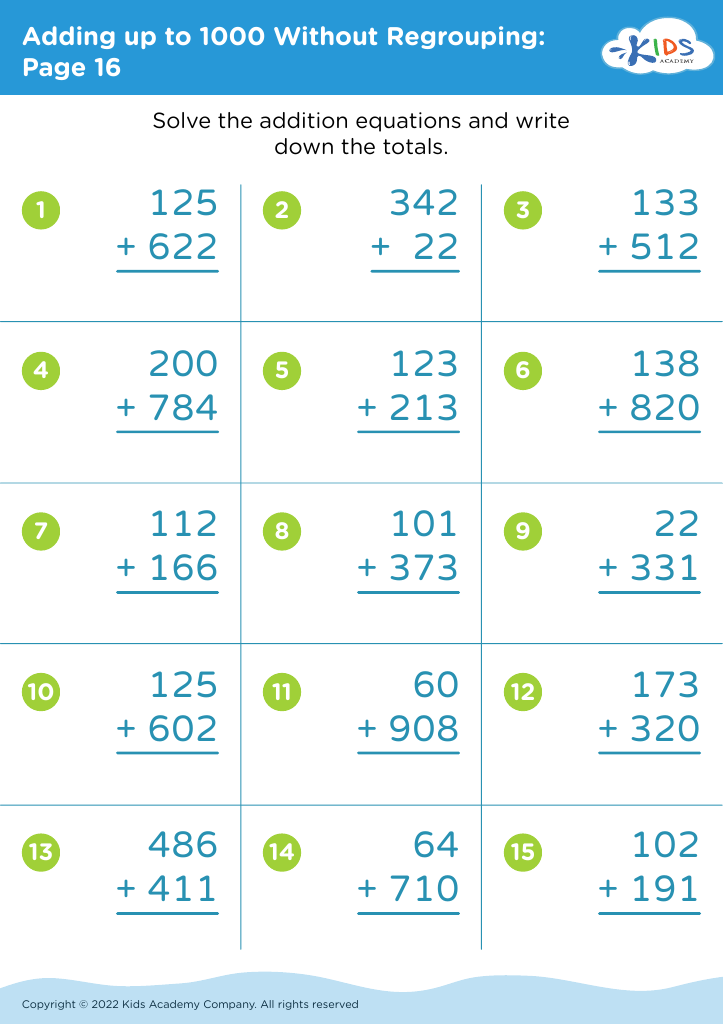
Adding up to 1000 Without Regrouping: Page 16
Worksheet
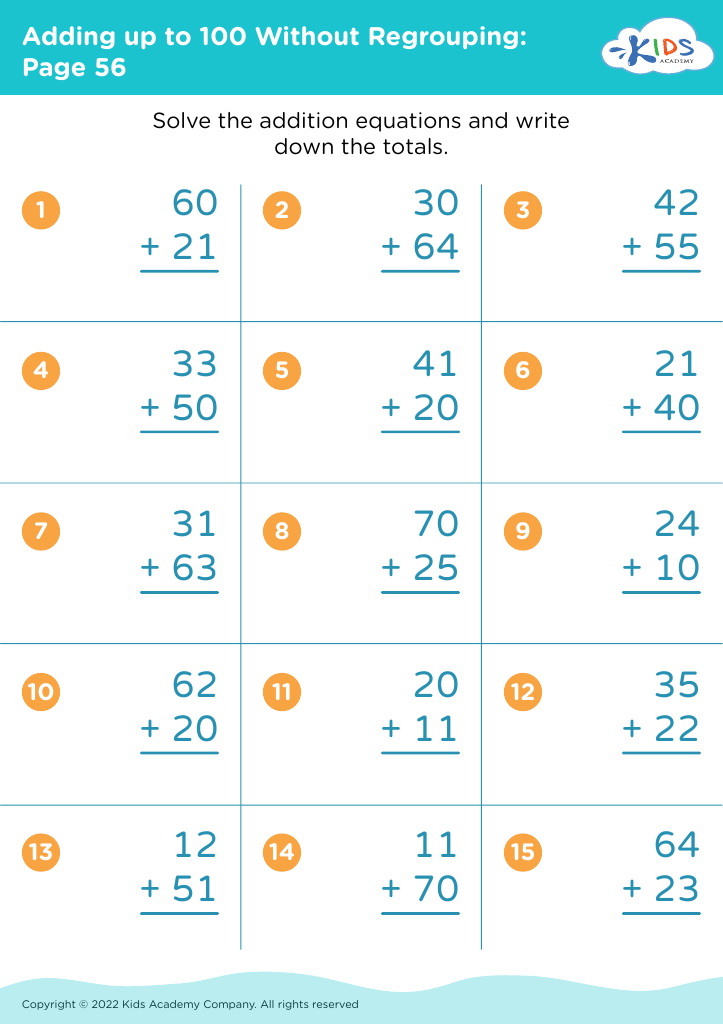
Adding up to 100 Without Regrouping: Page 56
Worksheet
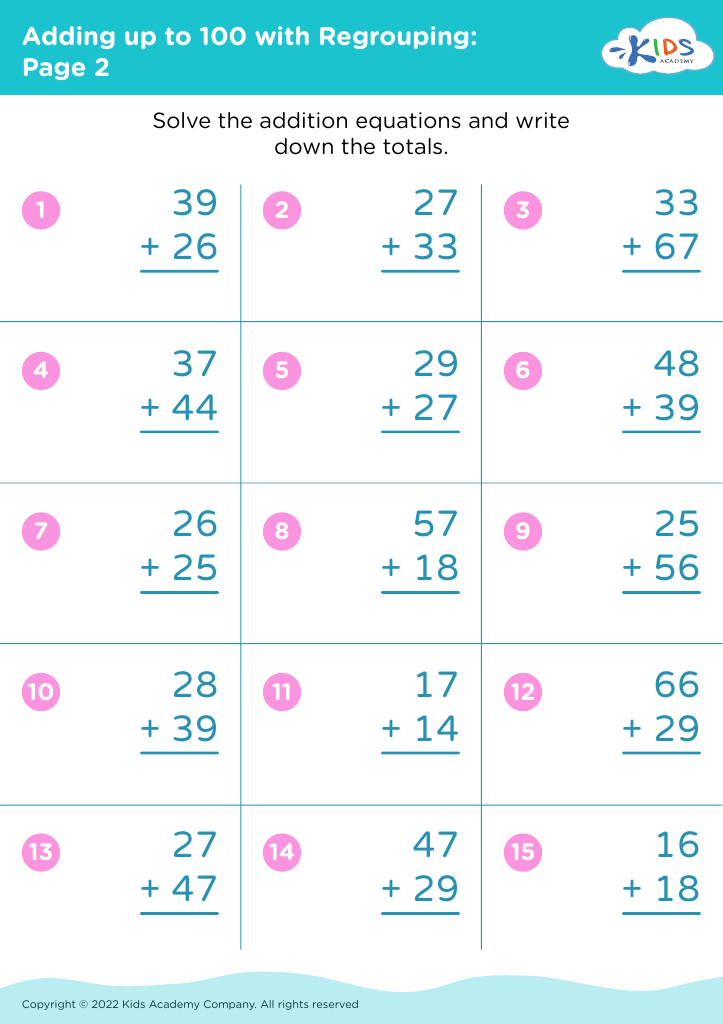
Adding up to 100 with Regrouping: Page 2
Worksheet
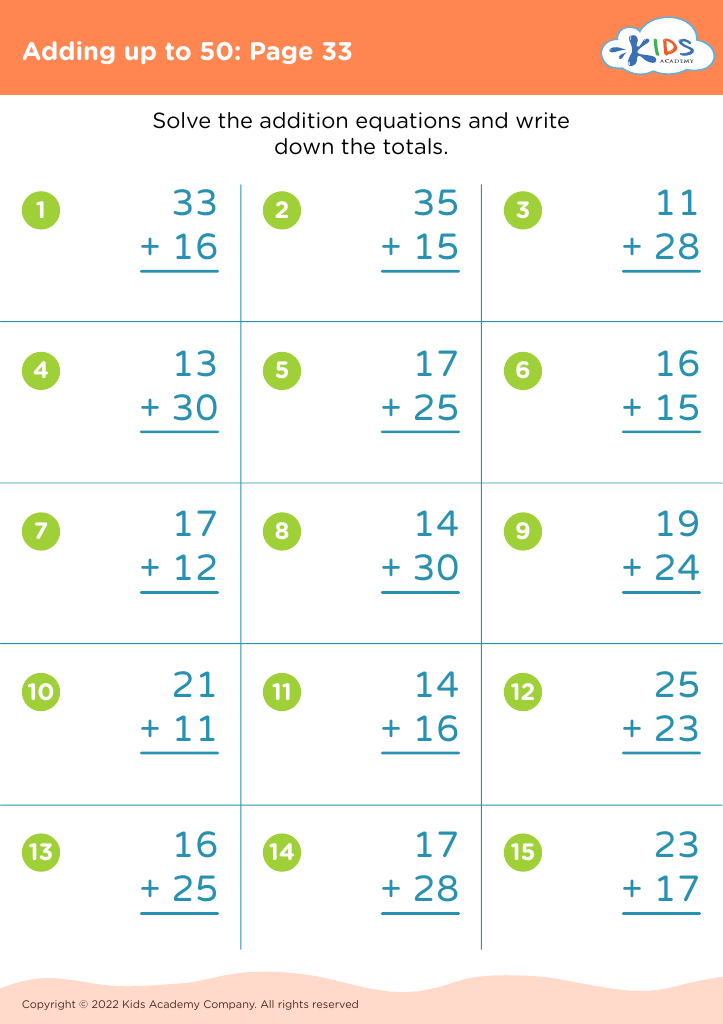
Adding up to 50: Page 33

Adding up to 50: Page 33

Adding up to 50: Page 33
Worksheet
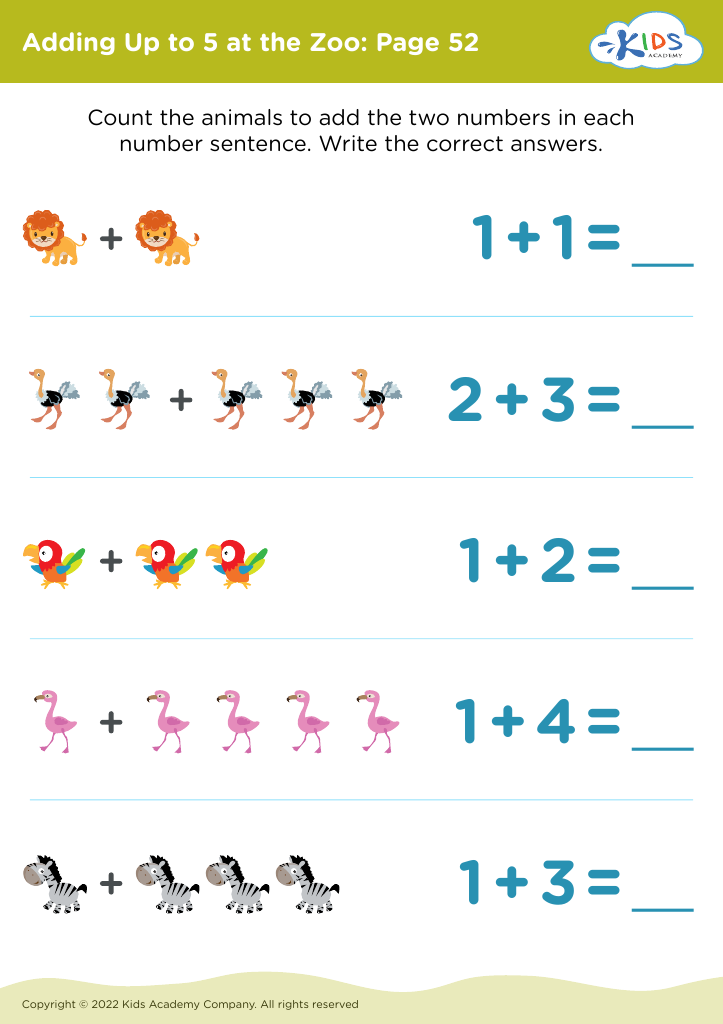
Adding Up to 5 at the Zoo: Page 52
Worksheet
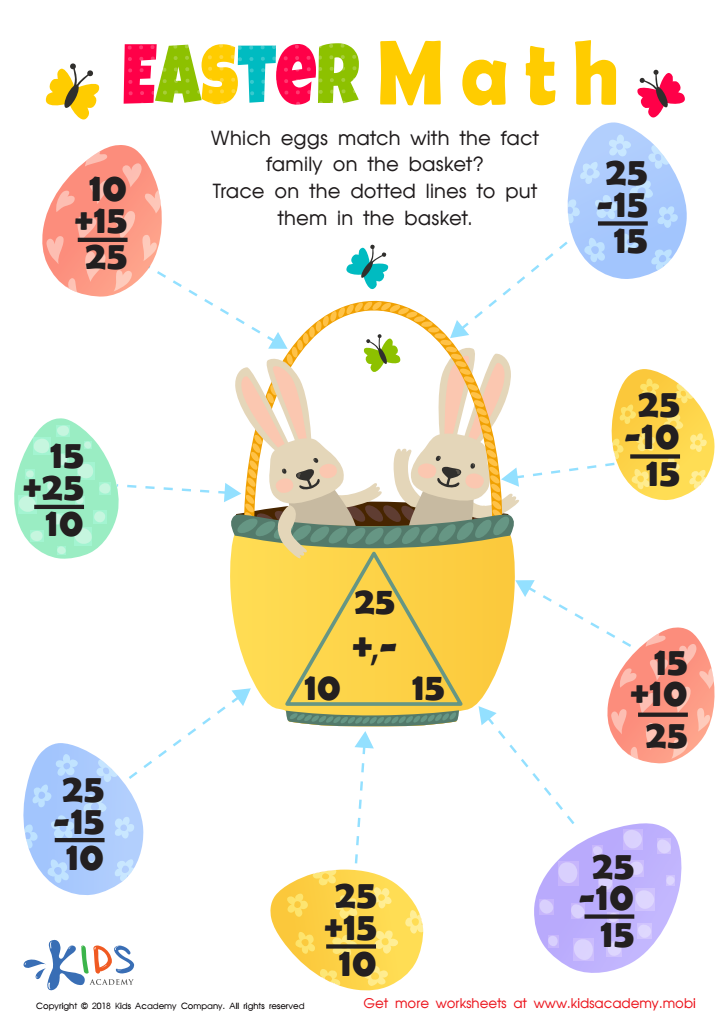
Fact Families: Easter Math Worksheet
Fact Families: Easter Math Worksheet
Kids will love this vibrant PDF packed with Easter math fun! Match facts with the colorful eggs, add and subtract multiples of five to boost automaticity, and have a blast with the bunny friends!
Fact Families: Easter Math Worksheet
Worksheet
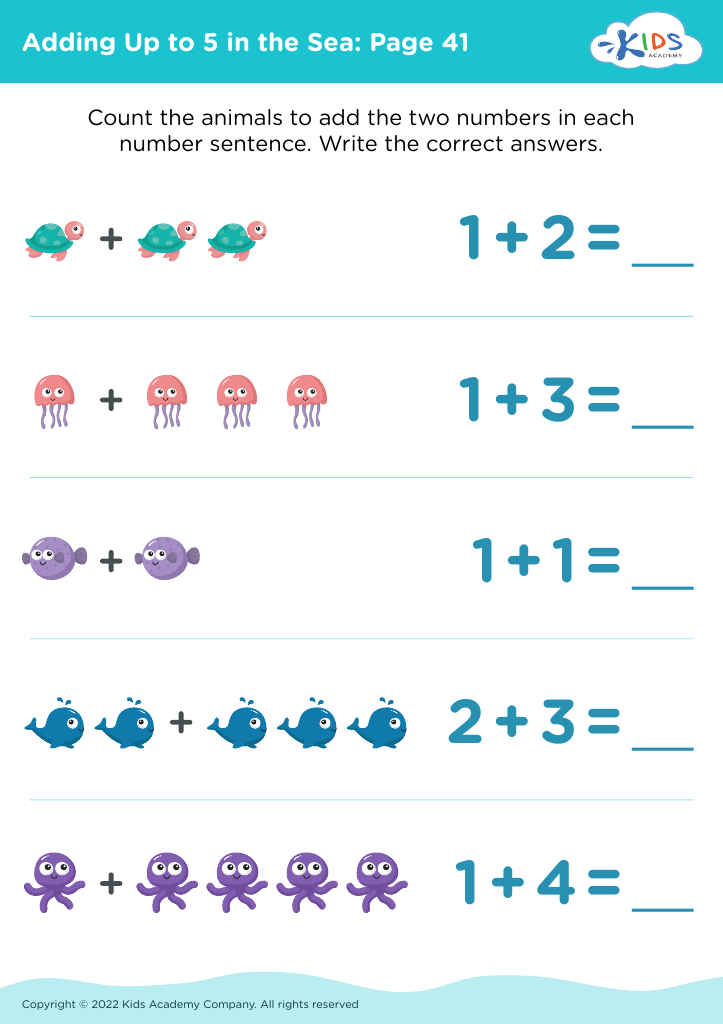
Adding Up to 5 in the Sea: Page 41
Worksheet
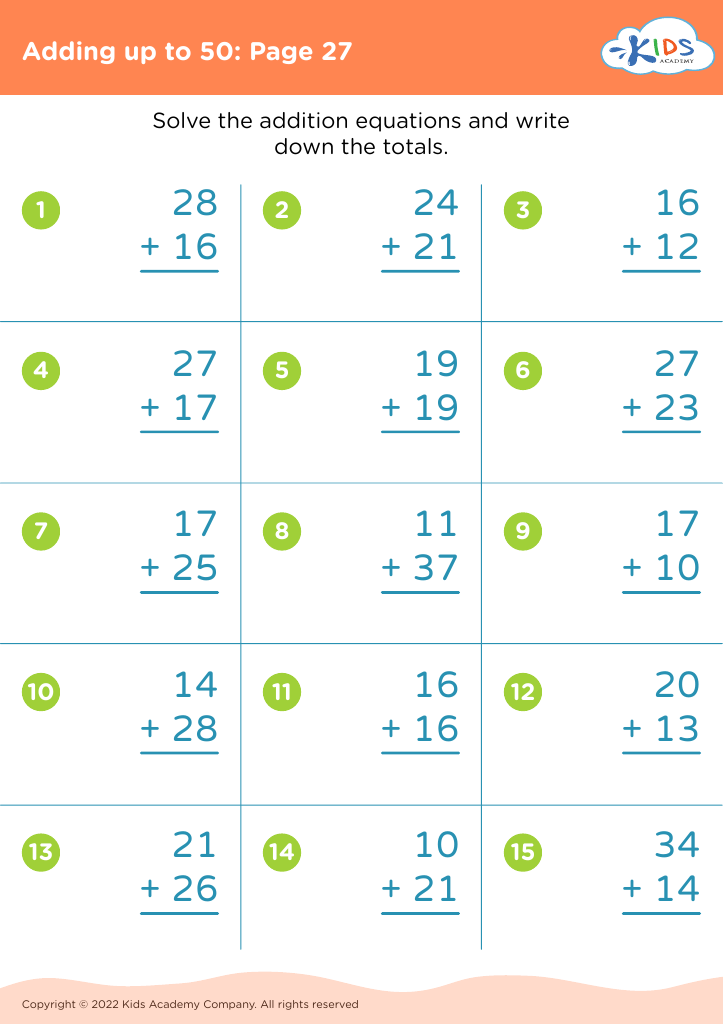
Adding up to 50: Page 27

Adding up to 50: Page 27

Adding up to 50: Page 27
Worksheet
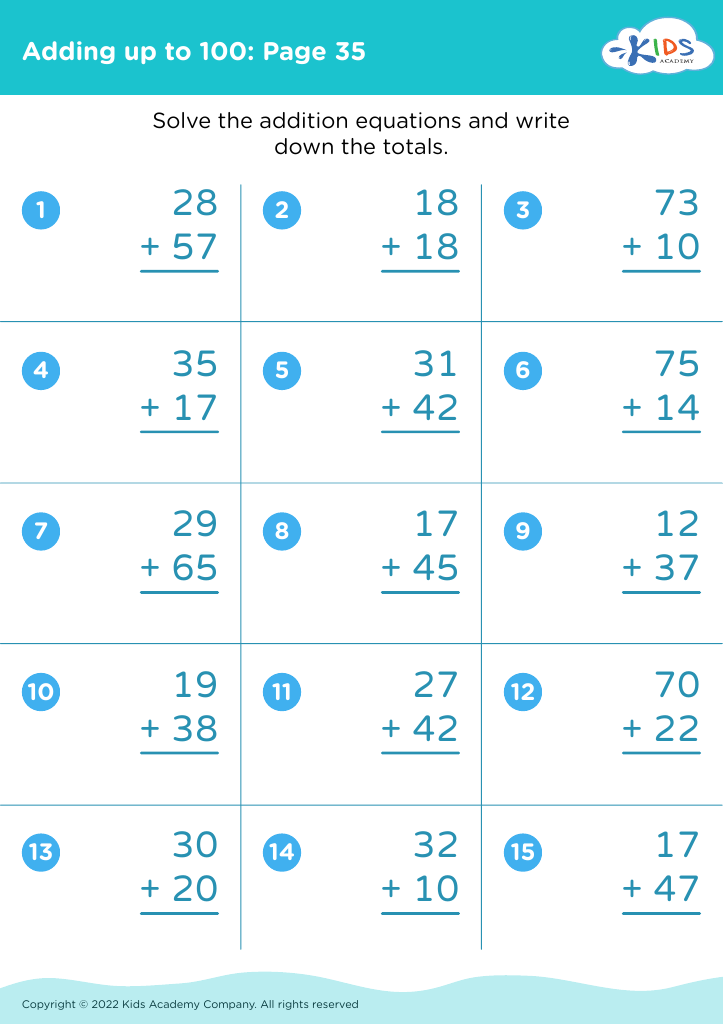
Adding up to 100: Page 35

Adding up to 100: Page 35

Adding up to 100: Page 35
Worksheet
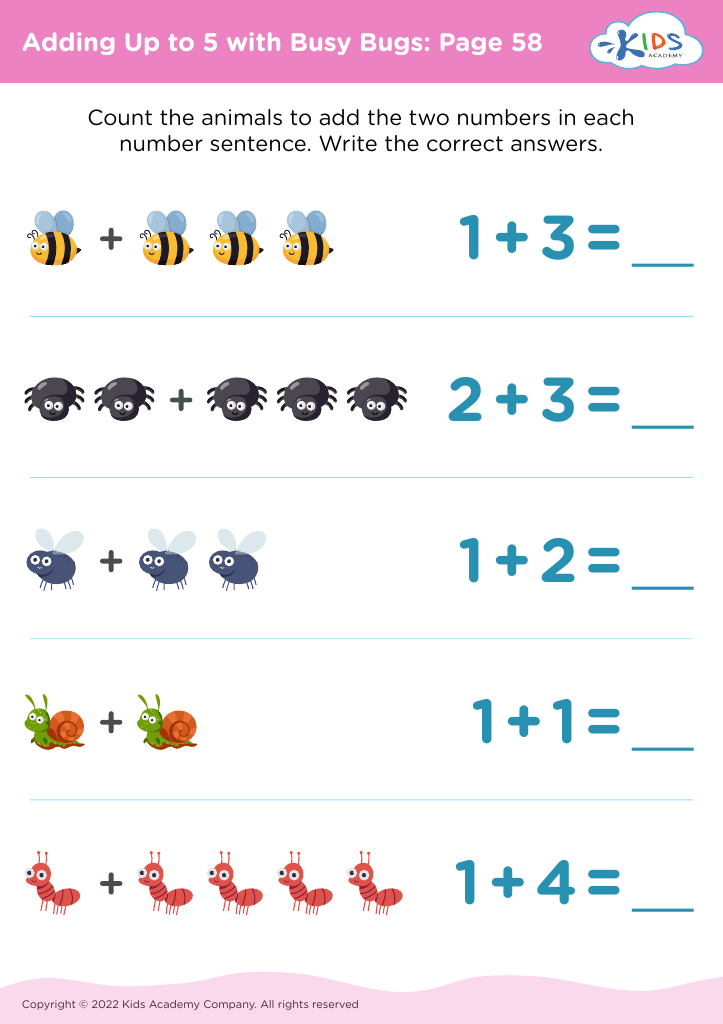
Adding Up to 5 with Busy Bugs: Page 58
Worksheet
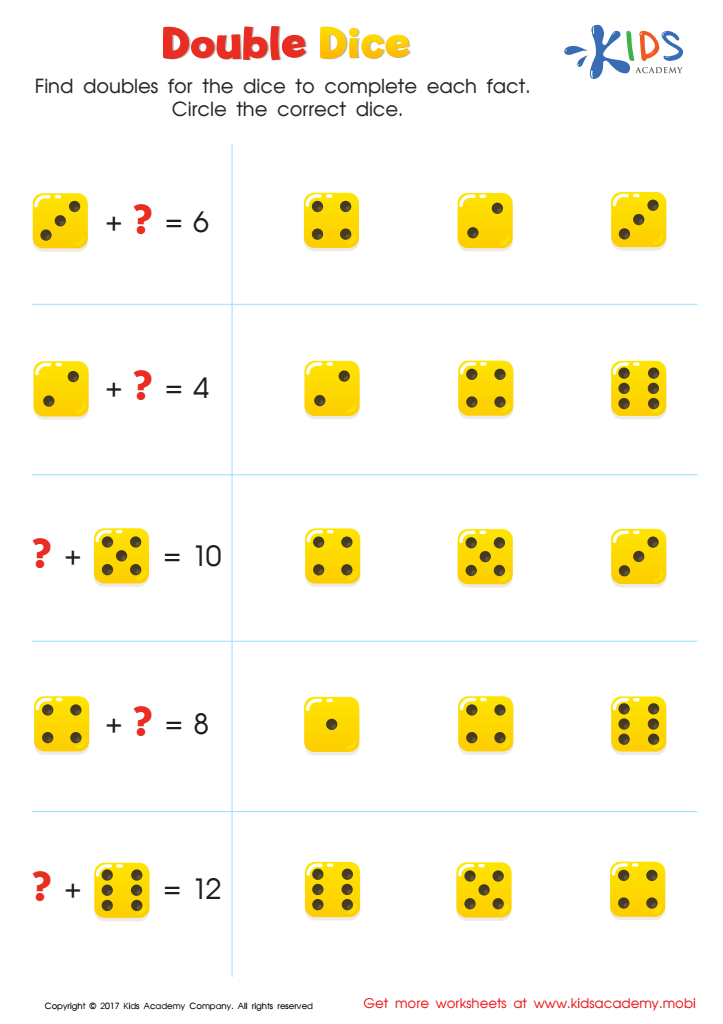
Addition Facts: Double Dice Worksheet

Addition Facts: Double Dice Worksheet

Are you looking for ways to make maths more engaging for kids? Maths can be a bore, but by teaching kids from an early age that it can be fun, they won't struggle with it. This worksheet is a great way to start: your child needs to identify the number on the left dice and find its double on the right. The sum of the two dice is also given.
Addition Facts: Double Dice Worksheet
Worksheet
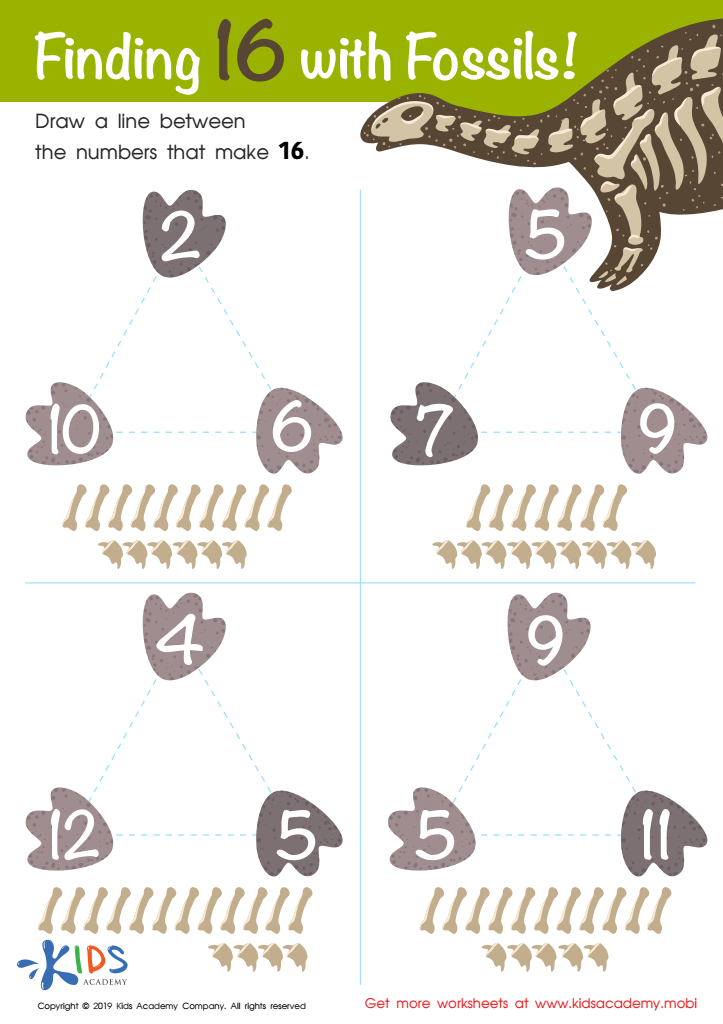
Finding 16 With Fossils Worksheet
Finding 16 With Fossils Worksheet

Experts hunt for fossils, dig them up, and study them to learn more about past life forms - how they lived, what they looked like, and when they lived. Show kids the picture in this worksheet and point out the fossils. Help them count the bones and draw a line between the numbers that add up to 16 in each triangle.
Finding 16 With Fossils Worksheet
Worksheet
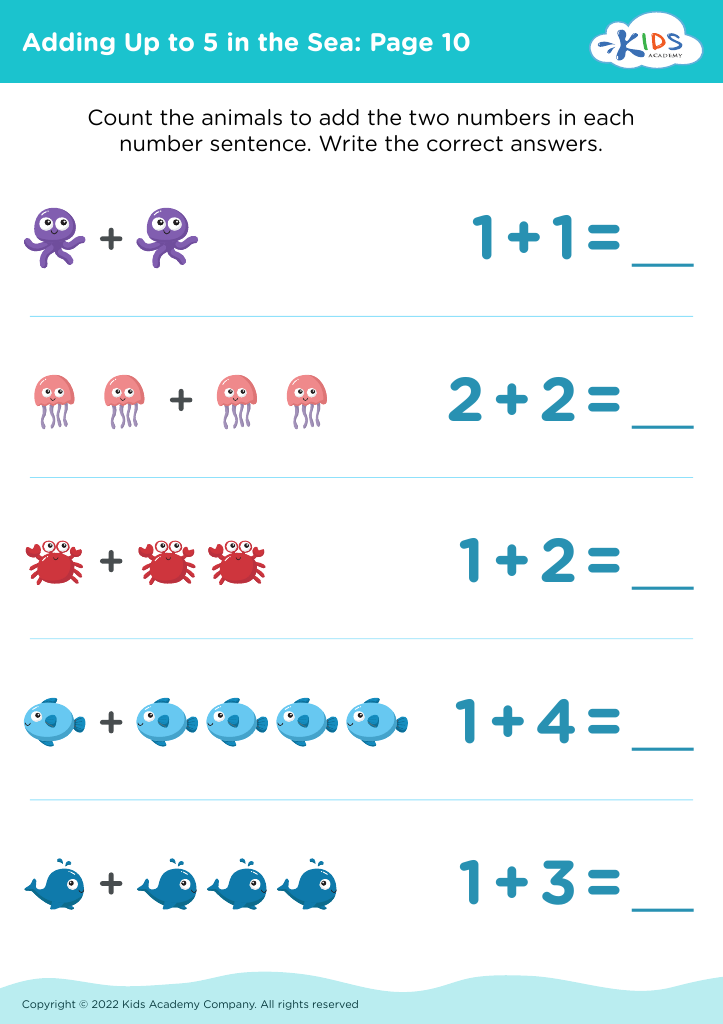
Adding Up to 5 in the Sea: Page 10
Worksheet
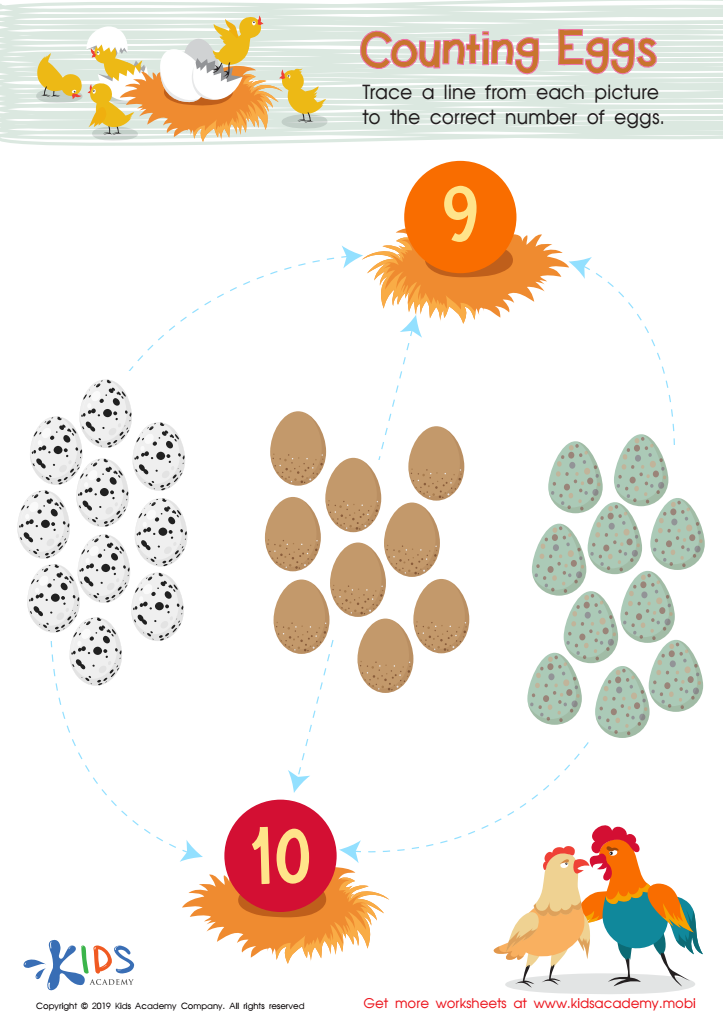
Counting Eggs Worksheet
Counting Eggs Worksheet

This worksheet is great for teaching kindergarteners to count and add numbers. It includes colorful pictures of eggs with numbers to trace. Help students count the eggs and draw a line to the right number. This will make learning fun and easy!
Counting Eggs Worksheet
Worksheet
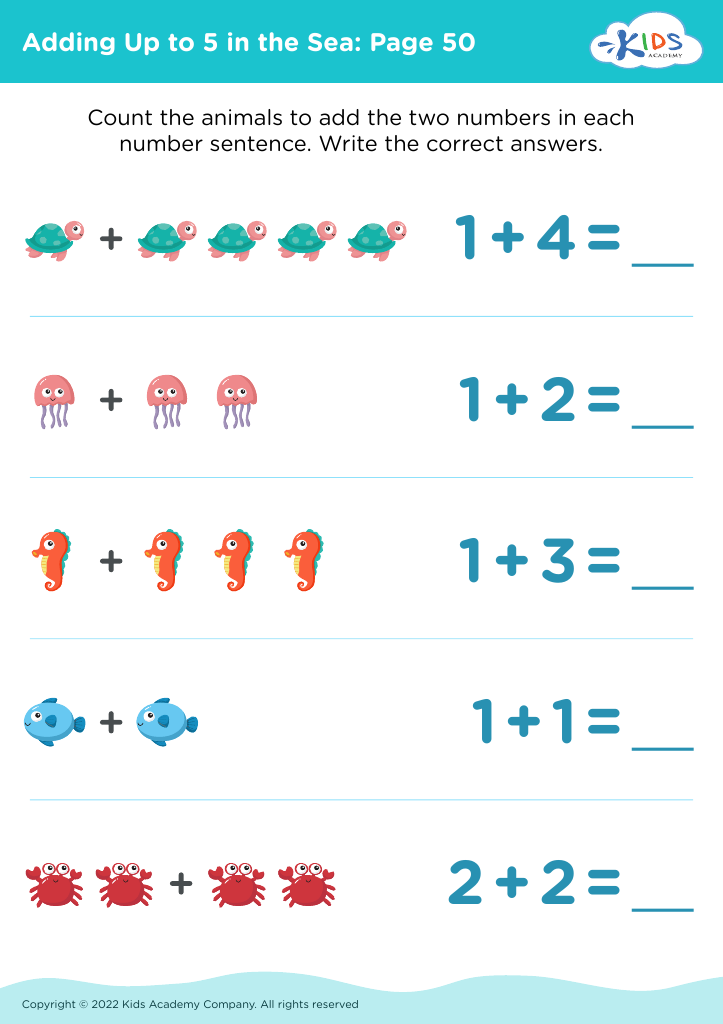
Adding Up to 5 in the Sea: Page 50
Worksheet
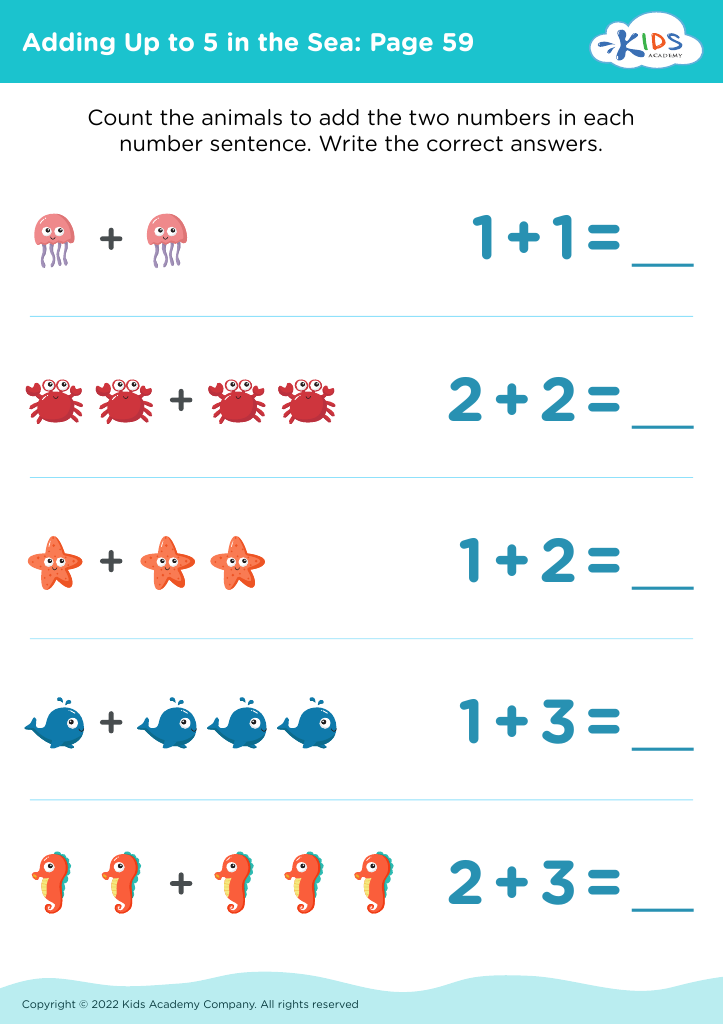
Adding Up to 5 in the Sea: Page 59
Worksheet
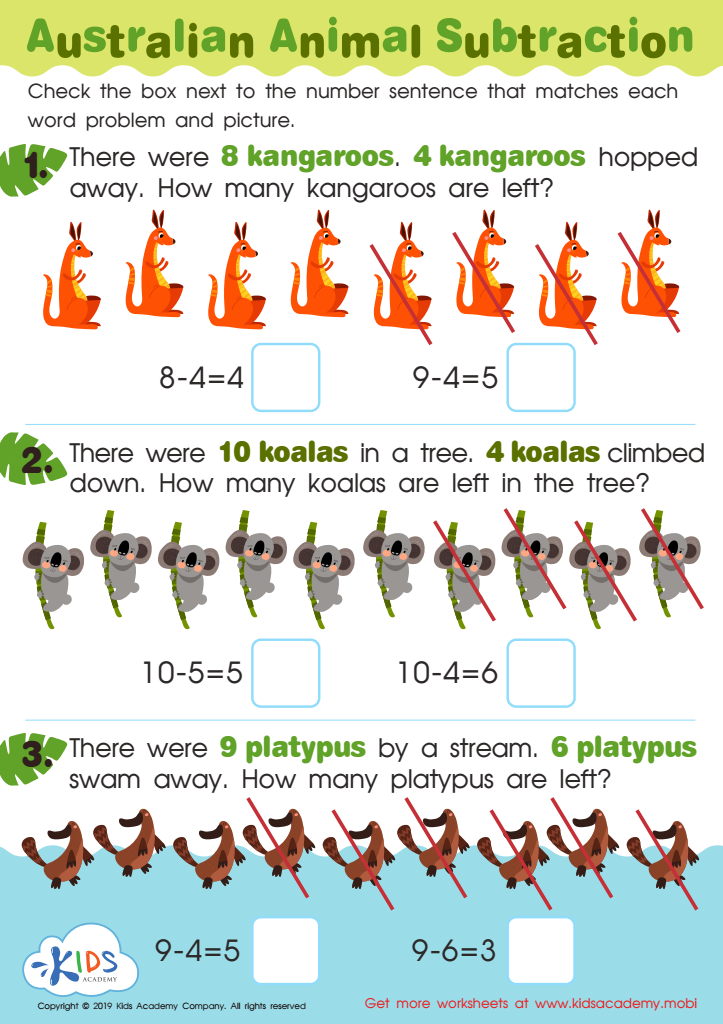
Australian Animal Subtraction Worksheet
Australian Animal Subtraction Worksheet

Test your child's wildlife knowledge. Ask them to name animals indigenous to Australia or other countries. Show them the animals in this worksheet and have them match each word problem and picture with the correct number sentence.
Australian Animal Subtraction Worksheet

Worksheet
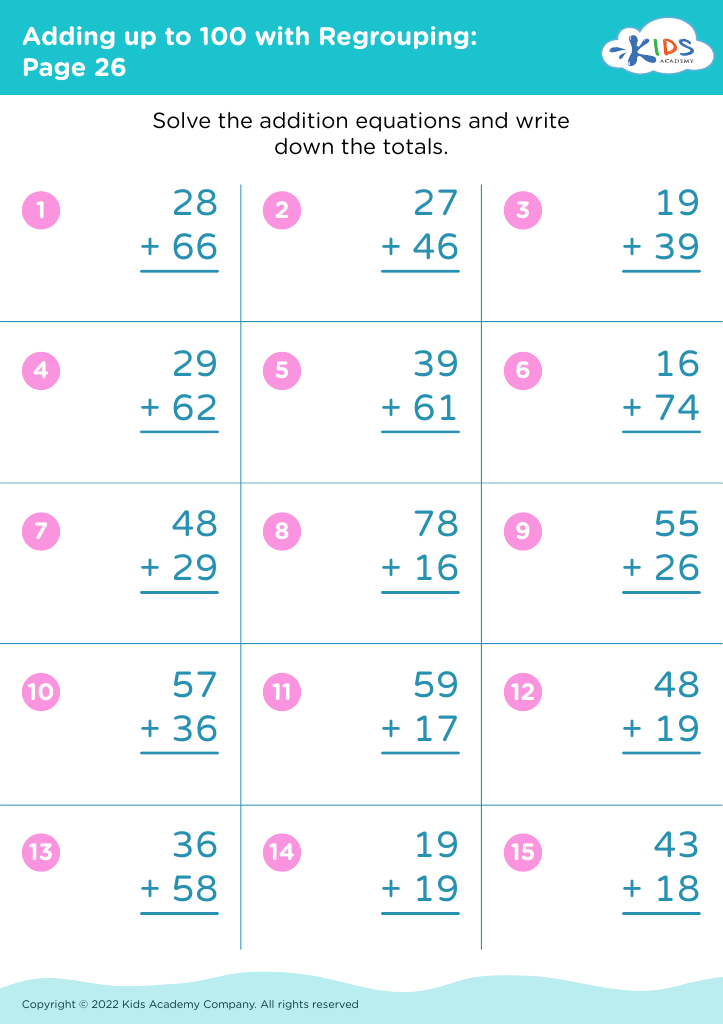
Adding up to 100 with Regrouping: Page 26
Worksheet
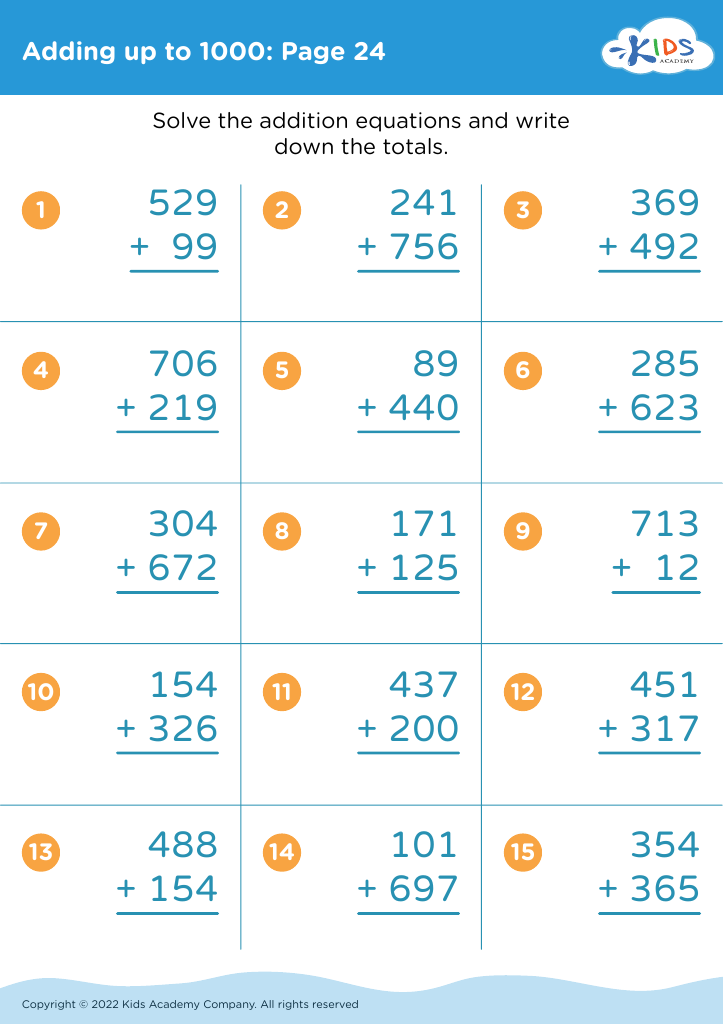
Adding up to 1000: Page 24

Adding up to 1000: Page 24

Adding up to 1000: Page 24
Worksheet


Counting skills, particularly addition and subtraction, are fundamental building blocks for early childhood education and should be a focus for parents and teachers. From ages 4 to 8, children are developing critical cognitive skills that lay the groundwork for their future learning.

First, mastering counting and basic arithmetic enhances children's ability to problem solve. These skills are essential in daily life, helping children make sense of the world around them, such as understanding quantities during shopping or dividing snacks among friends. Additionally, these early mathematical concepts improve logical thinking and reasoning abilities, which are crucial across all subjects.

Moreover, a solid foundation in counting and basic operations fosters confidence in mathematics. Children who grasp these concepts early on are more likely to approach math with a positive attitude, reducing anxiety associated with the subject in later years.

By encouraging counting through engaging and interactive methods—such as games, storytelling, or hands-on activities—parents and teachers can create a supportive learning environment. They should focus on making math fun to ensure that children not only learn but also develop a lifelong love for learning. Ultimately, fostering these skills is vital for nurturing well-rounded, capable learners prepared for future academic challenges.