Problem Solving Addition & Subtraction Worksheets for Ages 4-8 - Page 2
29 filtered results
-
From - To
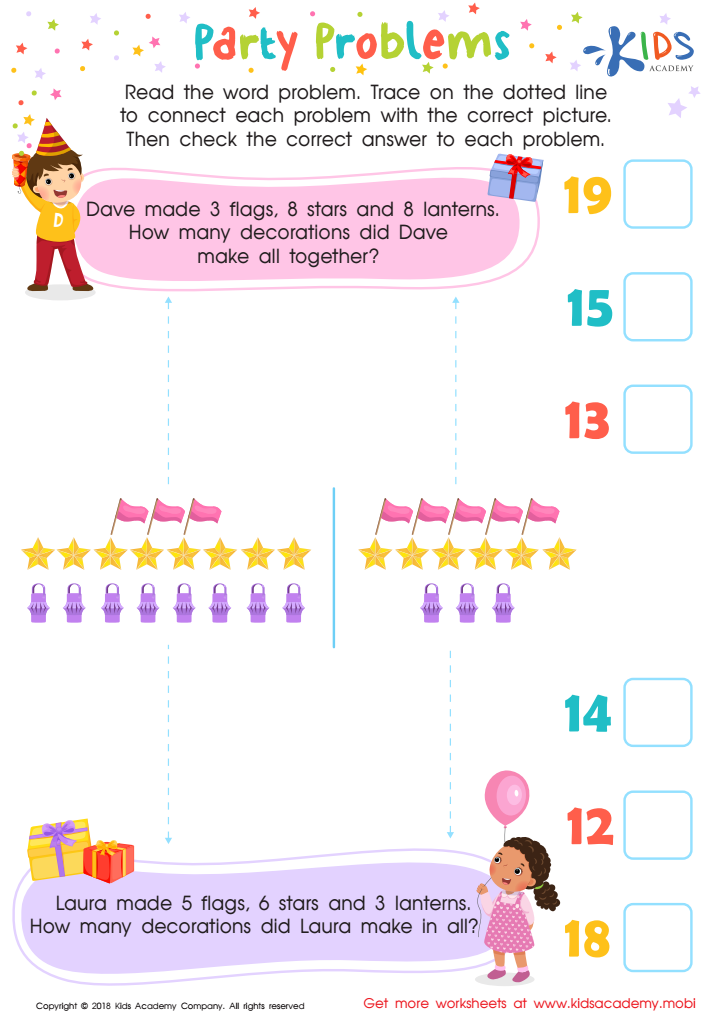
Party Problems Worksheet
 Assign to My Students
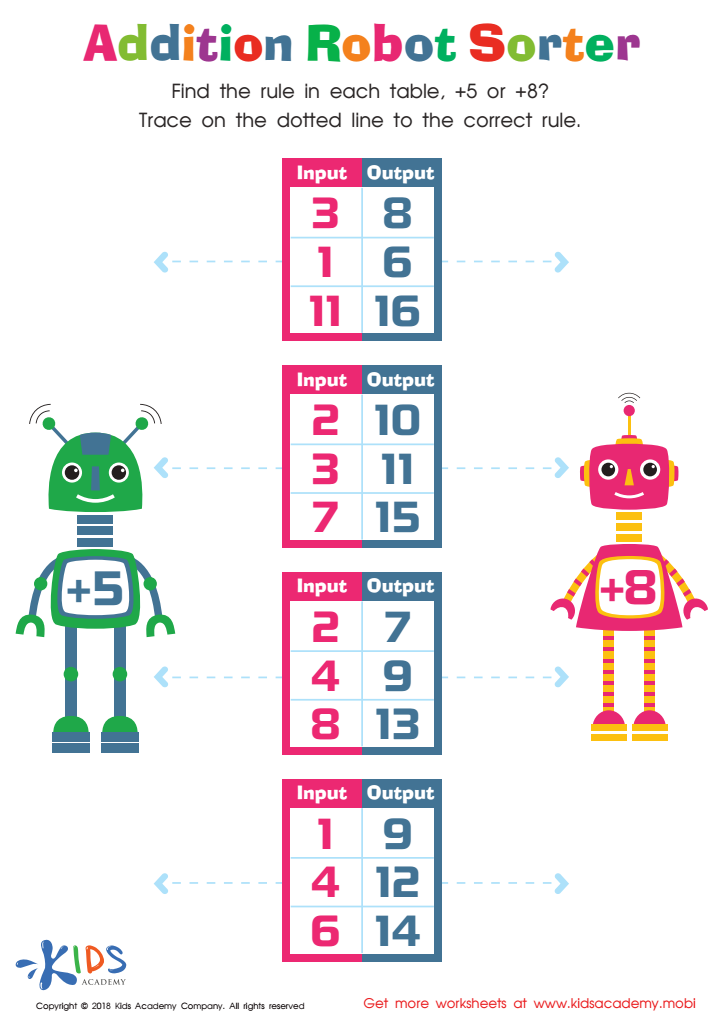
Addition Robot Sorter Worksheet
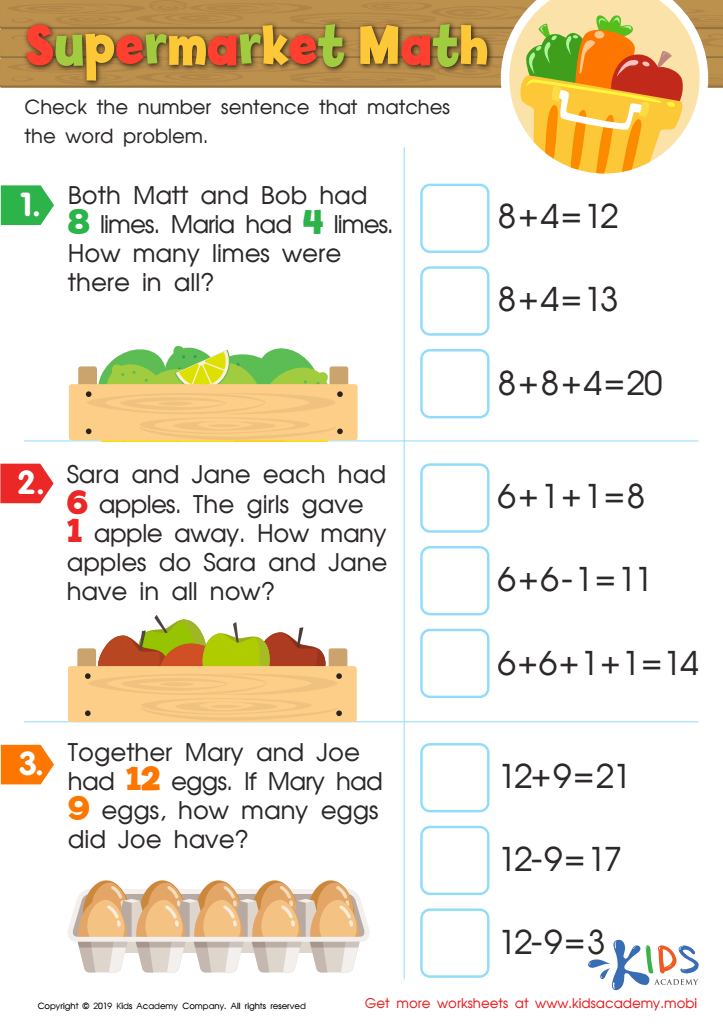
Supermarket Math Worksheet
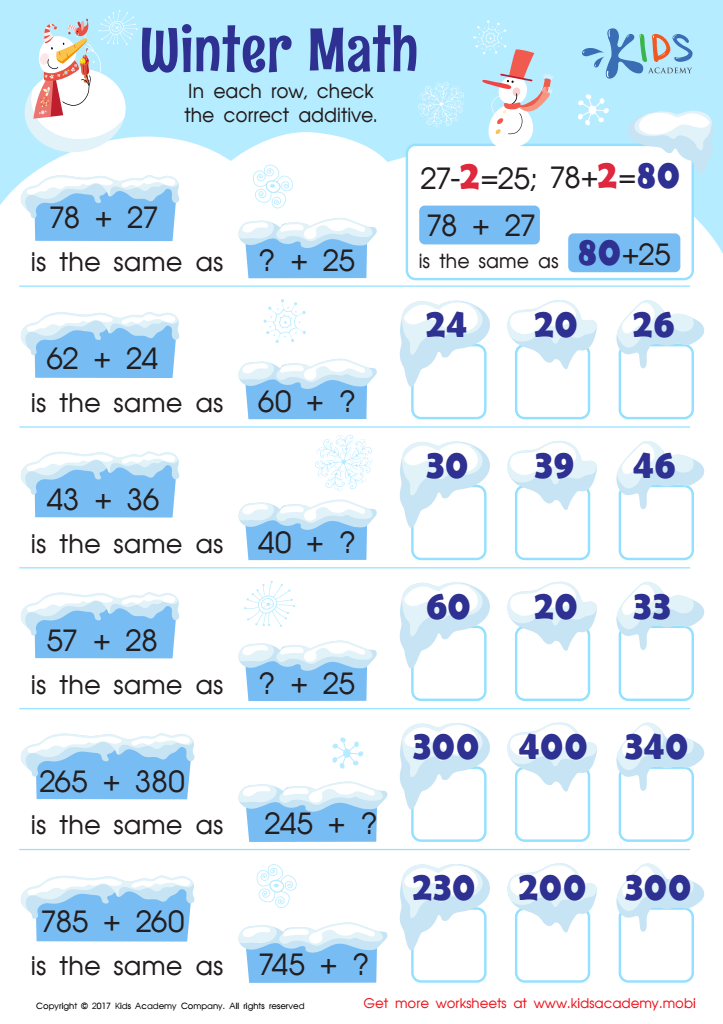
Free Addition Worksheet








Problem solving in addition and subtraction is a crucial aspect of early mathematics education for children ages 4-8. During these formative years, children develop foundational skills and critical thinking abilities that they will carry throughout their academic journey and beyond. Parents and teachers should prioritize these skills for several reasons.
Firstly, mastering addition and subtraction helps children develop numeracy skills essential for everyday life, such as budgeting, shopping, and time management. By engaging children in problem-solving activities, they can discover multiple strategies for finding solutions, fostering flexibility in their thinking.
Additionally, problem-solving promotes perseverance and resilience. As children encounter challenges, they learn to approach problems systematically, developing confidence and essential life skills. Moreover, engaging with math problems encourages curiosity and motivation, making learning enjoyable and relevant.
Furthermore, early exposure to problem-solving in mathematics sets a positive tone for later, more complex concepts in mathematics. Children who develop these skills early are more likely to excel in higher-grade-level math.
Lastly, collaboration with parents and teachers fosters a supportive learning environment. When caregivers engage in these activities, they reinforce the message that learning is valuable, thus promoting a lifelong love for learning. Through this shared effort, we can inspire the next generation to be imaginative thinkers and capable problem solvers.








