Understanding ordinal numbers Addition & Subtraction Worksheets for Ages 4-8
3 filtered results
-
From - To
Welcome to our "Understanding Ordinal Numbers Addition & Subtraction Worksheets" designed for children ages 4-8! These engaging worksheets help young learners grasp the concept of ordinal numbers, fostering essential math skills. With fun exercises, kids will practice addition and subtraction while mastering first, second, third, and beyond. Each worksheet is tailored to reinforce understanding through interactive activities, making math enjoyable and approachable. Perfect for parents and teachers, our resources support early childhood education, ensuring students build confidence and a solid foundation in math. Explore our worksheets today and encourage your child’s numerical journey while having fun!
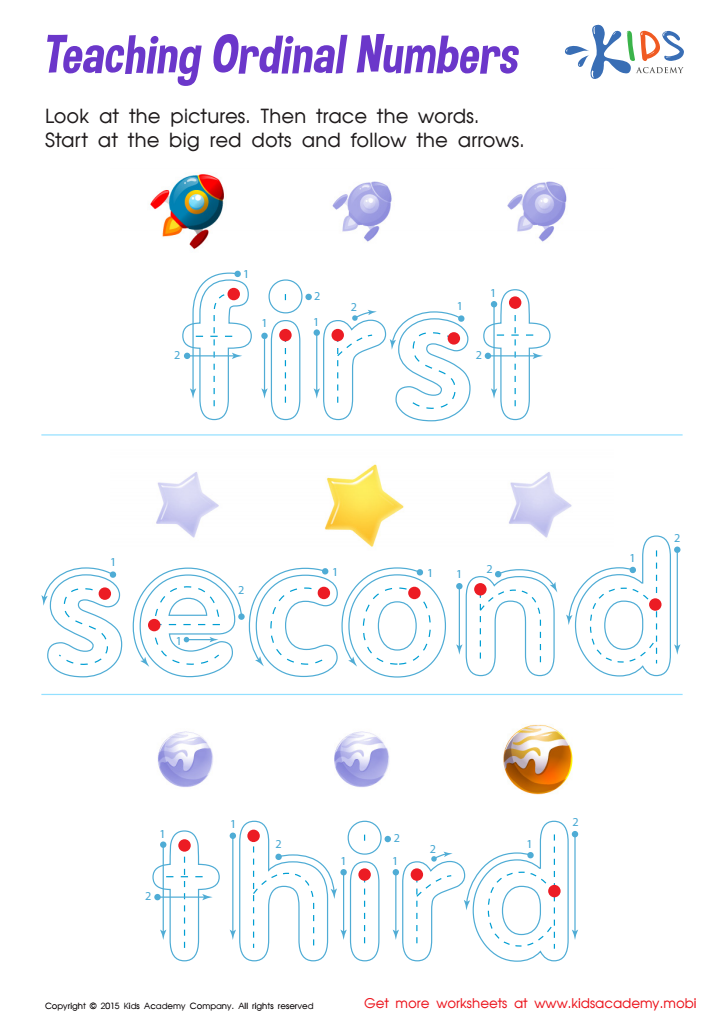
Ordinal Numbers: Teaching Ordinal Numbers Printable
 Assign to My Students
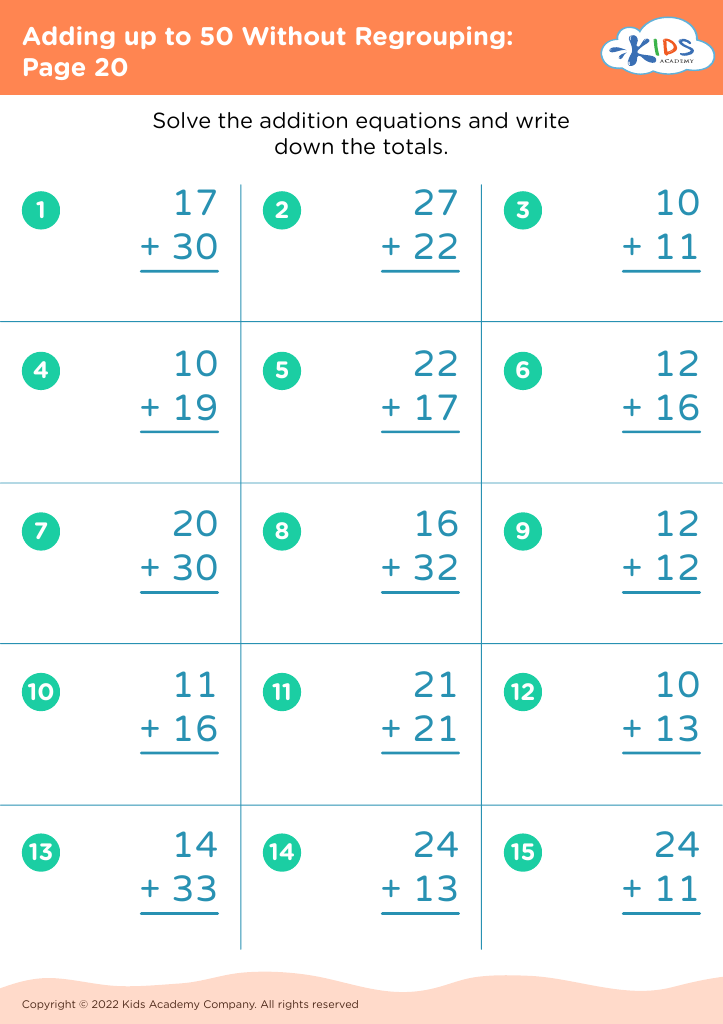
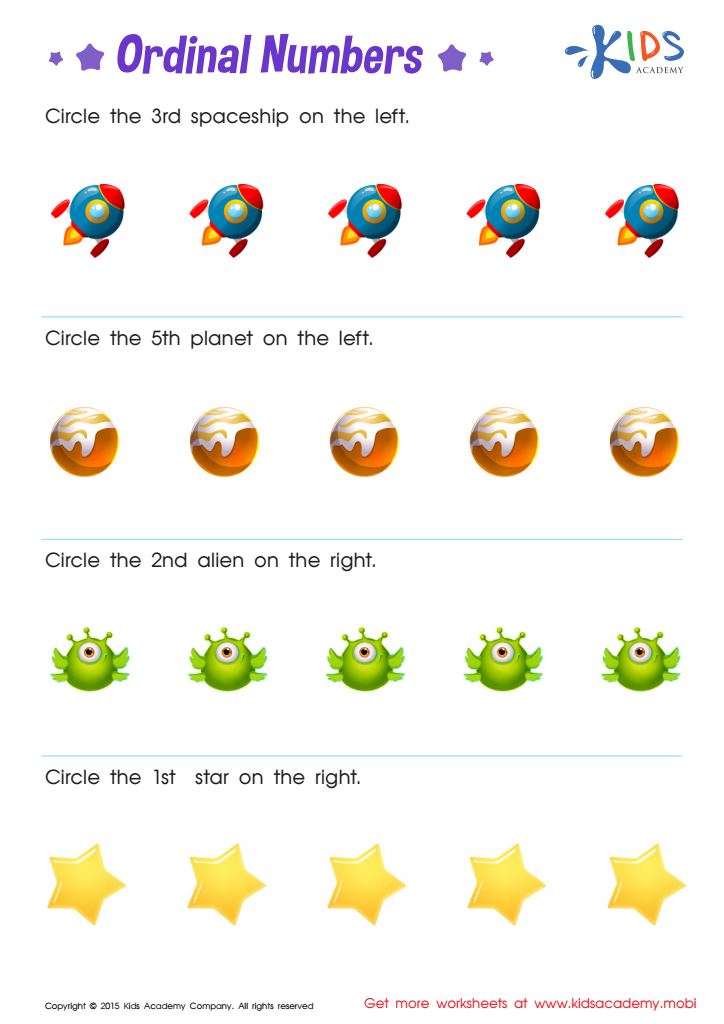
Ordinal Numbers: Space Ordinals Worksheet








Understanding ordinal numbers, addition, and subtraction is crucial for children aged 4-8, as it lays the groundwork for their mathematical development and overall cognitive growth. Ordinal numbers help children grasp concepts such as position and order, fostering skills like comparing quantities and understanding sequences, which are vital in everyday contexts—like knowing who finished first in a race or how old they are in relation to their siblings.
Meanwhile, addition and subtraction form the backbone of mathematical literacy. Mastering these foundational operations equips children with problem-solving skills and enhances their ability to handle real-life situations, such as managing money or understanding time schedules. As students learn these concepts through engaging activities, they also develop critical thinking and reasoning abilities.
Furthermore, when parents and teachers emphasize these skills, they support children’s social development as they learn to collaborate and communicate mathematical ideas. Fostering a positive attitude toward math can boost confidence and reduce anxiety about the subject, paving the way for future academic success. Ultimately, prioritizing understanding ordinal numbers, addition, and subtraction sets a strong foundation for lifelong learning, leaving children well-equipped to tackle more complex mathematical tasks as they progress.








