Introduce your young learners to the exciting world of numbers with our "Understanding Sequences Addition & Subtraction Worksheets for Ages 4-8." These engaging and age-appropriate worksheets are designed to strengthen mathematical skills by focusing on sequences, addition, and subtraction. Each activity promotes critical thinking and problem-solving abilities, making learning enjoyable and effective. Perfect for classrooms and at-home education, our worksheets provide a strong foundation in fundamental math concepts while enhancing cognitive development. Download today and watch your child's confidence and competency in math grow exponentially!
Check out this FREE Trial Lesson on Addition & Subtraction for age 4-8!

Adding with 5's

Favorites
With answer key
Interactive
  • 4-8
  • Understanding Sequences
  • Addition & Subtraction
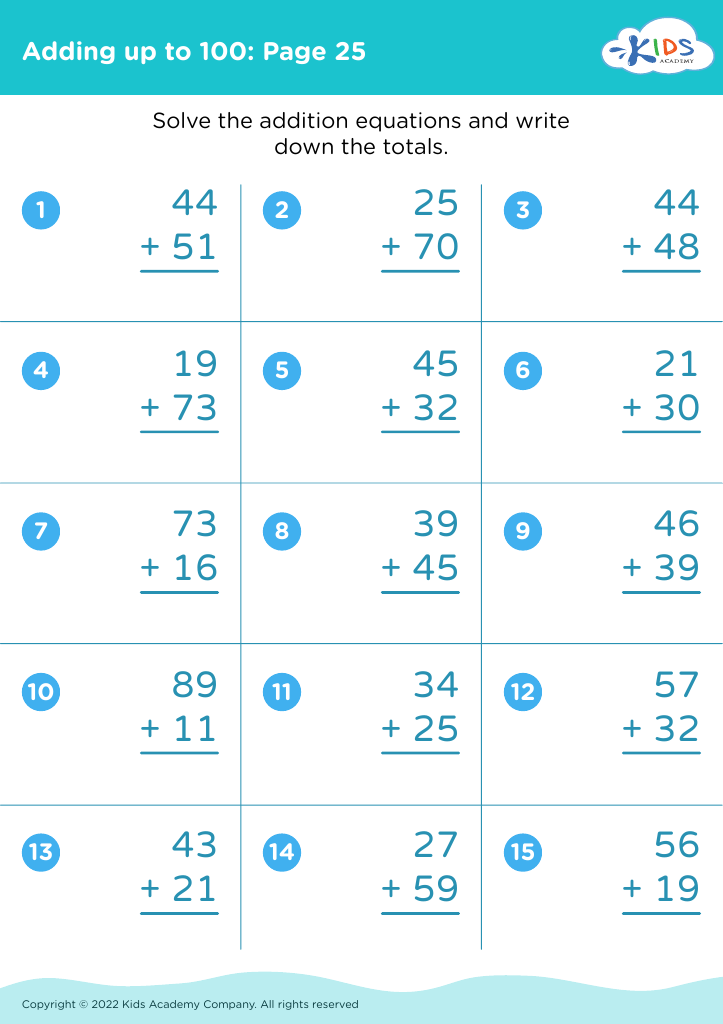
Adding up to 100: Page 25

Adding up to 100: Page 25

Adding up to 100: Page 25
Worksheet
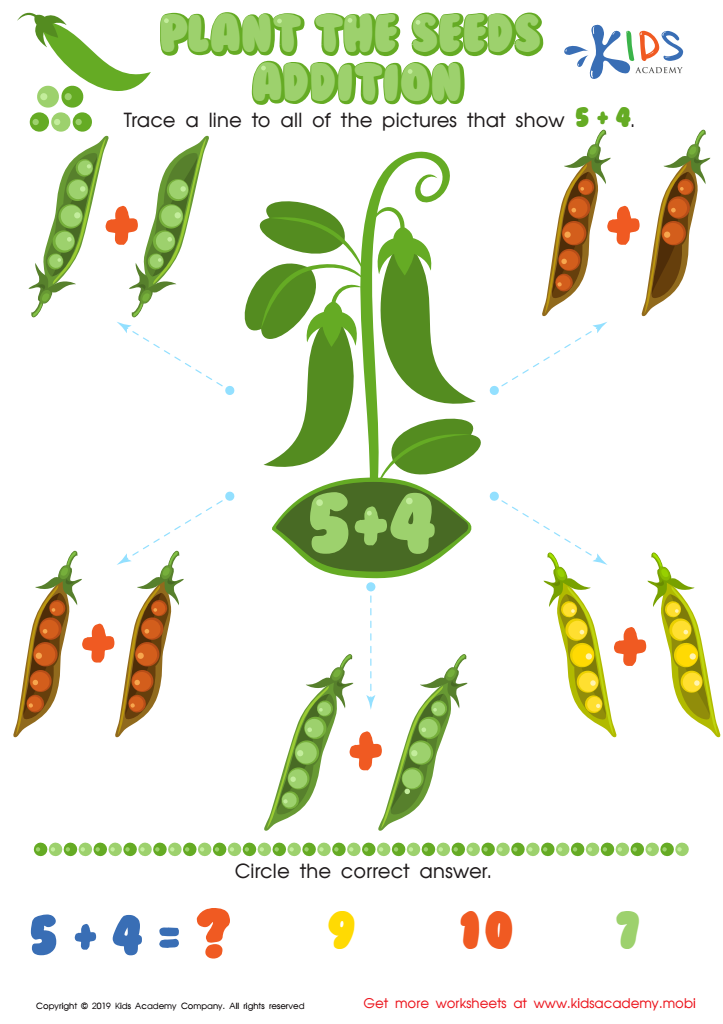
Plant the Seeds Addition Worksheet

Plant the Seeds Addition Worksheet

This worksheet combines math and learning about plants. Ask kids to name their favorite plants and which ones they see the most. Have them trace a line to all pictures in the middle which show the equation 5+4. Enjoy the beauty of plants while introducing math skills!
Plant the Seeds Addition Worksheet
Worksheet
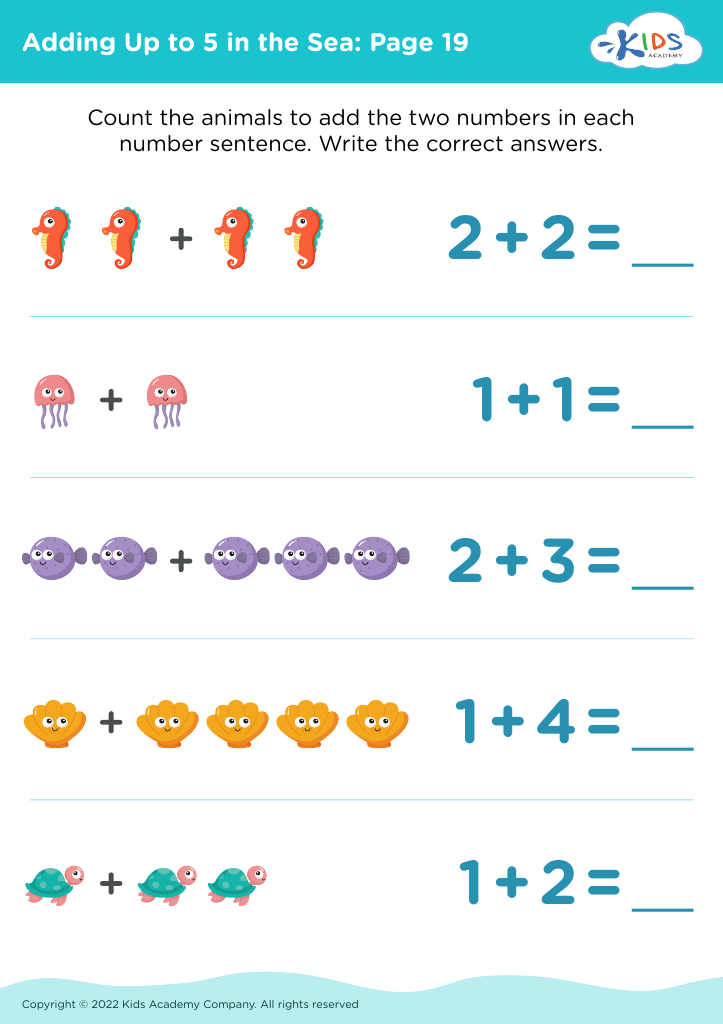
Adding Up to 5 in the Sea: Page 19
Worksheet
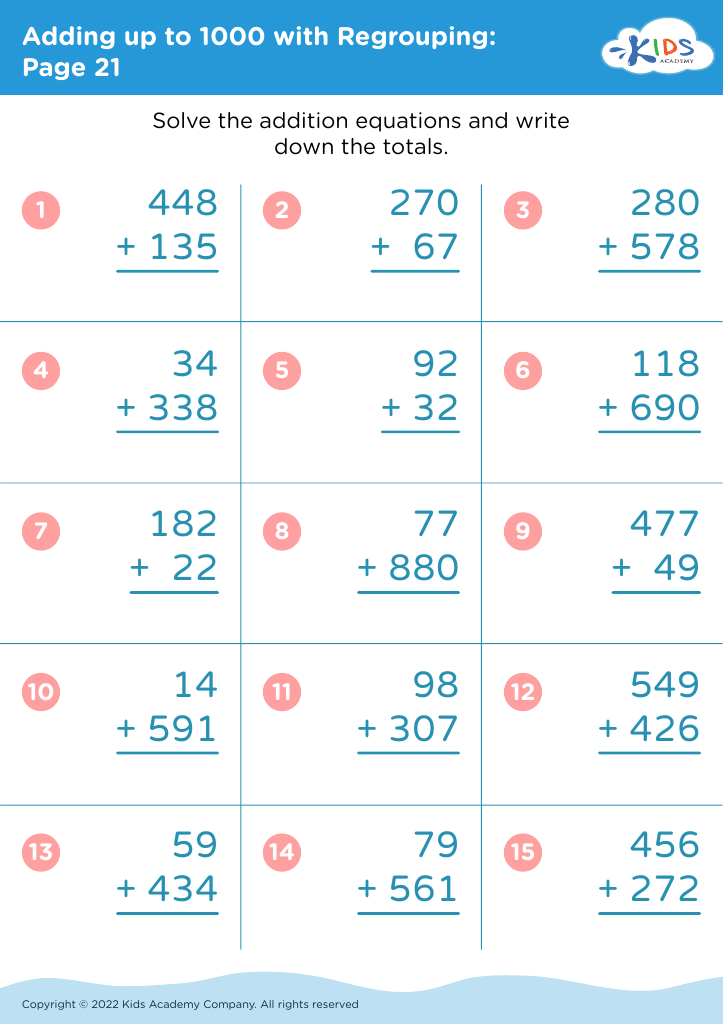
Adding up to 1000 with Regrouping: Page 21
Worksheet
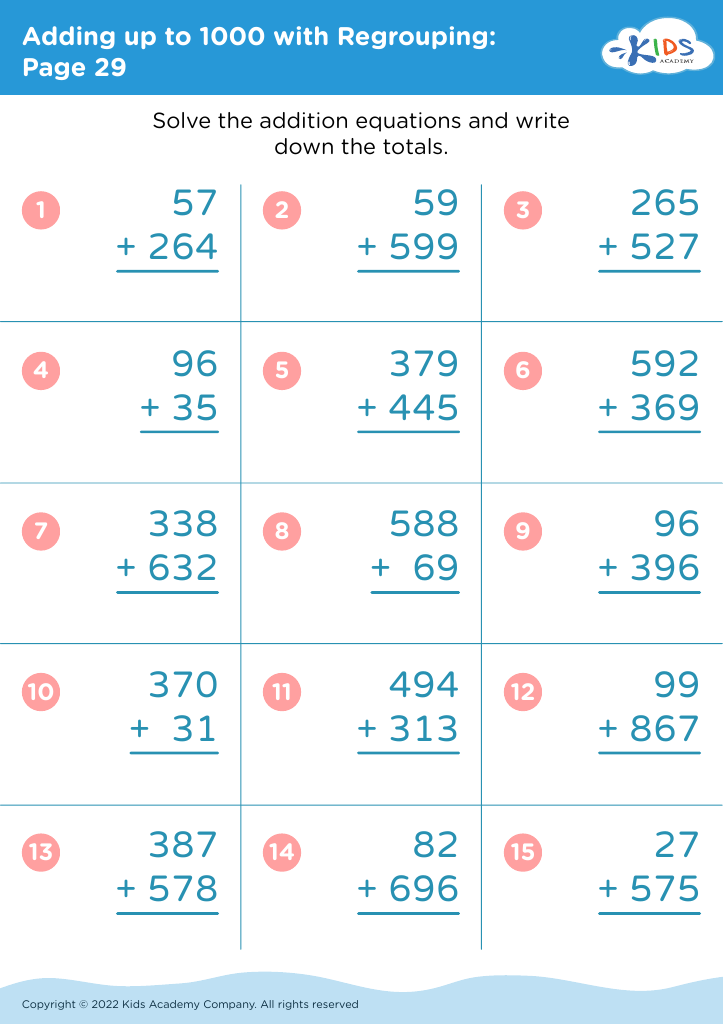
Adding up to 1000 with Regrouping: Page 29
Worksheet
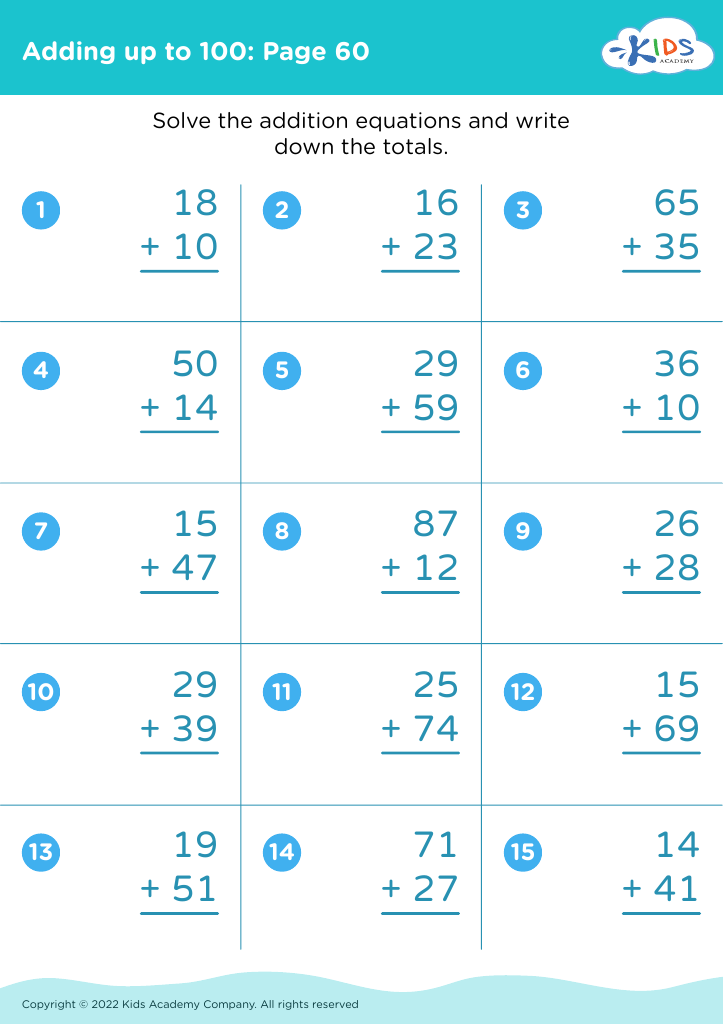
Adding up to 100: Page 60

Adding up to 100: Page 60

Adding up to 100: Page 60
Worksheet
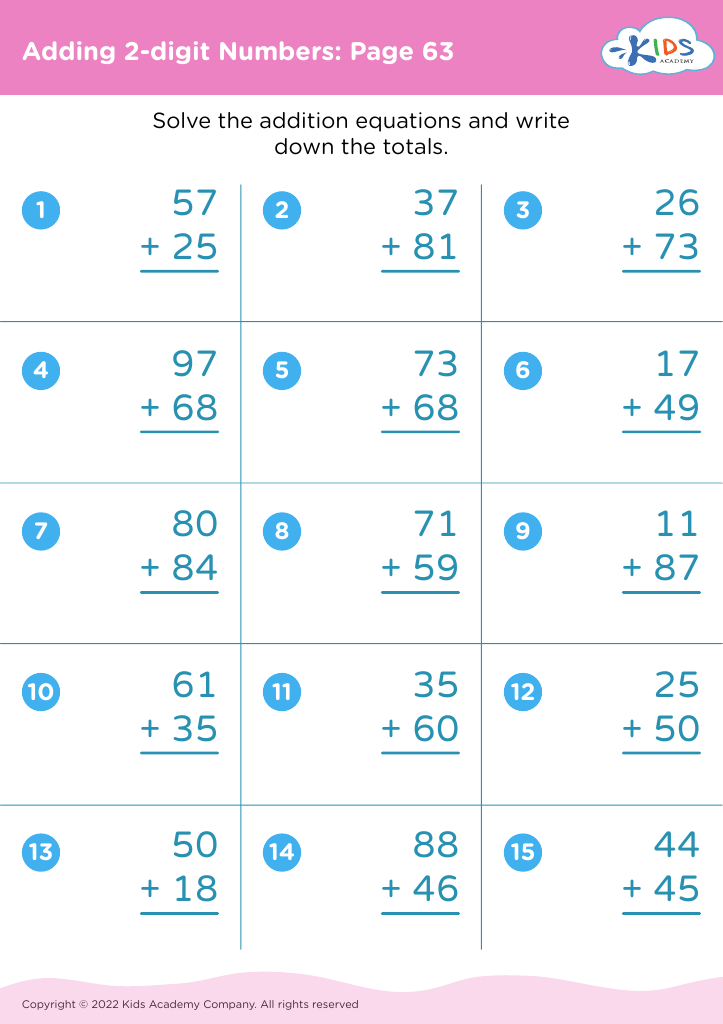
Adding 2-digit Numbers: Page 63

Adding 2-digit Numbers: Page 63

Adding 2-digit Numbers: Page 63
Worksheet
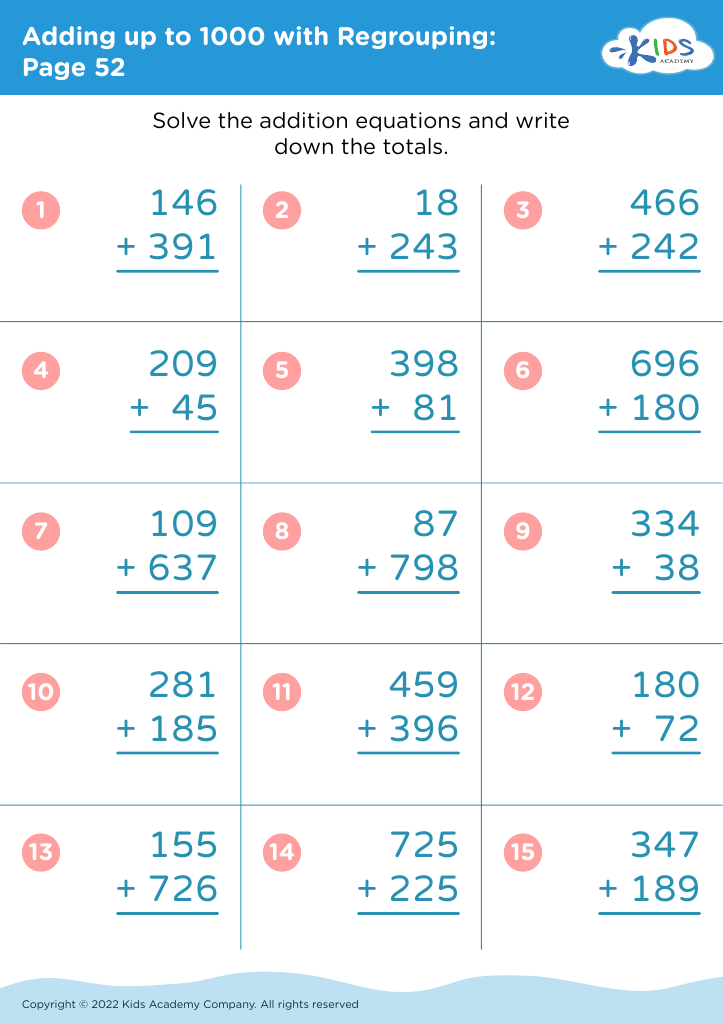
Adding up to 1000 with Regrouping: Page 52
Worksheet
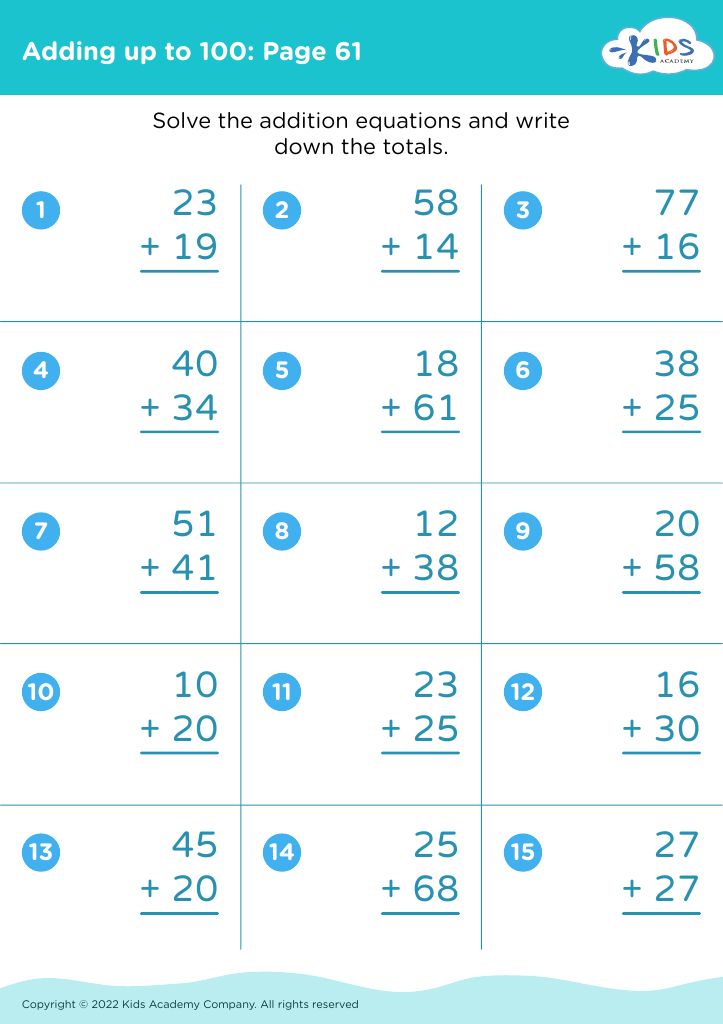
Adding up to 100: Page 61

Adding up to 100: Page 61

Adding up to 100: Page 61
Worksheet
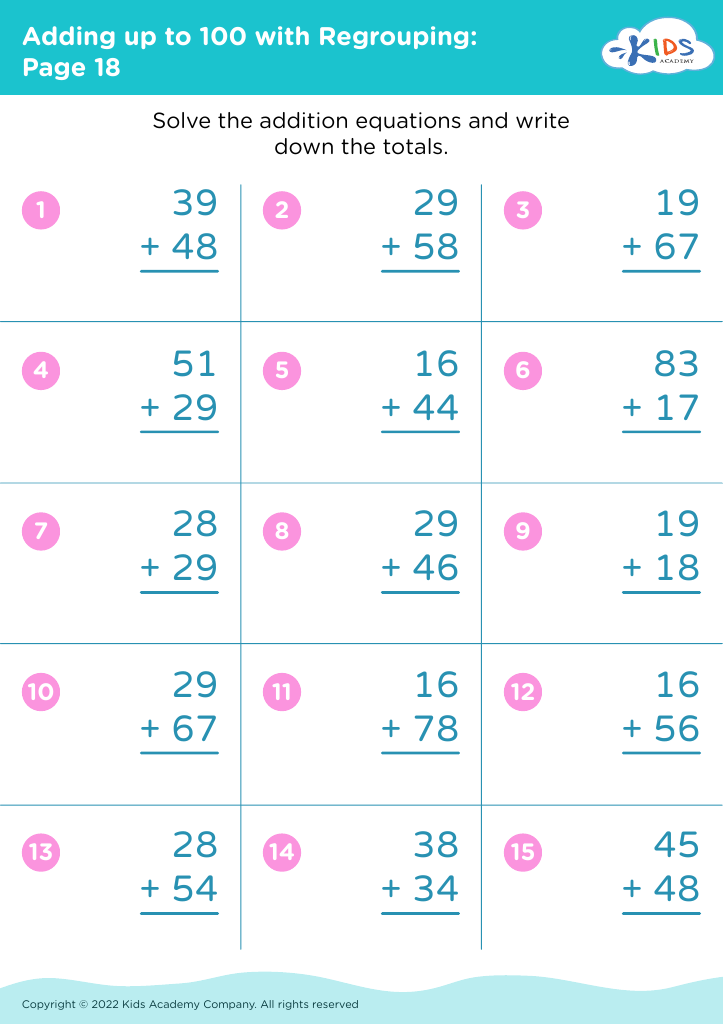
Adding up to 100 with Regrouping: Page 18
Worksheet
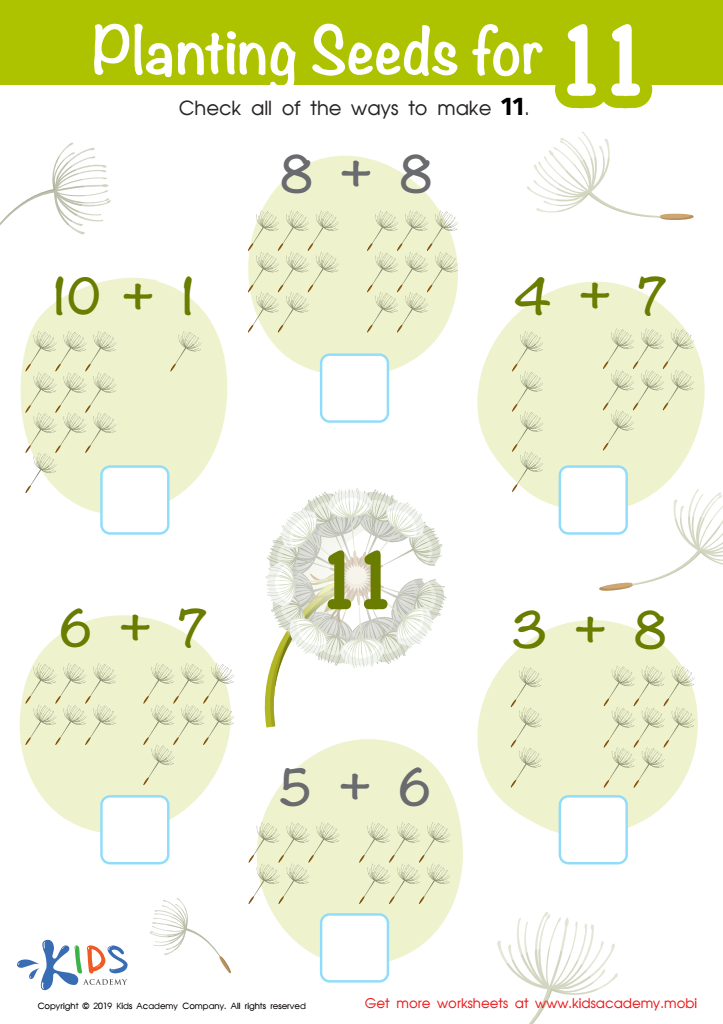
Planting Seeds for 11 Worksheet
Planting Seeds for 11 Worksheet
Before starting, ask your students to count as high as they can. Explain that different numbers can add up to the same total. Give examples like 2+2 =4 and 3+1 =4. Ask if they can think of other examples. Then have them work through the equations in the printout and circle all that add up to 11.
Planting Seeds for 11 Worksheet
Worksheet
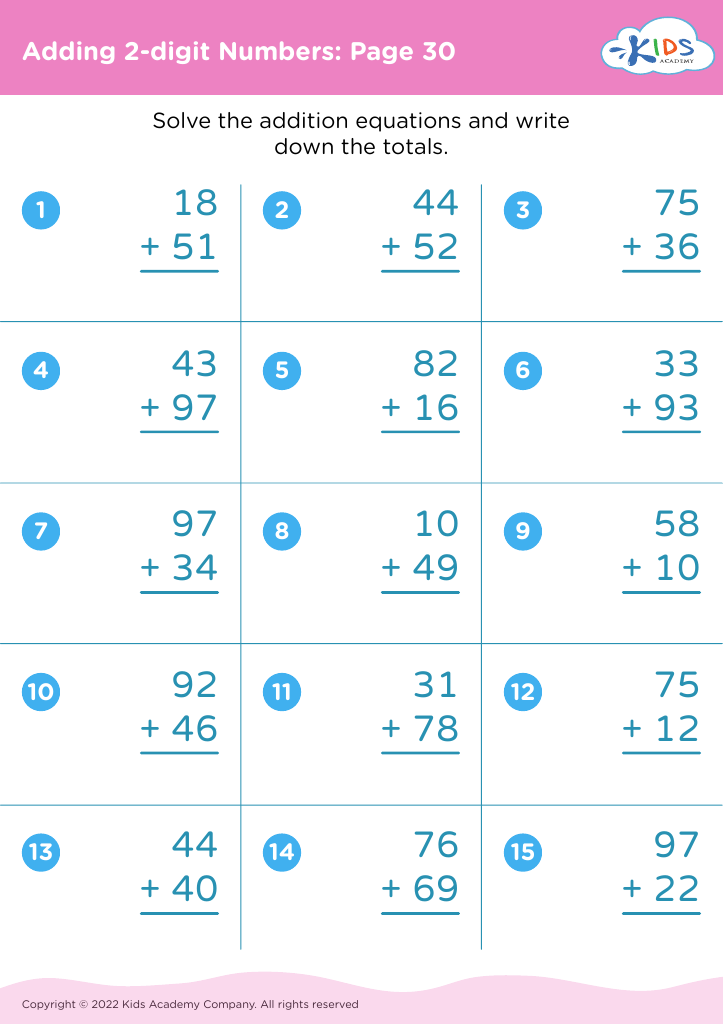
Adding 2-digit Numbers: Page 30

Adding 2-digit Numbers: Page 30

Adding 2-digit Numbers: Page 30
Worksheet
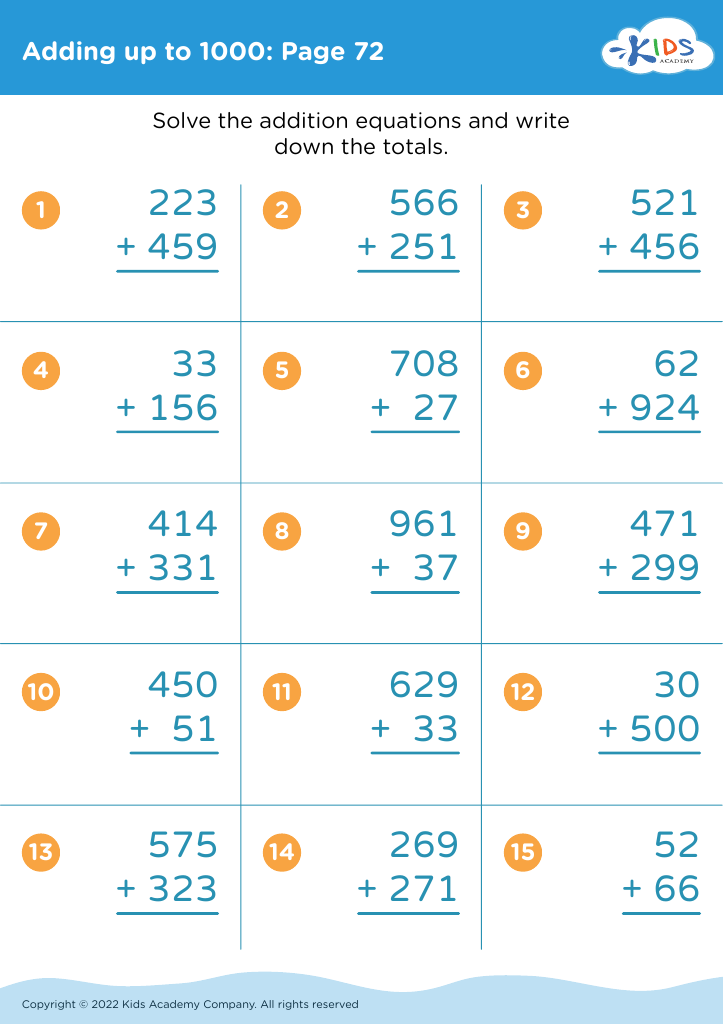
Adding up to 1000: Page 72

Adding up to 1000: Page 72

Adding up to 1000: Page 72
Worksheet
Haystack Steps Worksheet
Haystack Steps Worksheet

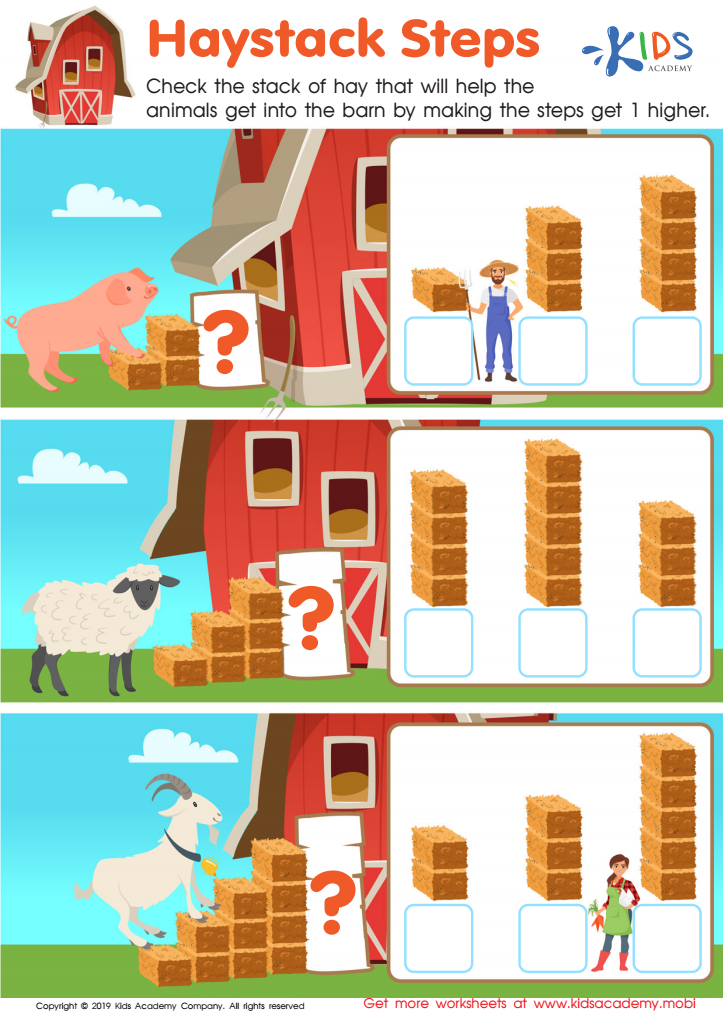
Have your kids ever visited a farm? What activities and sights did they enjoy? Farmers are essential to our lives, growing food and providing us with dairy and eggs. In this worksheet, a farmer has made a haystack for his animals to climb into the barn. Ask your kids to add an extra layer to the stack to make the climb easier.
Haystack Steps Worksheet
Worksheet
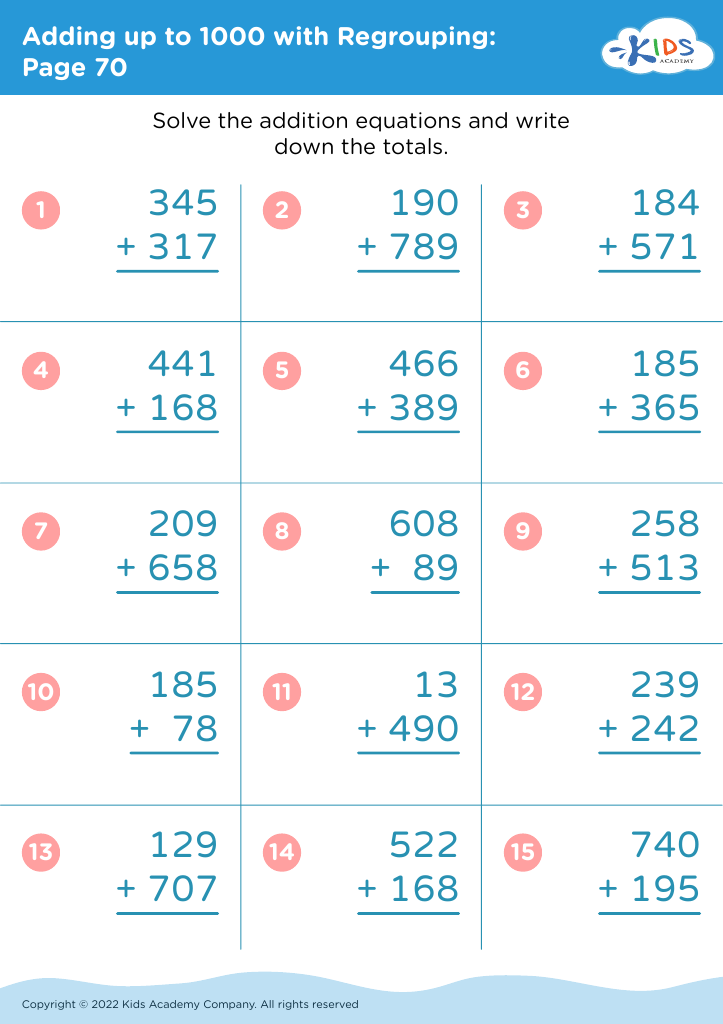
Adding up to 1000 with Regrouping: Page 70
Worksheet
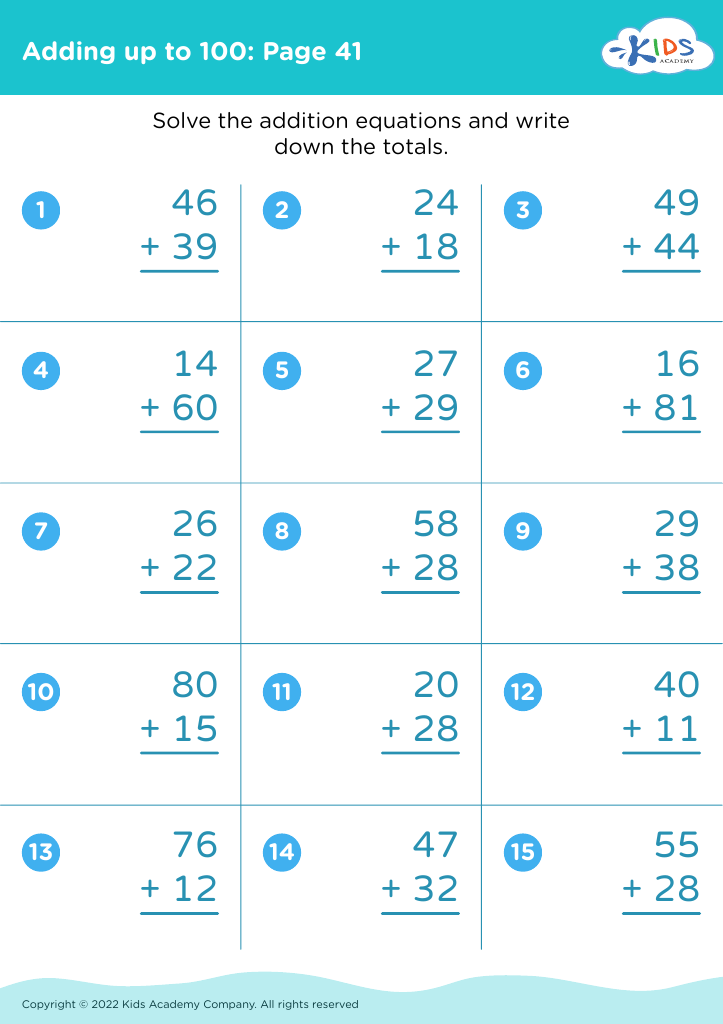
Adding up to 100: Page 41

Adding up to 100: Page 41

Adding up to 100: Page 41
Worksheet
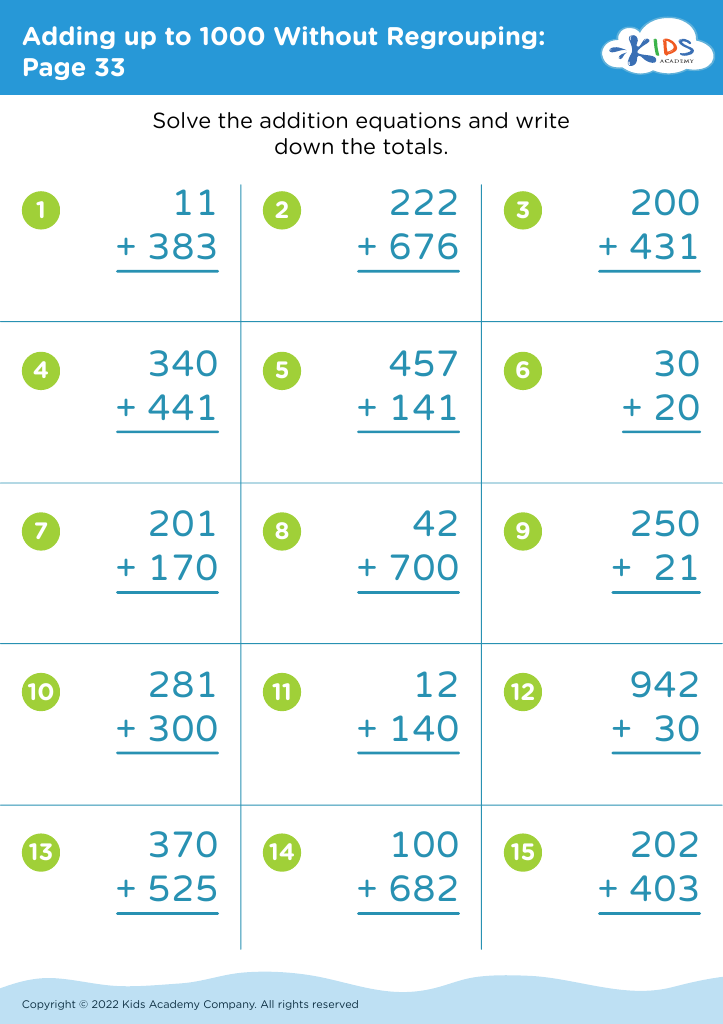
Adding up to 1000 Without Regrouping: Page 33
Worksheet


Understanding sequences, addition, and subtraction at an early age lays a critical foundation for children’s mathematical development. For parents and teachers of children aged 4-8, cultivating these skills is essential for several reasons.

Firstly, sequences enhance logical thinking and pattern recognition, which are fundamental cognitive skills. By identifying and predicting patterns, children develop a structured way of thinking that supports problem-solving across diverse subjects.

Addition and subtraction are the building blocks of arithmetic. Mastering these basic operations early helps children gain confidence in handling numbers, setting the stage for more complex mathematical concepts. Children who grasp these early are more likely to excel academically as math becomes more abstract in later years.

Moreover, understanding these concepts strengthens both fine motor skills and control as children actively engage with counting objects or writing numbers. Parents and teachers can use real-world examples, such as counting toys or snacks, to teach these concepts in a fun and relatable manner.

Additionally, early competence in math increases a child’s self-confidence. Positive reinforcement from successfully completing math tasks fosters a love for learning, encouraging a proactive attitude towards education.

In summary, focusing on sequences, addition, and subtraction during early childhood paves the way for future academic success and boosts essential cognitive and motor development. Parents and teachers play a pivotal role in nurturing these early mathematical skills.