Filters

94 filtered results

Clear all filters
Favorites
With answer key
Interactive

94 filtered results

Difficulty Level

Grade


Check out this FREE Trial Lesson on Addition & Subtraction for age 4-8!

A

Favorites
With answer key
Interactive
  • 4-8
  • Visual Learning
  • Addition & Subtraction
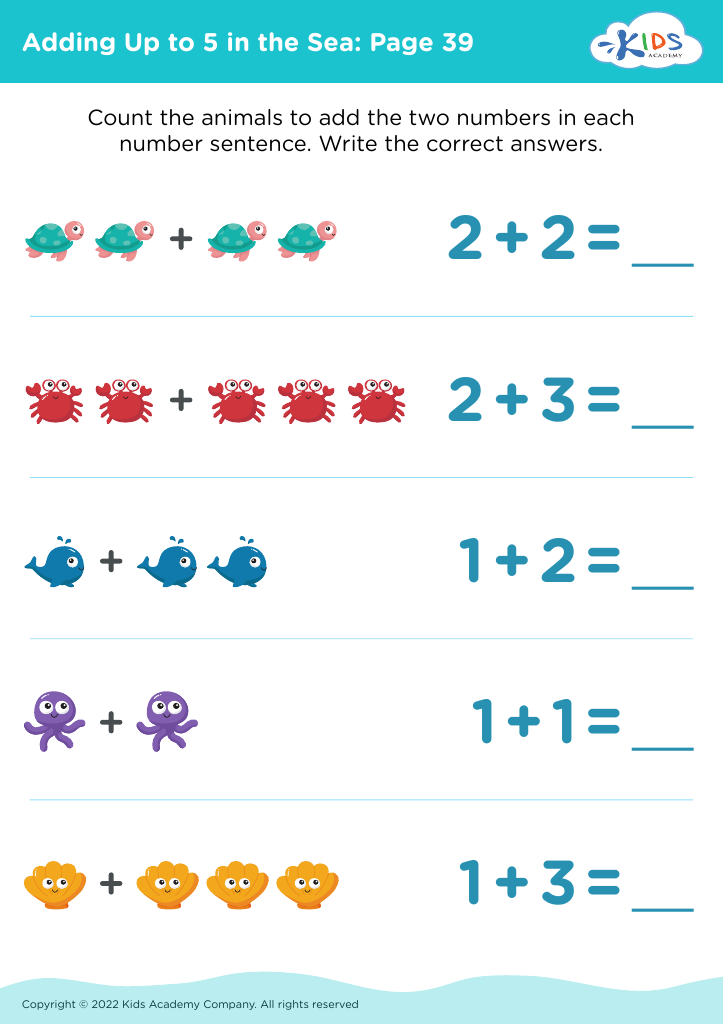
Adding Up to 5 in the Sea: Page 39
Worksheet
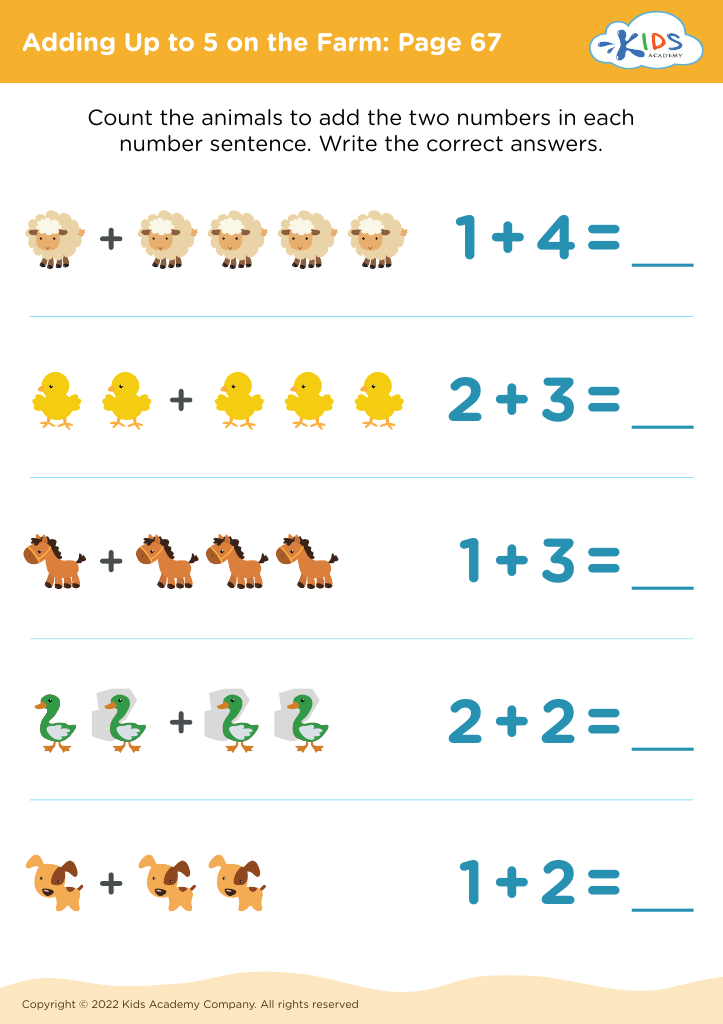
Adding Up to 5 on the Farm: Page 67
Worksheet
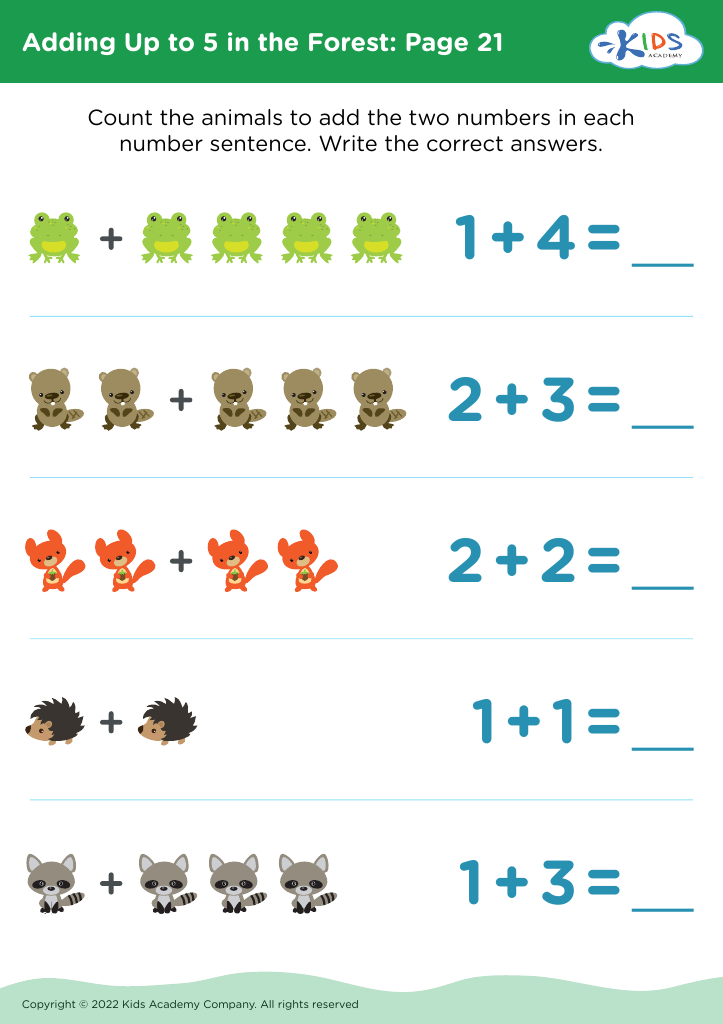
Adding Up to 5 in the Forest: Page 21
Worksheet
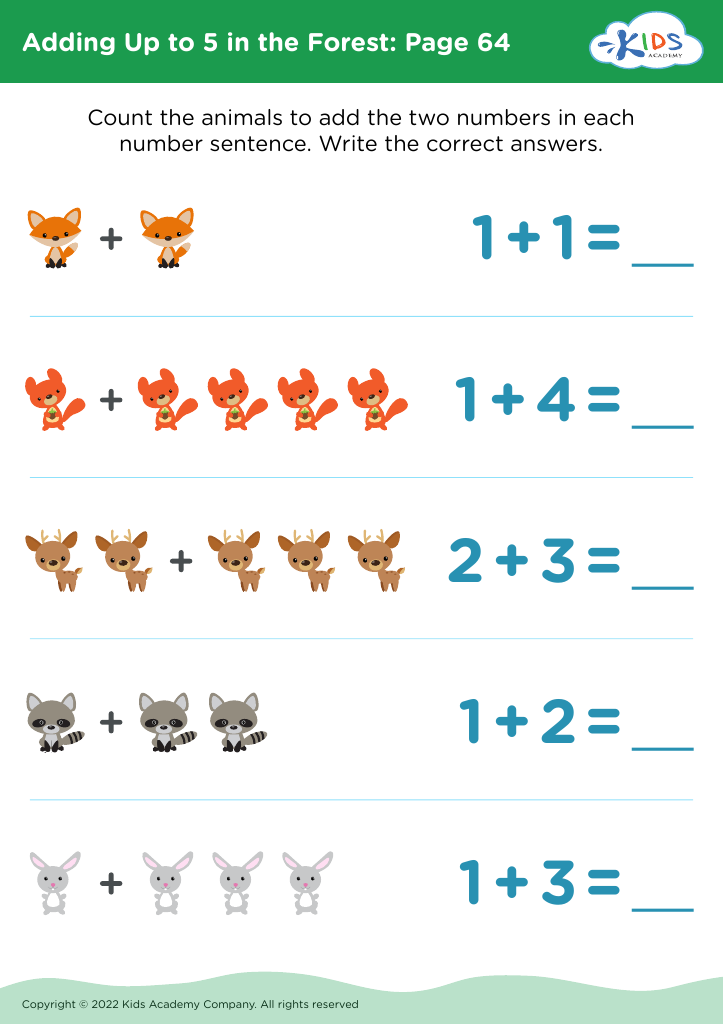
Adding Up to 5 in the Forest: Page 64
Worksheet
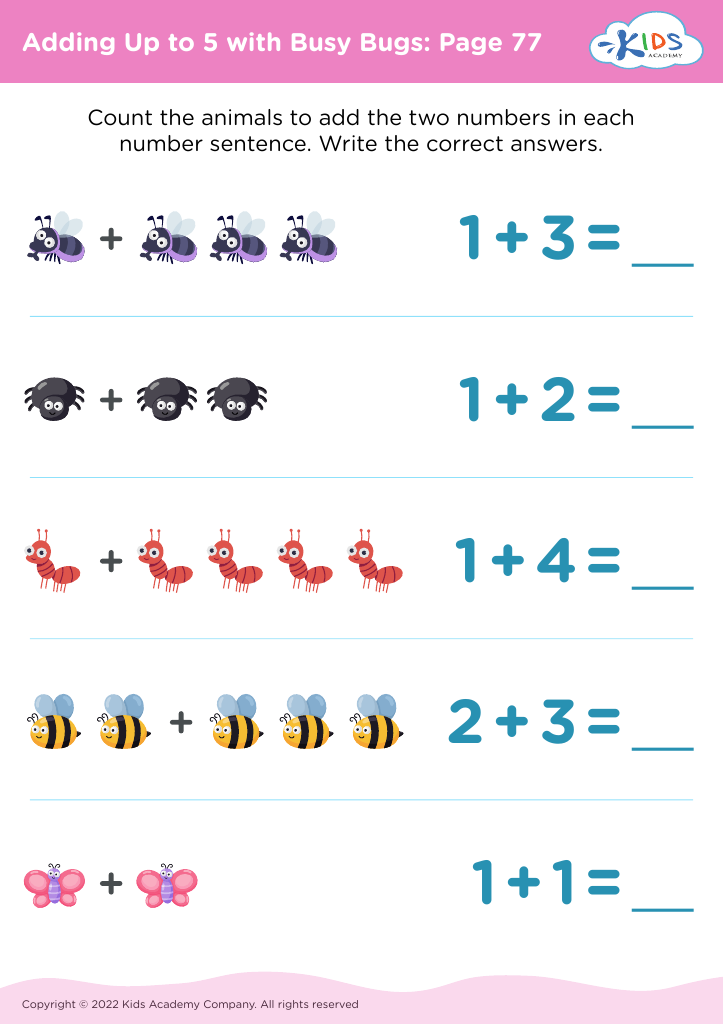
Adding Up to 5 with Busy Bugs: Page 77
Worksheet
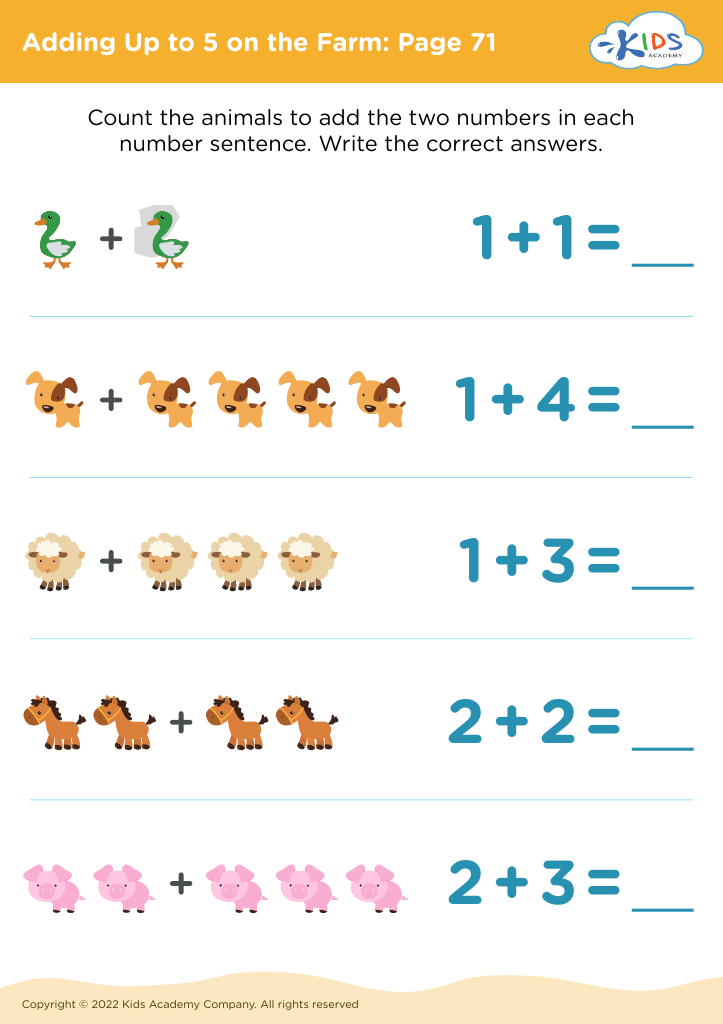
Adding Up to 5 on the Farm: Page 71
Worksheet
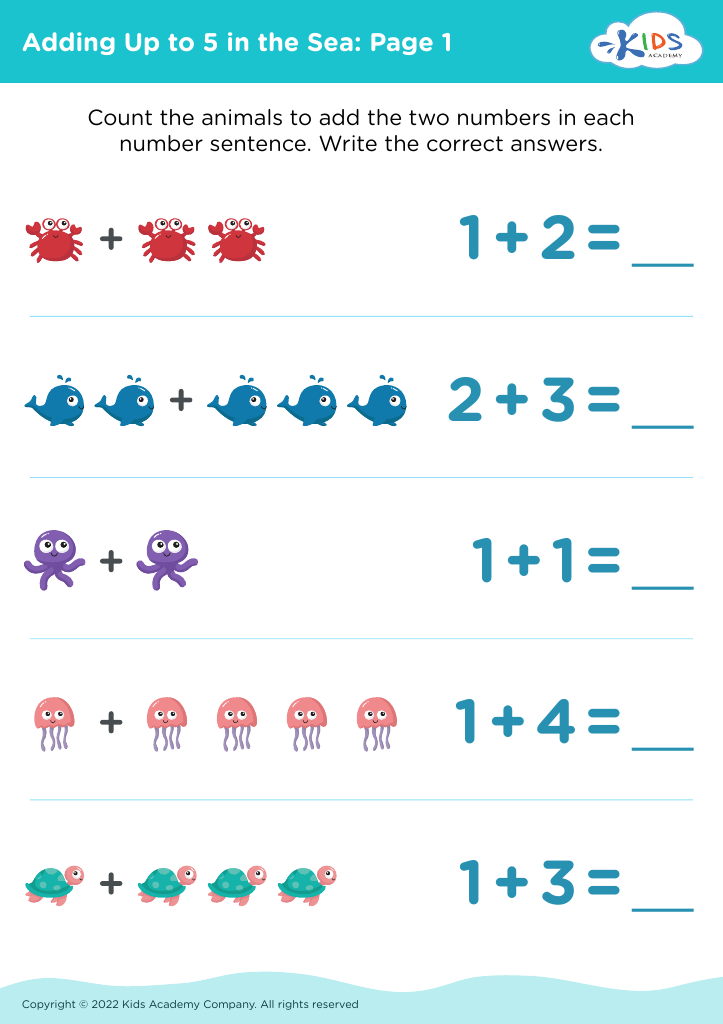
Adding Up to 5 in the Sea: Page 1

Adding Up to 5 in the Sea: Page 1

Adding Up to 5 in the Sea: Page 1
Worksheet
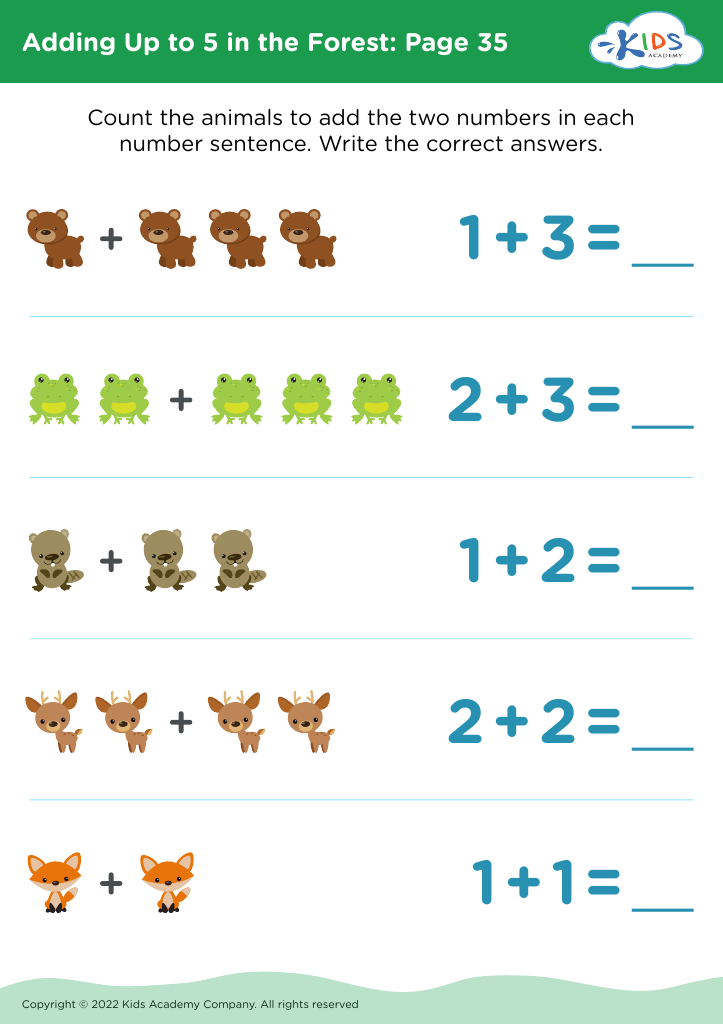
Adding Up to 5 in the Forest: Page 35
Worksheet
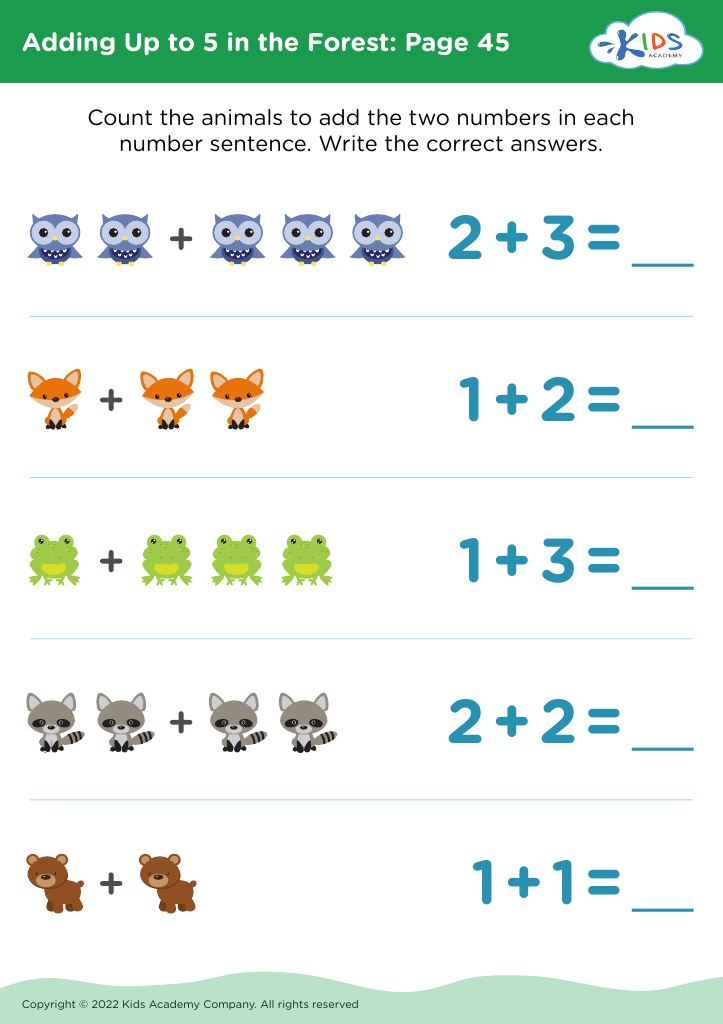
Adding Up to 5 in the Forest: Page 45
Worksheet
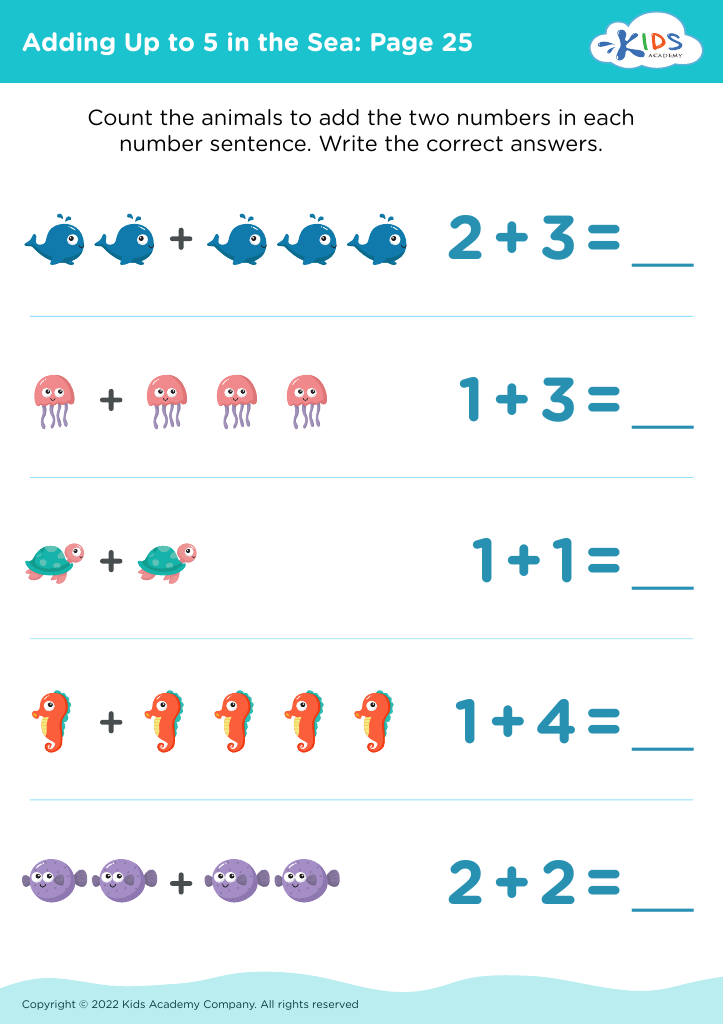
Adding Up to 5 in the Sea: Page 25
Worksheet
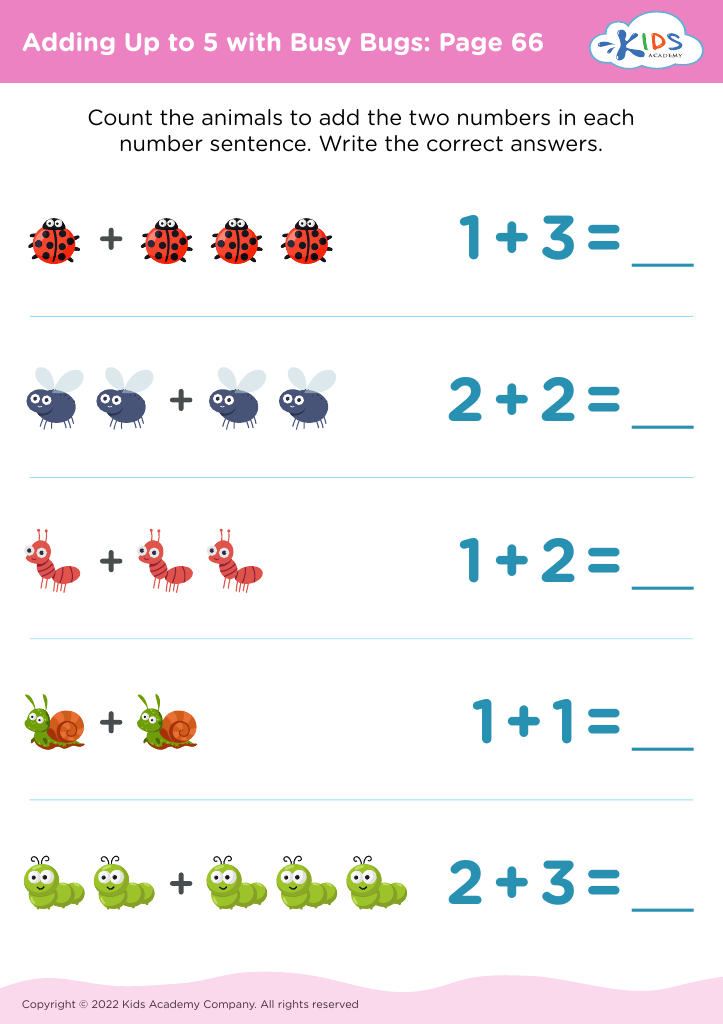
Adding Up to 5 with Busy Bugs: Page 66
Worksheet
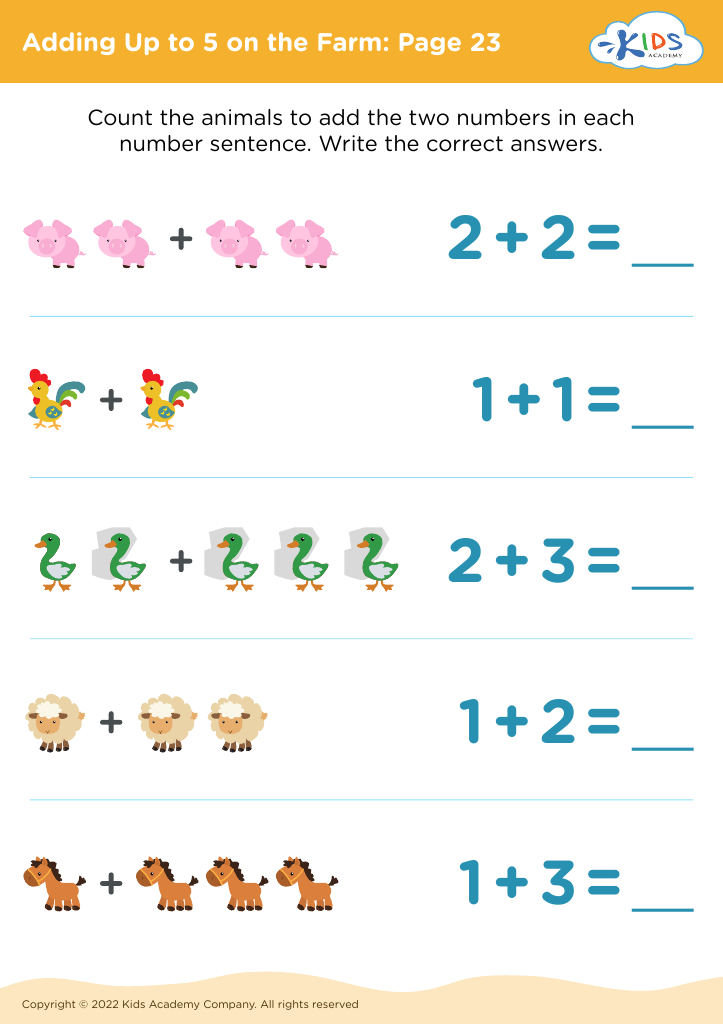
Adding Up to 5 on the Farm: Page 23
Worksheet
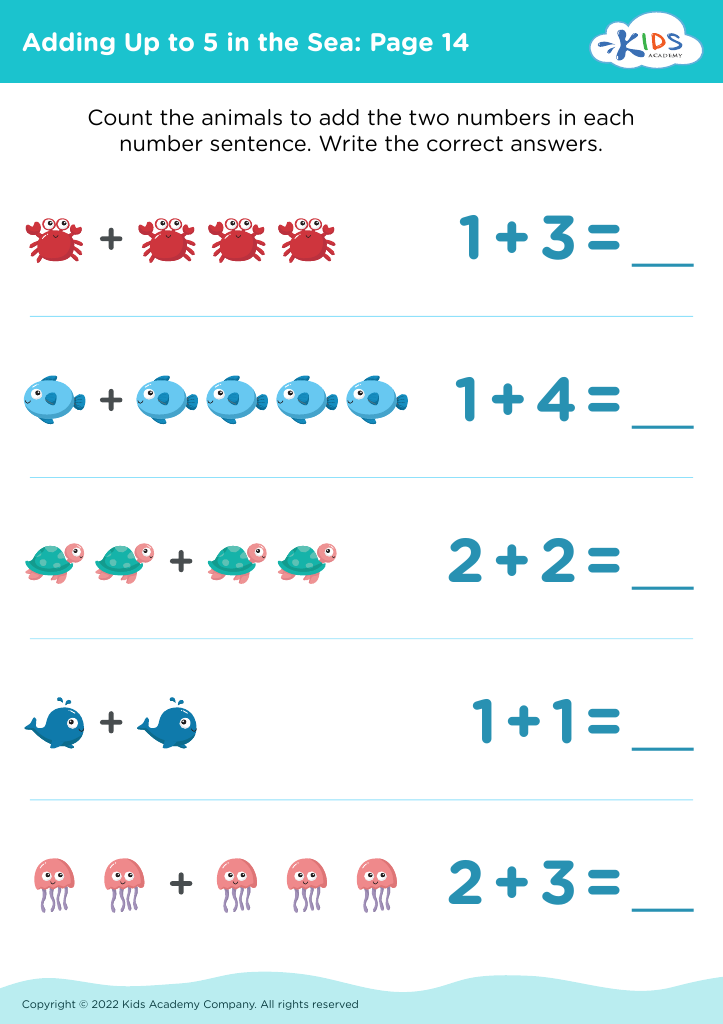
Adding Up to 5 in the Sea: Page 14
Worksheet
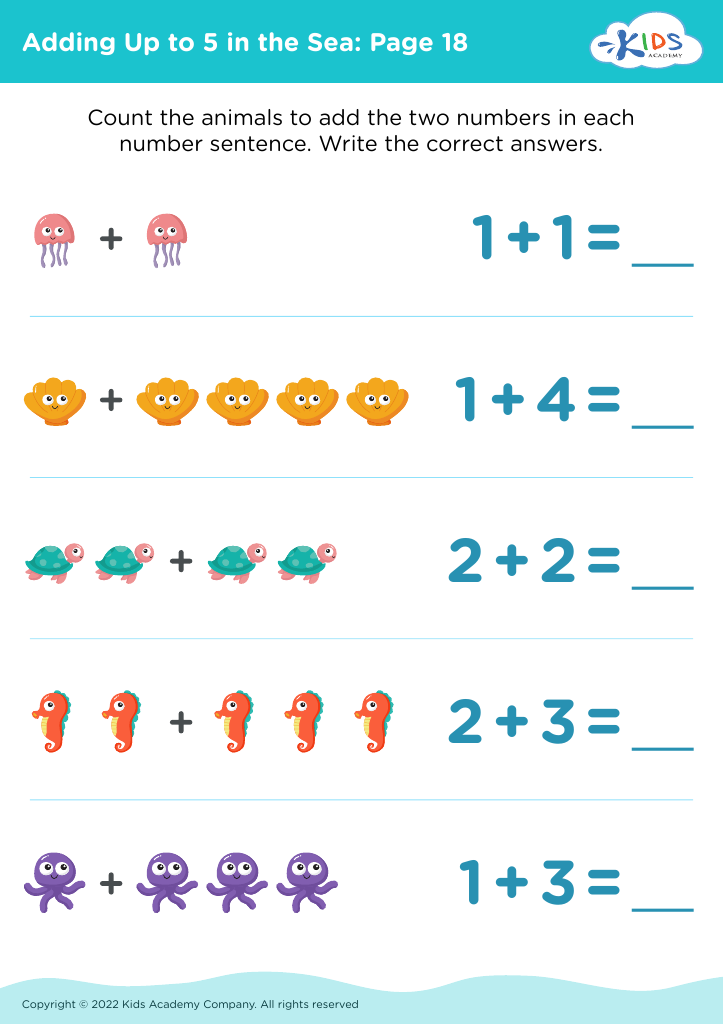
Adding Up to 5 in the Sea: Page 18
Worksheet
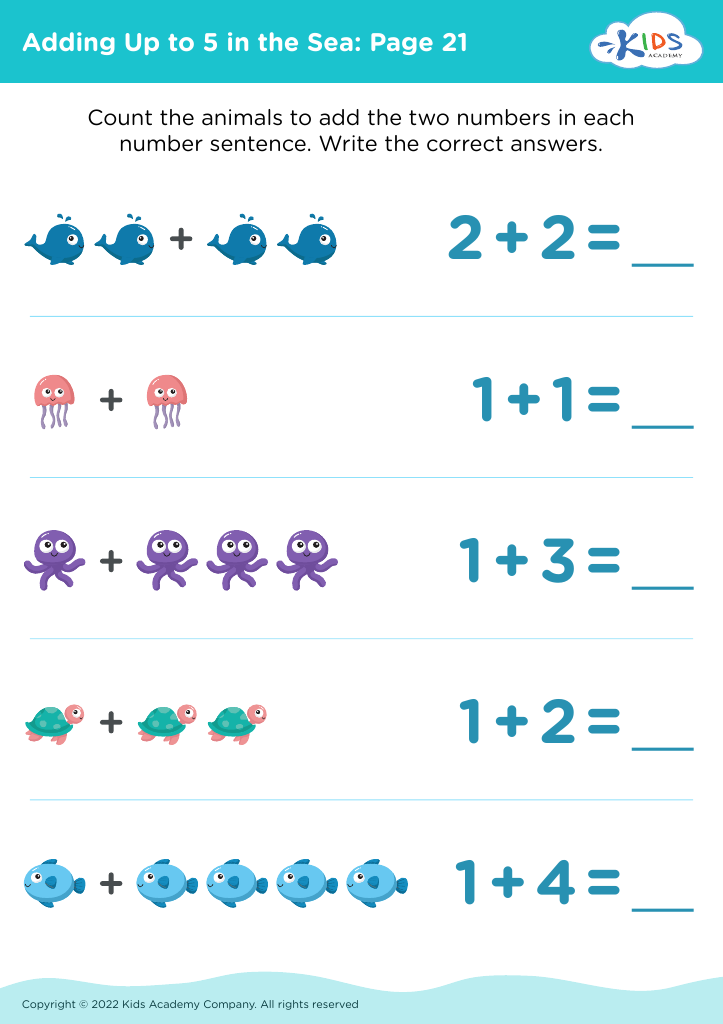
Adding Up to 5 in the Sea: Page 21
Worksheet
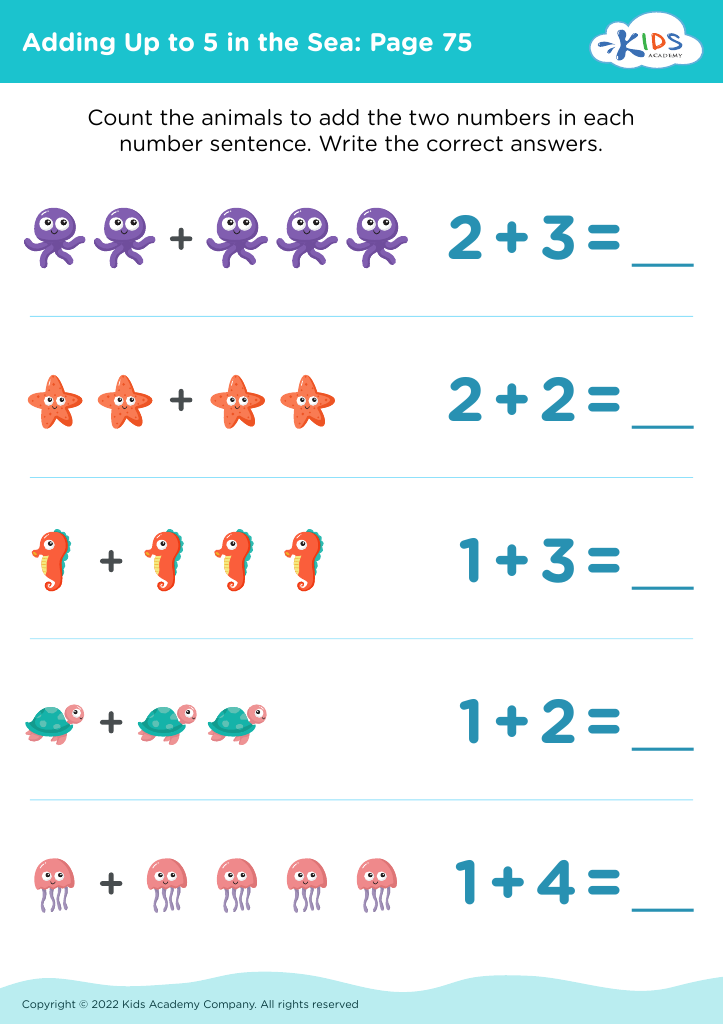
Adding Up to 5 in the Sea: Page 75
Worksheet
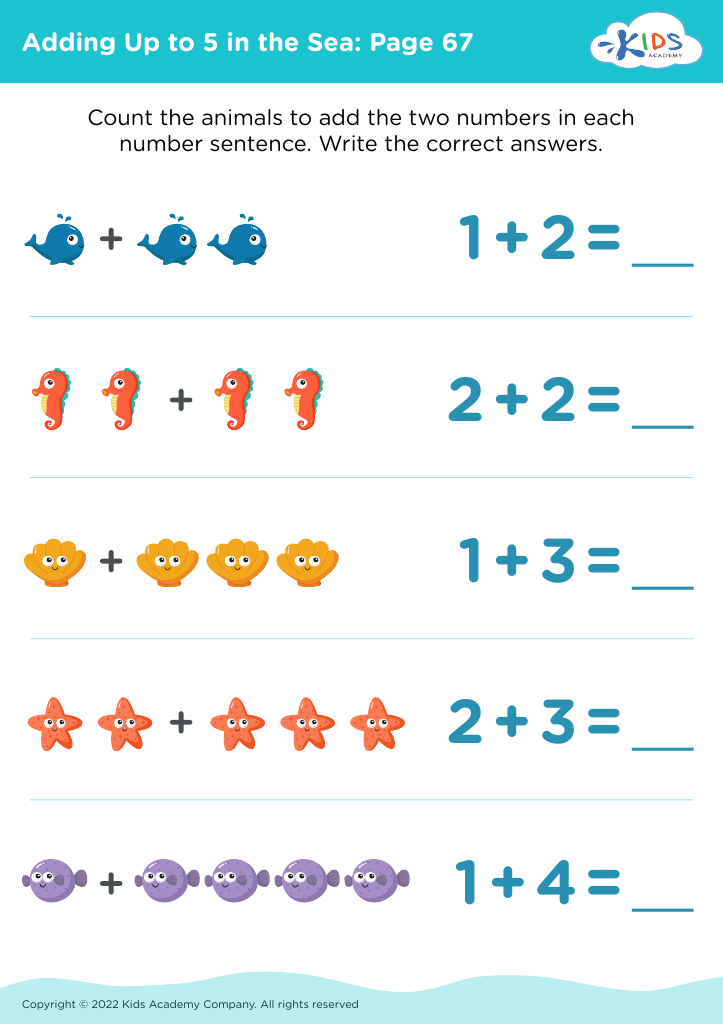
Adding Up to 5 in the Sea: Page 67
Worksheet
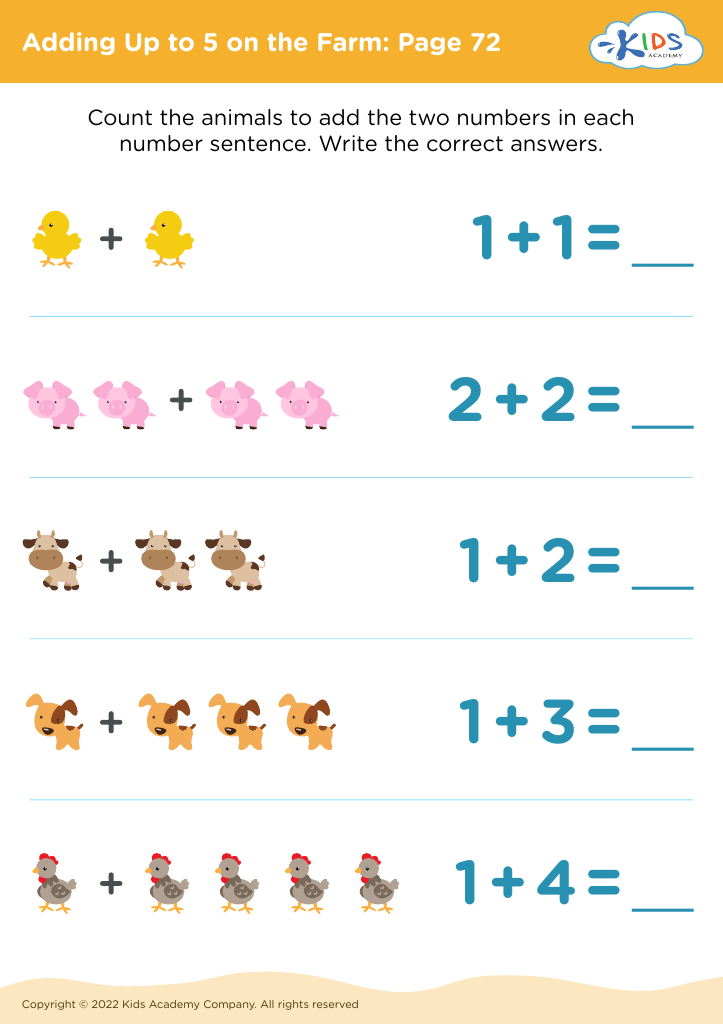
Adding Up to 5 on the Farm: Page 72
Worksheet
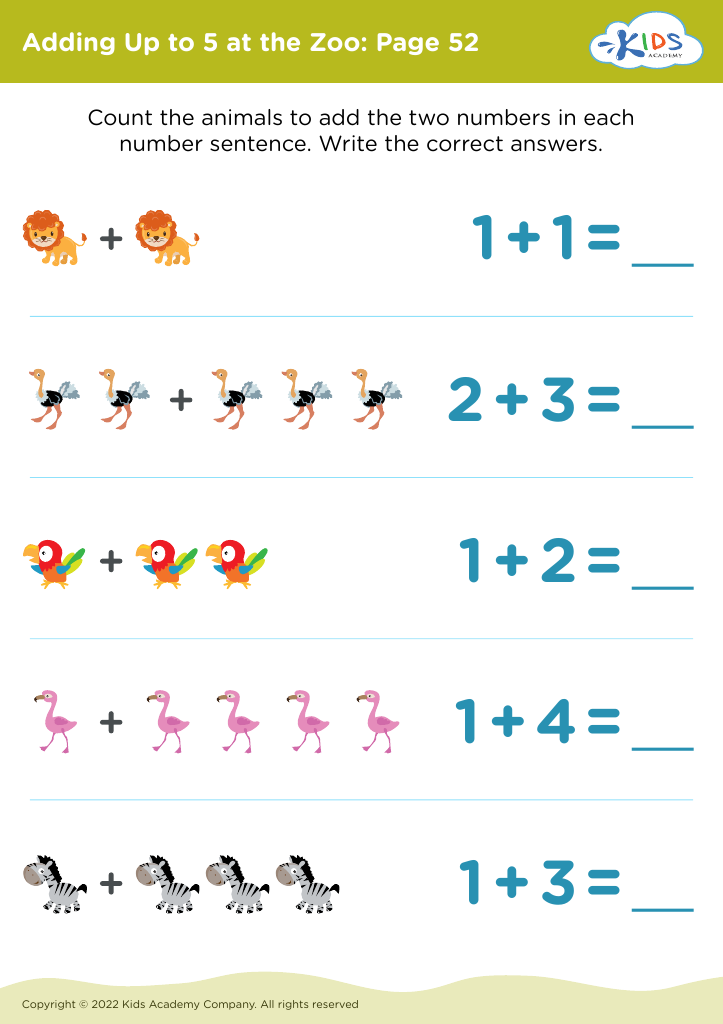
Adding Up to 5 at the Zoo: Page 52
Worksheet
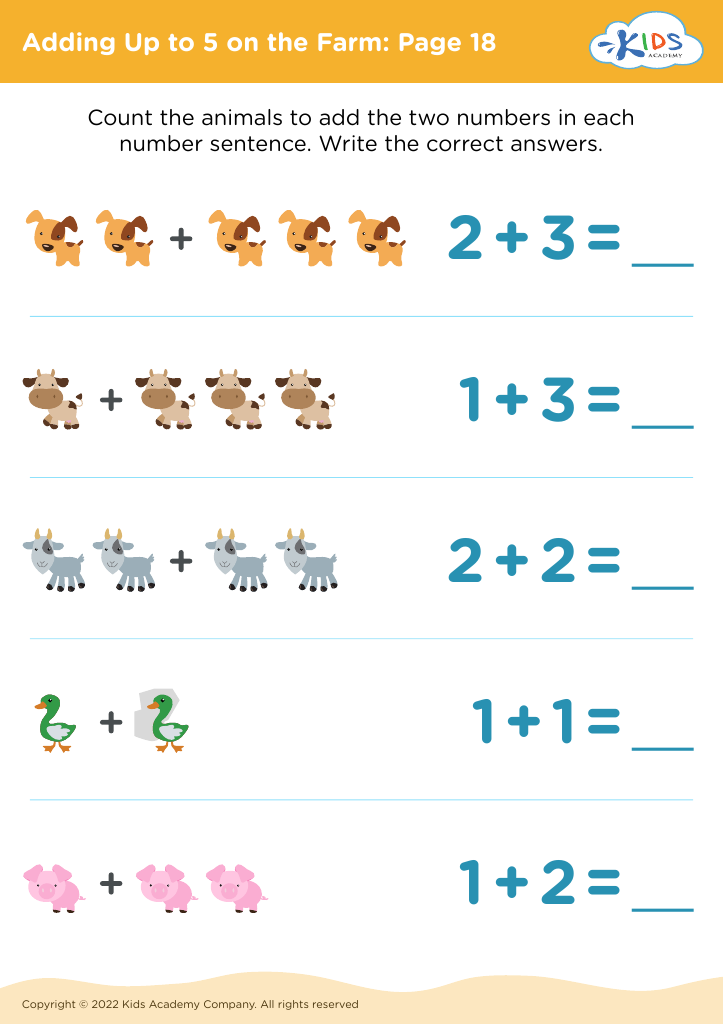
Adding Up to 5 on the Farm: Page 18
Worksheet
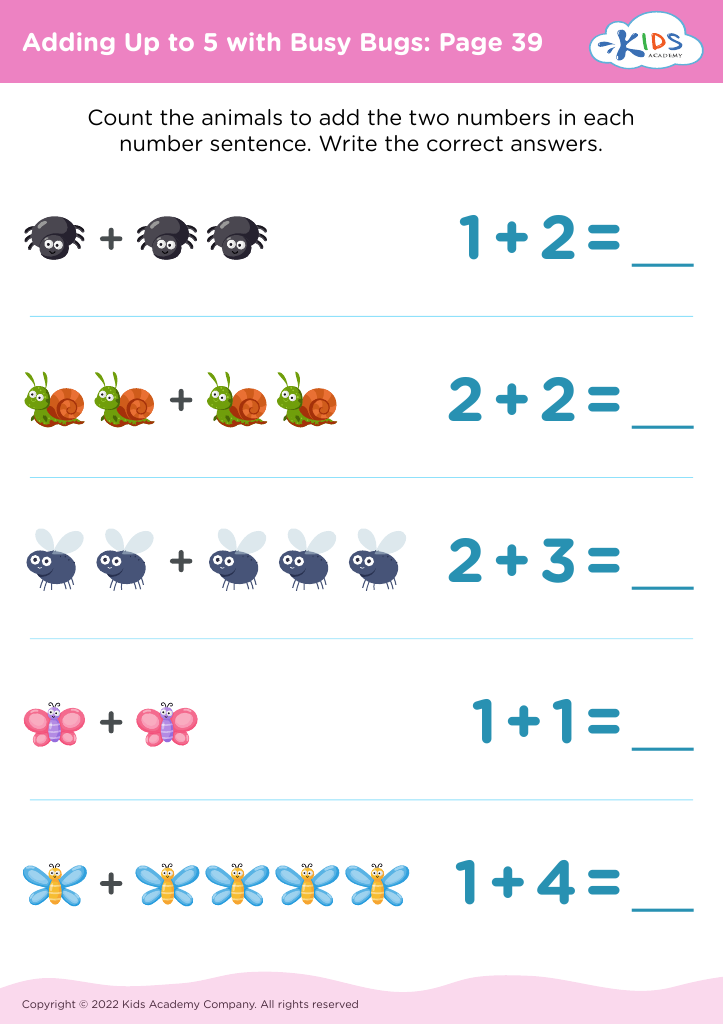
Adding Up to 5 with Busy Bugs: Page 39
Worksheet
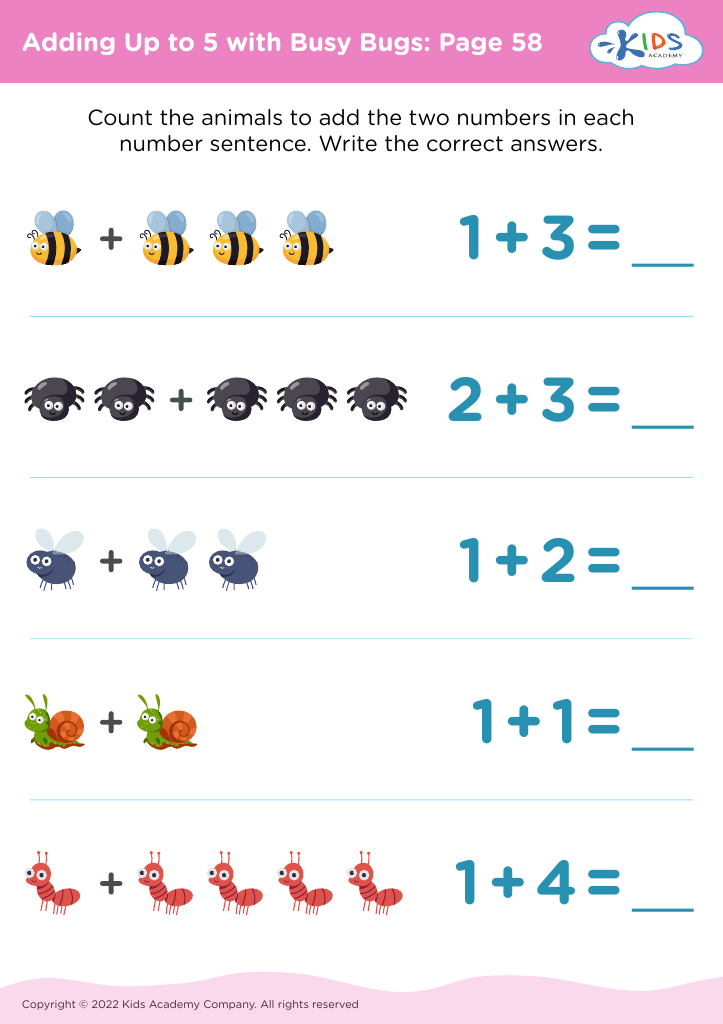
Adding Up to 5 with Busy Bugs: Page 58
Worksheet
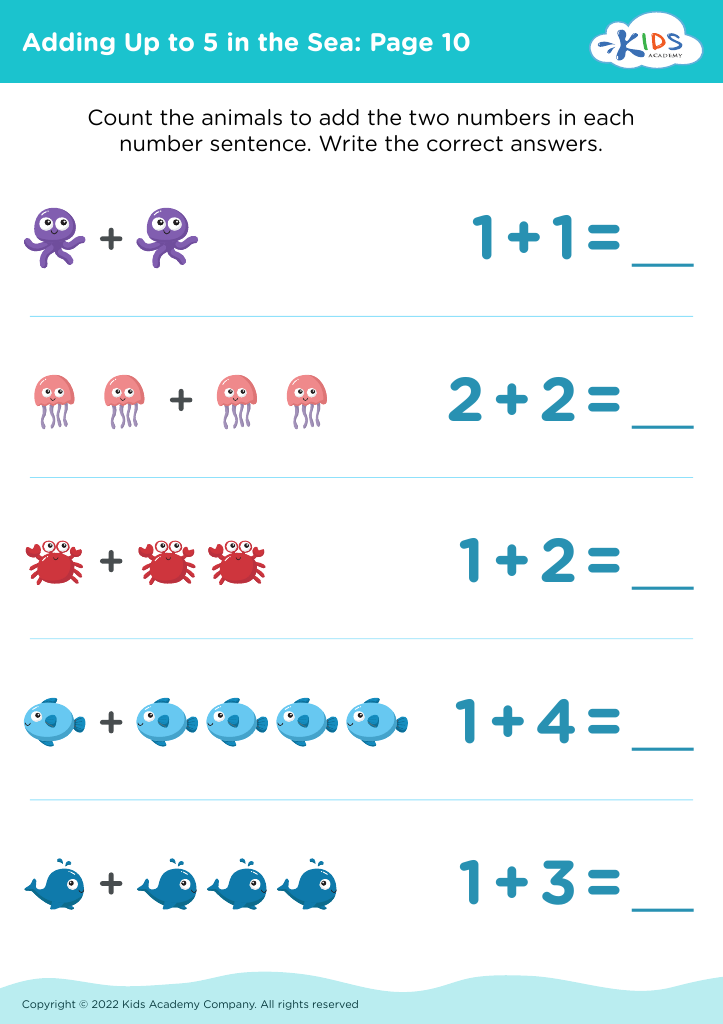
Adding Up to 5 in the Sea: Page 10
Worksheet
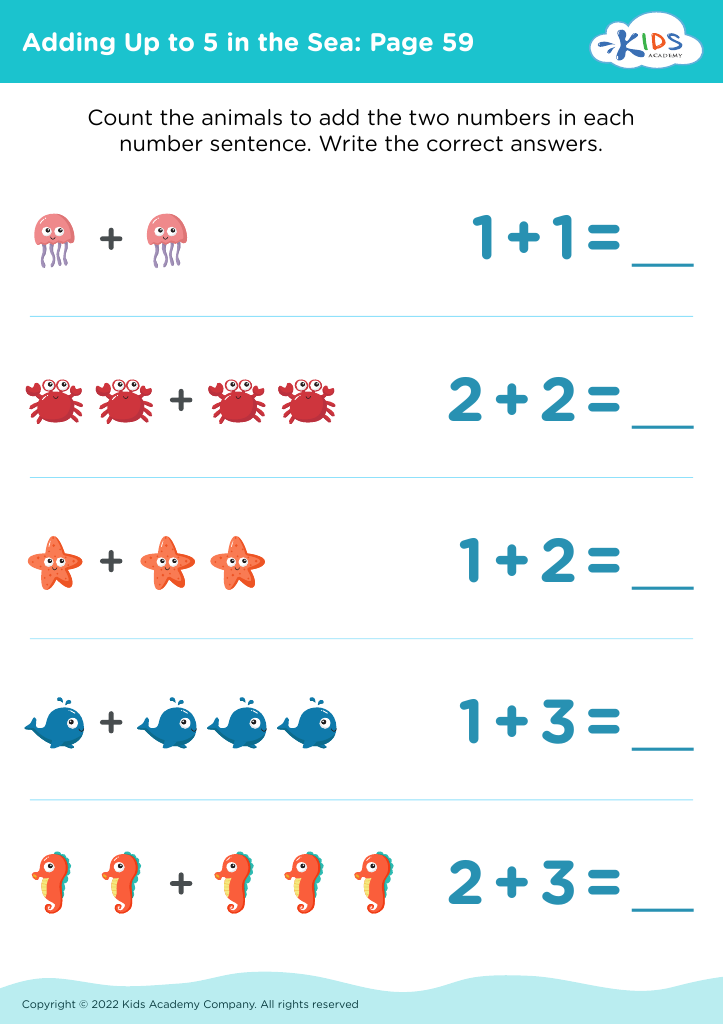
Adding Up to 5 in the Sea: Page 59
Worksheet


Visual learning in addition and subtraction for children aged 4 to 8 is crucial for several reasons. Firstly, young learners at this age often benefit from engaging and concrete methods of understanding mathematical concepts. Visual aids, such as counters, number lines, and colored blocks, help these children grasp abstract ideas by transforming them into tangible experiences. This not only makes learning enjoyable but also enhances retention and comprehension.

Furthermore, visual learning accommodates diverse learning styles. Some children are visual-spatial learners who excel when information is presented graphically. By incorporating visual strategies, parents and teachers can address the varied needs of students, ensuring that no child is left behind.

Additionally, fostering a visual learning approach builds a strong foundation in math, which is essential for future academic success. As children progress in their education, a solid understanding of basic addition and subtraction will support their ability to tackle more complex problems.

Lastly, instilling an early love for learning through visual tools promotes confidence in math skills. When children enjoy math, they develop perseverance and an eagerness to explore more challenging concepts. This love of learning lays the groundwork for lifelong academic enthusiasm and achievement. Thus, investing in visual learning methods is vital for nurturing young minds.