Filters

94 filtered results

Clear all filters
Favorites
With answer key
Interactive

94 filtered results

Difficulty Level

Grade


Check out this FREE Trial Lesson on Addition & Subtraction for age 4-8!

X

Favorites
With answer key
Interactive
  • 4-8
  • Visual Learning
  • Addition & Subtraction
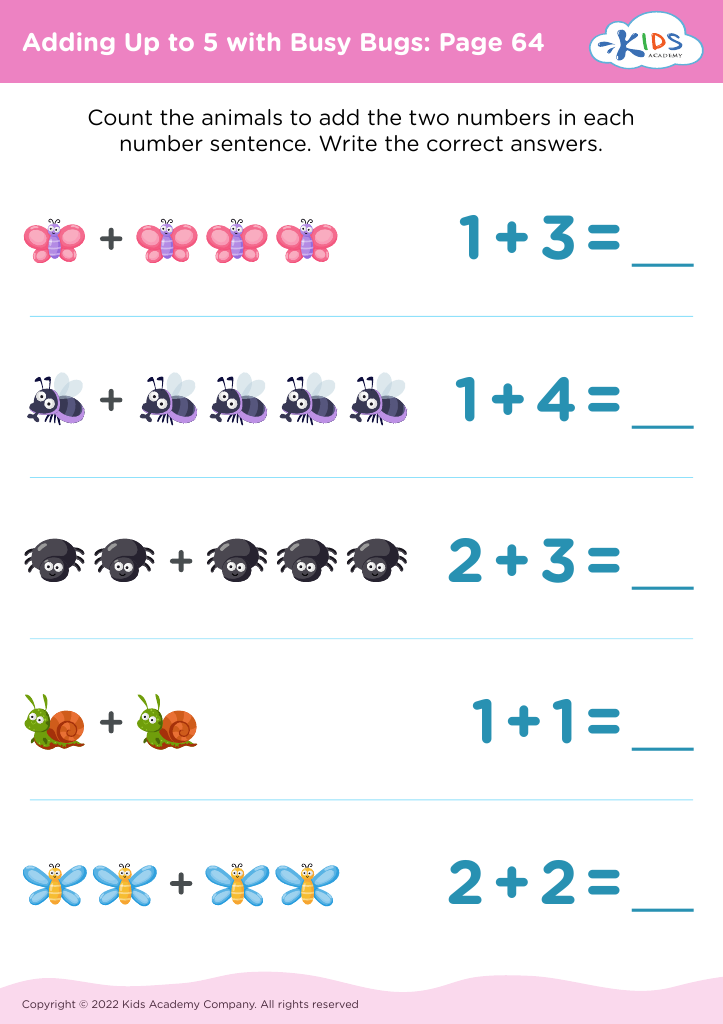
Adding Up to 5 with Busy Bugs: Page 64
Worksheet
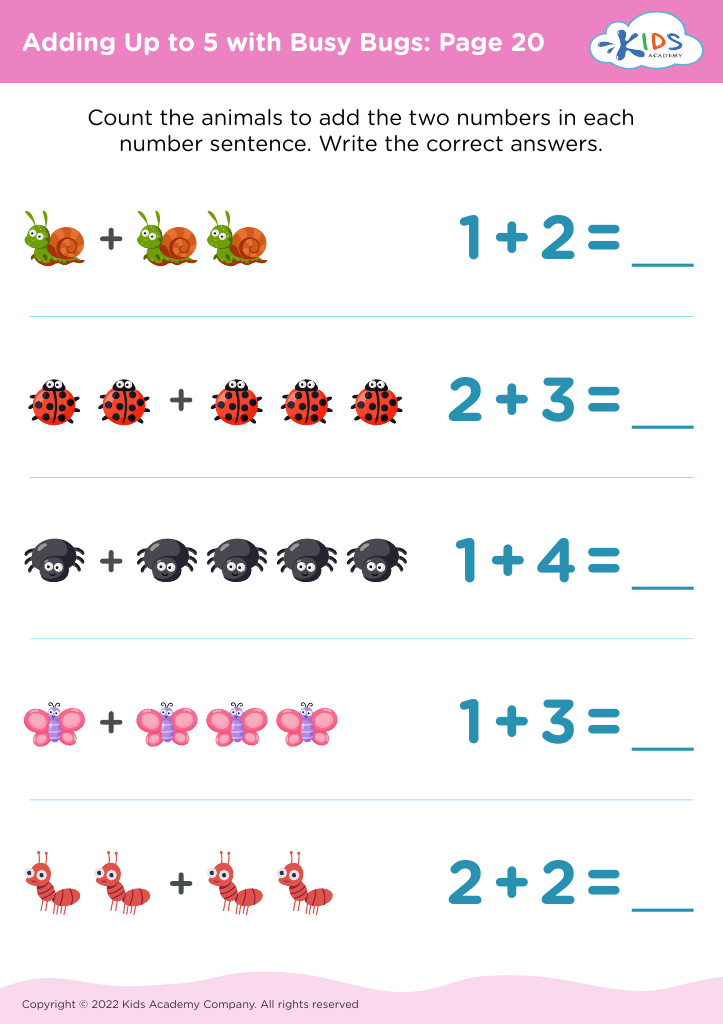
Adding Up to 5 with Busy Bugs: Page 20
Worksheet
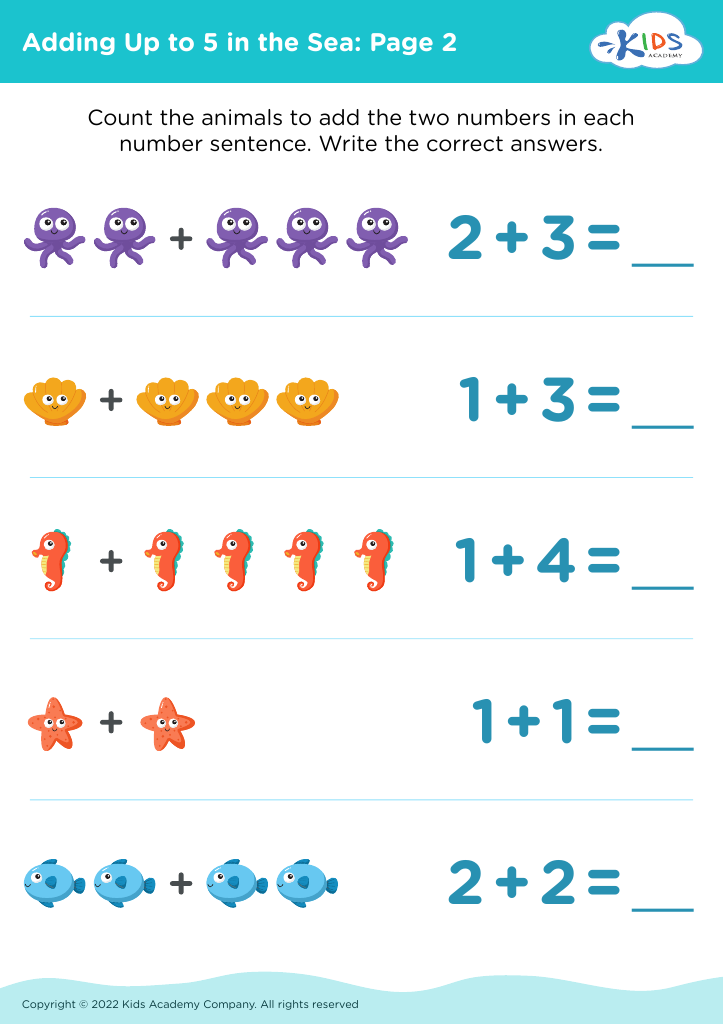
Adding Up to 5 in the Sea: Page 2

Adding Up to 5 in the Sea: Page 2

Adding Up to 5 in the Sea: Page 2
Worksheet
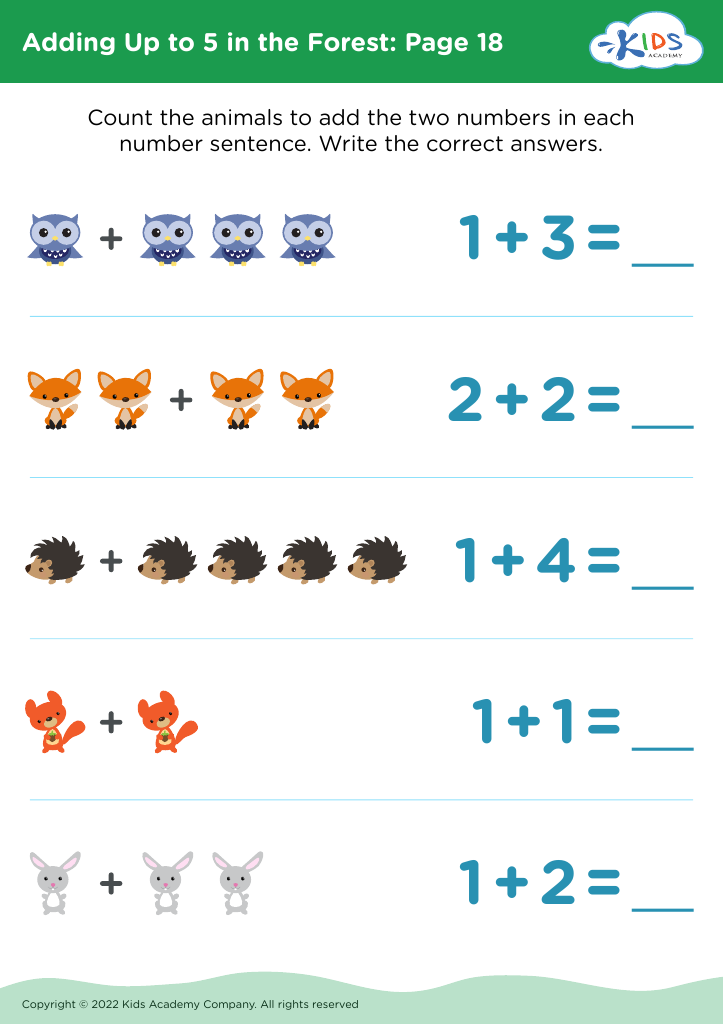
Adding Up to 5 in the Forest: Page 18
Worksheet
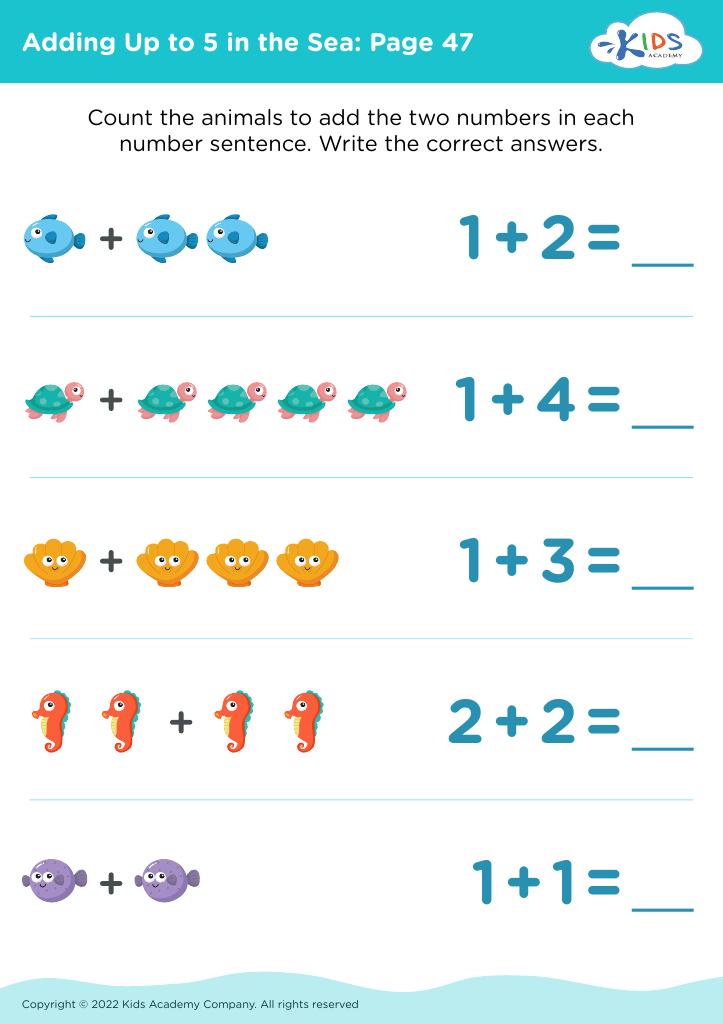
Adding Up to 5 in the Sea: Page 47
Worksheet
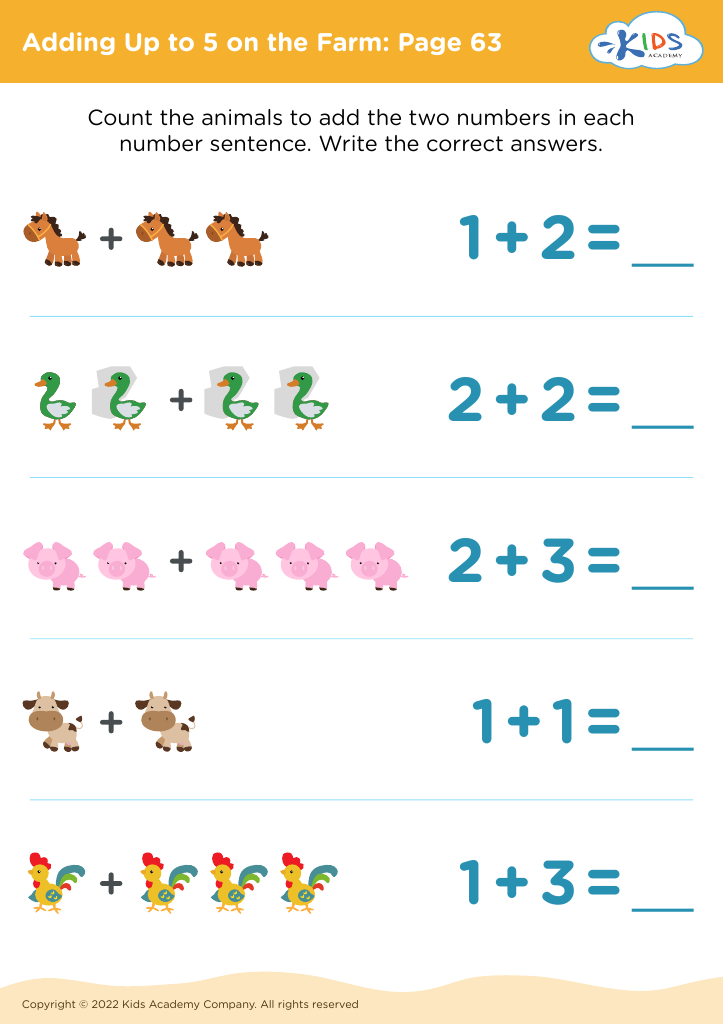
Adding Up to 5 on the Farm: Page 63
Worksheet
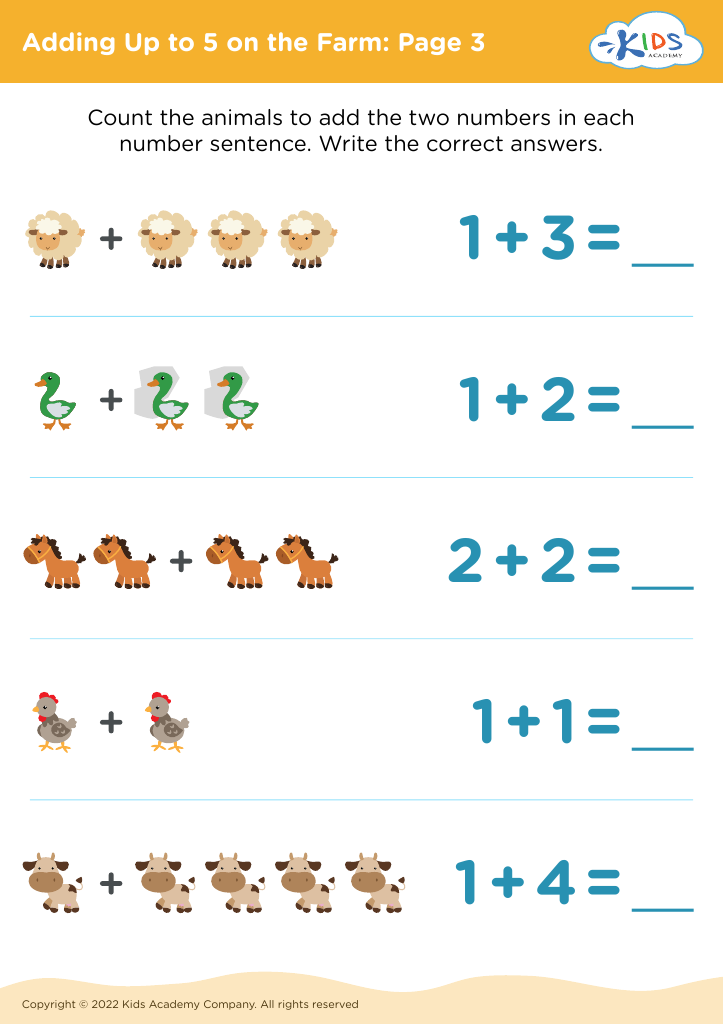
Adding Up to 5 on the Farm: Page 3
Worksheet
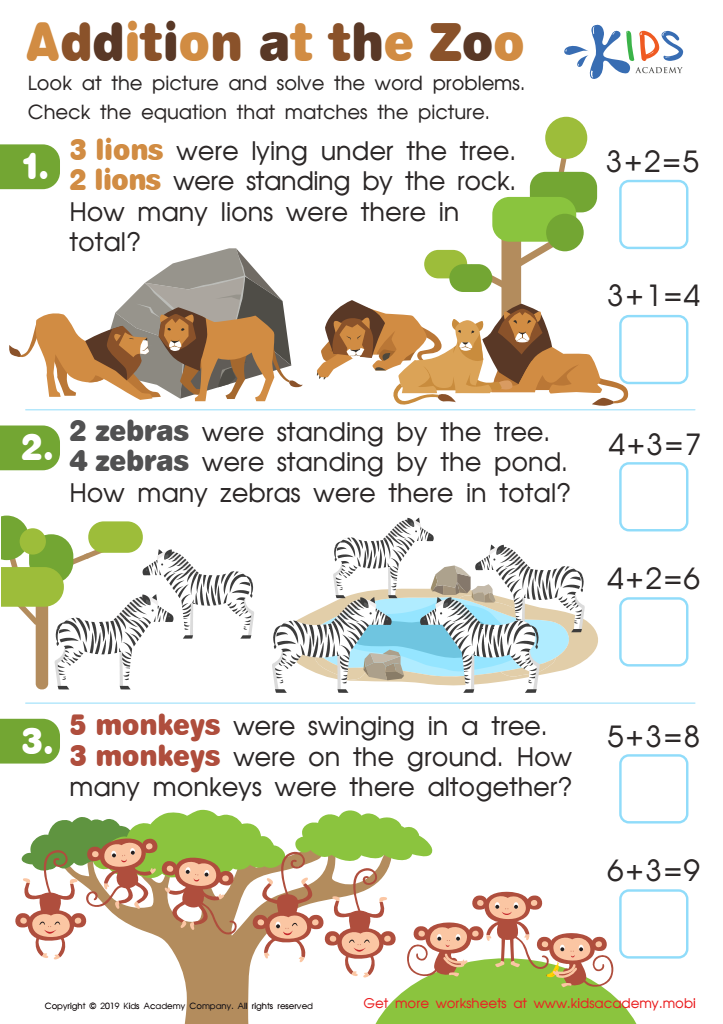
Addition at the Zoo Worksheet

Addition at the Zoo Worksheet

Visit the zoo with your kids and point out all the different animals. Ask them to name their favorites and identify animals on a worksheet. Challenge them to solve word problems related to the pictures. Ask them for the equation that fits the picture and check the answer.
Addition at the Zoo Worksheet
Worksheet
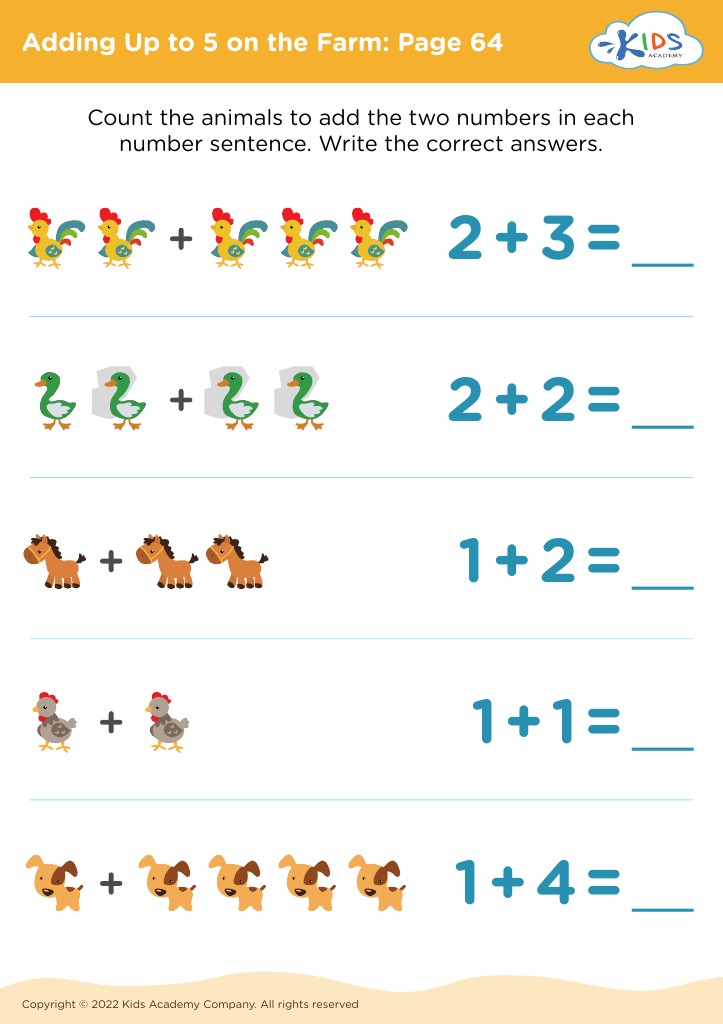
Adding Up to 5 on the Farm: Page 64
Worksheet
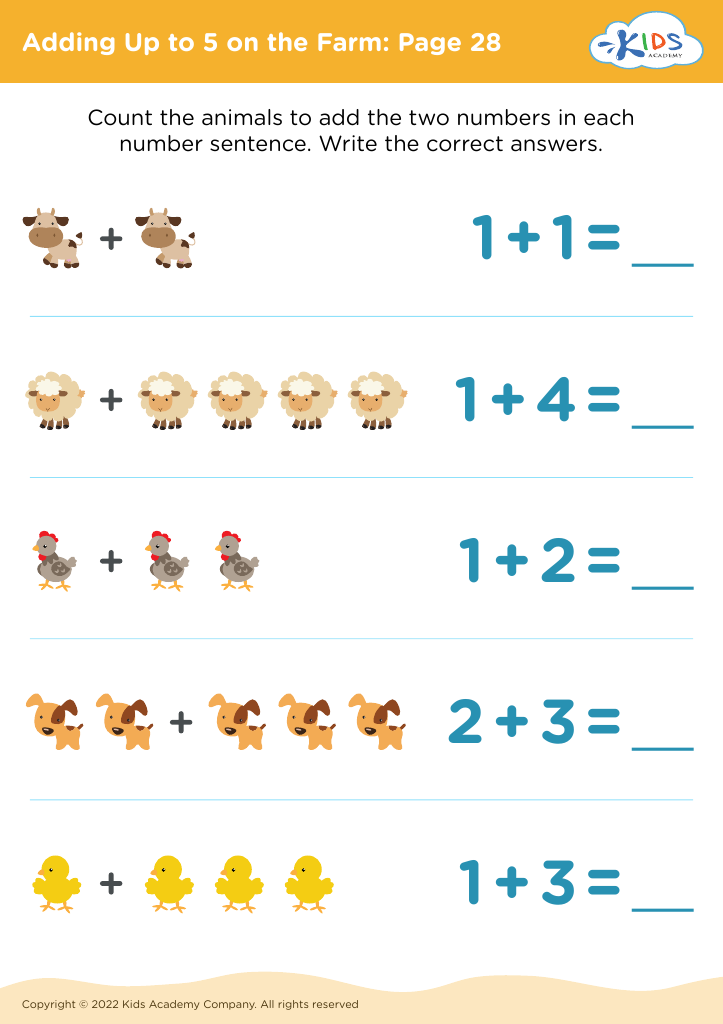
Adding Up to 5 on the Farm: Page 28
Worksheet
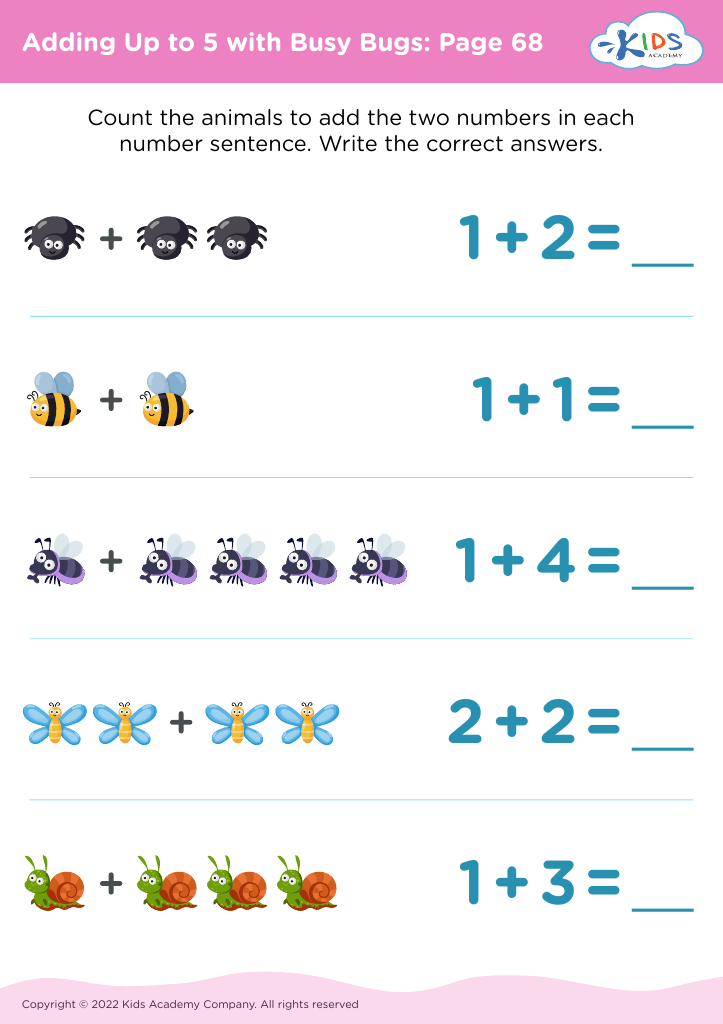
Adding Up to 5 with Busy Bugs: Page 68
Worksheet
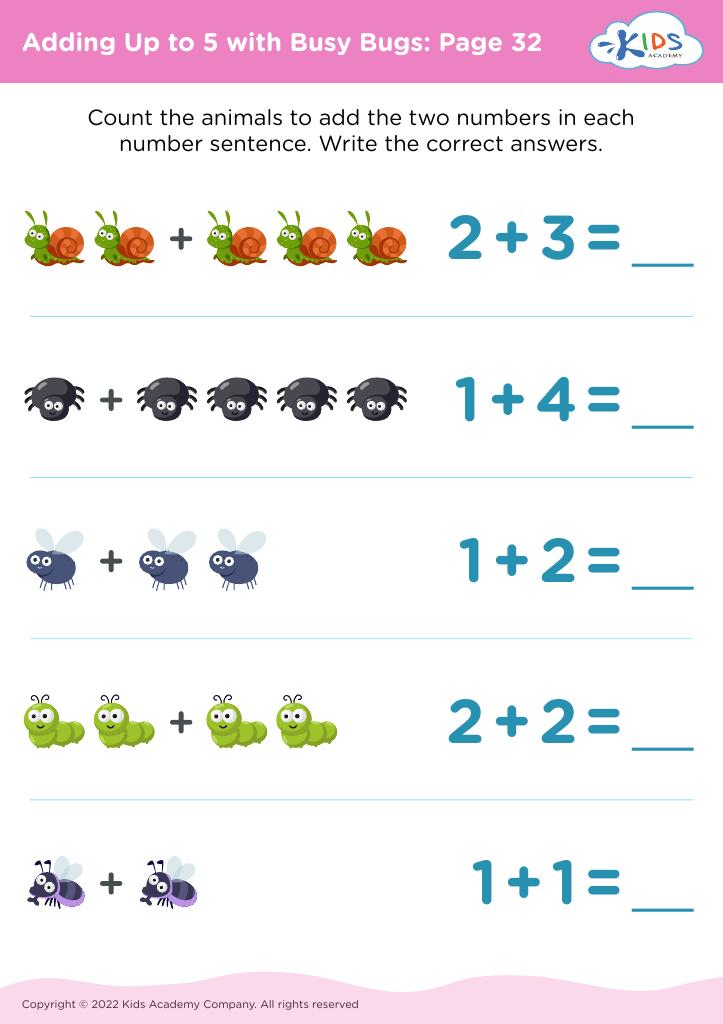
Adding Up to 5 with Busy Bugs: Page 32
Worksheet
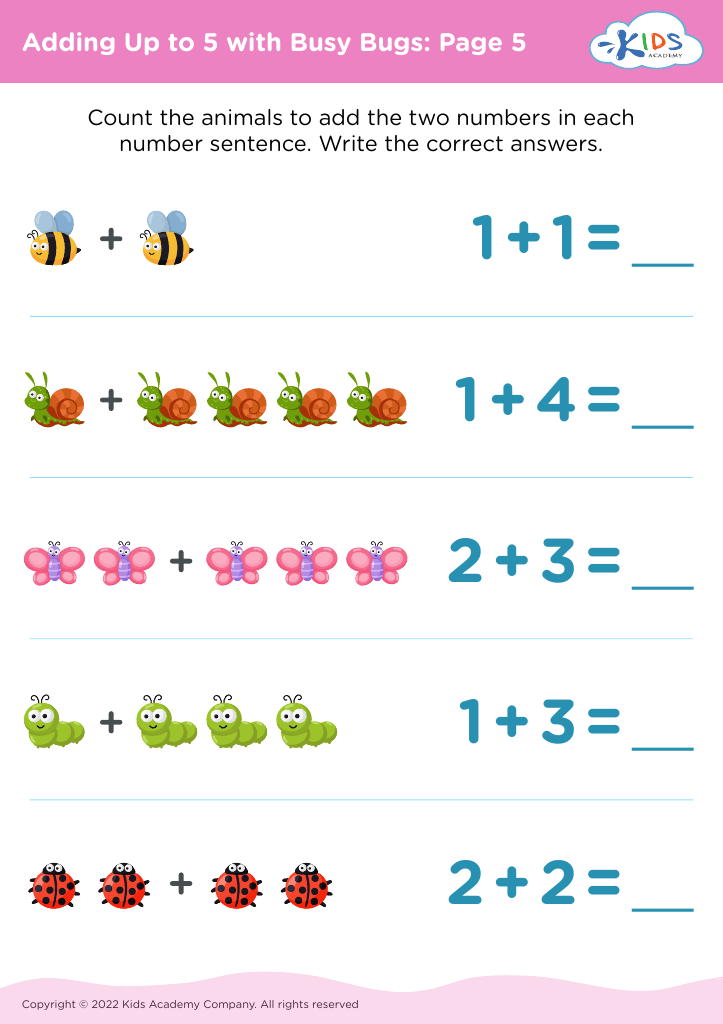
Adding Up to 5 with Busy Bugs: Page 5
Worksheet
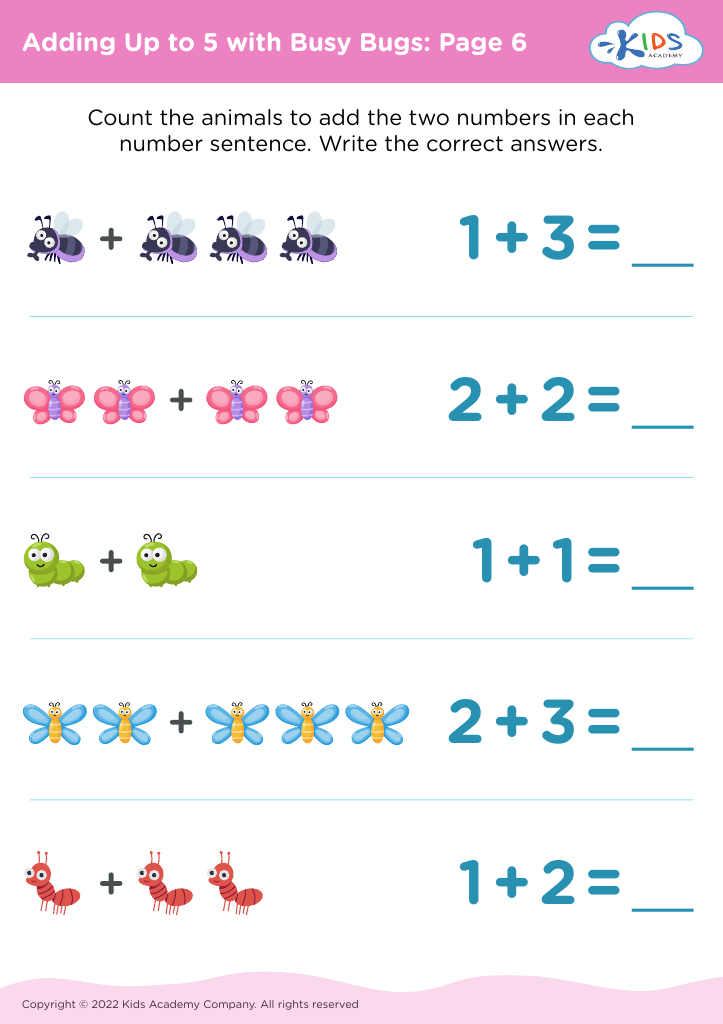
Adding Up to 5 with Busy Bugs: Page 6
Worksheet
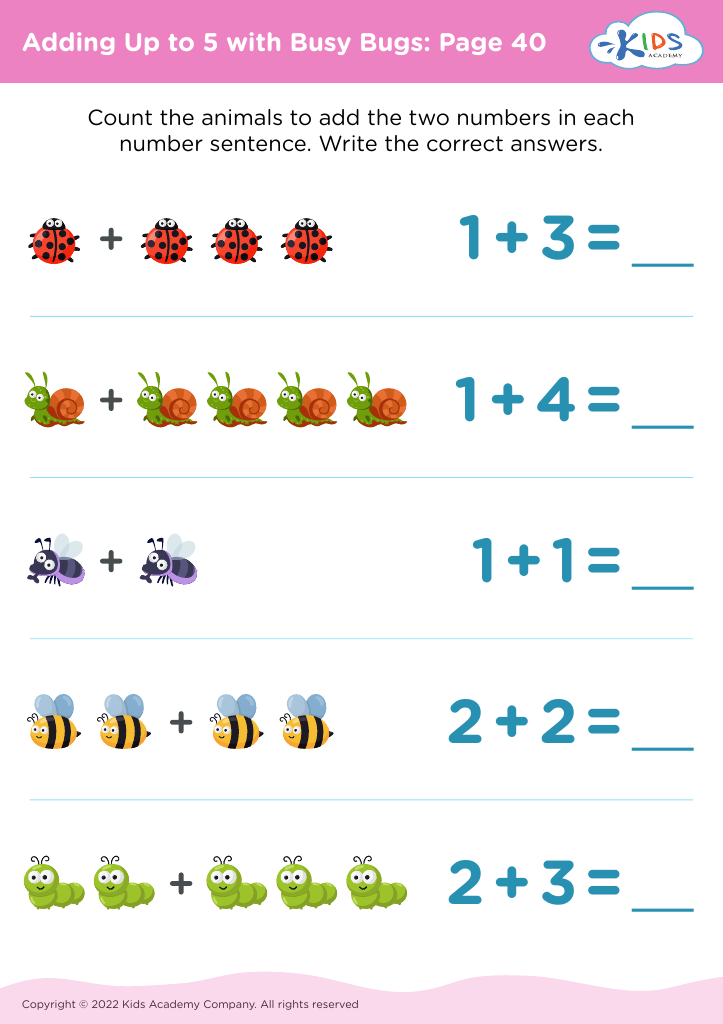
Adding Up to 5 with Busy Bugs: Page 40
Worksheet
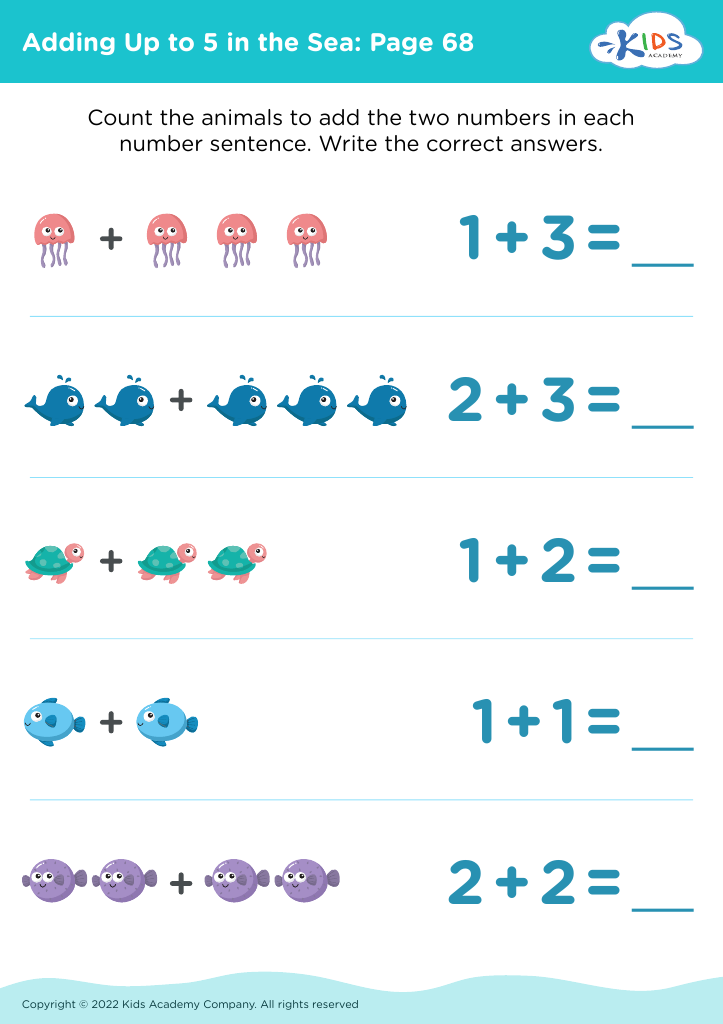
Adding Up to 5 in the Sea: Page 68
Worksheet
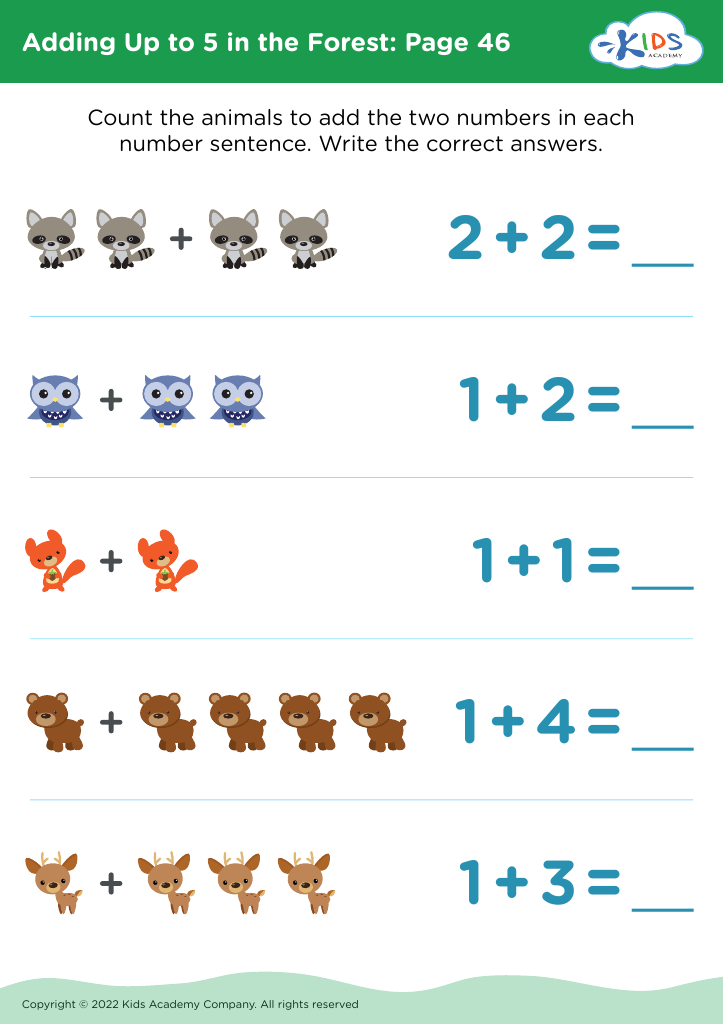
Adding Up to 5 in the Forest: Page 46
Worksheet
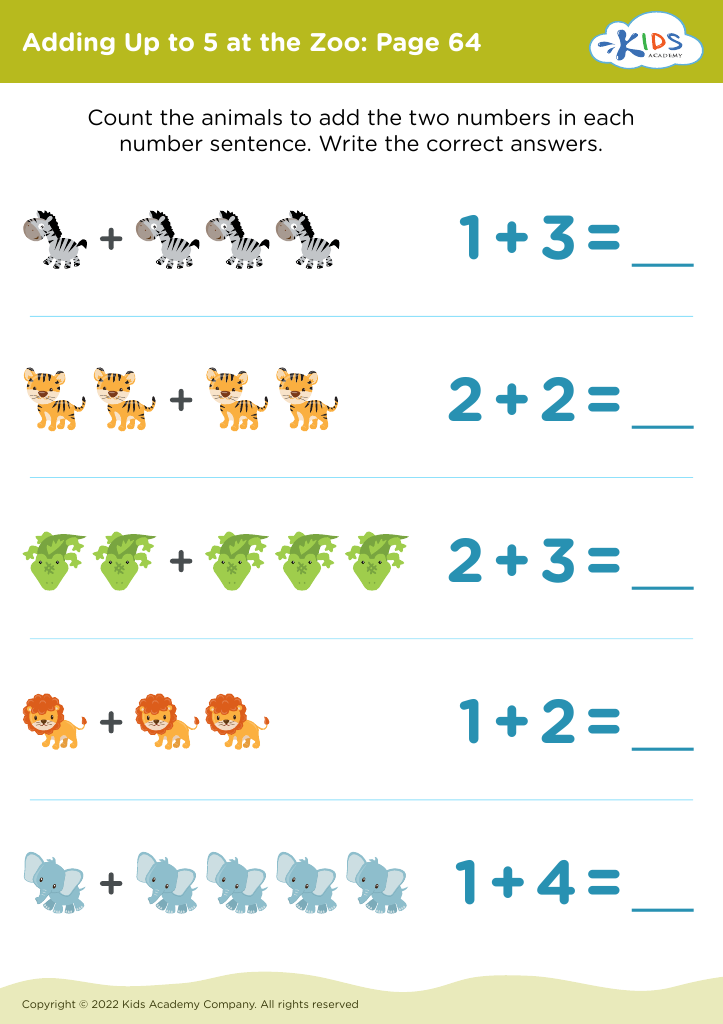
Adding Up to 5 at the Zoo: Page 64
Worksheet
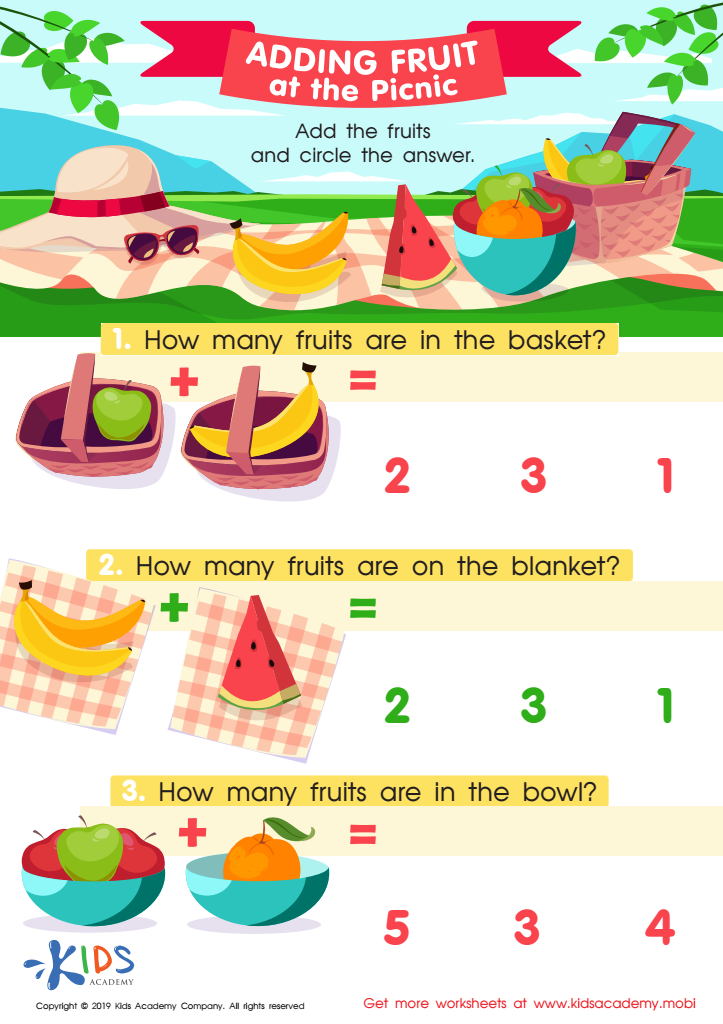
Adding Fruit at the Picnic Worksheet
Adding Fruit at the Picnic Worksheet
Picnics are a great way for the family to enjoy a fun day in the sun! Get your kids involved by having them help load the picnic basket and do this worksheet to practice their math skills while they get ready. Identify the fruits in the picture, add them up, and circle the correct answer.
Adding Fruit at the Picnic Worksheet

Worksheet
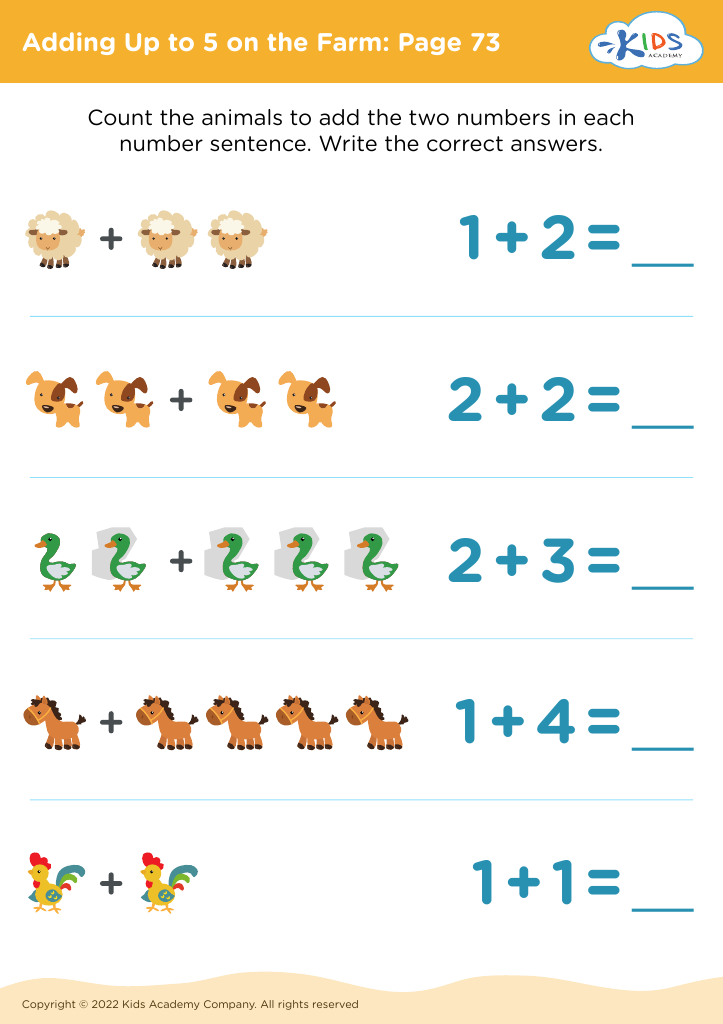
Adding Up to 5 on the Farm: Page 73
Worksheet
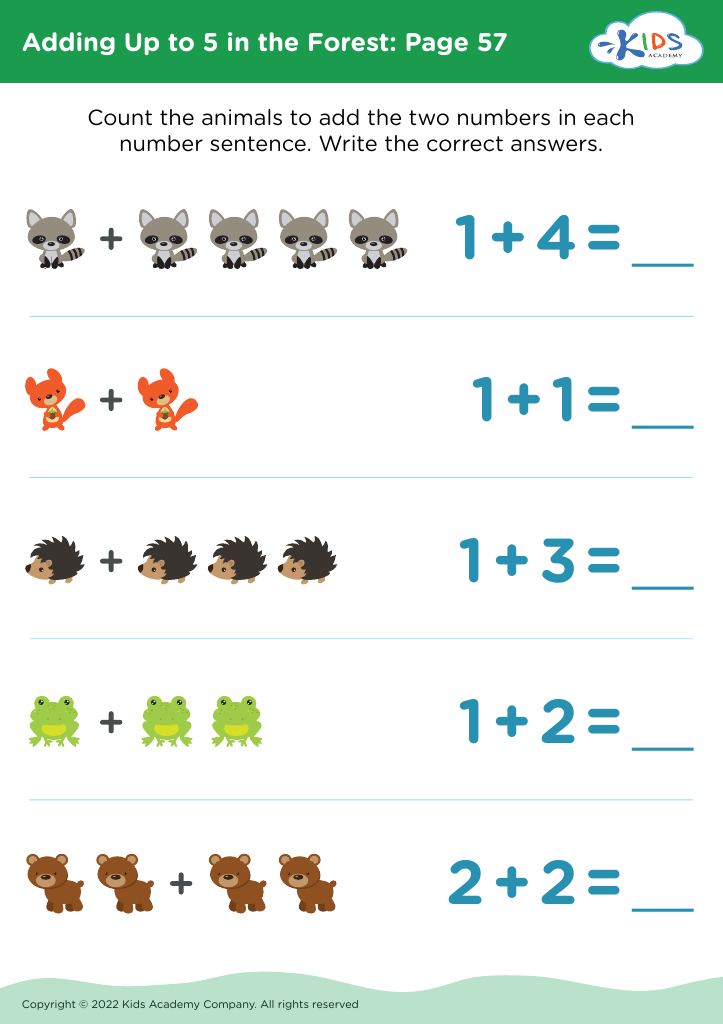
Adding Up to 5 in the Forest: Page 57
Worksheet
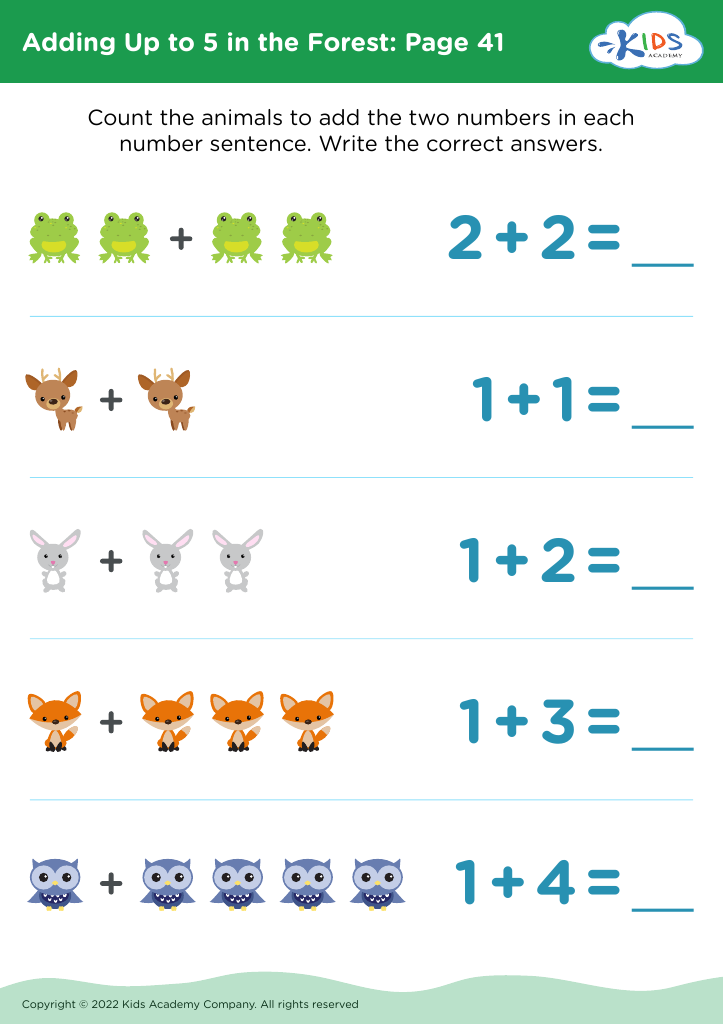
Adding Up to 5 in the Forest: Page 41
Worksheet


... 3 4

Visual learning in addition and subtraction for children aged 4 to 8 is crucial for several reasons. Firstly, young learners at this age often benefit from engaging and concrete methods of understanding mathematical concepts. Visual aids, such as counters, number lines, and colored blocks, help these children grasp abstract ideas by transforming them into tangible experiences. This not only makes learning enjoyable but also enhances retention and comprehension.

Furthermore, visual learning accommodates diverse learning styles. Some children are visual-spatial learners who excel when information is presented graphically. By incorporating visual strategies, parents and teachers can address the varied needs of students, ensuring that no child is left behind.

Additionally, fostering a visual learning approach builds a strong foundation in math, which is essential for future academic success. As children progress in their education, a solid understanding of basic addition and subtraction will support their ability to tackle more complex problems.

Lastly, instilling an early love for learning through visual tools promotes confidence in math skills. When children enjoy math, they develop perseverance and an eagerness to explore more challenging concepts. This love of learning lays the groundwork for lifelong academic enthusiasm and achievement. Thus, investing in visual learning methods is vital for nurturing young minds.