Vocabulary development Addition & Subtraction Worksheets for Ages 4-8
8 filtered results
-
From - To
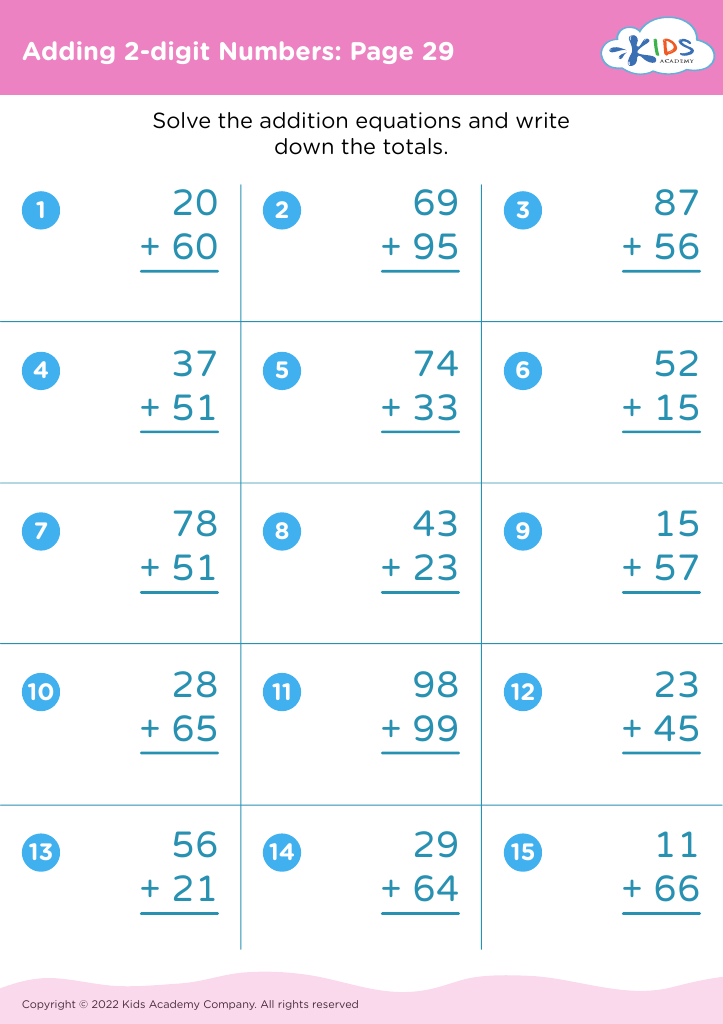
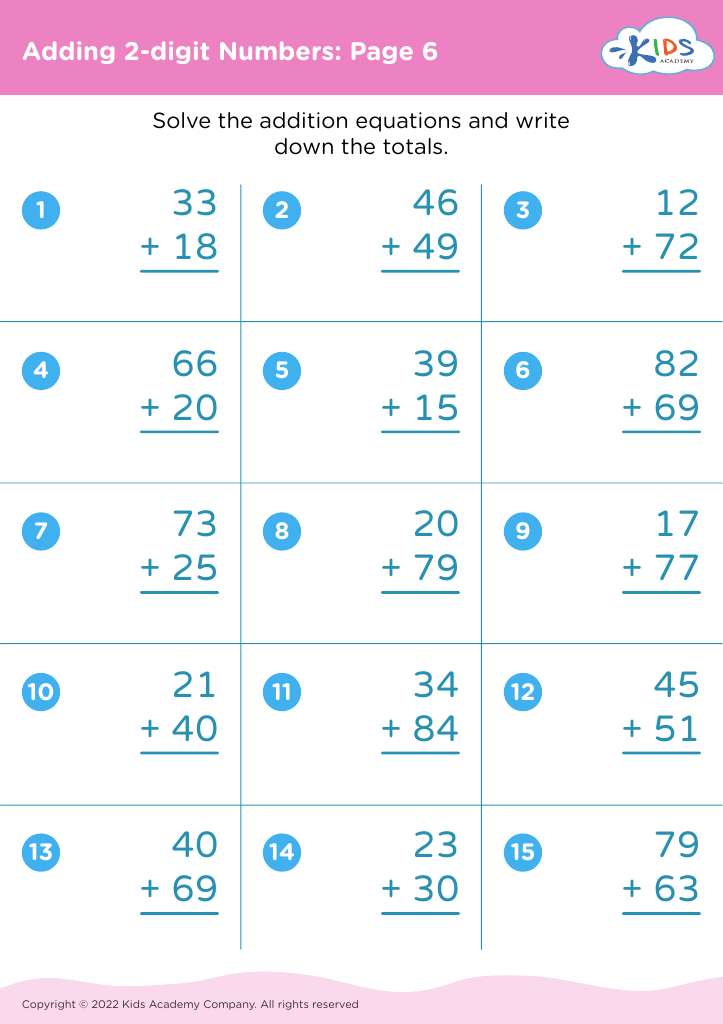
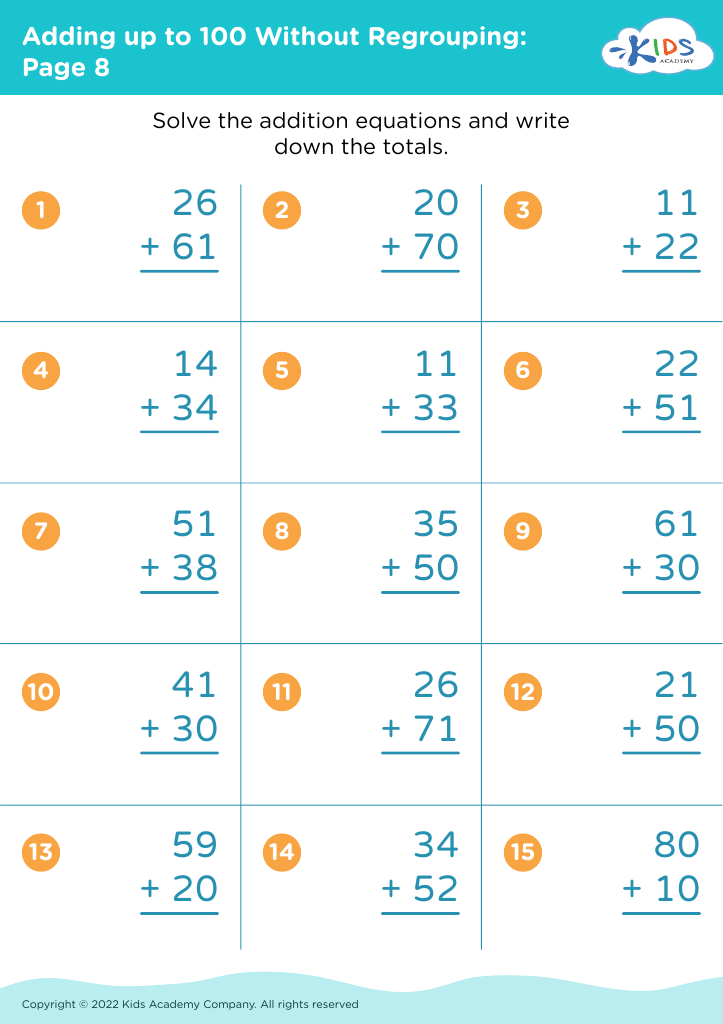
Unlock your child's potential with our Vocabulary Development Addition & Subtraction Worksheets for Ages 4-8. Specially designed, these printable resources help young learners build essential math and language skills concurrently. Through engaging activities, kids will practice adding and subtracting while enhancing their vocabulary. These worksheets feature colorful illustrations to capture attention and interactive tasks that encourage active learning. Perfect for classroom or home use, they aid cognitive development and make foundational math concepts easy and fun. Ideal for parents and teachers aiming to support their child's educational journey comprehensively. Get ready to inspire young minds today!
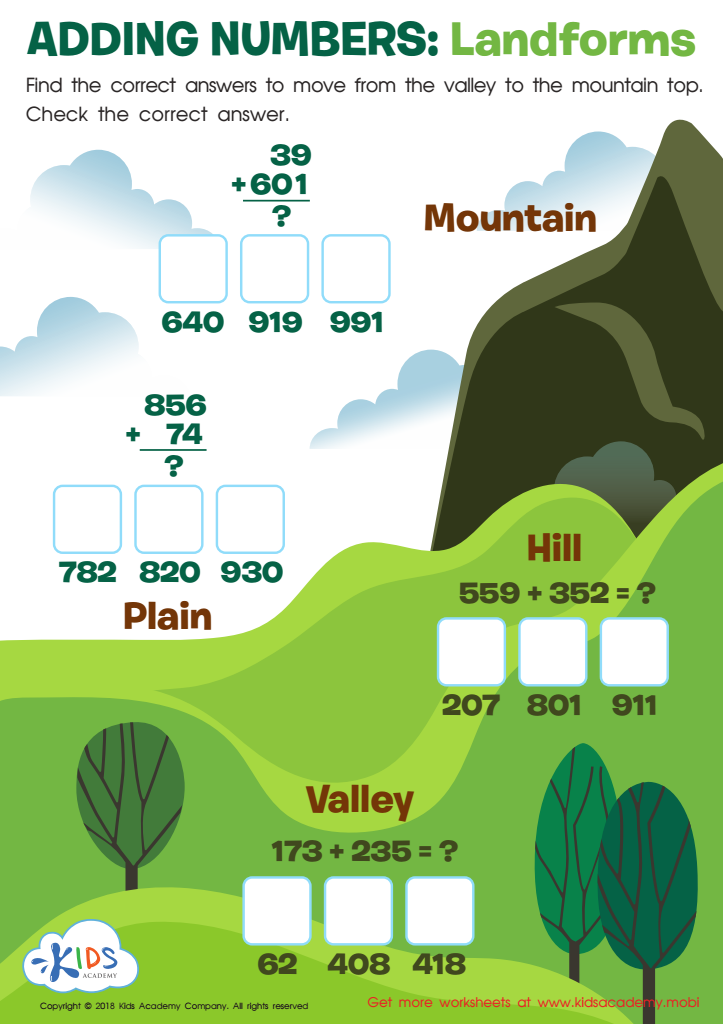
Adding Numbers: Landforms Worksheet
 Assign to My Students
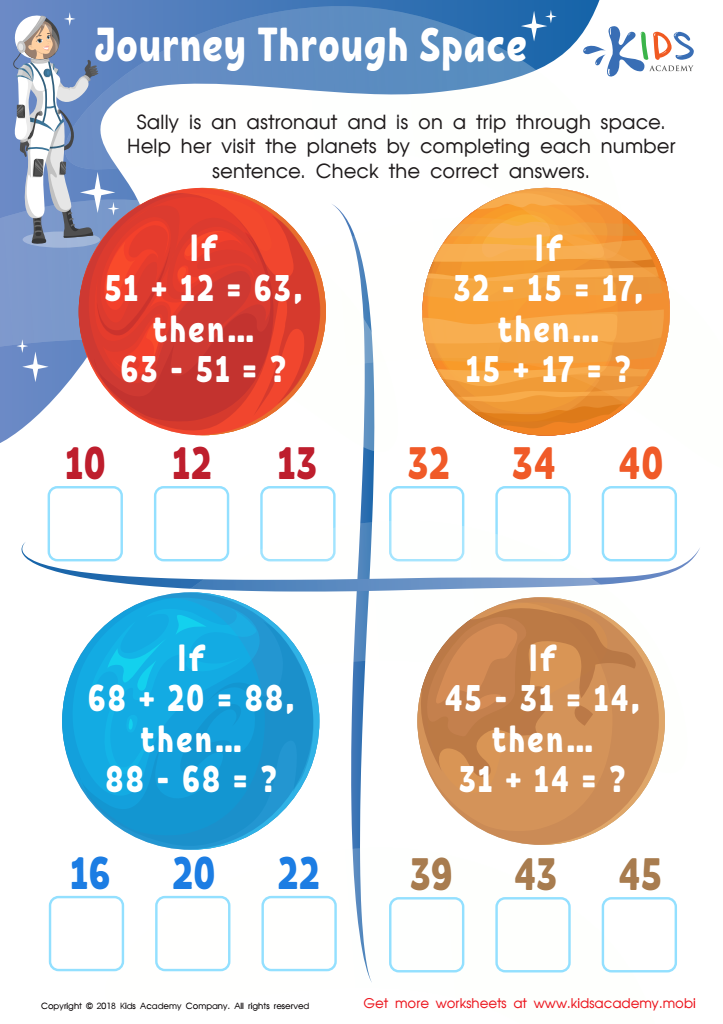
Journey Through Space Worksheet
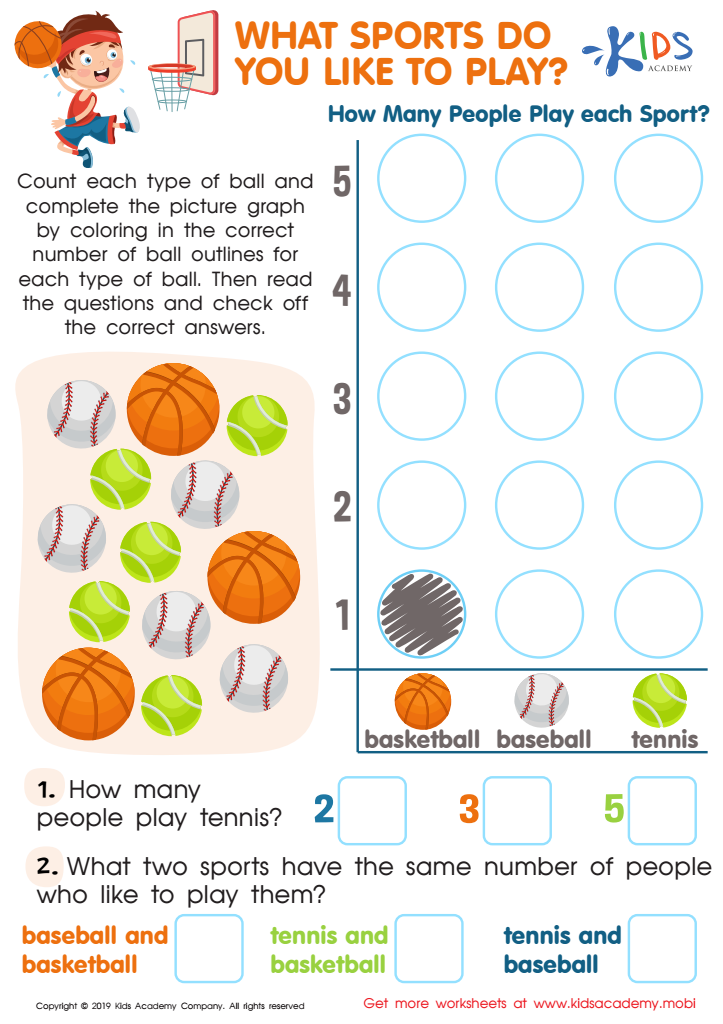
What Sports Do You Like to Play Worksheet








Vocabulary development in addition and subtraction for ages 4-8 is crucial for several key reasons. Firstly, a strong mathematical vocabulary builds the foundation necessary for understanding more advanced mathematical concepts. Words and phrases like "plus," "minus," "equals," "sum," and "difference" are not just jargon; they are fundamental to performing and comprehending math operations.
Between the ages of 4-8, children undergo significant cognitive development. This period, often referred to as the early childhood stage, is when neural connections related to language acquisition and numeracy are most malleable. A robust grasp of vocabulary related to addition and subtraction helps children follow instructions more easily, ask for help when needed, and articulate their problem-solving process.
An early introduction to mathematical terms also correlates with better performance in math later in life. Kids who have a comprehensive vocabulary in math can more quickly and accurately solve problems, understand classroom instructions, and feel more confident in their abilities.
Moreover, vocabulary in math fosters critical thinking and comprehension skills. When children understand the terms, they can better grasp overall concepts and apply them in various contexts, from story problems to real-life situations like counting money or sharing items equally.
Ultimately, nurturing vocabulary development in math equips children with tools they will use throughout their education and life. Teachers and parents serving as early caregivers provide essential reinforcement, setting the stage for future academic success and a more positive attitude towards learning.








