Addition Worksheets for Ages 4-8 - Page 2
1258 filtered results
-
From - To
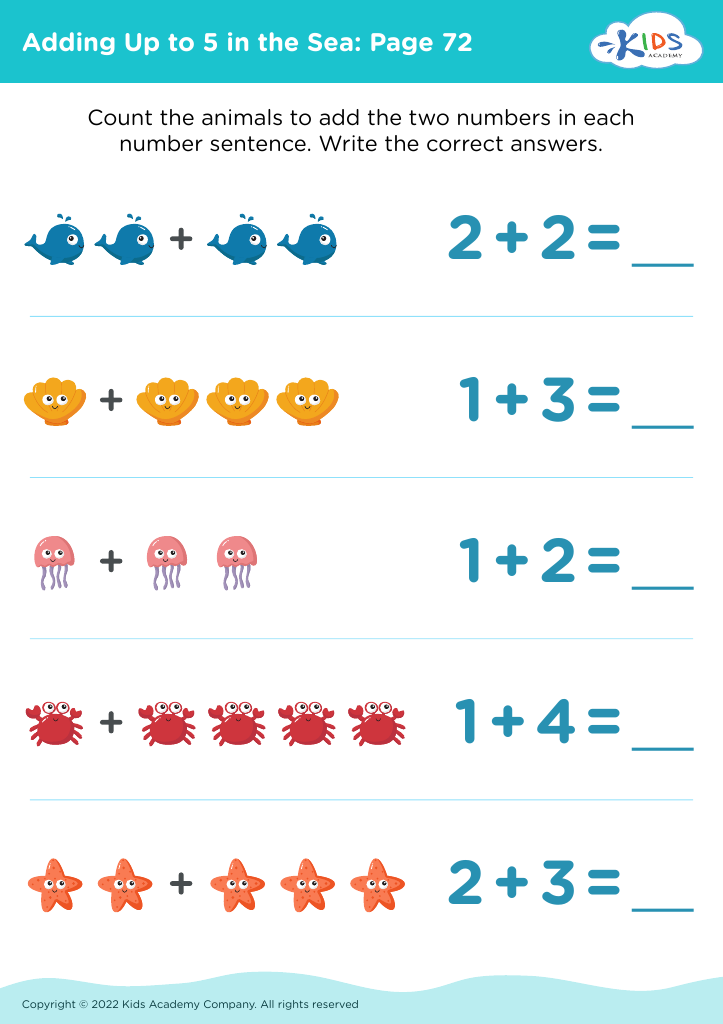
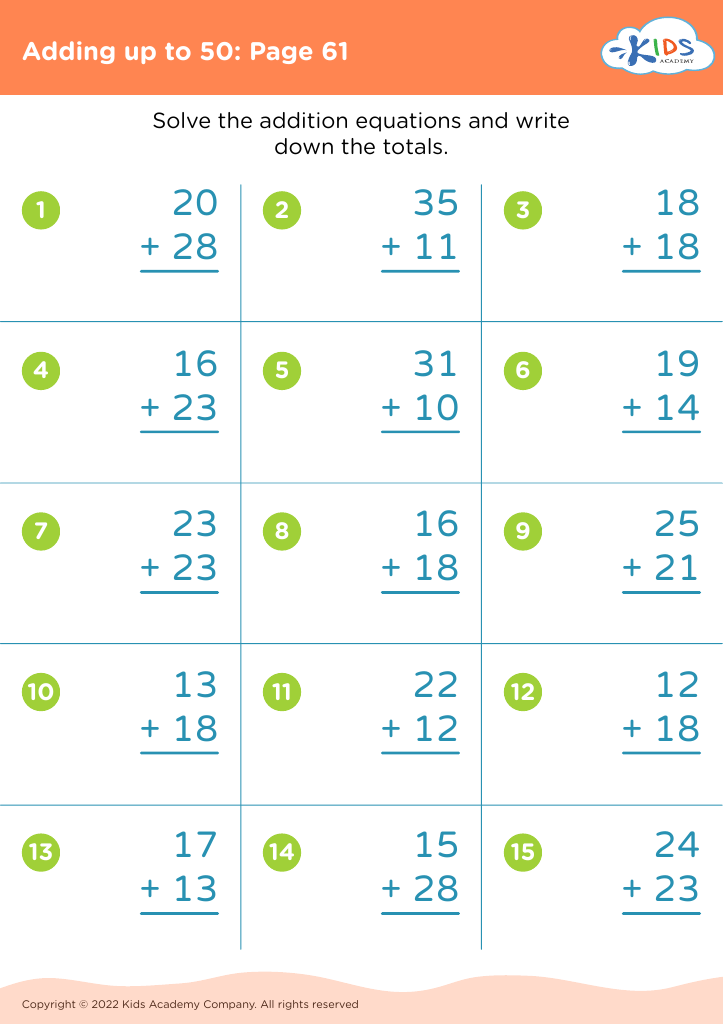
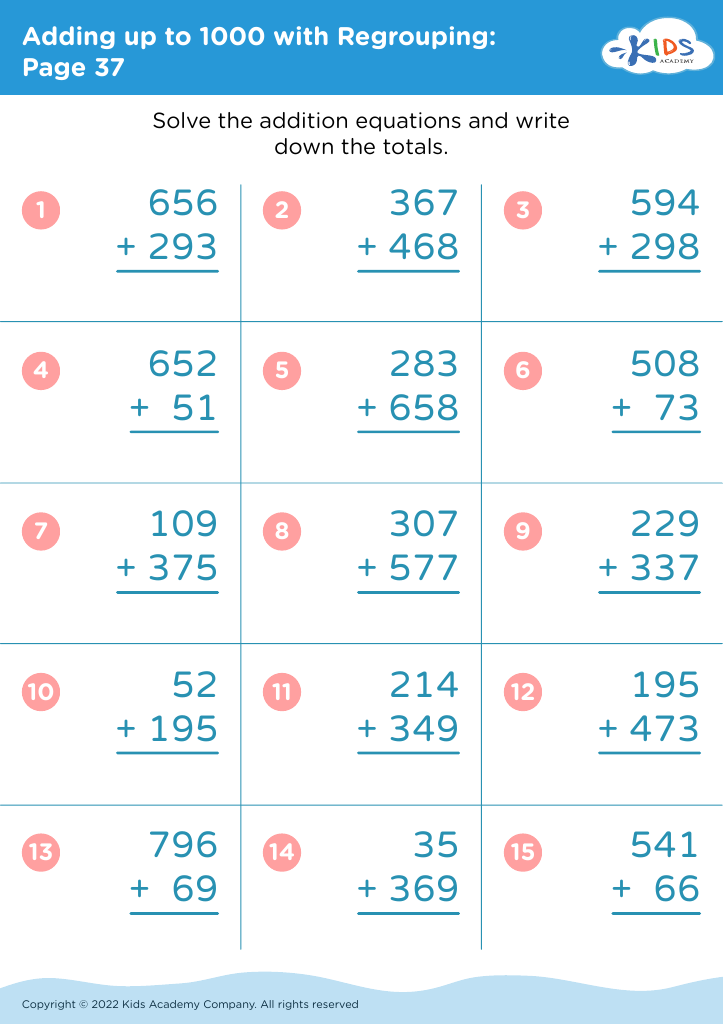
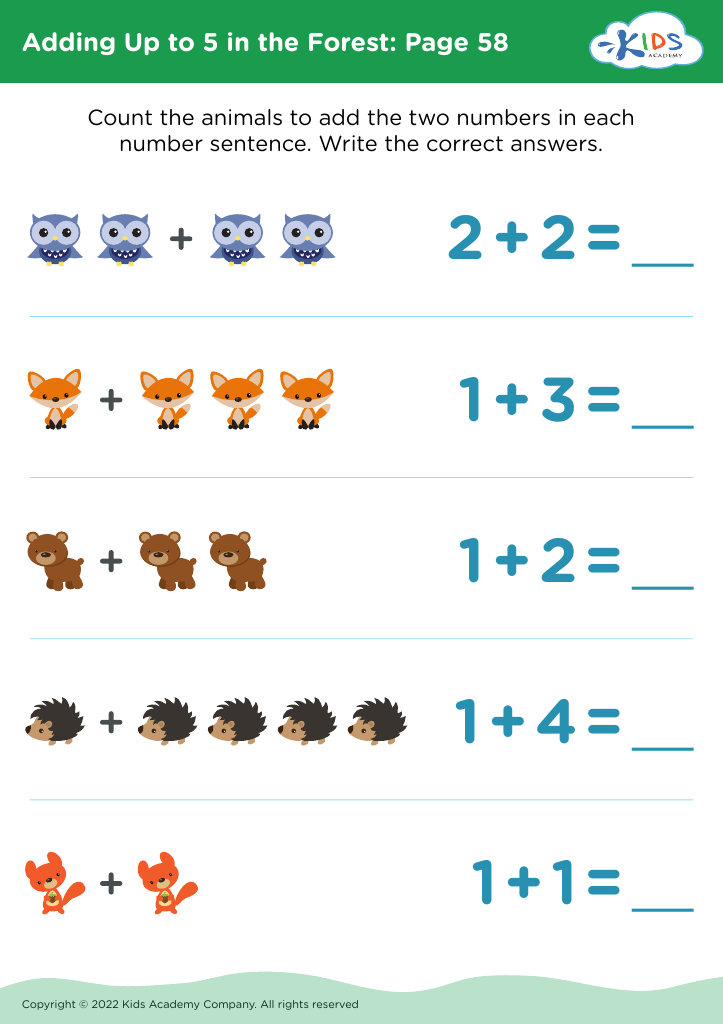
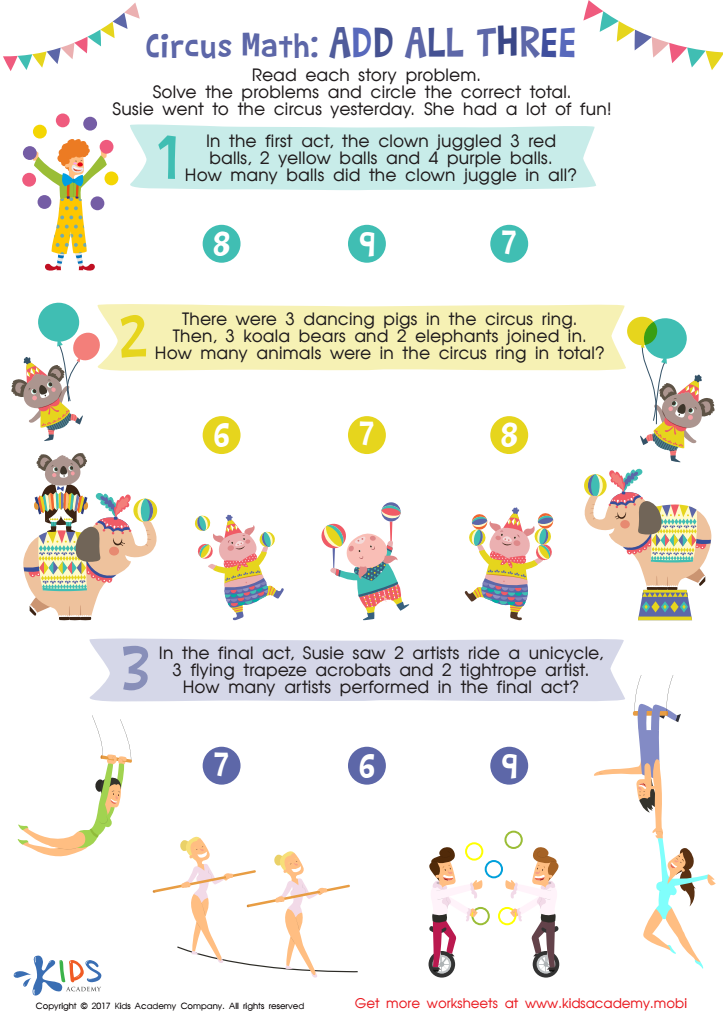
Circus Math Printable
 Assign to My Students
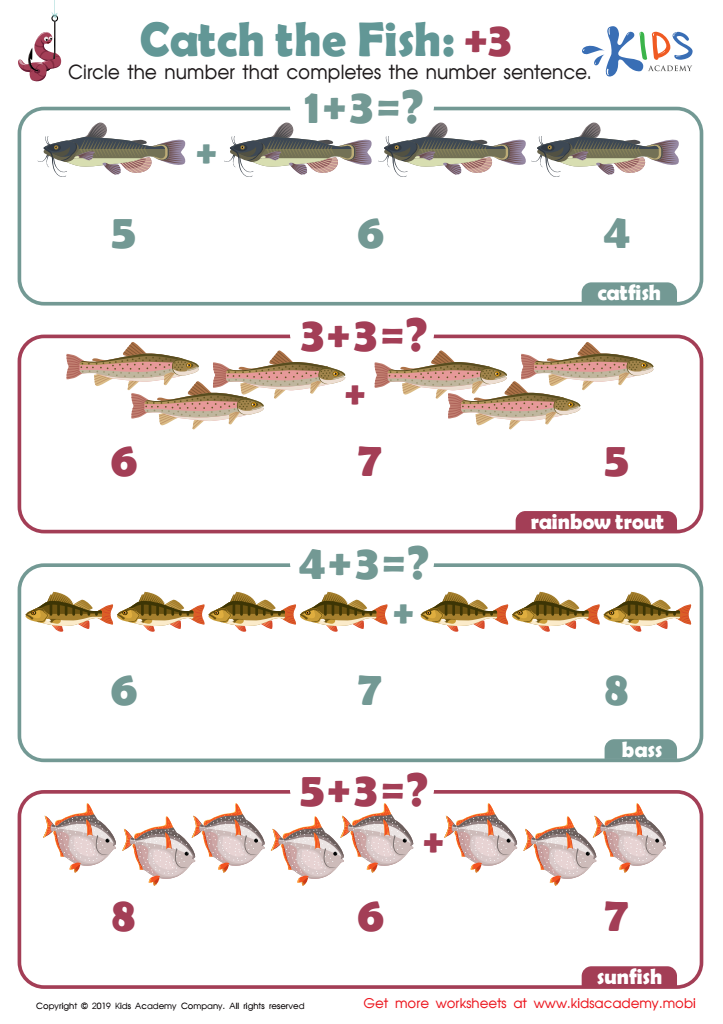
Catch the Fish: +3 Worksheet
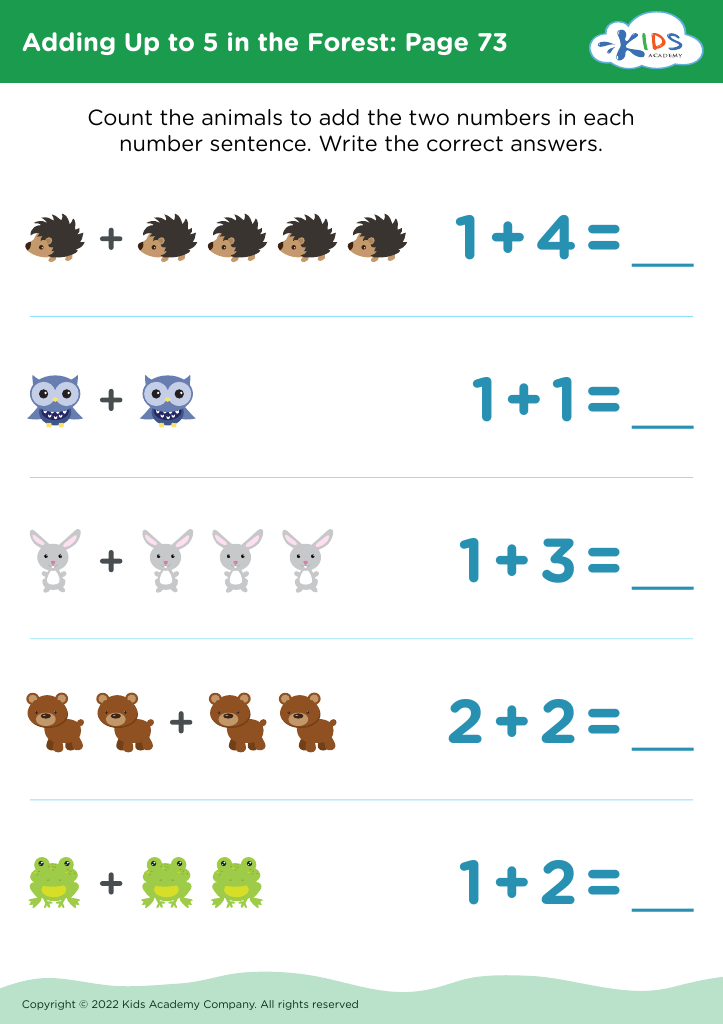
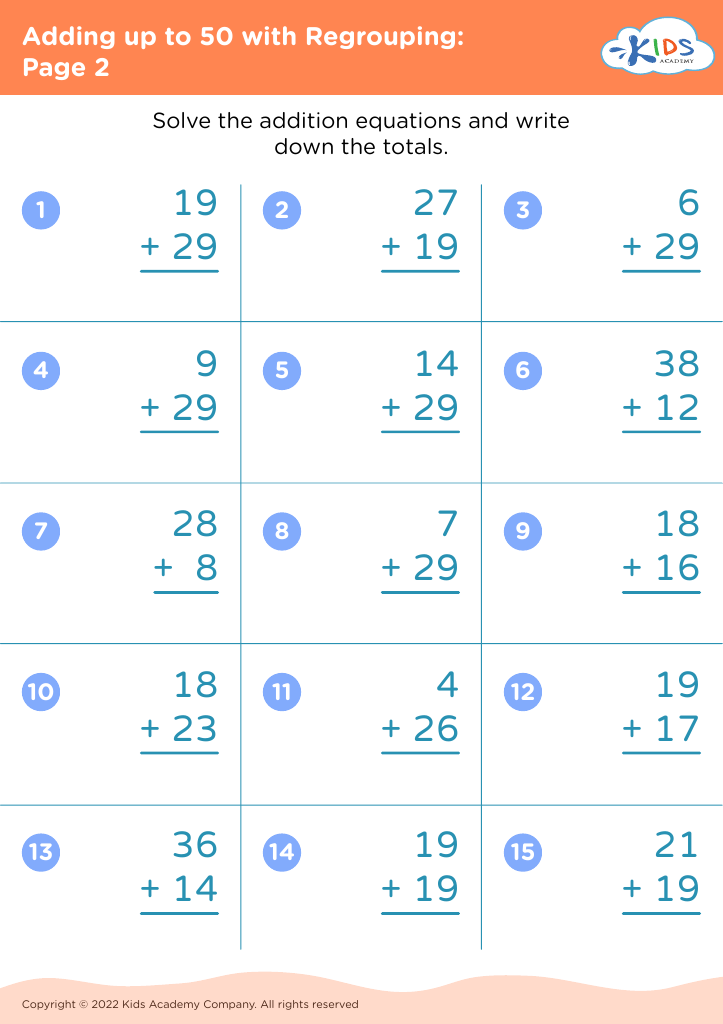
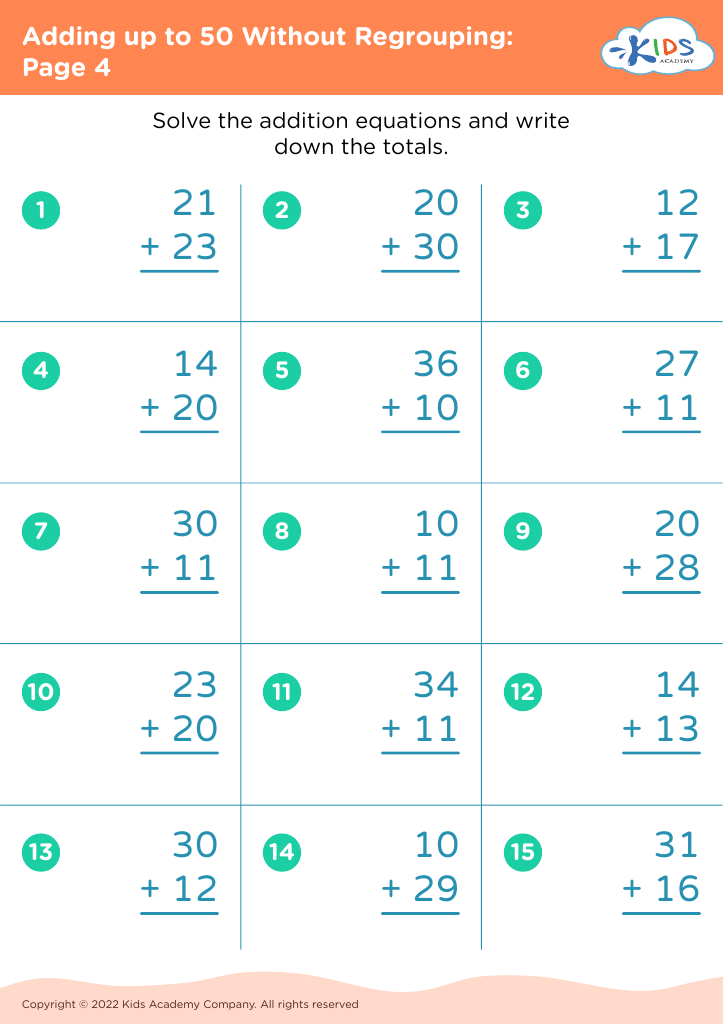
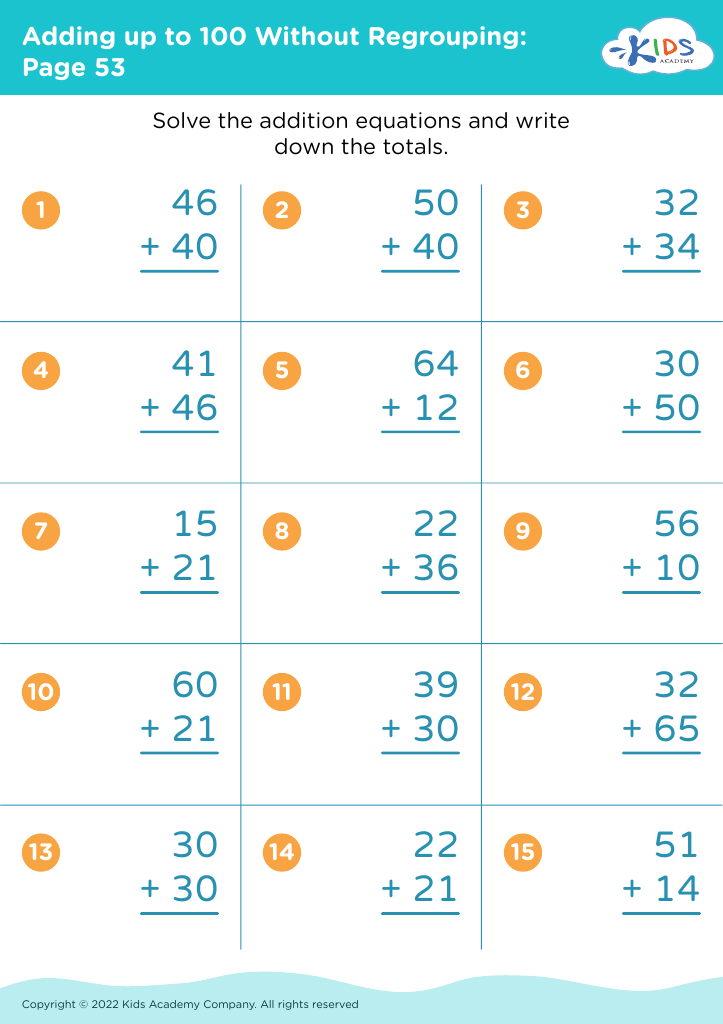
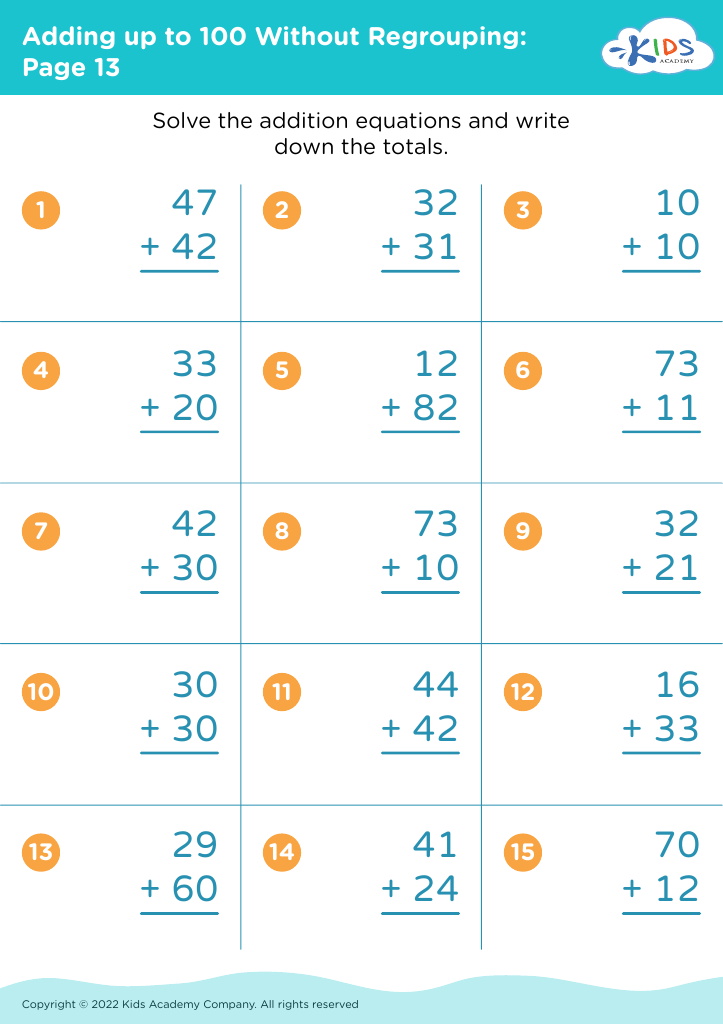
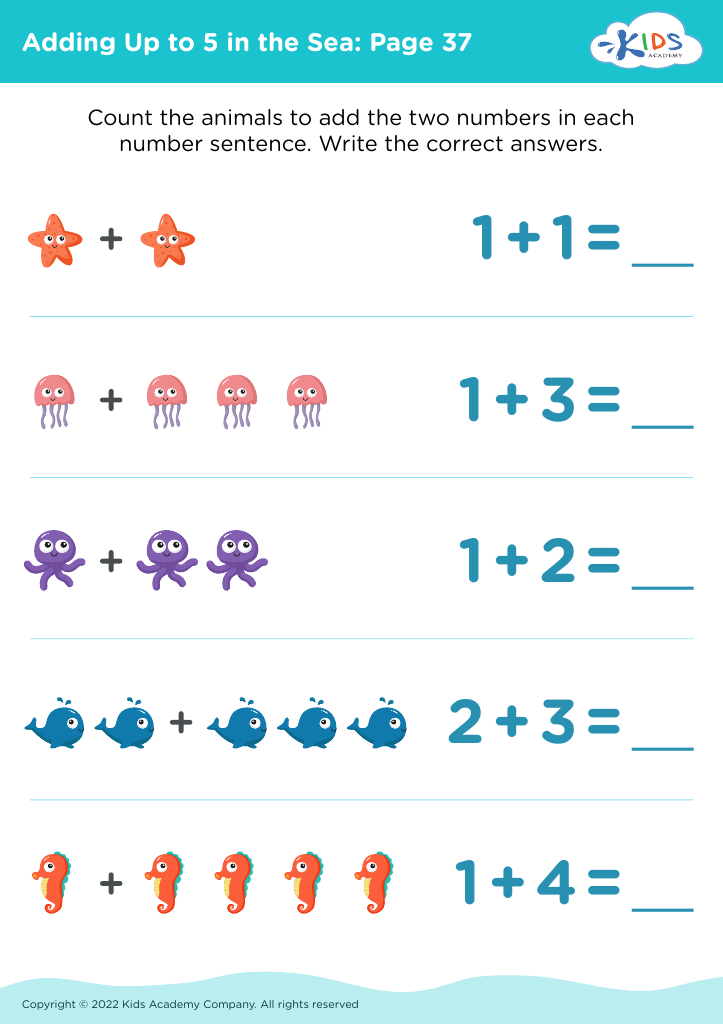
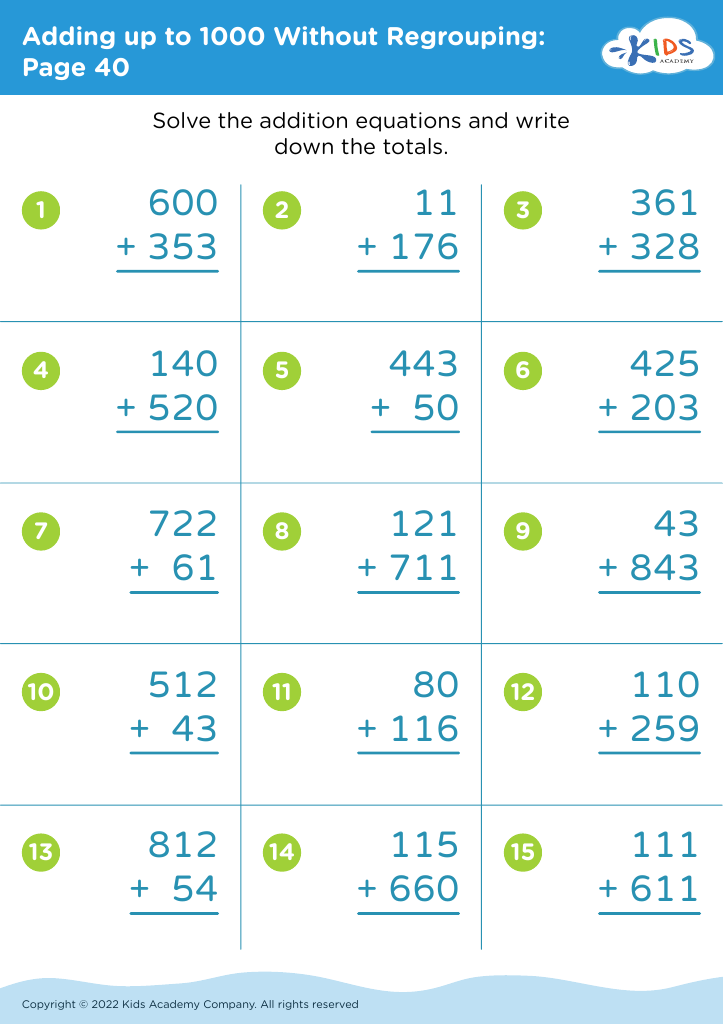
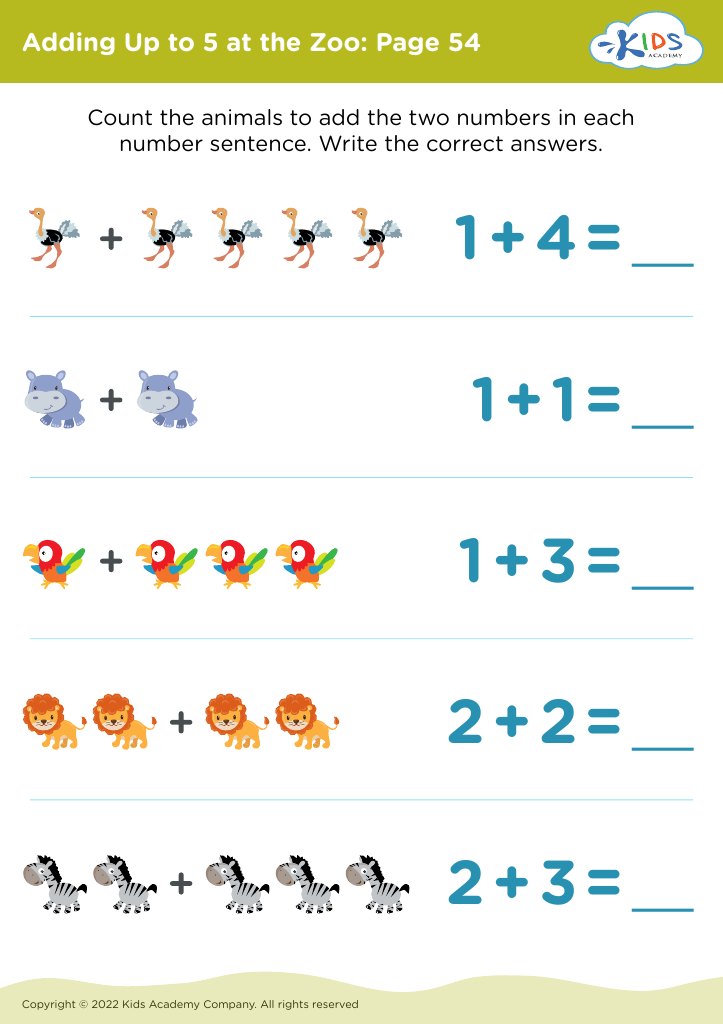
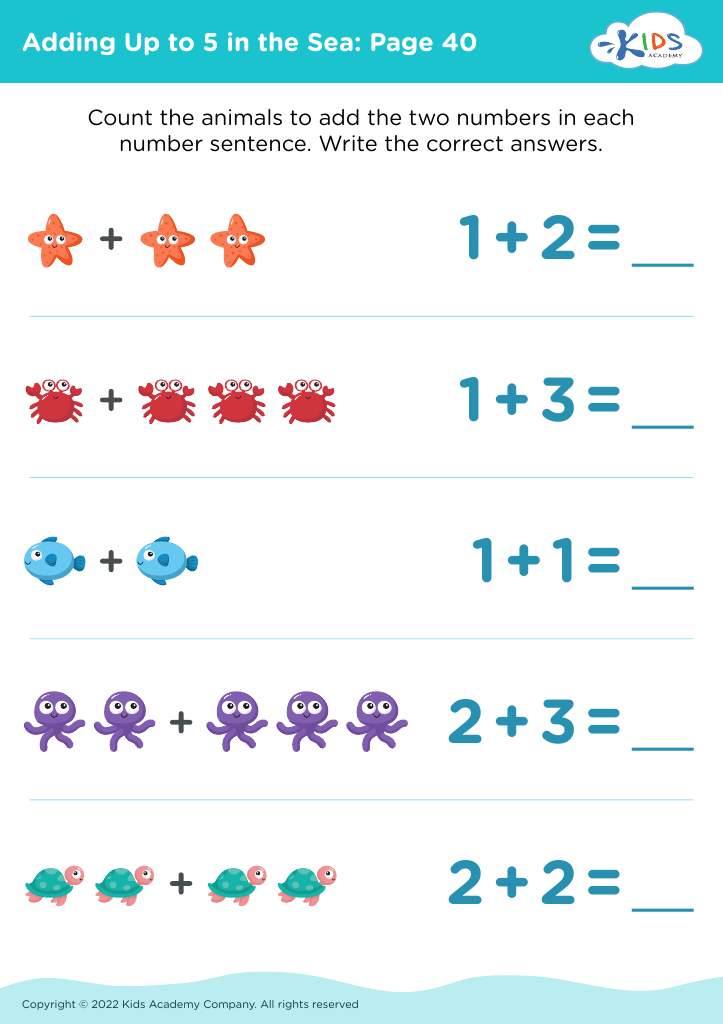
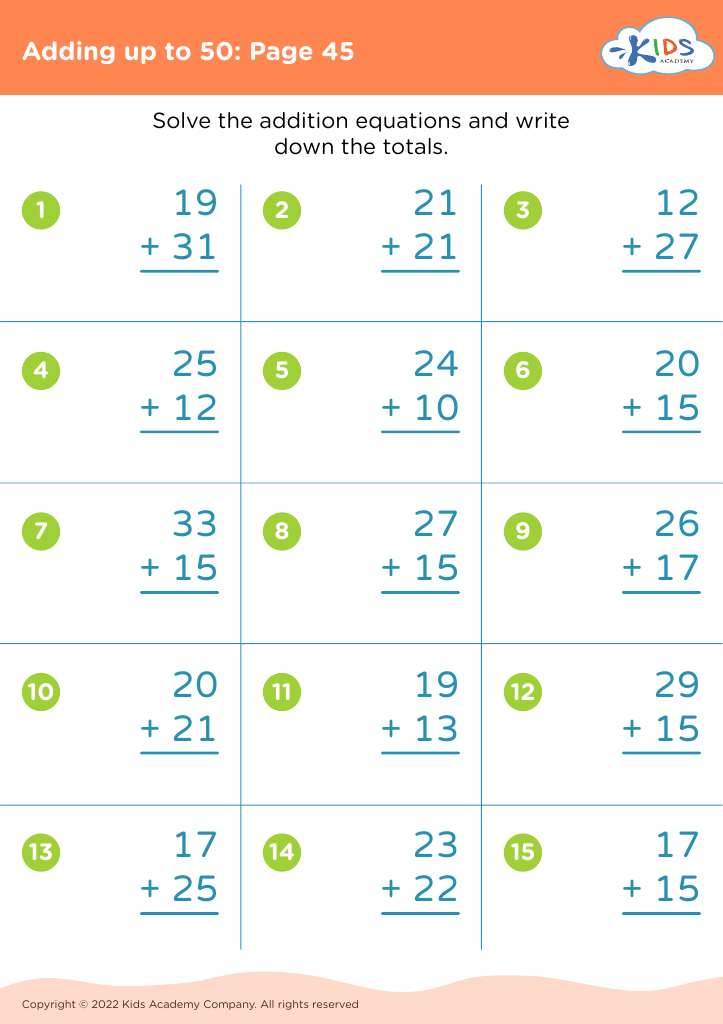
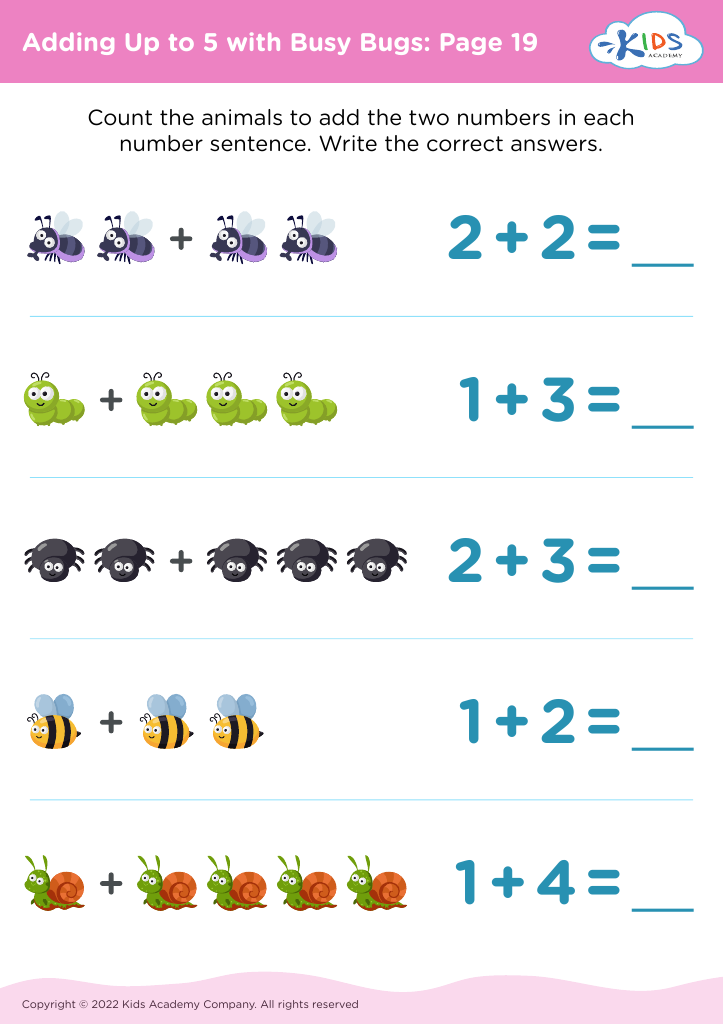
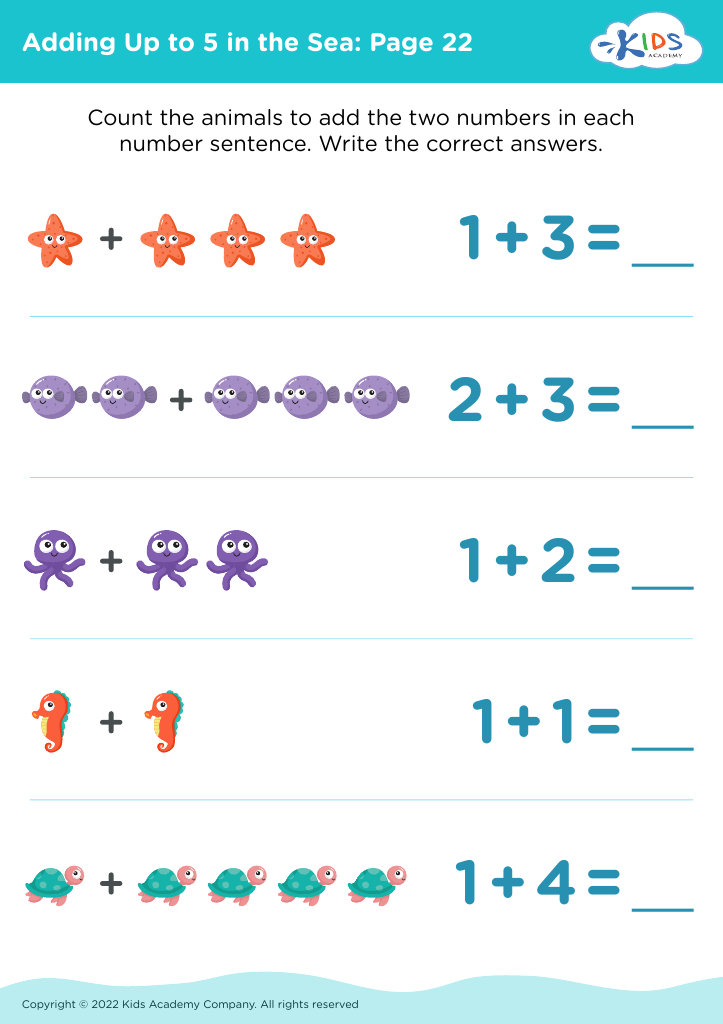
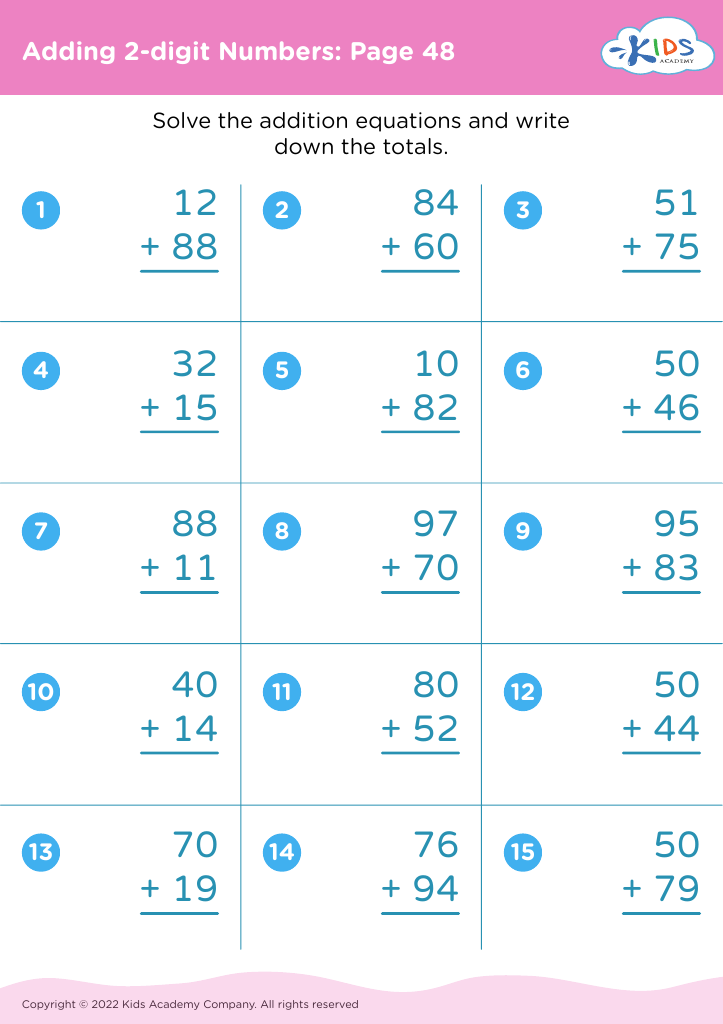
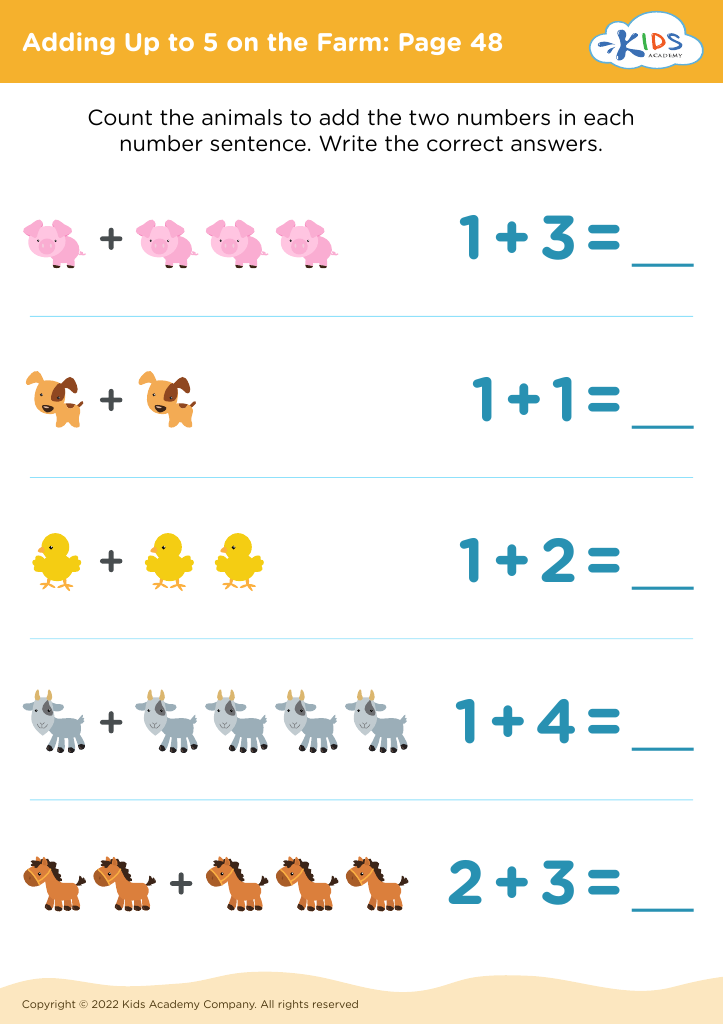
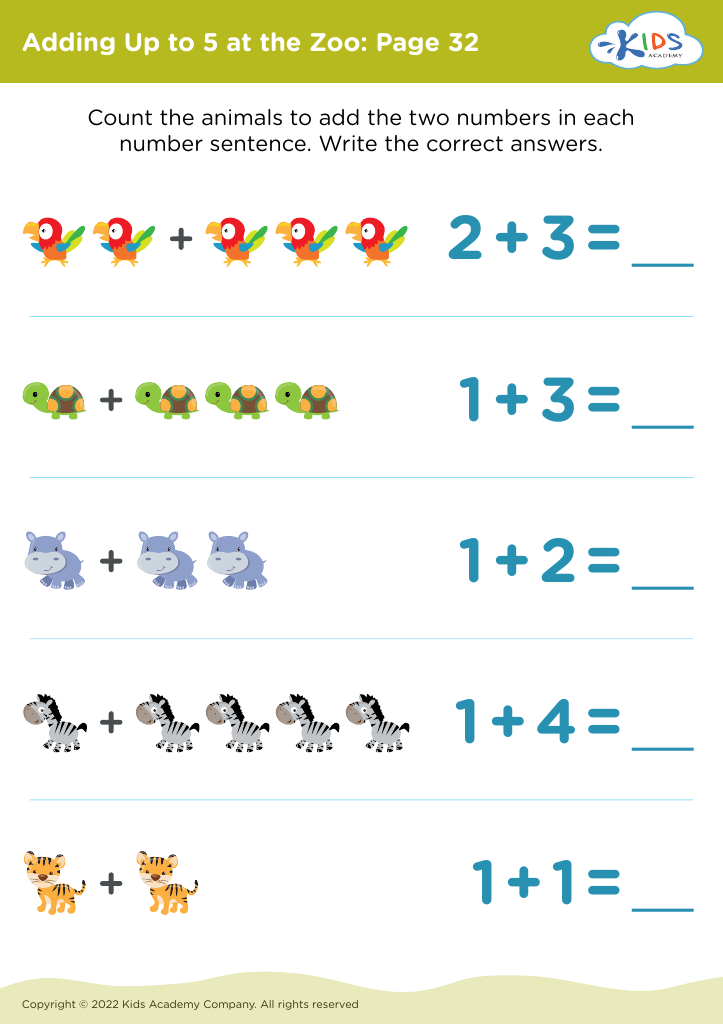
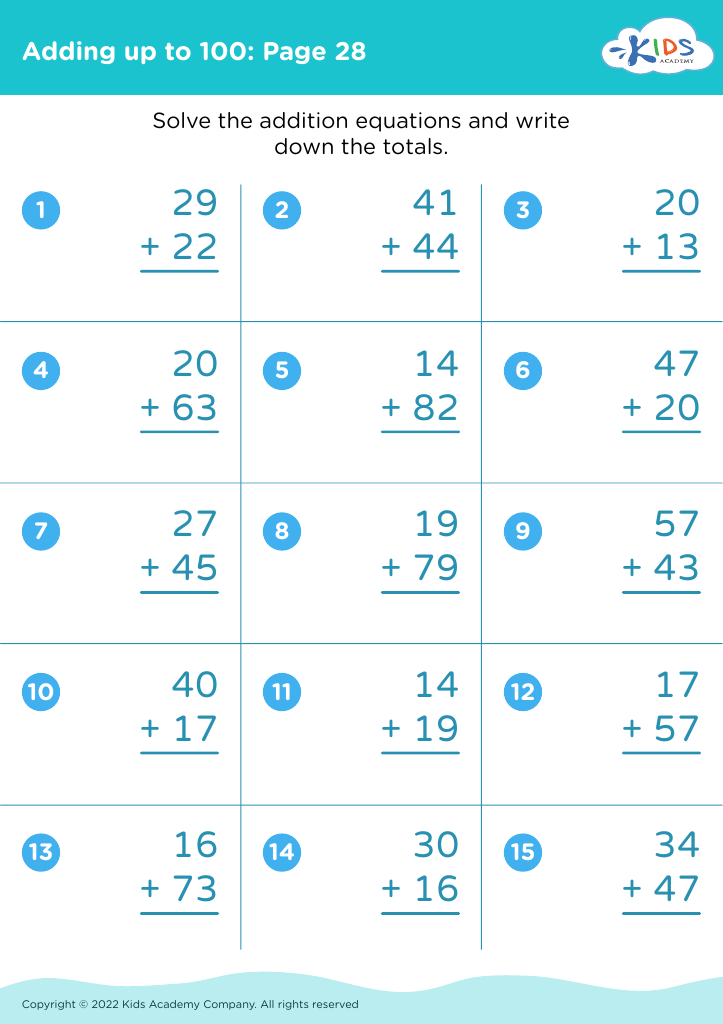








Parents and teachers should prioritize addition for children aged 4-8 because it forms the foundational building blocks for mathematical understanding. At this age, children undergo rapid cognitive development, making it an ideal time to introduce and reinforce basic math concepts. Mastery of addition enhances problem-solving skills, logic, and critical thinking, which are crucial in daily life and future academic endeavors.
Moreover, developing a strong grasp of addition helps build confidence in children, making them more willing to engage in more complex mathematical topics as they progress. Early success in addition also correlates with positive attitudes toward math, reducing anxiety and building a love for learning that can last a lifetime.
Incorporating engaging and age-appropriate activities, such as games and hands-on experiences, can make practicing addition enjoyable and effective. This sets the stage for a deeper understanding of broader mathematical concepts, like subtraction, multiplication, and division. Additionally, parents and teachers who are actively involved in this learning process foster stronger bonds and communication with their children, demonstrating that math is not just a school subject but a valuable life skill. Ultimately, prioritizing addition is essential for holistic development and lifelong learners.








