Filters

110 filtered results

Clear all filters
Favorites
With answer key
Interactive

110 filtered results

Difficulty Level

Grade


Check out this FREE Trial Lesson on Addition for age 4-8!

Exactly the Same, or Not

Favorites
With answer key
Interactive
  • 4-8
  • Addition skills
  • Addition
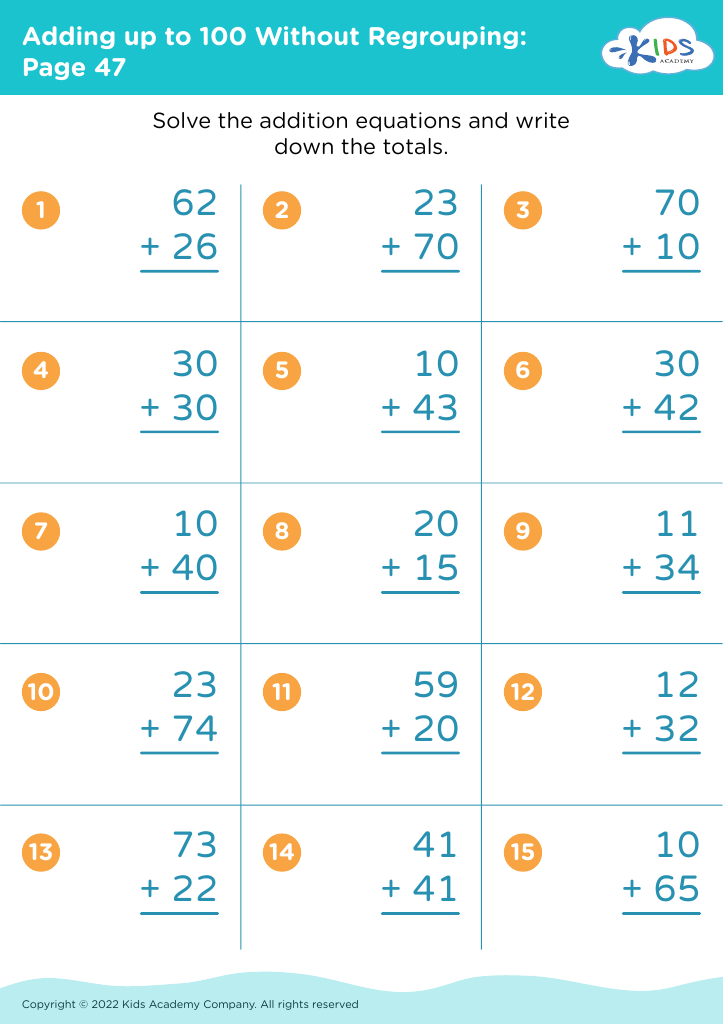
Adding up to 100 Without Regrouping: Page 47
Worksheet
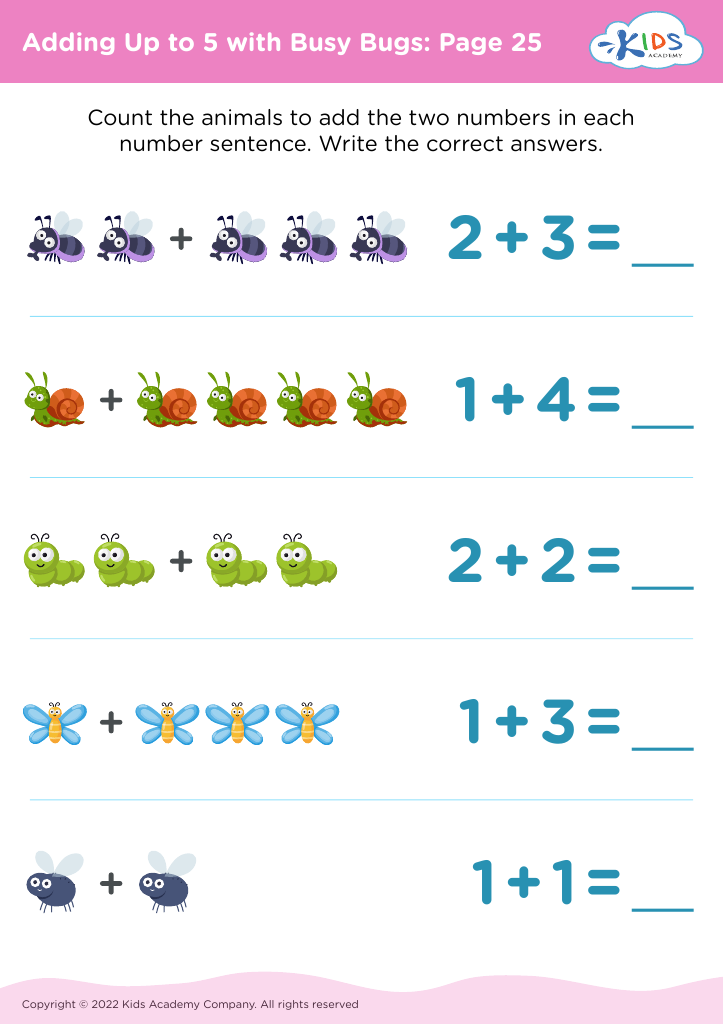
Adding Up to 5 with Busy Bugs: Page 25
Worksheet
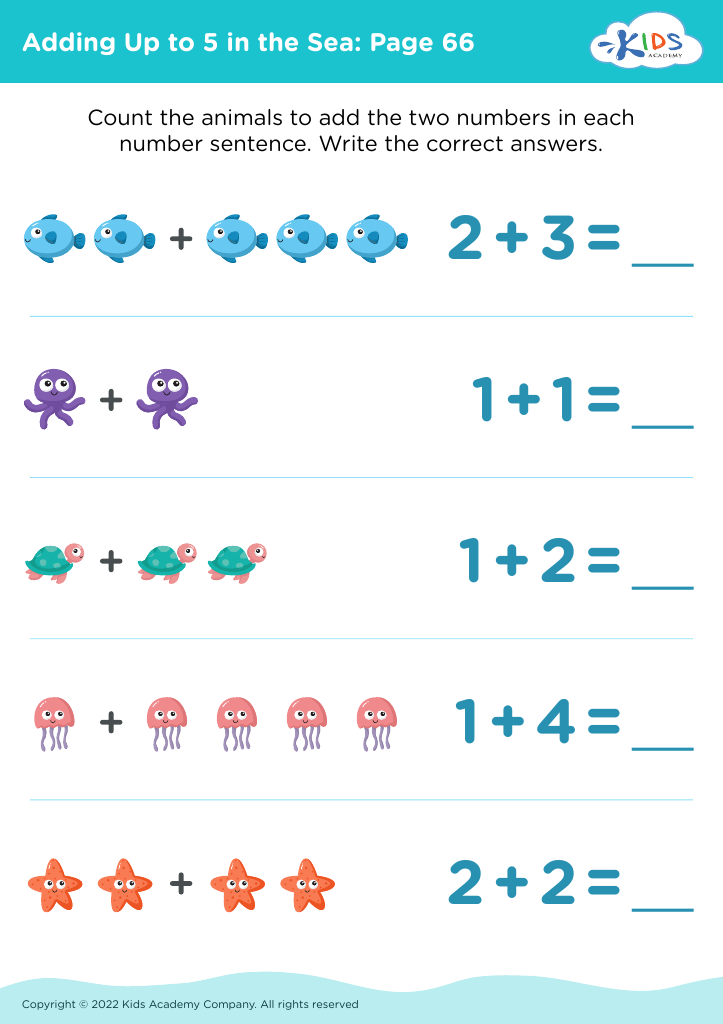
Adding Up to 5 in the Sea: Page 66
Worksheet
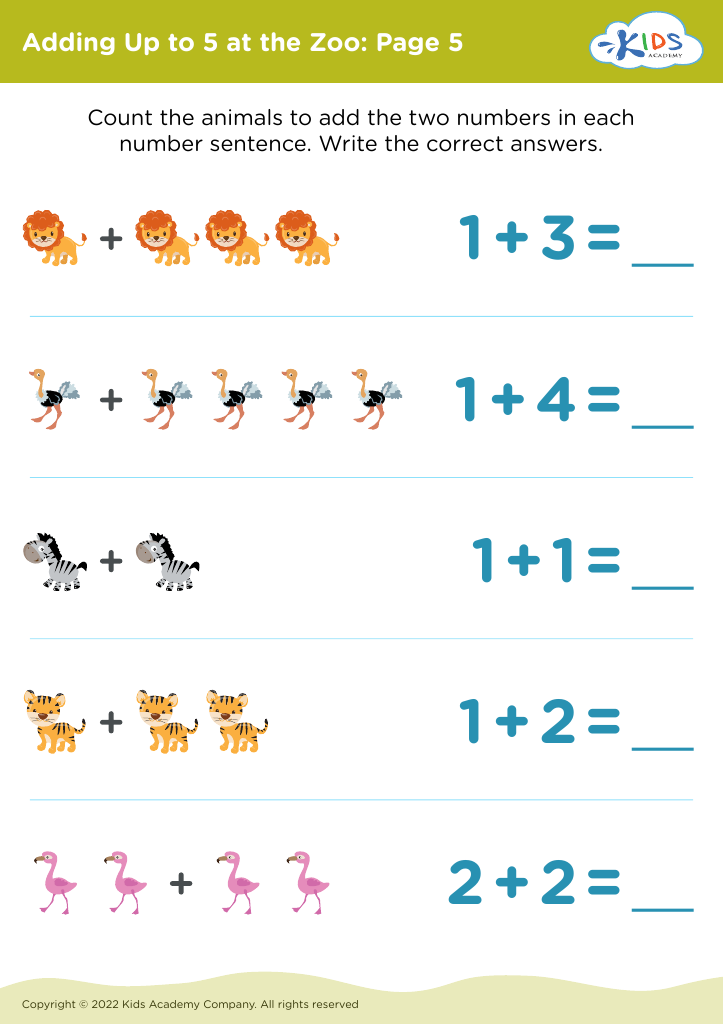
Adding Up to 5 at the Zoo: Page 5

Adding Up to 5 at the Zoo: Page 5

Adding Up to 5 at the Zoo: Page 5
Worksheet
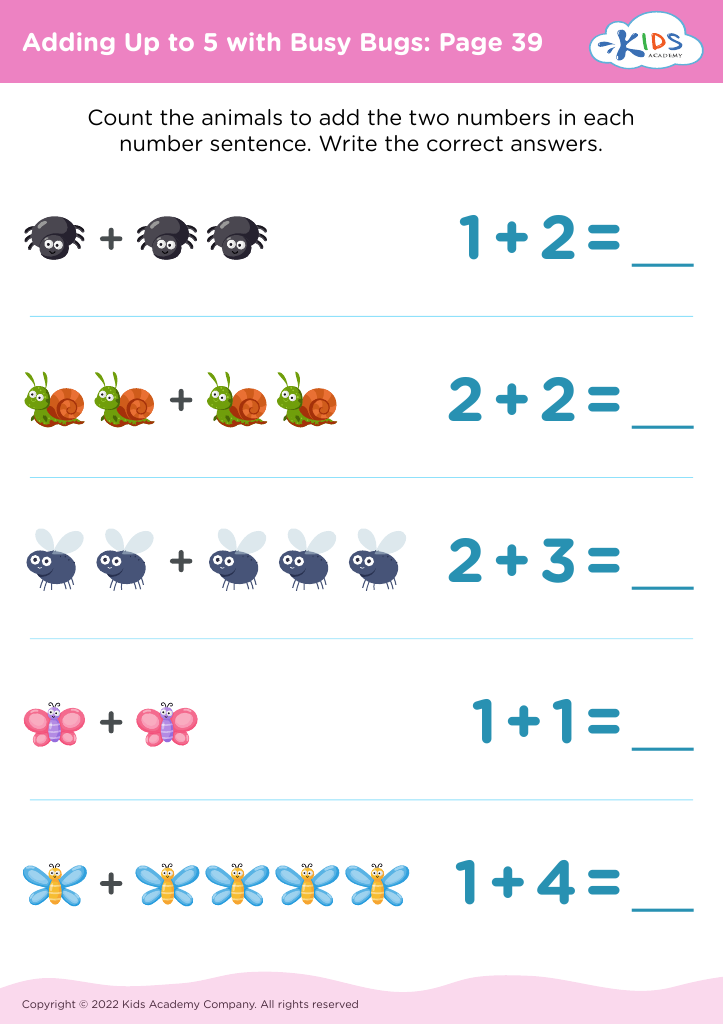
Adding Up to 5 with Busy Bugs: Page 39
Worksheet
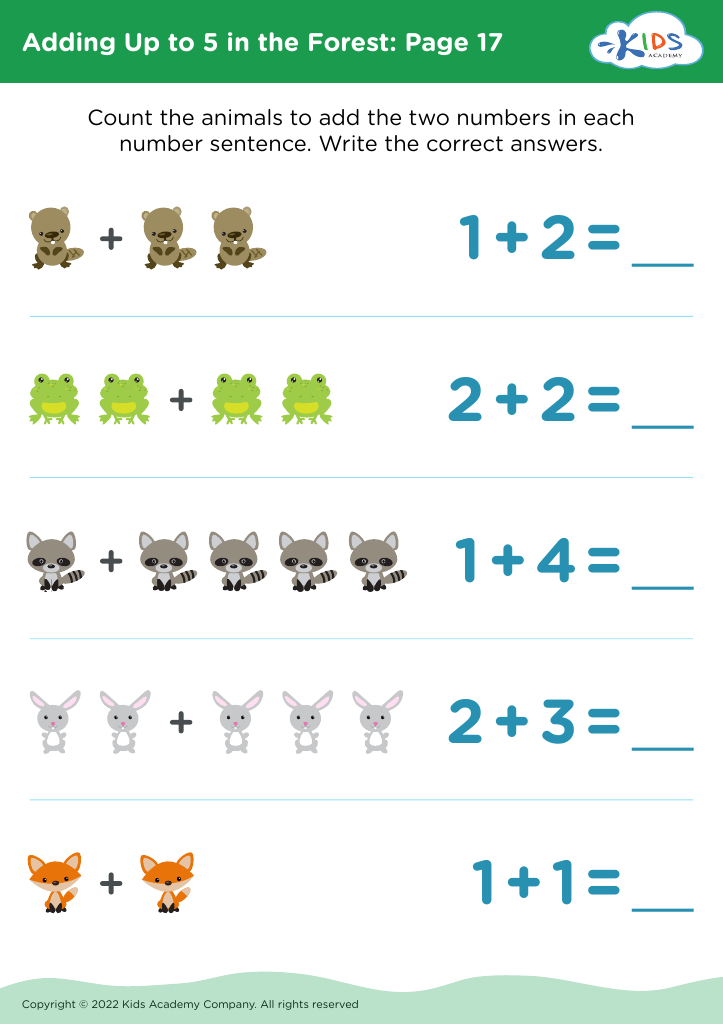
Adding Up to 5 in the Forest: Page 17
Worksheet
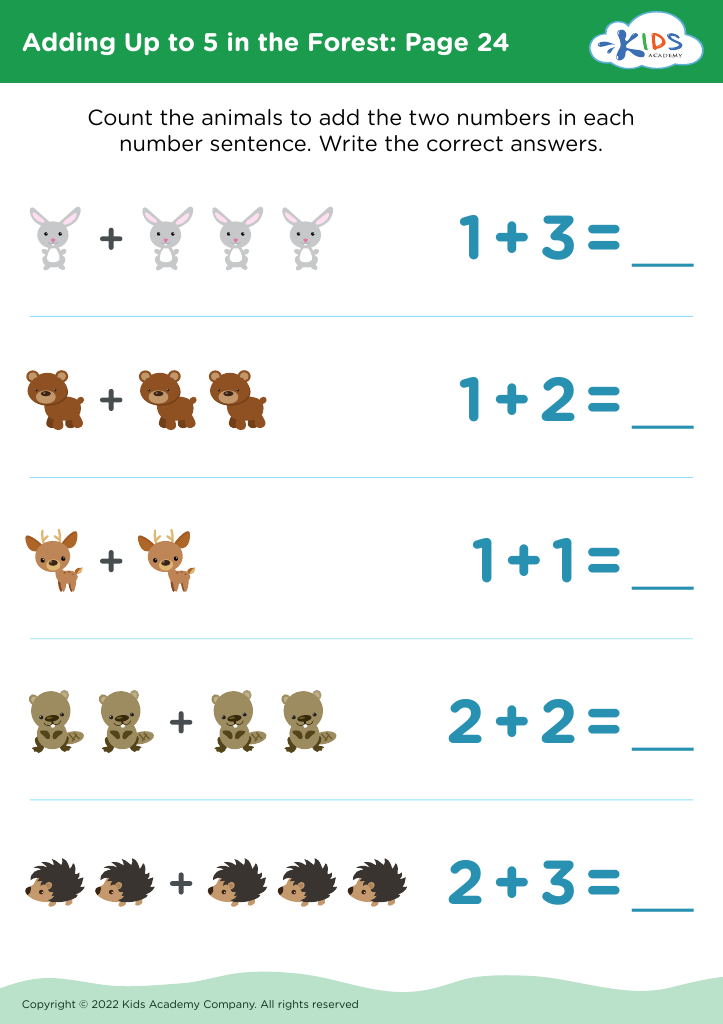
Adding Up to 5 in the Forest: Page 24
Worksheet
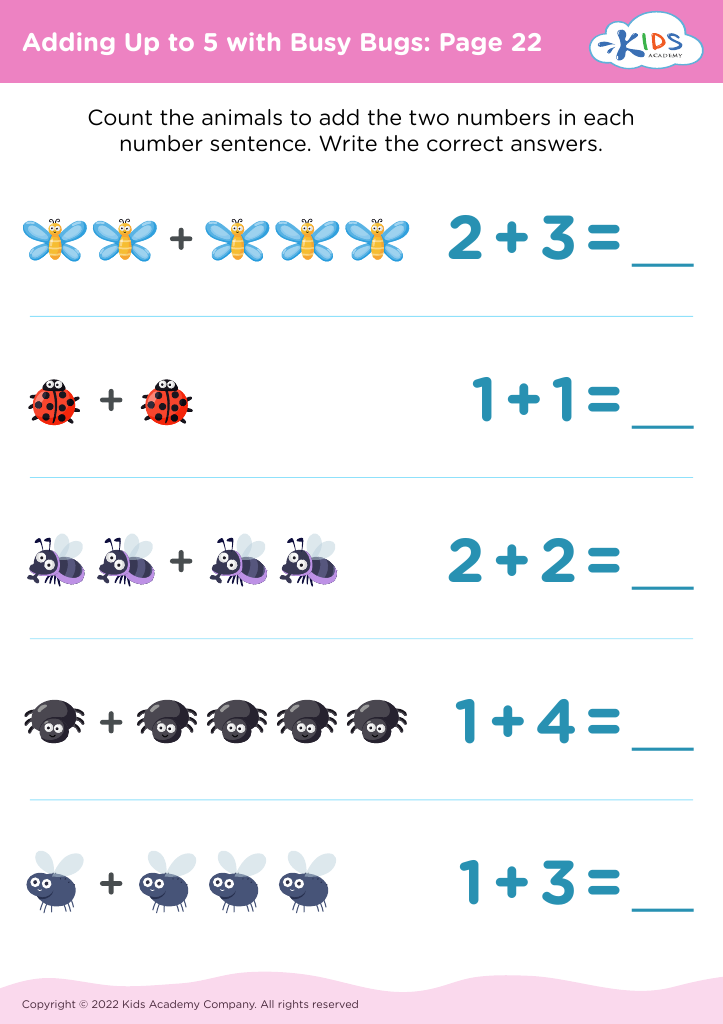
Adding Up to 5 with Busy Bugs: Page 22
Worksheet
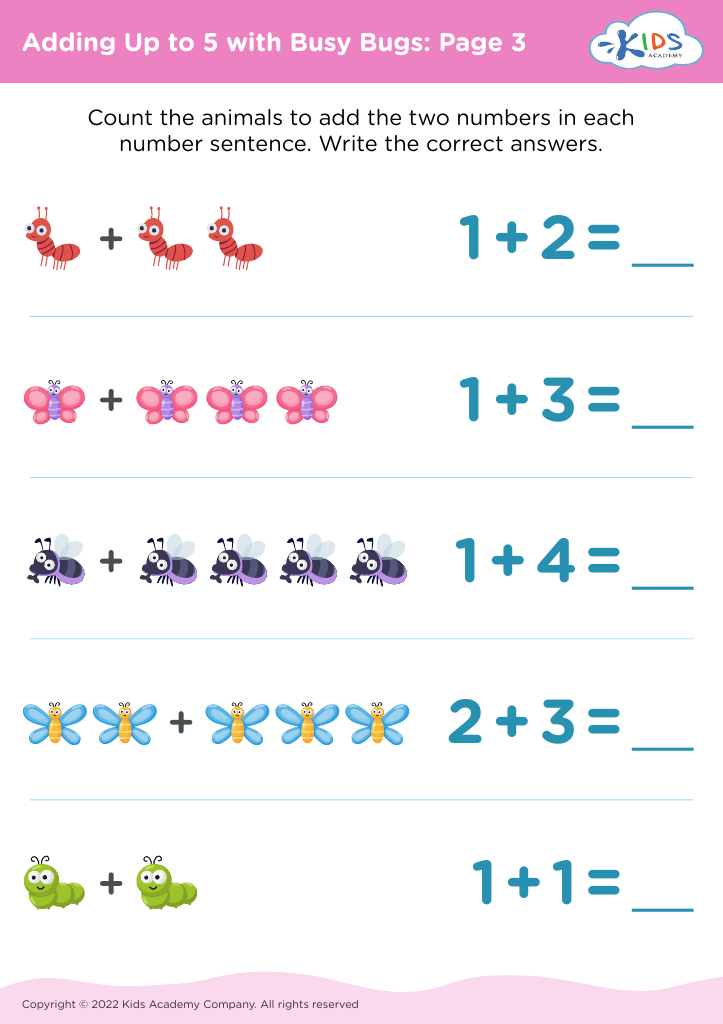
Adding Up to 5 with Busy Bugs: Page 3
Worksheet
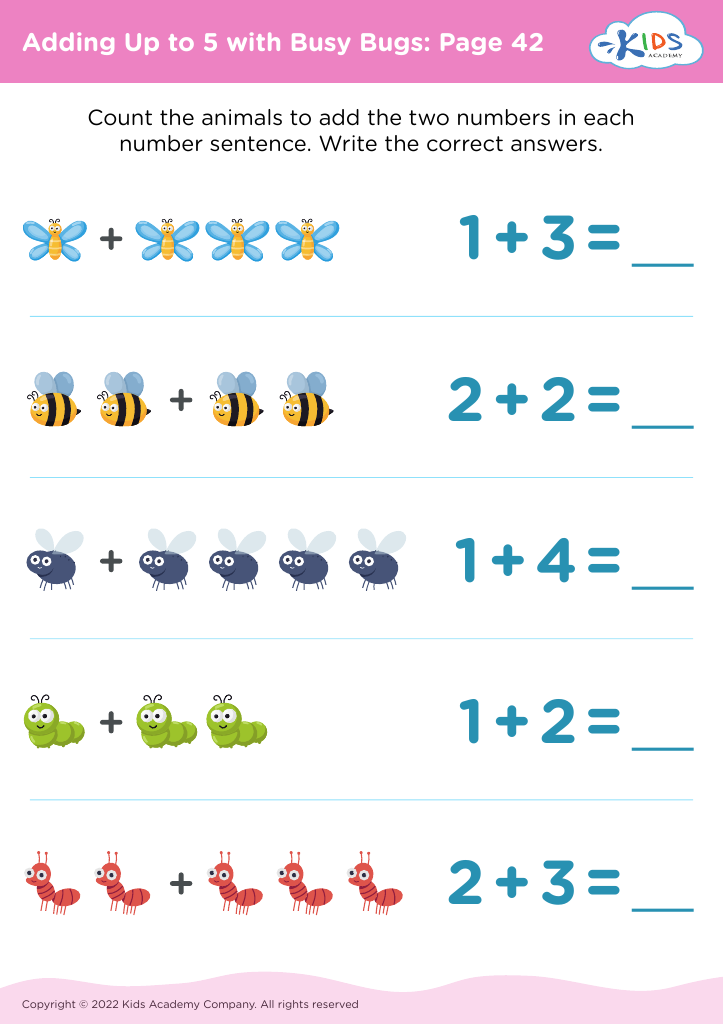
Adding Up to 5 with Busy Bugs: Page 42
Worksheet
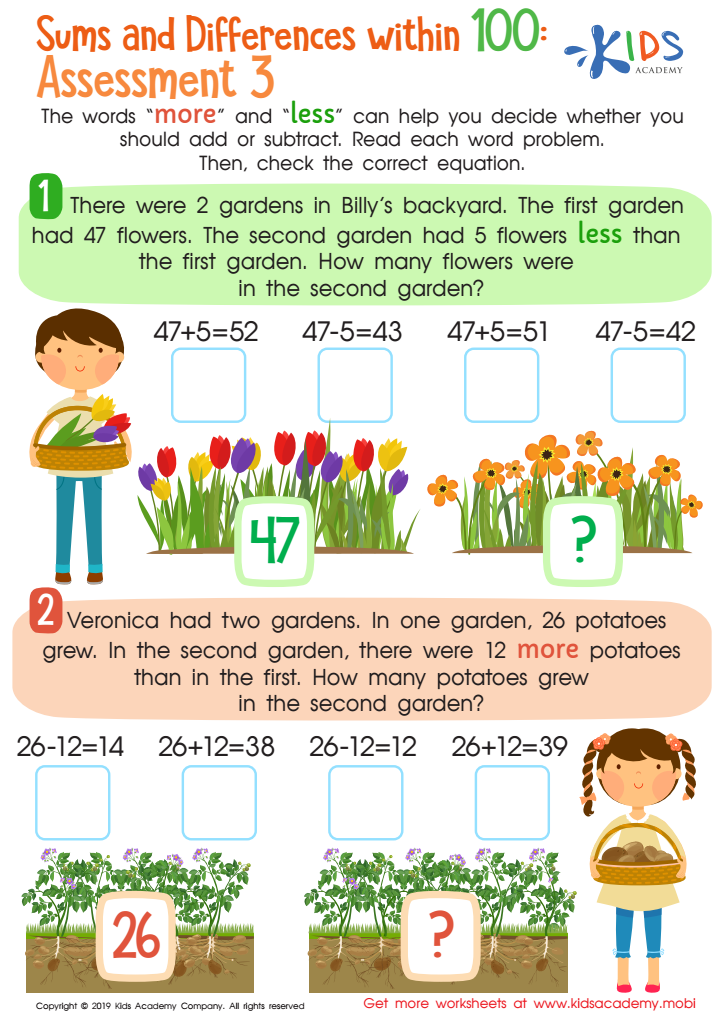
Sums and Differences Within 1 - Assessment 3 Worksheet

Sums and Differences Within 1 - Assessment 3 Worksheet

When we see 'more' or 'less', they usually refer to quantity. In Math, they indicate addition or subtraction. Help kids read aloud two simple word problems and figure out the correct equations for each. Check the correct equation afterwards.
Sums and Differences Within 1 - Assessment 3 Worksheet
Worksheet
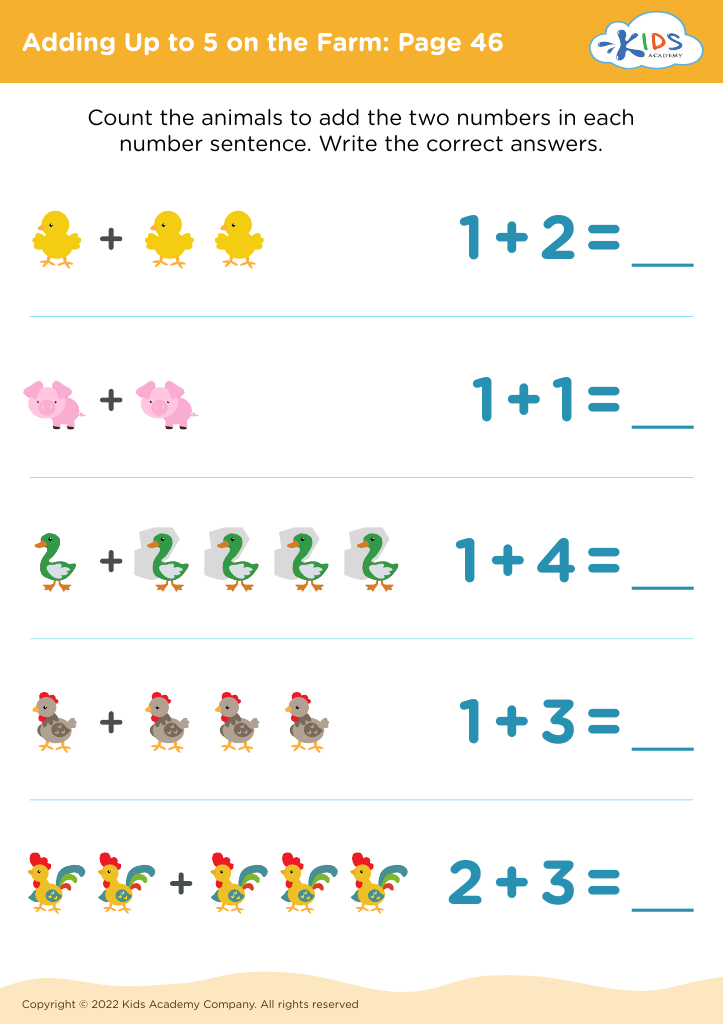
Adding Up to 5 on the Farm: Page 46
Worksheet
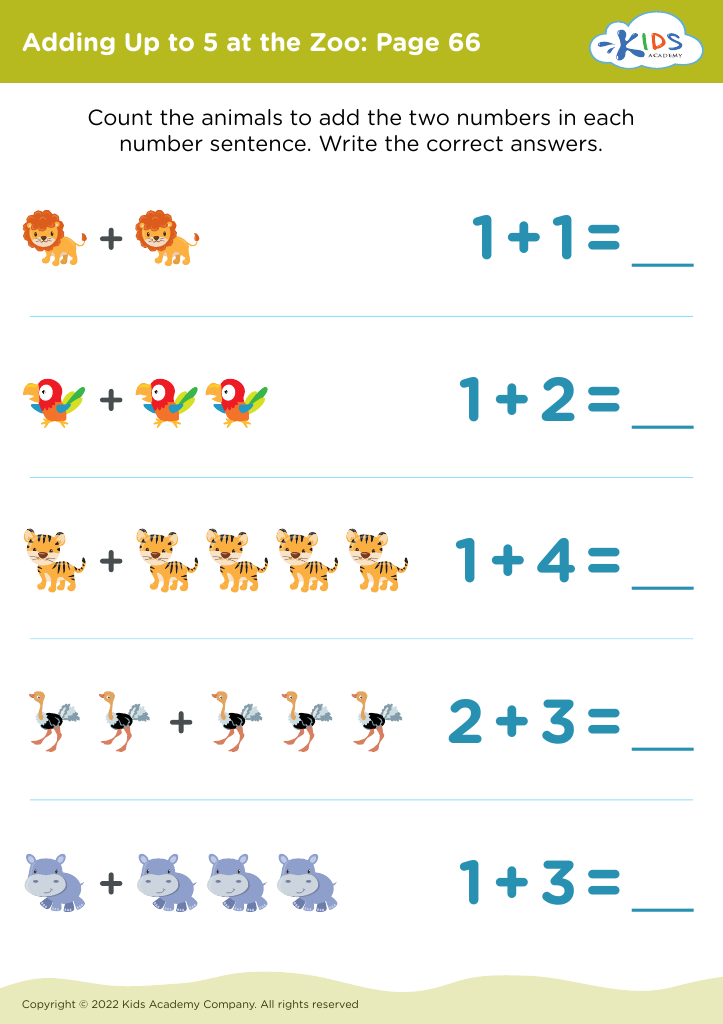
Adding Up to 5 at the Zoo: Page 66
Worksheet
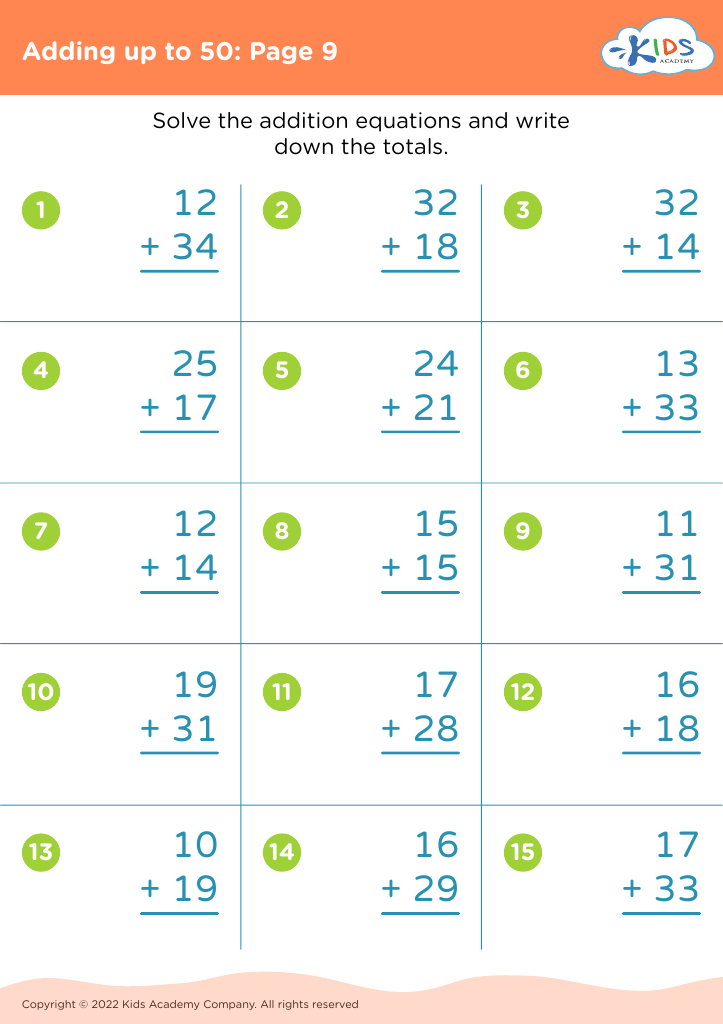
Adding up to 50: Page 9

Adding up to 50: Page 9

Adding up to 50: Page 9
Worksheet
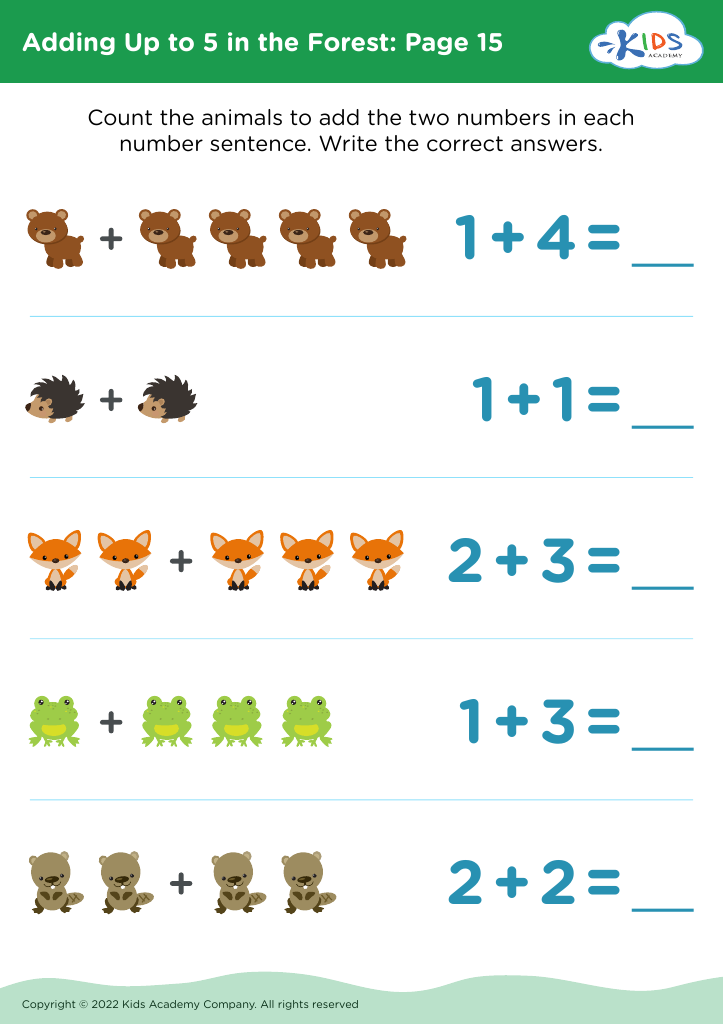
Adding Up to 5 in the Forest: Page 15
Worksheet
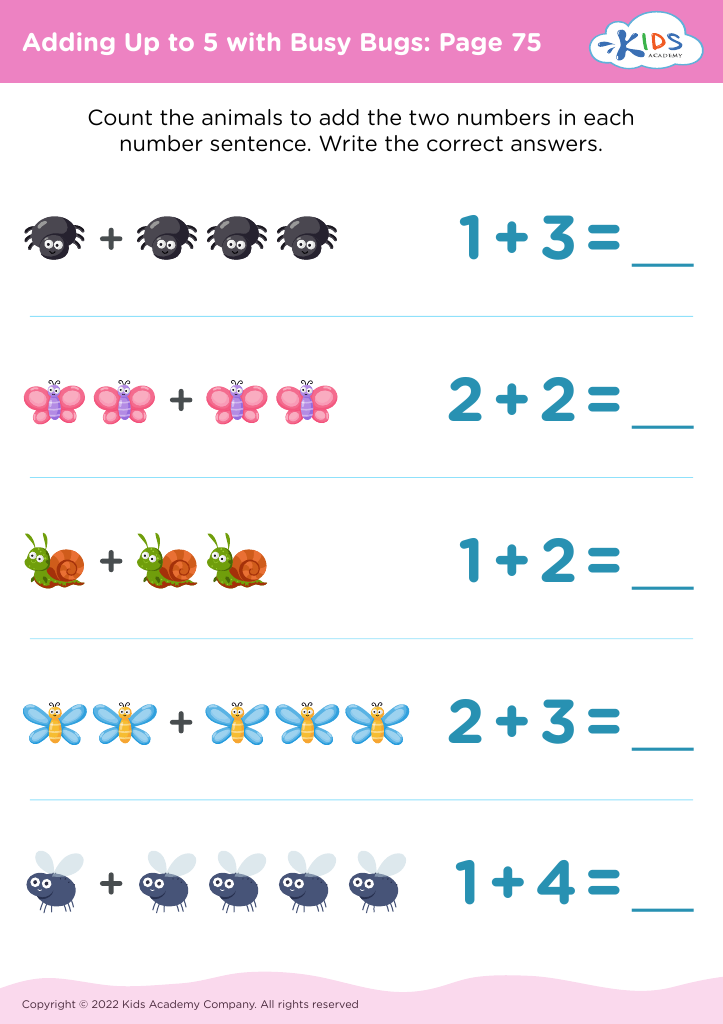
Adding Up to 5 with Busy Bugs: Page 75
Worksheet
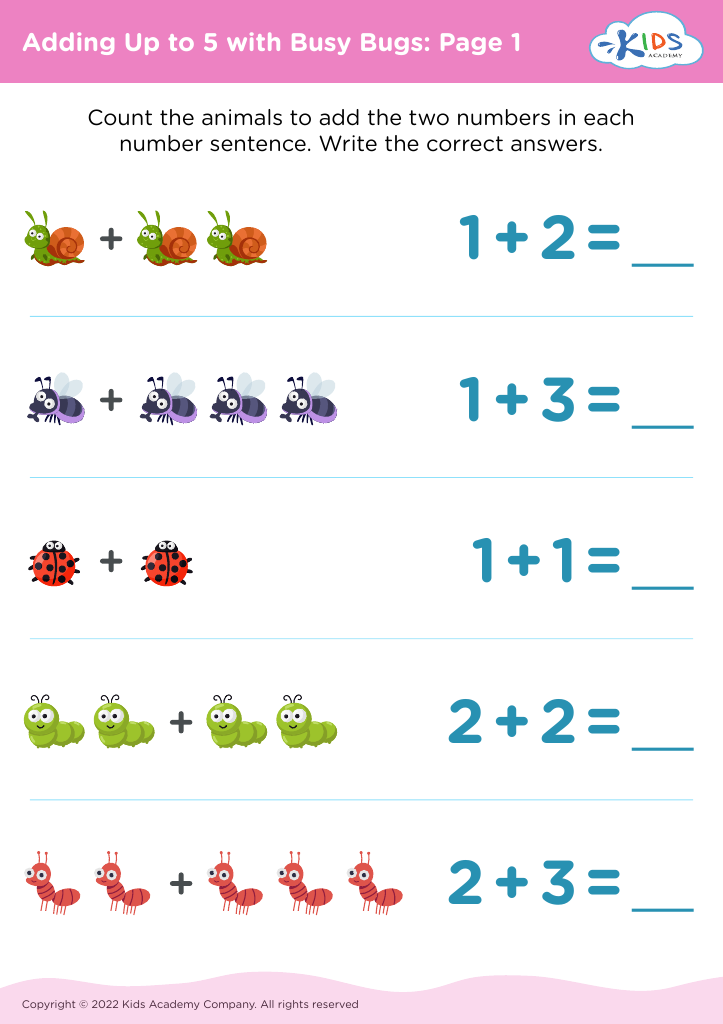
Adding Up to 5 with Busy Bugs: Page 1
Worksheet
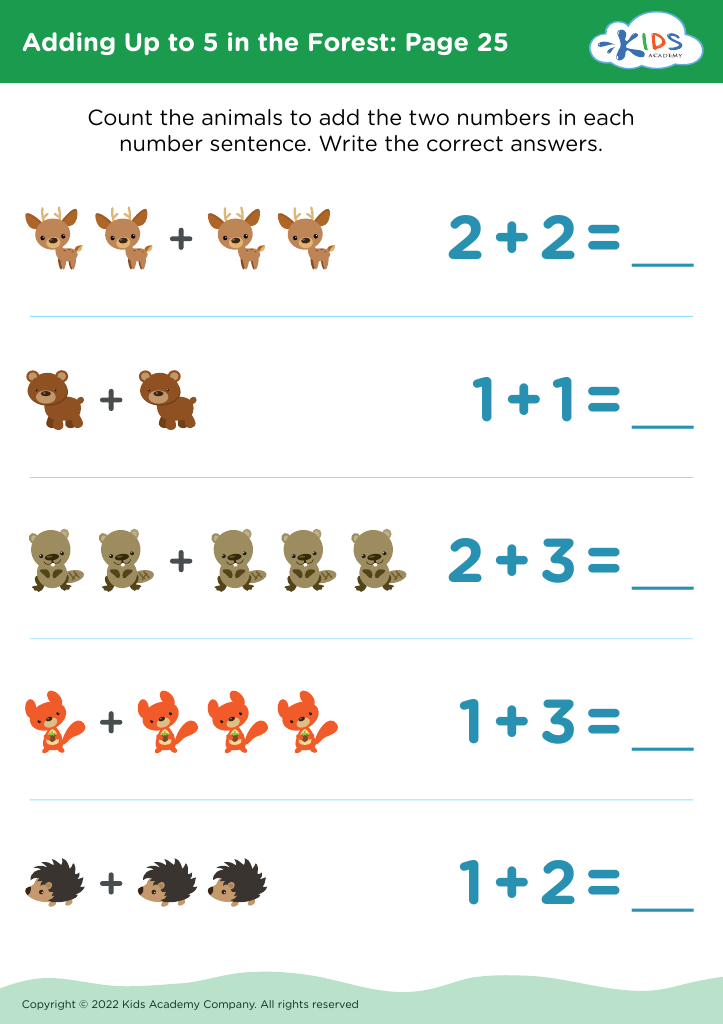
Adding Up to 5 in the Forest: Page 25
Worksheet
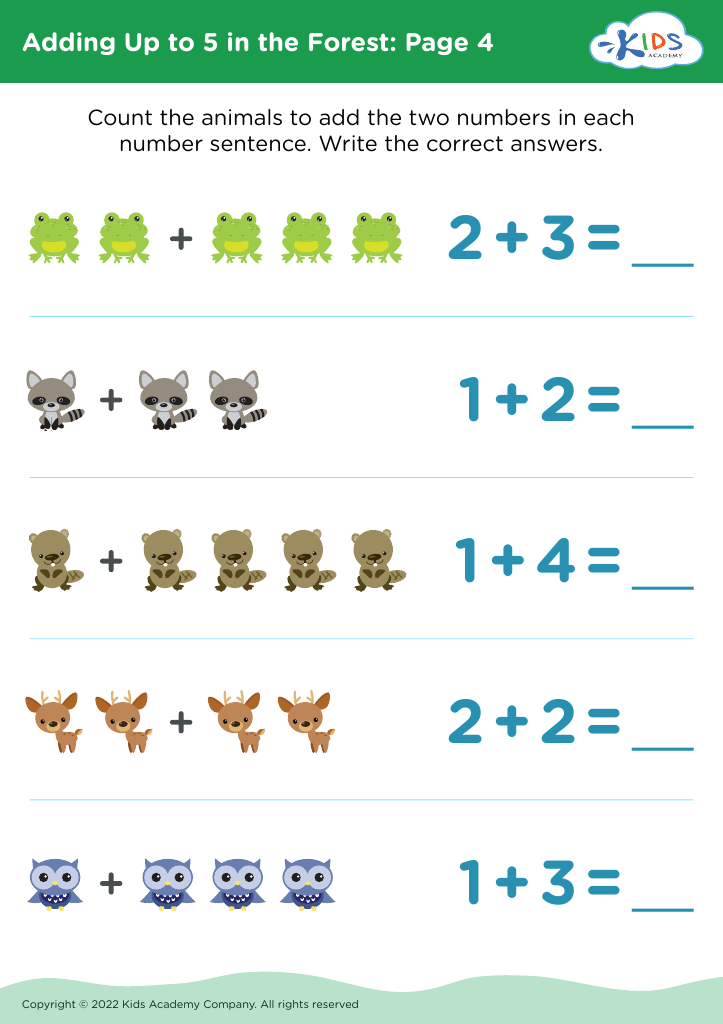
Adding Up to 5 in the Forest: Page 4
Worksheet
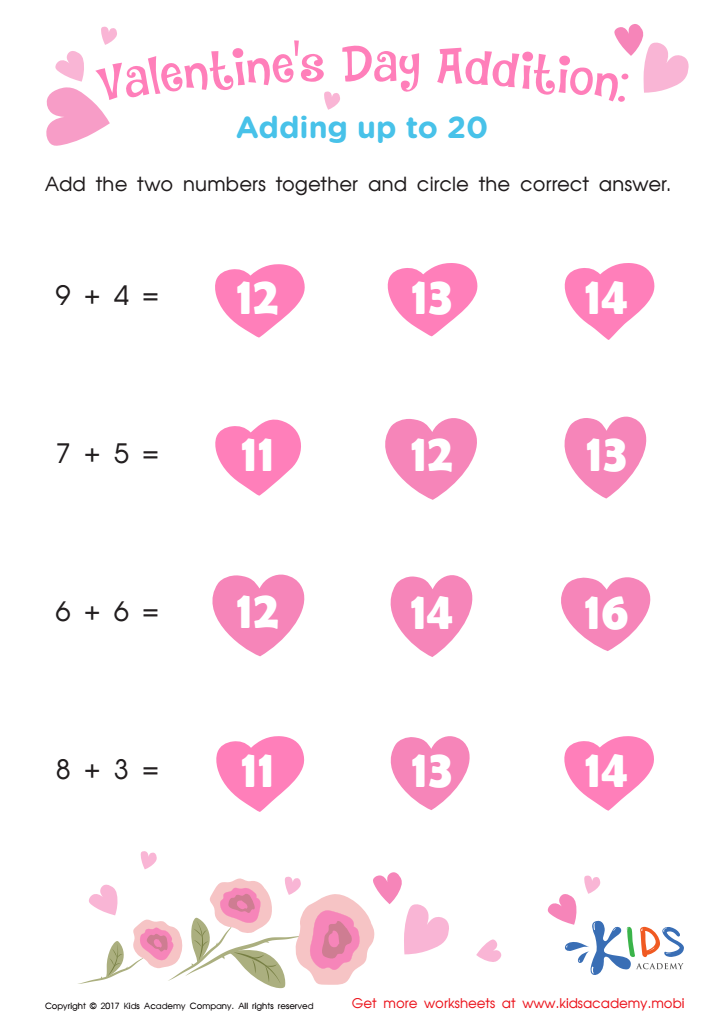
Addition up to 20 worksheet

Valentine's Day Addition Worksheet
This Valentine's Day themed worksheet is a fun way for your child to practice adding single digits up to 20! Hearts feature to help your child increase their math skills and have fun at the same time.
Valentine's Day Addition Worksheet
Worksheet
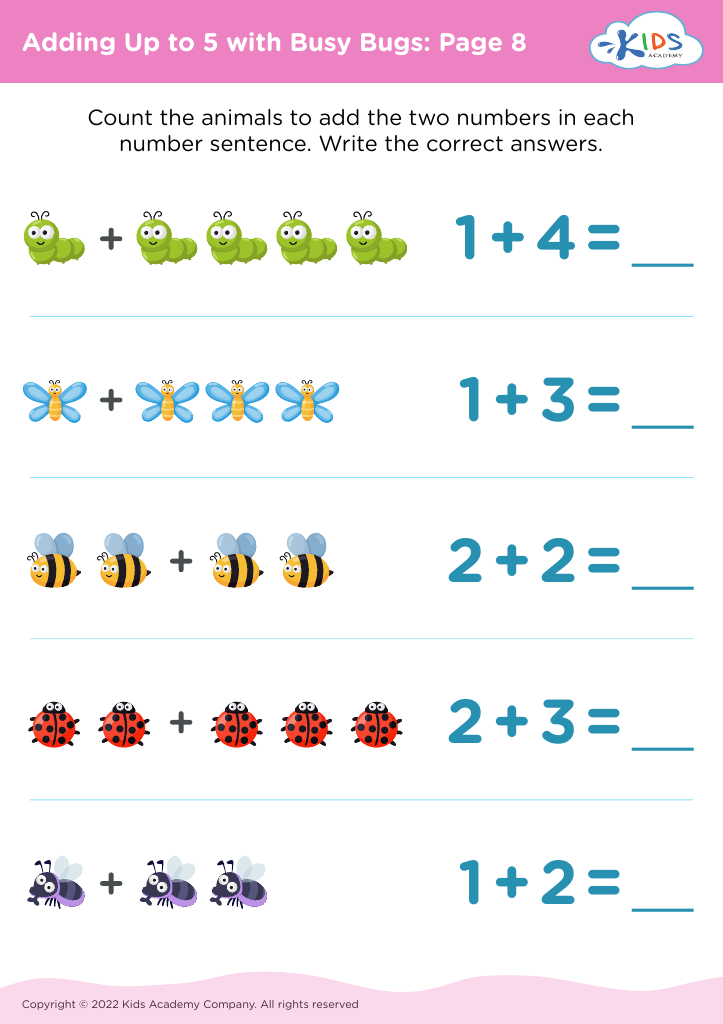
Adding Up to 5 with Busy Bugs: Page 8
Worksheet
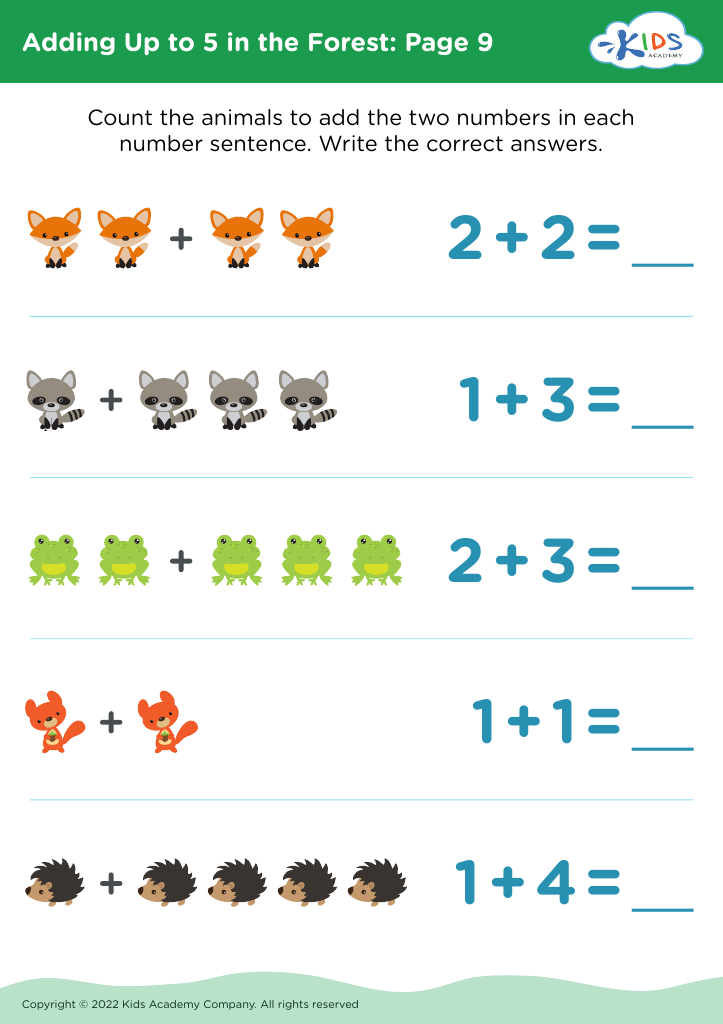
Adding Up to 5 in the Forest: Page 9
Worksheet
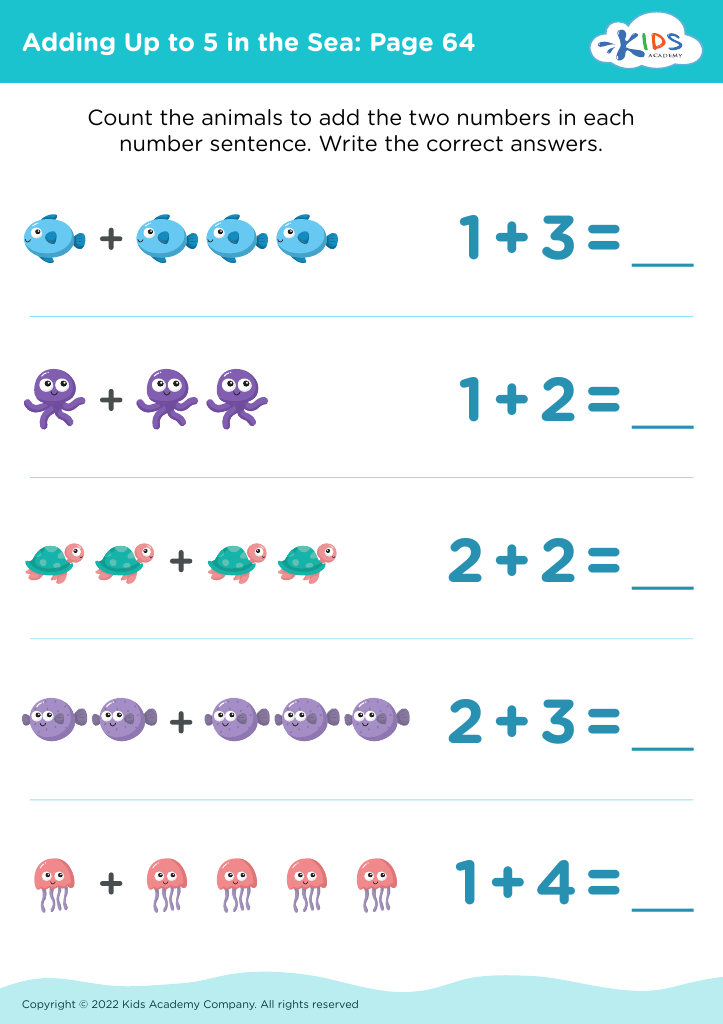
Adding Up to 5 in the Sea: Page 64
Worksheet
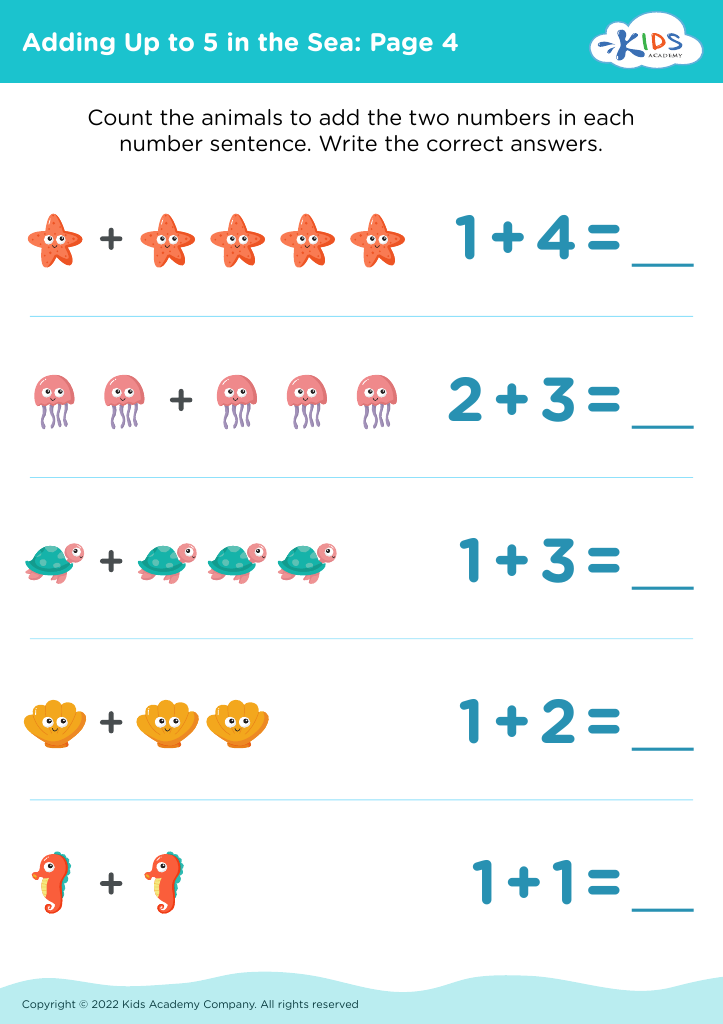
Adding Up to 5 in the Sea: Page 4

Adding Up to 5 in the Sea: Page 4

Adding Up to 5 in the Sea: Page 4
Worksheet


Addition skills form the foundation for a child’s mathematical understanding and have lasting impacts on their overall academic success. For children ages 4 to 8, mastering these skills fosters not only numerical fluency but also critical thinking and problem-solving abilities. First, early proficiency in addition allows children to build confidence as they tackle more complex mathematical concepts in later years. It cultivates a sense of achievement that encourages further exploration in learning.

Moreover, addition is an essential life skill that extends beyond the classroom. From counting money to measuring ingredients in cooking, the ability to add allows children to navigate daily situations effectively. By promoting addition skills in young learners, parents and teachers help them develop logical reasoning and enhance their cognitive development.

Additionally, establishing a strong foundation in addition can significantly influence a child’s attitude towards math. Positive experiences with early math learning can reduce math anxiety and open doors to future STEM opportunities. Collaborative activities, games, and playful learning strategies to teach addition make the process enjoyable, fostering a love for learning. Therefore, prioritizing the development of addition skills is crucial for empowering children, ensuring they are well-prepared for a successful academic journey and life beyond school.