Filters

271 filtered results

Clear all filters
Favorites
With answer key
Interactive

271 filtered results

Difficulty Level

Grade


Check out this FREE Trial Lesson on Addition for age 4-8!

Match Exactly the Same

Favorites
With answer key
Interactive
  • 4-8
  • Basic Addition Skills
  • Addition
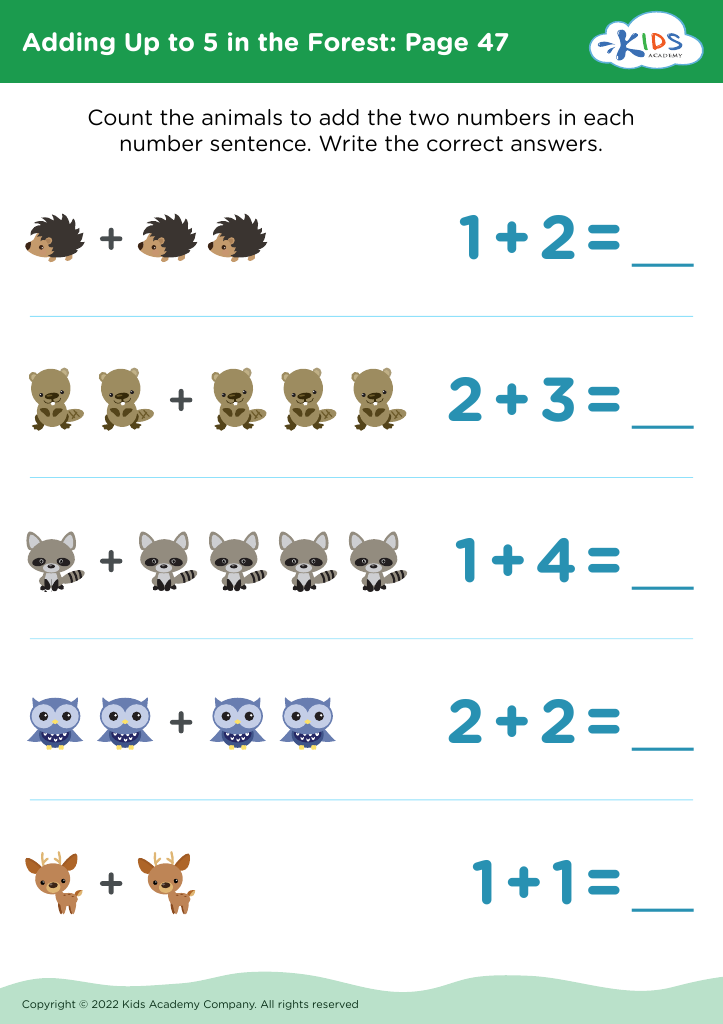
Adding Up to 5 in the Forest: Page 47
Worksheet
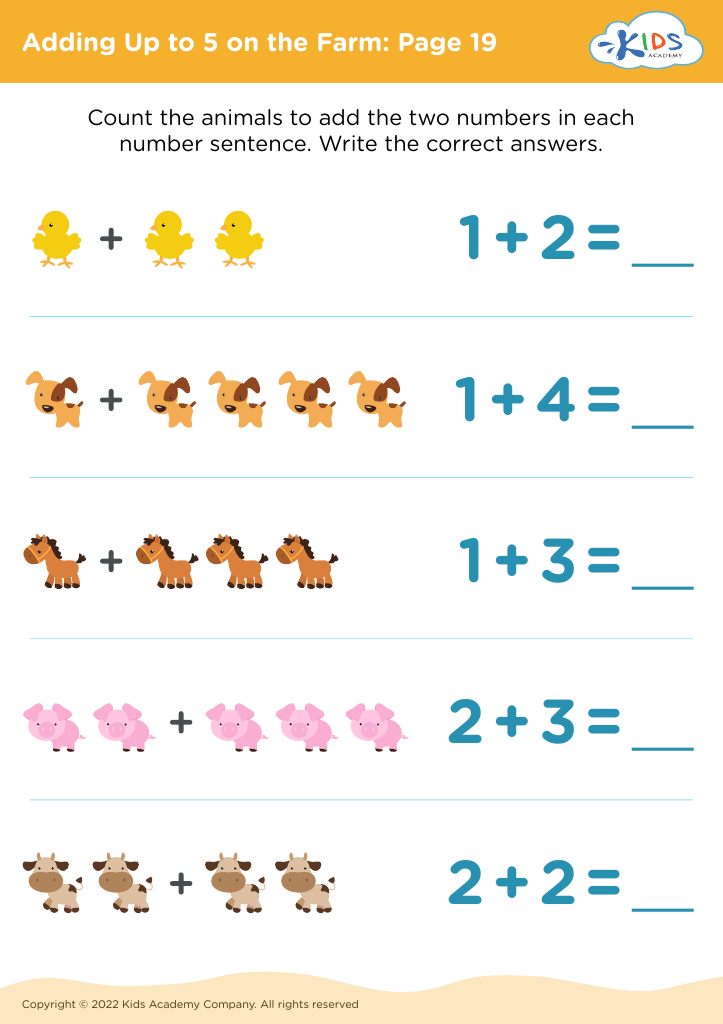
Adding Up to 5 on the Farm: Page 19
Worksheet
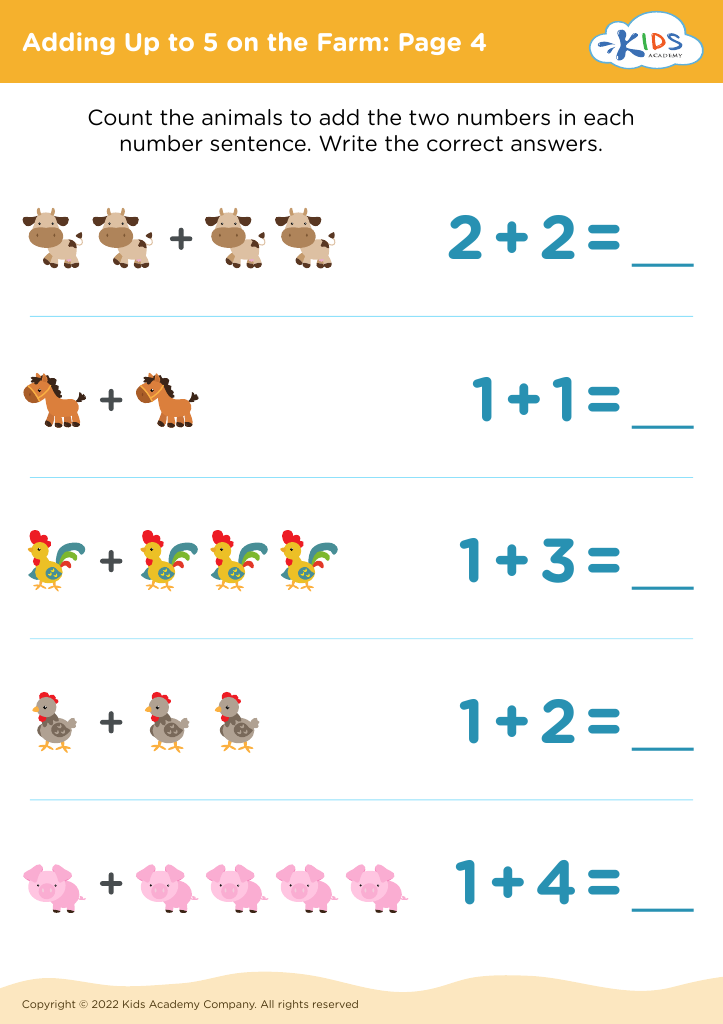
Adding Up to 5 on the Farm: Page 4
Worksheet
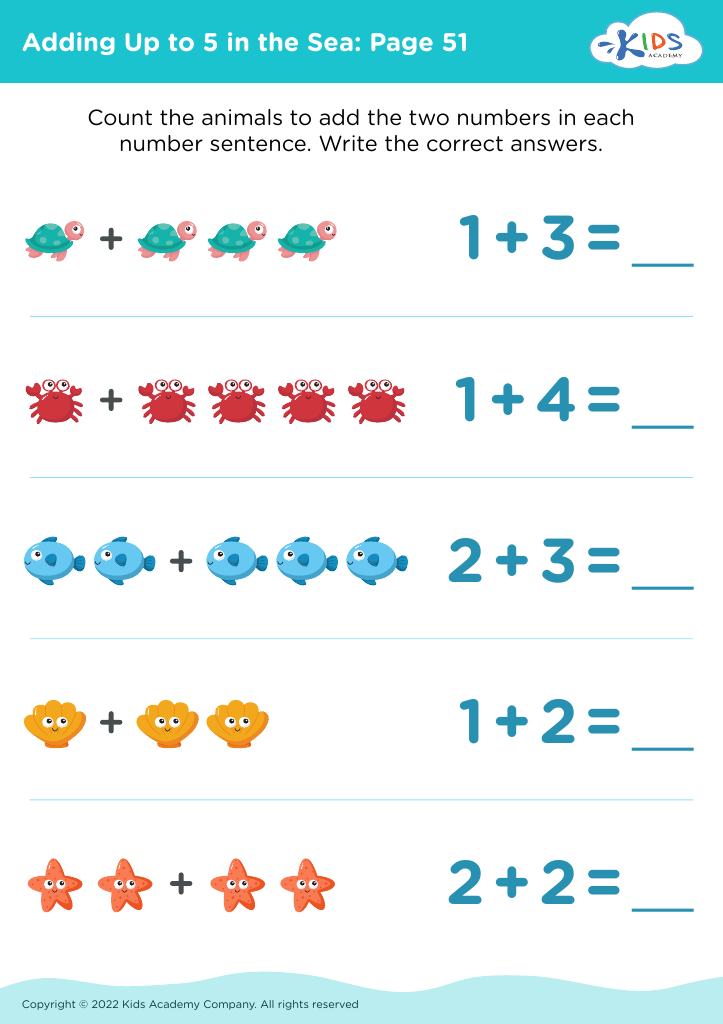
Adding Up to 5 in the Sea: Page 51
Worksheet
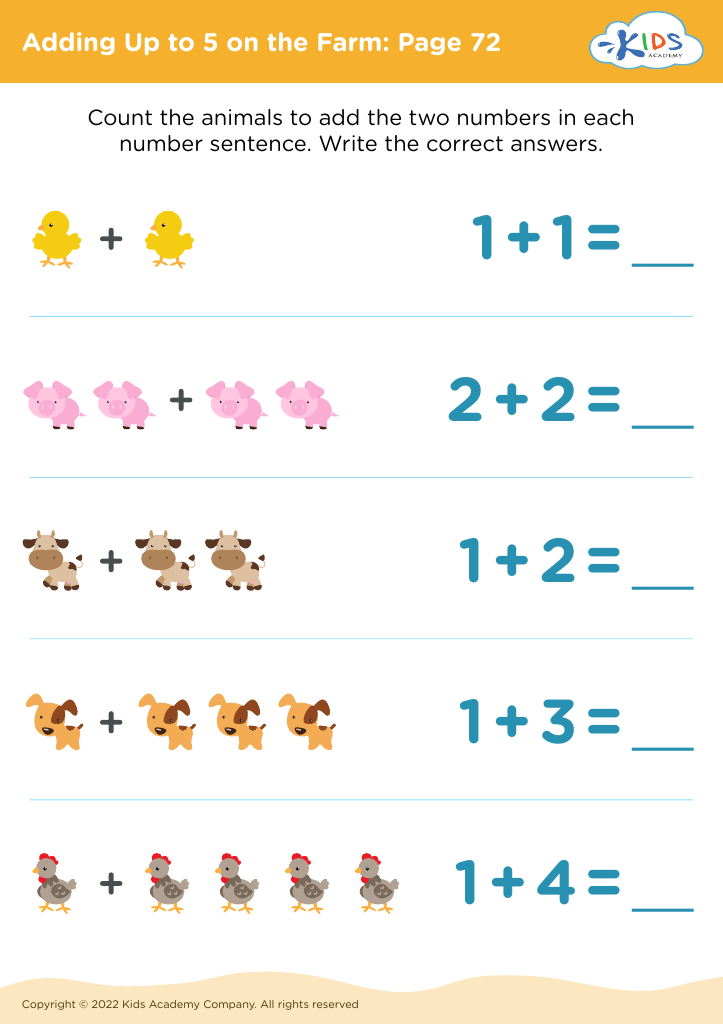
Adding Up to 5 on the Farm: Page 72
Worksheet
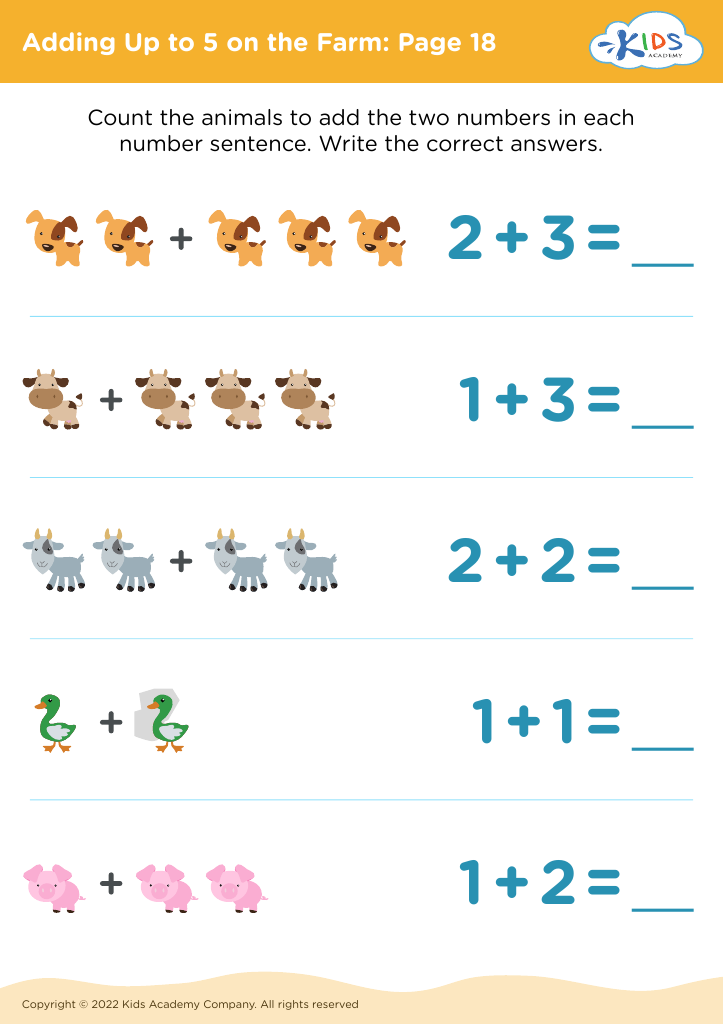
Adding Up to 5 on the Farm: Page 18
Worksheet
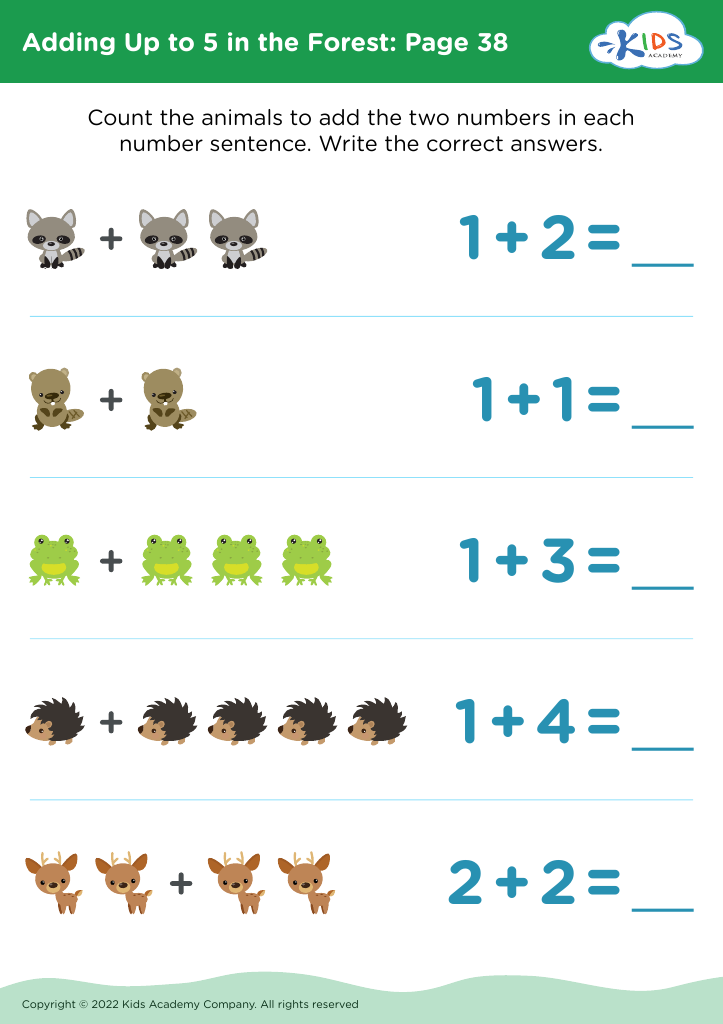
Adding Up to 5 in the Forest: Page 38
Worksheet
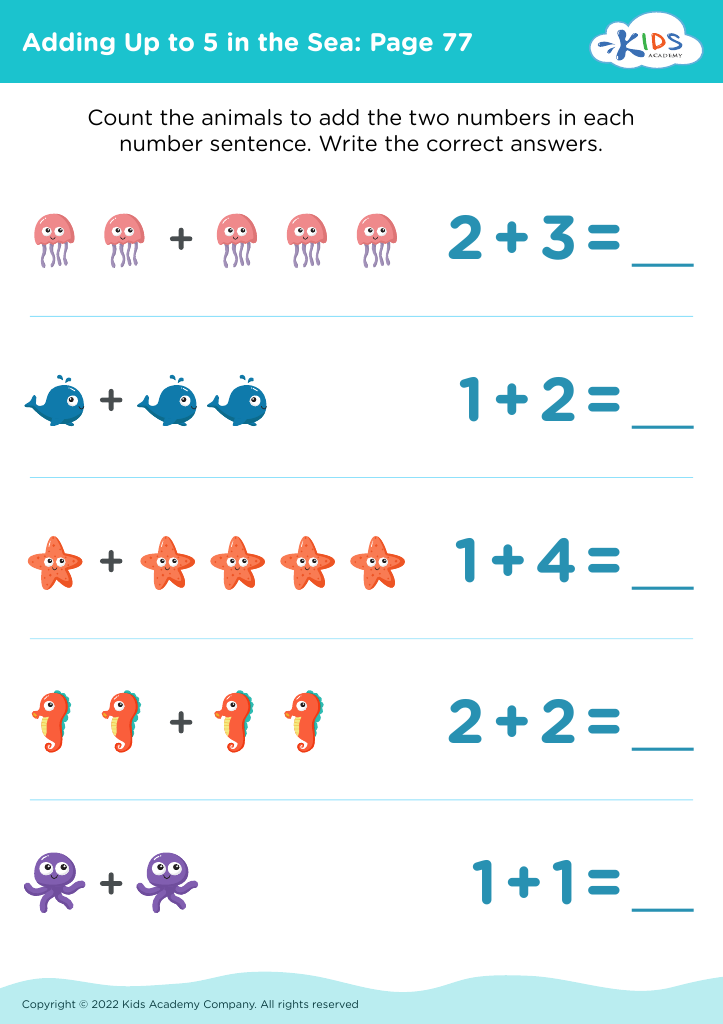
Adding Up to 5 in the Sea: Page 77
Worksheet
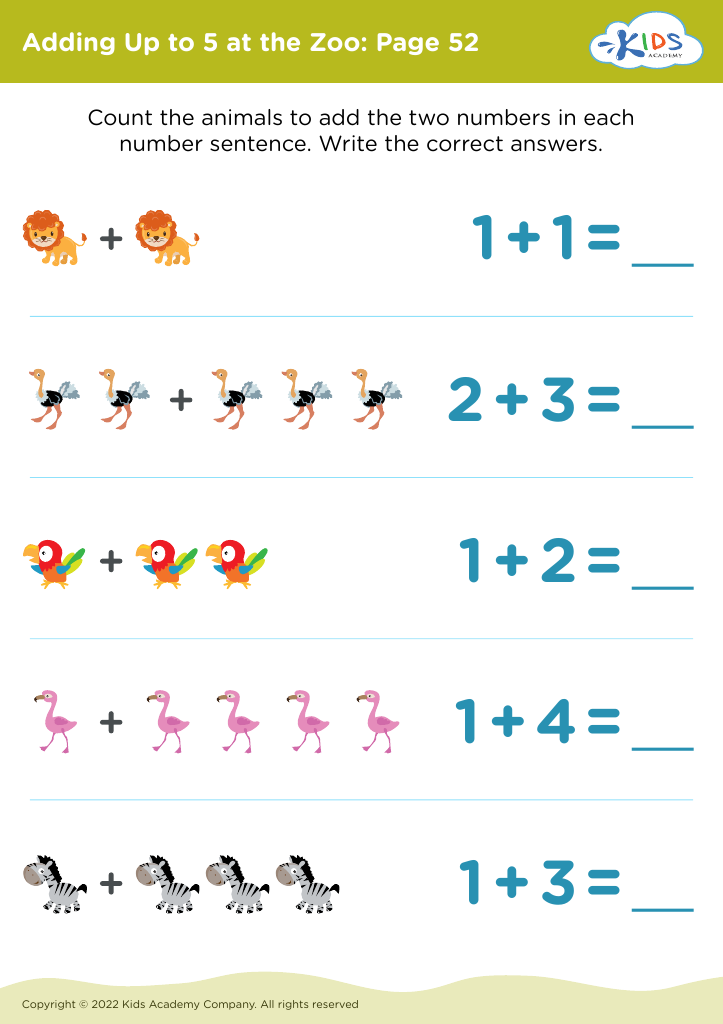
Adding Up to 5 at the Zoo: Page 52
Worksheet
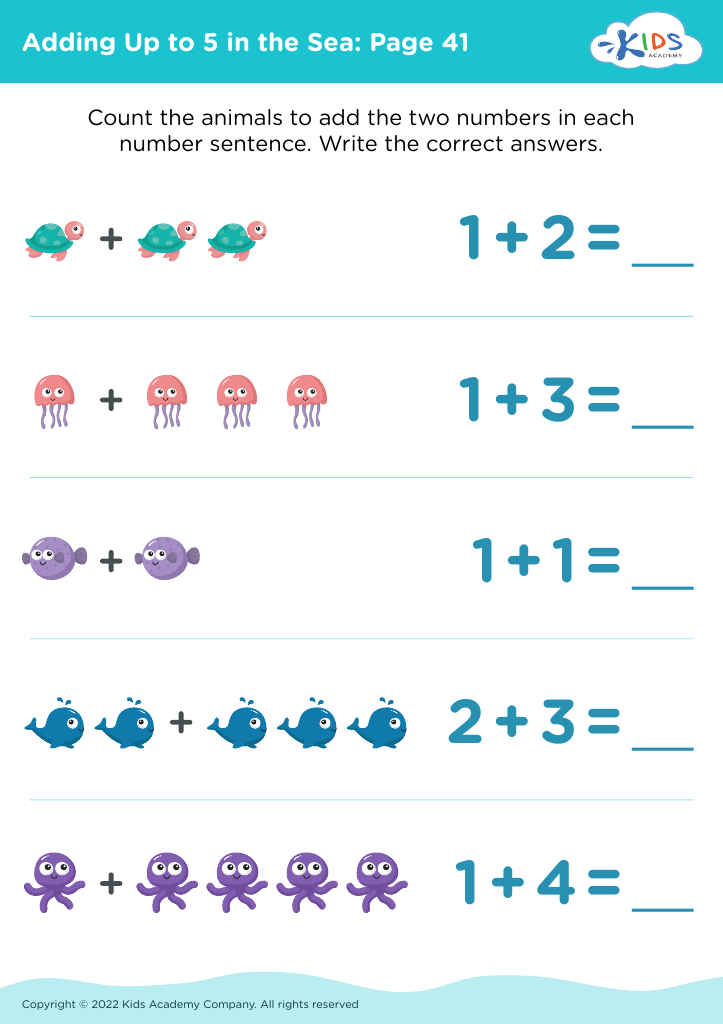
Adding Up to 5 in the Sea: Page 41
Worksheet
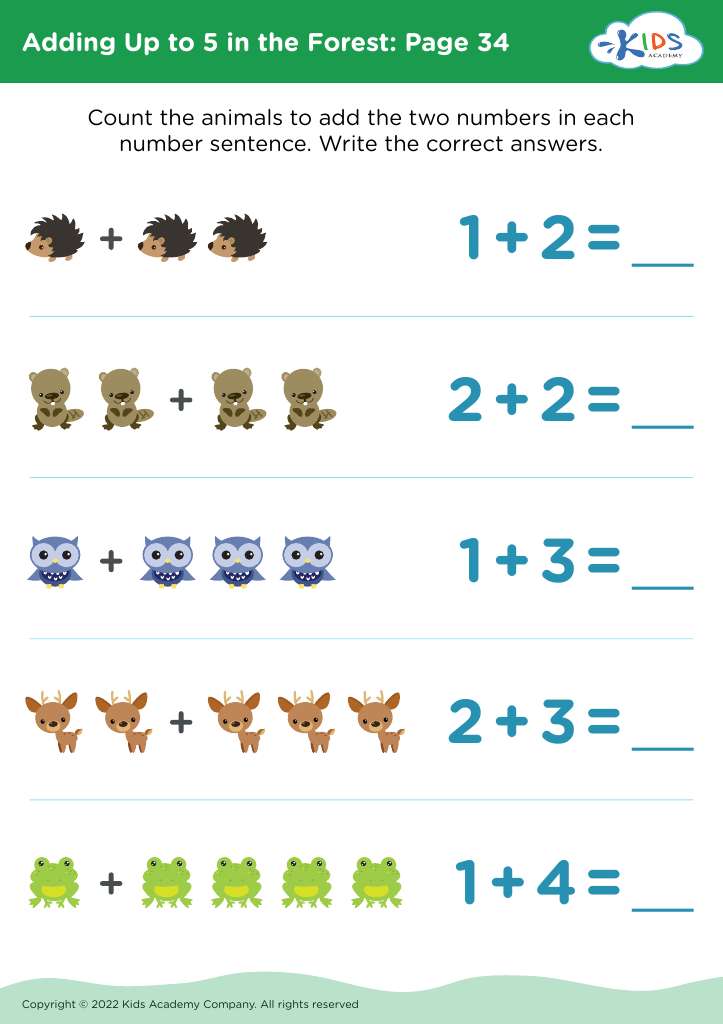
Adding Up to 5 in the Forest: Page 34
Worksheet
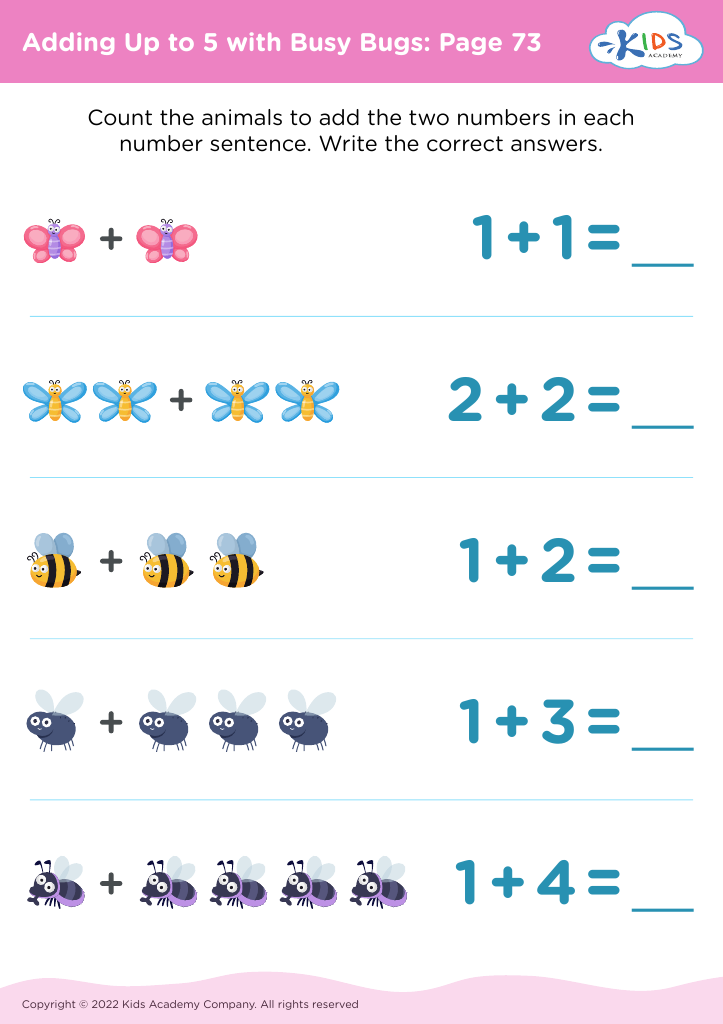
Adding Up to 5 with Busy Bugs: Page 73
Worksheet
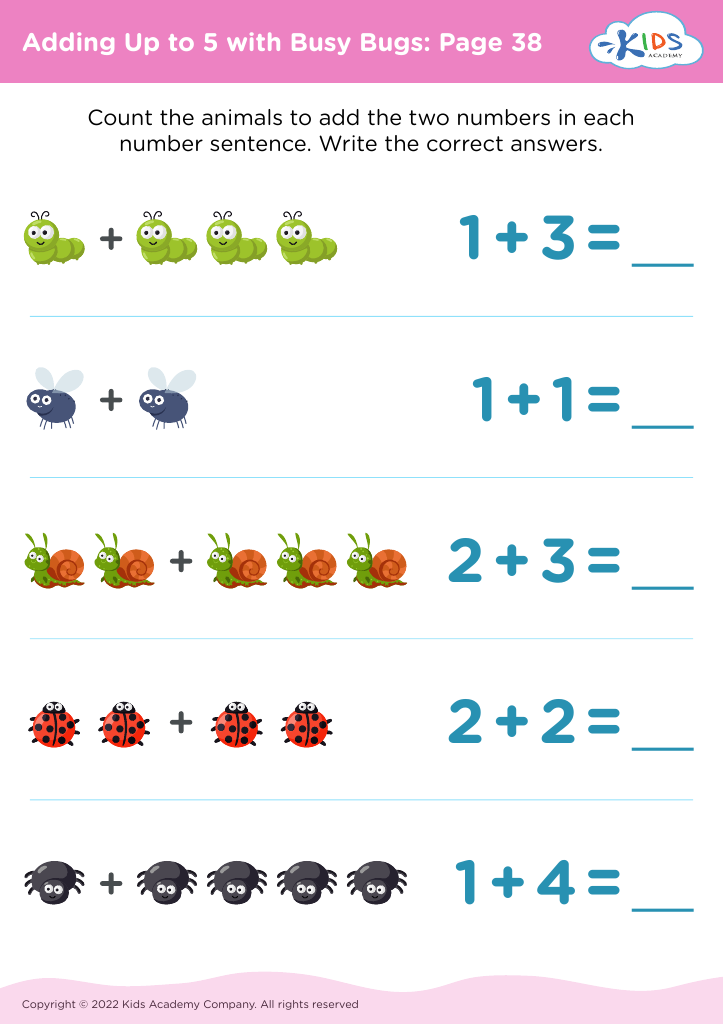
Adding Up to 5 with Busy Bugs: Page 38
Worksheet
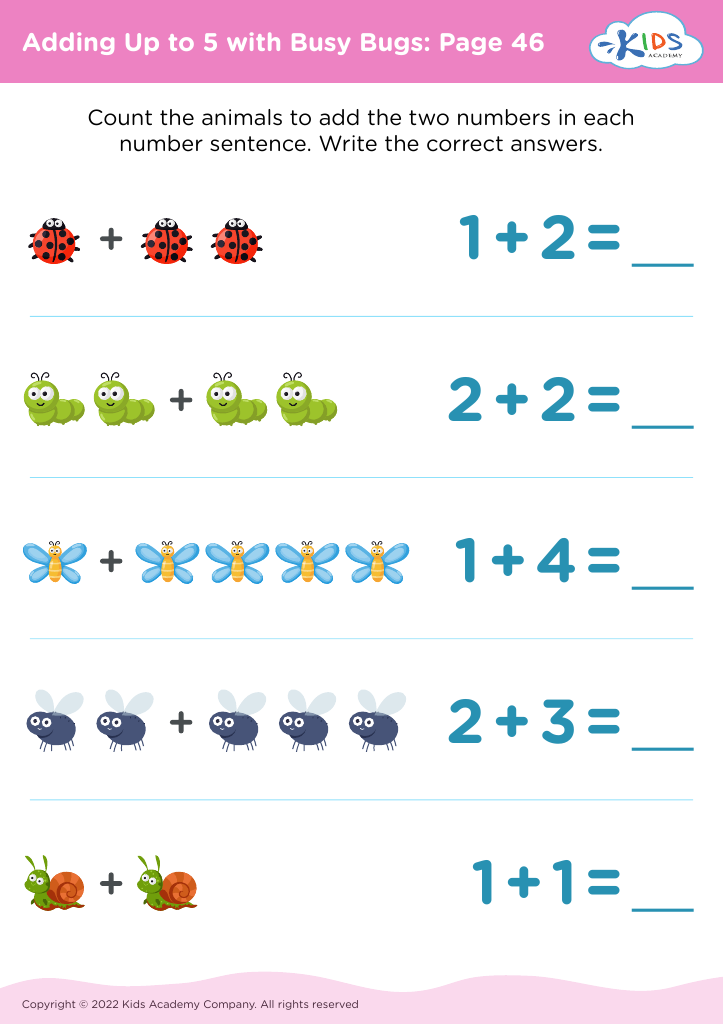
Adding Up to 5 with Busy Bugs: Page 46
Worksheet
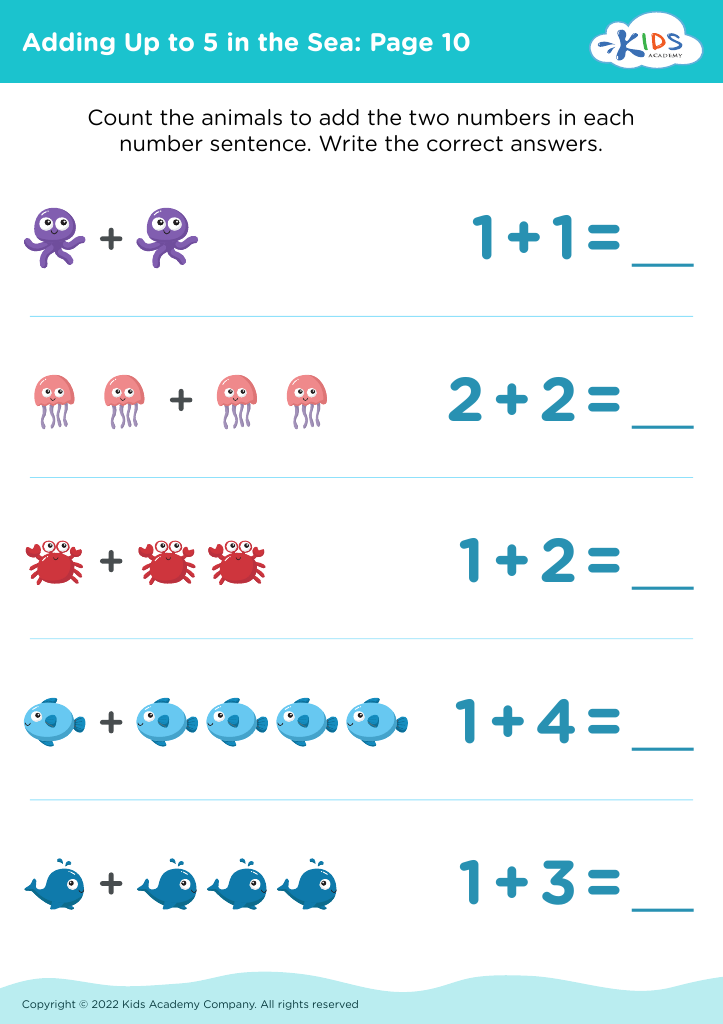
Adding Up to 5 in the Sea: Page 10
Worksheet
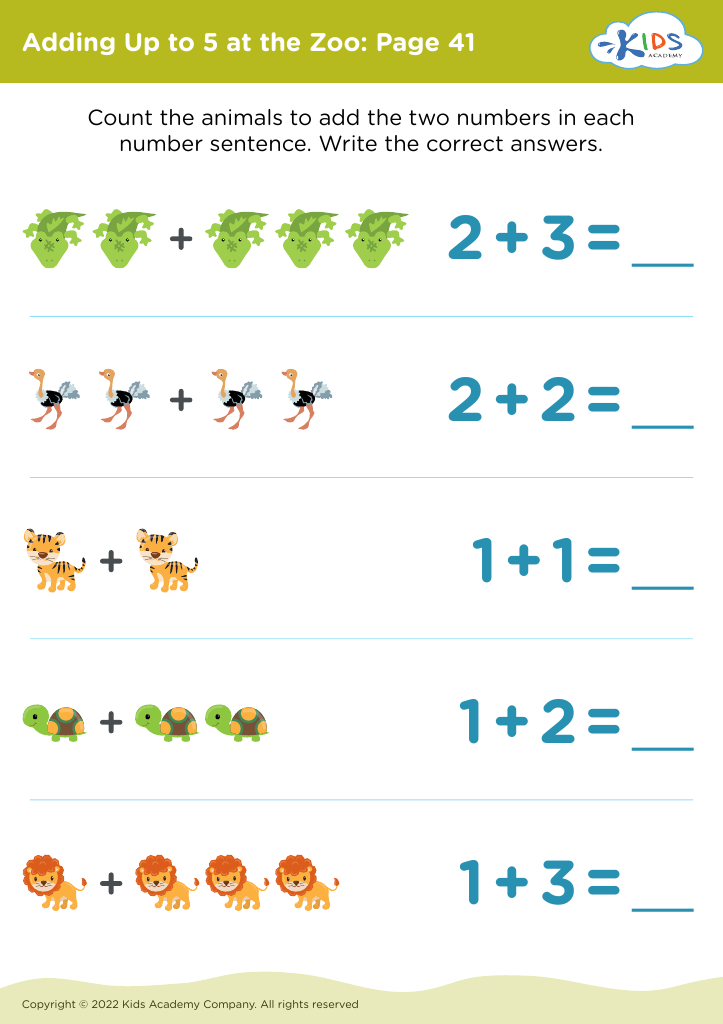
Adding Up to 5 at the Zoo: Page 41
Worksheet
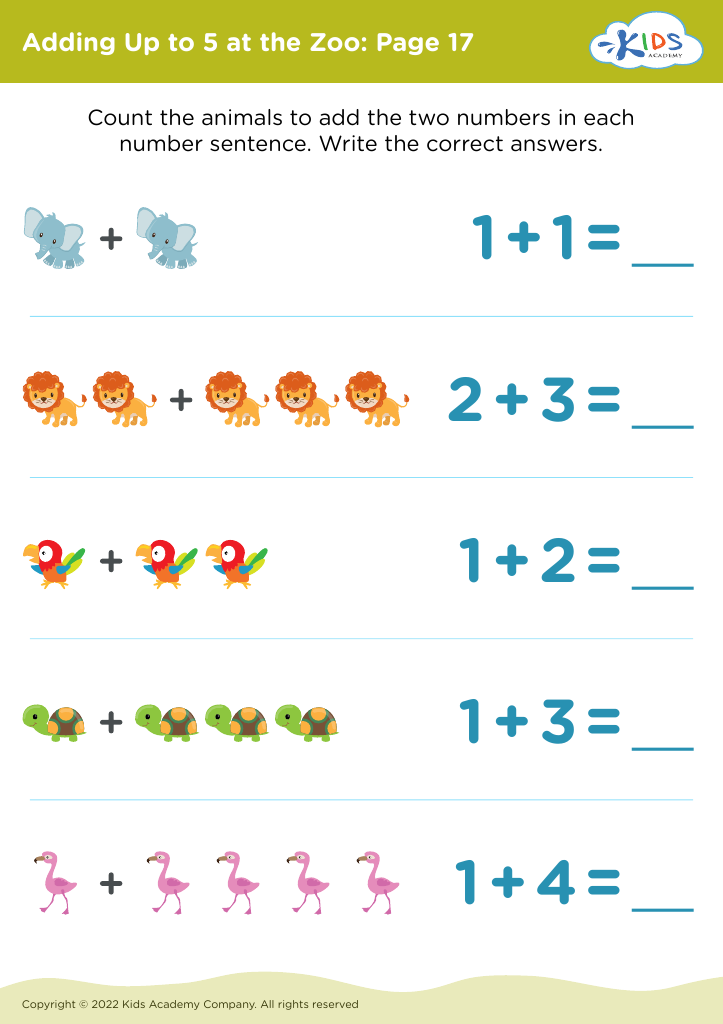
Adding Up to 5 at the Zoo: Page 17
Worksheet
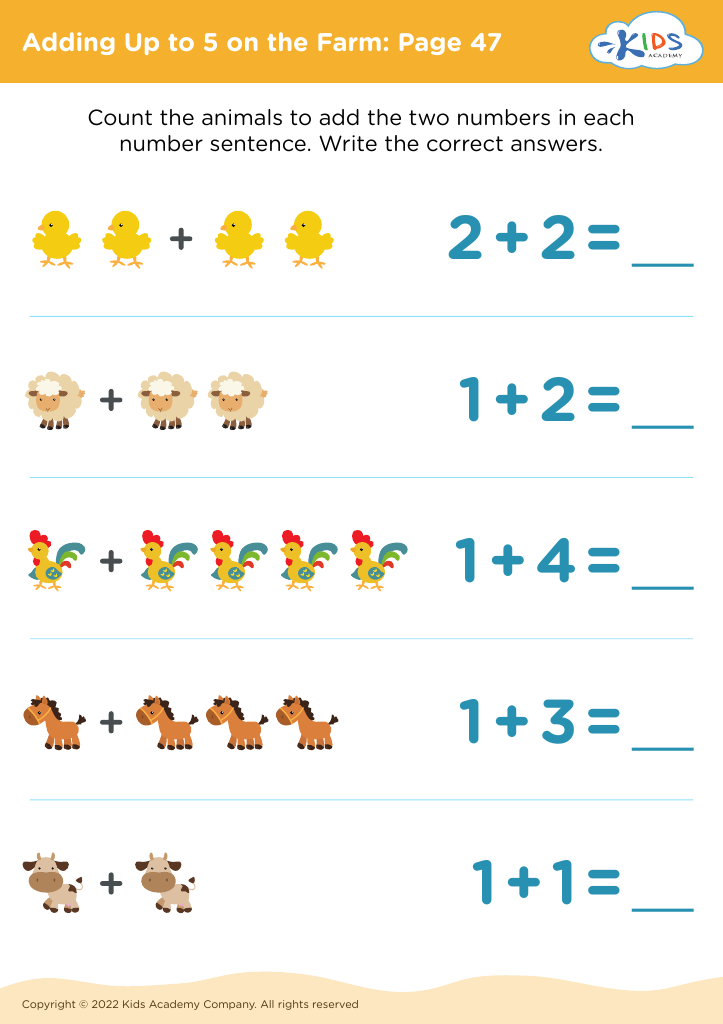
Adding Up to 5 on the Farm: Page 47
Worksheet
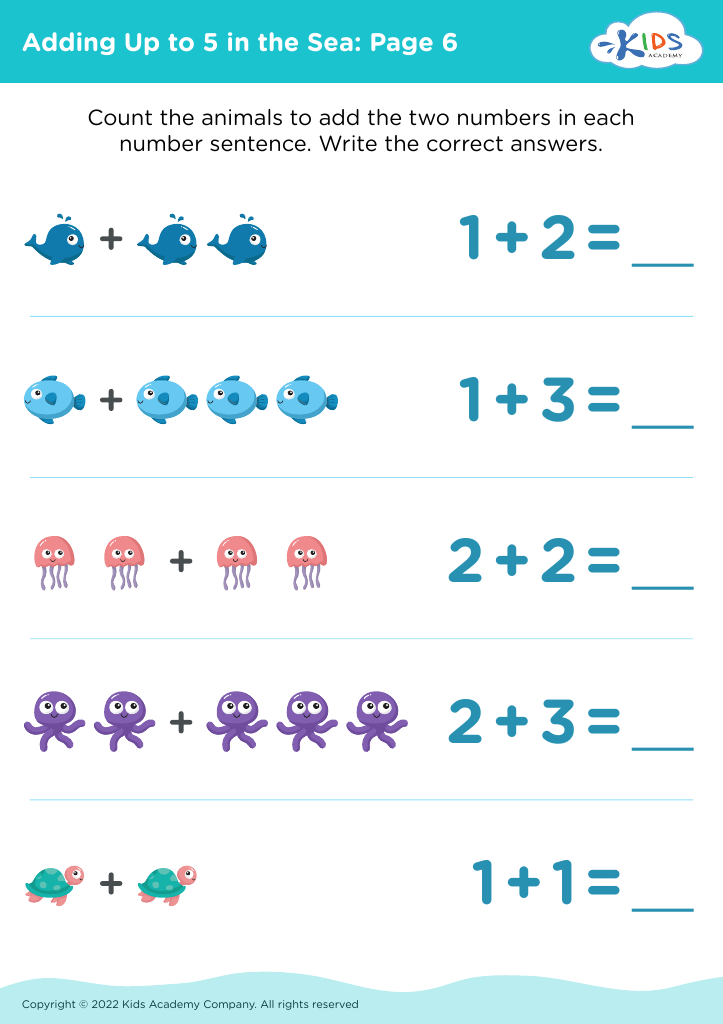
Adding Up to 5 in the Sea: Page 6

Adding Up to 5 in the Sea: Page 6

Adding Up to 5 in the Sea: Page 6
Worksheet
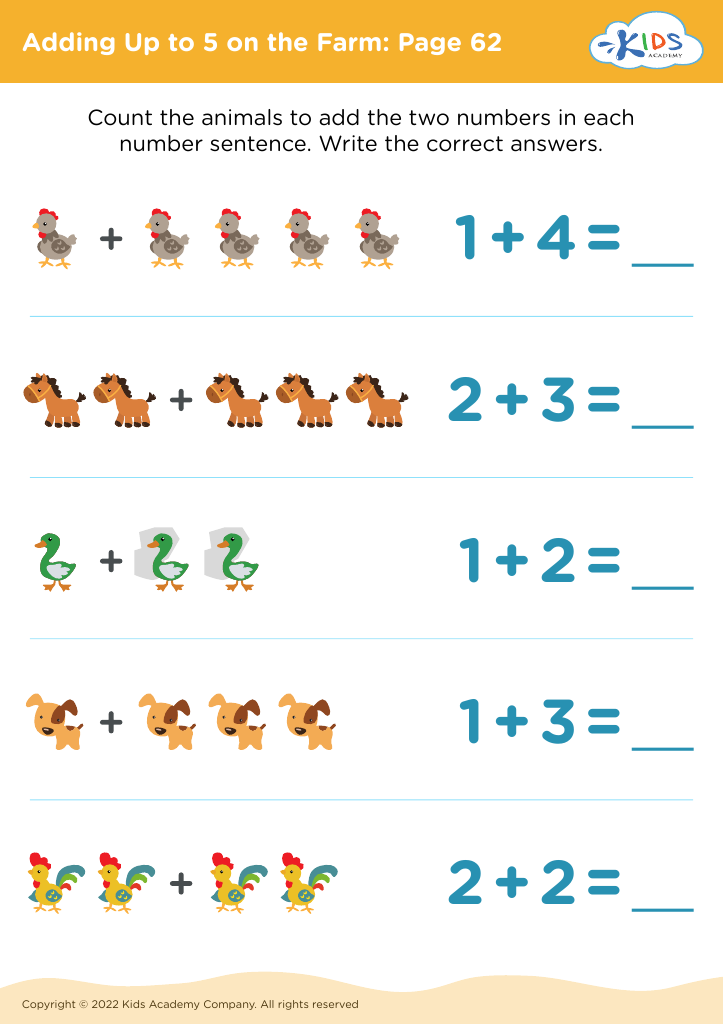
Adding Up to 5 on the Farm: Page 62
Worksheet
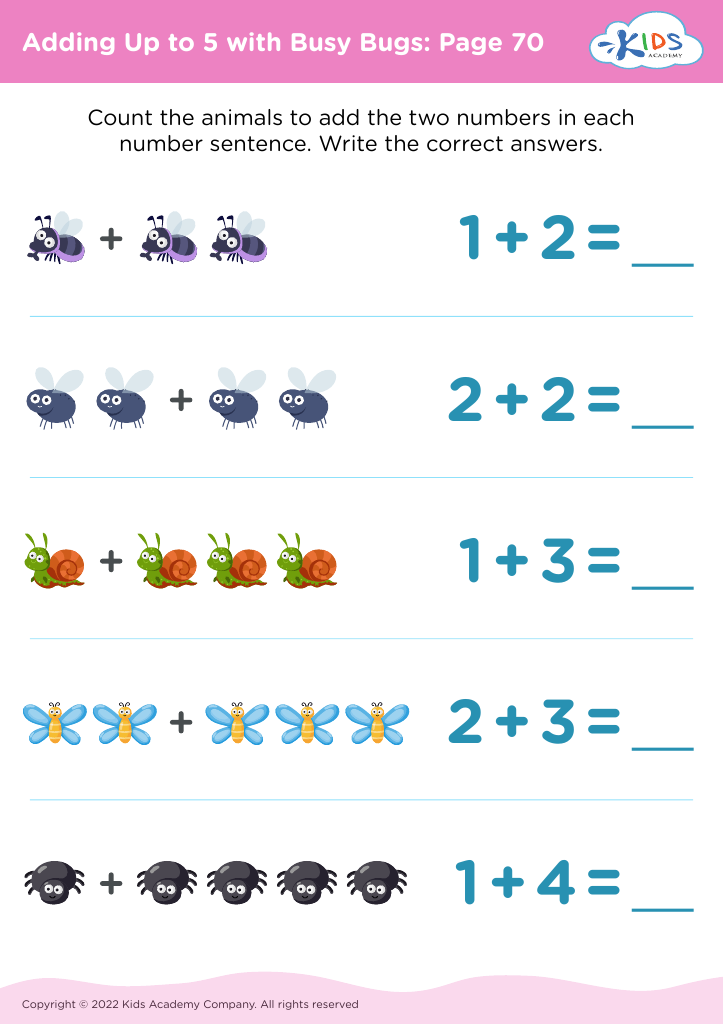
Adding Up to 5 with Busy Bugs: Page 70
Worksheet
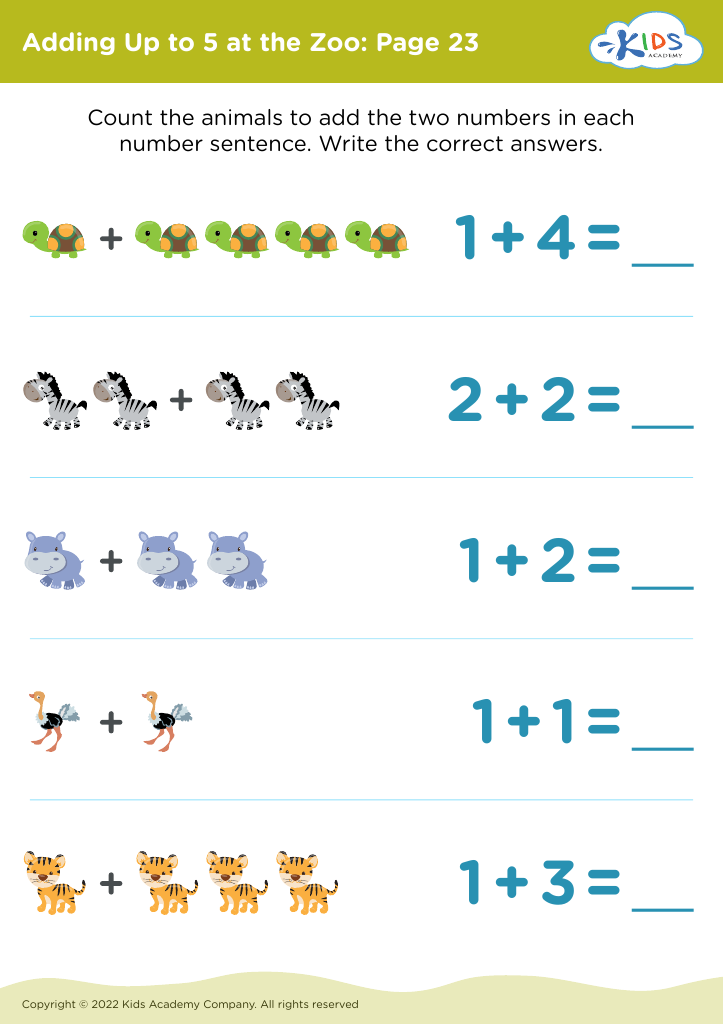
Adding Up to 5 at the Zoo: Page 23
Worksheet
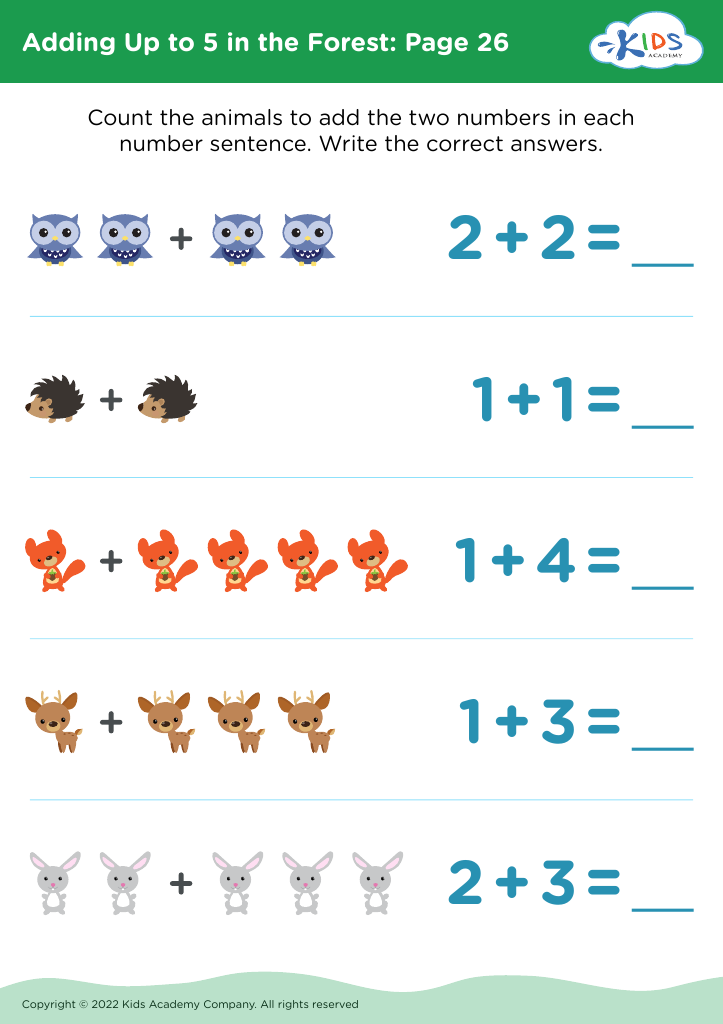
Adding Up to 5 in the Forest: Page 26
Worksheet
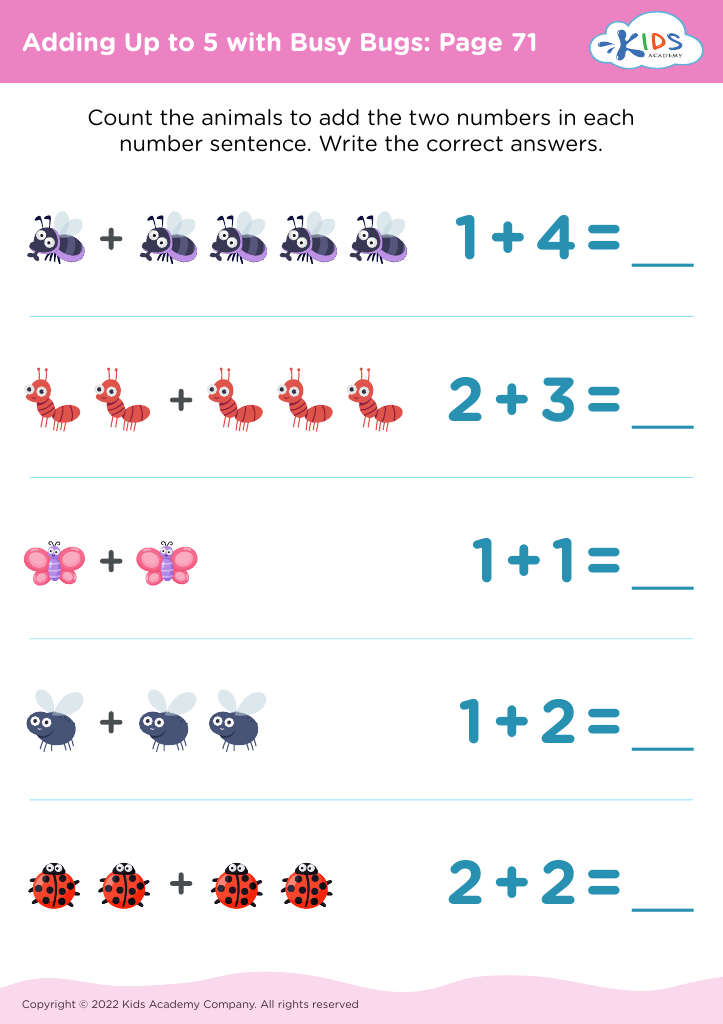
Adding Up to 5 with Busy Bugs: Page 71
Worksheet


Basic addition skills are fundamental for young children's cognitive development and academic success, making it essential for parents and teachers to prioritize these skills for children aged 4-8. At this formative stage, children are building a strong mathematical foundation that will support future learning in more advanced concepts. Understanding addition not only aids in developing critical thinking and problem-solving abilities, but it also supports daily life skills like counting money, telling time, and measuring ingredients in cooking.

Moreover, mastering basic addition fosters confidence in young learners. When children grasp these concepts early on, they are more likely to approach math with a positive attitude in the future, reducing anxiety around the subject. Parents and teachers can engage children in fun and interactive ways to practice addition, such as through games, storytelling, or hands-on activities. This makes learning enjoyable and memorable.

Finally, basic addition is often assessed in early educational settings. Children who struggle with these foundational skills may face challenges in their academic journey, affecting their overall learning experiences. By investing time and resources into developing addition skills, parents and teachers equip children with essential tools for lifelong learning and success.