Learn new vocabulary Addition Worksheets for Ages 4-8
4 filtered results
-
From - To
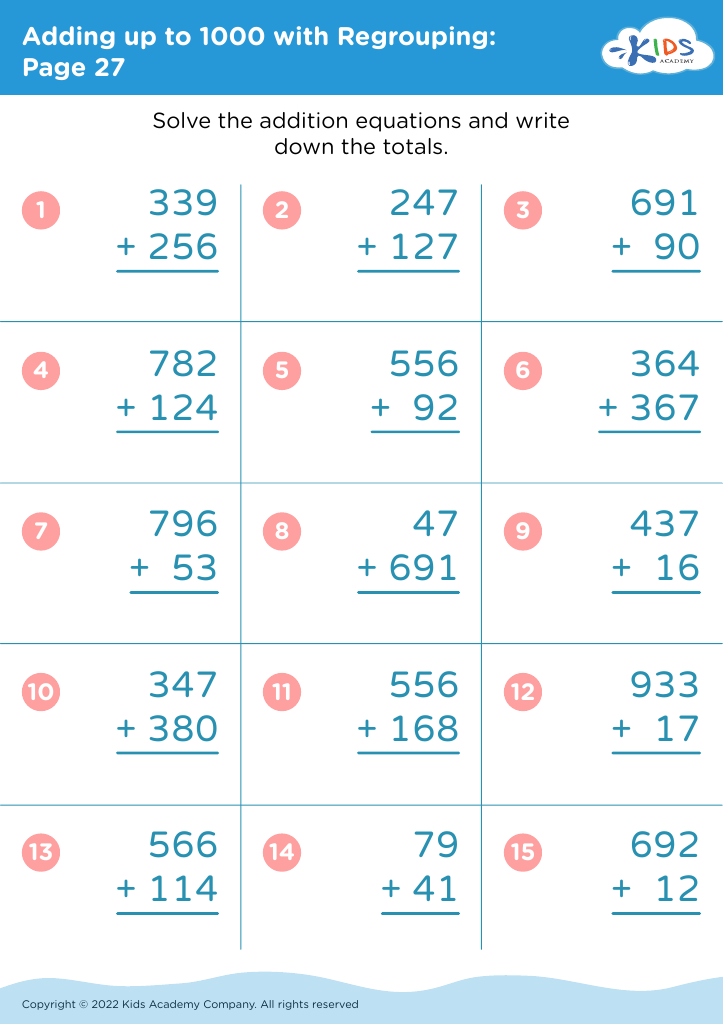
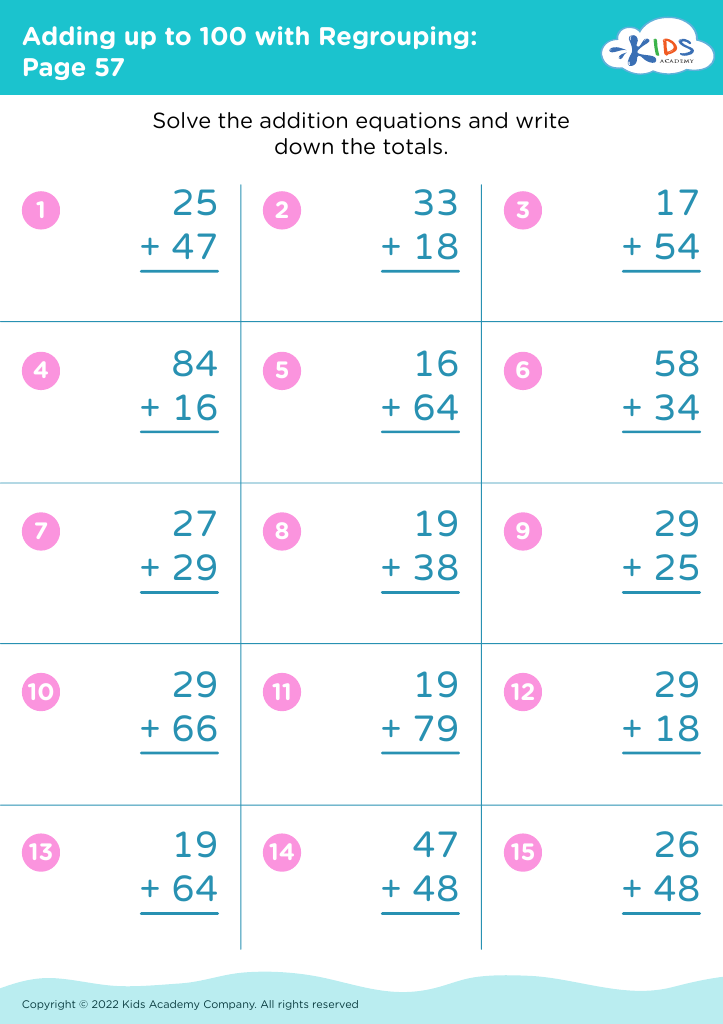
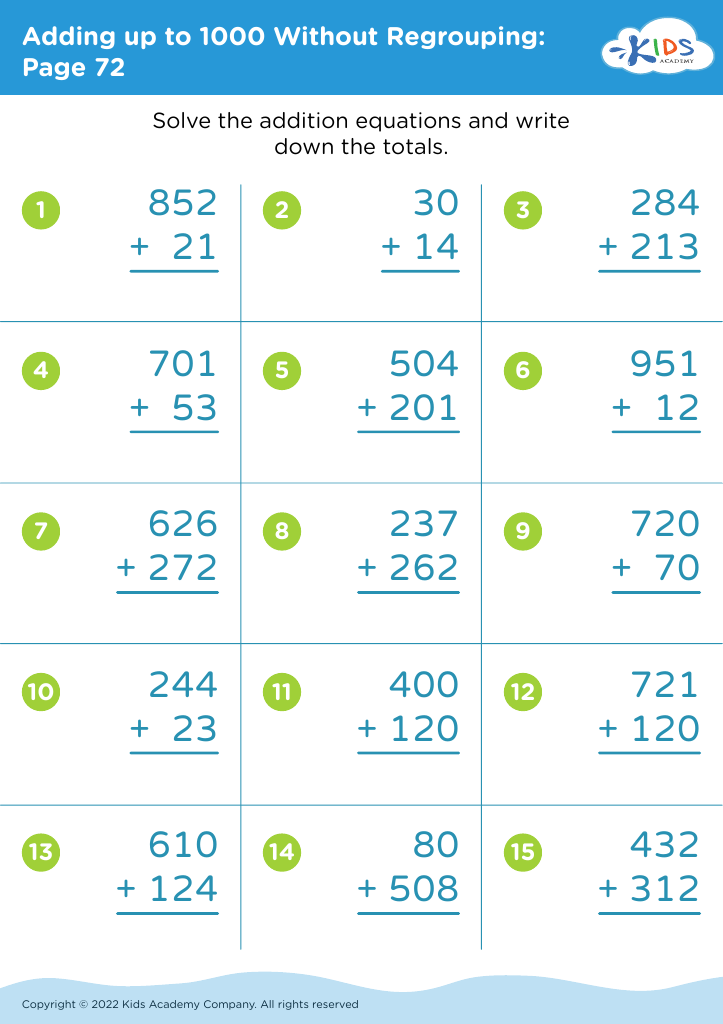
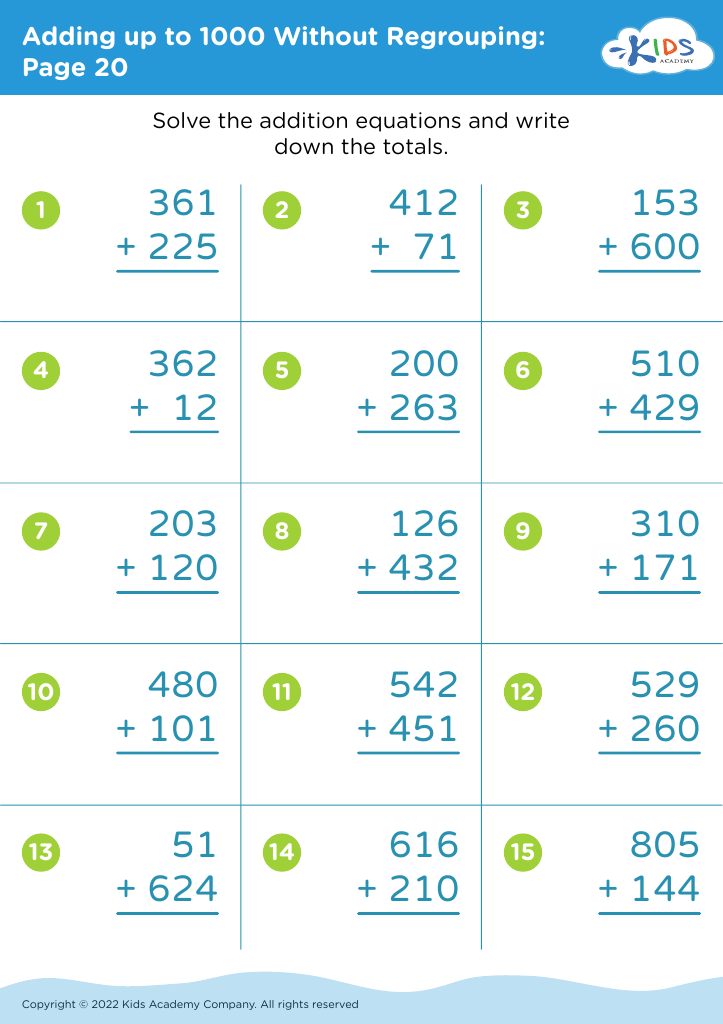
Enhance your child's learning experience with our "Learn New Vocabulary Addition Worksheets" designed specifically for ages 4-8! These engaging and interactive worksheets blend essential math skills with vocabulary development, helping young learners expand their word bank while mastering addition concepts. Each worksheet is tailored to be age-appropriate, ensuring children grasp both basic math and language skills in a fun and enjoyable way. With colorful illustrations and entertaining exercises, kids will love practicing addition and exploring new vocabulary. Get started today to foster a love for learning and set a strong foundation in both math and language for your little ones!








Parents and teachers should prioritize teaching new vocabulary and concepts like addition to children aged 4-8 because of the critical role language and mathematics play in a child's development. A robust vocabulary lays the foundation for effective communication, reading comprehension, and academic success. Learning new words helps young learners express their thoughts, needs, and ideas more articulately, thereby boosting their confidence and social interactions.
Furthermore, early mathematics skills, such as addition, are essential as they establish crucial mathematical understanding that children will build upon throughout their education. Integrating vocabulary with counting and basic addition introduces children to mathematical language, fostering their ability to articulate and understand math concepts. It also enhances cognitive skills like problem-solving and critical thinking.
Additionally, engaging children in vocabulary and math activities can make learning fun and interactive. This engagement encourages a love for learning, promotes curiosity, and cultivates a growth mindset. By fostering skills in these areas early on, parents and teachers can help children develop a strong educational foundation, setting them on a path for lifelong learning and academic achievement. Investing in vocabulary and addition skills supports a well-rounded education, benefiting the child now and in the future.








