Math problem-solving Addition Worksheets for Ages 4-8
11 filtered results
-
From - To
Introduce your child to the fun world of math problem-solving with our engaging addition worksheets tailored for ages 4-8. At Kids Academy, we offer a variety of printable worksheets designed to enhance learning skills through interactive and enjoyable exercises. These activities help young learners grasp fundamental concepts of addition while fostering critical thinking and analytical abilities. Perfect for both classroom and home use, our worksheets provide a solid foundation in math, ensuring that children develop the confidence and skills they need to succeed. Start your child's math adventure today with Kids Academy's carefully crafted addition worksheets.
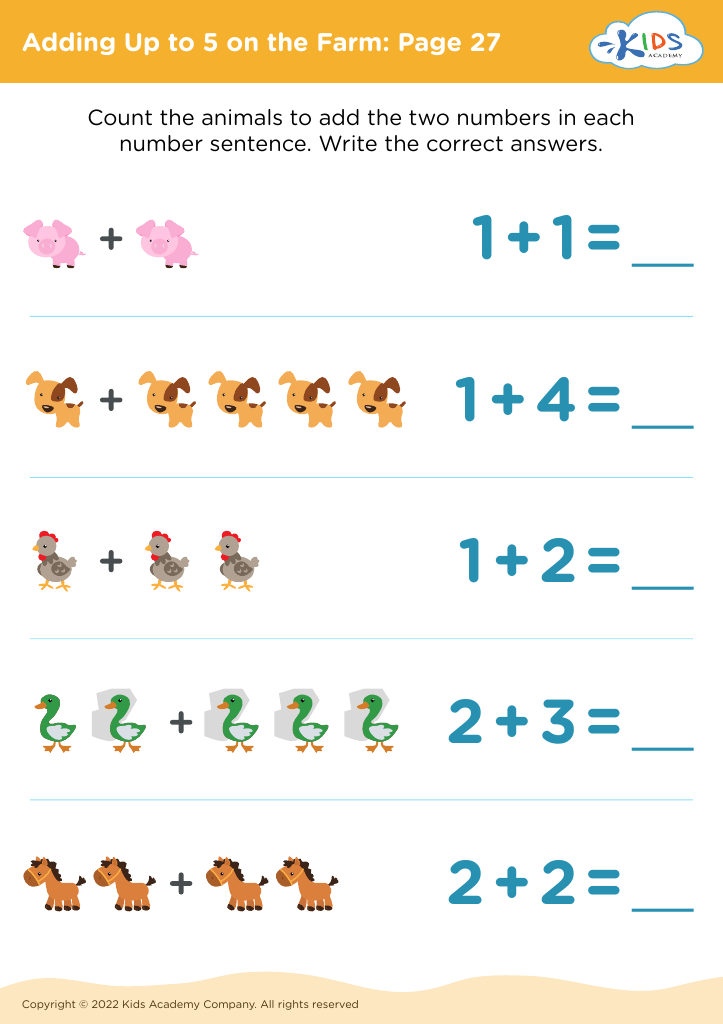
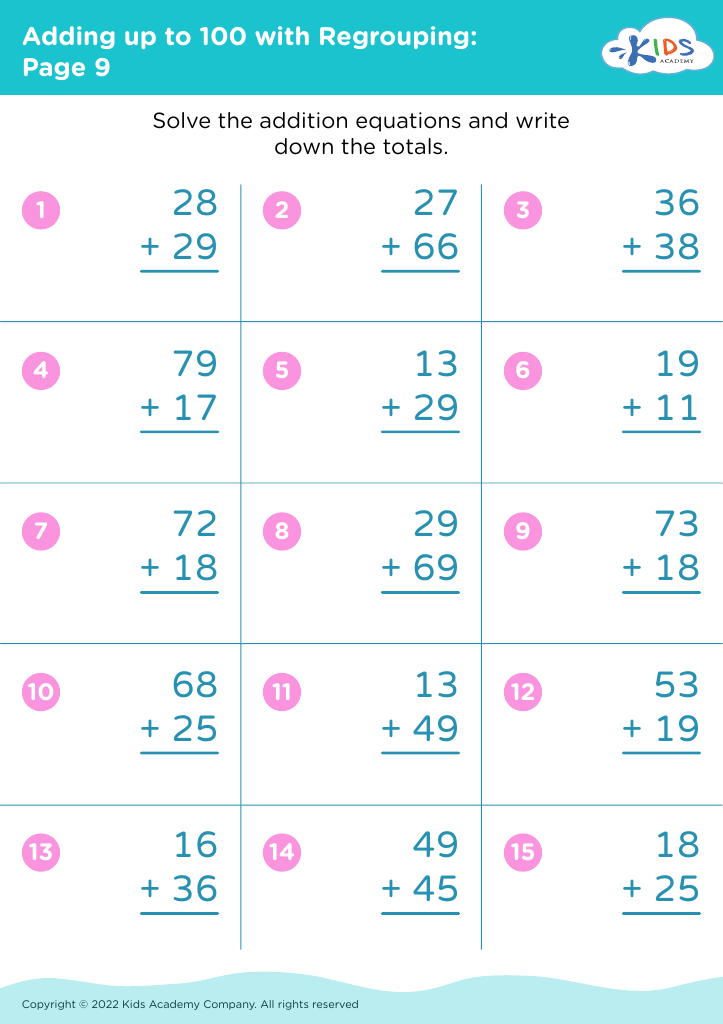
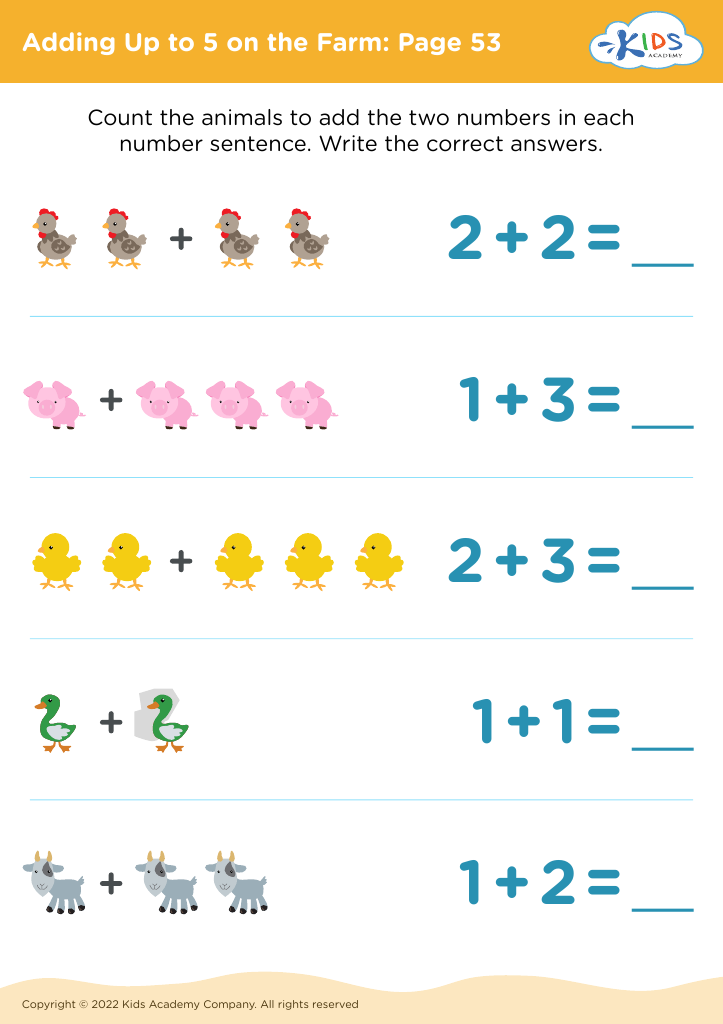
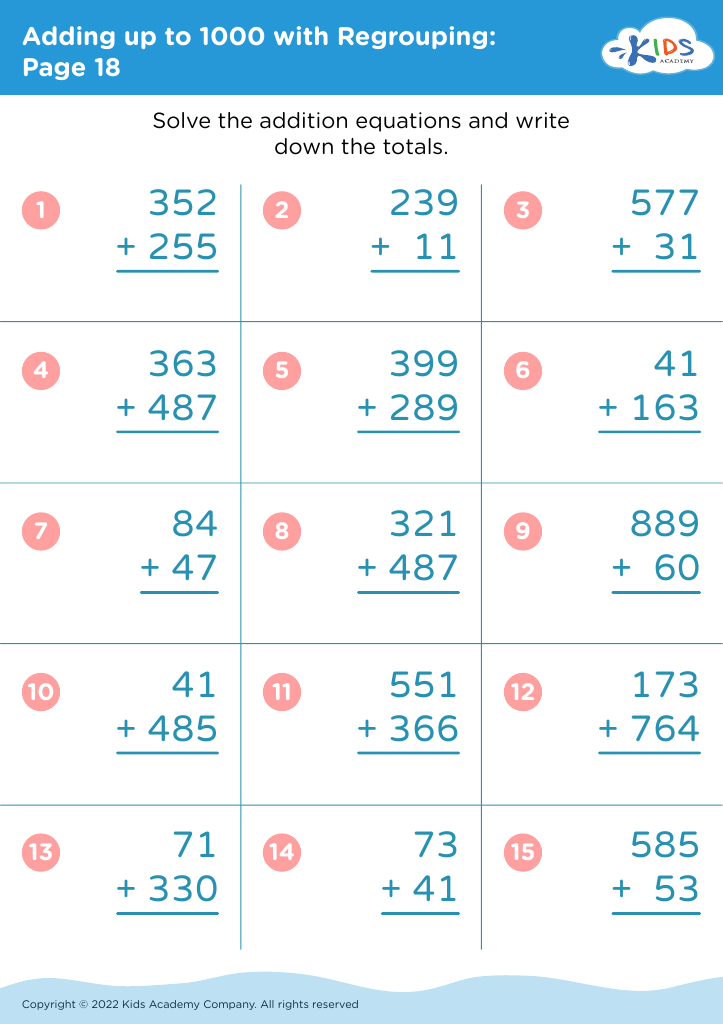
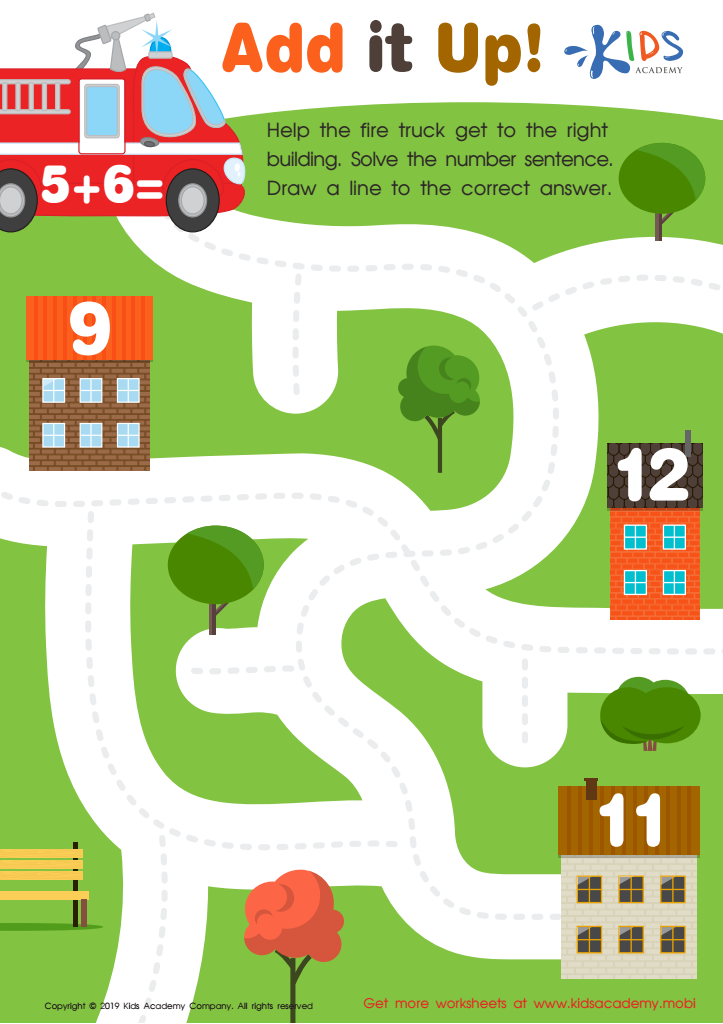
Add it Up Worksheet
 Assign to My Students
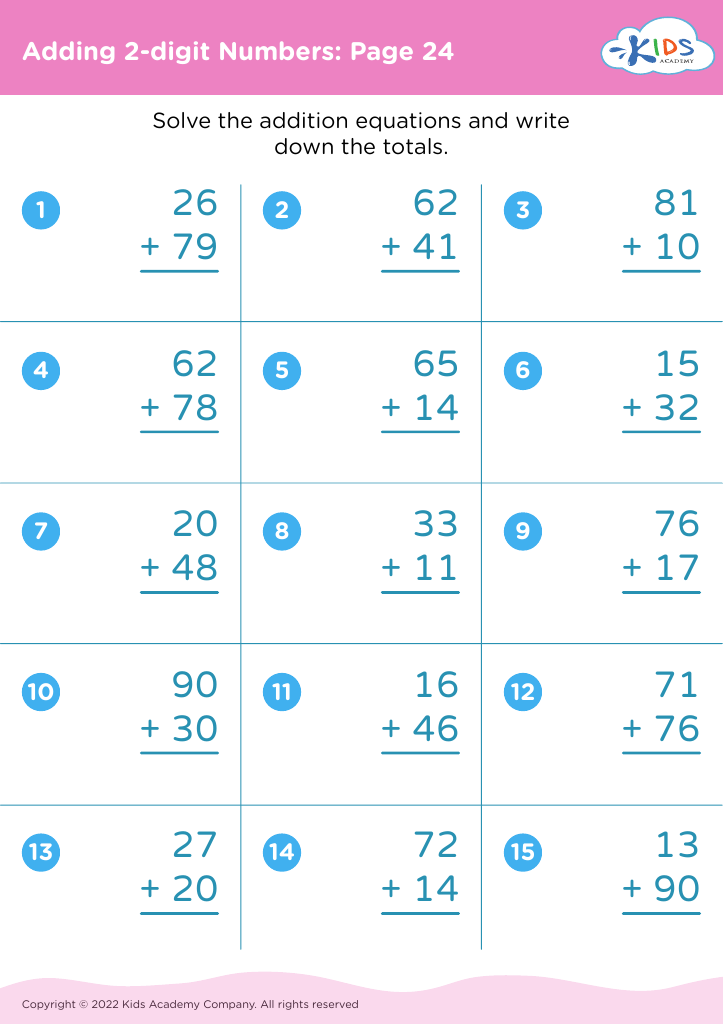
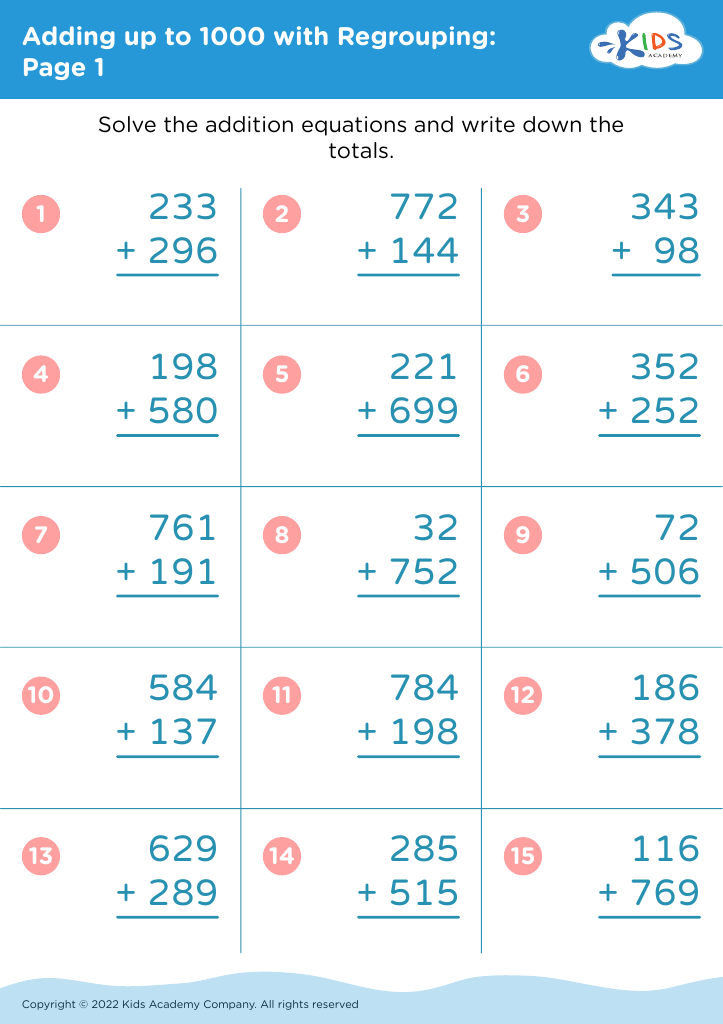
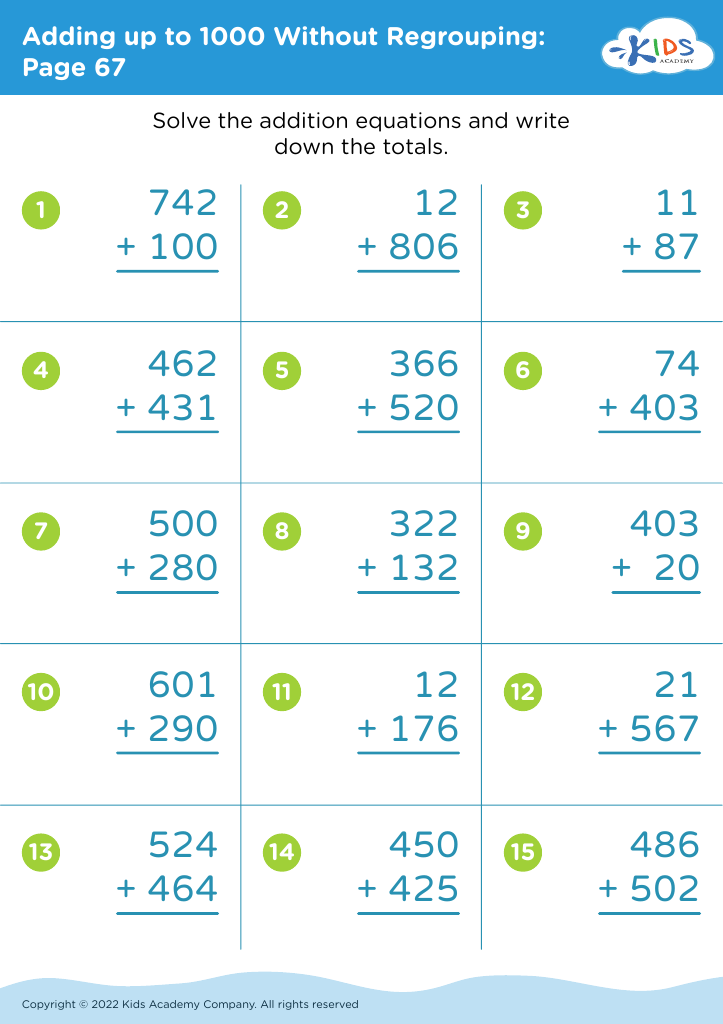
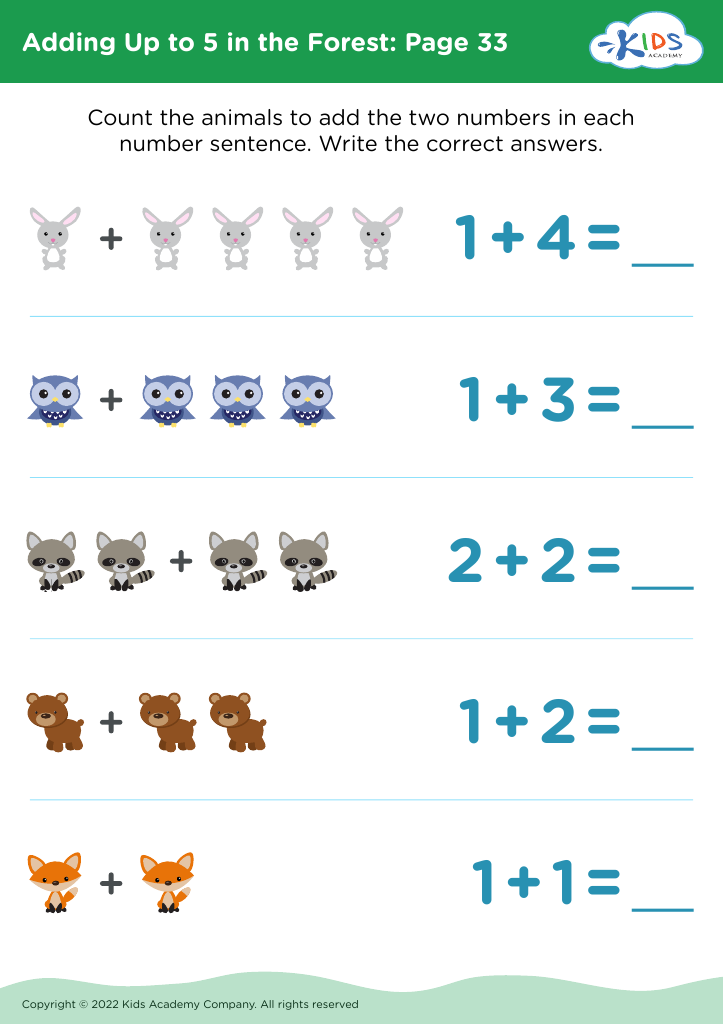
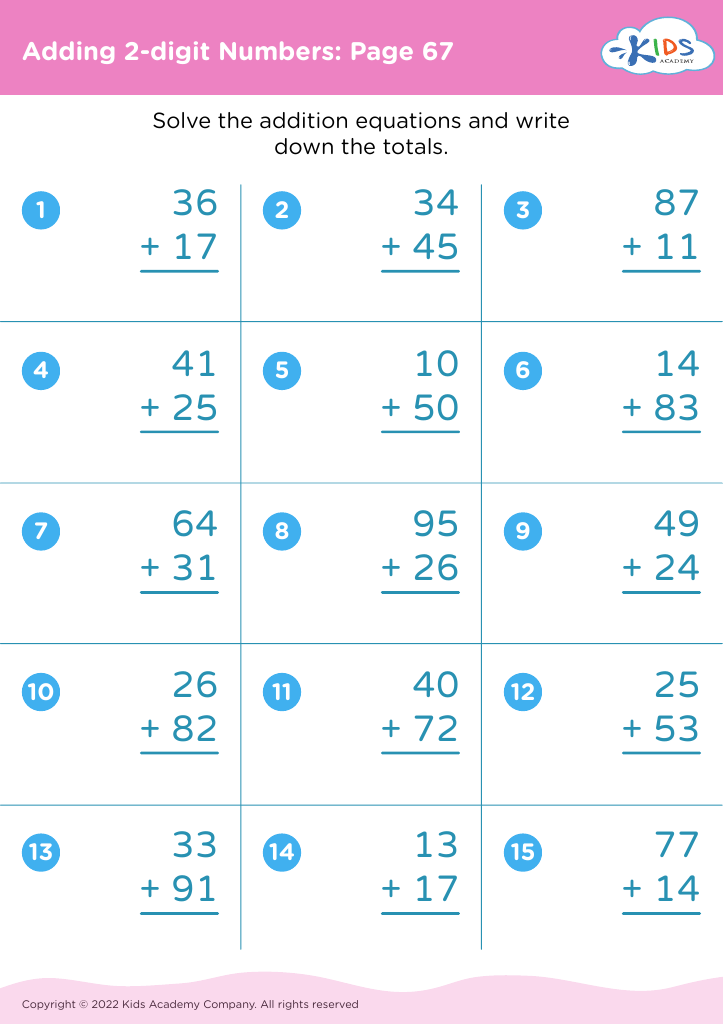
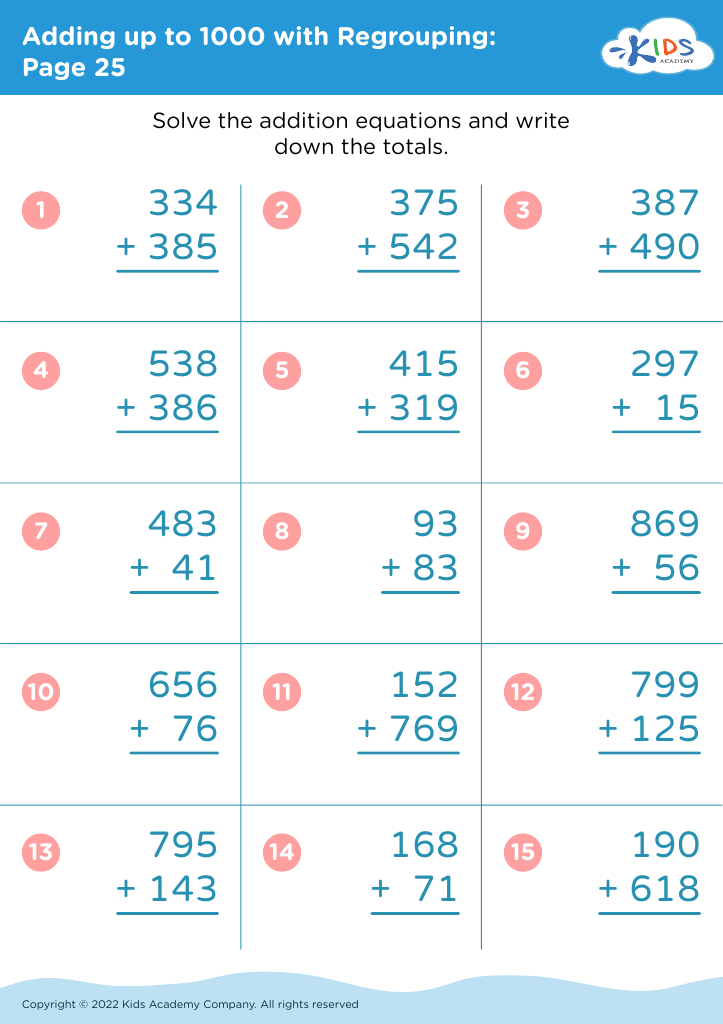








Parents and teachers should care deeply about teaching math problem-solving, particularly addition, to children aged 4-8 because it forms the cornerstone of numeracy skills essential for their academic and life success. Early mastery of addition not only prepares children for more complex math concepts but also fosters critical thinking and problem-solving abilities. At this developmental stage, children's brains are exceptionally receptive to new information, making it a prime period for laying a strong mathematical foundation.
Firstly, addition is one of the most basic yet fundamental math skills. Understanding and being able to perform addition helps children with everyday tasks, such as counting objects, managing time, and understanding basic economics like money handling. This practical knowledge enhances their confidence and independence.
Secondly, problem-solving involves identifying, analyzing, and finding solutions, skills valuable beyond the math classroom. Encouraging children to explore multiple ways to solve addition problems fosters creativity and adaptability.
Moreover, early engagement with math contributes to a positive attitude towards the subject, reducing anxiety and building a lifelong interest and competence in STEM fields. Engaged parents and proactive educators can ensure that learning addition is fun, relevant, and integral, laying a robust groundwork for future academic and real-world challenges.








