Introducing our "Simplifying Fractions Addition Worksheets for Ages 4-8," designed to make learning foundational fraction concepts fun and engaging for young learners. These age-appropriate worksheets use colorful visuals and easy-to-follow instructions to guide children through the basics of adding fractions. Perfect for home or classroom use, they help kids build confidence and enhance their math skills through practice and repetition. Educators and parents will love how these worksheets turn complex ideas into simple, bite-sized lessons that are approachable and enjoyable. Your child will master fraction addition in no time with these specially crafted educational tools!
Check out this FREE Trial Lesson on Addition for age 4-8!

Z

Favorites
With answer key
Interactive
  • 4-8
  • Simplifying Fractions
  • Addition
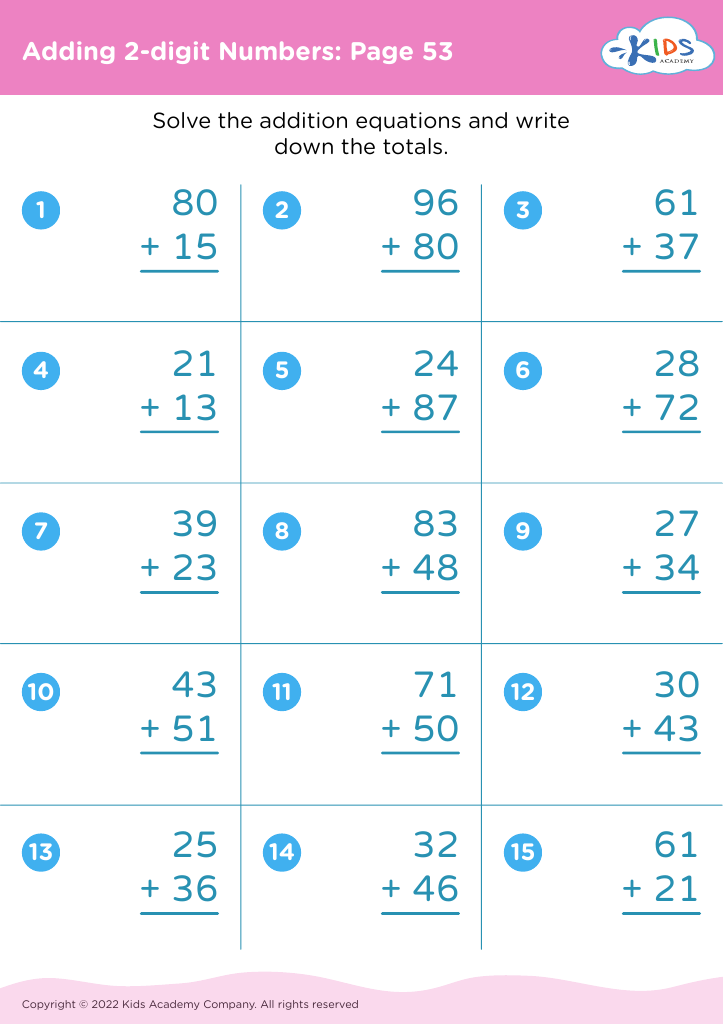
Adding 2-digit Numbers: Page 53

Adding 2-digit Numbers: Page 53

Adding 2-digit Numbers: Page 53
Worksheet
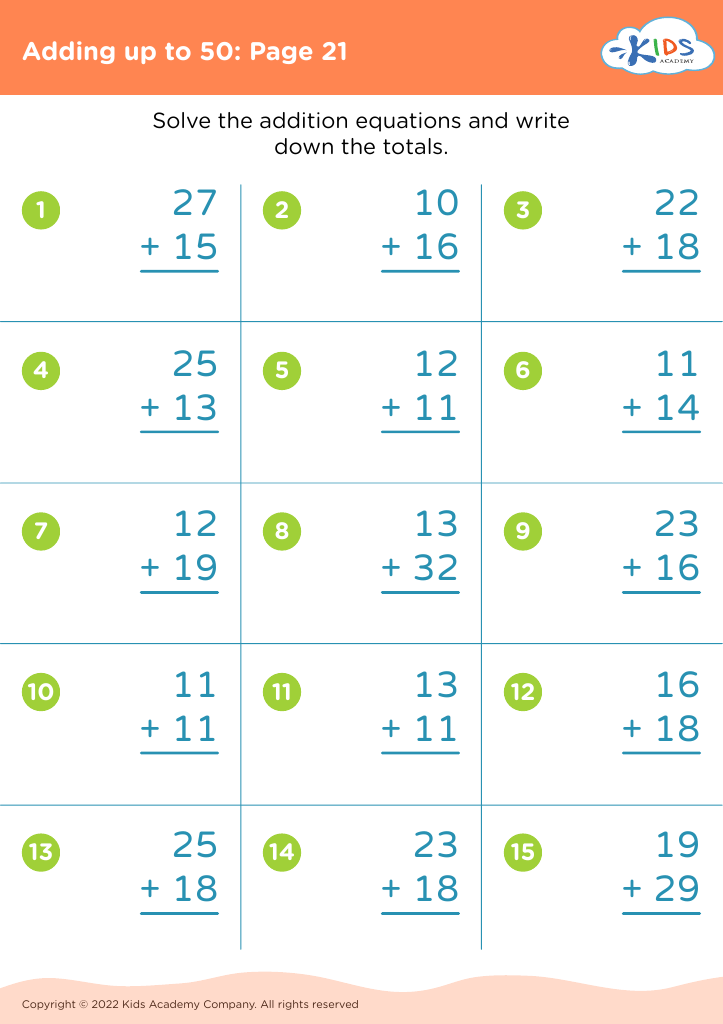
Adding up to 50: Page 21

Adding up to 50: Page 21

Adding up to 50: Page 21
Worksheet
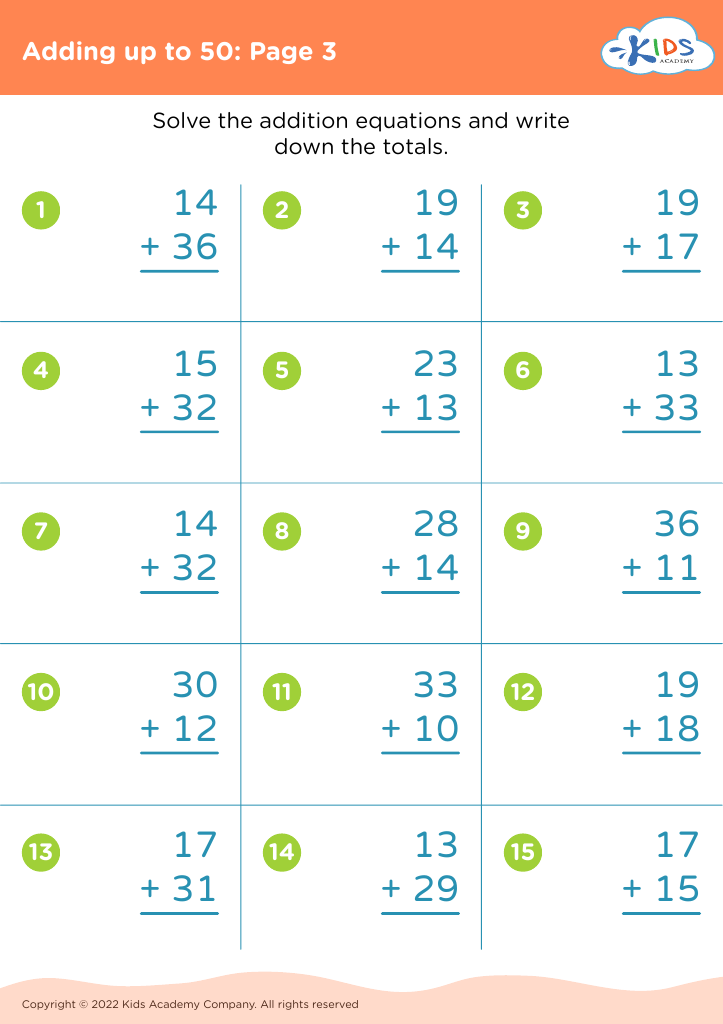
Adding up to 50: Page 3

Adding up to 50: Page 3

Adding up to 50: Page 3
Worksheet
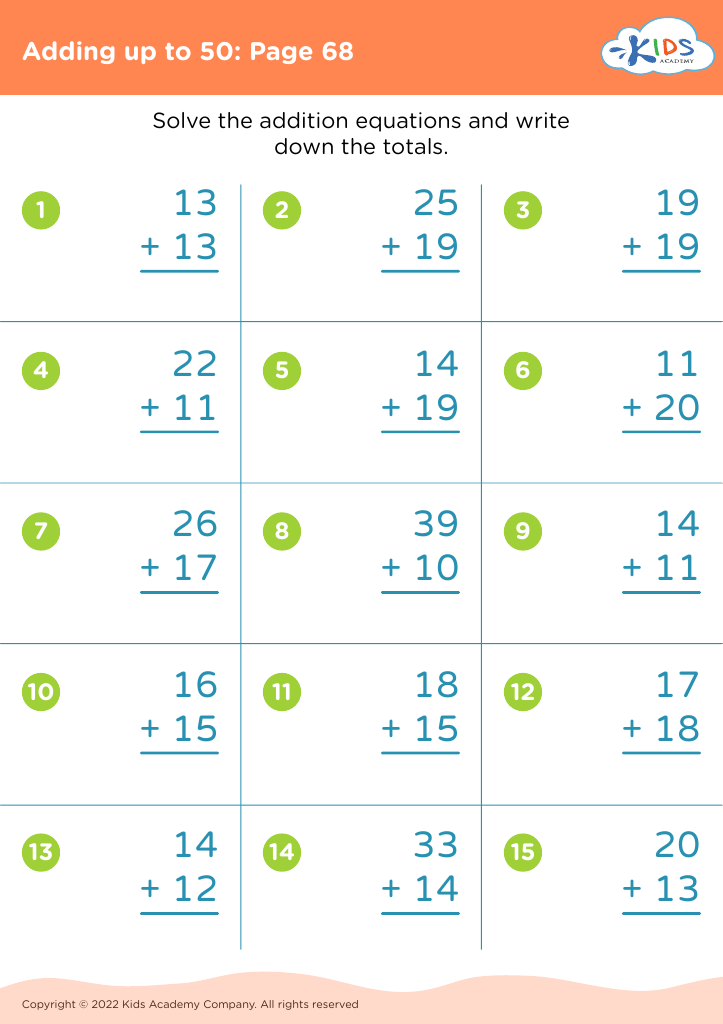
Adding up to 50: Page 68

Adding up to 50: Page 68

Adding up to 50: Page 68
Worksheet
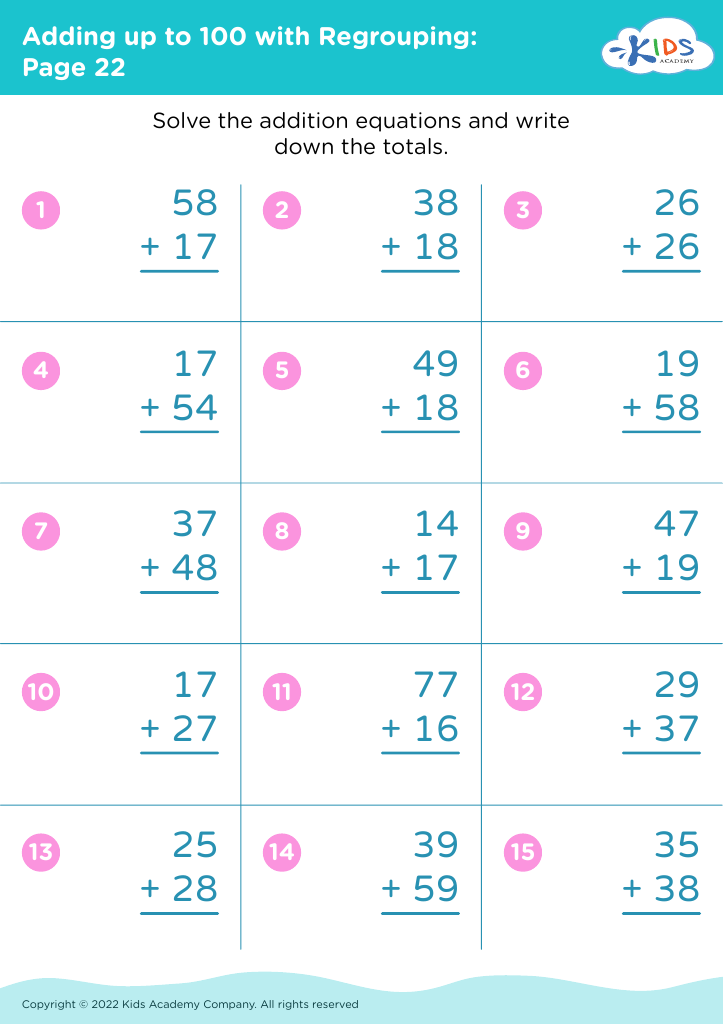
Adding up to 100 with Regrouping: Page 22
Worksheet
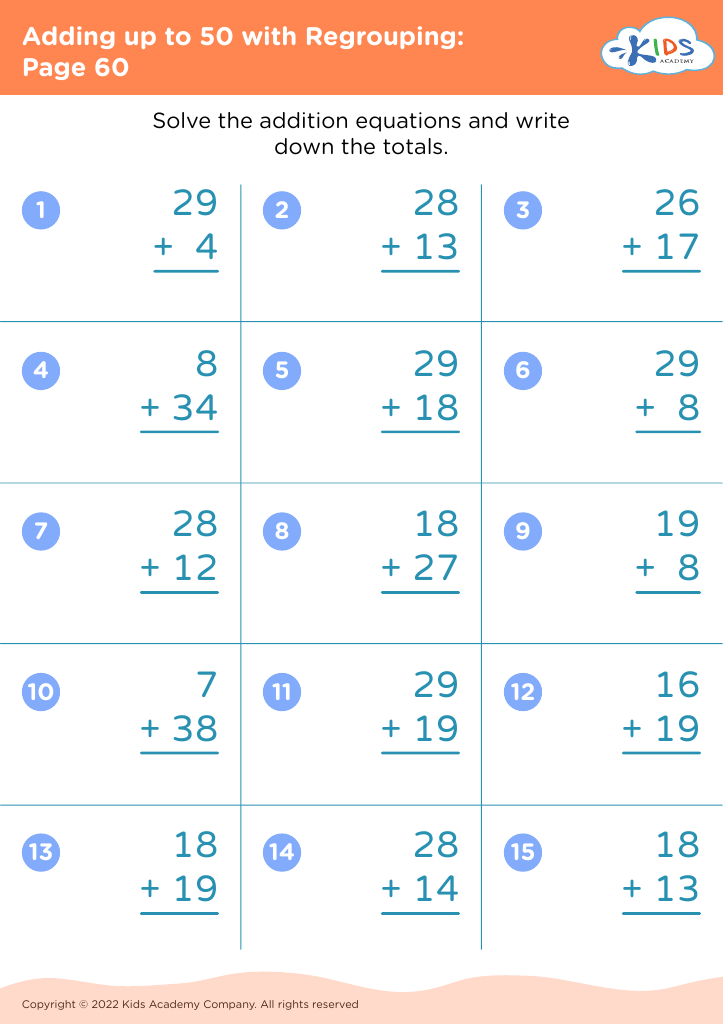
Adding up to 50 with Regrouping: Page 60
Worksheet
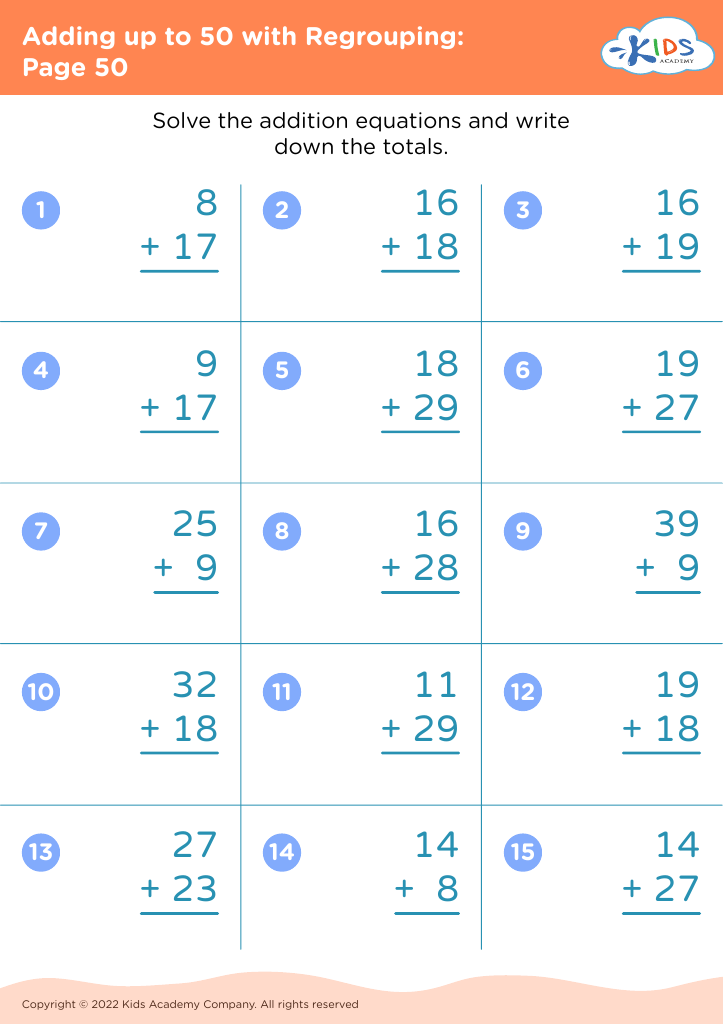
Adding up to 50 with Regrouping: Page 50
Worksheet
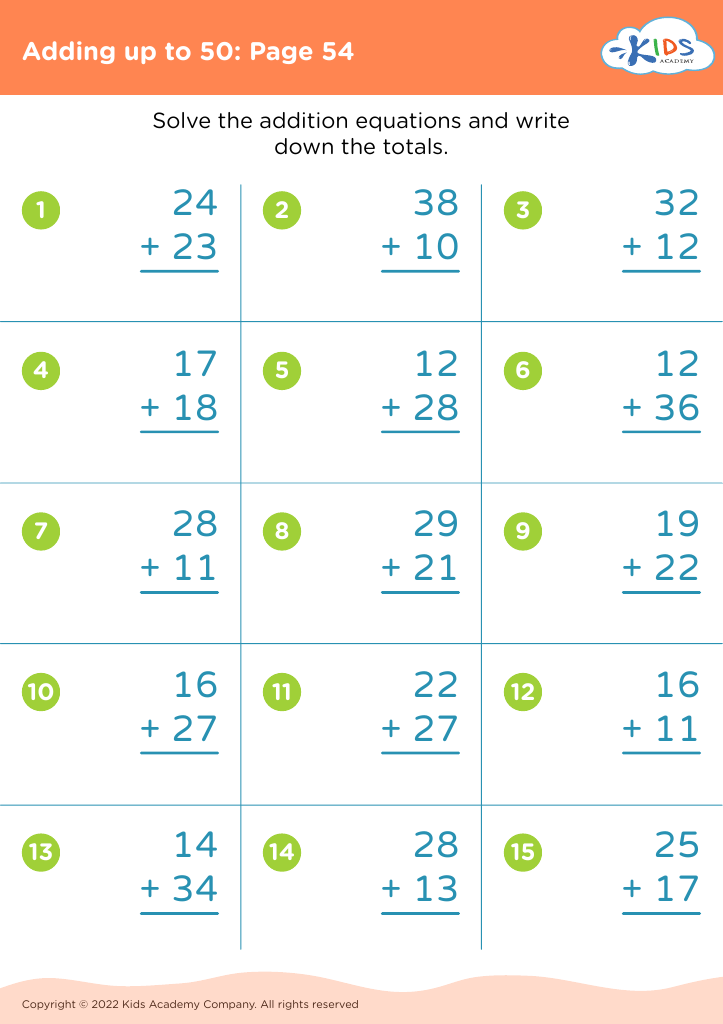
Adding up to 50: Page 54

Adding up to 50: Page 54

Adding up to 50: Page 54
Worksheet
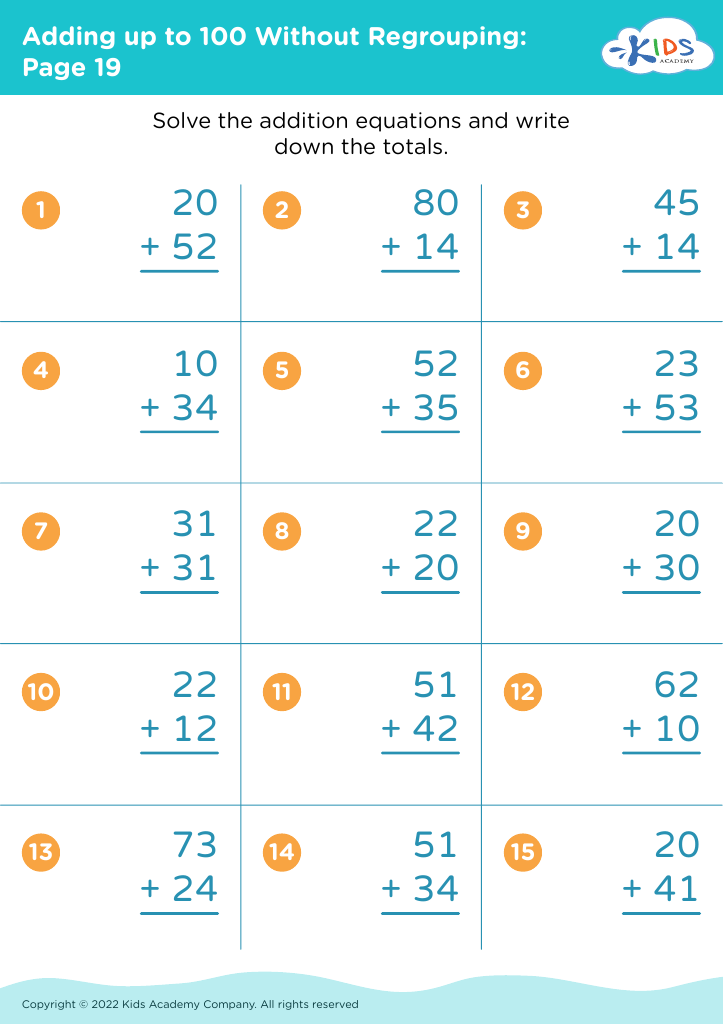
Adding up to 100 Without Regrouping: Page 19
Worksheet
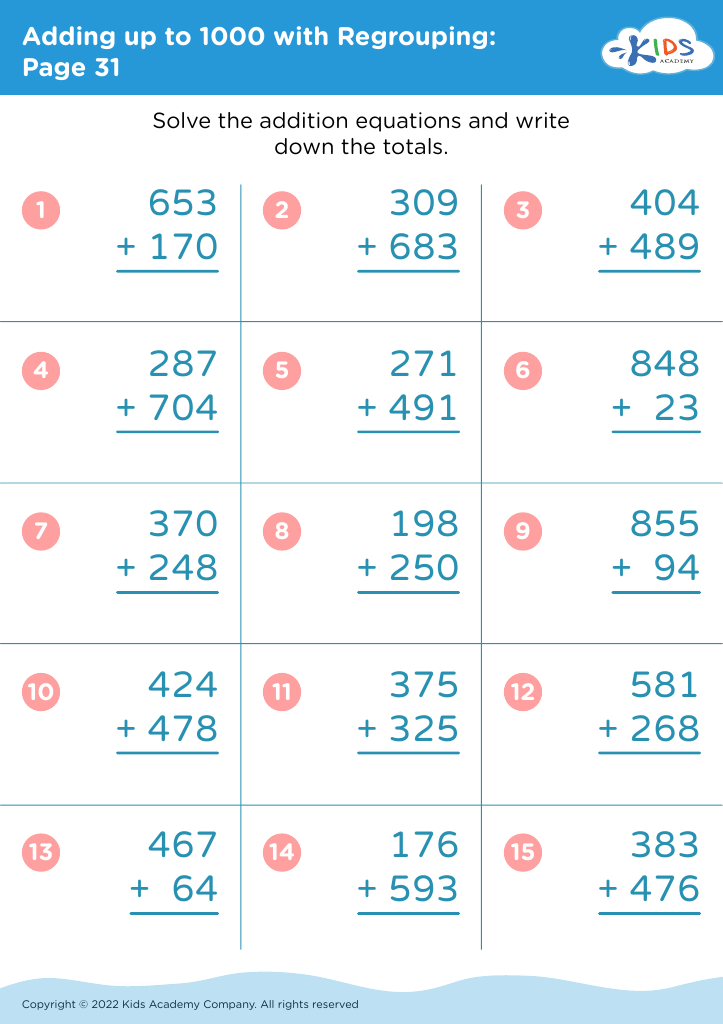
Adding up to 1000 with Regrouping: Page 31
Worksheet
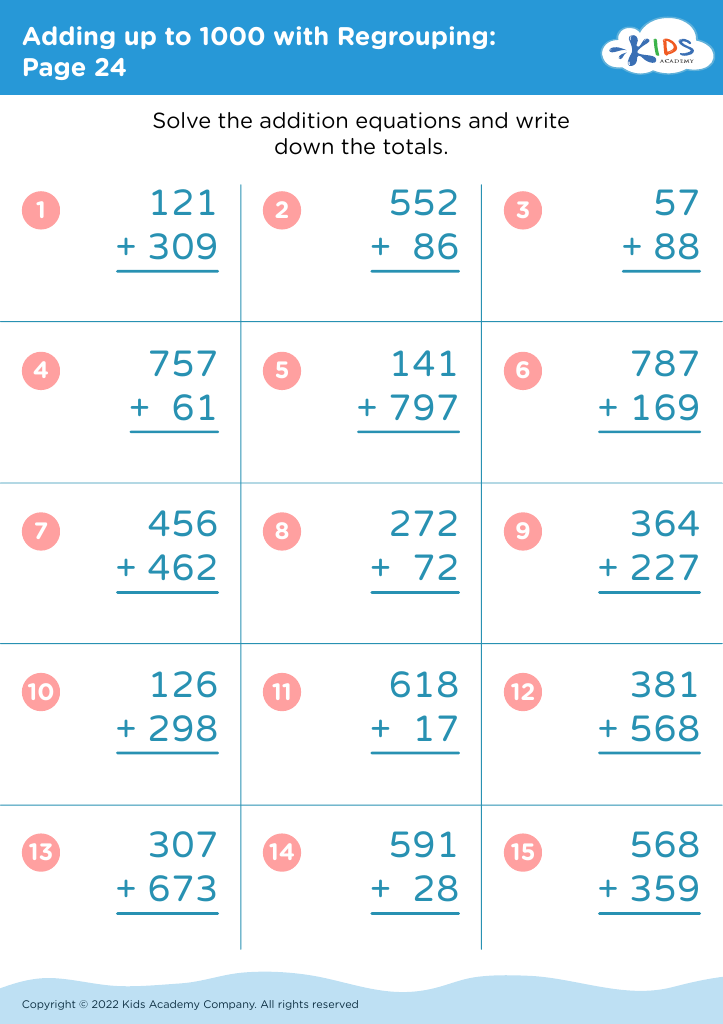
Adding up to 1000 with Regrouping: Page 24
Worksheet
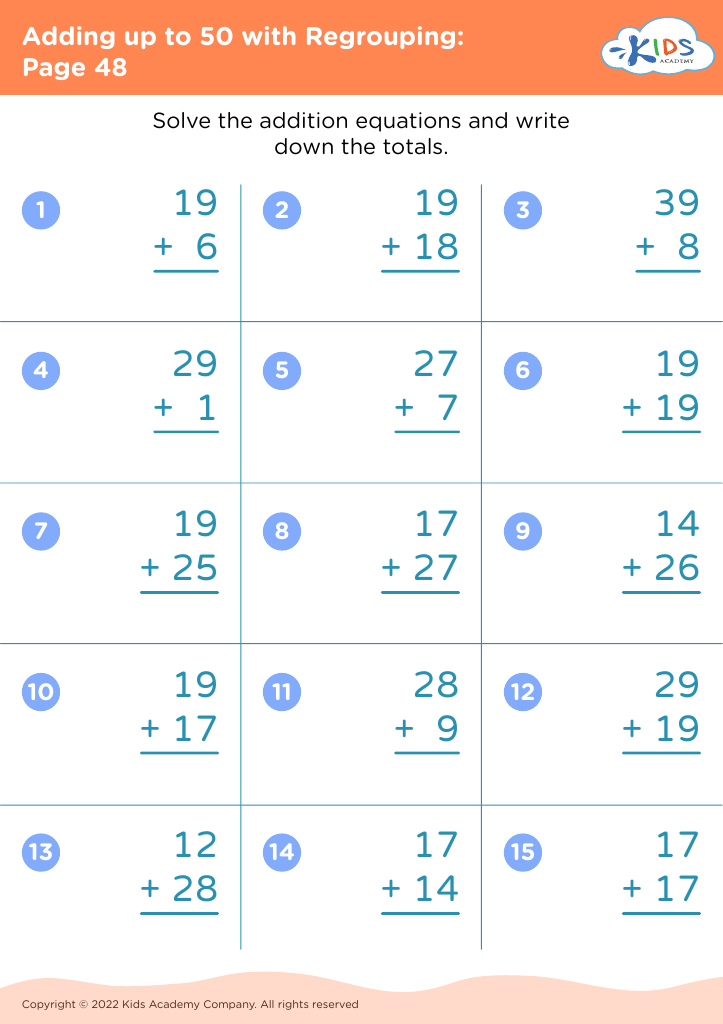
Adding up to 50 with Regrouping: Page 48
Worksheet
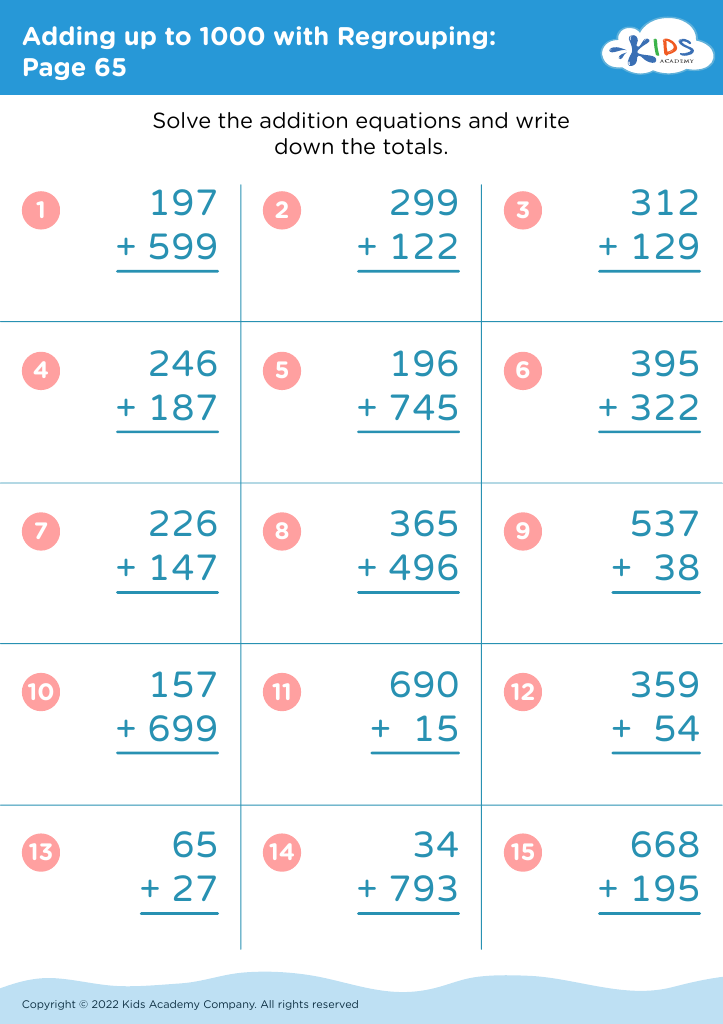
Adding up to 1000 with Regrouping: Page 65
Worksheet
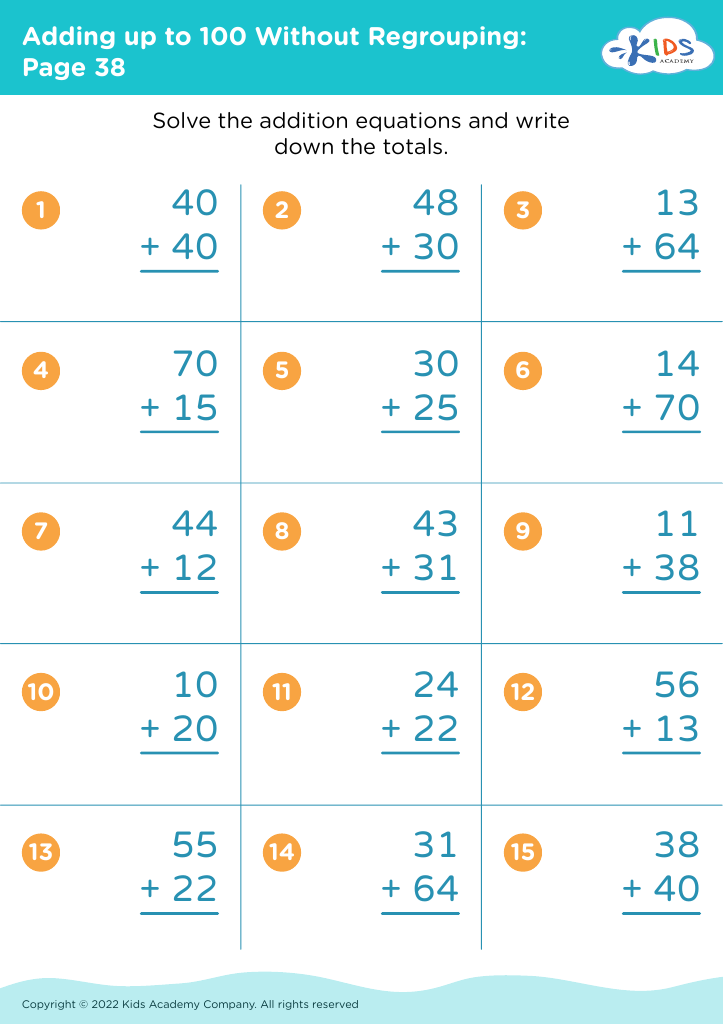
Adding up to 100 Without Regrouping: Page 38
Worksheet
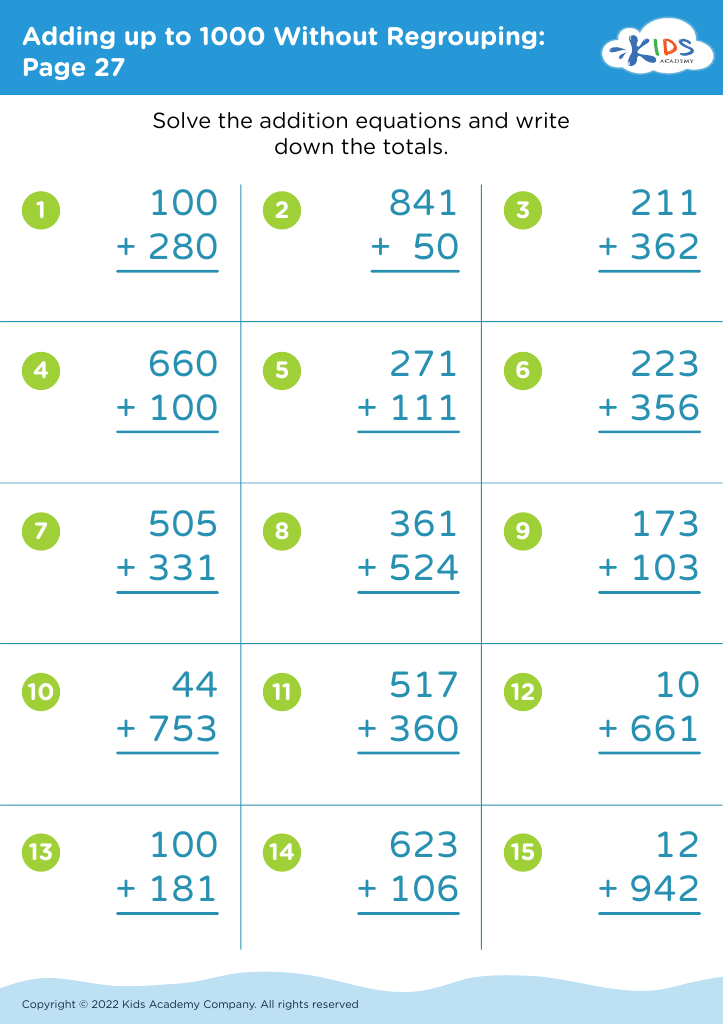
Adding up to 1000 Without Regrouping: Page 27
Worksheet
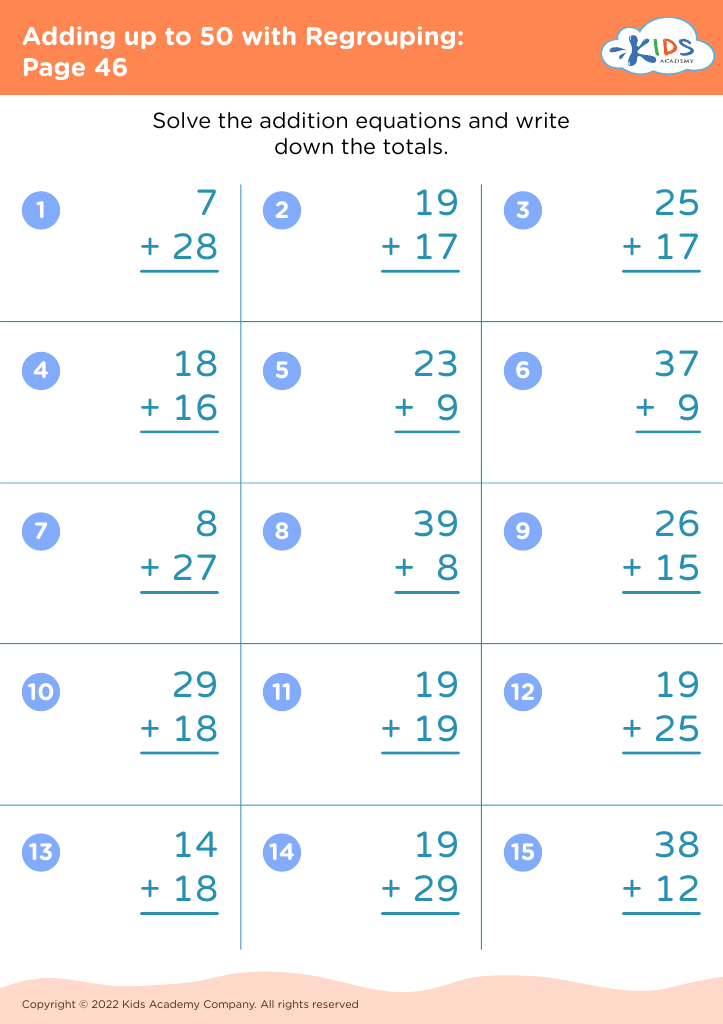
Adding up to 50 with Regrouping: Page 46
Worksheet
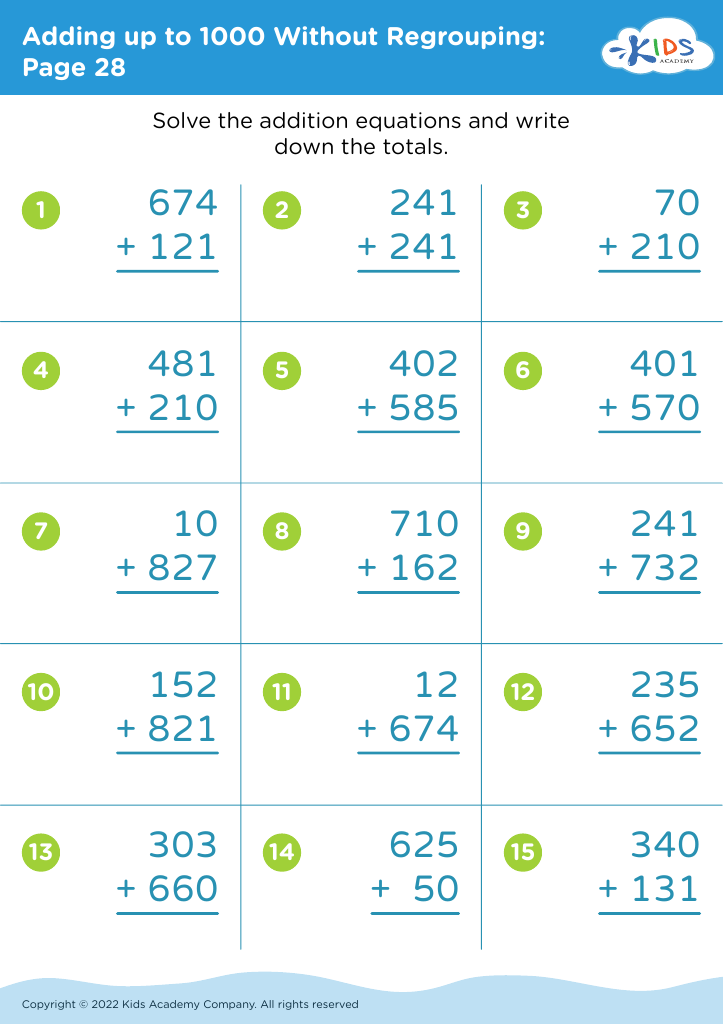
Adding up to 1000 Without Regrouping: Page 28
Worksheet
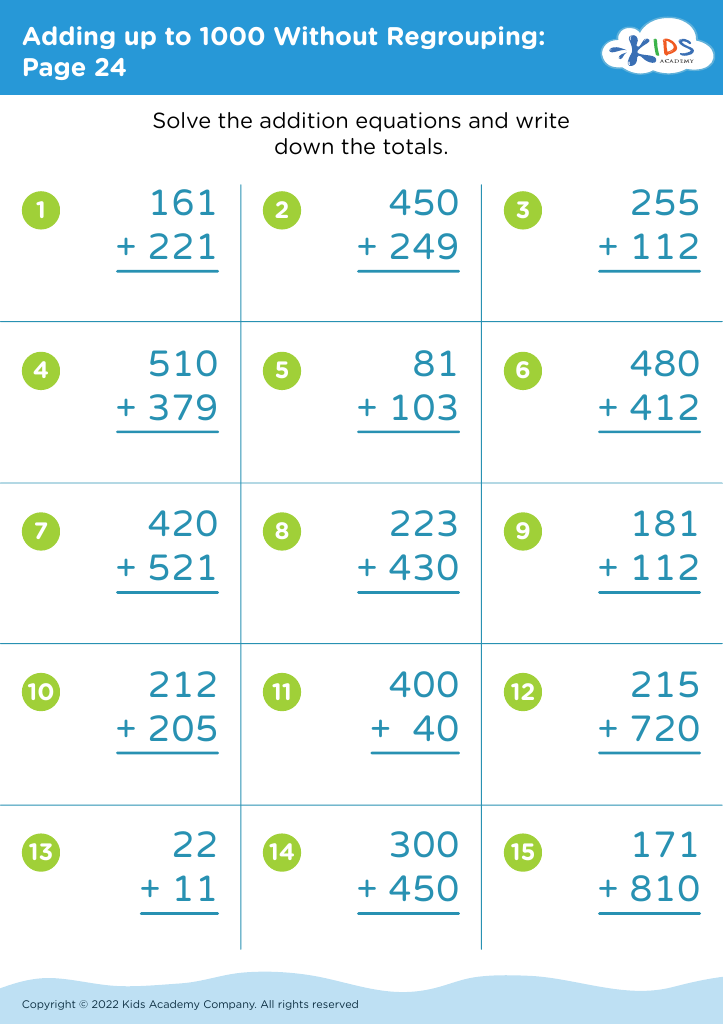
Adding up to 1000 Without Regrouping: Page 24
Worksheet


Parents and teachers should care about simplifying fraction addition for ages 4-8 because it's a foundational math skill that supports future learning and everyday life activities. At this early age, children are developing critical thinking and problem-solving skills. Introducing them to simplifying fractions helps sharpen these abilities. By simplifying fractions, children learn to make calculations more manageable, enhancing their accuracy and confidence in math. Additionally, it supports their understanding of equivalence and proportionality, concepts they will encounter frequently in future math lessons.

This age is a prime period for cognitive development, and establishing strong mathematical fundamentals is easier when concepts are introduced in a fun and engaging way early on. Simplifying fractions involves recognizing patterns and relationships between numbers, which is a key component of early math literacy.

Moreover, familiarizing young learners with fractions and their simplified forms connects math to their everyday experiences, like dividing a pizza or sharing toys, making the subject more relatable and less intimidating. As parents and teachers foster a supportive environment for learning these skills, children build a positive attitude toward math, setting the stage for success in more complex mathematical concepts later in their academic journey.

In summary, focusing on simplifying fraction addition for young children lays the groundwork for academic achievement and practical life skills, benefiting their holistic development.