
Critical Thinking Division Worksheets for Ages 4-8
3 filtered results
Difficulty Level
Grade
Age
-
From - To
Subject
Activity
Standards
Unlock your child's potential with our Critical Thinking Division Worksheets for Ages 4-8! Specifically designed to blend foundational math skills with age-appropriate problem-solving challenges, these worksheets make learning division engaging and fun. Through puzzles, word problems, and logical exercises, kids develop critical thinking skills while mastering division basics. Perfect for early learners, these worksheets support cognitive development and mathematical confidence, making complex concepts easier to understand. Ideal for teachers and parents alike, our printable resources are excellent for classroom lessons or at-home practice. Encourage your young learner to think critically and love math with our comprehensive collection!
Favorites
With answer key
Interactive
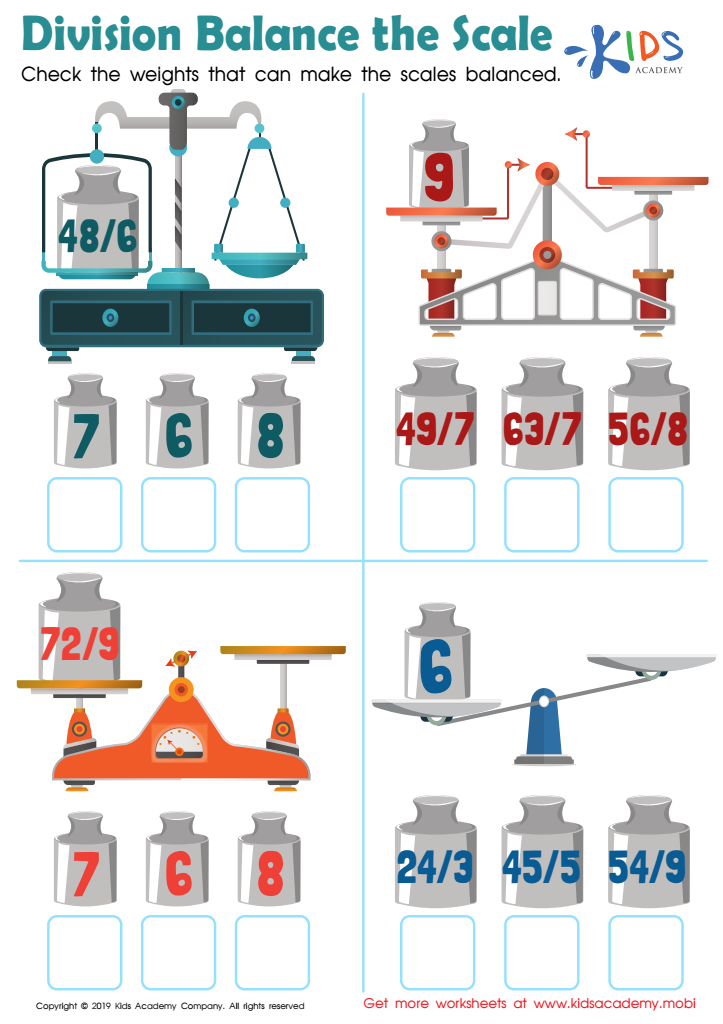
Division Balance the Scale Worksheet
Students can learn math better when they understand the relationships between numbers. This free worksheet helps them practice division: solving problems and matching the correct quotient to balance the scales. Fun visual boxes make it a unique way to engage with the material.
 Assign to My Students
Division Balance the Scale Worksheet
Worksheet
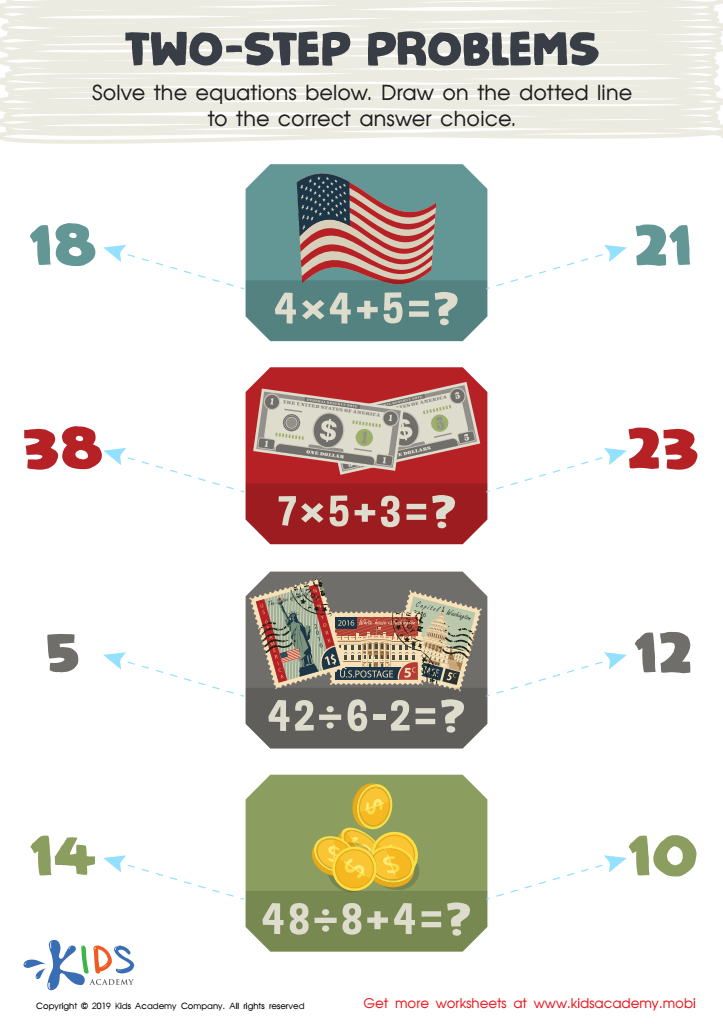
Two-Step Problems Worksheet
Help your child practice their math problem-solving skills with this worksheet. It covers the basics of subtractions, additions, multiplications, and divisions. With four simple equations, your kids can solve them and draw the correct answer on the dotted line. Reduce their strain and give them the help they need.
Two-Step Problems Worksheet
Worksheet
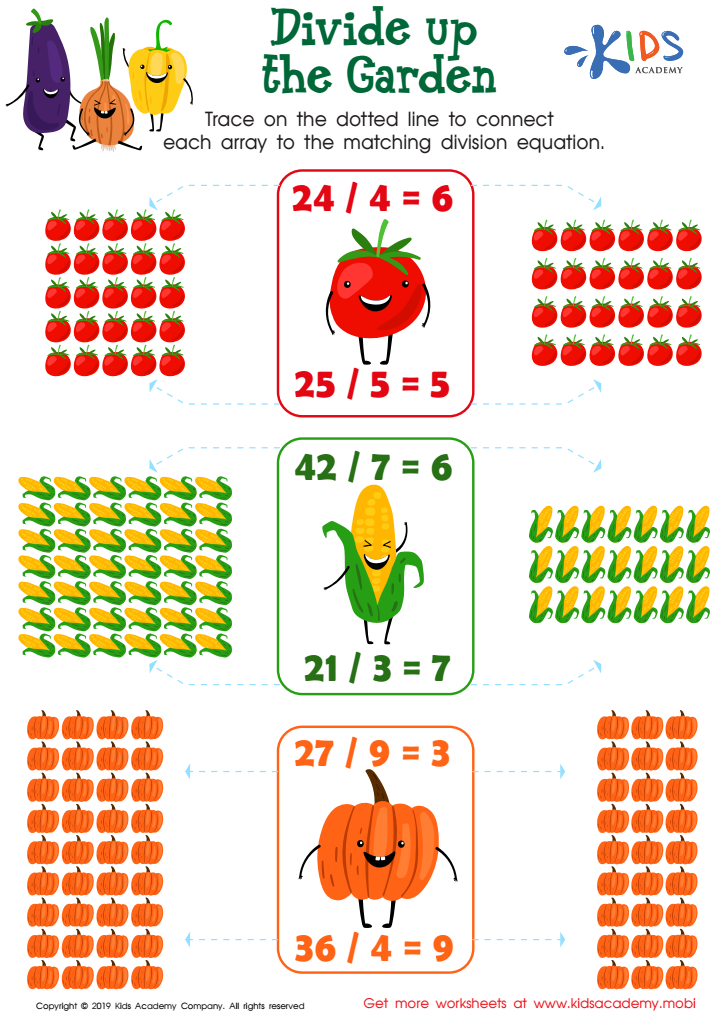
Divide up the Garden Worksheet
Dividing is simply grouping items into equal sets. This worksheet helps kids see division problems in array form. They'll match each equation with a picture group, using the lines provided. It's a great way for beginners to understand division more concretely.
Divide up the Garden Worksheet
Worksheet
Join Kids Academy for Free
Who is primarily going to use this learning content?








Critical thinking for children ages 4-8 lays a foundational pillar for lifelong learning and problem-solving. At this formative stage, young minds are highly receptive and capable of developing complex thinking patterns that will serve them throughout their lives. Encouraging critical thinking helps children understand the world more deeply and interact with it more effectively.
Parents and teachers should care about fostering these skills because they promote independence, creativity, and resilience. Introducing puzzles, storytelling, and inquiry-based activities can stimulate curiosity and enhance cognitive abilities in young learners. For instance, by asking a child why they think certain things happen or how they might solve a problem, adults help children to express their thoughts clearly and consider alternative perspectives.
Moreover, critical thinking enables better decision-making. Children learn to evaluate situations, anticipate outcomes, and make informed choices rather than acting impulsively. These skills contribute to academic success and prepare children to adapt to various challenges, both inside and outside the classroom.
Additionally, early exposure to critical thinking nurtures intellectual empathy and cooperative learning. As children learn to reason and support their ideas, they also learn to respect differing viewpoints, creating a more inclusive and thoughtful educational environment. Investing in critical thinking at a young age thus cultivates a generation of innovative, thoughtful, and empathetic individuals.








