Visual Learning Geometry Worksheets for Ages 4-8
5 filtered results
-
From - To
Explore our engaging Visual Learning Geometry Worksheets designed for children ages 4 to 8, perfect for enhancing spatial awareness and geometric understanding! Our colorful, interactive worksheets introduce foundational concepts through fun activities that capture young learners' attention. With a focus on visual aids, these worksheets help children recognize shapes, sizes, and patterns while developing critical thinking skills. Ideal for classroom use or at-home learning, our materials support diverse learning styles and promote hands-on exploration of geometry. Unlock your child's mathematical potential today with these delightful resources that make learning geometry a fun adventure! Suitable for parents and educators alike!
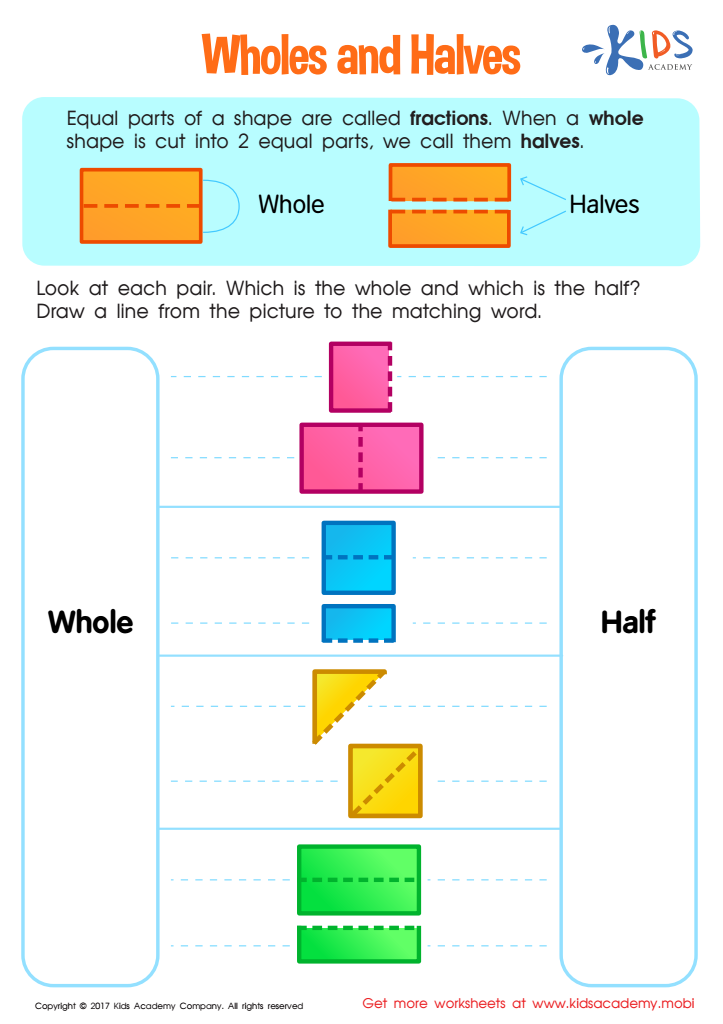
Wholes and Halves Worksheet
 Assign to My Students











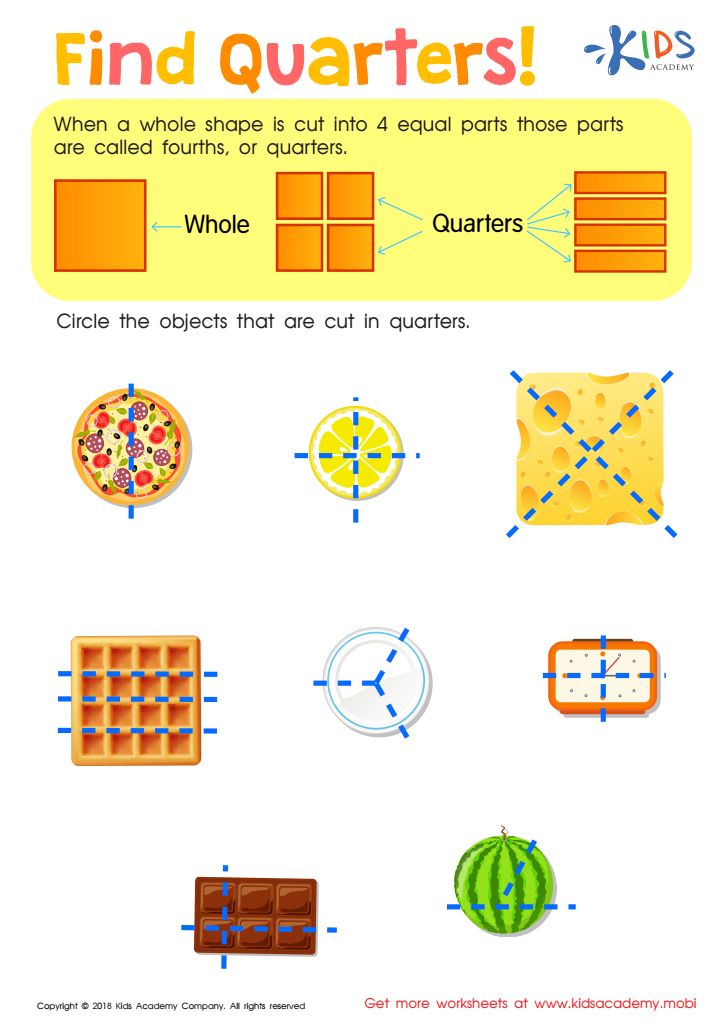
Find Quarters Worksheet
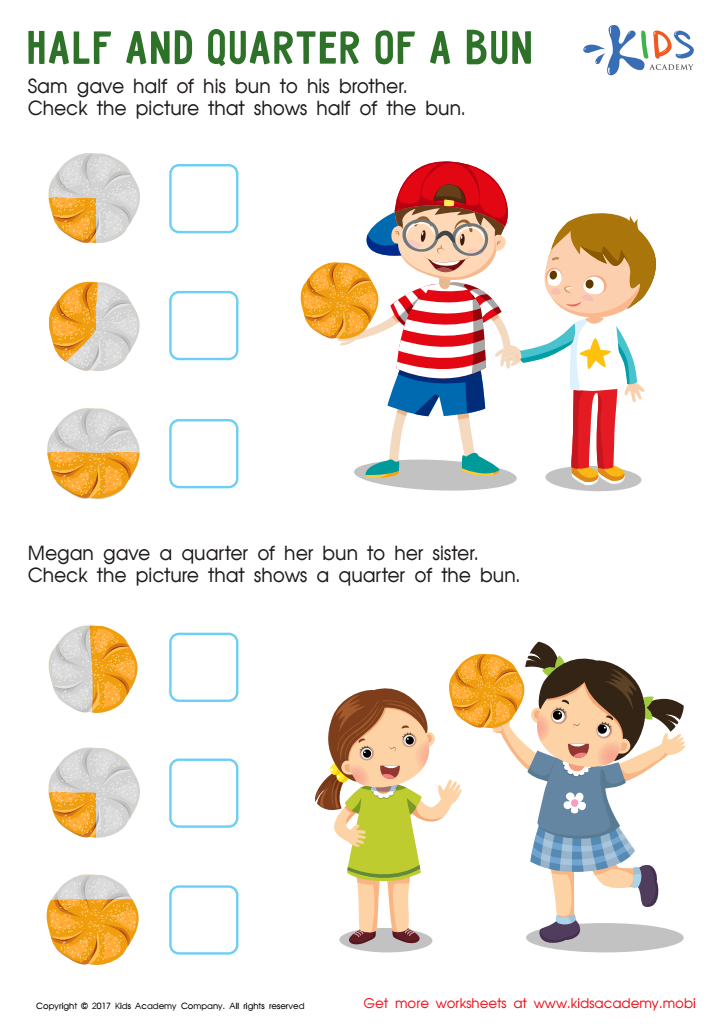
Half and Quarter of a Bun Worksheet
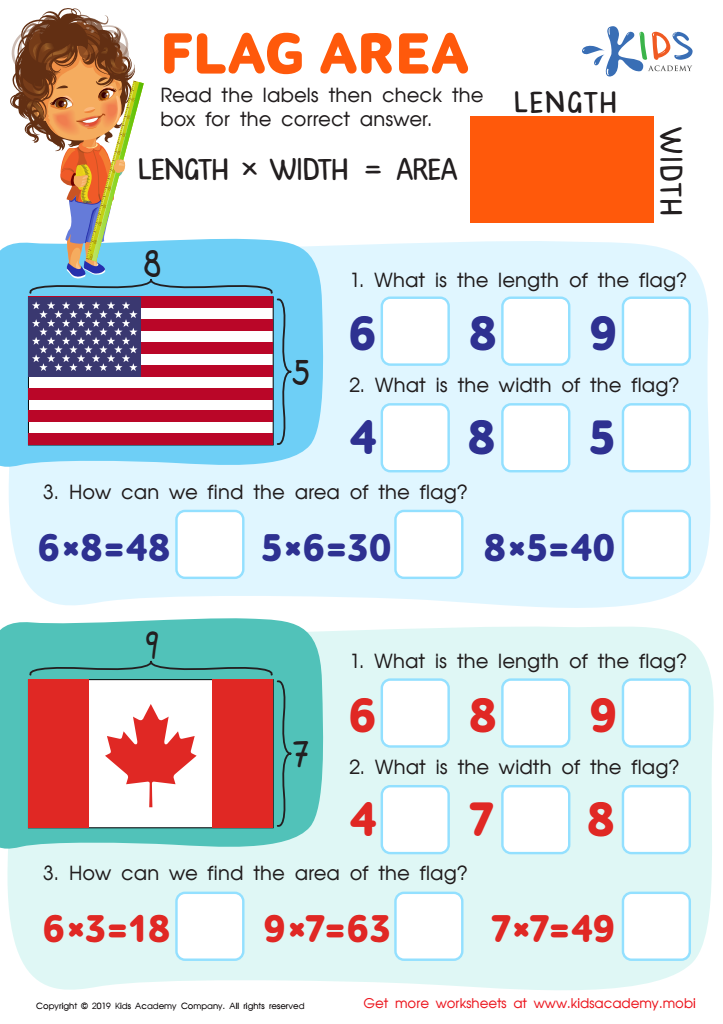
Flag Area Worksheet
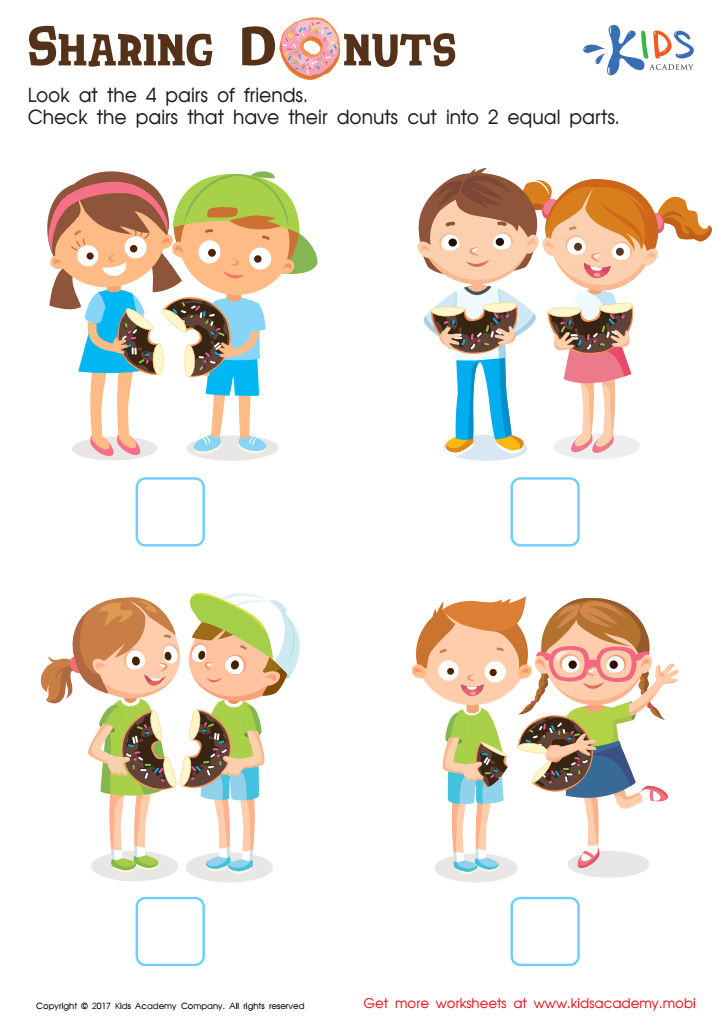
Sharing Donuts Worksheet








Visual learning in geometry for children aged 4-8 is crucial for several reasons. At this developmental stage, learners are incredibly active and draw on their observational and sensory experiences to make sense of the world around them. Geometry, as a fundamental part of mathematics, helps children understand shapes, spatial relationships, and the properties of objects, which are integral to their cognitive development.
Engaging children with visual aids such as shapes, diagrams, and interactive activities fosters a deeper understanding of geometric concepts. Visual learning caters to varied learning styles and can significantly enhance retention and comprehension, as young learners often grasp information more effectively through imagery than through abstract concepts.
Moreover, an early grasp of geometry builds a foundation for mathematical reasoning and problem-solving skills, promoting critical thinking. With strong visual learning opportunities, children can develop their ability to identify patterns, make predictions, and enhance their overall mathematical aptitude.
For parents and teachers, emphasizing visual learning in geometry not only makes math enjoyable and relatable but also encourages a lifelong interest in STEM fields. Thus, investing time and resources into visual learning geometry is an investment in children's academic success and future opportunities.








