
Animal recognition Numbers Worksheets for Ages 4-8
8 filtered results
Difficulty Level
Grade
Age
-
From - To
Subject
Activity
Standards
Introduce your child to the exciting world of numbers with our Animal Recognition Numbers Worksheets for ages 4-8! Designed to engage young learners, these worksheets merge the joy of animals with essential counting skills. Children will not only learn to recognize numbers but also associate them with their favorite animals, making math both fun and memorable. With vibrant illustrations and hands-on activities, these worksheets promote critical thinking and improve fine motor skills. Perfect for homeschooling or supplementary learning, these resources are ideal for helping children build a strong mathematical foundation while fostering a love for animals. Explore and download today!
Favorites
With answer key
Interactive
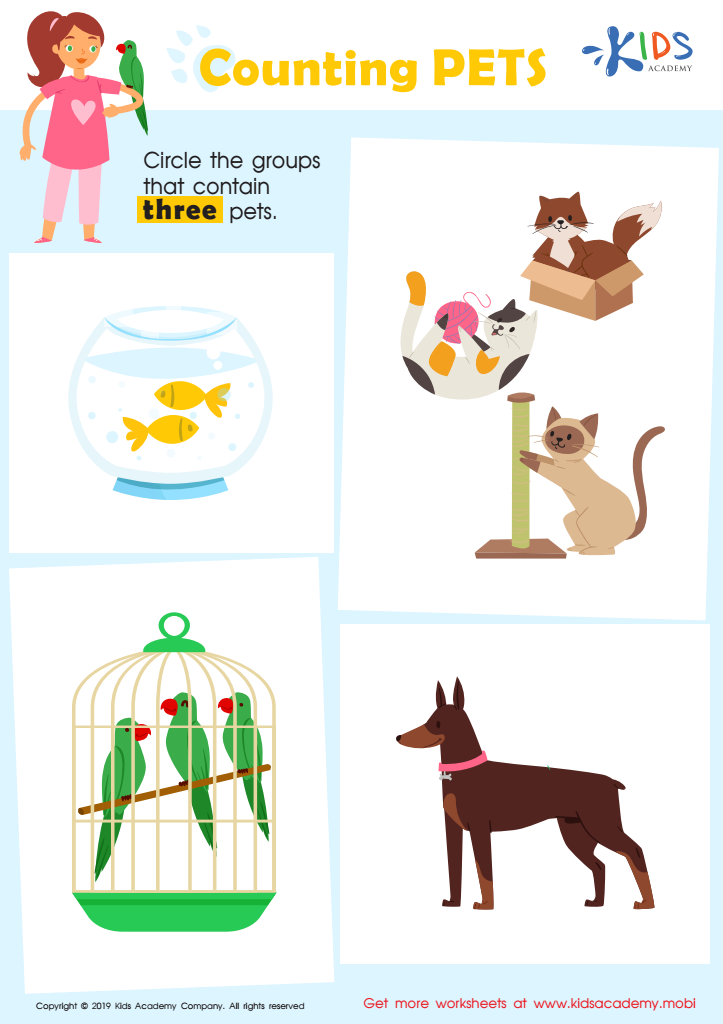
Counting Pets Worksheet
Kids adore their pets, making this free pet counting worksheet the perfect way to combine something they love with math skills. They'll count the number of pets, circle the pictures with three pets, and use one-to-one picture representation to help. This exercise will cultivate their learning and reinforce their love of animals!
 Assign to My Students
Counting Pets Worksheet
Worksheet
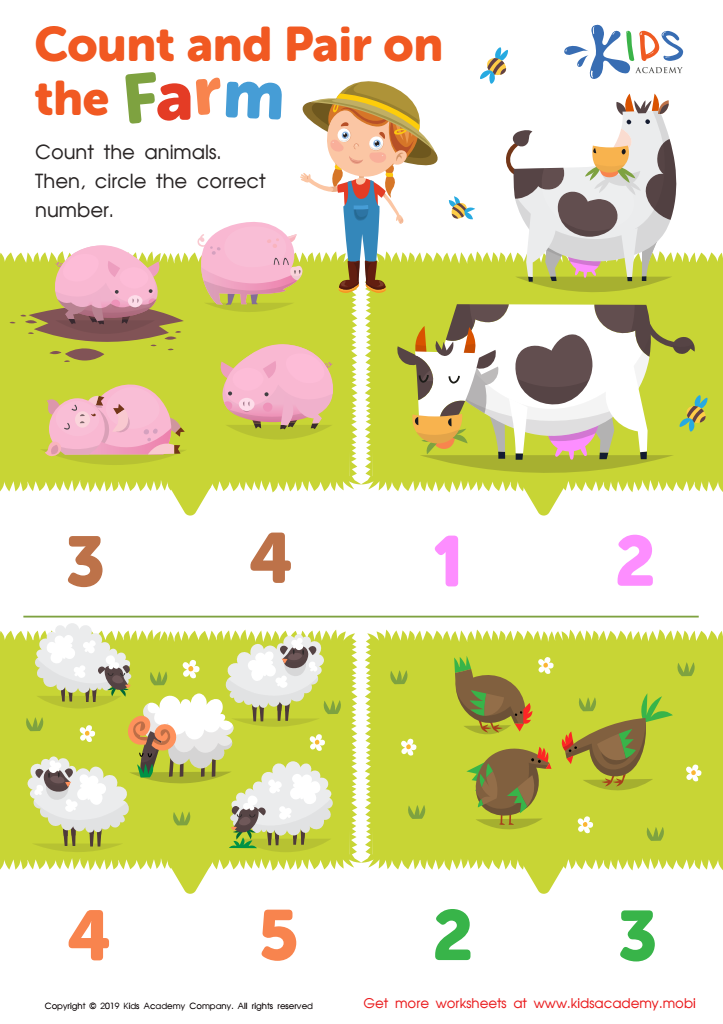
Count and Pair on the Farm Worksheet
Farms are essential to our society: they grow food and crops, and raise animals for us to use. Kids can have a great time at a farm, engaging in activities like identifying animals, counting them, and circling the correct number. On this worksheet, ask your kids to try all three!
Count and Pair on the Farm Worksheet
Worksheet
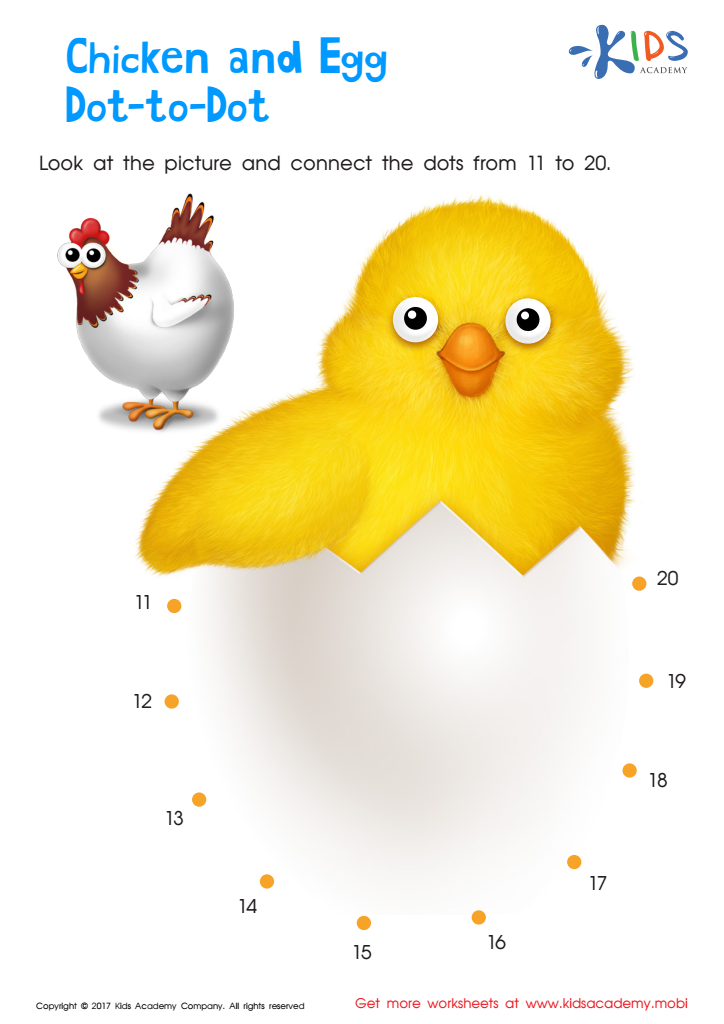
Ordering 11–20: Chicken & Egg Dot–to–dot Worksheet
Help your child hatch the chick and practice their counting skills with this dot to dot worksheet – the chicken came first! Connect the dots 11-20 to have fun and learn at the same time. Experience meaningful practice and gain confidence while drawing great pictures.
Ordering 11–20: Chicken & Egg Dot–to–dot Worksheet
Worksheet
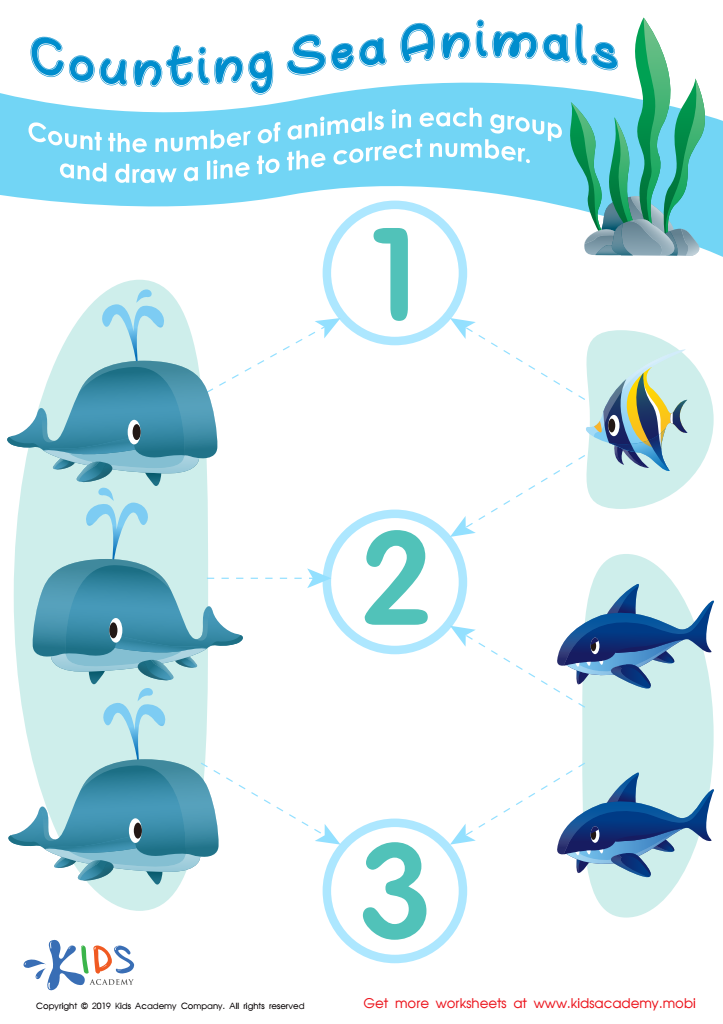
Counting Sea Animals Worksheet
Kids adore sea creatures for their captivating, unknown nature. Let them use this free worksheet to practice counting, where they match numbers to groups of animals. Through traceable lines, they'll easily connect numbers to sea creatures and learn math with vibrant, underwater fun!
Counting Sea Animals Worksheet
Worksheet
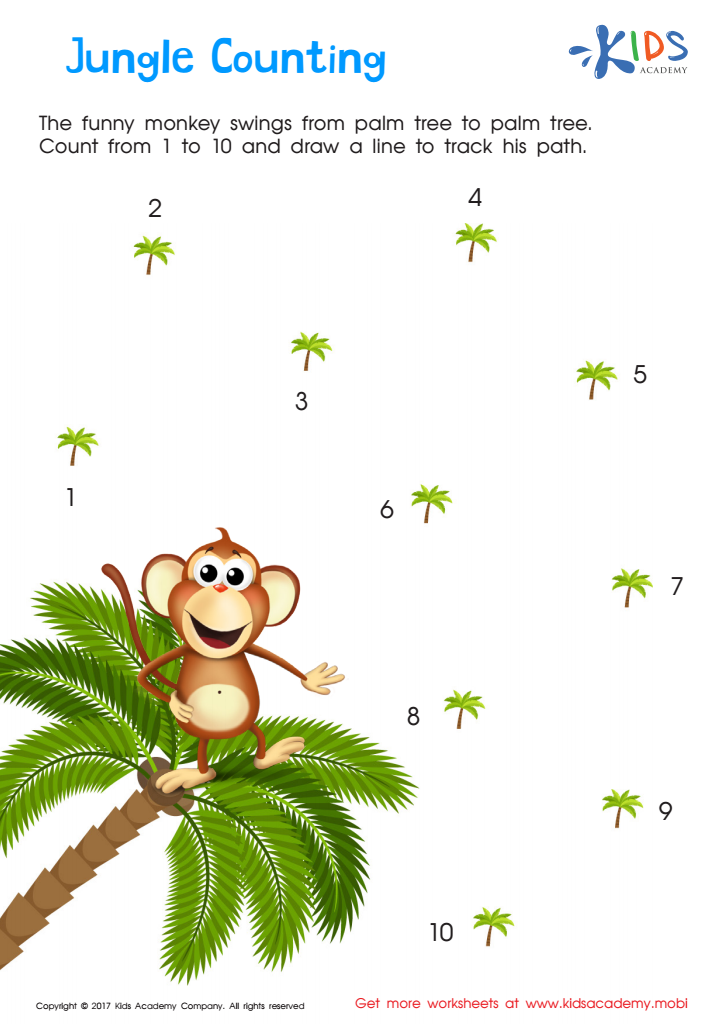
Jungle Counting Connect Dots Worksheet
Help your child count from 1-10 and practice problem solving skills with this dot to dot worksheet. Your child will enjoy helping the cute monkey swing from tree to tree while honing their math skills. Let them have a jungle-themed counting adventure!
Jungle Counting Connect Dots Worksheet
Worksheet
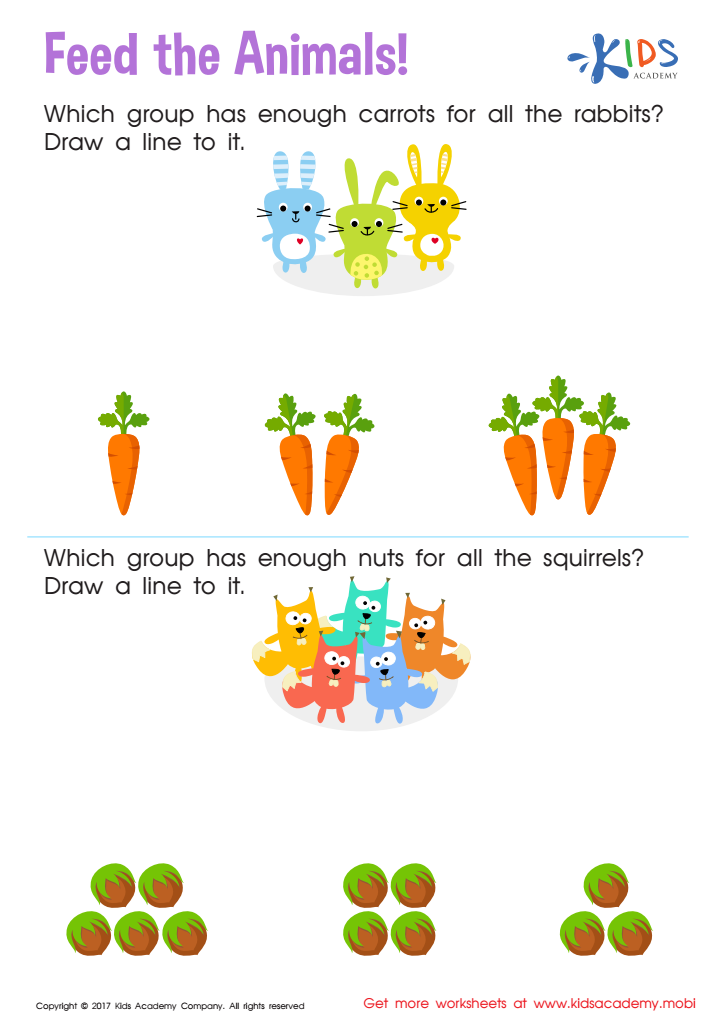
Count and Match: Feed the Animals Worksheet
Learning and growing involves more than just numbers, phonics and comparison. This Feed the Animals worksheet helps kids to exercise their reasoning skills. They must work out how many rabbits and carrots there are, and then repeat the process for the squirrels. This encourages problem solving and counting skills.
Count and Match: Feed the Animals Worksheet
Worksheet
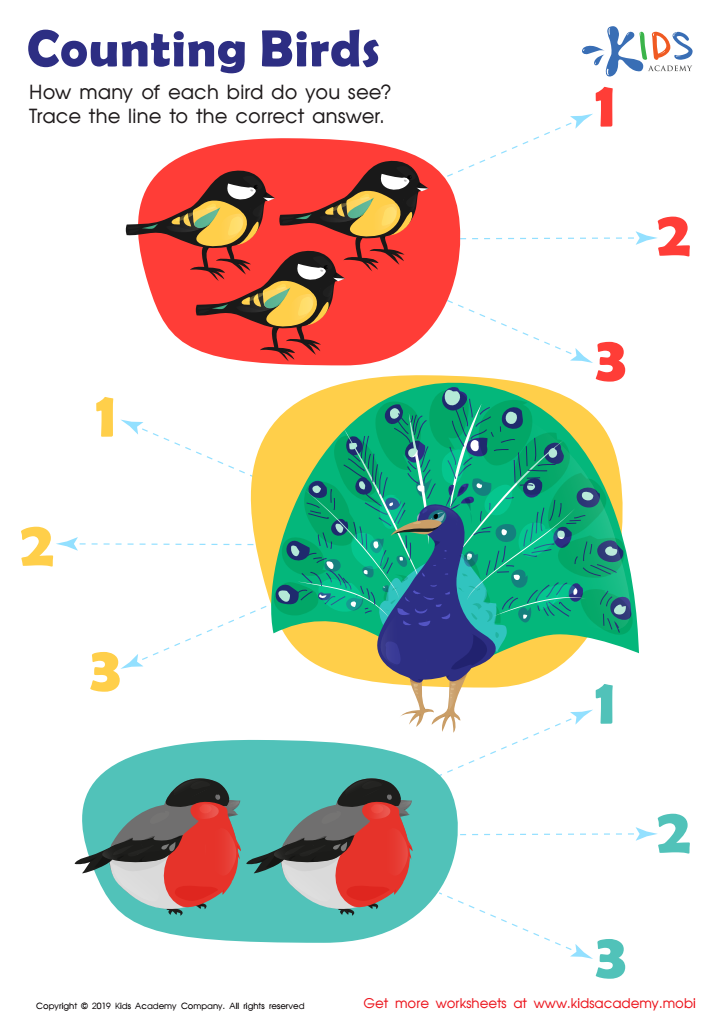
Counting Birds Worksheet
Kids love counting! With each number they learn, they can make a one-to-one representation with an item. The more practice they get, the better. Try this counting worksheet with traceable lines, to give your children practice and work on their fine motor skills. They will enjoy connecting the picture to the right number, and will feel like mathematicians with each success!
Counting Birds Worksheet
Worksheet
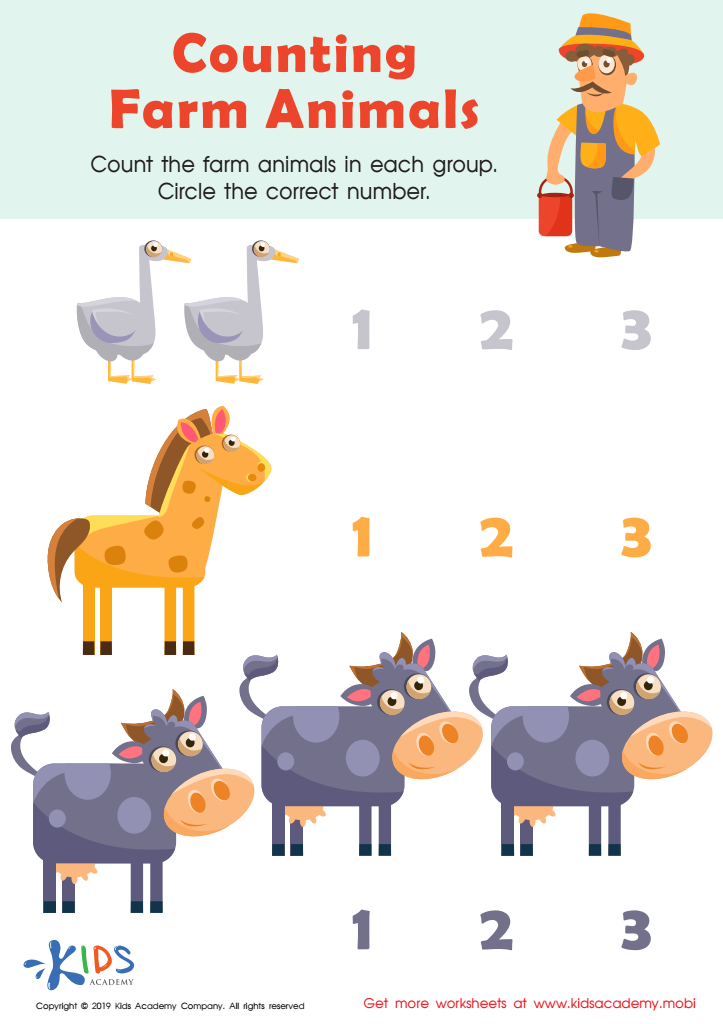
Counting Farm Animals Worksheet
Kids love farms! That's why this free farm animals counting worksheet is great for building number sense and counting skills. Have your young mathematician count the pictures, then circle the corresponding number. It's a fun and meaningful way to practice counting.
Counting Farm Animals Worksheet
Worksheet
Join Kids Academy for Free
Who is primarily going to use this learning content?








Animal recognition numbers are an important educational tool for children aged 4-8. These numerical identifiers help young learners recognize and categorize different animals, enhancing their cognitive development and understanding of the natural world. As children engage with these numbers, they also develop important skills in classification and comparison. For instance, they can learn how animals share common traits while also exploring their differences.
Furthermore, recognizing animals through numbers can promote curiosity and a love for nature. This lays the foundation for scientific learning in later years, as children begin to grasp concepts like habitats, food chains, and conservation. Teachers and parents can make learning interactive by incorporating games, flashcards, and group activities that involve animal recognition numbers, making it enjoyable and memorable.
Additionally, fostering an understanding of animals and their roles in the ecosystem can build empathy and inspire responsible behaviors towards wildlife. Awareness of animals' biological and environmental significance can motivate children to take an interest in protecting the planet. Overall, by caring about animal recognition numbers, educators and caregivers can support children’s cognitive learning, instill an appreciation for nature, and encourage proactive thinking about environmental stewardship in future generations.








