
Fine motor development Numbers Worksheets for Ages 4-8
3 filtered results
Difficulty Level
Grade
Age
-
From - To
Subject
Activity
Standards
Unlock your child's potential with our Fine Motor Development Numbers Worksheets, specially designed for ages 4-8. These engaging worksheets help young learners practice essential number recognition and counting skills while enhancing their fine motor abilities. Through fun activities like tracing, cutting, and coloring, children hone their hand-eye coordination and dexterity. Our carefully crafted exercises make learning interactive and enjoyable, fostering a love for math from an early age. Perfect for classrooms or home schooling, these worksheets provide the ideal blend of education and play. Download and watch your young mathematicians flourish as they master numbers with confidence!
Favorites
With answer key
Interactive
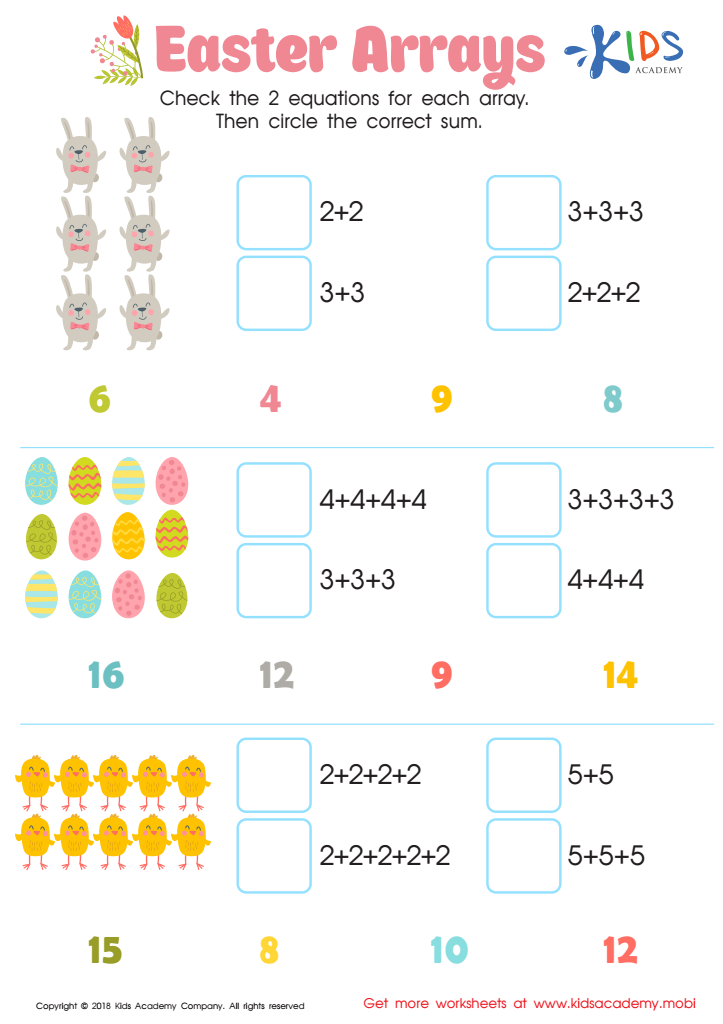
Easter Arrays Worksheet
Does your child love Easter? Do they adore the Easter bunny and egg hunts? Help them have fun with this worksheet! Go through it with them and check the equations for each array. Then, have them circle the correct sum. It's a great way to make the holiday extra exciting!
 Assign to My Students
Easter Arrays Worksheet
Worksheet
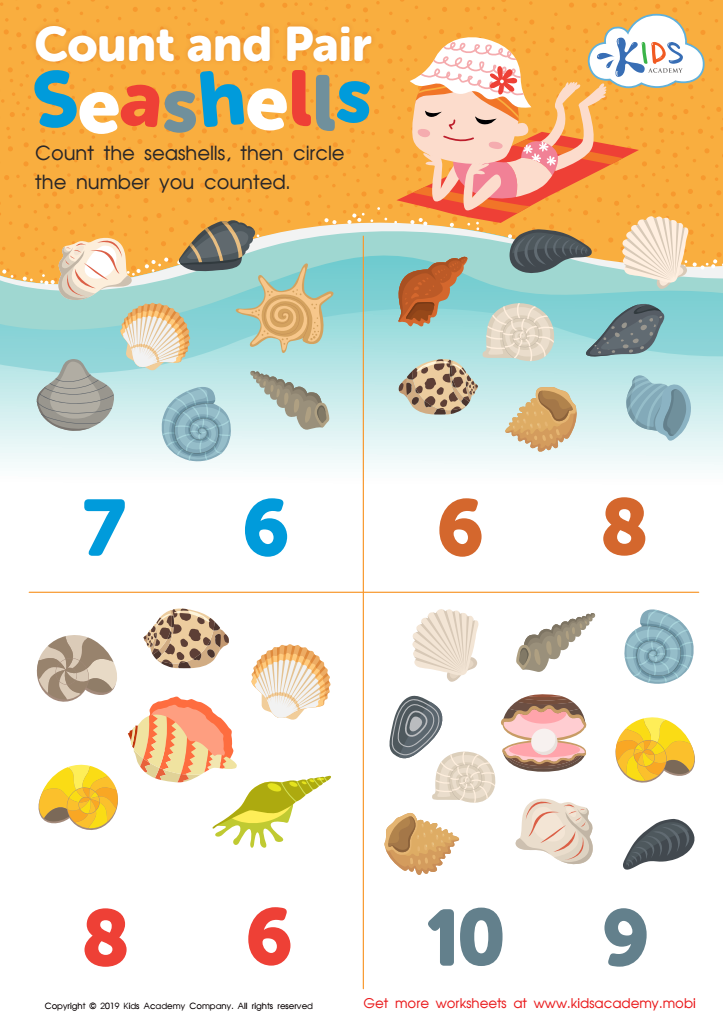
Count and Pair Seashells Worksheet
Kids love trips to the beach. Ask them to count the shells in the four sets of seashells in this printout - then circle the correct number beneath each set. Let them recall the happy memories of the beach and make this worksheet fun.
Count and Pair Seashells Worksheet
Worksheet
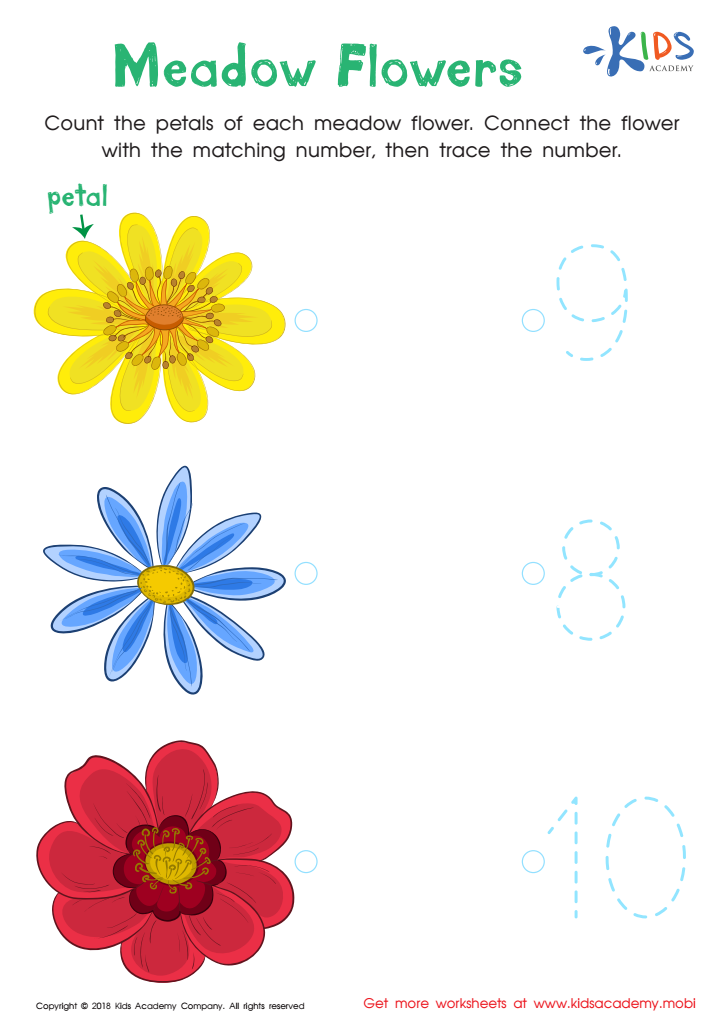
Kindergarten Number Tracing: Medow Flowers Worksheet
Take your child to the garden to count flower petals and trace numbers with this fun kindergarten PDF worksheet. They'll learn to count and write, all while enjoying the sweet scent of the flowers.
Kindergarten Number Tracing: Medow Flowers Worksheet
Worksheet
Join Kids Academy for Free
Who is primarily going to use this learning content?








Fine motor development is crucial for children aged 4-8 as it lays the foundation for essential life skills and academic success. During these formative years, children refine their hand-eye coordination, dexterity, and control over their fingers through activities that involve manipulation, such as writing, drawing, cutting, and playing with small objects.
Parents and teachers should be concerned with fine motor skills as these abilities directly affect a child's readiness for school. Strong fine motor skills enhance handwriting, which is vital for academic performance. They also facilitate tasks like using scissors or tying shoelaces, fostering independence. Furthermore, engaging in fine motor activities promotes cognitive development through problem-solving and critical thinking as children learn to navigate different materials and tools.
Additionally, fine motor skills contribute to social-emotional development. Children often work together in group activities that involve manipulative play, which helps build cooperation and communication skills. Caregivers can encourage these abilities through simple games, arts and crafts, or building projects, thereby creating enjoyable learning experiences. In summary, fostering fine motor development is an investment in a child's overall growth, preparing them for the challenges of both school and everyday life.








