Improving number sense Numbers Worksheets for Ages 4-8
4 filtered results
-
From - To
Explore our comprehensive collection of "Improving Number Sense" worksheets designed specifically for children ages 4-8. These engaging and interactive resources help young learners enhance their understanding of numbers through a variety of fun activities. From counting exercises to simple addition and subtraction problems, our worksheets promote essential foundational skills in mathematics. Ideal for both home and classroom use, these activities aim to boost confidence and foster a love for numbers in early learners. Let your child embark on an exciting numerical journey while developing critical thinking skills, improving number recognition, and building a strong math base. Discover the joy of learning with us today!
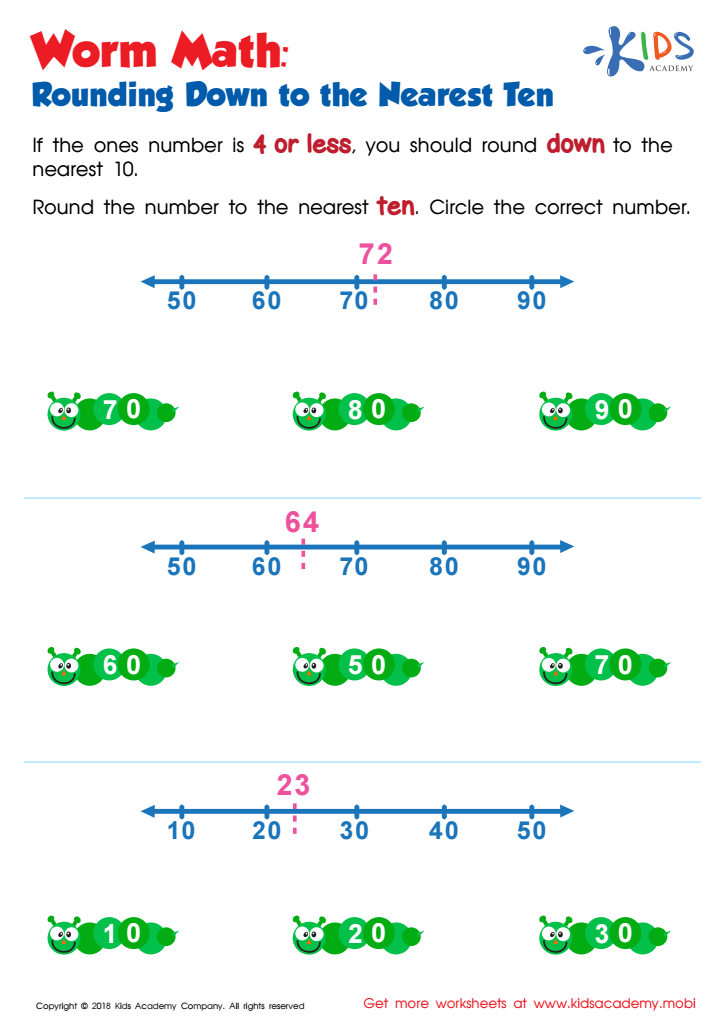
Worm Math Rounding Down to the Nearest Ten Worksheet
 Assign to My Students
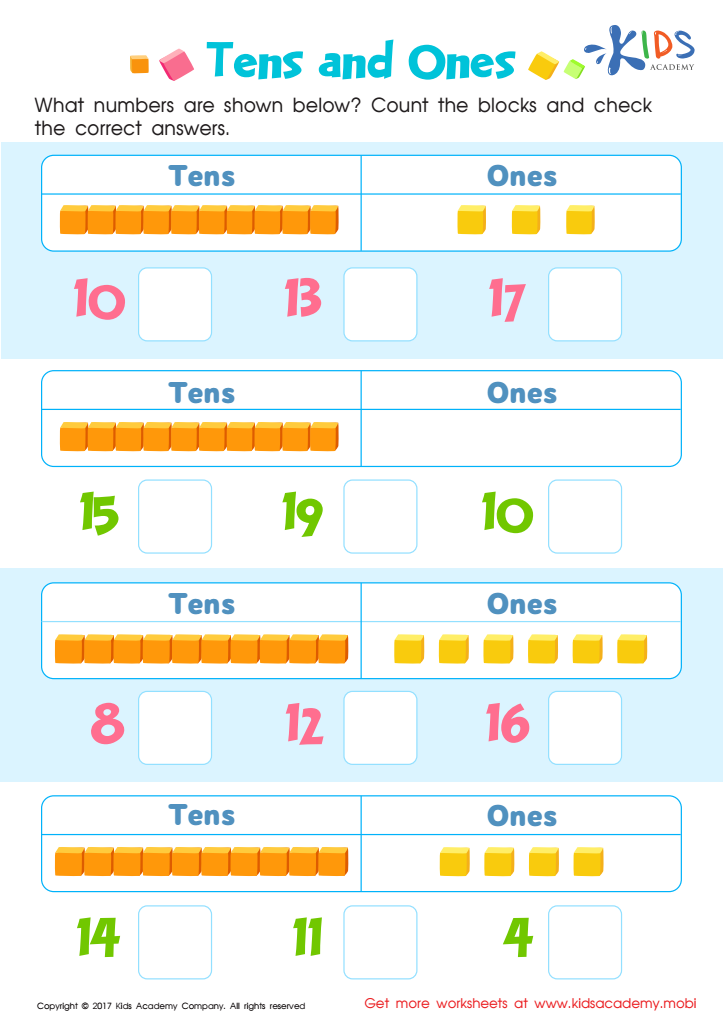
Tens and Ones Worksheet
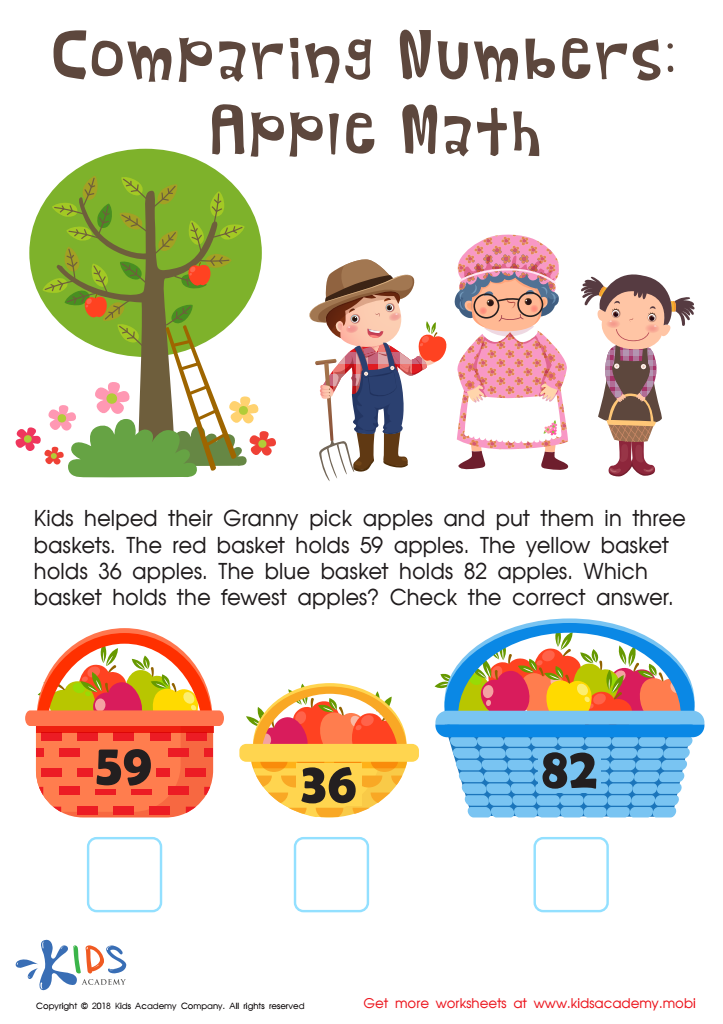
Apple Math Worksheet
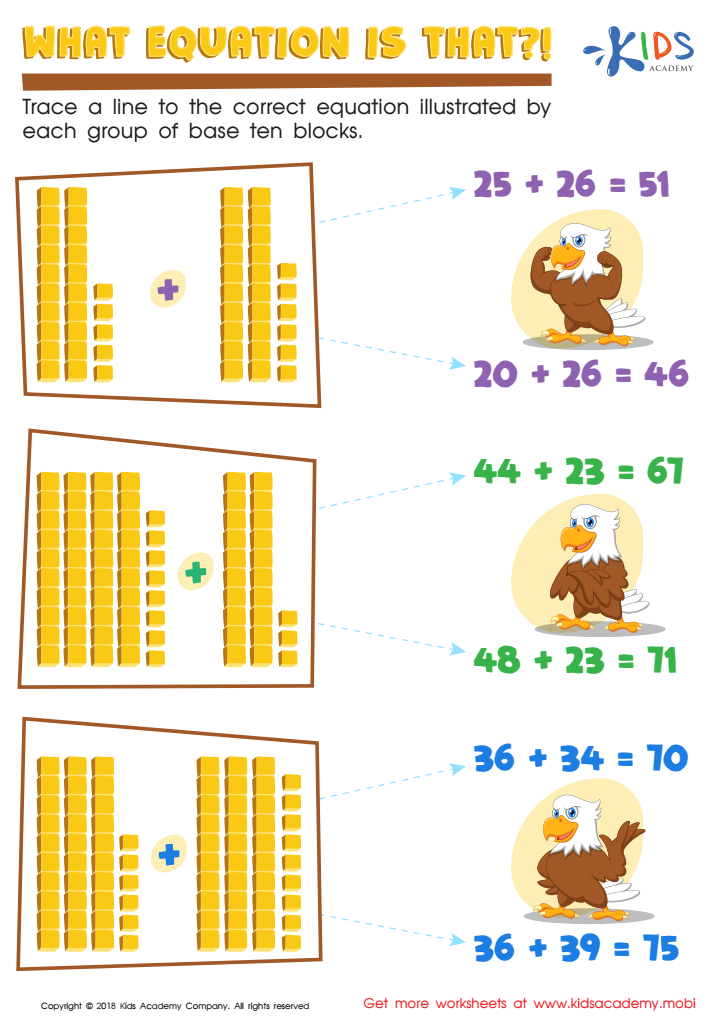
What Equation Is That? Worksheet








Improving number sense in children aged 4-8 is crucial for laying a strong mathematical foundation that will benefit them throughout their academic journey and beyond. At this age, children are naturally curious, making it an ideal time for them to explore numbers, patterns, and relationships. Number sense encompasses various skills, including understanding quantity, recognizing numerical patterns, and developing estimation abilities. By fostering these skills early on, parents and teachers can help children build confidence and enthusiasm for mathematics.
Strong number sense aids in problem-solving and critical thinking, which are essential skills not only in mathematics but in everyday decision-making. When children grasp how numbers function, they are better equipped to tackle more complex mathematical concepts later in their education. Moreover, a solid grasp of number sense can diminish math anxiety, as children feel more competent and motivated.
Engaging activities such as games, hands-on manipulatives, and real-life applications create an enriching learning environment. When parents and teachers prioritize number sense, they are investing in children's intellectual growth and future success. Ultimately, fostering a positive relationship with numbers at an early age sets the stage for lifelong learning and achievement.








