Logical Reasoning Numbers Worksheets for Ages 4-8
5 filtered results
-
From - To
Enhance your child's critical thinking skills with our Logical Reasoning Numbers Worksheets designed for ages 4-8. These engaging activities help young learners develop essential reasoning abilities while exploring numbers in a fun and interactive way. Each worksheet encourages students to analyze patterns, solve puzzles, and make connections through hands-on exercises. Tailored to meet early education standards, our worksheets foster problem-solving skills and boost confidence in math. Perfect for classrooms or at-home learning, these resources provide educators and parents with the tools needed to support children’s cognitive development. Download now and watch your child thrive in logical reasoning and numeracy!
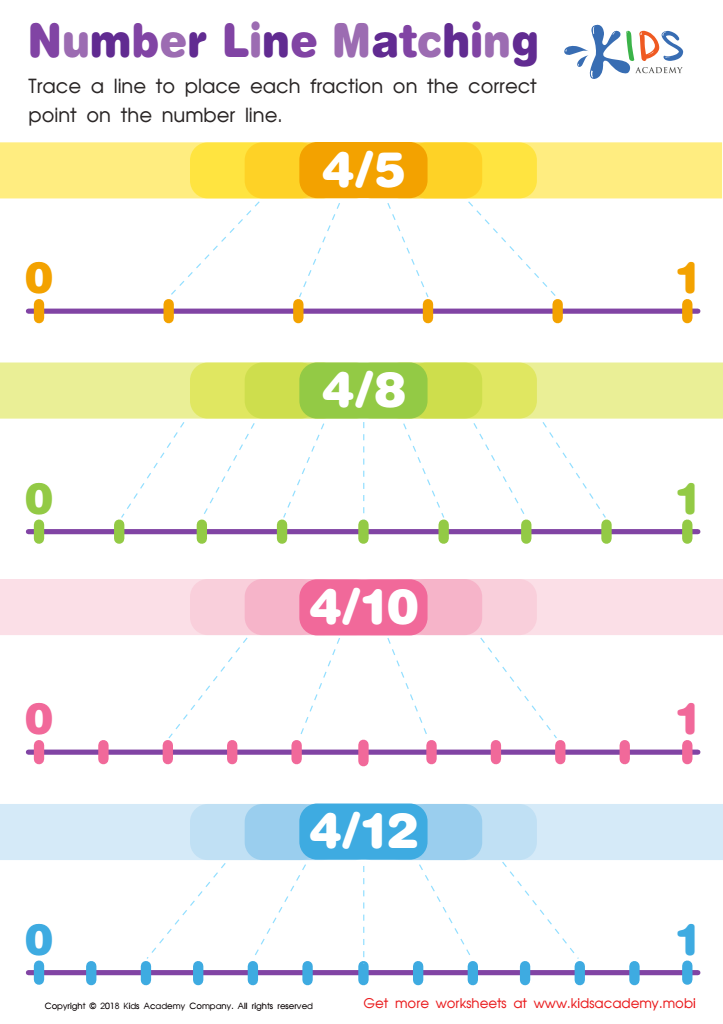
Number Line Matching Worksheet
 Assign to My Students
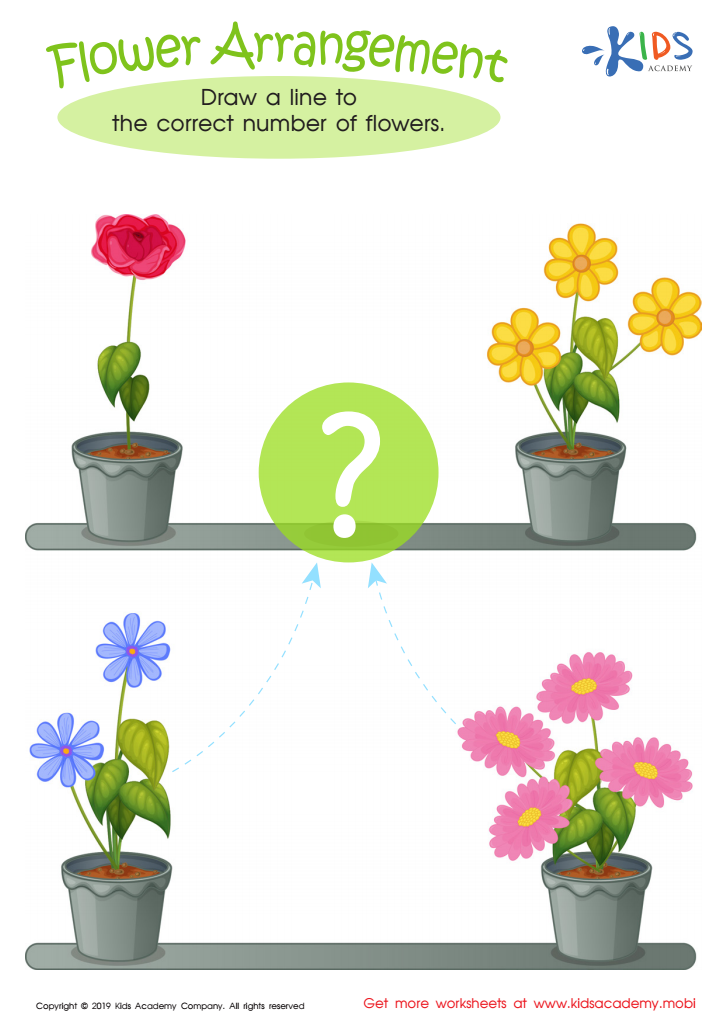
Flower Arrangement Worksheet
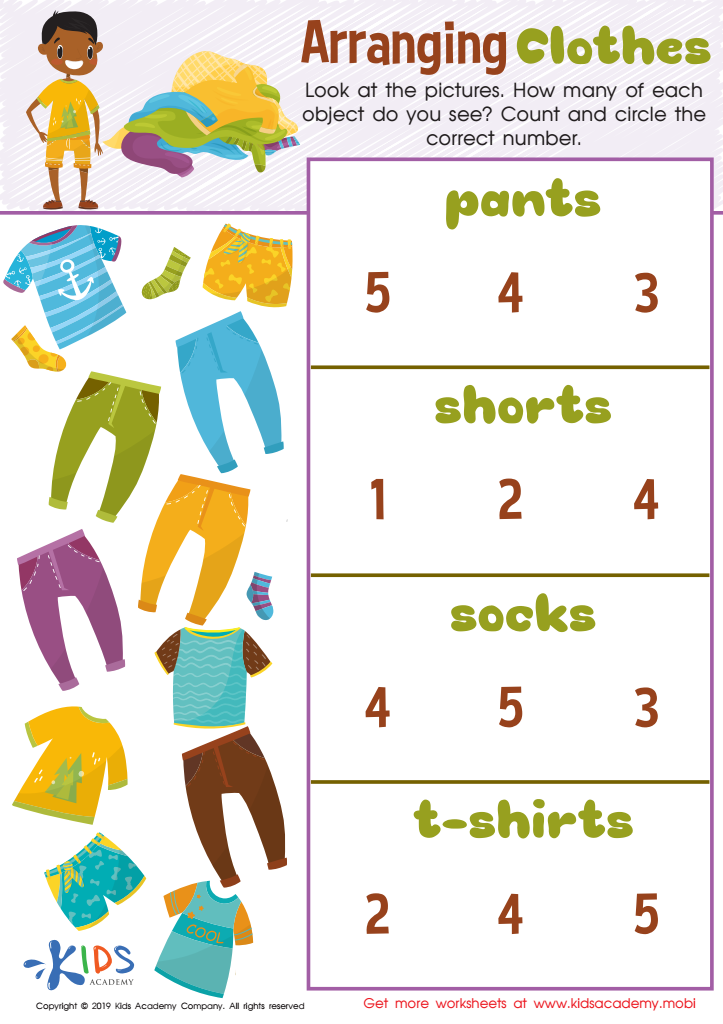
Arranging Clothes Worksheet
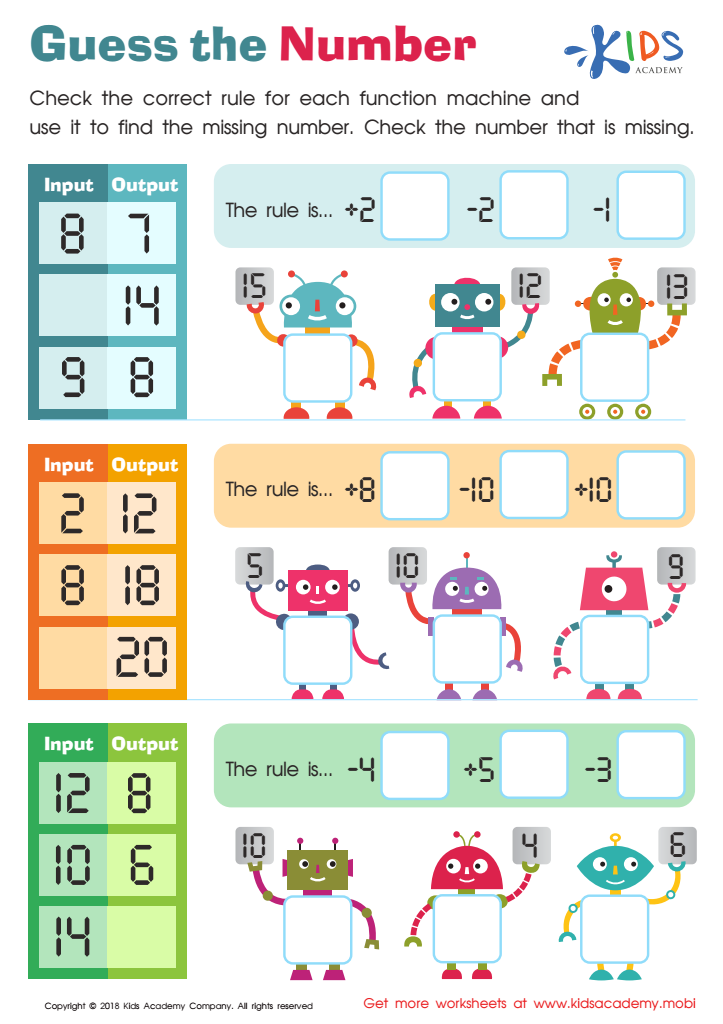
Guess the Number Worksheet
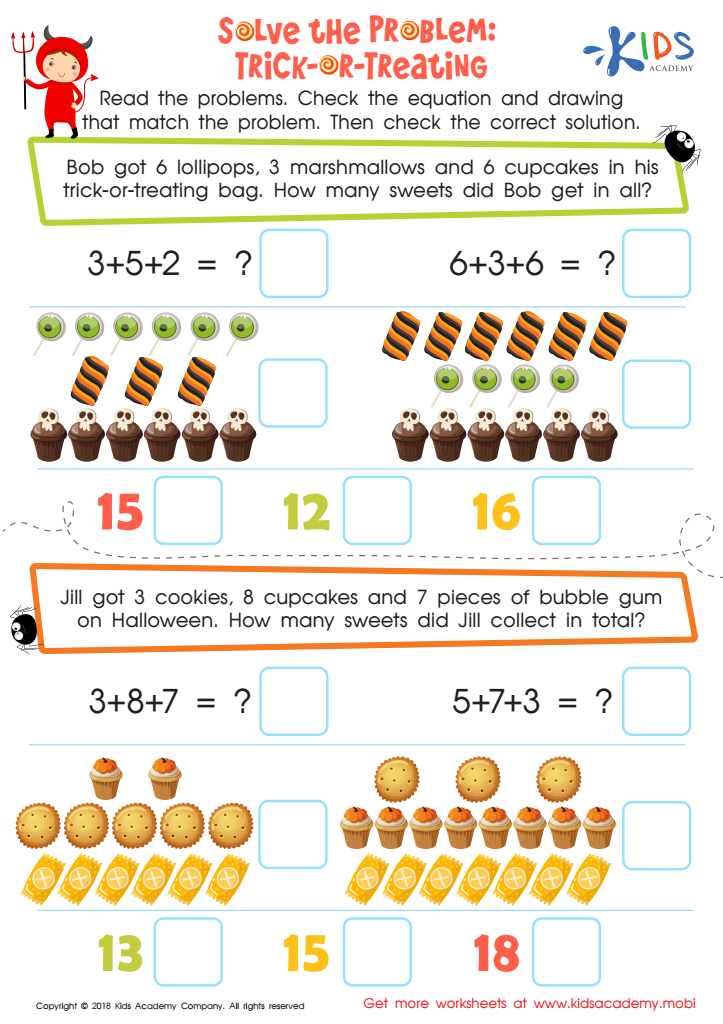
Solve the Problem: Trick–or–treating Worksheet



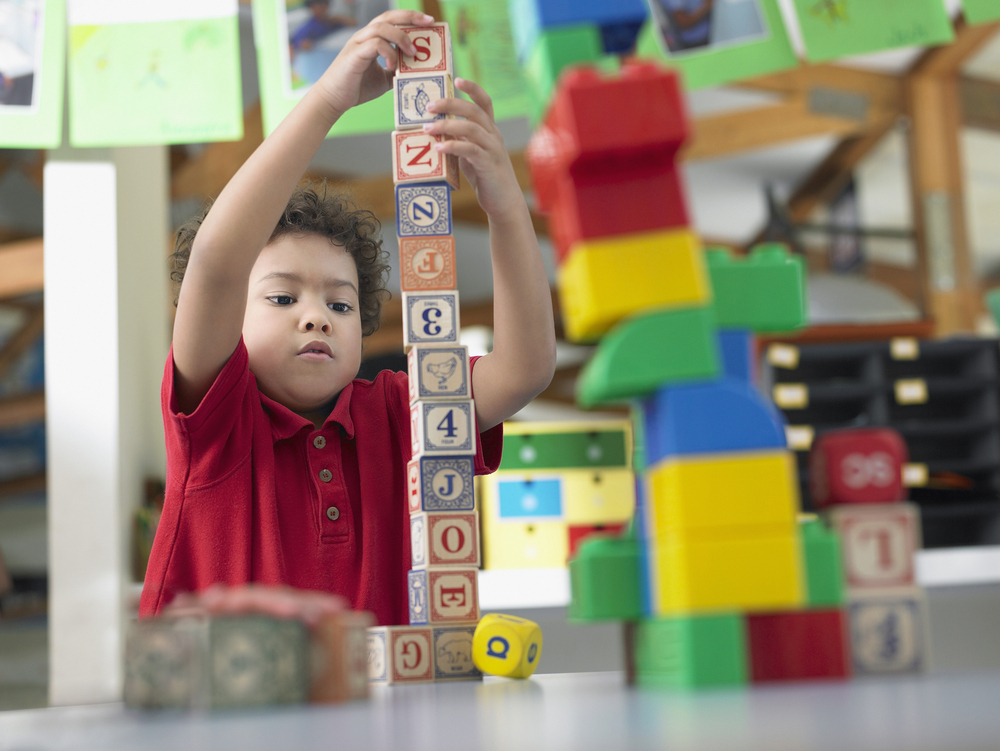




Logical reasoning with numbers is a crucial skill for children aged 4-8 as they lay the foundation for critical thinking and problem-solving abilities. At this age, children are naturally curious and eager to learn. Engaging them in logical reasoning activities helps sharpen their analytical skills, fostering a mindset that thrives on inquiry and exploration.
Parents and teachers should care about this focus because it enhances a child’s ability to understand relationships between numbers and concepts. This not only prepares them for future math learning but also supports their confidence in a subject that many find daunting as they grow older. Additionally, encouraging logical reasoning promotes cognitive development, supporting memory retention and the ability to draw connections between different pieces of information.
Activities that involve logical reasoning promote collaborative learning experiences, fostering communication and teamwork among peers. These interactions are vital as children learn to express their thoughts clearly and learn from others. Ultimately, prioritizing logical reasoning with numbers equips children with essential life skills, preparing them to navigate complex situations both inside and outside the classroom, making it a core area of focus for parents and educators alike.








