
Number representation Numbers Worksheets for Ages 4-8
3 filtered results
Difficulty Level
Grade
Age
-
From - To
Subject
Activity
Standards
Explore our engaging Number Representation Numbers Worksheets for ages 4-8, designed to make learning fun and effective! These colorful and captivating worksheets help young learners grasp the foundations of numbers and their representations with ease. Perfect for preschoolers and early elementary students, our activities include matching numbers to objects, recognizing number patterns, and exciting counting games. Developed by educational experts, these worksheets aim to build strong mathematical skills and confidence in young minds. Download now from Kids Academy to give your child a wonderful head start on their numerical journey!
Favorites
With answer key
Interactive
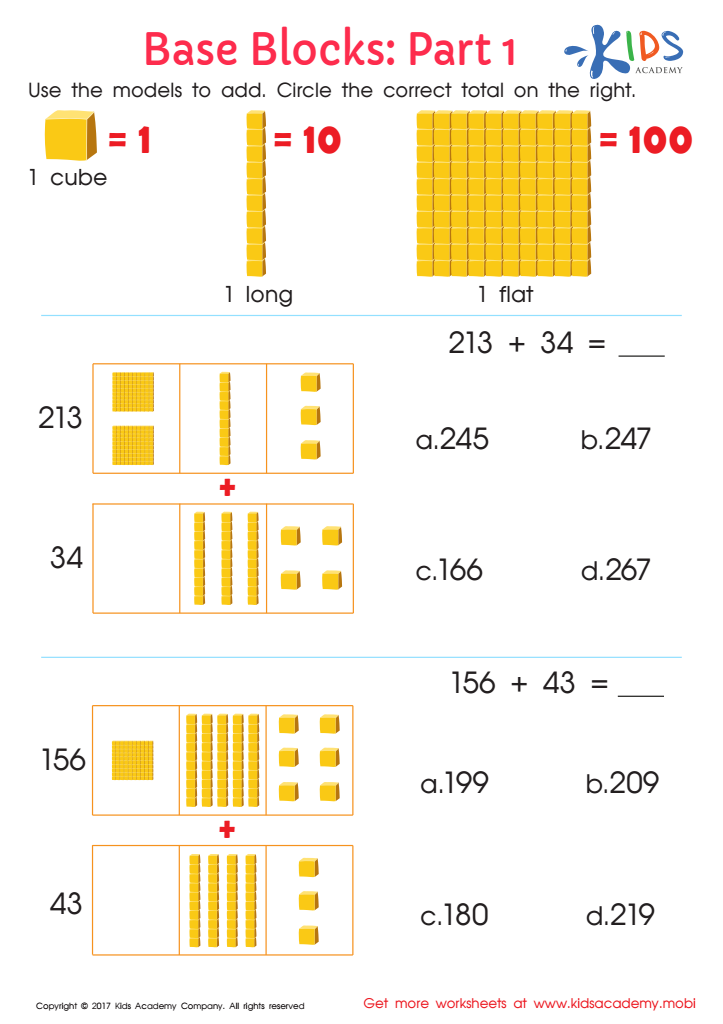
Base Ten Blocks Worksheet: Part 1
They promote numeracy and are a great substitute when kids don't have access to physical blocks.
 Assign to My Students
Base Ten Blocks Worksheet: Part 1
Worksheet
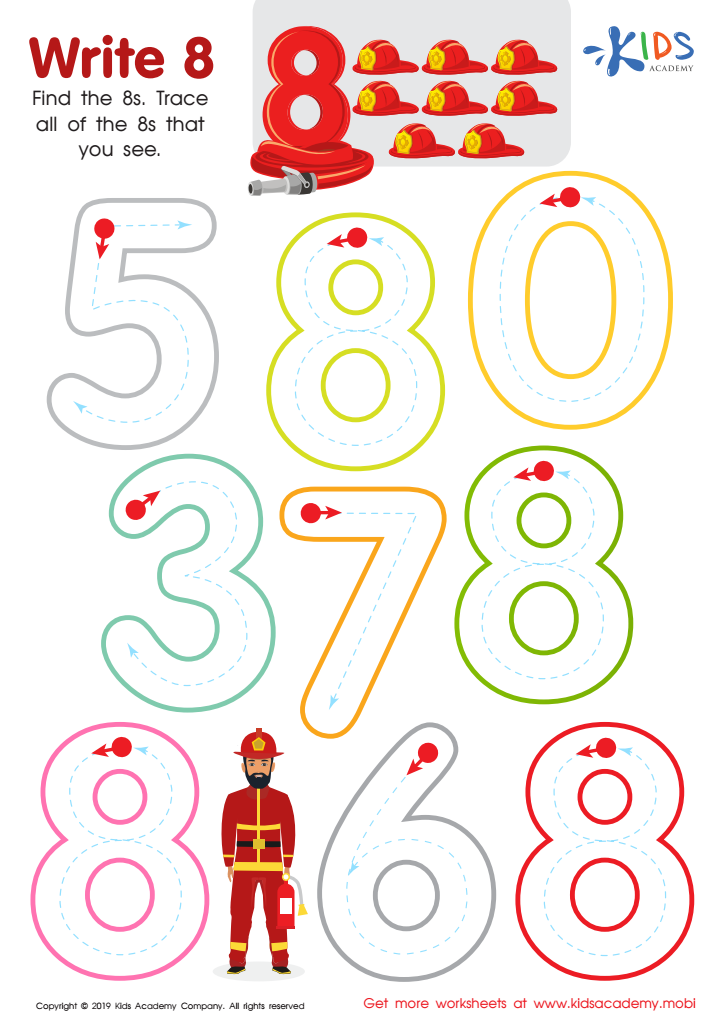
Write 8 Worksheet
Once your kids can count small numbers, it's time to learn how to write them. With your help and patience, they will soon be pros! This worksheet will make learning easier. Help them spot the 8s in the picture, then help them trace them.
Write 8 Worksheet
Worksheet
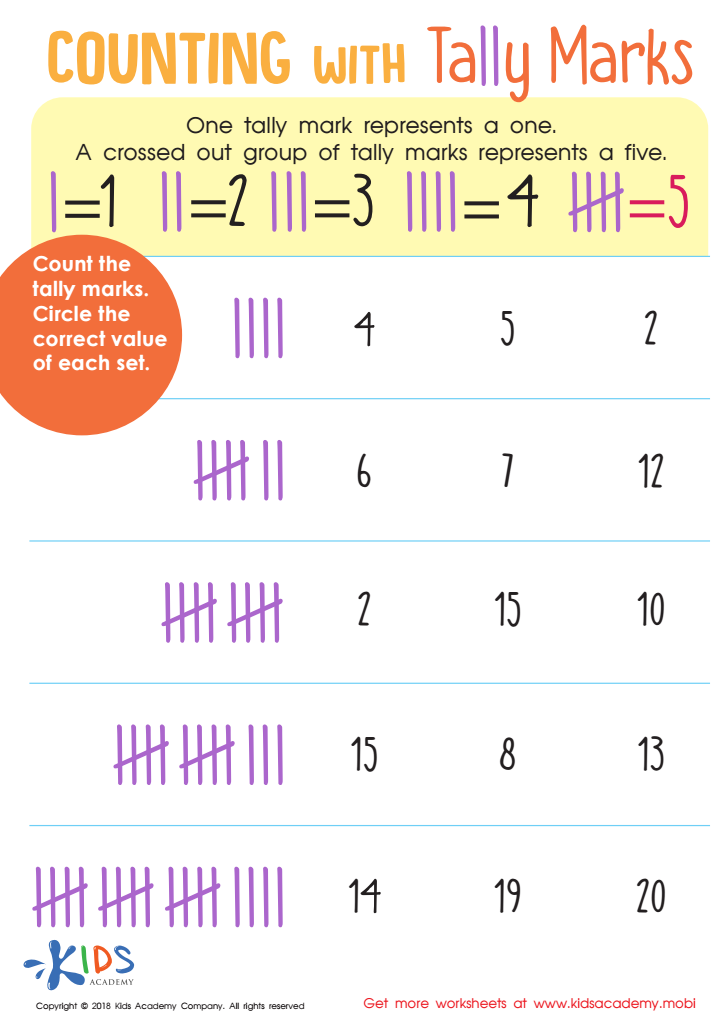
Counting with Tally Marks Worksheet
Young mathematicians can use tally marks to count on or back, and learn to give larger numbers value with efficiency. This PDF teaches them that each tally equals one and five can be grouped together to add/subtract quickly and accurately. They can then use tallies for math problems and scorekeeping during games with friends.
Counting with Tally Marks Worksheet
Worksheet
Join Kids Academy for Free
Who is primarily going to use this learning content?







Parents and teachers should care about number representation for children aged 4-8 because it lays the foundational skills for mathematics and broader cognitive development. During these formative years, children form their initial understanding of numbers, which is essential for future mathematical learning. Number representation helps kids grasp basic concepts like counting, addition, and subtraction, which are vital for everyday problem-solving and academic success.
Understanding numbers and their relationships develops critical thinking and logical reasoning skills. Early exposure also boosts confidence in handling mathematical tasks, reducing math anxiety later in life. Moreover, number representation influences abilities in other subjects, such as science and engineering, which rely heavily on math.
Interactive and engaging methods of teaching numbers can make learning enjoyable and foster a positive attitude toward education. Visual and hands-on activities, like counting objects or using number lines, can also cater to different learning styles, making math accessible to all students.
Lastly, early number representation supports social skills. Activities involving sharing, grouping, and comparing quantities provide opportunities for children to collaborate, communicate, and learn from each other.
In summary, caring about number representation in early childhood sets children on a path to academic success, critical thinking, and a positive attitude toward lifelong learning.








