
Practicing multiplication Numbers Worksheets for Ages 4-8
3 filtered results
Difficulty Level
Grade
Age
-
From - To
Subject
Activity
Standards
Boost your child's arithmetic skills with our Practicing Multiplication Numbers Worksheets designed for ages 4-8. These engaging and colorful worksheets make learning multiplication fun and easy, helping young learners grasp foundational concepts through a variety of fun activities. By progressively introducing multiplication in a child-friendly manner, we ensure that kids build confidence as they master basic math operations. Featuring an array of illustrations and exercises tailored for early elementary students, our worksheets cater to different learning styles, making numeracy a breeze. Equip your child with the tools they need to excel in math while fostering a love for learning.
Favorites
With answer key
Interactive
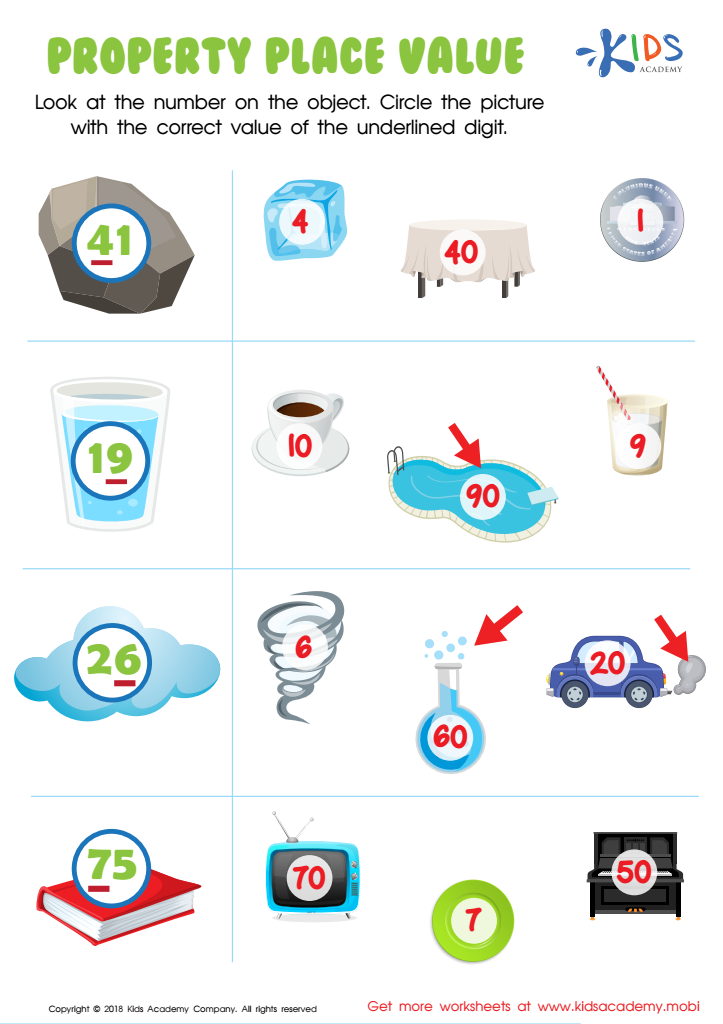
Property Place Value Worksheet
Help your child learn place value with this engaging worksheet! Kids Academy knows that colorful pictures motivate learners. Instruct them to name the place value of the underlined numbers on the left. Then, look through the images on the right to find the numbers that represent the indicated place value.
 Assign to My Students
Property Place Value Worksheet
Worksheet
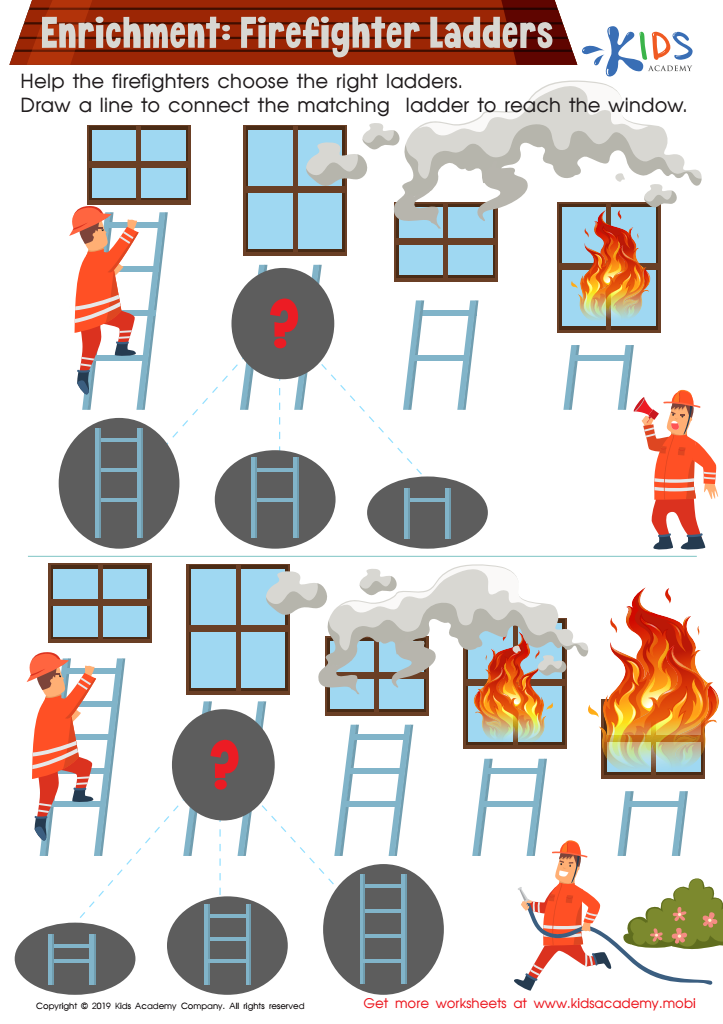
Enrichment: Firefighter Ladders Worksheet
Firefighters are vital to their communities. If your kids want to become firefighters, they'll love this worksheet. Ask them to spot the firemen in the picture. Then, help the firemen pick the right ladders to reach the windows. Draw lines to connect the ladders that match. It's a great learning activity!
Enrichment: Firefighter Ladders Worksheet
Worksheet
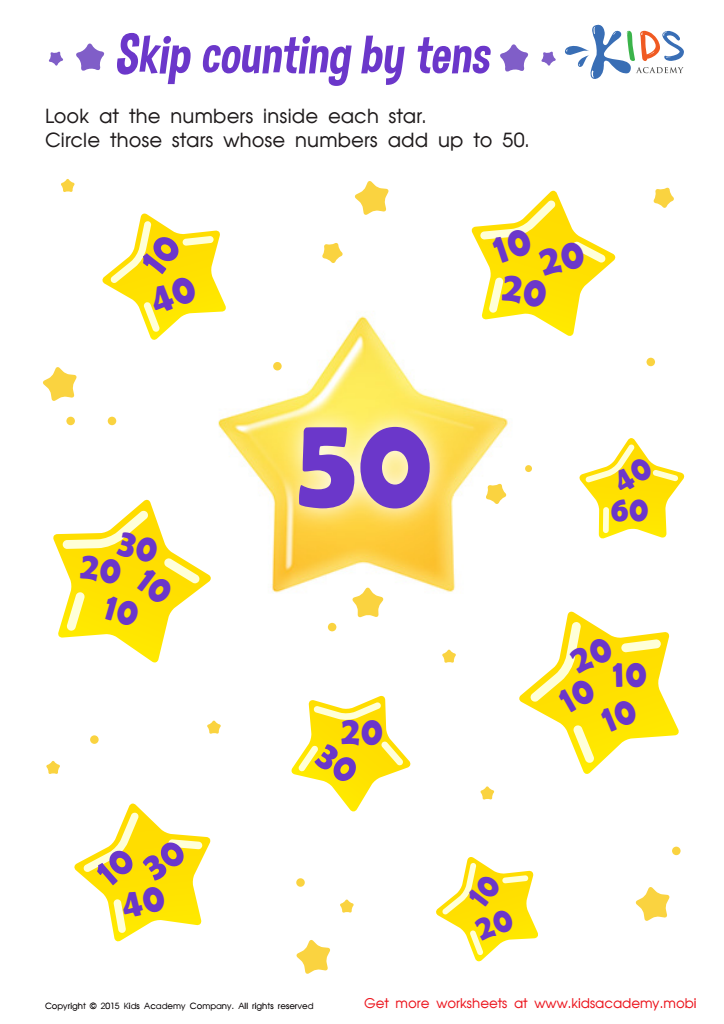
Learn Dozens: Skip Counting by Tens Printable
This skip counting by 10 worksheet helps kids strengthen fluency, practice addition & build number sense. They'll use problem-solving skills to find the correct answer, which is revealed by stars. This worksheet is a fun way to practice crucial foundational math skills.
Learn Dozens: Skip Counting by Tens Printable
Worksheet
Join Kids Academy for Free
Who is primarily going to use this learning content?








Practicing multiplication in early childhood, specifically for ages 4-8, holds significant importance and should be a focus for both parents and teachers. During this foundational stage, young minds are extremely receptive and can absorb new concepts more easily. Introducing multiplication early nurtures mathematical thinking and helps children understand patterns and relationships in numbers.
Understanding multiplication lays the groundwork for more advanced math skills such as division, fractions, and algebra. It also aids in developing problem-solving abilities and logical thinking. When children learn multiplication through engaging, hands-on activities, it reinforces their confidence and sets a positive attitude towards mathematics in general.
Parents and teachers can foster learning through playful interactions and consistent practice, which ensures that multiplication becomes second nature. By incorporating multiplication into daily routines and play, children can grow familiar with these concepts without feeling pressured. This approach often leads to a deeper interest and enjoyment in math.
Early mastery of multiplication not only benefits academic achievement but also cultivates a growth mindset, resilience, and the joy of learning. Thus, dedicating time and effort towards multiplication practice for young children can have long-lasting effects on their overall academic journey and intellectual development.








