Understanding number sequence Numbers Worksheets for Ages 4-8
3 filtered results
-
From - To
Discover our engaging Understanding Number Sequence Worksheets, designed for children ages 4-8! At Kids Academy, we provide fun and interactive activities to help young learners grasp the concept of number sequences. Our worksheets are colorful, easy-to-follow, and foster essential math skills, such as counting, ordering, and recognizing patterns. Each worksheet is crafted to build confidence and develop a strong foundation in early math education. Perfect for both classroom use and at-home practice, our resources make learning enjoyable and effective. Explore our collection today and support your child’s journey in mastering number sequences!
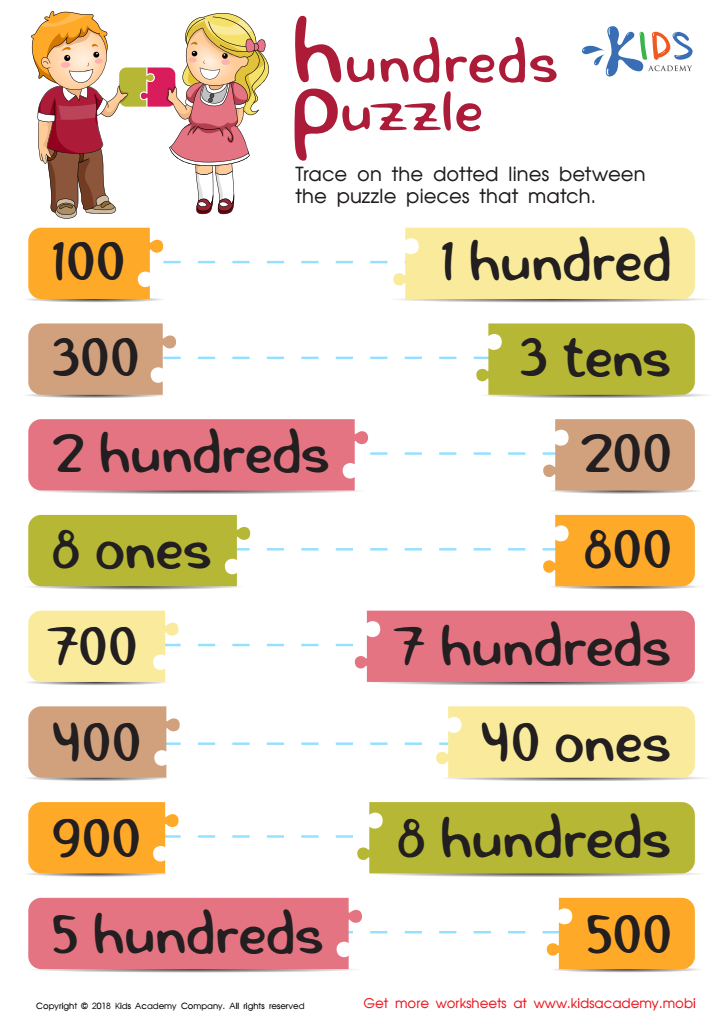
Hundreds Puzzle Worksheet
 Assign to My Students
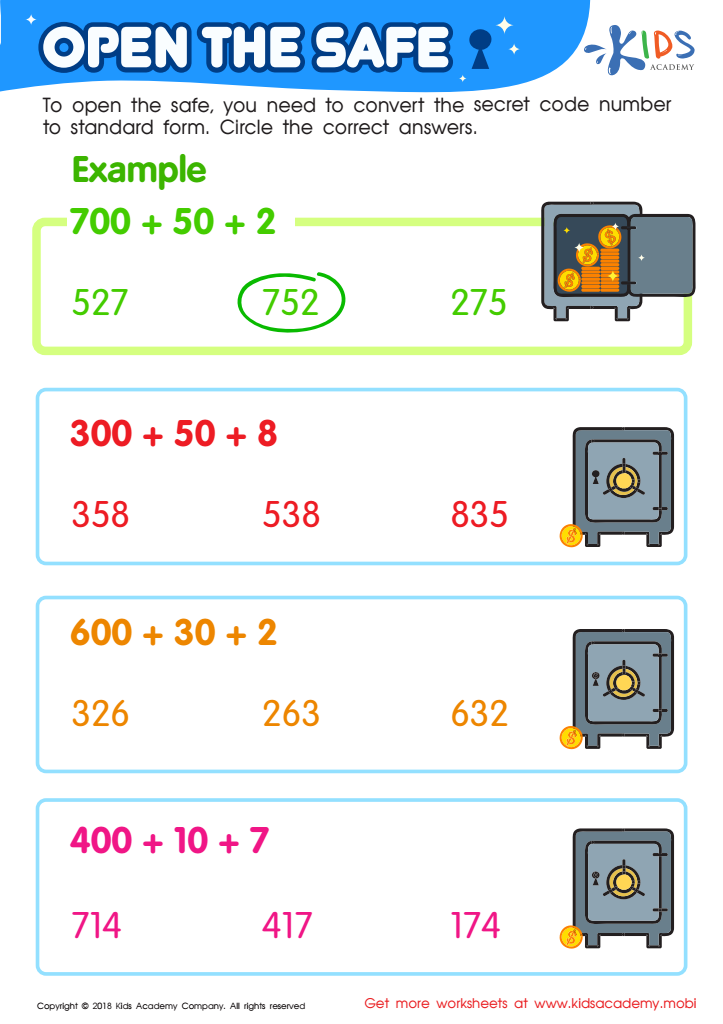
Open the Safe Worksheet
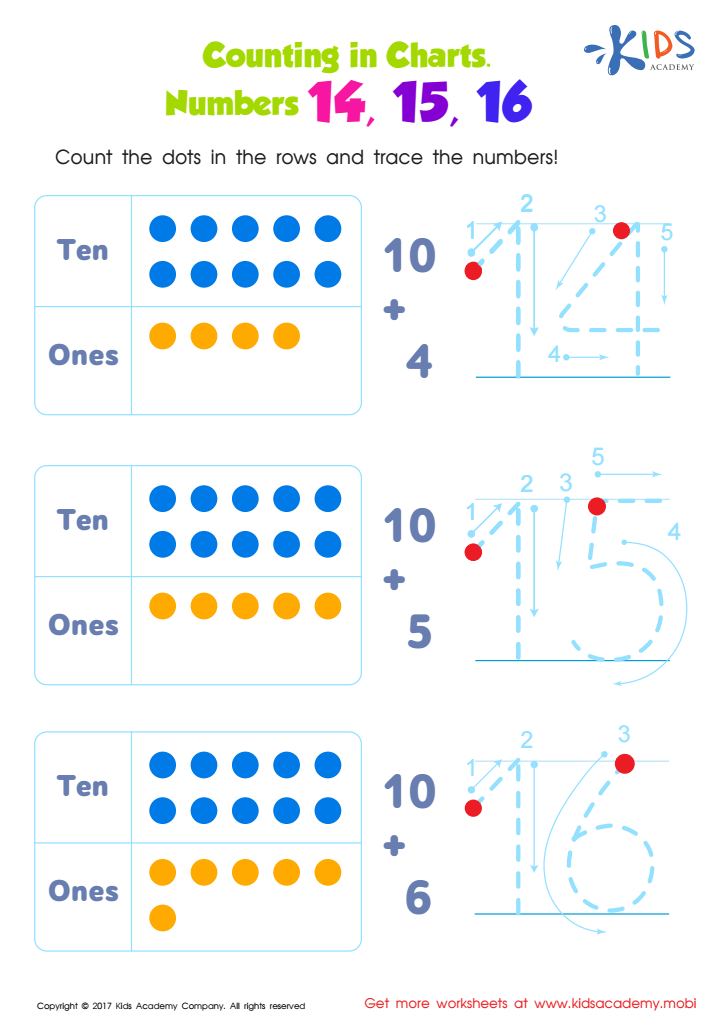
Number Tracing Worksheet








Understanding number sequences is foundational for children ages 4-8 as it plays a crucial role in their overall mathematical development. At this age, children begin to grasp the concept of numbers, which underpins their ability to perform more complex mathematical tasks in the future, such as addition, subtraction, and multiplication. Learning number sequences helps to build their numerical fluency and confidence, making math less daunting as they progress academically.
From a cognitive perspective, recognizing patterns and sequences strengthens problem-solving skills and logical thinking. These abilities extend beyond math, as they are fundamental to understanding and organizing information in all subjects, including reading and science.
For parents and teachers, fostering an environment where number sequences are regularly practiced can make learning engaging and fun. Simple activities like counting games, interactive apps, and daily number-based tasks help reinforce these concepts. A child proficient in number sequences will likely find higher mathematical concepts more accessible, giving them a head start in education.
Moreover, early mastery of number sequences is a predictor of school readiness and academic success. By emphasizing the importance of this skill, parents and teachers lay a solid foundation for future learning, thereby fostering a positive attitude towards education overall.








