Comparing object weights Math Worksheets for Ages 4-8
3 filtered results
-
From - To
Discover our engaging "Comparing Object Weights Math Worksheets" designed for children aged 4-8! These attractive, printable resources help kids master weight comparison through interactive, hands-on activities. Available on Kids Academy, the worksheets feature fun visuals and exercises that teach critical thinking, pairing objects and fostering an early understanding of measurement. Perfect for home or classroom use, these worksheets transform learning into an enjoyable adventure, ensuring that young learners grasp the concept of heavy vs. light successfully. Parents and teachers can boost their child's early math skills with these effective, age-appropriate worksheets. Unleash your child's potential today!
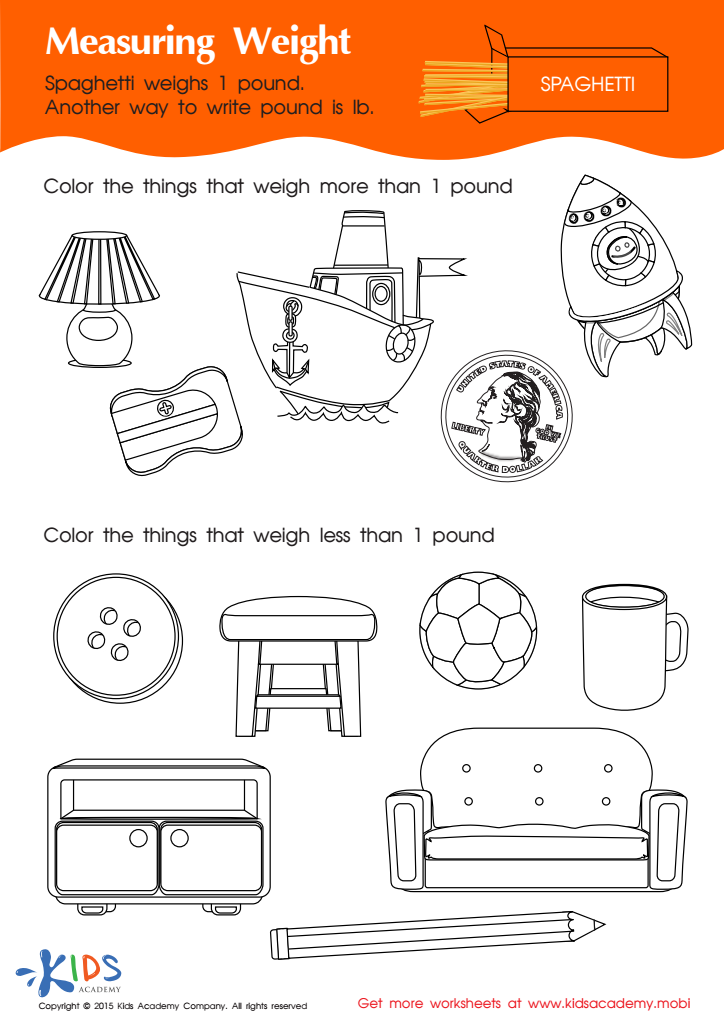
 Assign to My Students
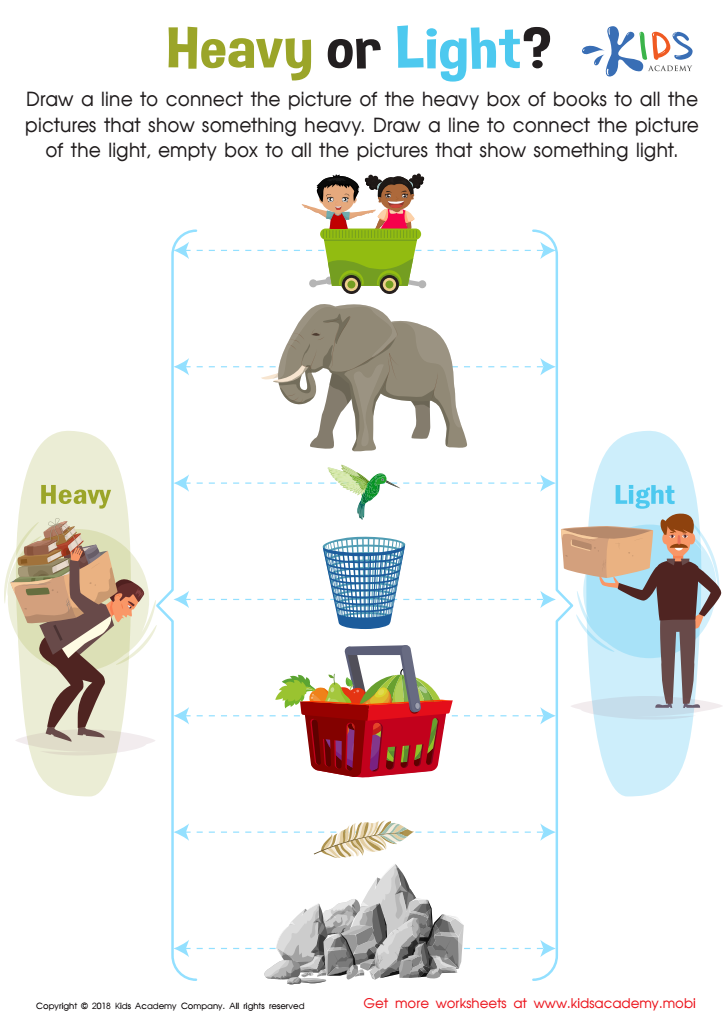
Heavy or Light? Worksheet
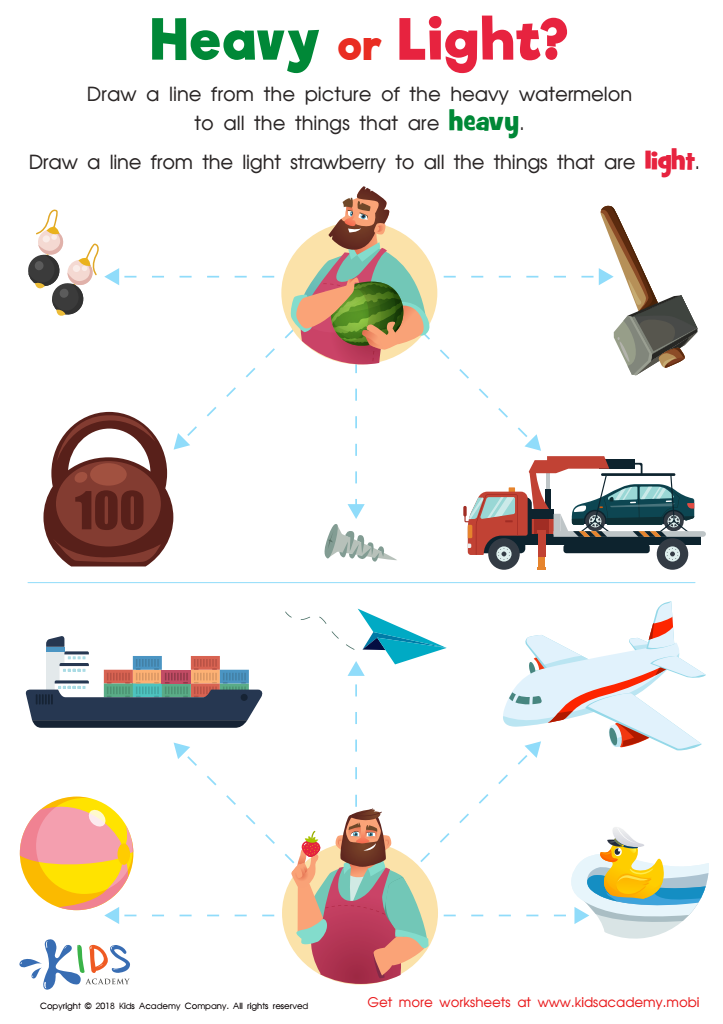
Heavy or Light? Worksheet








Teaching children aged 4-8 to compare object weights is crucial because it lays the foundation for essential mathematical skills and everyday problem-solving abilities. Understanding weight helps children develop a sense of measurement, an important aspect of their cognitive development. During early childhood, learning through hands-on activities is most effective. Comparing the weights of different objects makes abstract mathematical concepts tangible and accessible.
These activities support the development of critical thinking and reasoning skills. When children hold, lift, and compare objects, they make hypotheses and draw conclusions, practicing scientific thinking. By asking questions like "Which is heavier?" or "How do these objects compare in weight?" parents and teachers encourage language development and inquisitiveness.
Moreover, the early introduction to these concepts prepares children for more complex topics in their later education. Experience with comparing weights supports their understanding of balance, scale, and measurement units—all foundational skills for subjects like physics and engineering.
Incorporating weight comparison in the classroom or at home aids in holistic development, intertwining motor skills through lifting and maneuvering objects with intellectual growth. Consequently, caring about comparing object weights helps nurture well-rounded, curious, and capable young learners ready for future challenges.








