Comparing objects Math Worksheets for Ages 4-8
8 filtered results
-
From - To
Enhance your child's learning experience with our Comparing Objects Math Worksheets, designed specifically for children ages 4-8! These engaging worksheets will help young learners develop essential comparing skills through fun activities that include identifying similarities and differences between various objects. Kids will improve their critical thinking and math abilities while engaging with colorful illustrations and interactive exercises. Perfect for both classroom settings and at-home learning, our worksheets encourage creativity and information retention. Empower your child to master the concepts of more, less, and equal, while enjoying the process of comparing objects in a playful and educational environment!
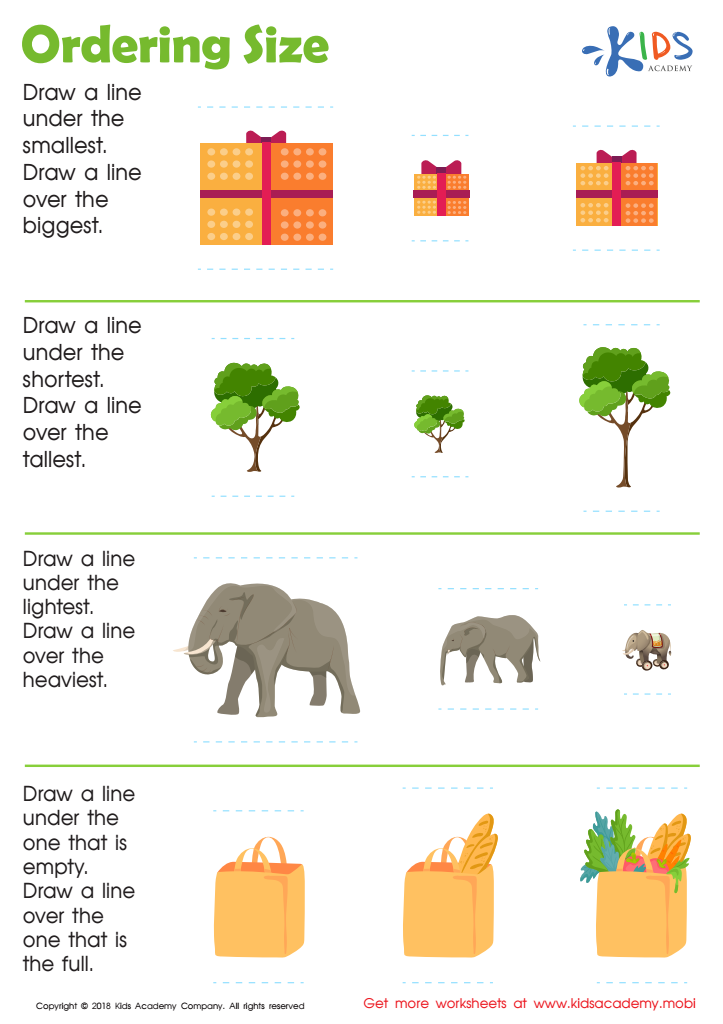
Ordering Size Worksheet
 Assign to My Students
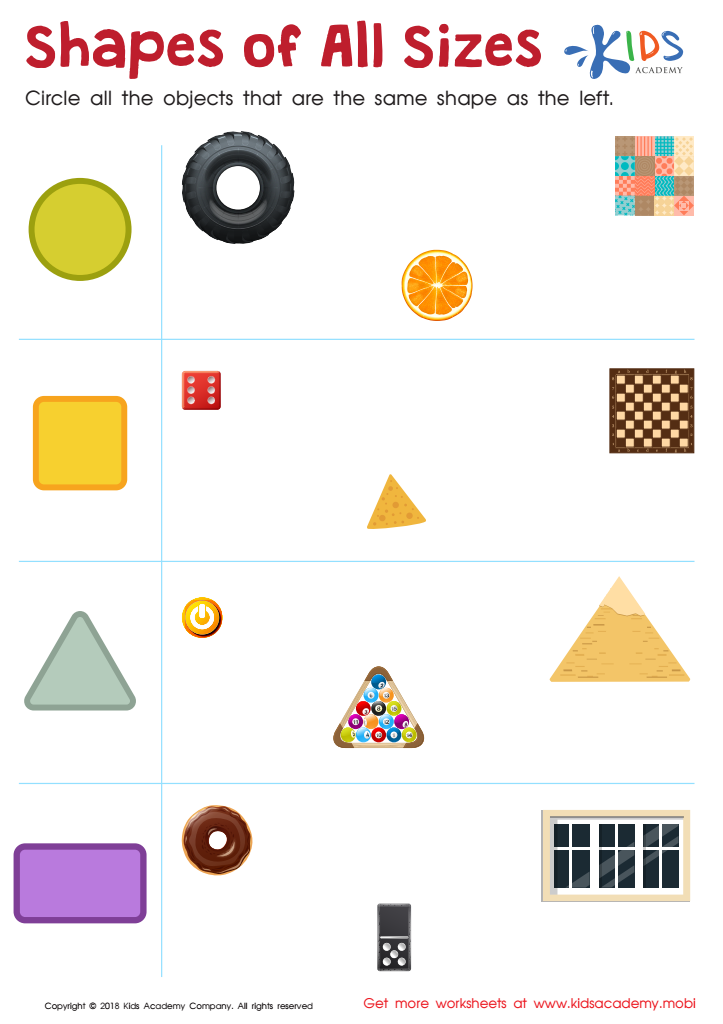
Shapes of All Sizes Worksheet
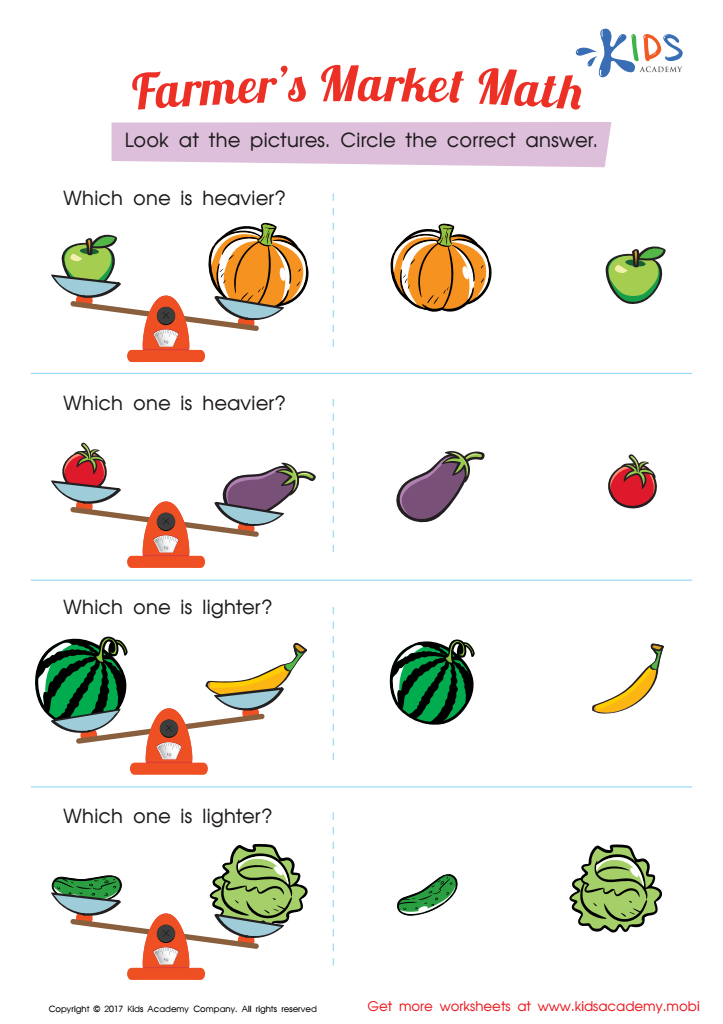
Which One Is Heavier Worksheet
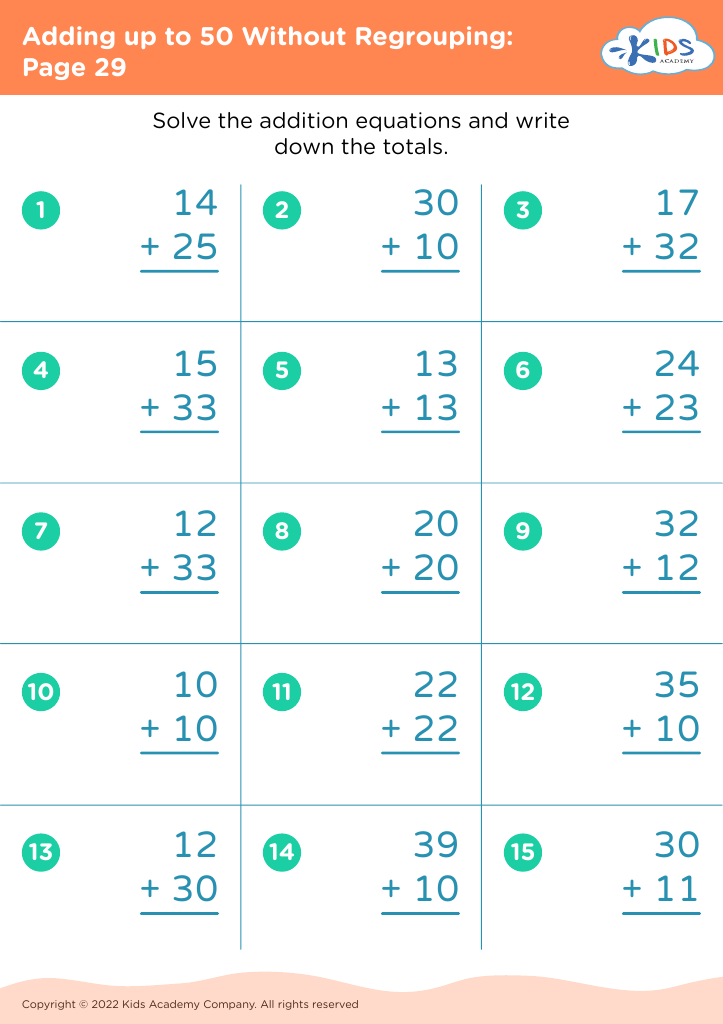
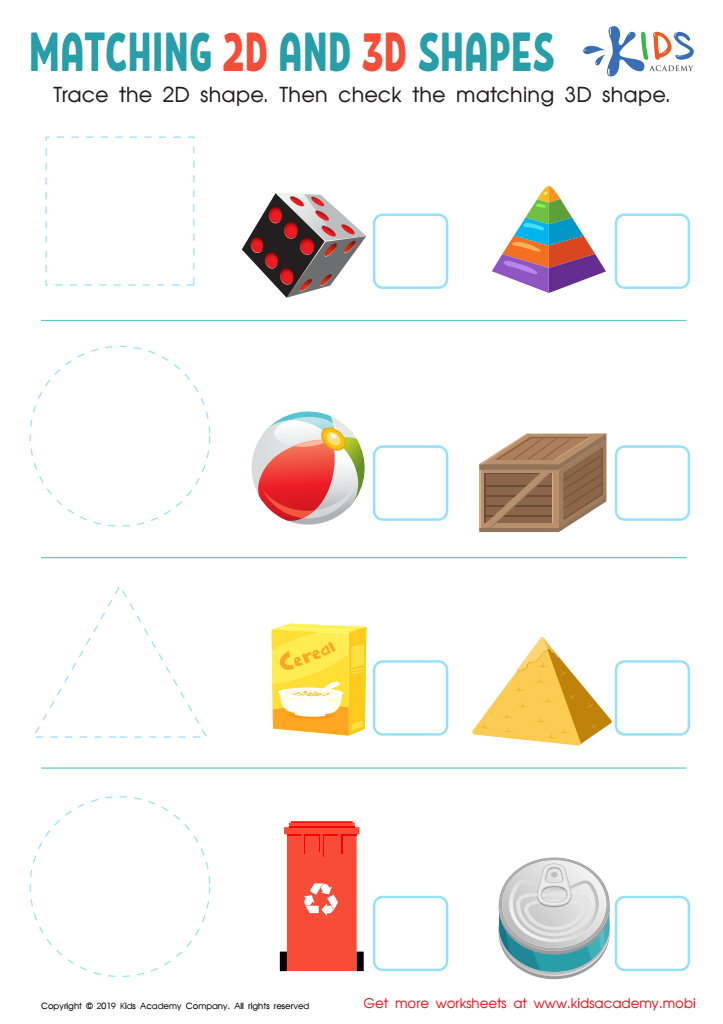
Matching 2D and 3D Shapes Worksheet
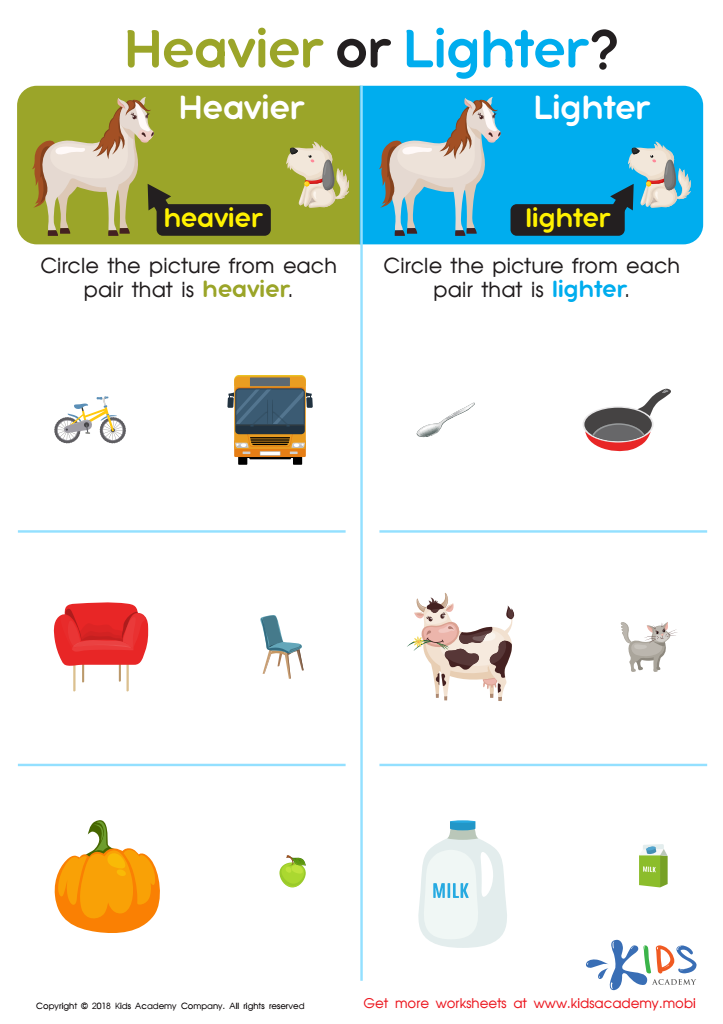
Heavier or Lighter? Worksheet
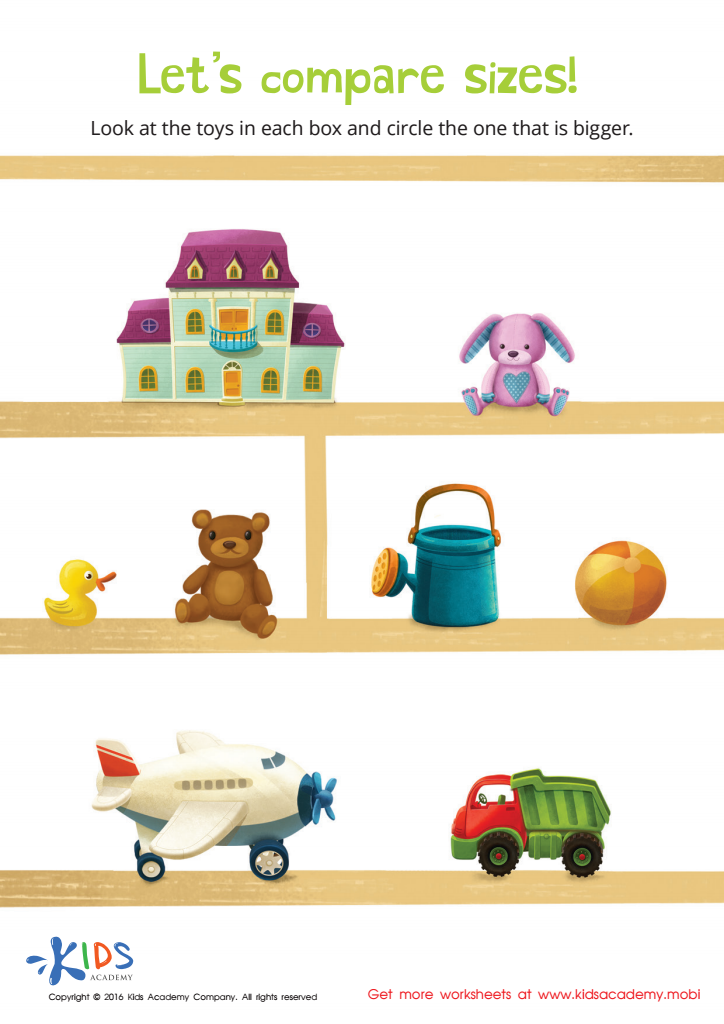
Classifying by Size Sorting Worksheet






Comparing objects is a foundational math skill for children aged 4-8 that plays a crucial role in their cognitive and mathematical development. This skill involves assessing attributes such as size, weight, length, and quantity, fostering critical thinking and analytical abilities. When parents and teachers engage children in comparing objects, they promote an understanding of concepts like more/less, greater/smaller, and equal/unequal, which are essential for later mathematical operations.
Furthermore, this activity facilitates vocabulary development, as children learn descriptive language to express their observations. For instance, terms like “taller,” “heavier,” or “similar” enrich communication skills. Engaging in such comparisons also enhances children's problem-solving abilities, encouraging them to make decisions based on evidence.
Additionally, it connects children's everyday experiences to formal math concepts—reinforcing the value of math in real life. For example, noticing which fruit is larger or grouping similar items helps students visualize numbers and quantities. Ultimately, by emphasizing the importance of comparing objects in math, parents and teachers lay the groundwork for more complex mathematical concepts, fostering a love for learning and contributing to a child’s overall academic success. This early engagement nurtures curious minds, setting the stage for lifelong learners.








