
Develop problem-solving abilities Math Worksheets for Ages 4-8
4 filtered results
Difficulty Level
Grade
Age
-
From - To
Subject
Activity
Standards
Nurture your child’s critical thinking with our "Develop Problem-Solving Abilities Math Worksheets for Ages 4-8." Designed to engage young minds, these worksheets offer a variety of activities focusing on fundamental math skills such as addition, subtraction, patterns, and shapes. Each worksheet encourages kids to think logically, enhancing their problem-solving abilities in a fun and interactive way. Perfect for both classroom and home use, our worksheets make learning math enjoyable and effective, setting a solid foundation for future academic success. Download now to help your child build confidence and excel in math!
Favorites
With answer key
Interactive
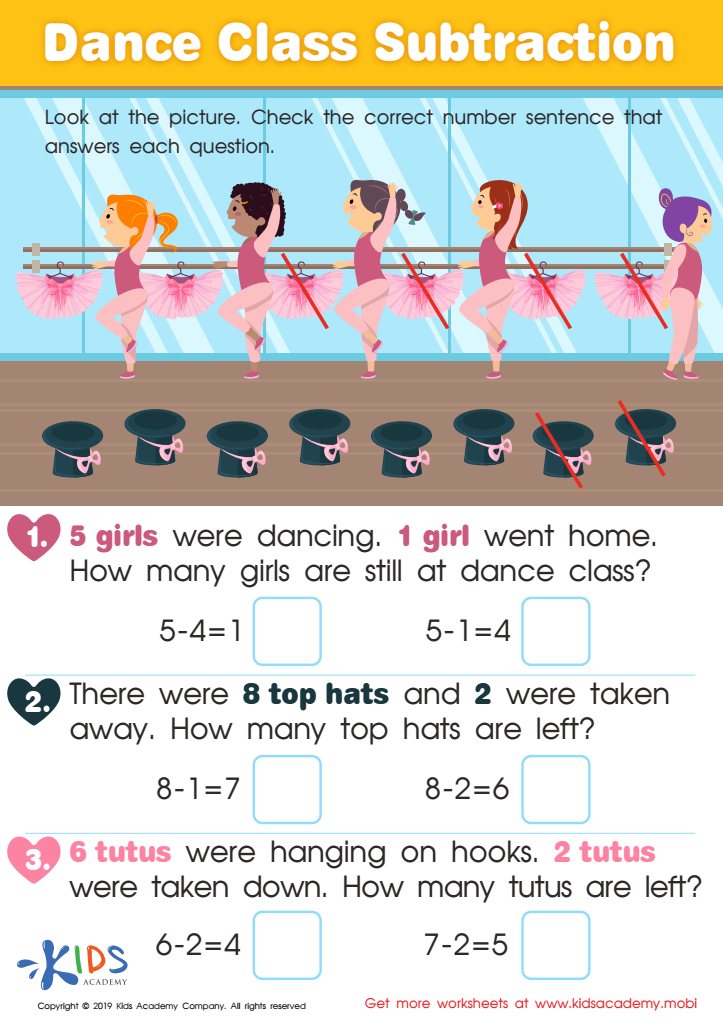
Dance Class Subtraction Worksheet
Dancing is an excellent form of exercise, and some people dance professionally, expressing their feelings through body movements. Help your kids identify the type of dance in the picture and answer the word problems in this worksheet. Encourage them to check the correct number sentence that answers the question.
 Assign to My Students
Dance Class Subtraction Worksheet
Worksheet
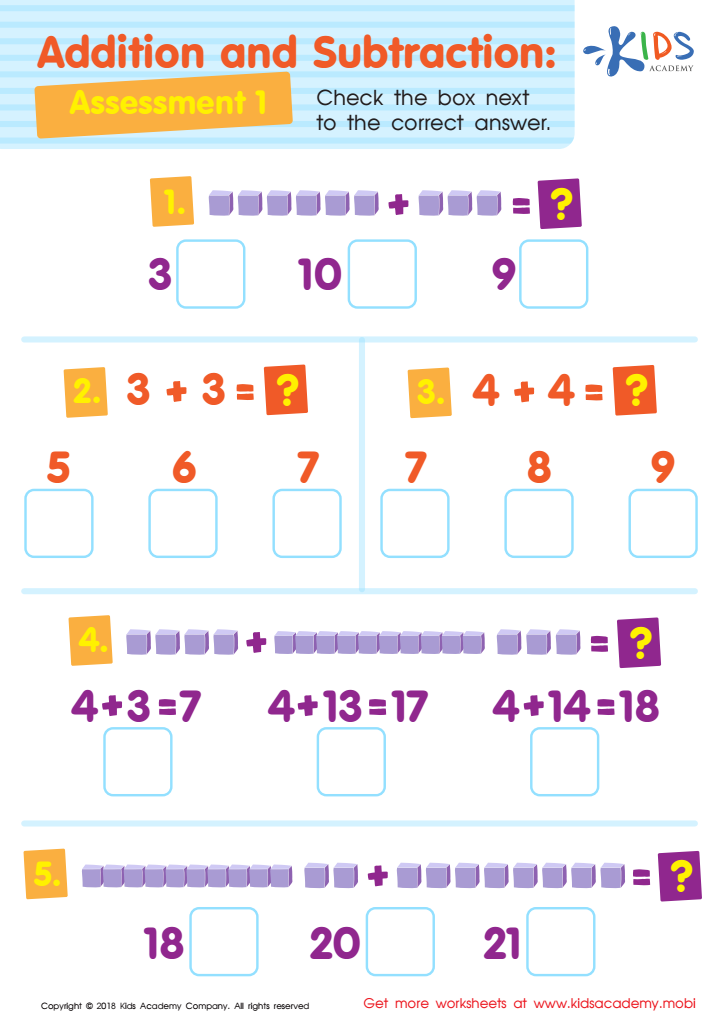
Addition and Subtraction Assessment 1 Worksheet
Kids often find math difficult, even adults! But it's important they learn the basics, like adding and subtracting. Use this worksheet to help them practice. Check the box next to the correct answer for each equation. It's a great way to give them a jump start and help them succeed in math.
Addition and Subtraction Assessment 1 Worksheet
Worksheet
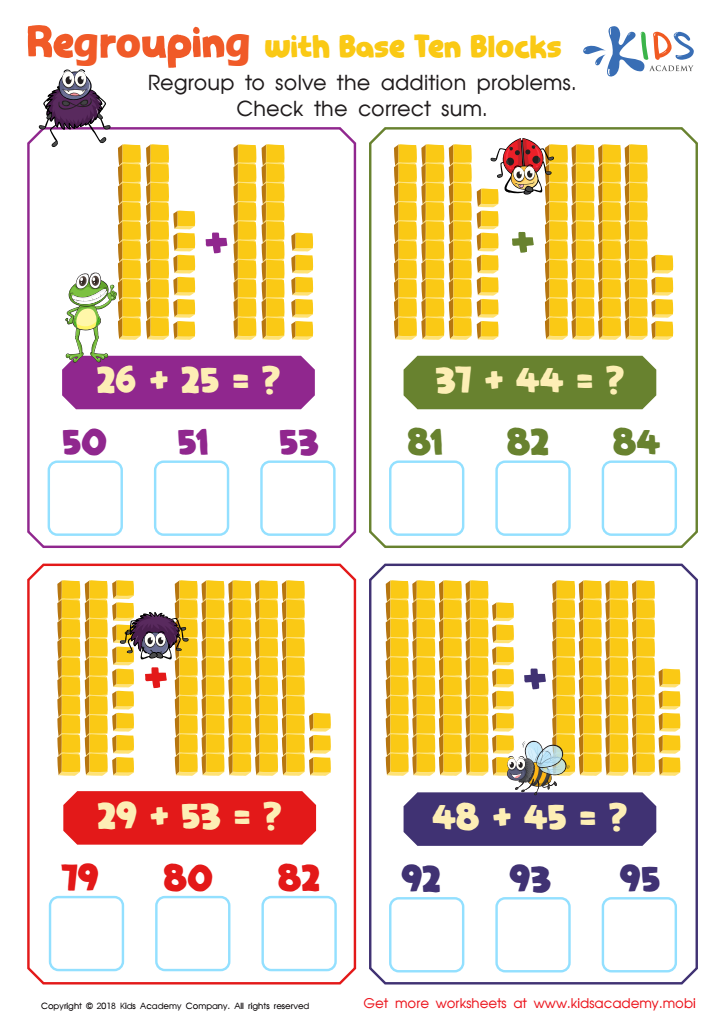
Regrouping With Base Ten Blocks Worksheet
Challenge your child to regroup the base ten blocks and solve the four equations in this worksheet. This exercise requires counting and adding up in base ten. When they are done, help them check the correct sum.
Regrouping With Base Ten Blocks Worksheet
Worksheet
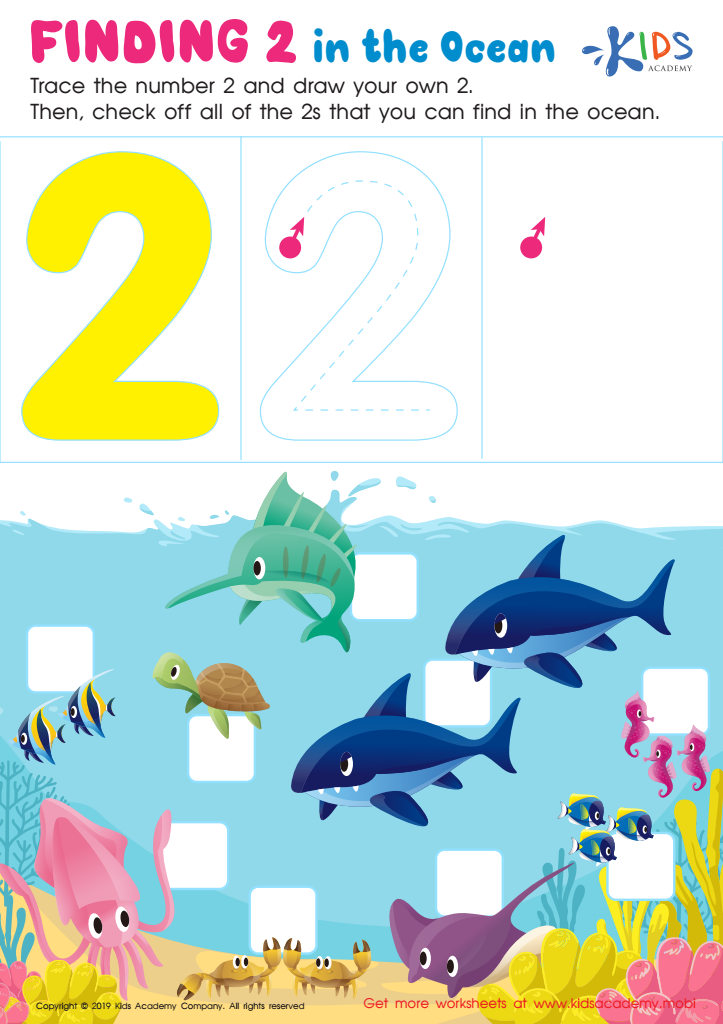
Finding 2: In the Ocean Worksheet
Kids start their math journey with basic numbers. Finger counting, number representation with pictures and this worksheet help build number sense. Kids trace lines and dots to write the number two and identify groups of two sea creatures for easy success and to feel proud of their math skills.
Finding 2: In the Ocean Worksheet
Worksheet
Join Kids Academy for Free
Who is primarily going to use this learning content?








Parents and teachers should prioritize developing problem-solving abilities in math for children aged 4-8 because these early years are foundational for cognitive development and lifelong learning. At this stage, children's brains are highly receptive to new information and experiences. By introducing them to problem-solving in math, we help build critical thinking and reasoning skills that extend beyond numeracy.
When children engage in mathematical problem-solving, they learn to analyze situations, identify patterns, and formulate solutions creatively and systematically. These skills contribute to a solid mathematical foundation, making future learning more accessible and enjoyable.
Problem-solving in math also fosters perseverance and resilience. Young children learn that it is okay to make mistakes and that persistence leads to success. These attitudes are essential not only for academic achievements but also for personal growth and overcoming life's challenges.
Additionally, early exposure to problem-solving promotes a positive attitude towards math, reducing math anxiety that often develops later. By engaging children with interactive and enjoyable math activities, parents and teachers help instill a love for learning and curiosity about the world.
In summary, developing problem-solving abilities in math for ages 4-8 equips children with essential cognitive tools, promotes positive learning behaviors, and sets the stage for academic and personal success.








