Discover engaging Fraction Simplification Math Worksheets designed for children ages 4-8! Our worksheets provide a fun, interactive way for young learners to grasp the concept of fractions through simplification exercises. Tailored to meet the developmental needs of early mathematicians, these resources feature colorful illustrations and age-appropriate problems that enhance understanding and retention. Perfect for homeschoolers, extra practice, or classroom use, these worksheets promote critical thinking and problem-solving skills. Help your child build a strong mathematical foundation with our easy-to-understand fraction simplification activities. Download and print them today to spark curiosity and foster a love for learning!
Check out this FREE Trial Lesson on Math for age 4-8!

Lesson 1- Partitioning Shapes

Favorites
With answer key
Interactive
  • 4-8
  • Fraction simplification
  • Math
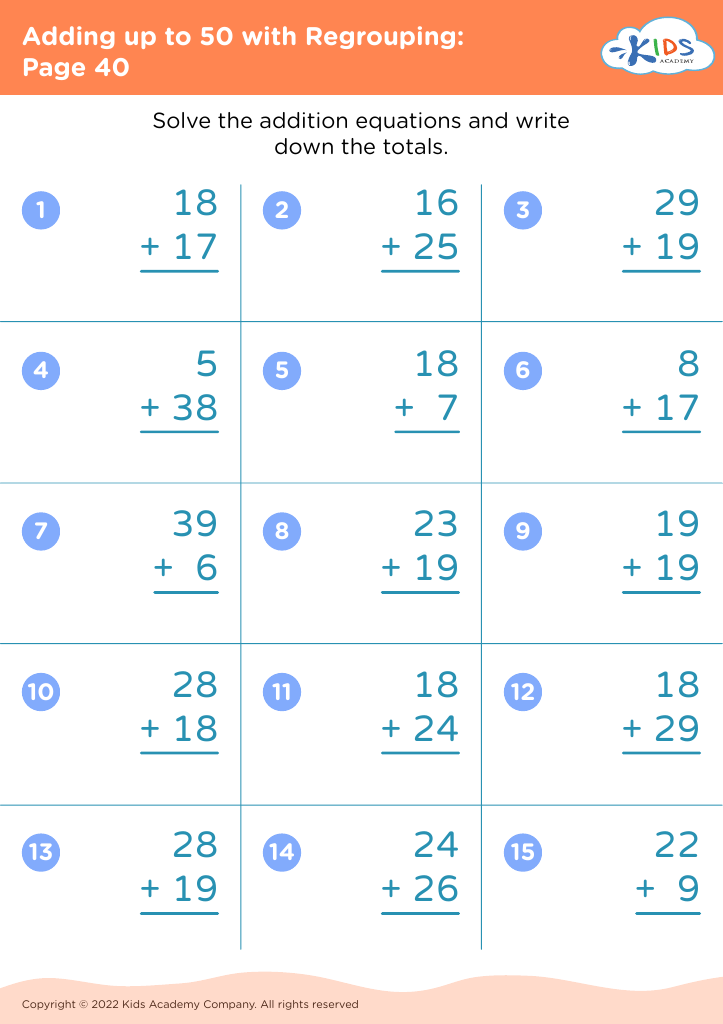
Adding up to 50 with Regrouping: Page 40
Worksheet
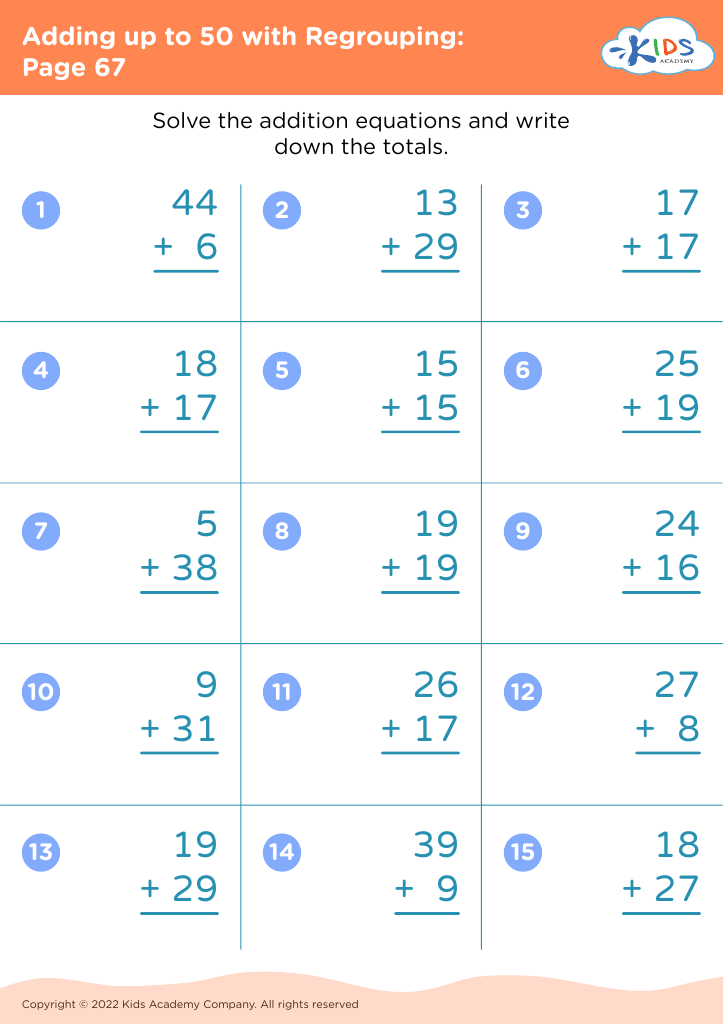
Adding up to 50 with Regrouping: Page 67
Worksheet
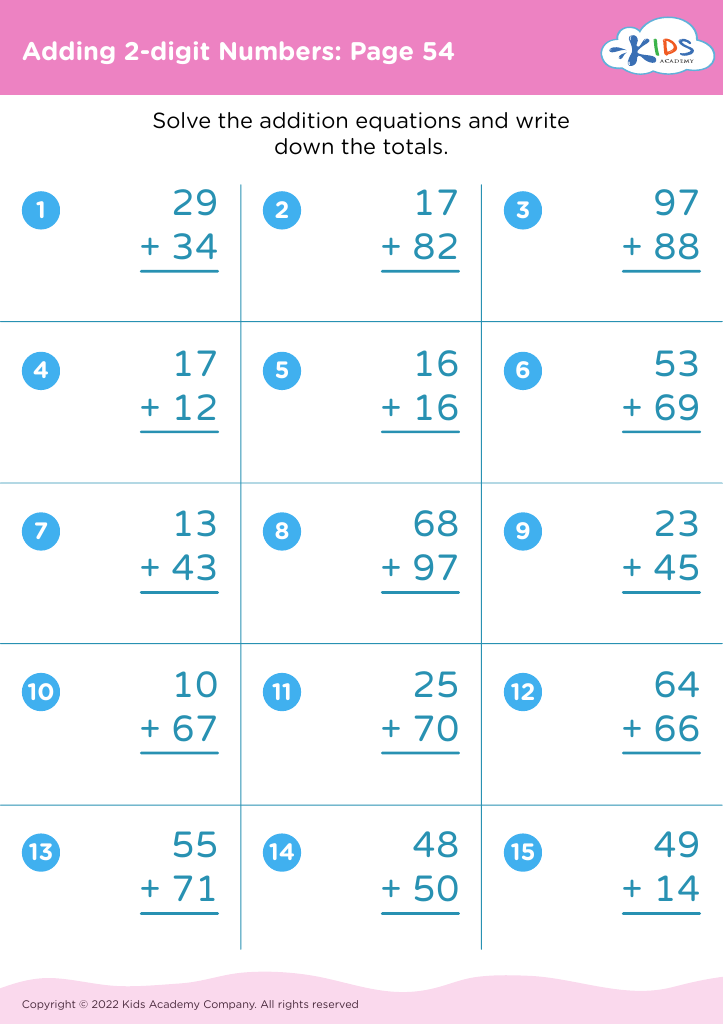
Adding 2-digit Numbers: Page 54

Adding 2-digit Numbers: Page 54

Adding 2-digit Numbers: Page 54
Worksheet
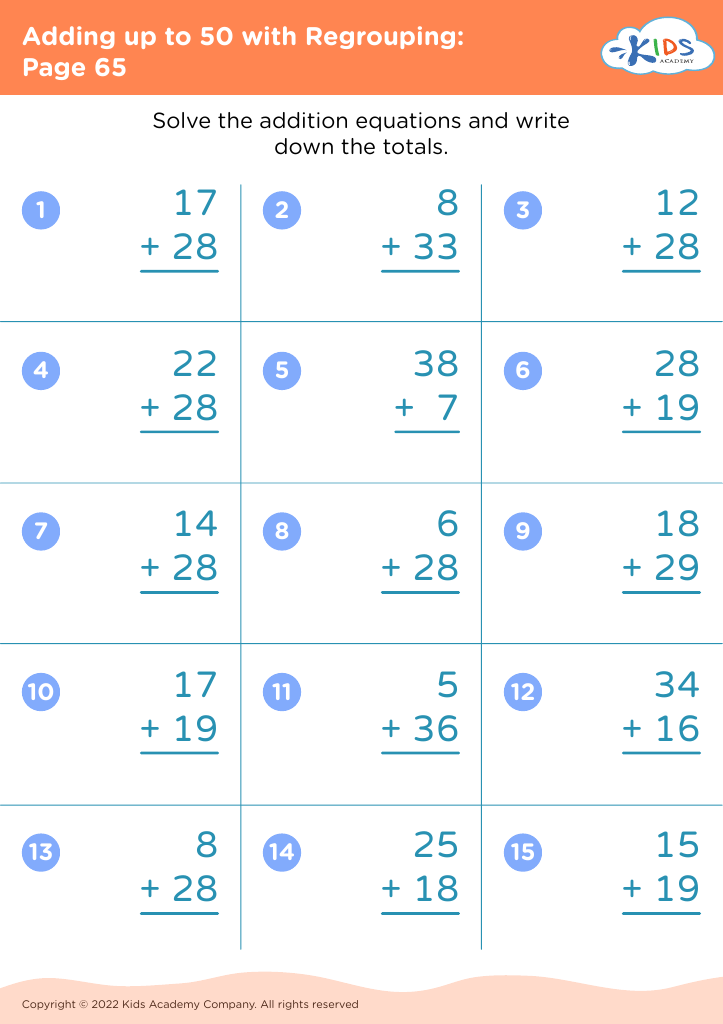
Adding up to 50 with Regrouping: Page 65
Worksheet
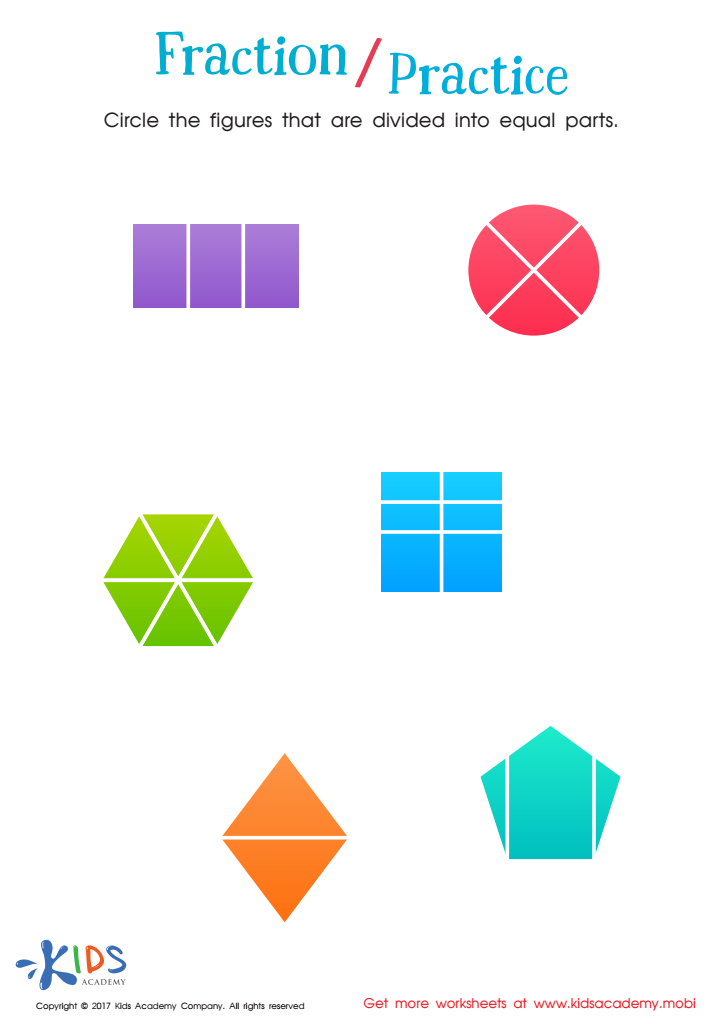
Fraction Practice Printable

Fractions: Shapes Worksheet

Get your printable now. Kids learn math differently today than you did in school; understanding concepts rather than memorizing facts. Help your child understand fractions with this printable worksheet. It'll help your child recognize parts of a whole, identify equal parts and build a foundation for numeracy. A better understanding sets kids up for math success! Get your printable now.
Fractions: Shapes Worksheet
Worksheet
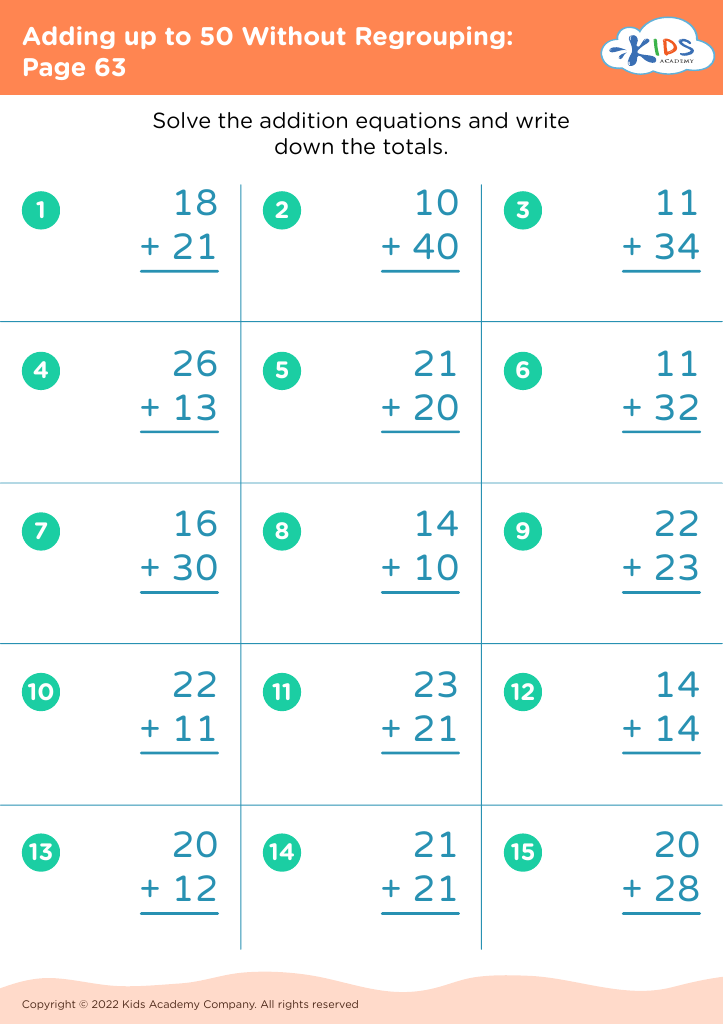
Adding up to 50 Without Regrouping: Page 63
Worksheet
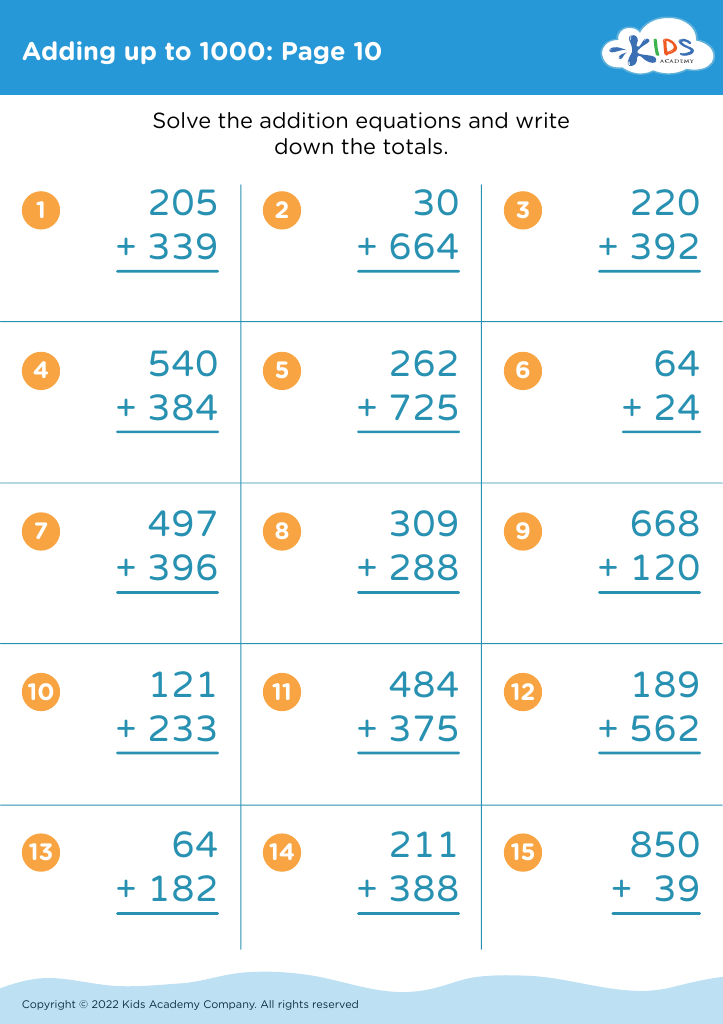
Adding up to 1000: Page 10

Adding up to 1000: Page 10

Adding up to 1000: Page 10
Worksheet
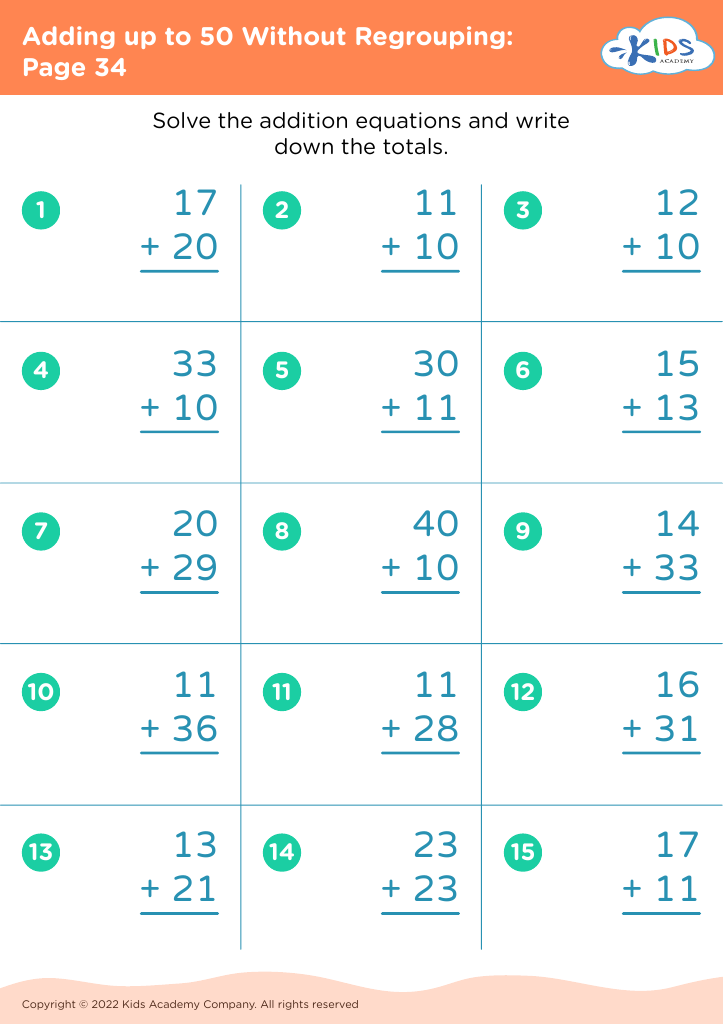
Adding up to 50 Without Regrouping: Page 34
Worksheet
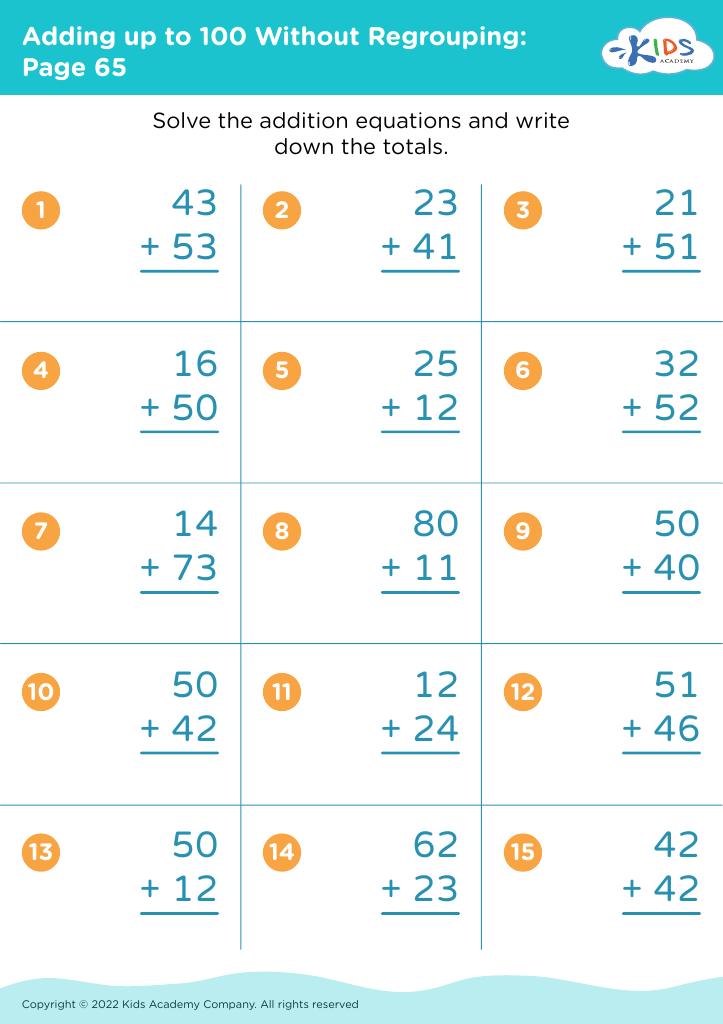
Adding up to 100 Without Regrouping: Page 65
Worksheet
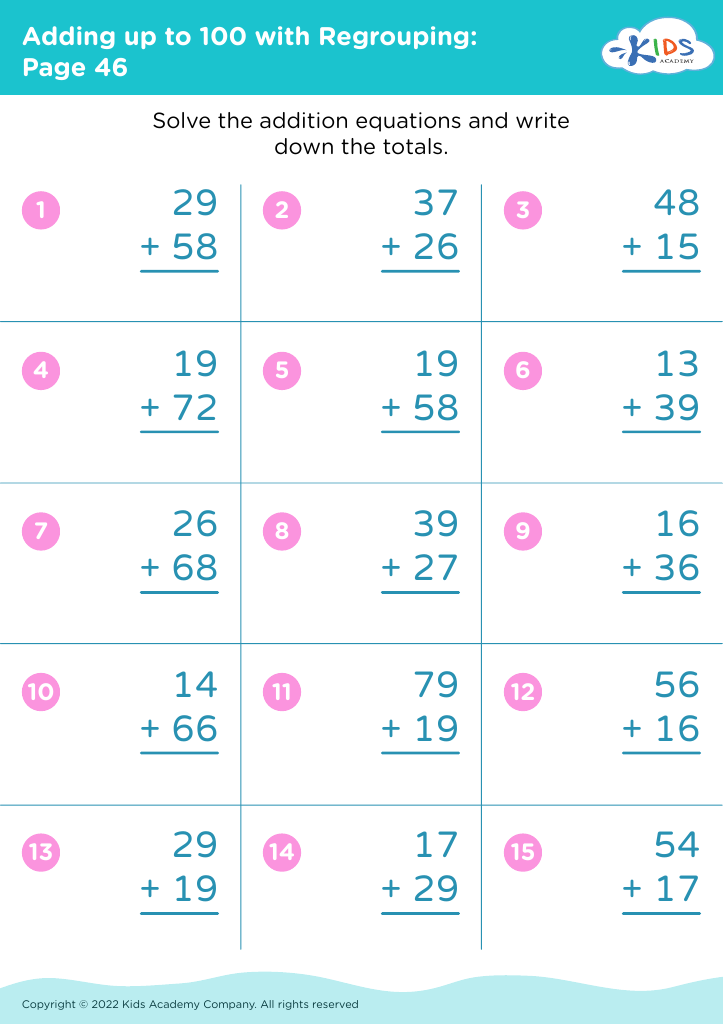
Adding up to 100 with Regrouping: Page 46
Worksheet
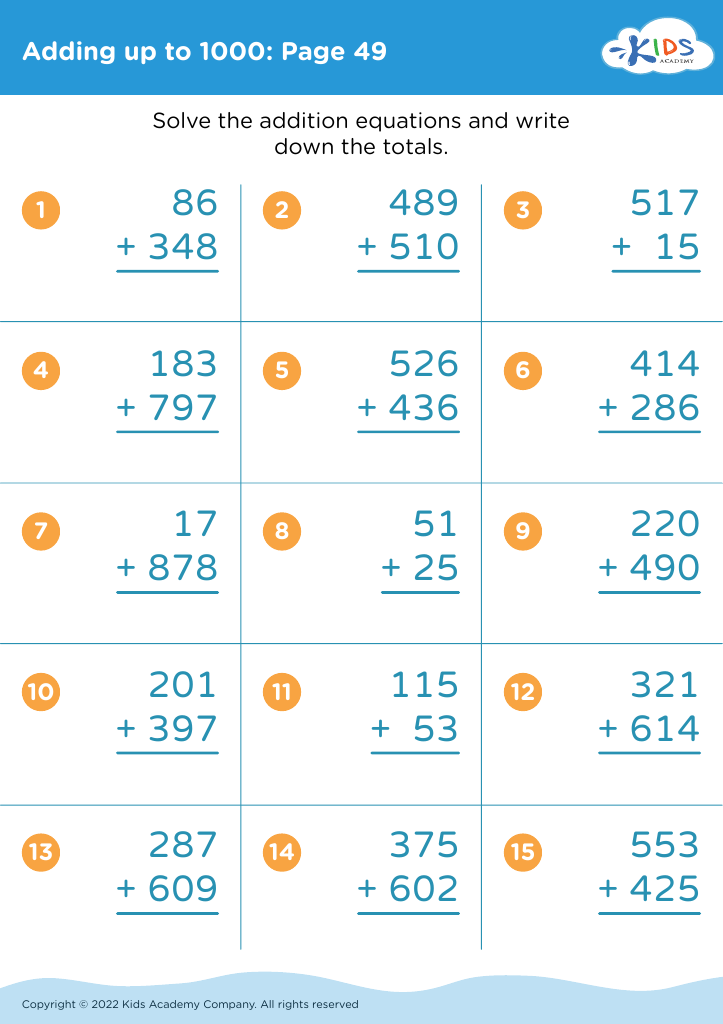
Adding up to 1000: Page 49

Adding up to 1000: Page 49

Adding up to 1000: Page 49
Worksheet
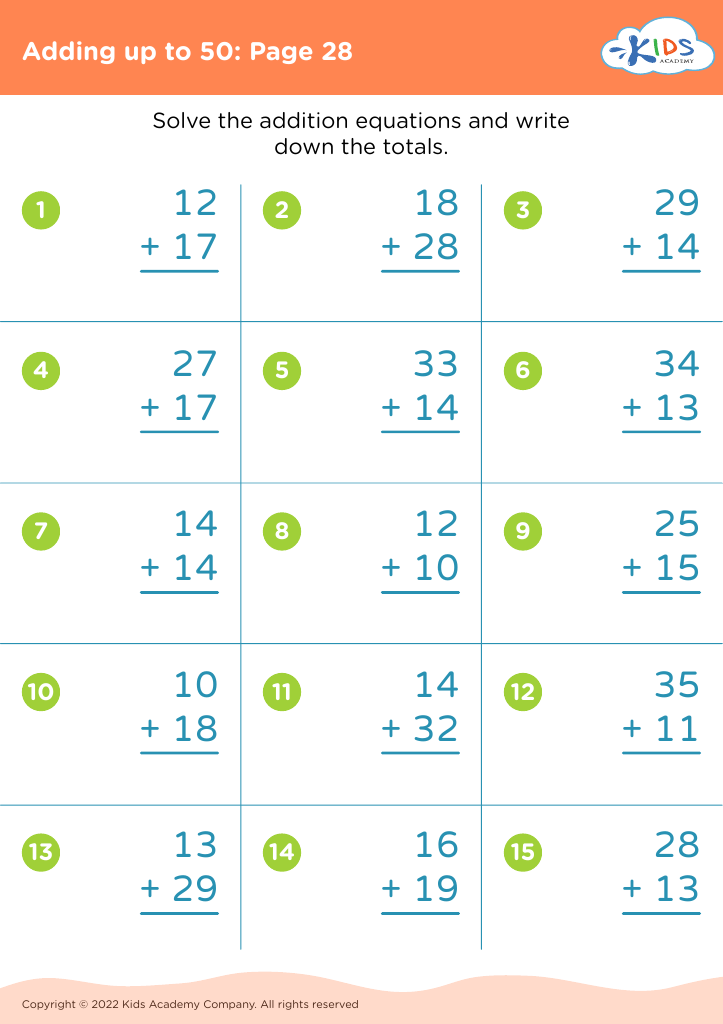
Adding up to 50: Page 28

Adding up to 50: Page 28

Adding up to 50: Page 28
Worksheet
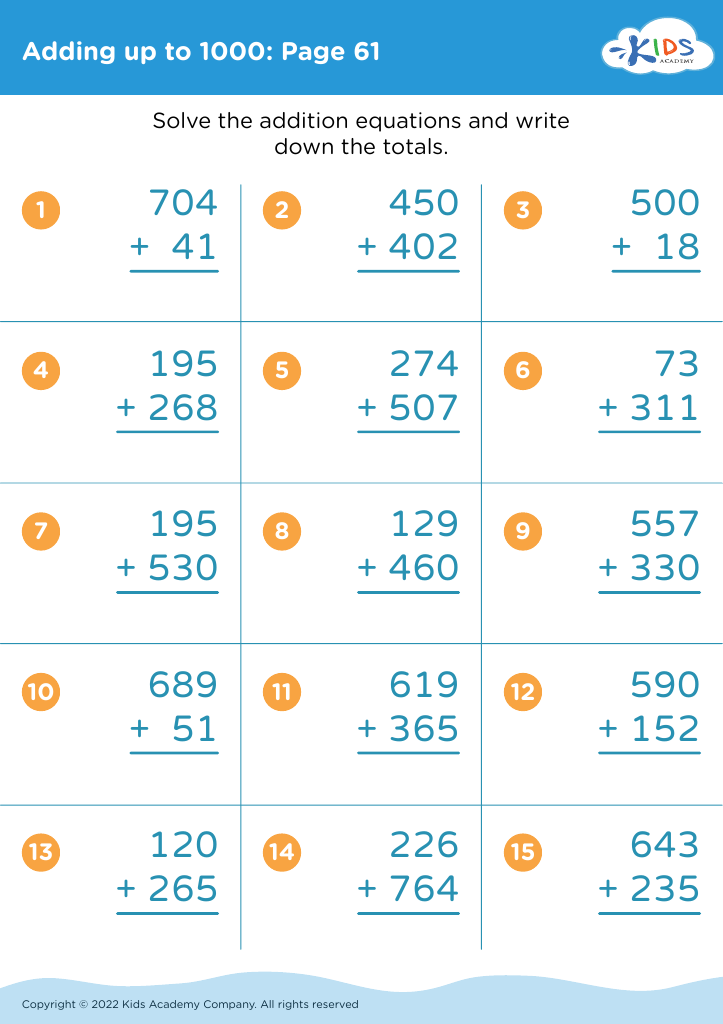
Adding up to 1000: Page 61

Adding up to 1000: Page 61

Adding up to 1000: Page 61
Worksheet
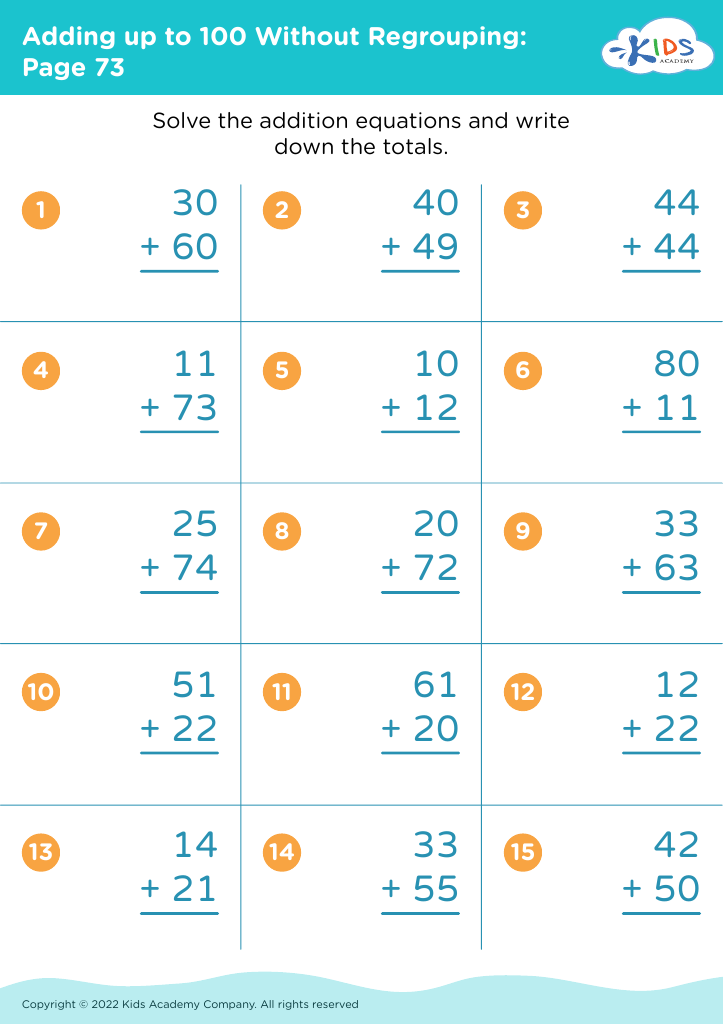
Adding up to 100 Without Regrouping: Page 73
Worksheet
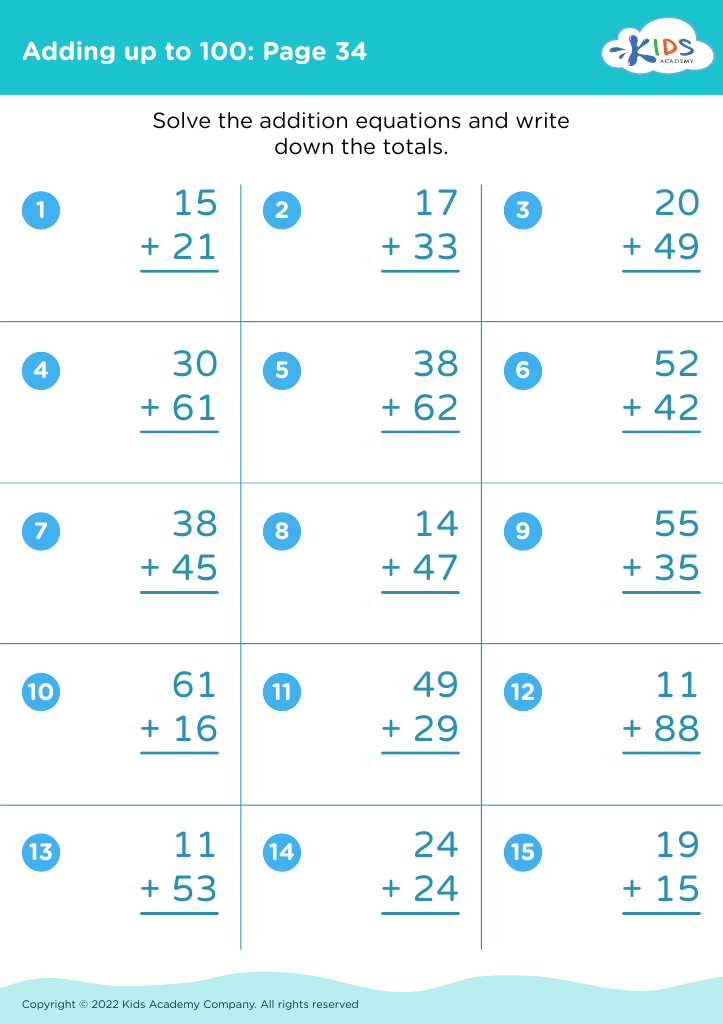
Adding up to 100: Page 34

Adding up to 100: Page 34

Adding up to 100: Page 34
Worksheet
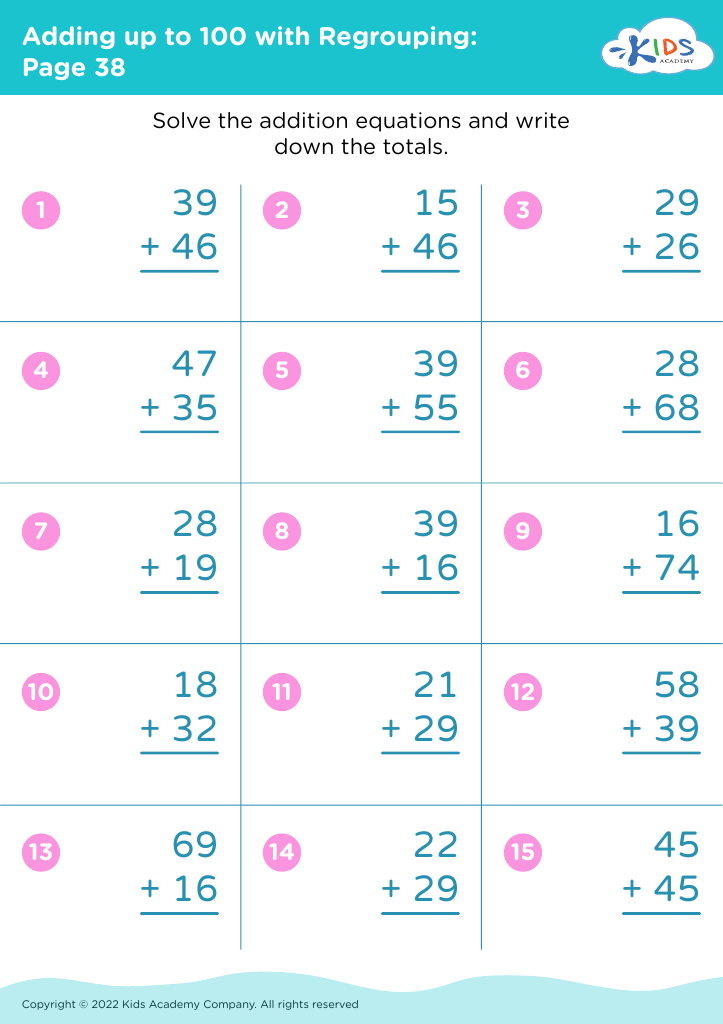
Adding up to 100 with Regrouping: Page 38
Worksheet
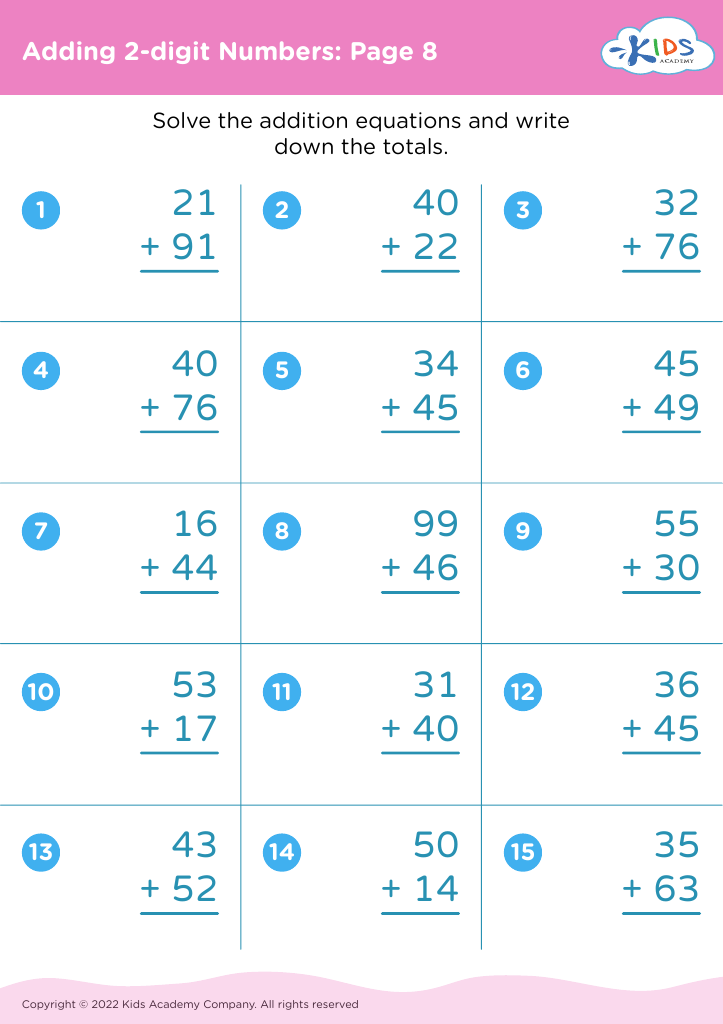
Adding 2-digit Numbers: Page 8

Adding 2-digit Numbers: Page 8

Adding 2-digit Numbers: Page 8
Worksheet
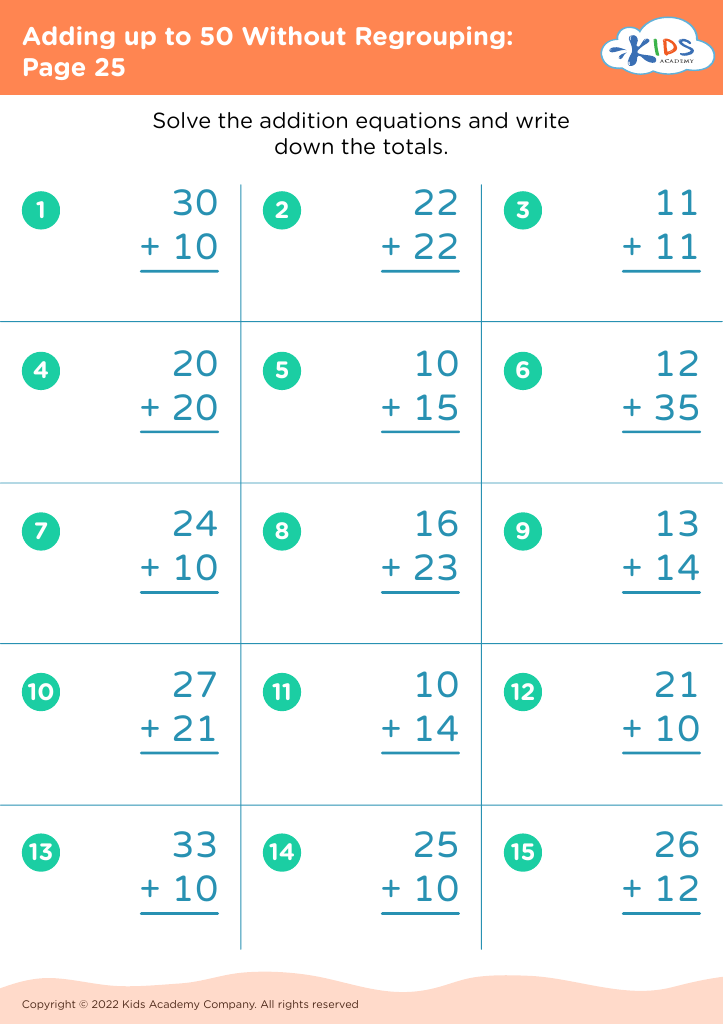
Adding up to 50 Without Regrouping: Page 25
Worksheet
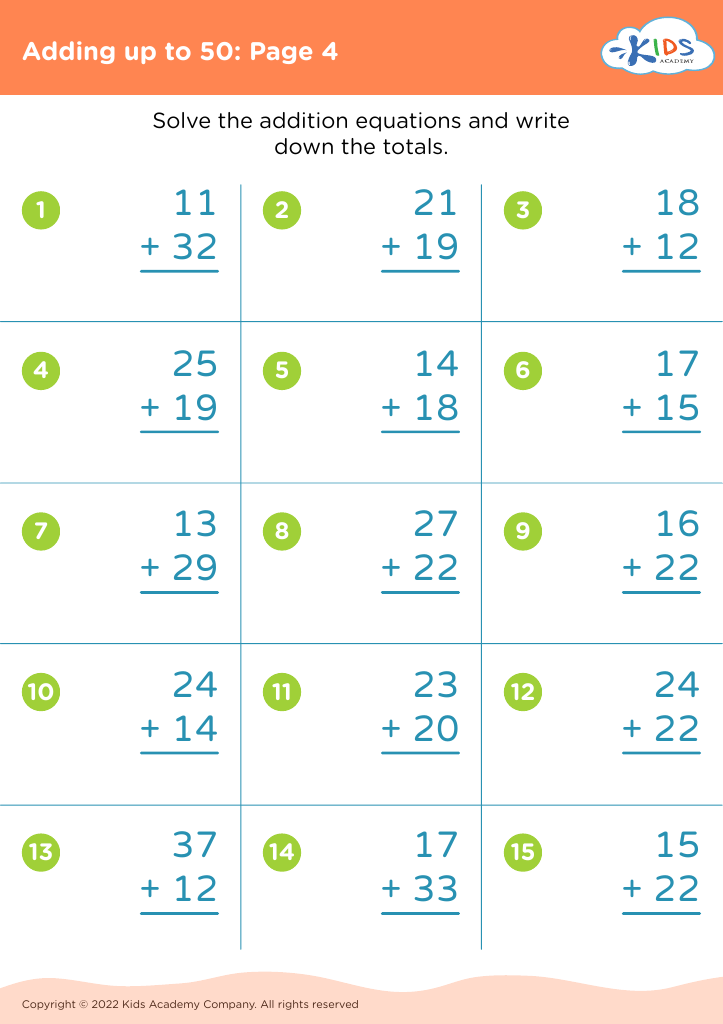
Adding up to 50: Page 4

Adding up to 50: Page 4

Adding up to 50: Page 4
Worksheet
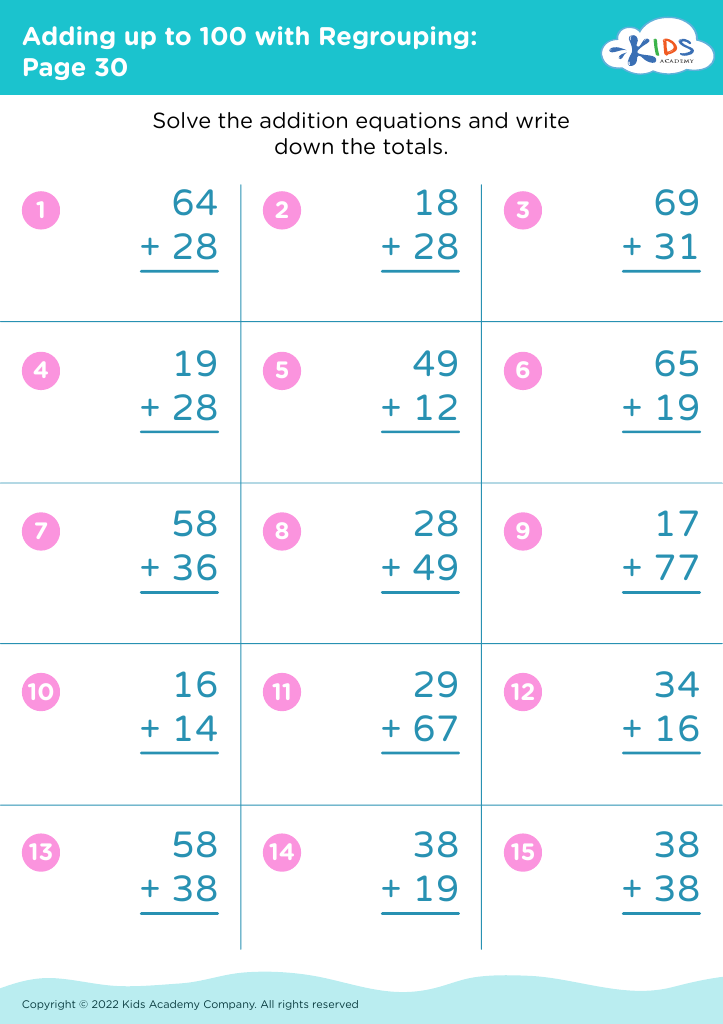
Adding up to 100 with Regrouping: Page 30
Worksheet
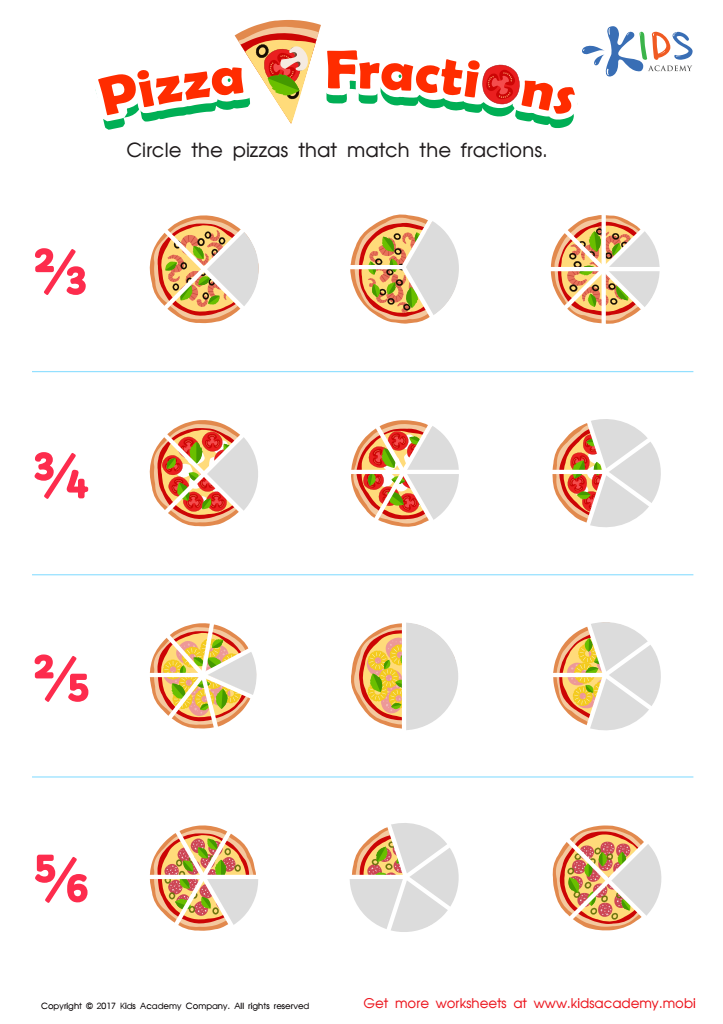
Pizza Fraction Printable

Fractions: Pizza Printable
Fractions can be tricky for kids, but this pizza fractions printable can help! Kids can understand fractions by seeing them, as they use one of their favorite foods. It helps them grasp the concept and gain a deeper understanding of what fractions represent. Extend their learning by quizzing them when you order pizza next time.
Fractions: Pizza Printable
Worksheet
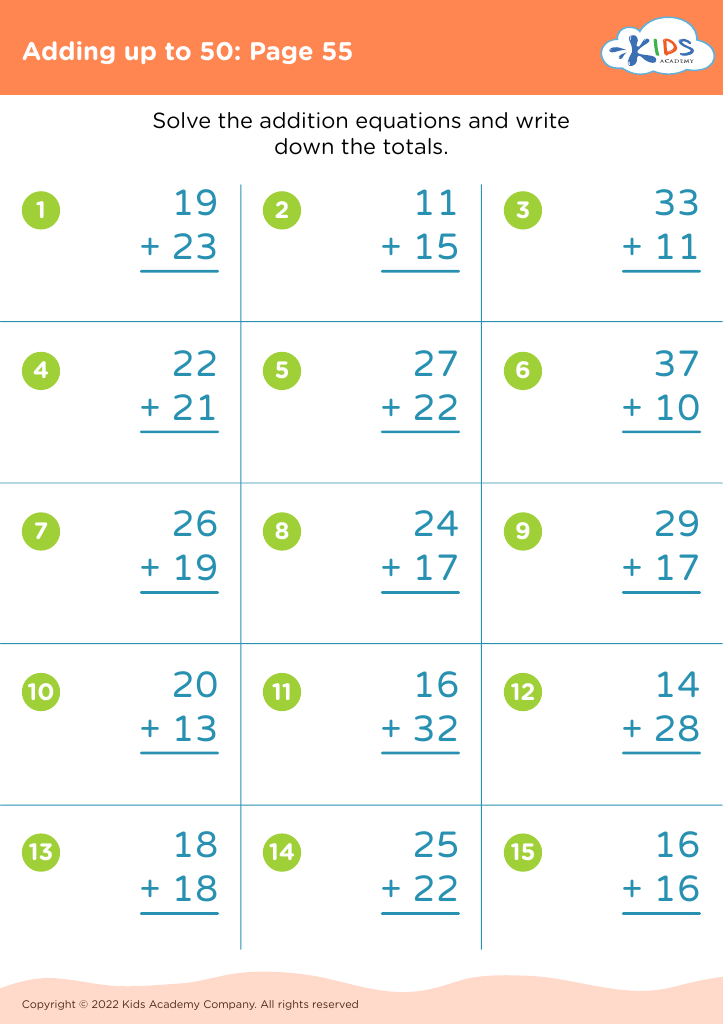
Adding up to 50: Page 55

Adding up to 50: Page 55

Adding up to 50: Page 55
Worksheet
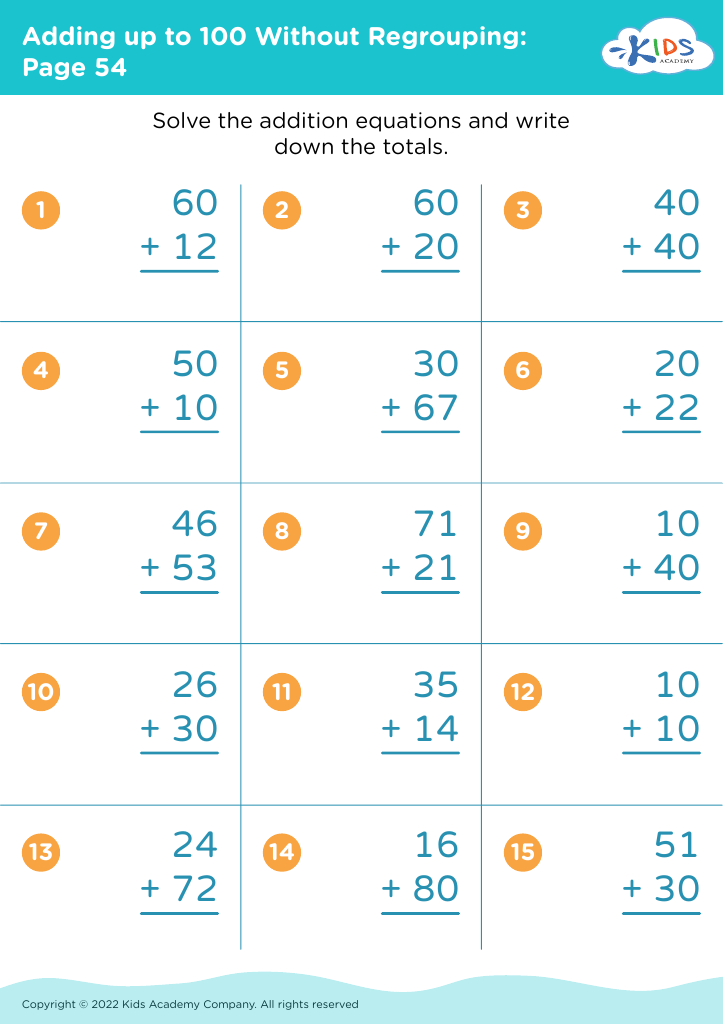
Adding up to 100 Without Regrouping: Page 54
Worksheet
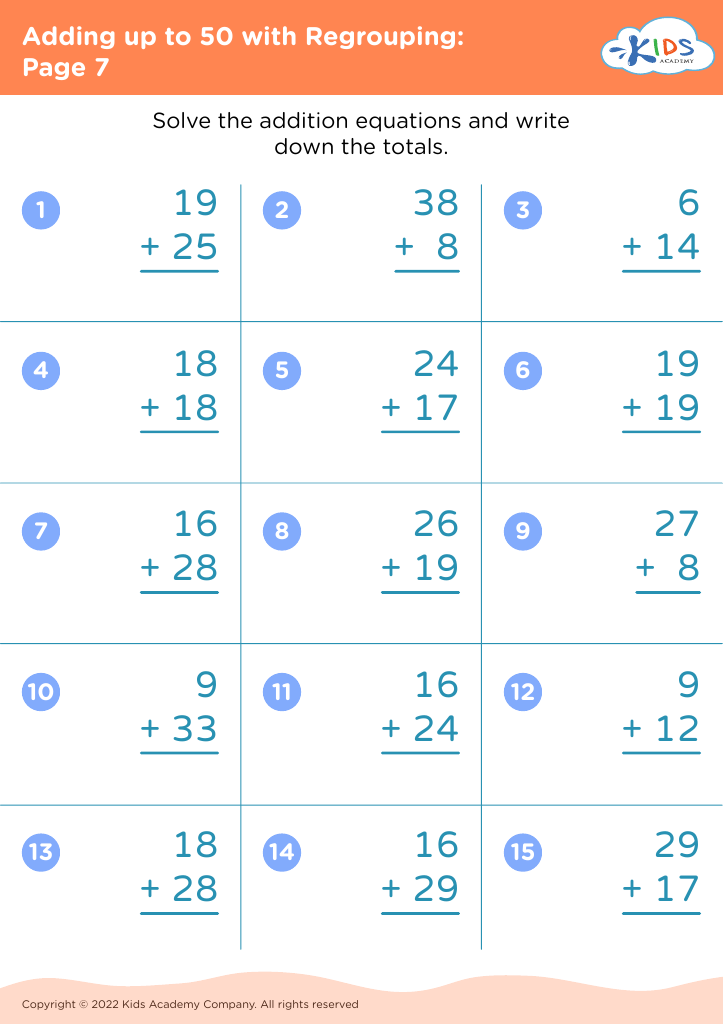
Adding up to 50 with Regrouping: Page 7
Worksheet


Fraction simplification is an essential math skill for children aged 4-8, and understanding its importance can significantly influence their academic growth. At this developmental stage, children are naturally curious and eager to learn, making it an opportune time to introduce them to fundamental concepts like fractions. Learning to simplify fractions fosters number sense—a crucial foundational skill that contributes to their overall mathematical understanding.

Parents and teachers should care about fraction simplification because it enhances problem-solving abilities. Simplifying fractions encourages logical thinking and helps children recognize relationships between quantities, an essential skill that extends beyond math into real-life situations. This foundational understanding also sets the stage for more complex mathematical concepts they will encounter later, such as ratios and percentages.

Furthermore, engaging children in simplifying fractions through hands-on activities and visual aids helps to make learning enjoyable and interactive. Practicing this skill promotes confidence as learners tackle progressively difficult tasks and develops persistence—a valuable trait in all areas of learning.

In summary, prioritizing fraction simplification in early education prepares children for future success in mathematics, nurtures critical thinking skills, and encourages a lifelong love for learning. By valuing these concepts, parents and teachers play a vital role in fostering foundational skills essential for long-term academic achievement.