Number representation Math Worksheets for Ages 4-8
4 filtered results
-
From - To
Discover engaging Number Representation Math Worksheets tailored for ages 4-8 at Kids Academy! Our printable worksheets are designed to build foundational math skills through fun and interactive activities. Children will learn to identify, trace, and count numbers, enhancing their understanding of number sense and mathematical concepts. Perfect for preschoolers and early elementary students, these worksheets support classroom learning and home practice. Parents and educators can easily download and print to reinforce learning. Help your child excel in math with our carefully crafted resources that make learning numbers a joyful experience. Visit Kids Academy for more details!
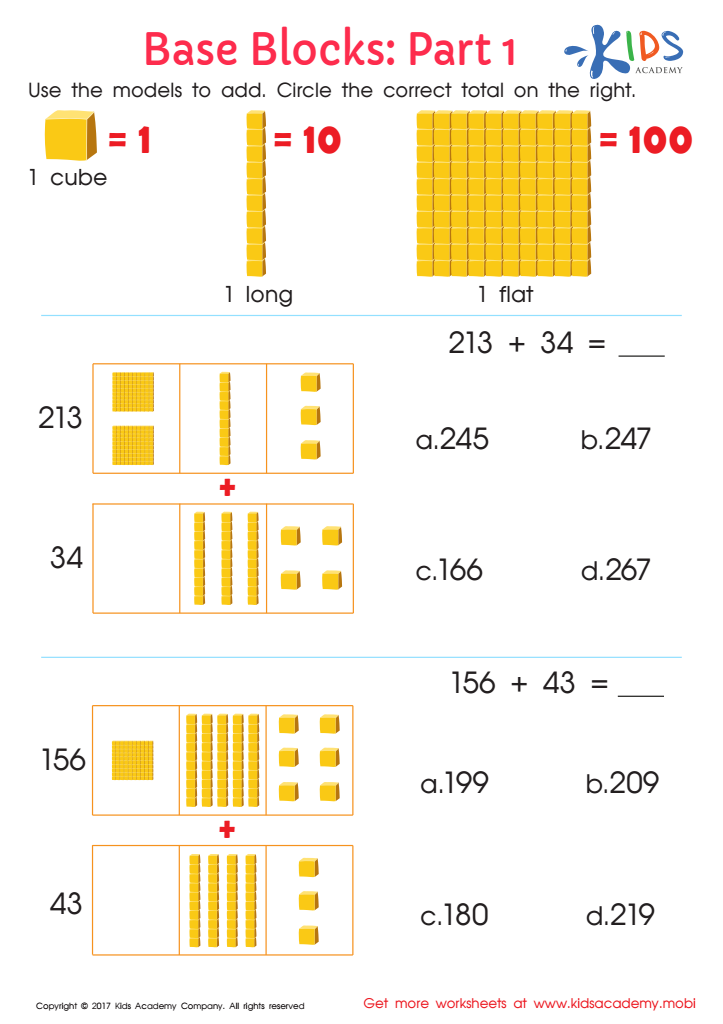
Base Ten Blocks Worksheet: Part 1
 Assign to My Students
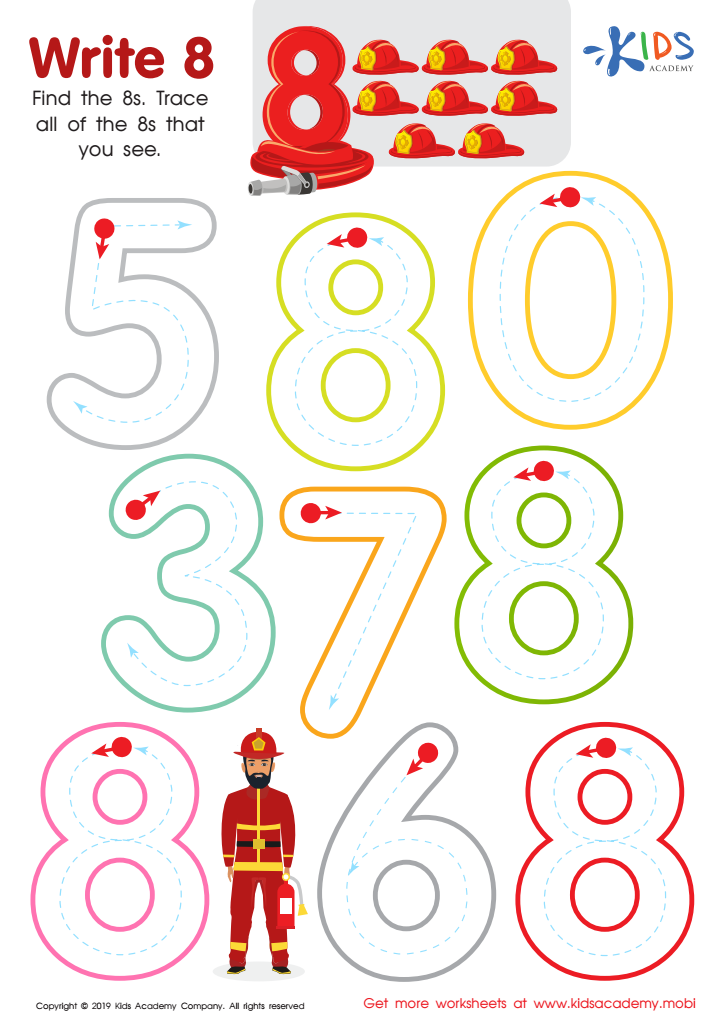
Write 8 Worksheet
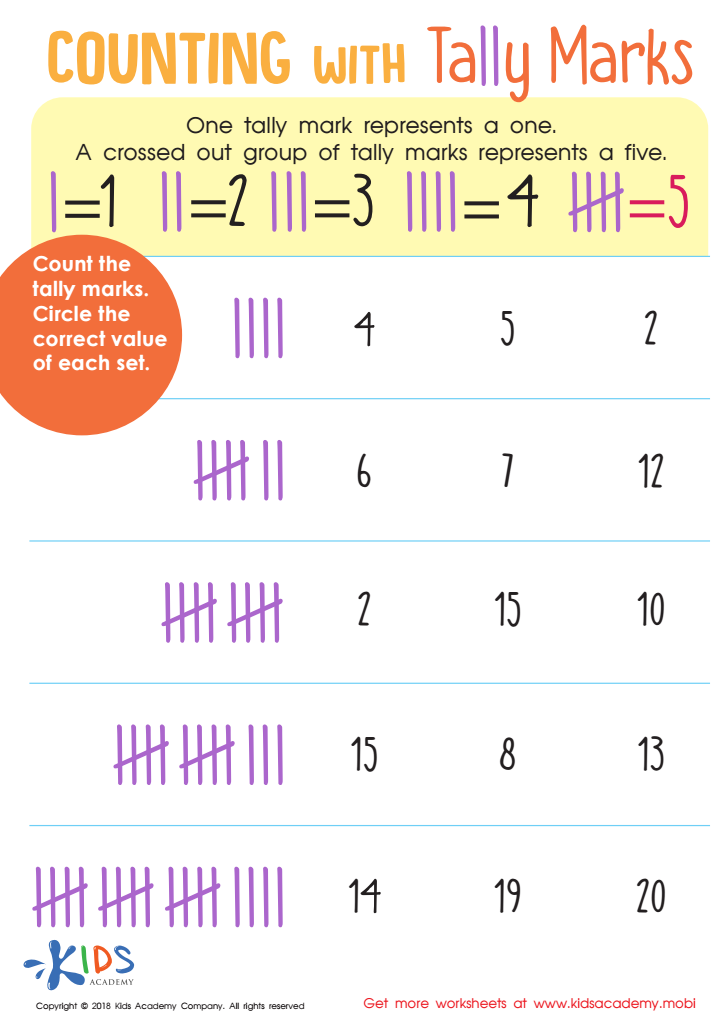
Counting with Tally Marks Worksheet
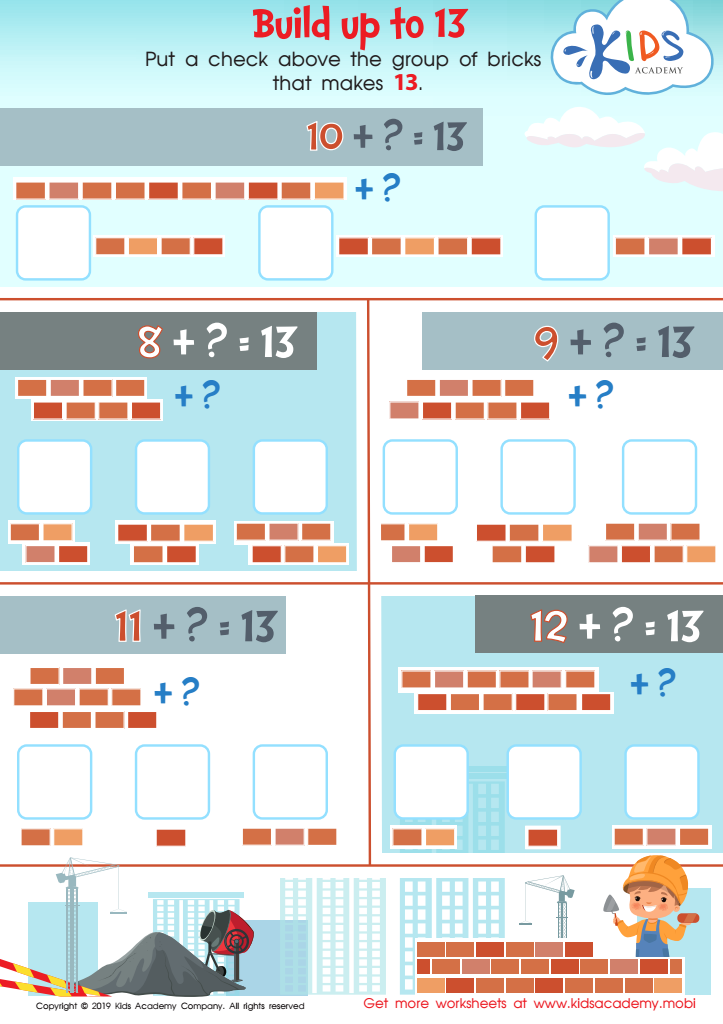
Build up to 13 Worksheet






Number representation is a critical foundational skill for young children, typically between the ages of 4-8. During these formative years, children's understanding of number concepts greatly influences their future math success and their ability to grasp complex mathematical ideas. Here are key reasons why parents and teachers should care about number representation:
-
Building Blocks of Math: Number representation involves recognizing and working with numbers in various forms, such as numerals, words, and visual models (like dot patterns or objects). This variety helps children understand numbers' abstract and concrete relationships, providing a strong base for arithmetic and problem-solving skills.
-
Cognitive Development: Engaging with numbers boosts cognitive skills like memory, attention, and logical thinking. It enhances a child's ability to categorize, compare, and analyze, invaluable for academic success in all subjects.
-
Confidence and Competence: Early mastery of number representation fosters a child’s confidence and willingness to tackle more complex math topics. Feeling competent with basic numbers encourages a positive attitude towards math as they progress through school.
-
Real-World Skills: Understanding numbers is not just about academic success; it's practical. Young children use number skills in daily activities such as counting items, understanding time, and handling money, making these lessons immediately relevant and helpful.
In summary, emphasizing number representation during early childhood cements essential mathematical and cognitive skills, instills confidence, and ensures practical competency for everyday tasks, setting a robust stage for future learning.








