Story sequencing Math Worksheets for Ages 4-8
5 filtered results
-
From - To
Enhance your child's math skills with our engaging Story Sequencing Math Worksheets, specially designed for ages 4-8. These worksheets combine storytelling with problem-solving, helping young learners grasp essential math concepts while developing critical thinking abilities. Each activity encourages children to arrange events in a logical order, fostering both sequencing skills and numerical proficiency. With colorful illustrations and age-appropriate challenges, these worksheets make learning fun and interactive. Perfect for classroom use or home practice, our resources support early childhood education by blending creativity with foundational math skills. Encourage your child's love for learning and watch them thrive with our story sequencing activities!
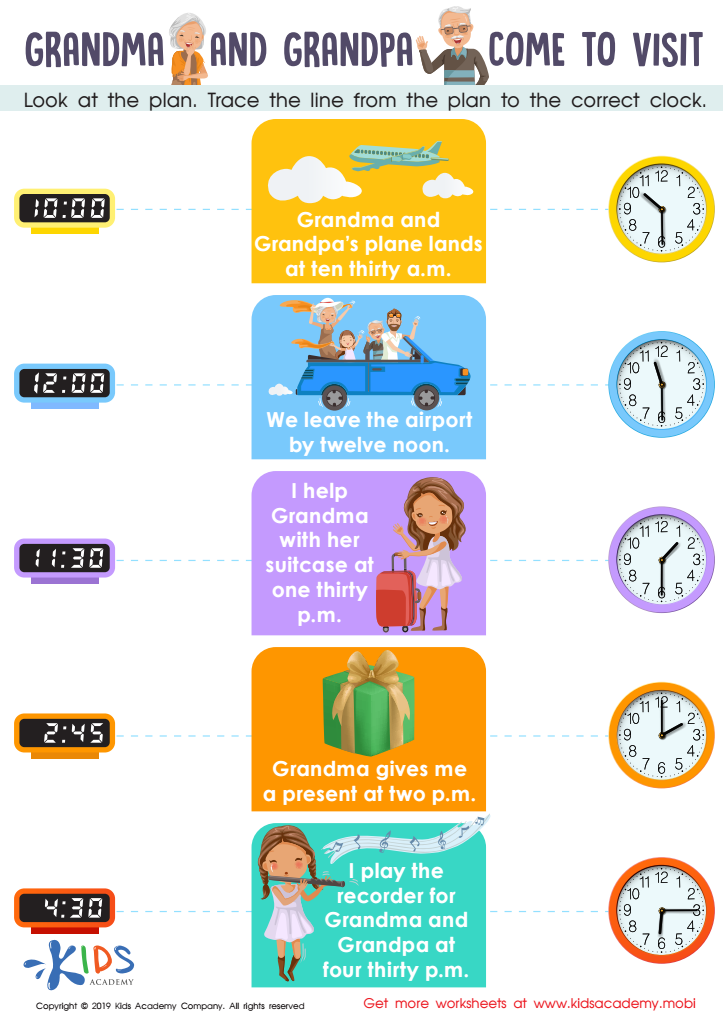
Grandpa and Grandma Come to Visit Worksheet
 Assign to My Students
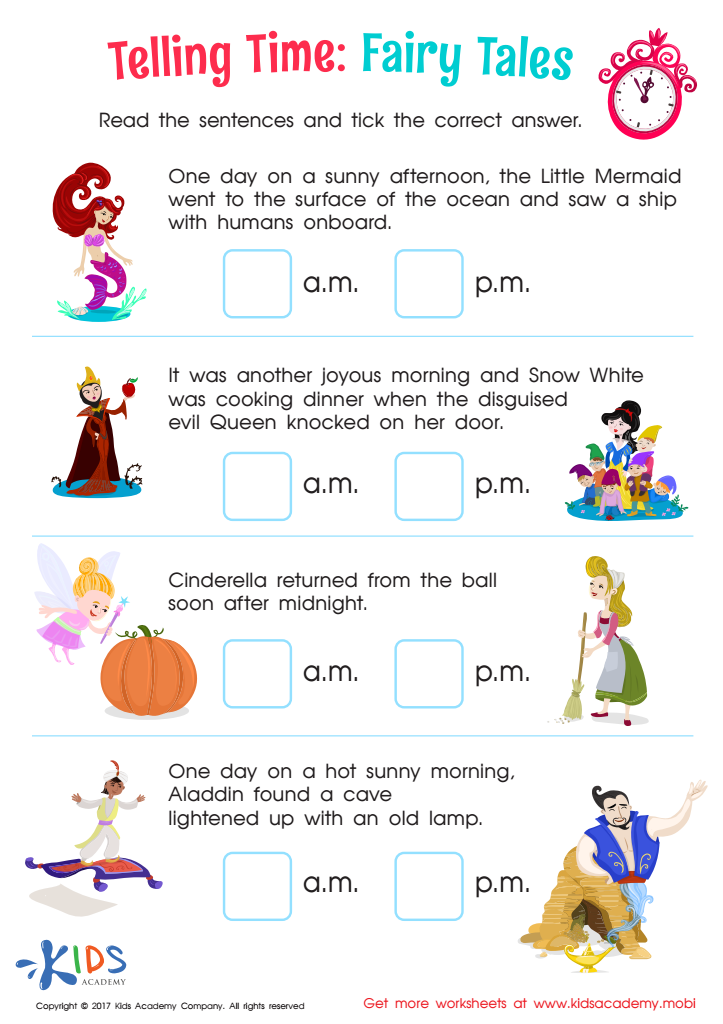
Telling Time: Fairy Tales Worksheet
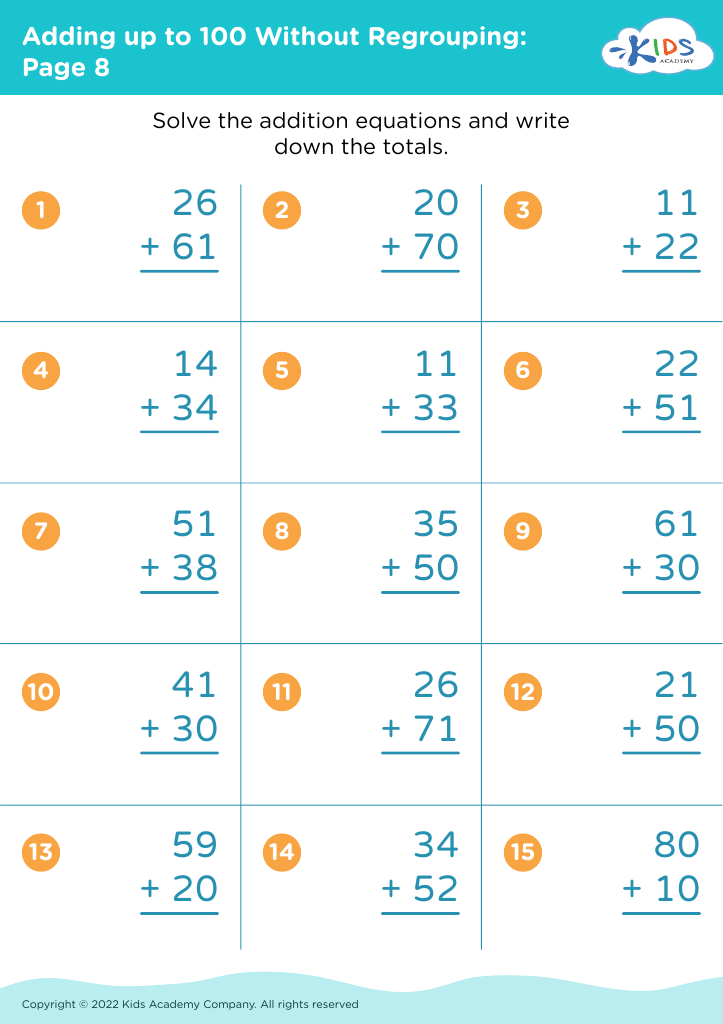
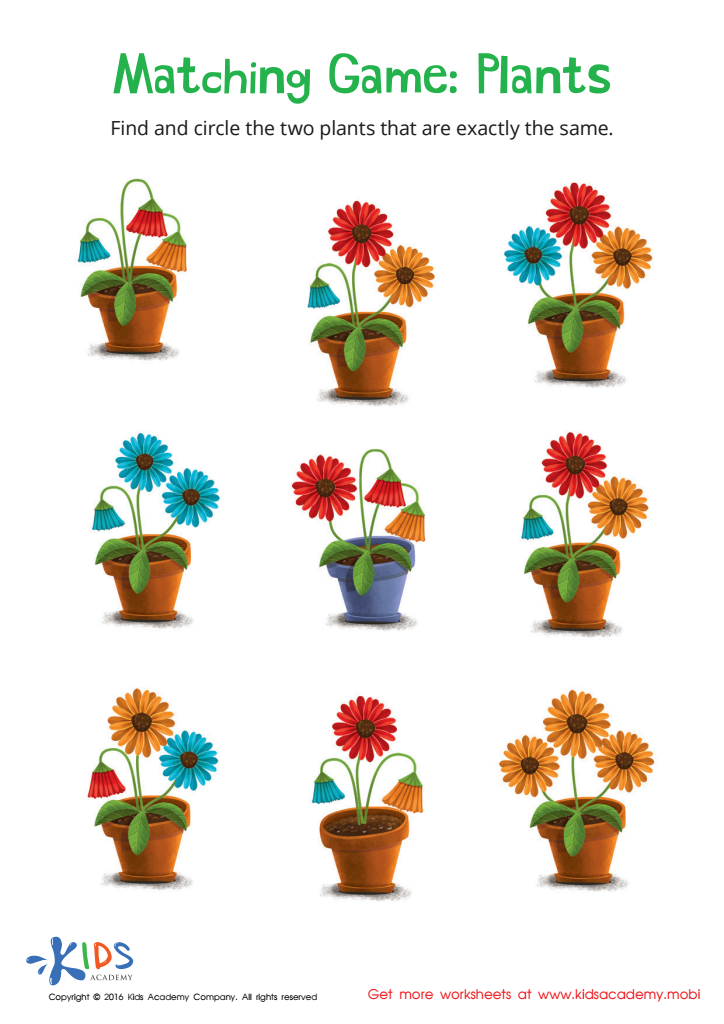
Matching: Plants Worksheet
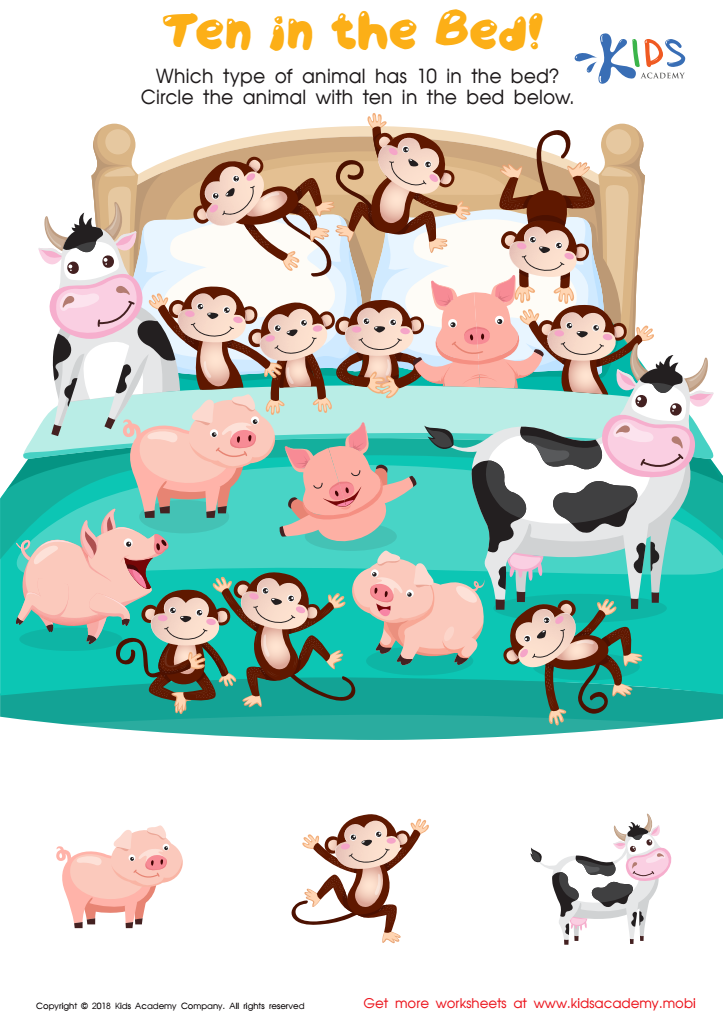
Ten in the Bed Worksheet







Story sequencing in math is essential for children aged 4 to 8, as it fosters both cognitive and interpersonal skills in a holistic learning environment. Through the integration of narratives and math, children learn to order events, recognize patterns, and make logical connections—skills critical in developing problem-solving abilities. When children engage with math stories, they visualize scenarios, which helps them better understand abstract mathematical concepts.
Moreover, story-based learning cultivates language development, boosting vocabulary and comprehension. By discussing story sequences, kids enhance their narrative skills, learning to articulate their thoughts, which directly improves math vocabulary and communication skills.
For parents and teachers, focusing on story sequencing in math supports a child's emotional and social growth. Collaborative storytelling fosters listening and cooperation, teaching children to respect diverse viewpoints and ideas, and encourages teamwork during problem-solving activities.
Additionally, embedding math narratives into lessons makes learning enjoyable. When students find joy in the process, their motivation and enthusiasm for math inherently increase. Overall, adopting story sequencing in math for young learners not only strengthens their mathematical foundation but also nurtures essential life skills, positively impacting their overall development.








