Comparing sizes Measurement Worksheets for Ages 4-8
9 filtered results
-
From - To
Discover a fun and engaging way for children ages 4-8 to learn about comparing sizes with our Measurement Worksheets! Designed to enhance their understanding of size differentiation, these worksheets feature a variety of activities that encourage critical thinking and observational skills. Young learners will compare lengths, heights, and weights, helping them grasp essential measurement concepts in a playful manner. Each worksheet is thoughtfully crafted to support visual learning through vibrant illustrations and real-world examples. Ideal for both classroom and home use, these worksheets provide a valuable resource for educators and parents aiming to foster early math skills in a supportive environment. Lets measure success together!
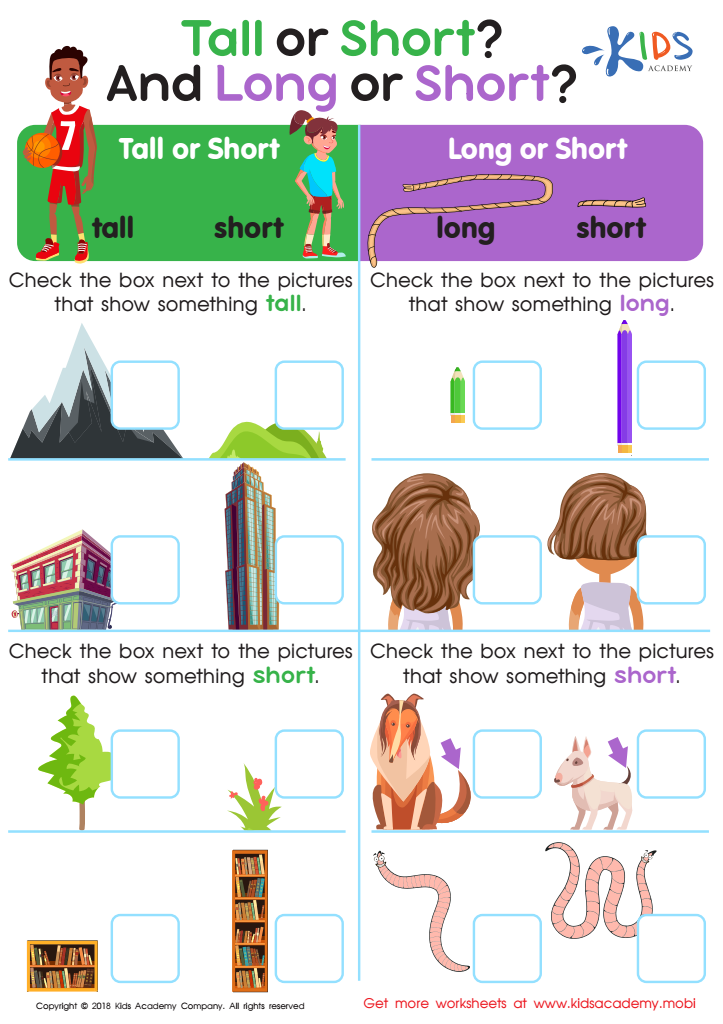
Tall or Short and Long or Short? Worksheet
 Assign to My Students
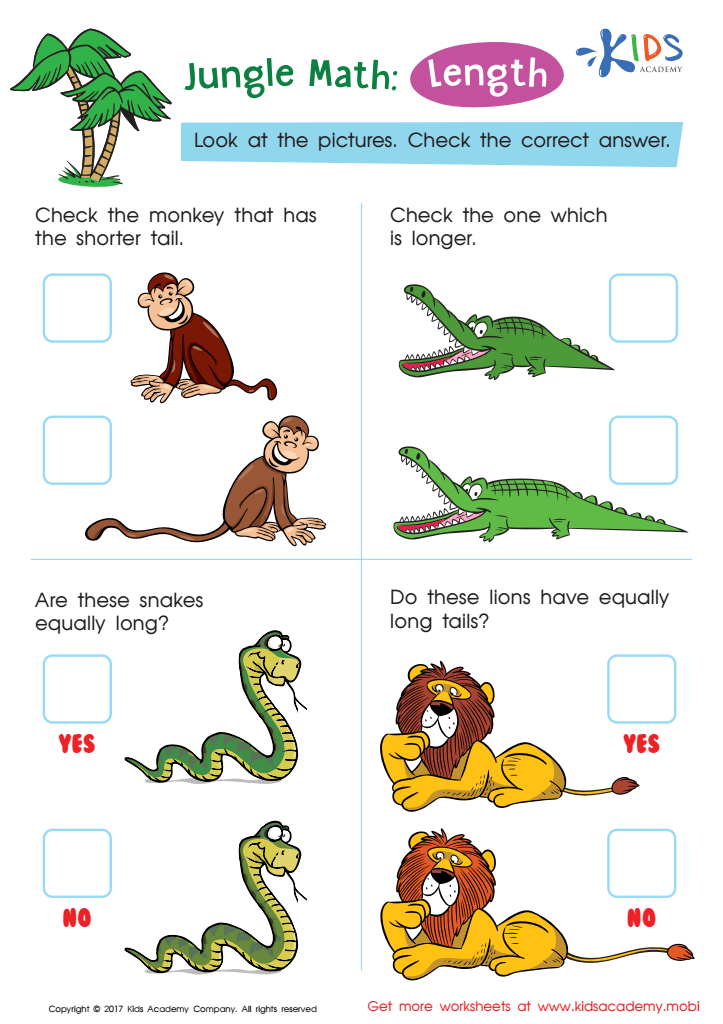
Which One Is Longer - Length Worksheet
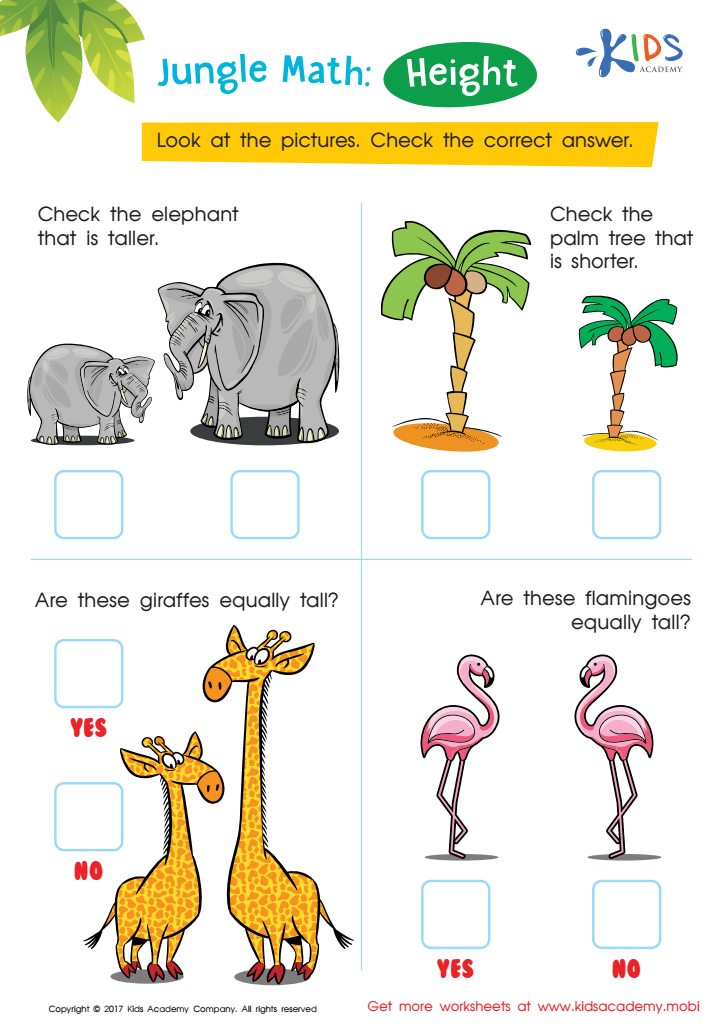
Which Is Taller Worksheet
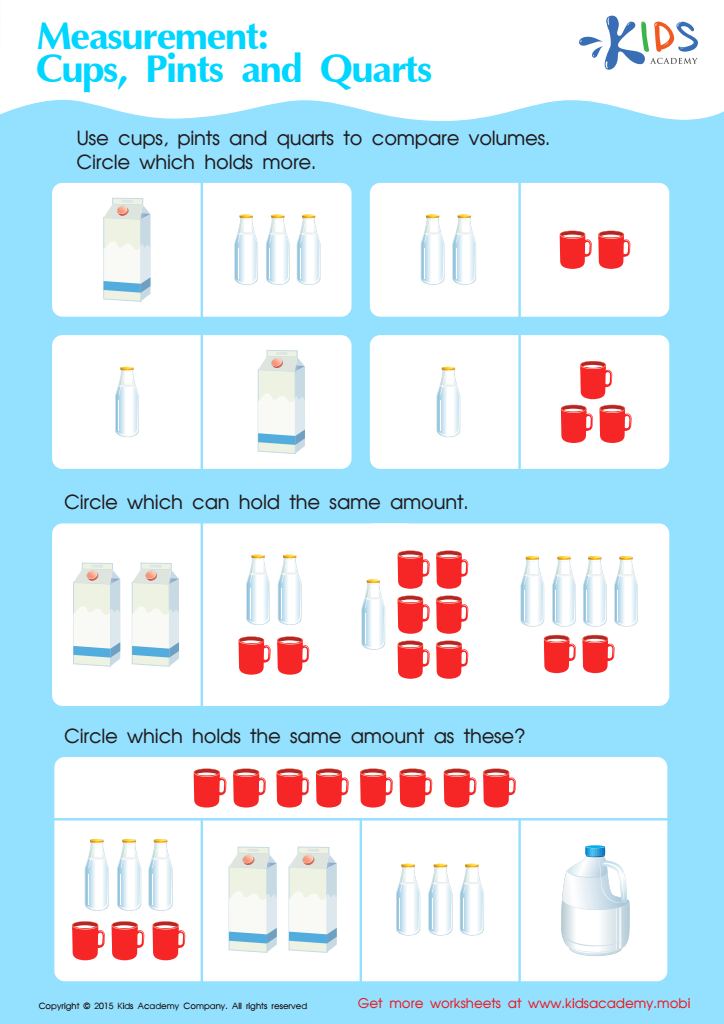
Measurement: Compare Volumes Worksheet
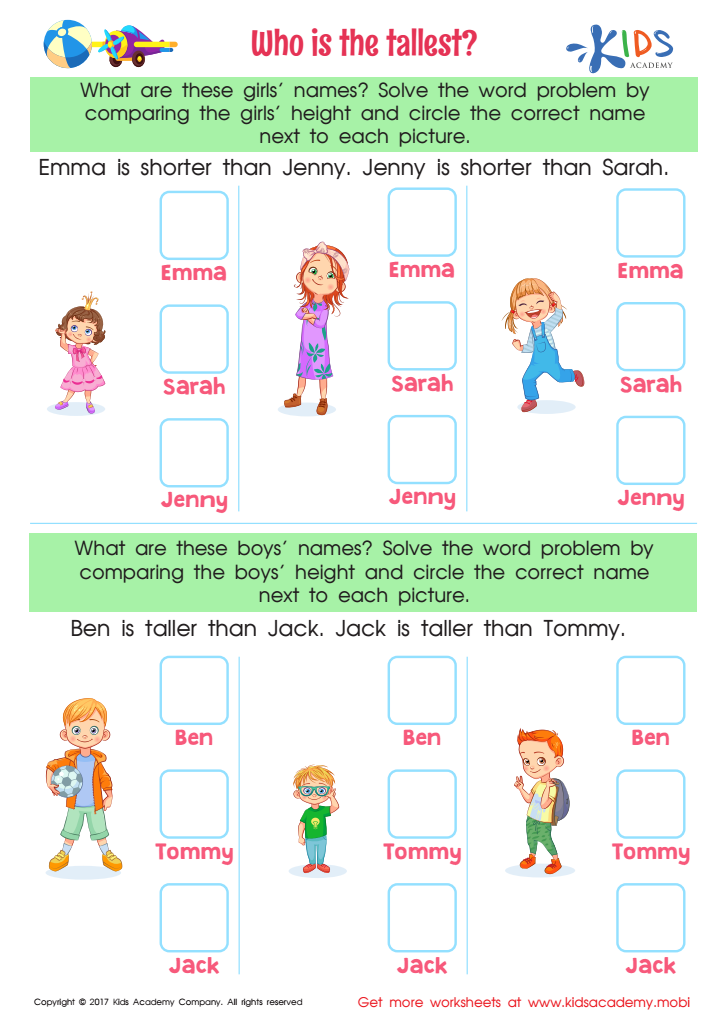
Who Tallest Printable
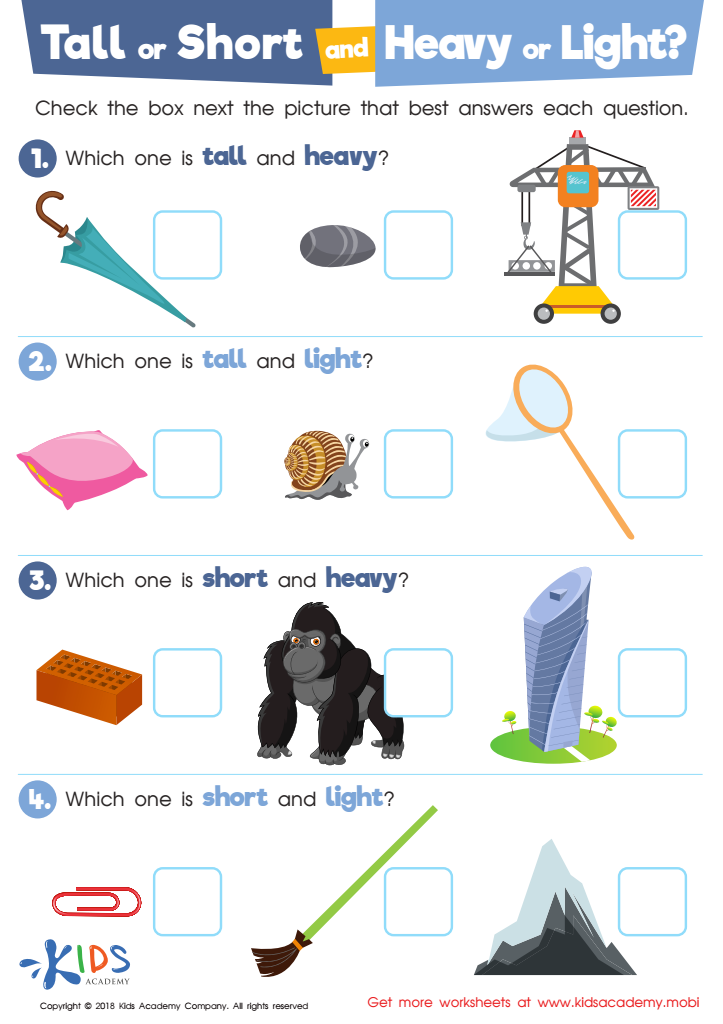
Tall or Short and Heavy or Light? Worksheet
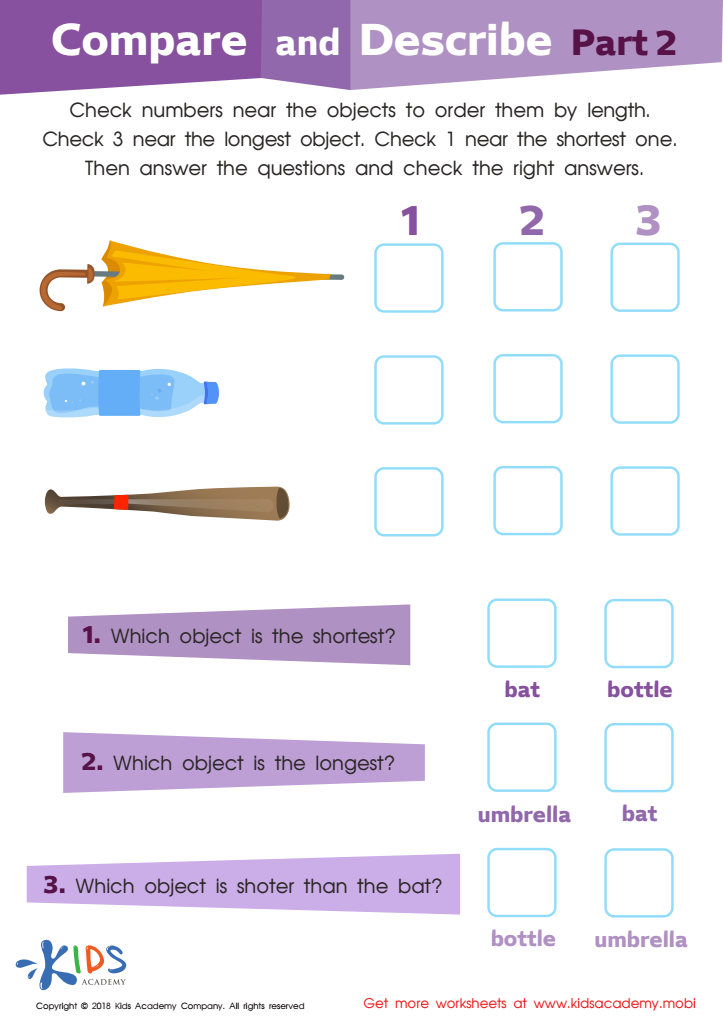
Compare and Describe: Part 2 Worksheet
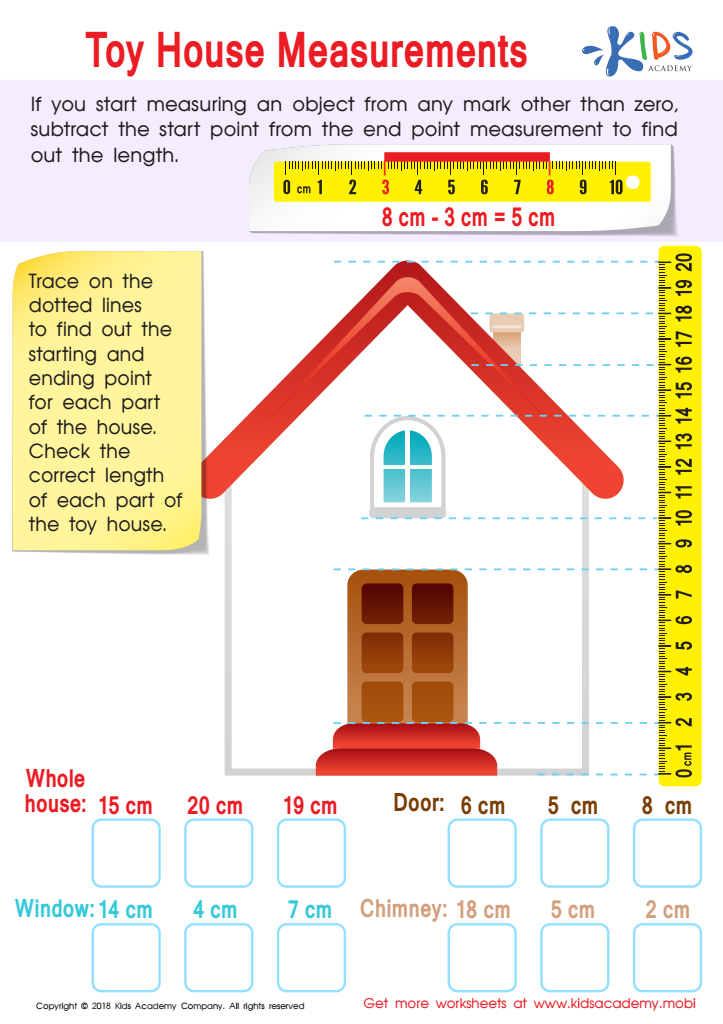
Toy House Measurements Worksheet
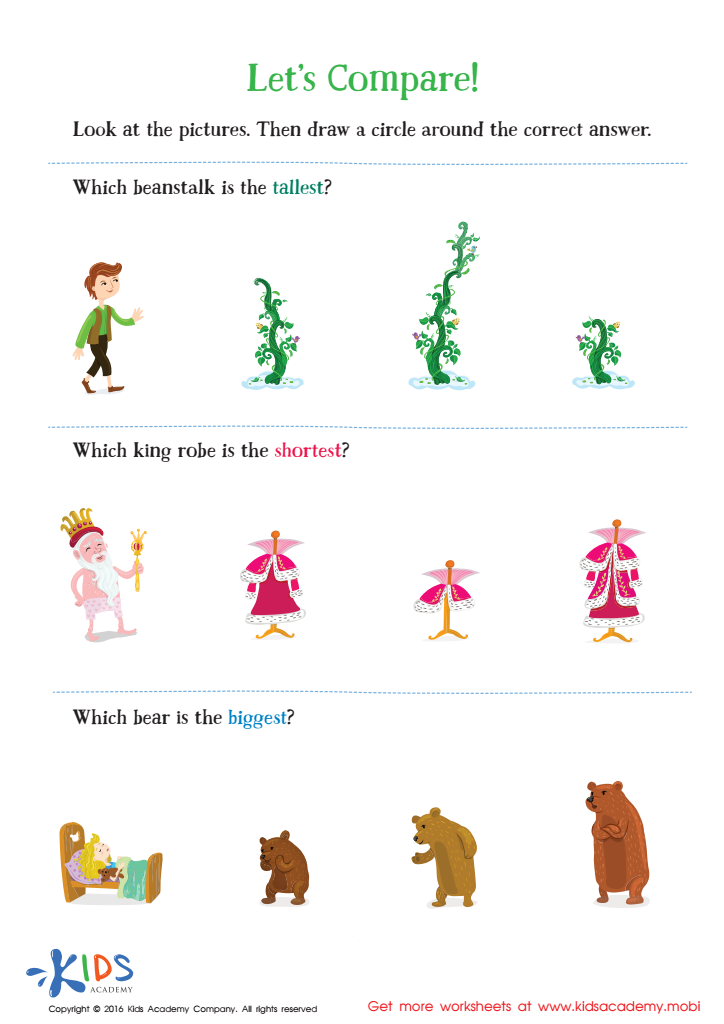
Fairy Tale Worksheet: Let's Compare








Comparing sizes is a fundamental concept in early education, crucial for children aged 4-8. Understanding measurement not only strengthens their math skills but also enhances critical thinking, reasoning, and observational abilities. When parents and teachers engage children in size comparisons—such as big vs. small, tall vs. short—they promote spatial awareness and encourage them to ask questions, fostering a sense of curiosity about the world.
Moreover, meaningful measurement activities help children grasp the importance of units of measure and the relative nature of size. Through playful explorations, such as measuring objects with blocks or comparing the heights of friends, kids learn to apply these concepts to real-life situations. This not only builds confidence in their mathematical abilities but also prepares them for more complex ideas in later grades.
Furthermore, engaging families in these activities strengthens home-school connections, allowing parents to support their child's learning in a fun and relatable way. The ability to compare sizes lays the groundwork for more advanced mathematical concepts, ensuring that children are adequately prepared for future educational challenges. Ultimately, by valuing measurement activities, parents and teachers cultivate a rich foundation of knowledge that contributes to children's overall cognitive development and lifelong learning.








