Unlock the world of data interpretation for young learners with our engaging Measurement Worksheets for ages 4-8! Designed to enhance math skills, these worksheets introduce children to essential concepts in data interpretation through fun and interactive activities. Kids will explore themes like measuring objects, analyzing graphs, and comparing data, all while developing critical thinking and problem-solving skills. Perfect for classroom use or at-home learning, our printable worksheets make it easy to track progress and build confidence. Help your child soar in math with these valuable resources that encourage curiosity and a love for learning! Explore our collection today!

Check out this FREE Trial Lesson on Measurement for age 4-8!

Picture Graphs Word Problems

Favorites
With answer key
Interactive
  • 4-8
  • Data interpretation
  • Measurement
Reading a Bar Graph Worksheet 3rd Grade

Reading Bar Graph Worksheet

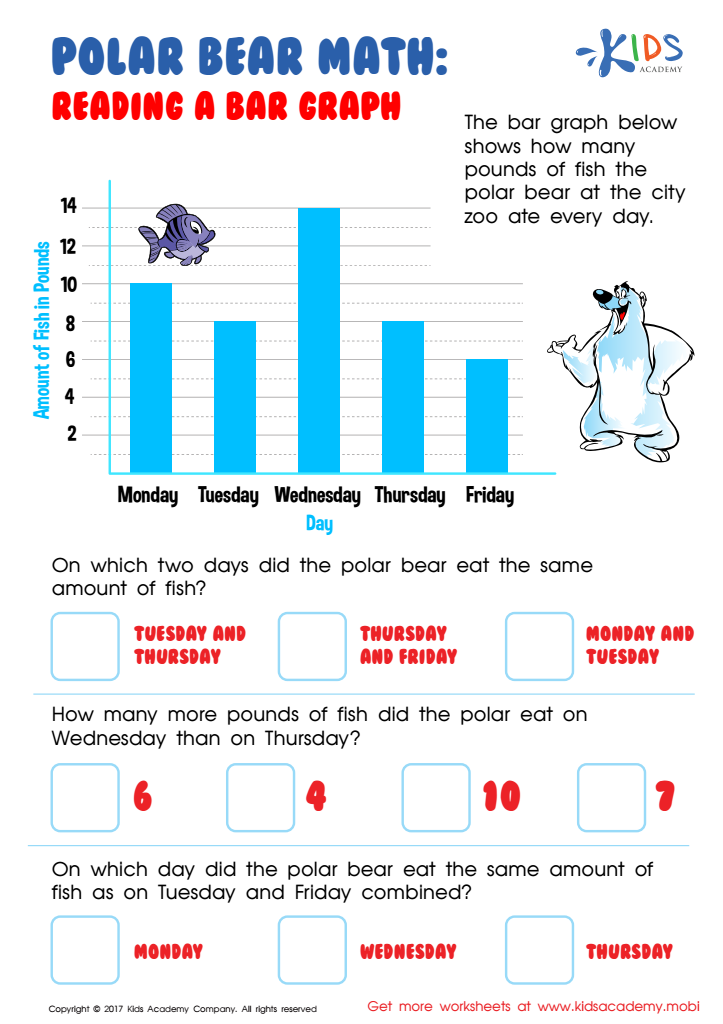
Take your child north to practice data reading with a polar bear friend! This worksheet challenges 3rd graders to interpret data on a graph and solve related math problems.
Reading Bar Graph Worksheet
Worksheet
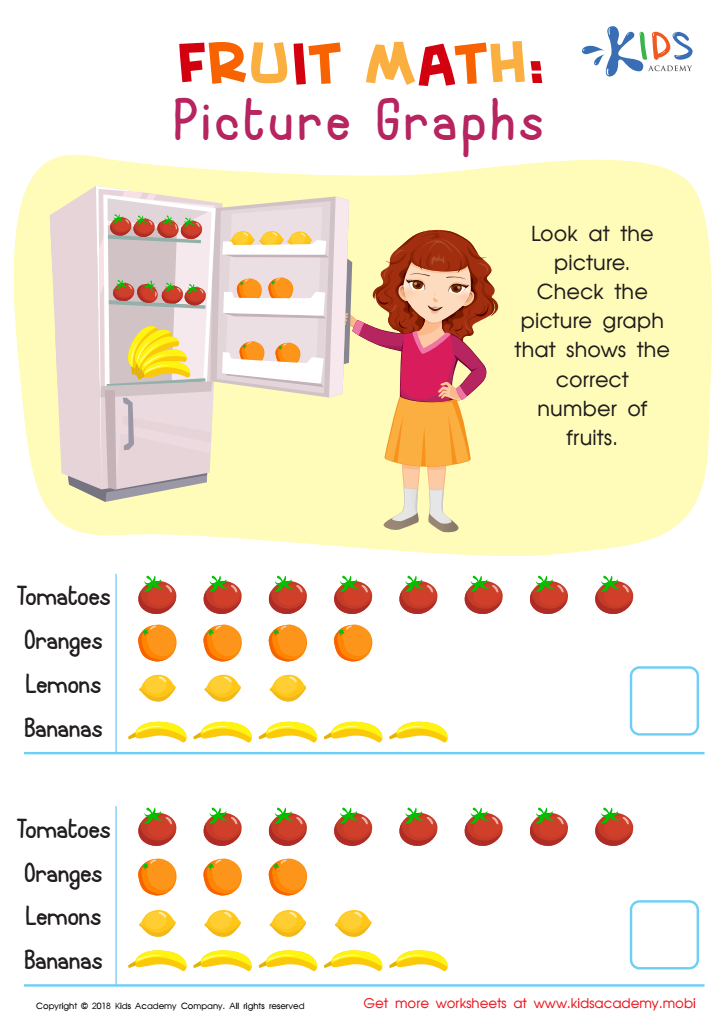
Fruit Math: Picture Graphs Worksheet

Fruit Math: Picture Graphs Worksheet

Help your child learn to draw graphs by having them look at pictures. Ask them to identify a graph that accurately portrays the data and have them explain why. This will prepare them to easily draw more complex graphs in the future. For example, have them look at the picture with the number of fruits in the colorful worksheet and explain why the graph is accurate.
Fruit Math: Picture Graphs Worksheet
Worksheet
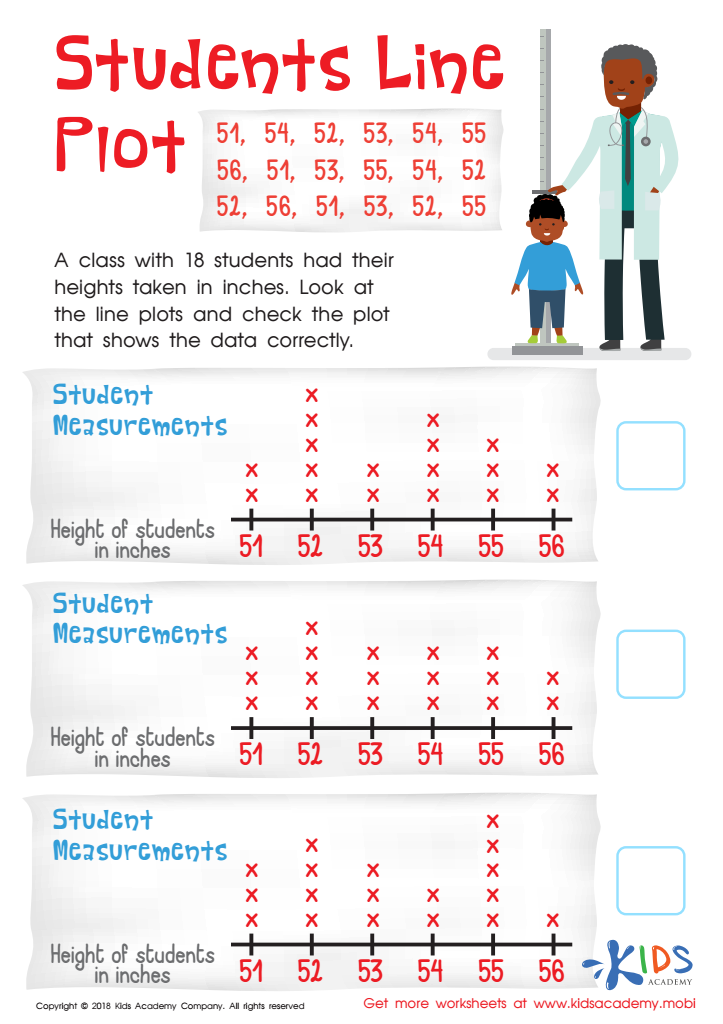
Students Line Plot Worksheet

Students Line Plot Worksheet

Help your students learn to draw a line plot correctly by giving real examples. In this exercise, they must check the data of a class of 18 students' heights (in inches). Have them compare two line plots and figure out which one is correct.
Students Line Plot Worksheet
Worksheet
Dog Math: Line Plots Worksheet

Dog Math: Line Plots Worksheet

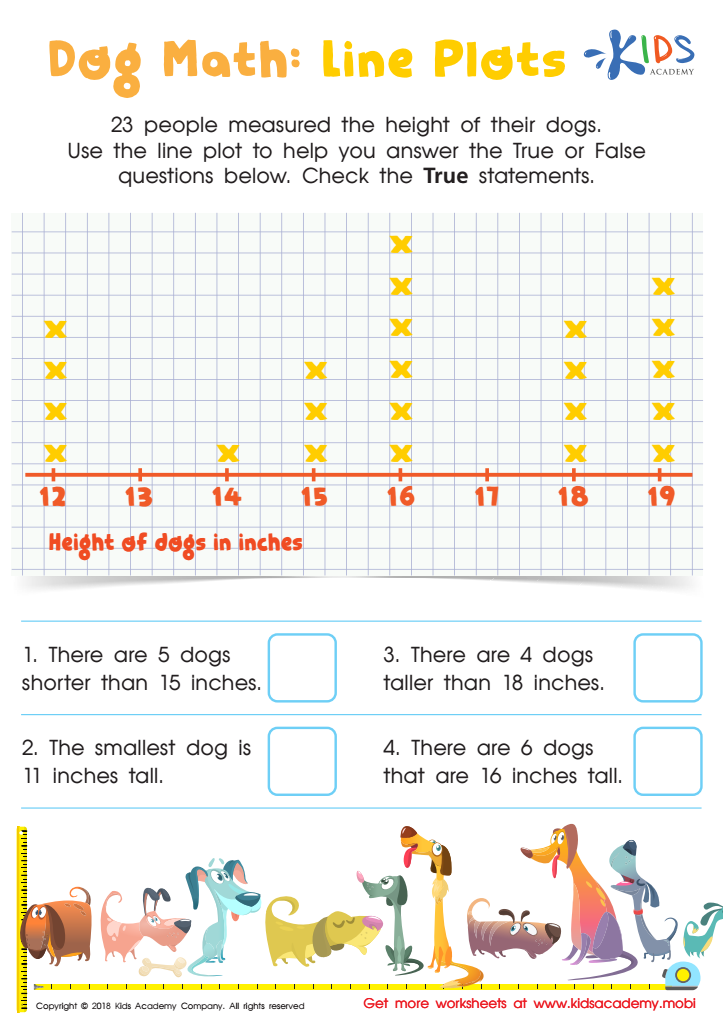
Do your kids love dogs? If you have family pets, your kids may be excited to do this worksheet. It involves a line plot and True/False questions about 23 people measuring their dogs' heights. Assist your kids in verifying the statements that are True.
Dog Math: Line Plots Worksheet
Worksheet
Coffeehouse Survey: Picture Graph Word Problems Worksheet

Coffeehouse Survey: Picture Graph Word Problems Worksheet

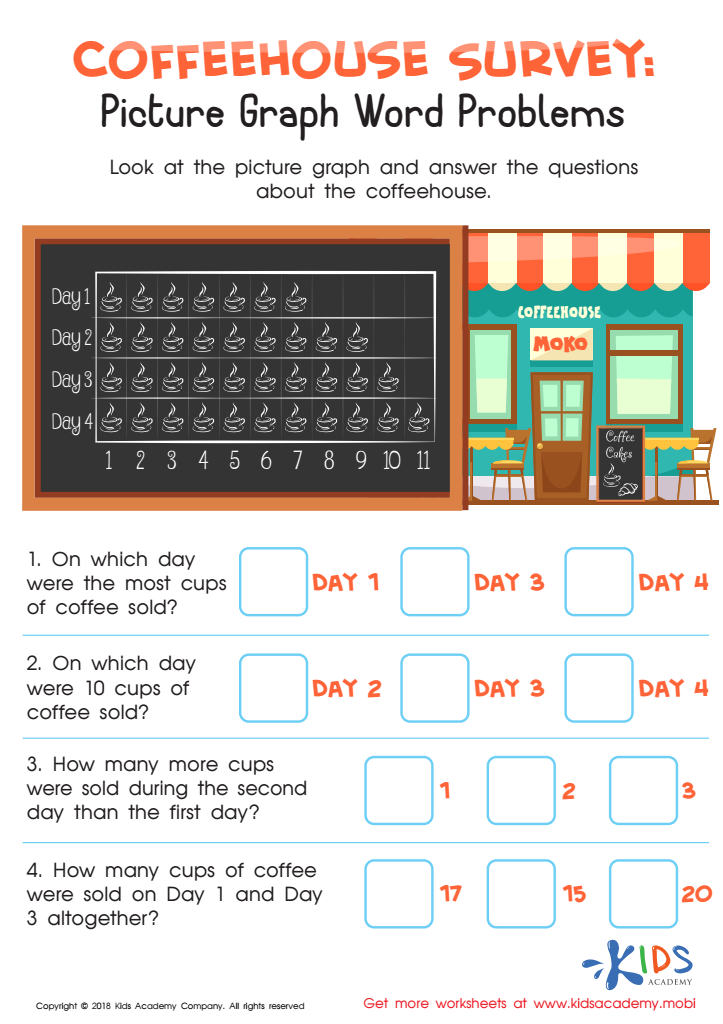
This coffeehouse survey helps children interpret pictures and answer questions. Your child will look at a picture graph displaying daily coffee cup sales from Day 1 to Day 4. Aid them in answering questions on the number of cups sold and which day had the most sales.
Coffeehouse Survey: Picture Graph Word Problems Worksheet
Worksheet
Data: Assessment 2 Worksheet

Data: Assessment 2 Worksheet

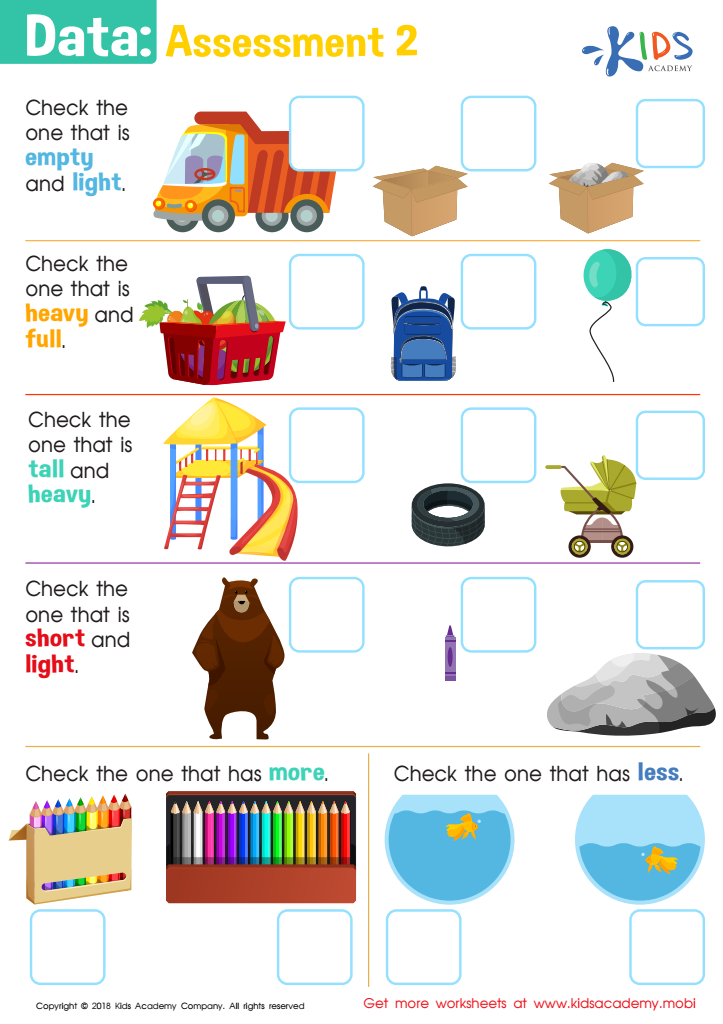
This PDF helps you assess your students' understanding of concepts like empty/light, full/heavy, tall/short, and more/less. With this worksheet, students use pictures to answer questions and check off the appropriate box. It's a fast, easy way to determine what concepts they have learned and which need more work.
Data: Assessment 2 Worksheet
Worksheet
Line plot worksheet for 2nd grade

Line Plot Worksheet

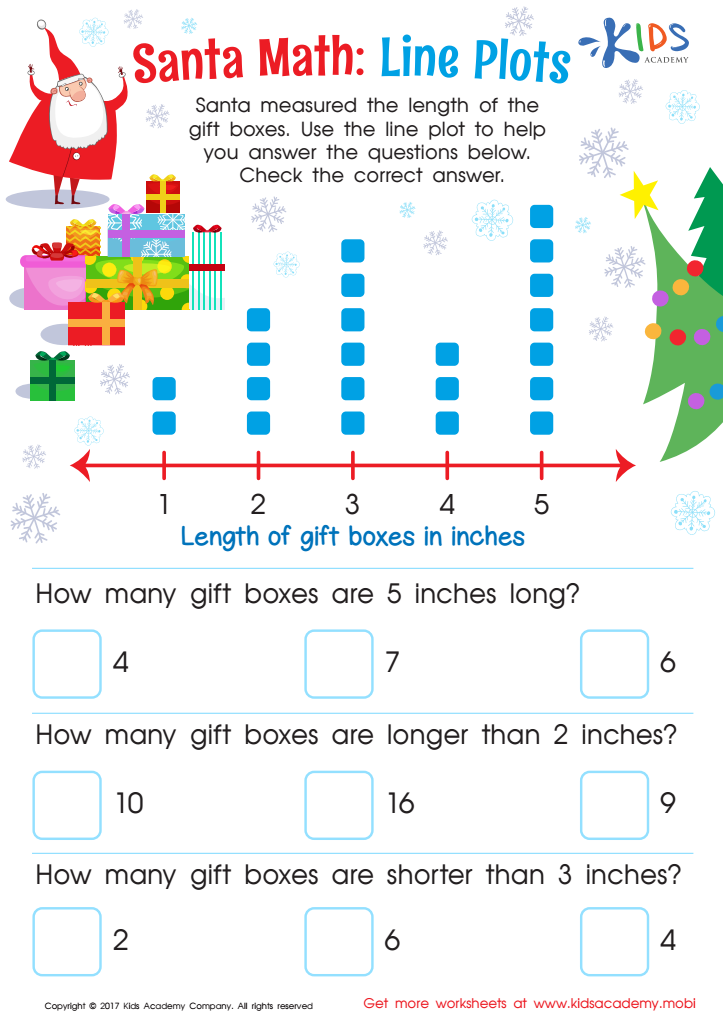
Help your child measure presents with Santa using this 2nd grade line plot worksheet! It's a fun way to boost math skills and analyze data. Plus, it's sure to delight your child!
Line Plot Worksheet
Worksheet
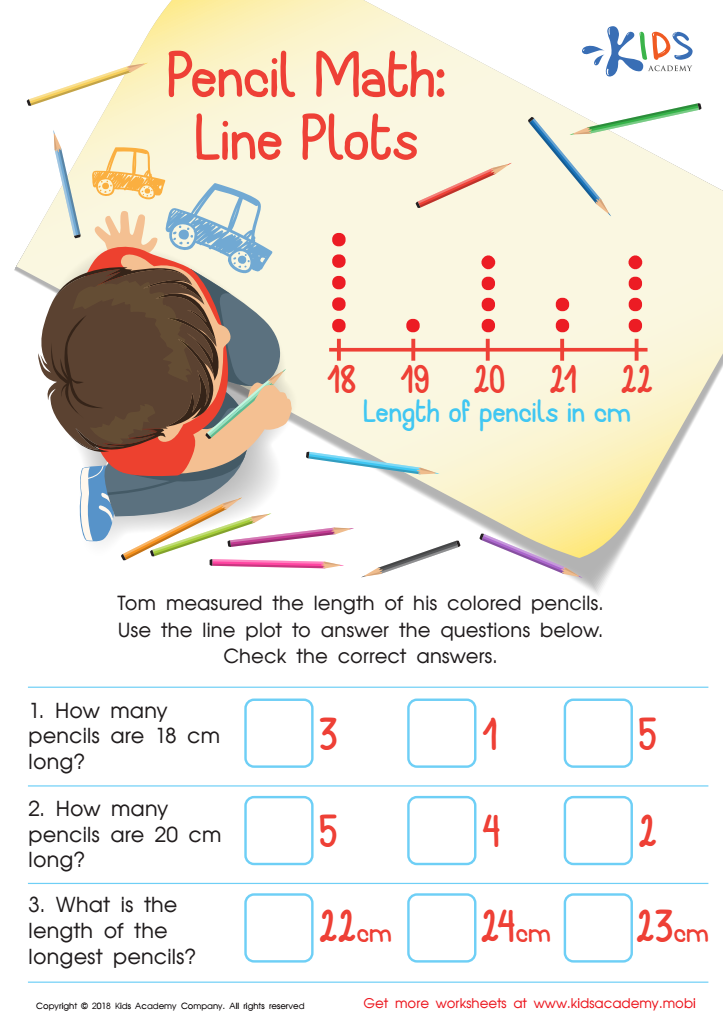
Pencil Math: Line Plots Worksheet

Pencil Math: Line Plots Worksheet

Your child will meet Tom in this worksheet, helping him find the length of his colored pencils. Tom has written the lengths in cm, and the line plot will help your kids answer the questions. Check the correct answers for each, including how many pencils are of a certain length. The line plot makes it easy to find the answers.
Pencil Math: Line Plots Worksheet
Worksheet
Pet Survey Worksheet

Pet Survey Worksheet

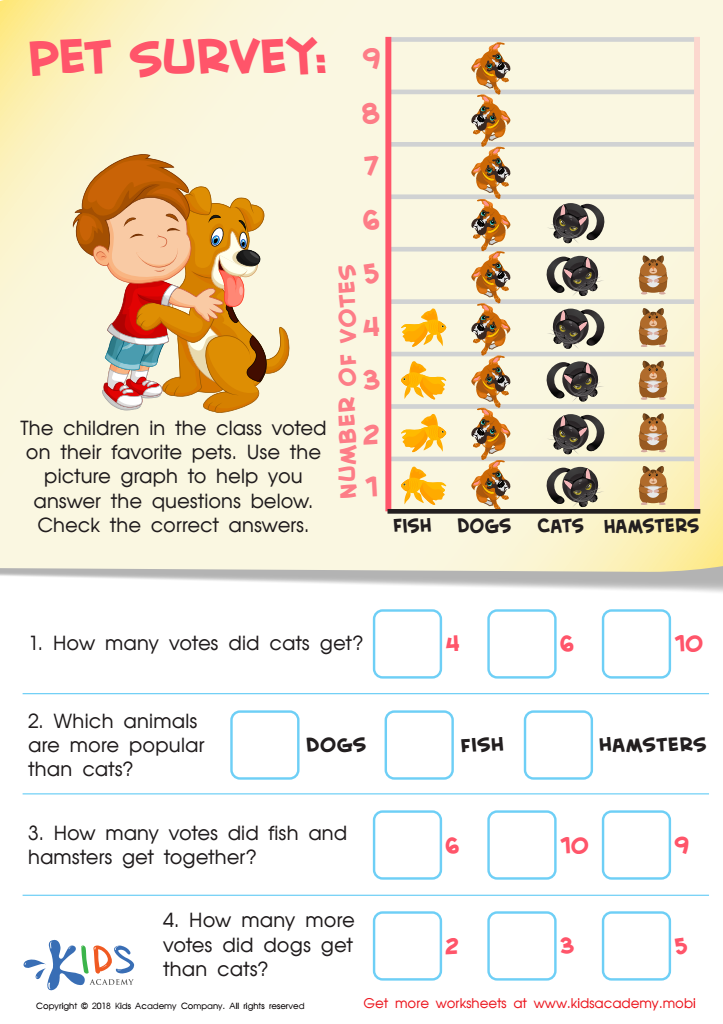
Do you have a furry family member? If the answer is yes and your kids love animals, they'll enjoy this worksheet. The picture graph shows the children's votes for their favorite pet - fish, dog, cat and hamster. Ask your child to use the graph to answer the questions. Guide them to check the right answer.
Pet Survey Worksheet
Worksheet
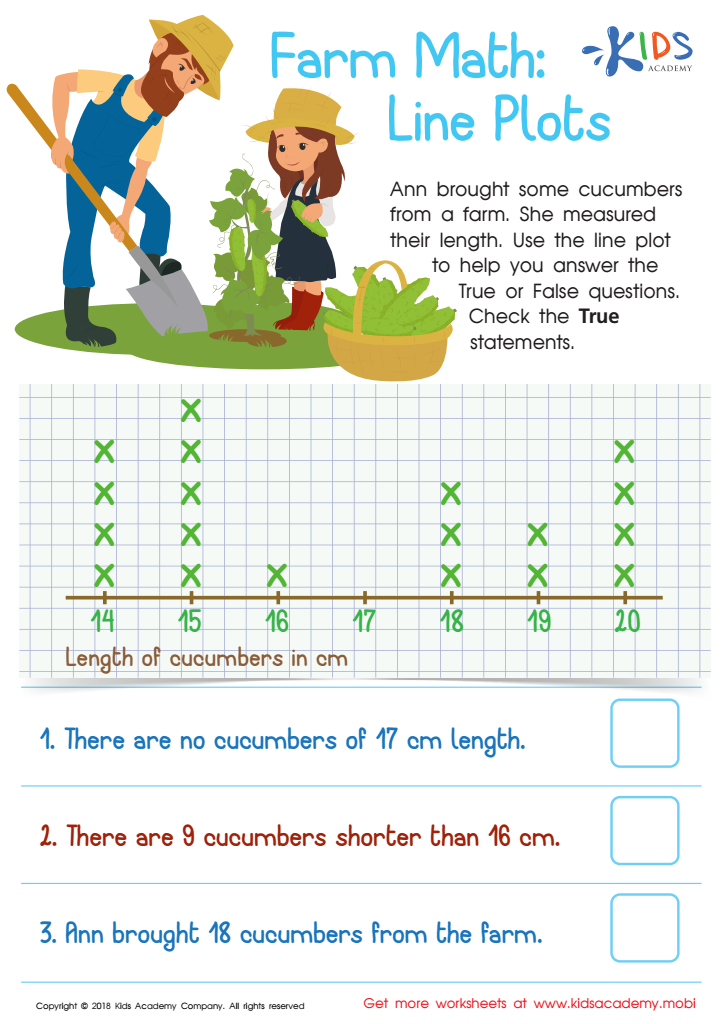
Farm Math: Line Plots Worksheet


Farm Math: Line Plots Worksheet

Ann brought cucumbers from a farm and measured their length. She drew a line plot for your students to use to answer True/False questions about the number and length of the cucumbers. Ask your students to check only the True statements. (80 words)
Farm Math: Line Plots Worksheet

Worksheet


Data interpretation and measurement are crucial for children aged 4-8, as these foundational skills play a vital role in their overall cognitive development. Understanding data—through simple concepts like sorting, counting, and comparing—fosters critical thinking and problem-solving abilities. Parents and teachers should emphasize these skills because they encourage children to observe, ask questions, and draw conclusions based on evidence, enhancing their analytical capabilities.

Moreover, measurement helps children grasp important concepts of size, weight, and volume, leading to a better understanding of the world around them. Simple activities like measuring ingredients in cooking or comparing heights with peers aid in developing a sense of numeracy and spatial awareness.

Additionally, these skills contribute to later academic success in mathematics and science, paving the way for effective decision-making in real-life scenarios. Engaging children in data-related activities can also promote teamwork and communication, as they learn to share and discuss findings. Parents and teachers who prioritize data interpretation and measurement create rich learning environments that nurture curious, confident learners equipped for future challenges. By embedding these concepts into everyday experiences, caregivers can instill a love of learning that encourages lifelong pursuits in inquiry and exploration.