Numbers up to 100 Worksheets for Ages 4-8 - Page 3
51 filtered results
-
From - To
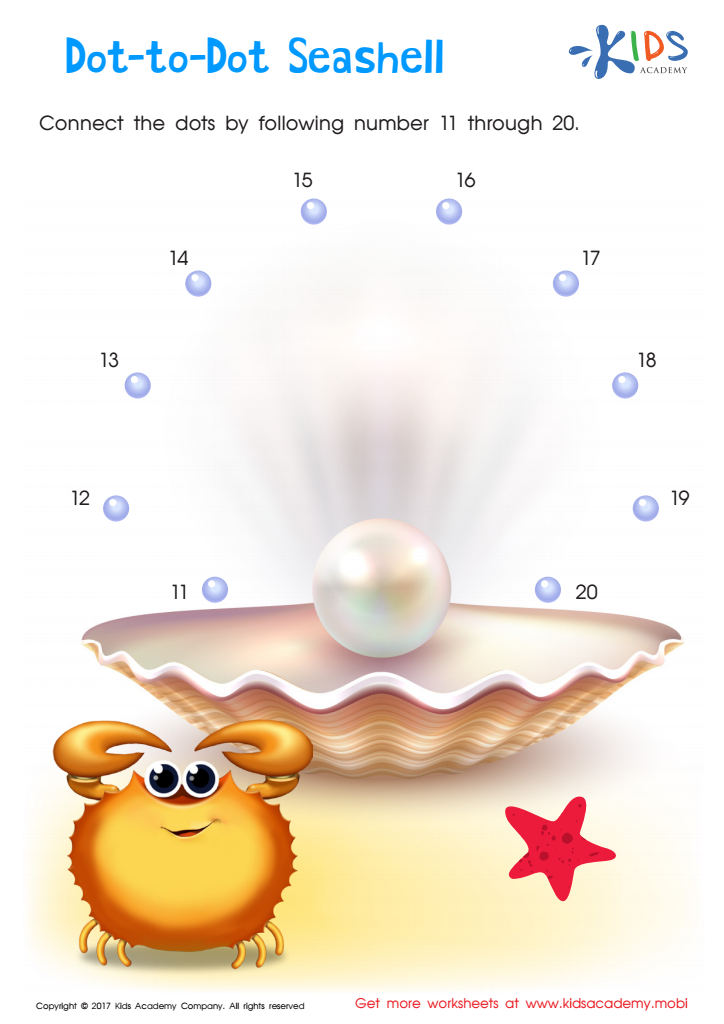
Ordering 11–20: Dot–to–dot Seashell Printable
 Assign to My Students
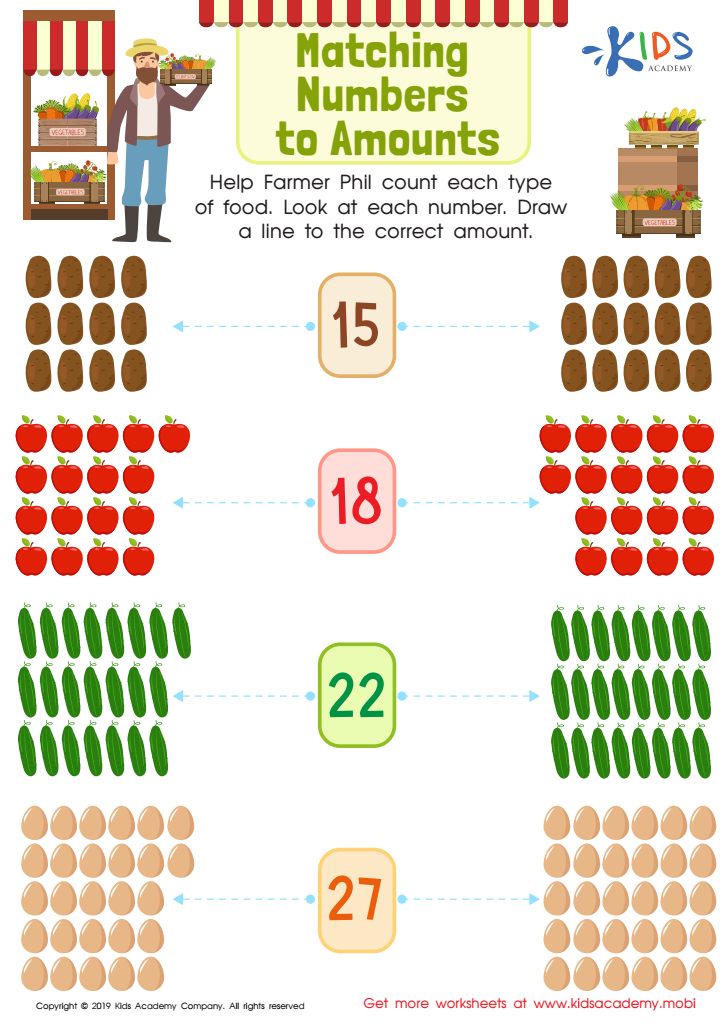
Matching Numbers to Amounts Worksheet

Counting on the City Skyline: Dot-to-Dot Worksheet








Understanding numbers up to 100 is crucial for children aged 4-8, as it forms the foundation for all future mathematical learning. At this stage, children are developing key cognitive skills, and engaging with numbers enhances their mathematical fluency, problem-solving abilities, and critical thinking.
For parents and teachers, focusing on this number range allows children to grasp basic concepts such as counting, addition, and subtraction, which are essential for everyday tasks. Mastering numbers helps with pattern recognition and understanding sequences, both vital for more complex mathematical ideas.
Moreover, familiarity with numbers promotes confidence in young learners. As they navigate a world filled with numbers, from measuring ingredients in cooking to following directions, their comfort with numerical concepts leads to greater independence and practical life skills.
Additionally, early engagement with numbers can nurture a love for math and learning, setting the stage for positive attitudes toward education and exploration of subjects like science and engineering in the future. Ultimately, prioritizing numbers up to 100 enriches children's learning experiences, making education more enjoyable and effective. Parents and teachers play a pivotal role in guiding this process, ensuring that children develop strong mathematical foundations for lifelong success.








