Number Recognition Skip Counting Worksheets for Ages 4-8
3 filtered results
-
From - To
Introducing our engaging Number Recognition Skip Counting Worksheets, specially designed for children ages 4-8! These worksheets provide a fun and interactive way for young learners to master number recognition while developing vital skip counting skills. Each worksheet is thoughtfully crafted to encourage children to identify numbers in a sequence, fostering their mathematical understanding. With colorful illustrations and varied exercises, kids will enjoy exploring numbers as they skip count by twos, fives, and tens. Perfect for preschool and early grade classroom activities, these worksheets make learning enjoyable and effective. Download now and support your child's math journey today!
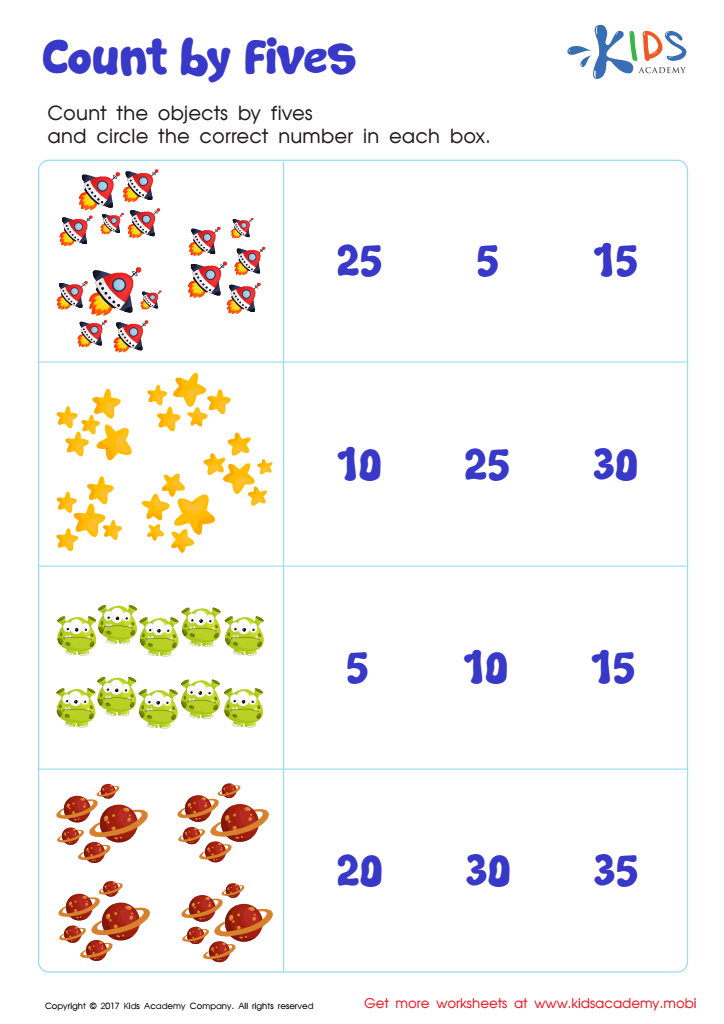
Skip Counting by 5s: Space Math Printable
 Assign to My Students
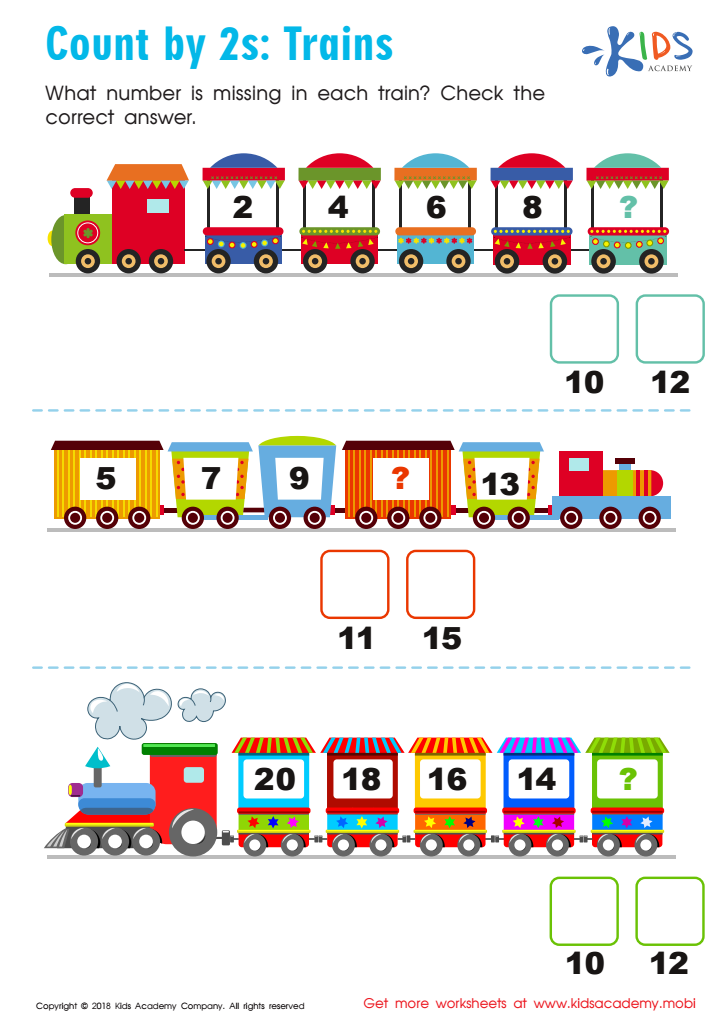
Count by 2's: Trains Worksheet
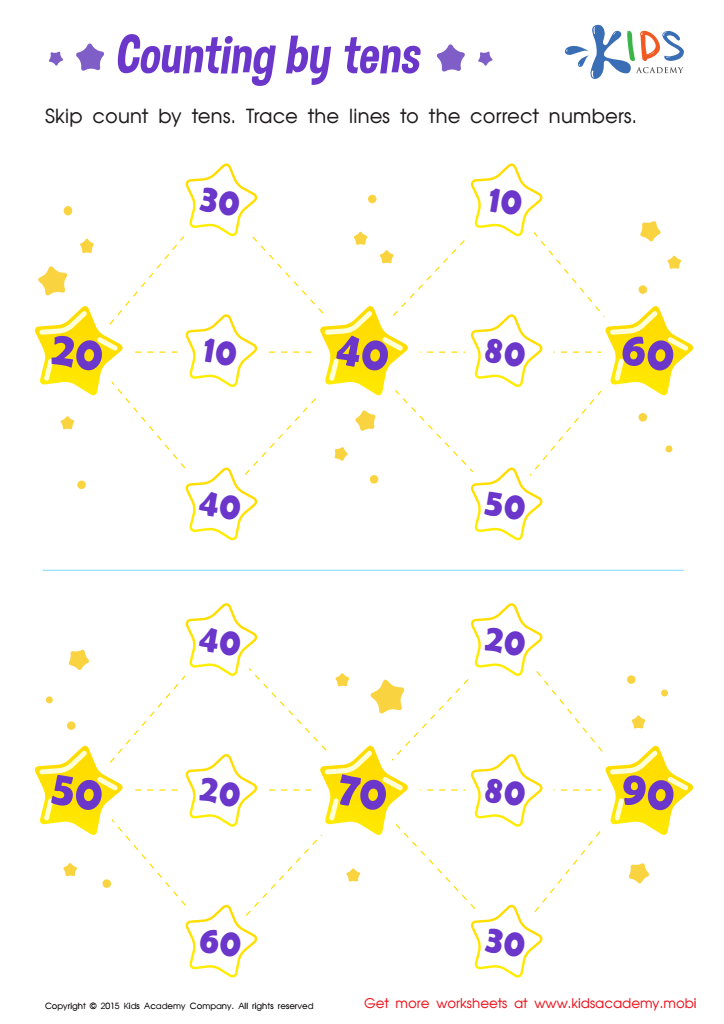
Learn Dozens: Counting by Tens Printable




%20(1).jpg)



Number recognition and skip counting are foundational skills for early learners, particularly for ages 4-8. Understanding these concepts plays a critical role in developing numeracy, which is essential for future mathematical understanding. Parents and teachers should prioritize these skills because they lay the groundwork for more complex mathematical operations.
Firstly, number recognition helps children identify, name, and understand the value of numbers, which enhances their ability to sequence and categorize numerical data. This is crucial as students progress in math, enabling them to tackle addition, subtraction, and understanding place value with confidence.
Skip counting, such as counting by twos, fives, or tens, not only reinforces number patterns but also strengthens mental math abilities and enhances problem-solving skills. It promotes an understanding of multiplication and division concepts at an early stage, setting the stage for more advanced arithmetic.
Additionally, these skills boost children's overall confidence in math, fostering a positive attitude toward learning. Engaging in fun activities that promote skip counting and number recognition can cultivate a love for numbers and help children develop critical thinking skills. Therefore, nurturing these skills in young learners is vital for their academic success and future endeavors in mathematics.








