Character analysis Reading Worksheets for Ages 4-8
6 filtered results
-
From - To
Unlock the power of storytelling with our Character Analysis Reading Worksheets for Ages 4-8. Perfectly designed to engage young readers, these worksheets help kids delve deeper into their favorite stories by exploring characters’ roles, traits, and journeys. Through fun and interactive activities, children enhance their comprehension, critical thinking, and reading skills. Give your child a head start in literacy with a resource that makes learning exciting and insightful. Ideal for home or classroom use, our materials foster a lifelong love for reading and a greater understanding of literature from an early age. Start your journey with us today!
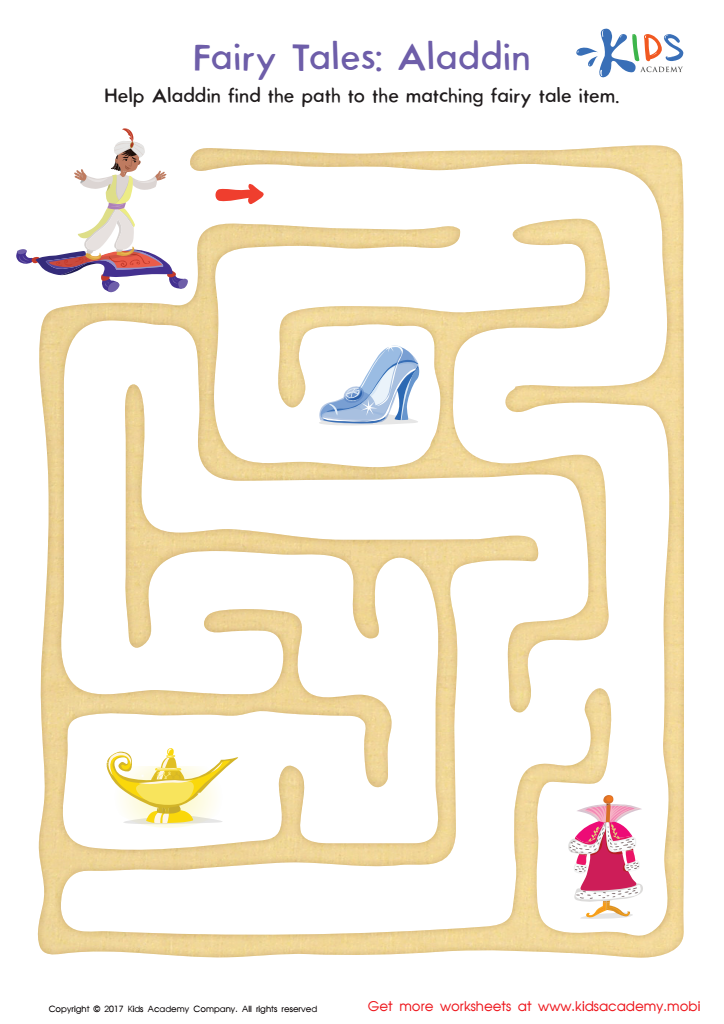
Fairy Tales Aladdin Printable
 Assign to My Students
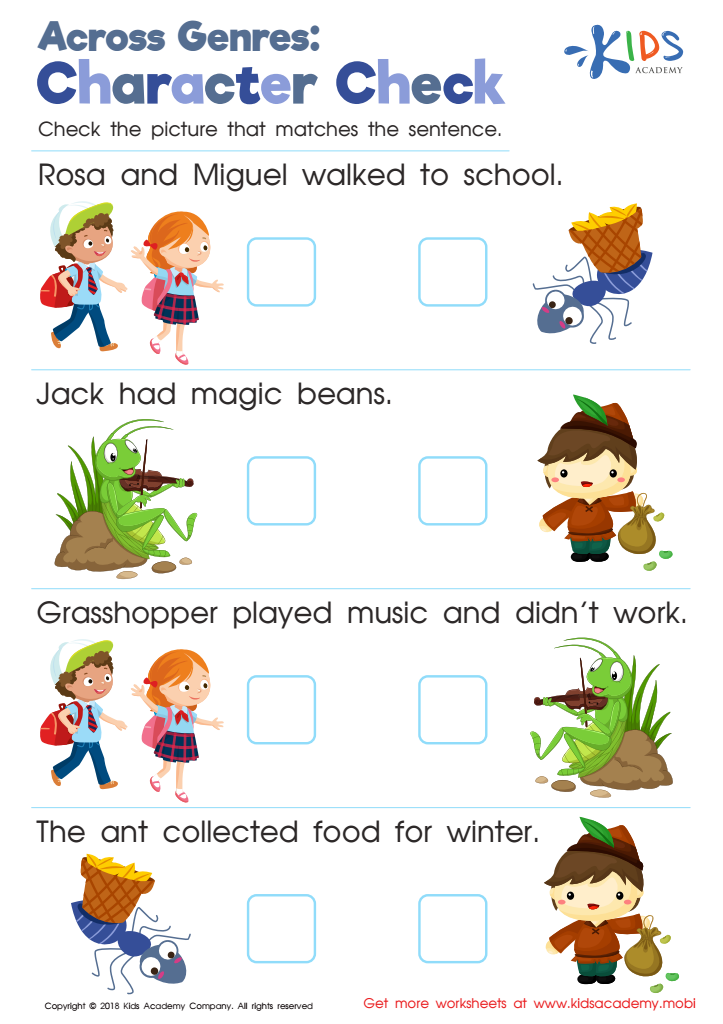
Across Genres: Character Check Worksheet
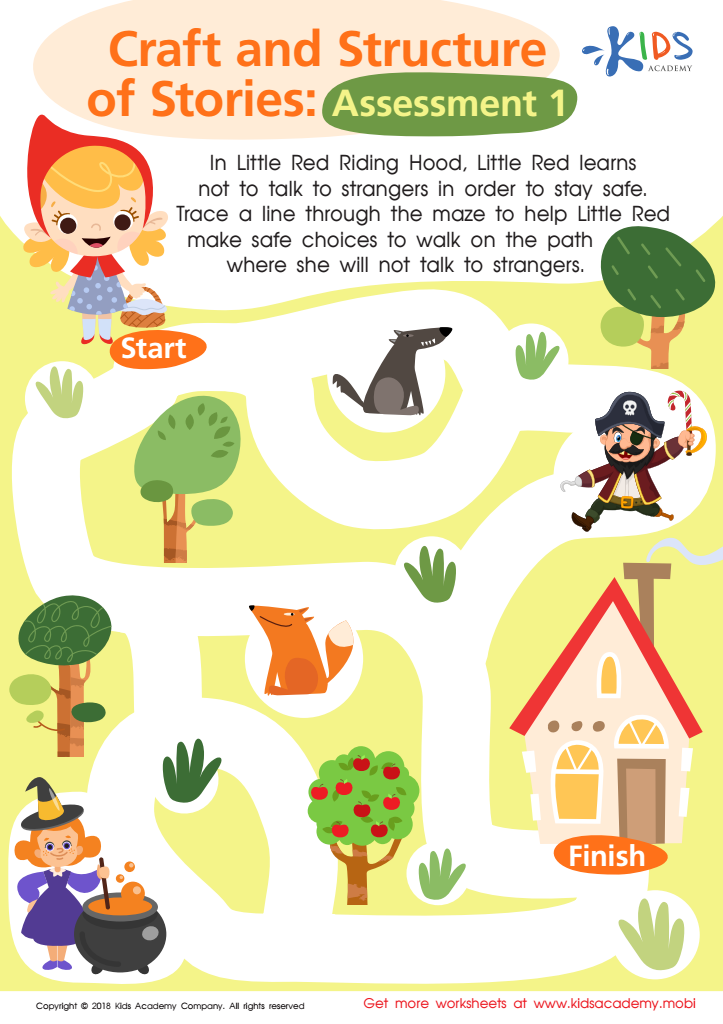
Craft and Structure of Stories: Assessment 1 Worksheet
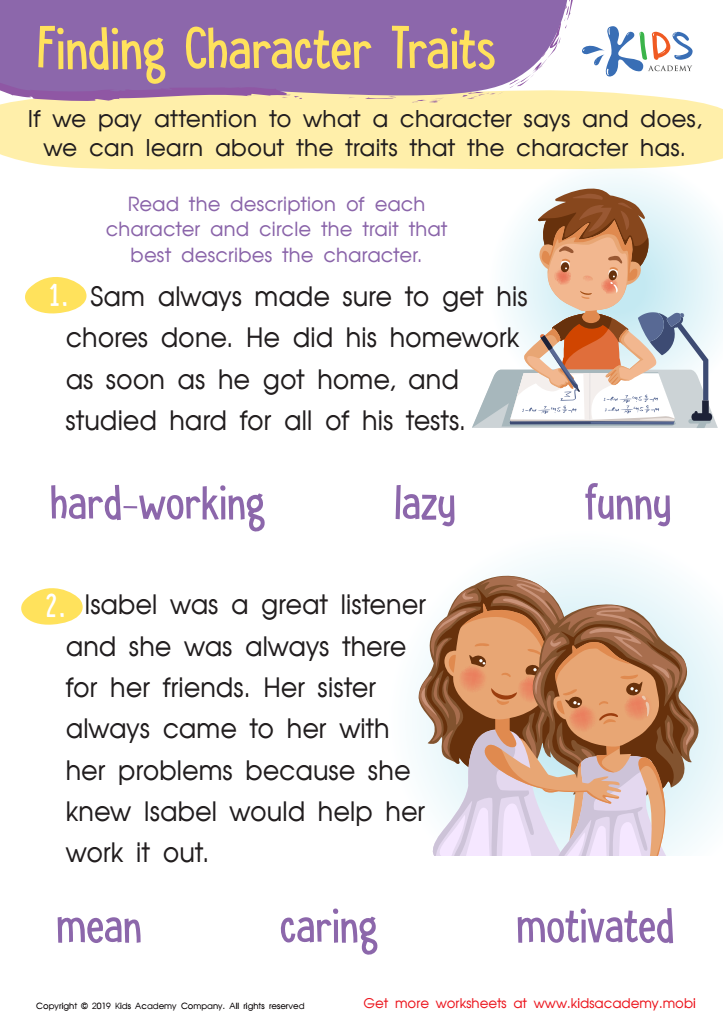
Finding Character Traits Worksheet
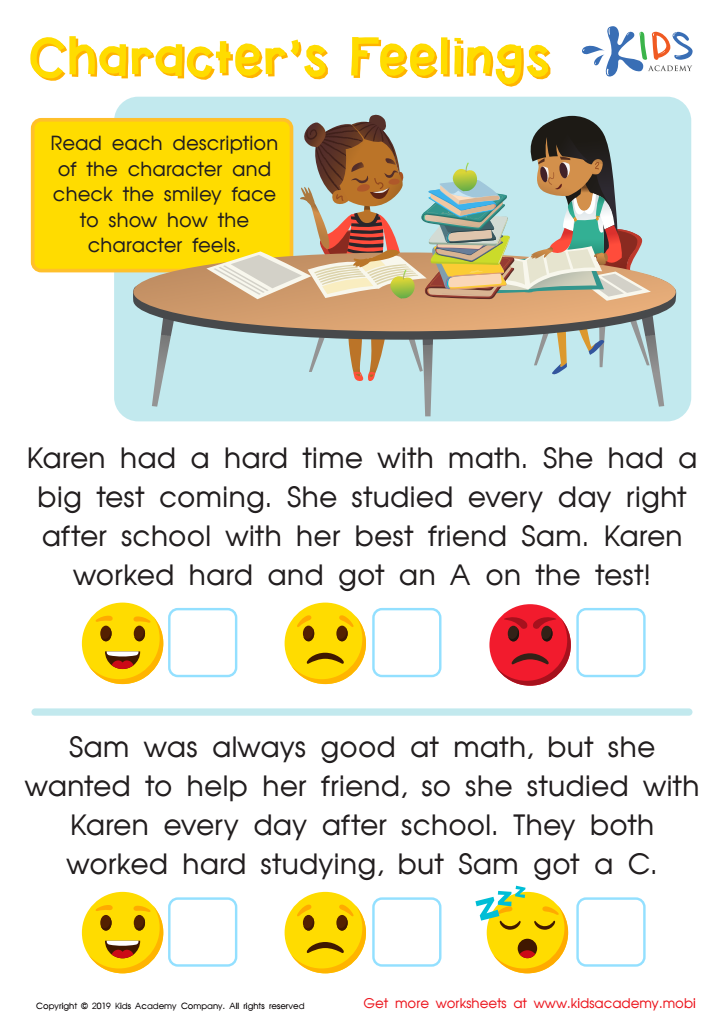
Character’s Feelings Worksheet








Character analysis is an essential skill for young readers, even as early as ages 4-8, because it lays the groundwork for critical thinking, empathy, and comprehension. When parents and teachers engage in character analysis with children, they help them understand not just the events of a story but the motivations, feelings, and development of a character. This understanding enriches the children's reading experience and helps them form deeper emotional connections to the material.
Through character analysis, young children learn to identify traits such as kindness, bravery, or selfishness. Discussing these traits helps children internalize values and apply them in real-life scenarios. For example, if a child reads about a character who shows empathy, they begin to understand the importance of being kind to others.
Additionally, character analysis fosters vocabulary growth and language development by encouraging children to describe what they see and feel about a character using specific terms. It also enhances their ability to make predictions, infer feelings or motives, and draw conclusions, all of which are critical thinking skills that transcend reading into real-world problem solving.
In summary, parents and teachers should care about character analysis because it bolsters cognitive, emotional, and social growth, equipping children with the skills they need to navigate their inner and outer worlds more effectively.








