Moral understanding Reading Worksheets for Ages 4-8
6 filtered results
-
From - To
Explore our engaging Moral Understanding Reading Worksheets, designed for children ages 4-8. These worksheets foster important values by steering young learners through relatable stories and scenarios that highlight concepts such as sharing, empathy, and kindness. Each interactive activity encourages critical thinking and reflection, helping kids understand moral lessons in a fun and approachable way. With colorful illustrations and age-appropriate language, these resources support early literacy while promoting social-emotional development. Perfect for parents and teachers, our moral understanding worksheets cultivate not just reading skills, but also a strong foundation of ethical awareness to guide children in their everyday interactions.
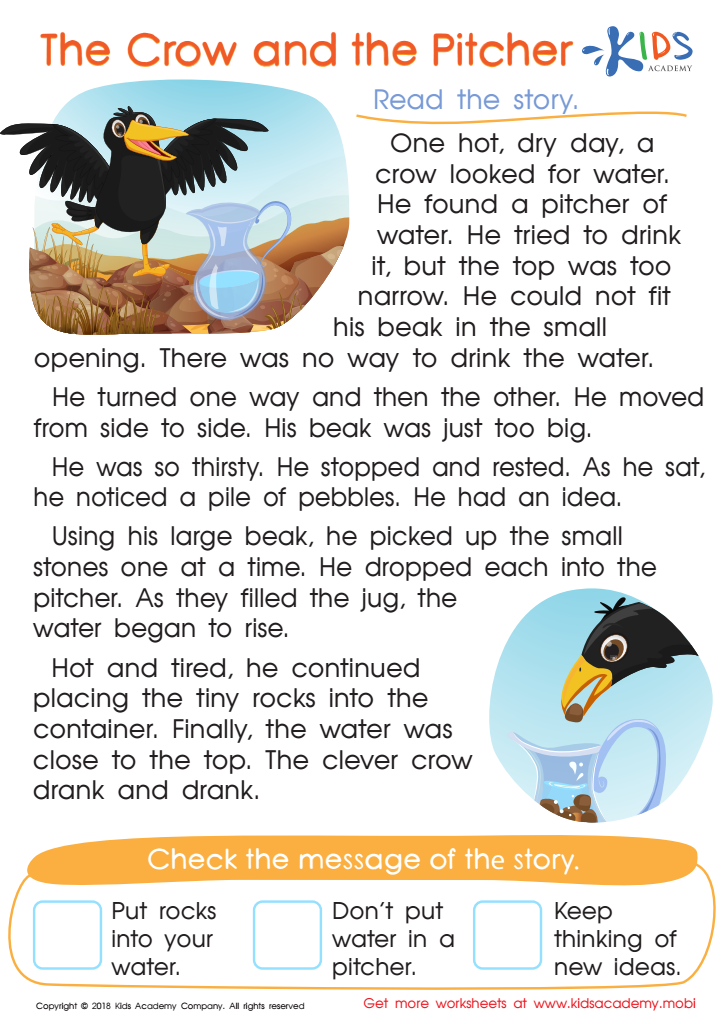
The Crow and the Pitcher Worksheet
 Assign to My Students
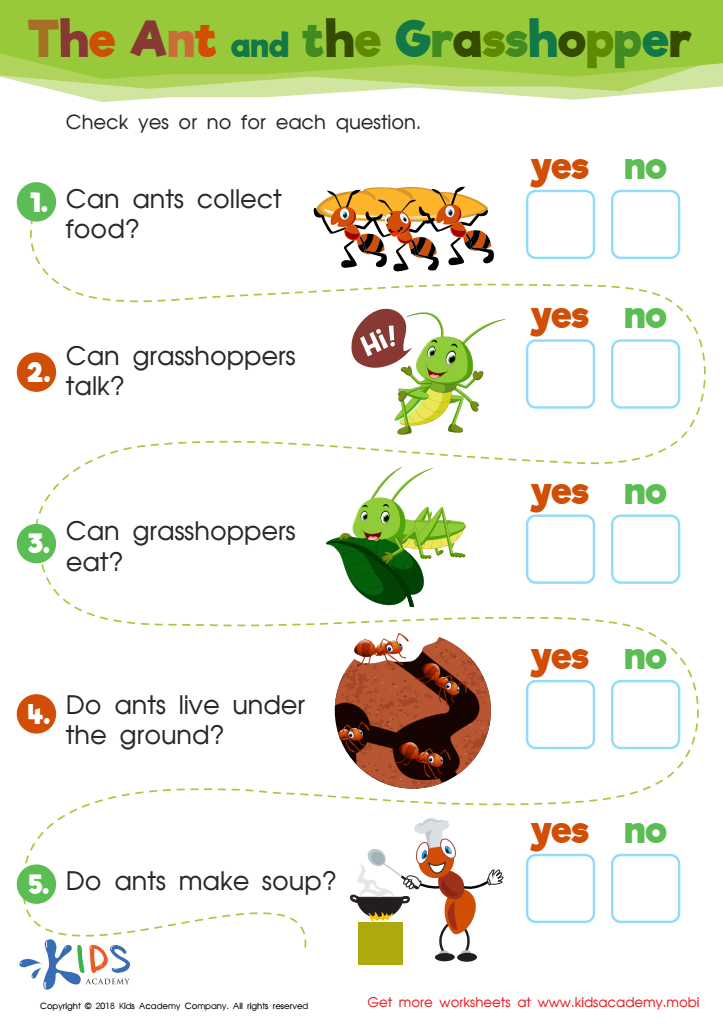
The Ant and The Grasshopper Worksheet
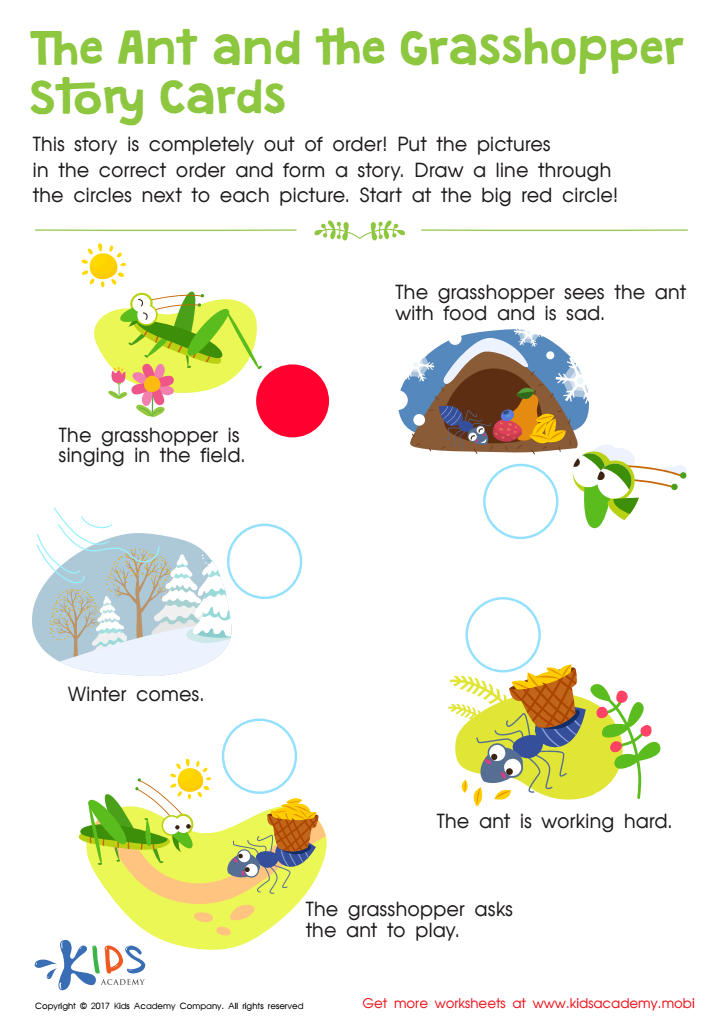
The Ant and The Grasshopper Worksheet
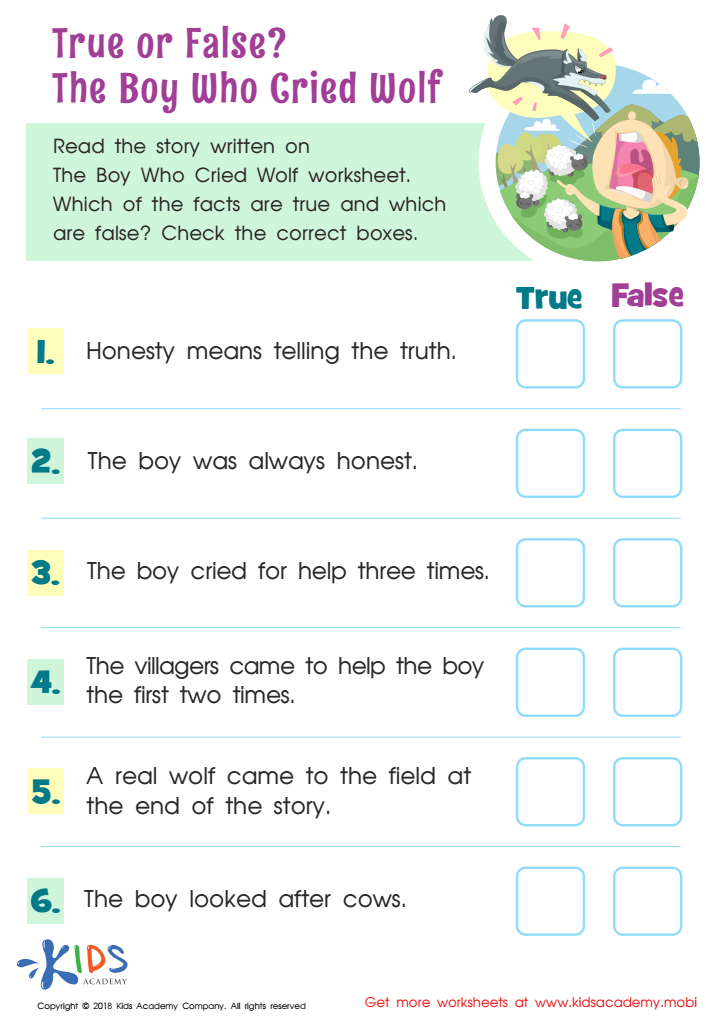
True or False? The Boy Who Cried Wolf Worksheet
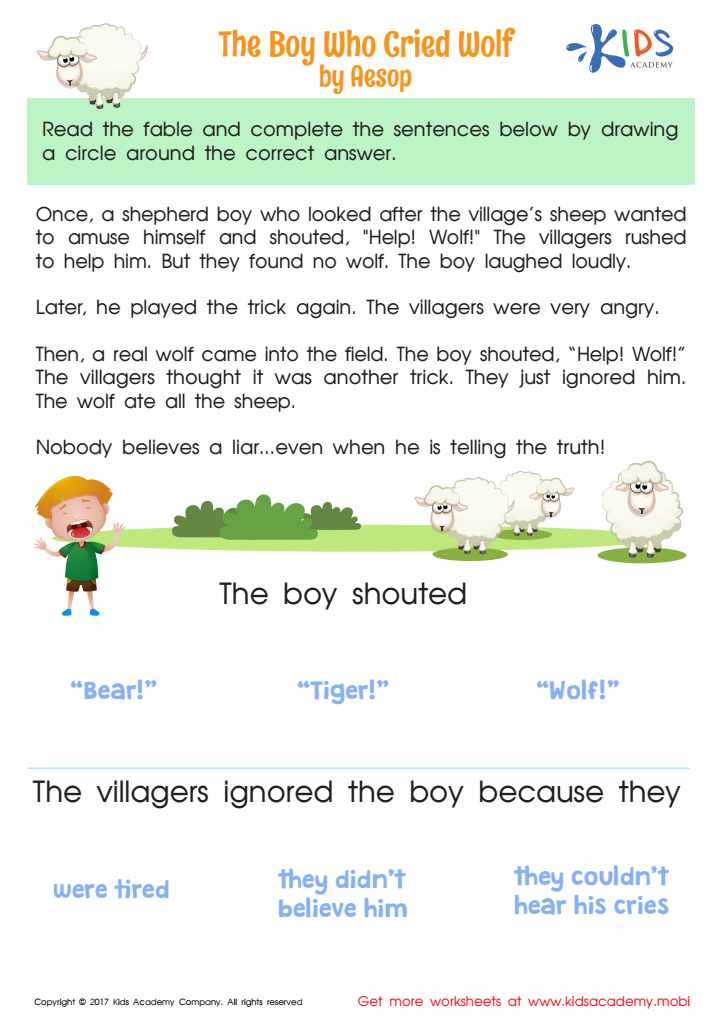
The Boy Who Cried Wolf Worksheet
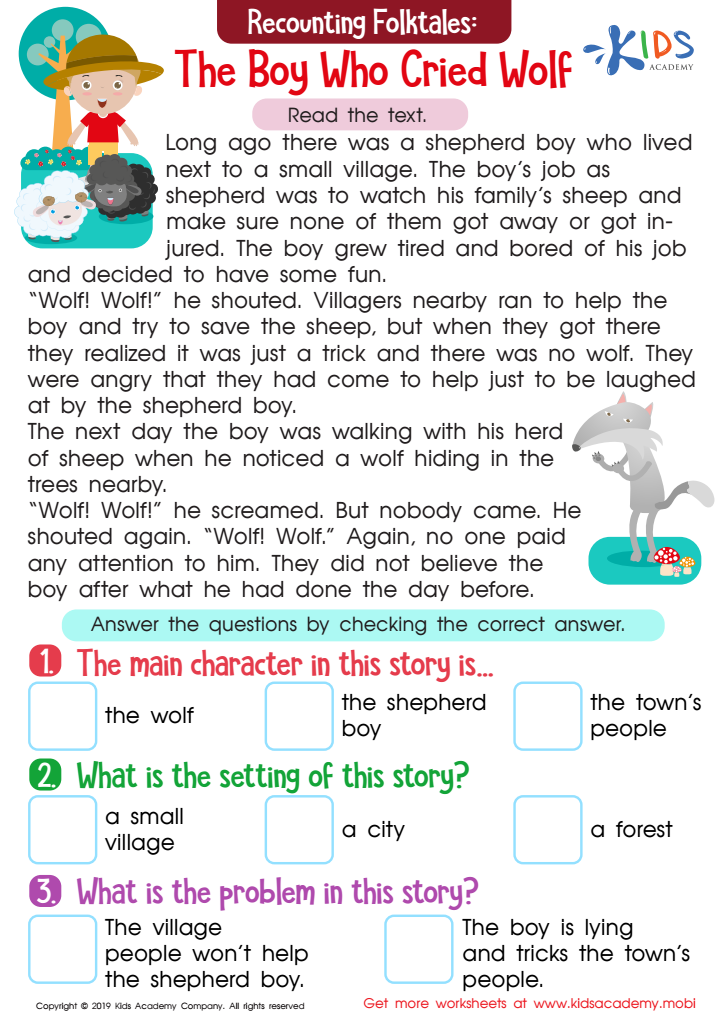
The Boy Who Cried Wolf Part 1 Worksheet







Moral understanding is crucial for children aged 4-8 as it shapes their social and emotional development. During these formative years, children develop an awareness of right and wrong, empathy, and the ability to consider others' feelings. Reading stories that emphasize moral themes helps to cultivate these essential skills.
Parents and teachers play a vital role in this process. Engaging young readers with age-appropriate books that highlight moral dilemmas and positive values fosters discussions about ethics and relationships. Through storytelling, children learn to navigate complex social situations and understand the importance of compassion, fairness, and responsibility.
Moreover, moral understanding in reading encourages critical thinking. Children learn to analyze characters' decisions and reflect on the consequences of their actions, building a foundation for ethical reasoning as they grow. This, in turn, impacts their interactions with peers, helping to create a more empathetic environment both at home and in the classroom.
Supporting moral understanding through reading not only prepares children to be thoughtful and caring individuals but also strengthens community bonds. Ultimately, parents and teachers should prioritize moral education as it equips children with the tools necessary for successful and meaningful relationships in their lives.








