
Phonics practice Reading Worksheets for Ages 4-8
7 filtered results
Difficulty Level
Grade
Age
-
From - To
Subject
Activity
Standards
Boost your child's reading skills with our engaging Phonics Practice Reading Worksheets designed for ages 4-8! These colorful, printable worksheets make learning phonics fun and effective, helping young learners develop essential reading abilities. Each worksheet features targeted activities that focus on letter sounds, blending, and decoding, ensuring a solid foundation in literacy. Perfect for at-home practice or in the classroom, these resources encourage independent learning and build confidence in young readers. Whether your child is just beginning to read or looking to sharpen their skills, our phonics worksheets offer the perfect tools for success and a love for reading!
Favorites
With answer key
Interactive
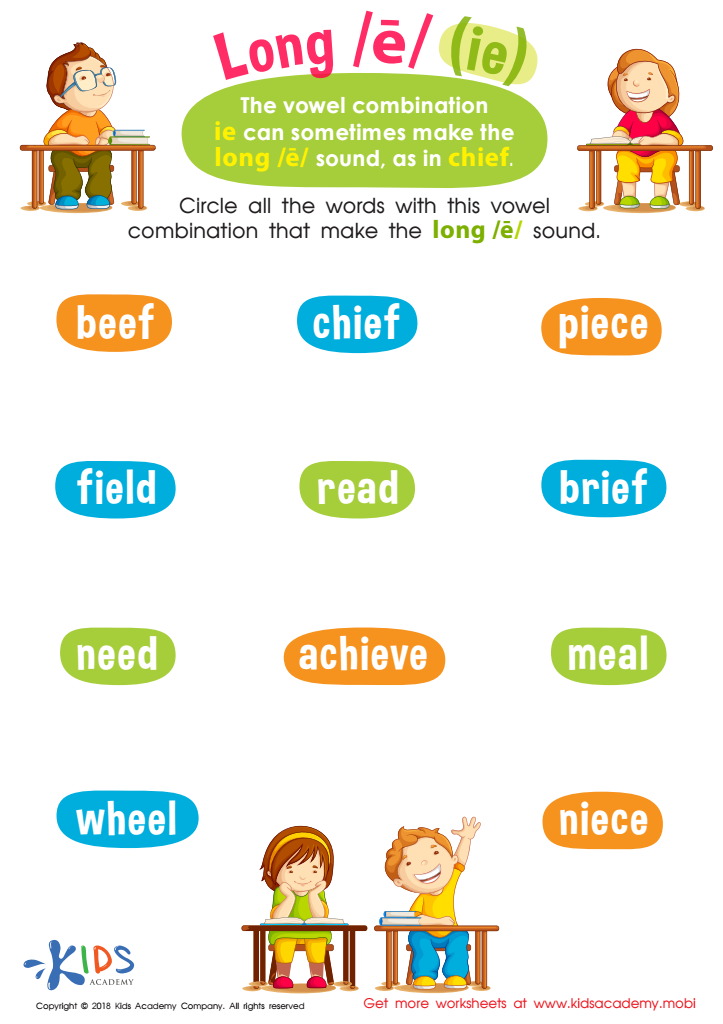
Reading: Long E and IE Worksheet
Ask your child to name some words with the long /e/ sound they hear every day. Then, read aloud all the words in the worksheet with them. Ask them to circle the words containing ie that make this sound.
 Assign to My Students
Reading: Long E and IE Worksheet
Worksheet
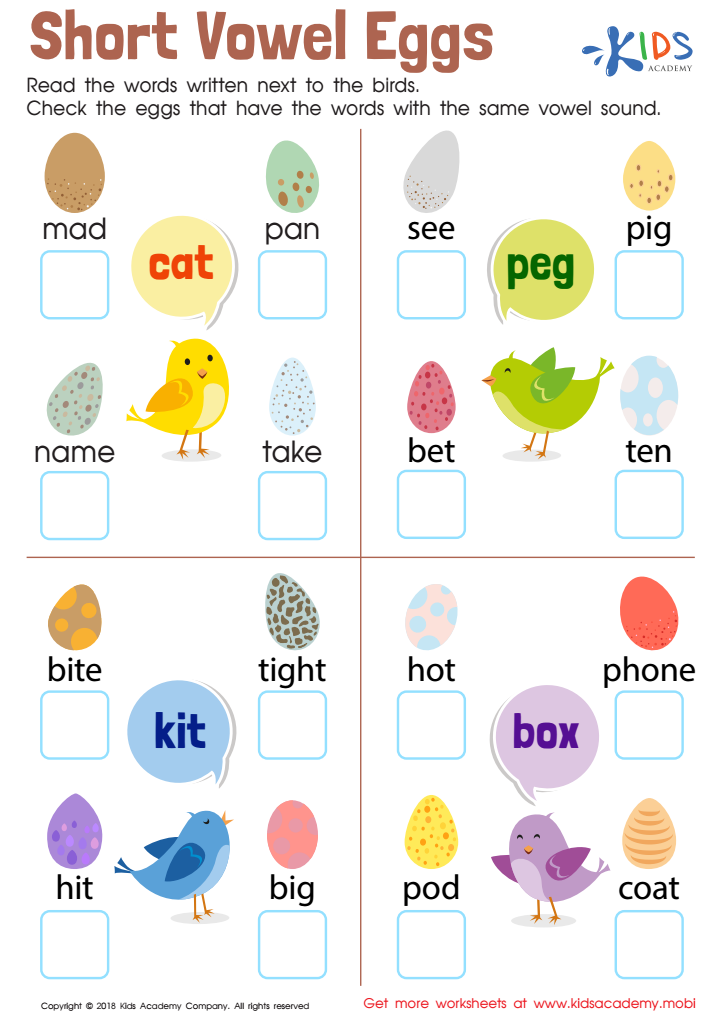
Short Vowel Eggs Worksheet
Your students will love helping these birdies pick the short vowel eggs! Have them read the words in the thought bubbles, then check off the boxes with the same short vowel sounds. The bright colors of this free Worksheet will draw them in and get them practicing their vowels!
Short Vowel Eggs Worksheet
Worksheet
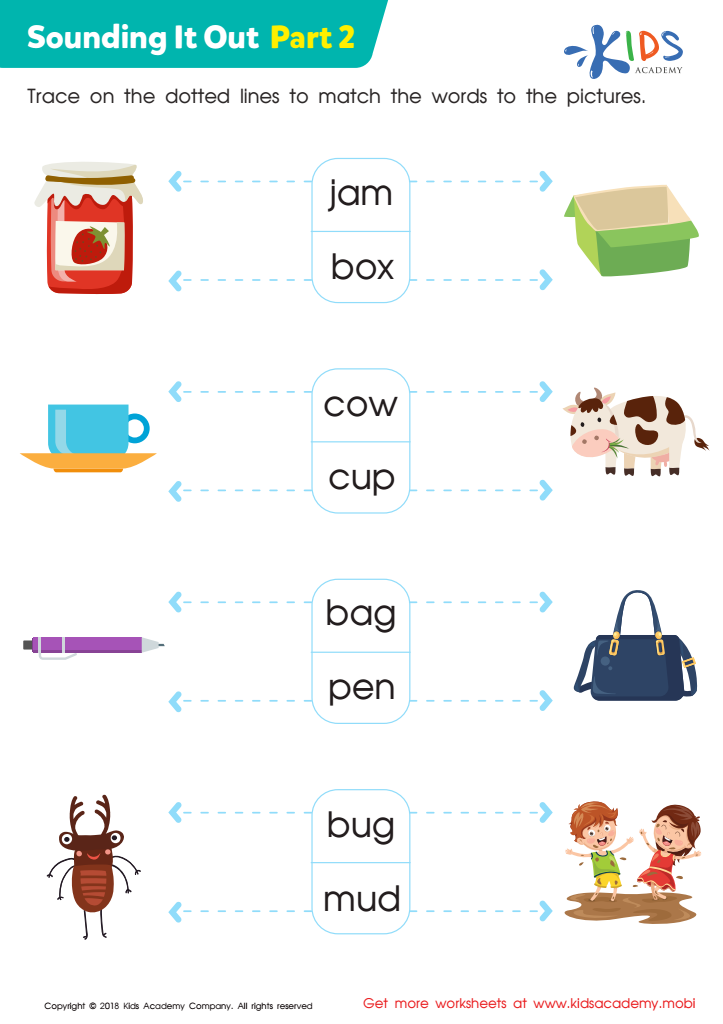
Sounding it Out: Part 2 Worksheet
Mastering phonics is key for kids to learn to read! This free worksheet uses fun pictures to help them sound out words. Ask them to name the images, then use the hints to say each word. Kids will become accomplished readers in no time!
Sounding it Out: Part 2 Worksheet
Worksheet
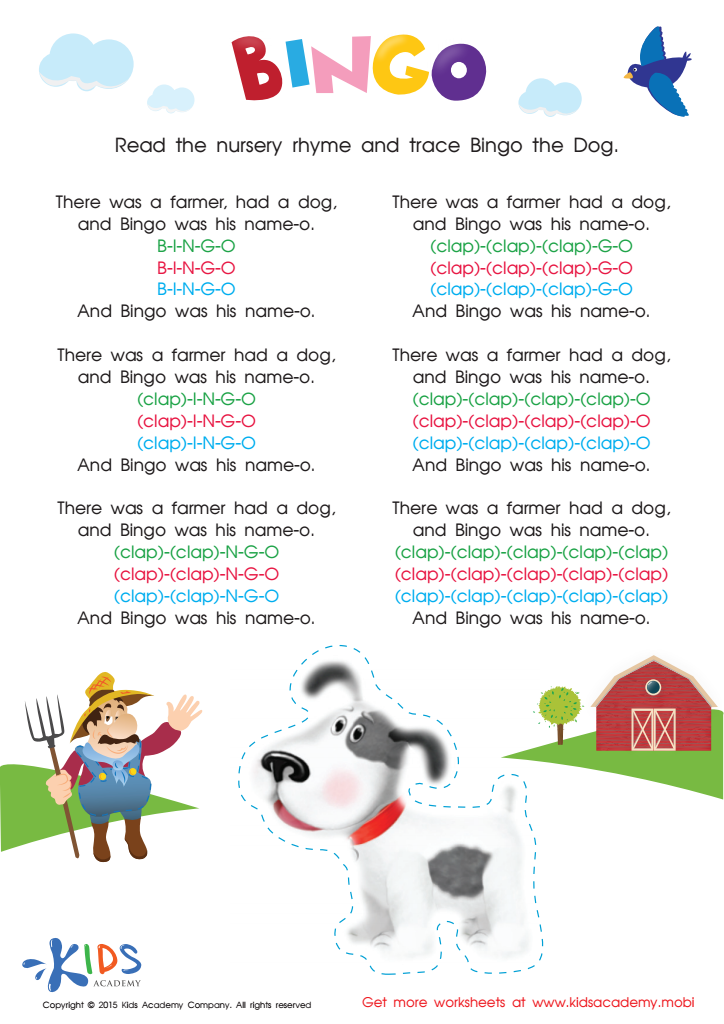
Nursery Rhymes: The Bingo Song Worksheet
Introduce The Bingo Song to your little ones. Have your kids sing some words and lines aloud, while you replace letters with claps. Add other activities: tapping, patting, jumping, and use your imagination. Print our free Bingo Song Coloring Pages and let your kids color them. Get more free worksheets at our website Kids Academy.
Nursery Rhymes: The Bingo Song Worksheet
Worksheet
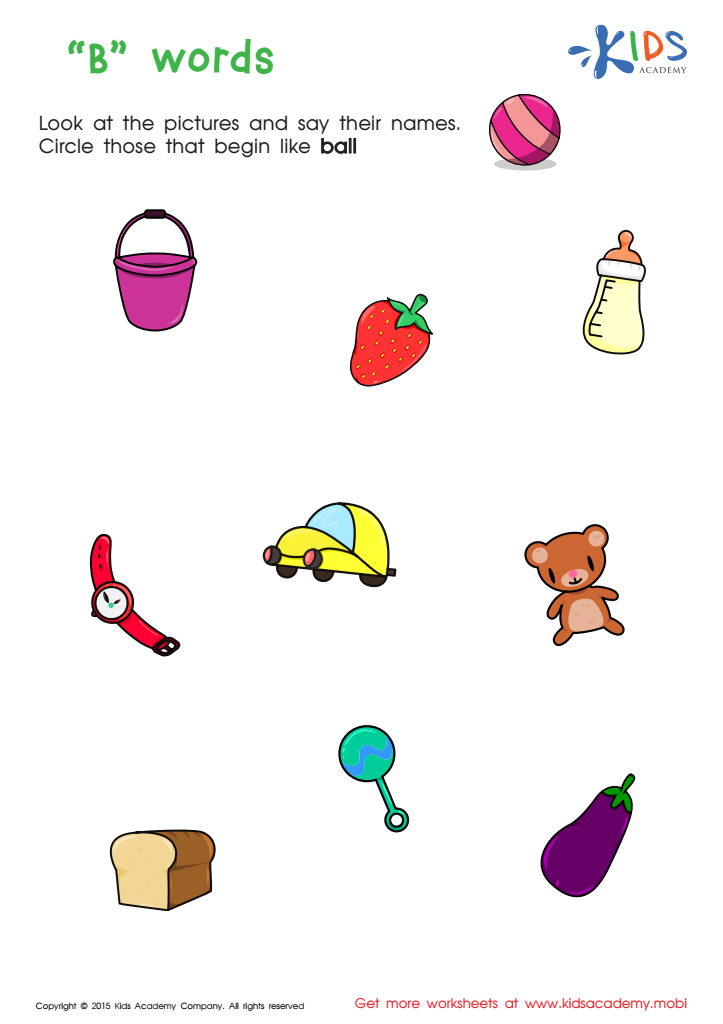
First Words Worksheet
Want to help your preschooler learn to read and write? Start with this 'B' words printable worksheet. It will help your child match pictures to the letters they know, sound out words, and build literacy. Once they understand the concept, they can start sounding out words and building reading skills.
First Words Worksheet
Worksheet
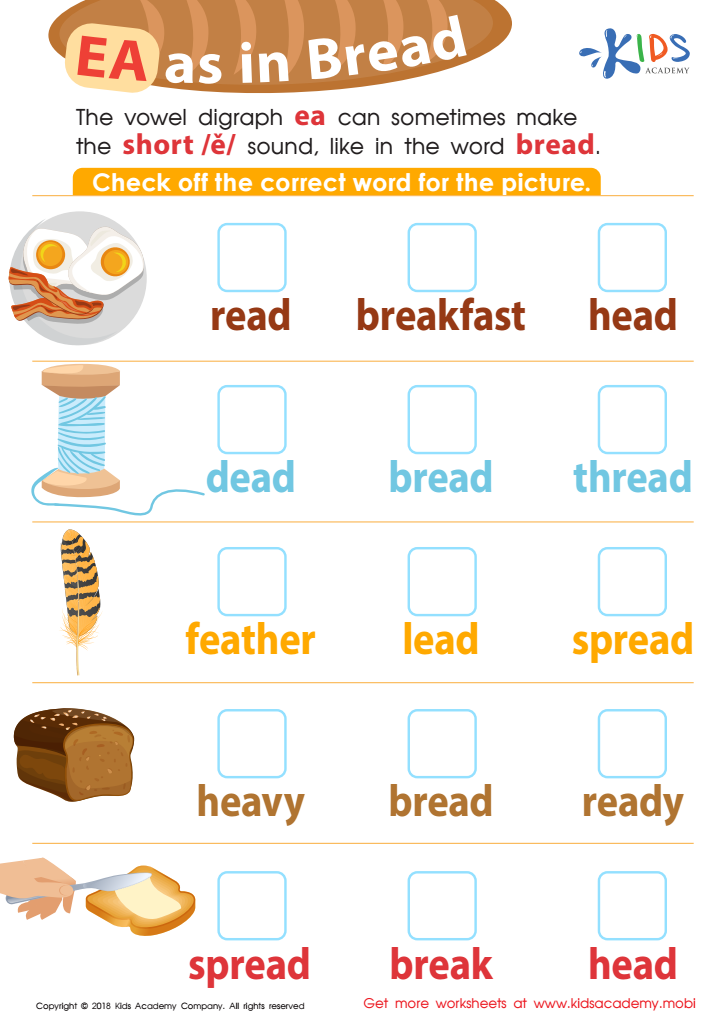
Reading: EA as in Bread Worksheet
The vowel digraph ea can be read in two ways. Examples of the long sound are "read" and "lead"; examples of the short sound are "bread" and "head". Ask your kids to give you more examples and then have them check off the correct word for the pictures on this worksheet. This will help them understand the ea sound.
Reading: EA as in Bread Worksheet
Worksheet
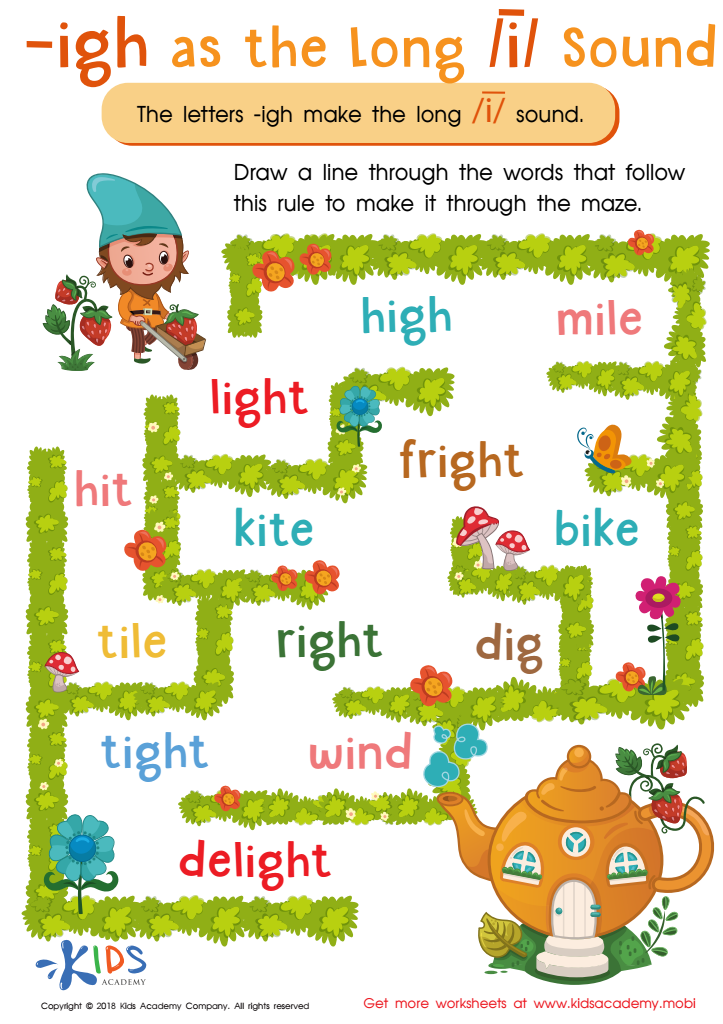
Reading: IGH as Long I Worksheet
Kids can have fun and learn with this maze! They'll look for and read words with the 'long I' sound spelled 'igh'. Most words ending with 'T' have this spelling. Decode words while learning about long vowel sounds and their spellings.
Reading: IGH as Long I Worksheet
Worksheet
Join Kids Academy for Free
Who is primarily going to use this learning content?





.jpg)

Phonics practice is essential for children ages 4-8 as it lays the foundation for proficient reading and comprehension skills. At this age, children are rapidly developing their language capabilities, and phonics helps them connect sounds with letters, enabling them to decode words independently. By mastering phonics, children can read with fluency, which boosts their confidence and fosters a love for reading. Furthermore, phonics instruction helps solidify the relationship between spoken language and written text, an important step in literacy development.
Teachers and parents should care about phonics because it directly impacts a child's overall academic success. Proficient readers tend to perform better across various subjects, as many disciplines require strong reading skills for comprehension and engagement. Moreover, early phonics practice can identify and address potential reading difficulties—early intervention fosters resilience and support for children who may struggle later on.
Phonics instruction also cultivates critical thinking and language skills, encouraging children to explore vocabulary, develop spelling skills, and enhance their oral language ability. Ultimately, a solid commitment to phonics practice aids in nurturing a generation of skilled, confident, and enthusiastic readers who are well-equipped for lifelong learning and success.








